REVIEW · ROME
Private Walk Through the Jewish Ghetto in Rome
Book on Viator →Operated by Roman Vacations · Bookable on Viator
History walks beside you in Rome’s Jewish Quarter. In this private, English-guided stroll, you’ll trace how the area connects Roman power, Renaissance art, and the lived reality of the Ghetto—starting near Trajan’s Column and ending on Tiber Island. I especially like how the route keeps you moving between landmark Rome and the streets where community life shaped day to day culture, plus you get an included stop for kosher gelato or coffee.
One thing to consider: entry to the Tempio Maggiore di Roma is not included, so you may want to plan for that extra ticket if you want to go inside. The walk is short on paper, but it’s still a city stroll—comfortable shoes help.
In This Review
- Key points before you step into the Ghetto
- Starting at Foro Traiano: Trajan’s Column and Michelangelo’s Campidoglio
- Teatro di Marcello: the little Colosseum you’ll want to photograph
- Fontana delle Tartarughe and a traditional kosher gelato stop
- Tempio Maggiore di Roma: the oldest ghetto and the synagogue that still matters
- Il Portico di Ottavia: Augustus, the fish market, and crossing into Ghetto streets
- Tiber Island finish: the hospital story and an easy plan for your next meal
- Price, timing, and how this private format pays off
- Should you book the Private Walk Through the Jewish Ghetto in Rome?
Key points before you step into the Ghetto
- Private guide, small-group feel: Only your group joins the walk, so questions actually fit into the story.
- Big-picture Roman context: You’ll connect the Jewish Quarter to Rome’s broader timeline, not just a single era.
- Landmarks with quick payoff: Trajan’s area, Piazza Venezia/Campidoglio, Teatro di Marcello, and major viewpoints pack a lot in.
- Gelato break built in: You’ll stop for authentic Italian gelato or coffee, including a traditional kosher option.
- Old Ghetto, still active today: The route brings you to the oldest Jewish Ghetto area and the Great Synagogue functions now.
Starting at Foro Traiano: Trajan’s Column and Michelangelo’s Campidoglio
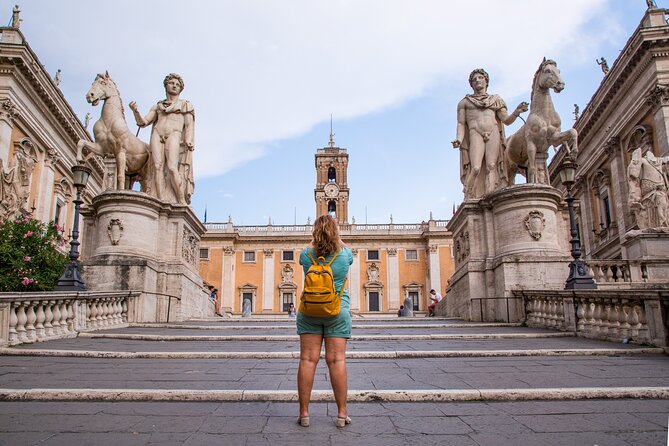
The tour starts at Foro Traiano, a sharp choice because you begin where Rome’s “imperial voice” is loudest. You’ll start at Trajan’s Column and then head toward Piazza Venezia. This is the kind of setup that helps you get your bearings fast: you see how Rome’s monuments were designed to impress, control attention, and tell official stories in stone.
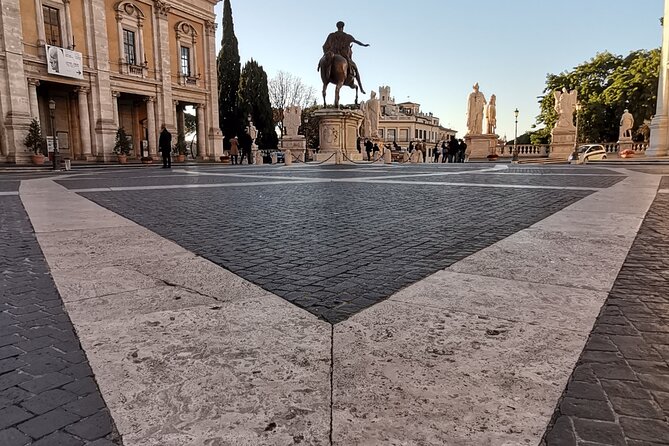
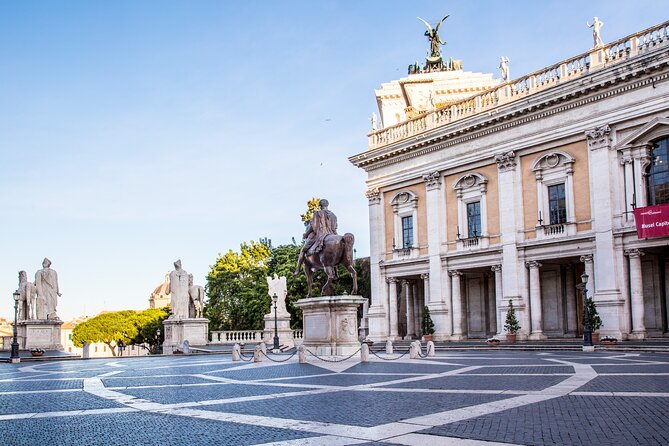
From there, you walk up the gently sloping steps toward Piazza del Campidoglio. The square here is tied to Michelangelo’s vision, and even if you don’t go deep into museum rooms, you still get the sense of order and drama that the Capitoline hill is built to deliver. It’s a good moment to slow down, look around, and notice how the city’s layout guides you—because that same urban logic matters later when you enter the Ghetto streets.
If you’re the type who loves asking why things are placed where they are, this first section is ideal. Guides on this walk have been described as engaging and able to connect details across centuries. If your guide is one of the people named Jamie (described as an archaeologist), James, or Angela, you can likely count on a steady stream of “how this connects to that” explanations.
Practical note: this part is efficient and timed, with a free admission ticket for the segment. It’s more about seeing and understanding key sightlines than about waiting in lines.
You can also read our reviews of more walking tours in Rome


Teatro di Marcello: the little Colosseum you’ll want to photograph
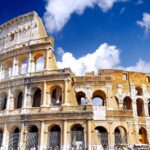
Next comes Teatro di Marcello, often nicknamed the little Colosseum. The comparison is helpful, but the point isn’t that it’s a lesser version. It’s slightly older (dating back to 12 BC), and it didn’t host the blood sports associated with the Colosseum. That distinction matters: it nudges you to see Roman entertainment as part of civic life, not just spectacle.
Architecturally, it gives you the rhythm of the big Roman amphitheater style—layered stone forms, strong curves, and a design that was meant to hold crowds and attention. If you like your Rome in layers, this stop works because it sits between eras. You’re still in “Rome’s classic world” while gearing up to enter a neighborhood shaped by restrictions and community resilience.
There’s a very human angle here too. Today, apartments are above the structure, so you’re looking at an ancient footprint that still affects how people live. That’s one reason this stop feels more real than a purely distant ruin.
This segment is short and free to view. If you tend to linger in one spot too long, keep an eye on the clock so you don’t get rushed later at the synagogue area.
Fontana delle Tartarughe and a traditional kosher gelato stop
Then you shift from Roman stonework to Renaissance artistry and street-level life. The route passes by the neighborhood’s restaurants, and you’ll get a tasting stop for traditional kosher gelato, plus the tour includes authentic Italian gelato or coffee in general. It’s a small stop on paper, but it’s a smart one because it turns history into something you can actually experience.
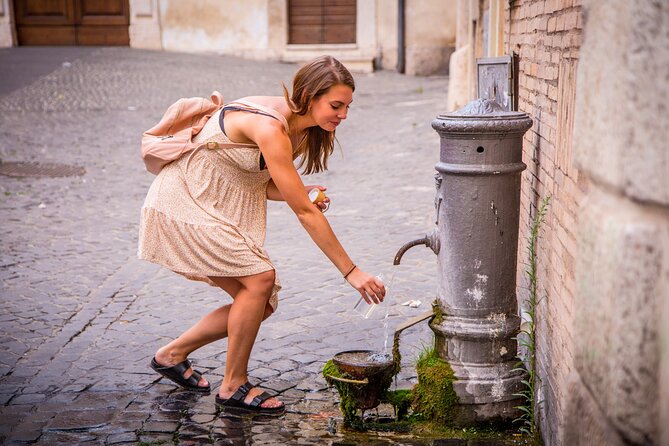
After the gelato break, you’ll see Fontana delle Tartarughe, also called the Turtle Fountain. This is described as a late Italian Renaissance masterpiece, and the tour highlights that it was famously constructed in just one day. Even if you don’t track every artistic detail, this stop is worth it for the sheer “how did they do that?” factor: you’re staring at a feat of planning, design, and production that had to be coordinated fast.
This is also a nice reset before the heavier emotional and historical content ahead. You’re still learning, but the vibe changes from “monument inspection” to “street rhythm” and then to “art you can’t ignore.”
Value check: because gelato or coffee is included, you don’t have to hunt for a place afterward just to feel like you got a worthwhile break. It’s built in.
Tempio Maggiore di Roma: the oldest ghetto and the synagogue that still matters
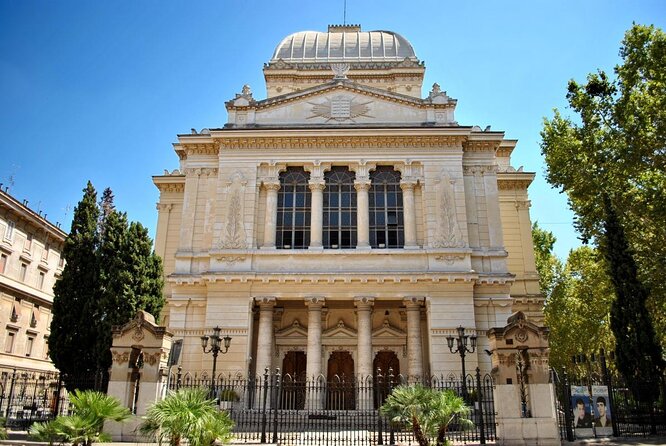
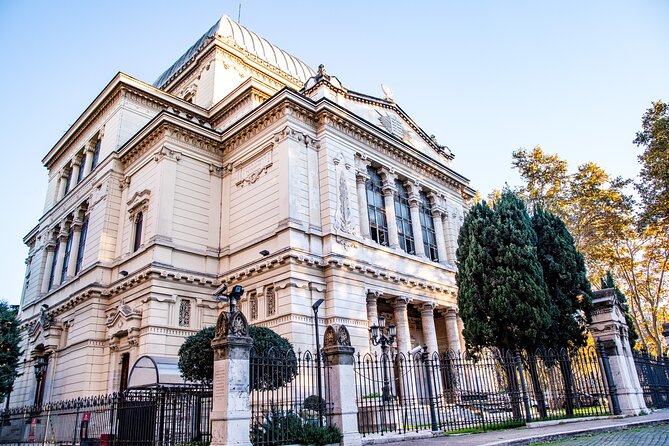
The heart of the walk is the Tempio Maggiore di Roma area, tied to the oldest Jewish Ghetto in Rome. You’ll learn that the synagogue was constructed in 1555, and the story includes a hard political reality: rights granted to Roman Jews were revoked, and restrictions followed, including being barred from trade and from owning real estate.
That context is crucial. Without it, you might see beautiful architecture and important buildings and still miss what the Ghetto life was built around: constraints imposed from outside, paired with strong community response from within. The tour framing emphasizes how the Jewish community thrived inside those walls—developing business trade, shaping unique cuisine, and sustaining a distinct dialect of Italian. You get the sense that culture wasn’t an accessory. It was survival, identity, and continuity.
This stop also points to the synagogue’s ongoing role today. The Great Synagogue is still functioning as a place of prayer and a key cultural reference point for the Jewish community of Rome. It’s also noted as the third largest synagogue in Europe.
One important consideration: admission to the Tempio Maggiore di Roma is not included. That doesn’t make the stop less valuable, but it does mean you should decide in advance whether you want to budget extra for an interior visit. If you love architecture and want the full effect, plan for that ticket.
If you want to maximize your learning here, bring questions. A good guide can connect what you see outside to what shaped daily life. Guides who are strong at broader Roman historical context tend to shine at this point of the route.
Il Portico di Ottavia: Augustus, the fish market, and crossing into Ghetto streets
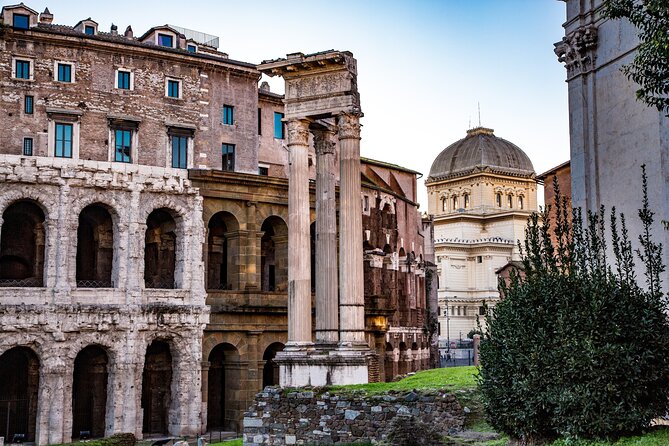
From the synagogue area, the walk moves to Il Portico di Ottavia. It’s a short transition, but it connects big power to practical daily commerce. The portico is described as an enormous structure built by Emperor Augustus in honor of his sister Octavia. Later, from the 15th to early 20th century, it served as the home to Rome’s fish market.
That time span gives you a useful mental bridge: the same location can be imperial monument, economic hub, and then a gateway into the Ghetto itself. The tour specifically notes that it’s from here that you enter the Ghetto. That’s a powerful way to structure the walk—your feet cross a threshold, and your understanding changes with it.
This is where the street-level details tend to click for people who like cultural geography. You’re not just seeing sights; you’re learning how spaces can be repurposed, restricted, and reinterpreted across time. The Ghetto wasn’t floating in isolation. It grew out of Rome’s systems—political decisions, economic needs, and urban layout.
This part is also free to view. If you’re someone who likes taking photos, try to capture the portico exterior before the route turns more inward. Once you’re in denser Ghetto streets, shots can be harder to frame, and you’ll want to keep your attention on what your guide is explaining.
You can also read our reviews of more private tours in Rome




Tiber Island finish: the hospital story and an easy plan for your next meal
The tour concludes at Tiber Island (Isola Tiberina). Ending here is a smart move because it’s visually rewarding and practical for continuing your day. The tour notes that past and present mix on the island, and it has an ancient role as a hospital—supported by the river as a natural barrier that helped limit disease spread. One of Rome’s best hospitals is still located on that site today.
So you get a rare closing lens: you’re not ending in a postcard ruin. You’re ending in a living place where “history” has a daily function. The views along the river can also help you reset emotionally after the Ghetto portion.
Convenience matters too. The island sits between the Ghetto and Trastevere, and it’s well connected, so it’s easy to get back to other parts of Rome. The walk ending on Tiber Island also gives you flexible meal options. If you want a quick lunch or a relaxed dinner afterward, you’re close to both areas.
From a pacing standpoint, the final segment is short and free. It’s the kind of finish that makes you feel like you wrapped the story rather than just ran out of time.
Price, timing, and how this private format pays off
At $84.11 per person for about 2 hours, the value is in the combination: a certified expert guide, direct conversation, and a focused route that hits several anchor points without wasting time. This is a private experience, so only your group participates. That matters when you want to ask follow-up questions instead of competing with others for the guide’s attention.
The tour is in English and uses a mobile ticket, which makes the start smoother if you’re trying to keep your day low-stress. It’s also typically booked ahead (often around 48 days), which is a polite hint that you should choose your date early if your schedule is tight.
A quick word on walking: most travelers can participate, and public transportation is nearby at the start and at the end. Still, this is Rome on foot, and the route includes uphill steps at Campidoglio. Comfortable shoes aren’t optional—they’re just smart.
What’s included is also clear and helpful:
- your exclusive expert certified tour guide
- authentic Italian gelato or coffee (with a traditional kosher gelato taste stop on the route)
What’s not included:
- transportation to and from the meeting point
- additional food or drink
So if you’re budgeting, plan for the synagogue entry if you want to go inside, plus any extra meals after the tour.
Should you book the Private Walk Through the Jewish Ghetto in Rome?
I’d book it if you want more than “a few historic stops.” This walk is structured to connect Roman monuments, Renaissance art, and real community life under restrictions, then end where you can keep exploring immediately. The gelato break is a bonus, but the main win is the framing: you learn how the Ghetto fits into Rome’s larger story over time.
Skip it (or consider adjusting expectations) if you’re hoping for long museum time or a tour that includes everything at no extra cost. Tempio Maggiore di Roma entry is not included, and the stops are designed to be efficient rather than slow and sprawling.
If you like private guiding and you want your questions answered with context, this is a strong pick for a first or second day in Rome, especially if you also plan to spend time in Trastevere afterward.