REVIEW · ROME
Rome: Colosseum, Palatine Hill and Roman Forum Guided Tour
Book on GetYourGuide →Operated by Rutas Romanas · Bookable on GetYourGuide
Three legends, one ticket, fast-moving Rome. This guided loop hits the Colosseum, Palatine Hill, and the Roman Forum in one go, with an expert guide and headsets so you don’t miss the story. You also get a practical route that helps you make sense of what you’re looking at, instead of wandering and guessing.
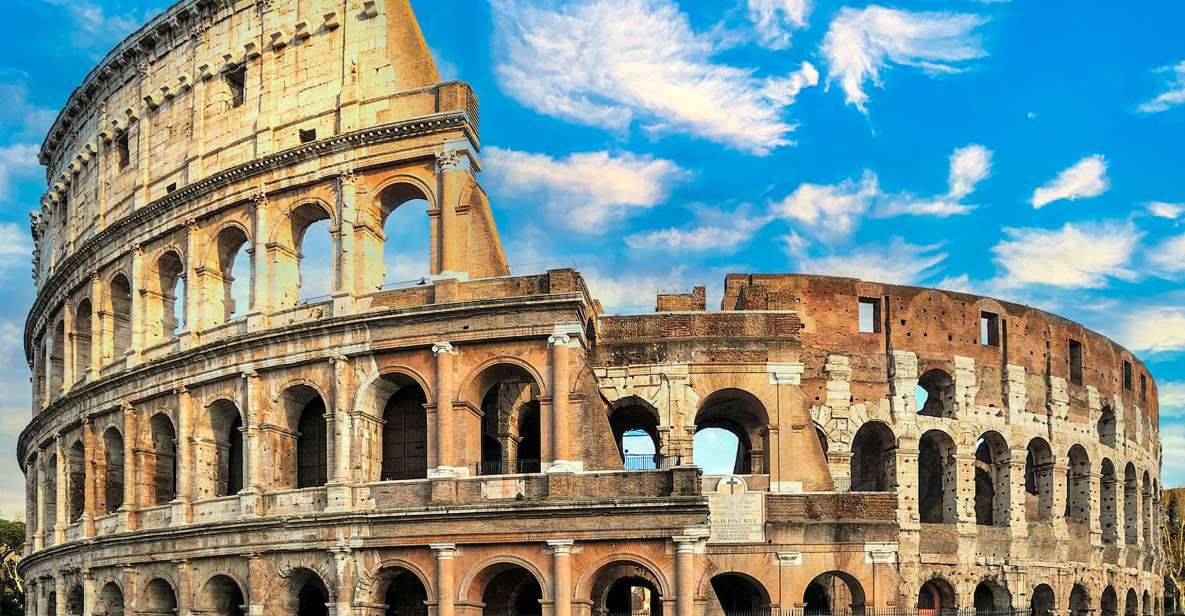
What I love most is the way the Colosseum is explained as a living machine of spectacle—then you’re guided to the panoramic terrace views of the arena and basement floor. I also like that the Roman Forum portion gets you right into the heart of ancient Rome, including the central area where political, religious, economic, and legal life clustered.
The main thing to watch is that everyone must pass a security check, and on busy days you can still face delays. Rain or shine also matters, since parts of Palatine Hill and the Roman Forum may be less accessible in bad weather.
In This Review
- Key highlights worth planning for
- The 2.5-hour hit list: why this route works
- Starting at the Colosseum: what to notice before you get inside
- The terrace view: arena and basement floor
- Inside the Colosseum: how the guide turns stone into a story
- The Arch of Constantine and Titus: quick stops, big meaning
- Palatine Hill: the oldest Rome, plus imperial residences
- A realism check
- Walking the Via Sacra: turning the Forum approach into the main event
- The Roman Forum central area: where Rome’s decisions happened
- Why standing in the center helps
- Headsets and group control: the small tech that makes it better
- Price and value: is $52 worth it for this lineup?
- Timing, weather, and the security checkpoint reality
- What to bring, and what to leave behind
- Who this tour is best for (and who should skip it)
- Should you book this Colosseum, Palatine Hill, and Roman Forum tour?
Key highlights worth planning for
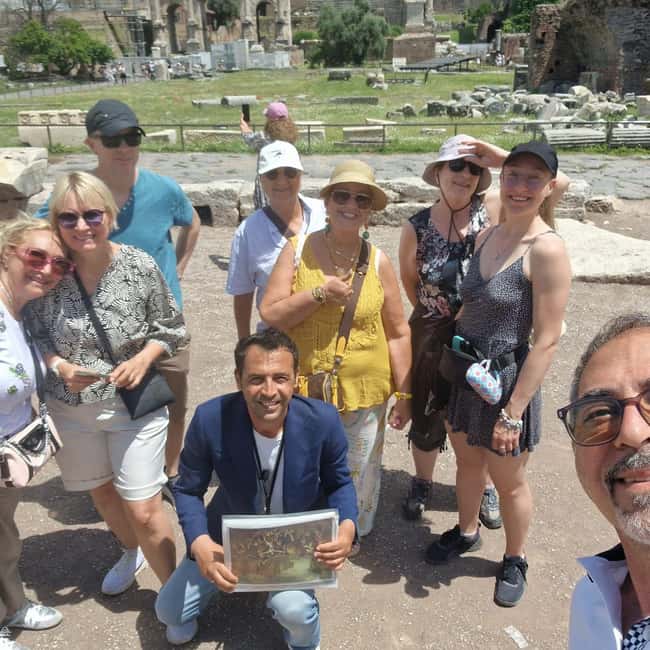
- Skip-the-line entry that saves time at major security and ticket points
- Colosseum terrace views that frame the arena and basement floor
- Palatine Hill route through the oldest settlement area and key imperial sites
- Via Sacra walk past major Forum landmarks, including temple remnants and the House of the Vestals
- Central Roman Forum focus at the Curia and other iconic monuments
The 2.5-hour hit list: why this route works
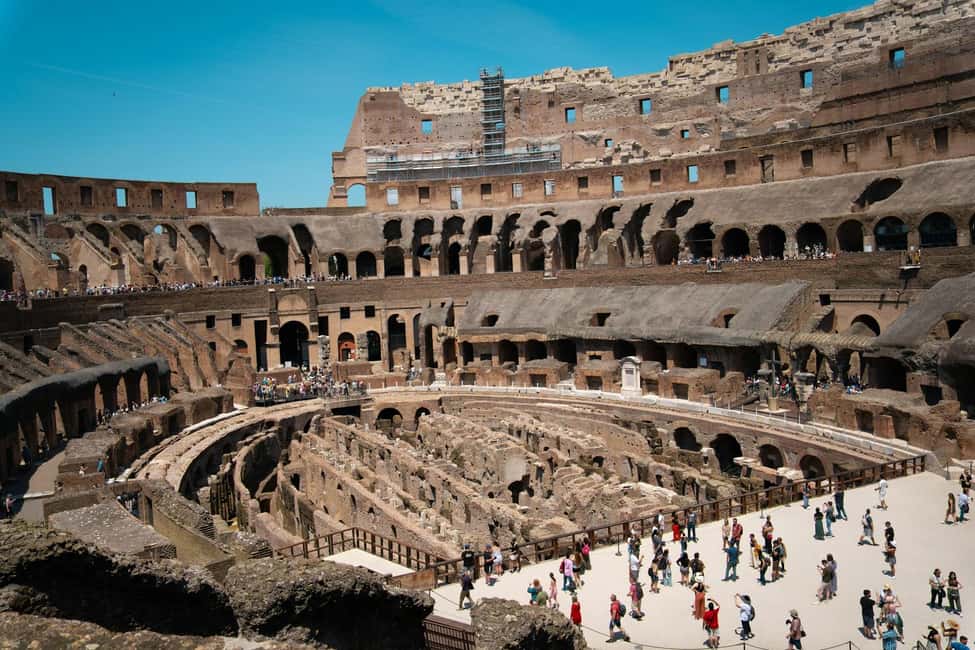
This tour is built for your first (or second) trip to Rome. In just 2.5 hours, you move through three of the biggest names in the ancient world: the Colosseum, Palatine Hill, and the Roman Forum. It’s the kind of route that helps you connect places that are usually presented as separate “must-sees.”
The biggest value is not just seeing monuments. It’s understanding how power and entertainment fed each other. The Colosseum shows what Rome staged for the masses. Palatine Hill shows where elites lived. The Roman Forum shows where Rome decided things—laws, religion, politics, and commerce all in one zone.
If you like a clear plan and minimal confusion, this format is a strong fit. You’ll spend your time looking at real structures, not trying to decode directions.
You can also read our reviews of more guided tours in Rome



Starting at the Colosseum: what to notice before you get inside
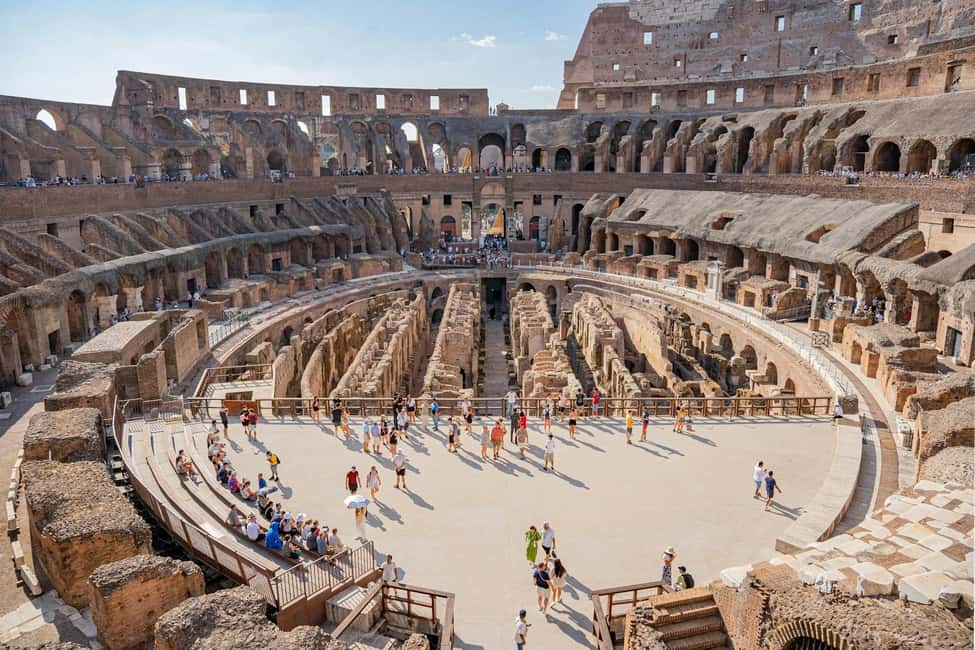
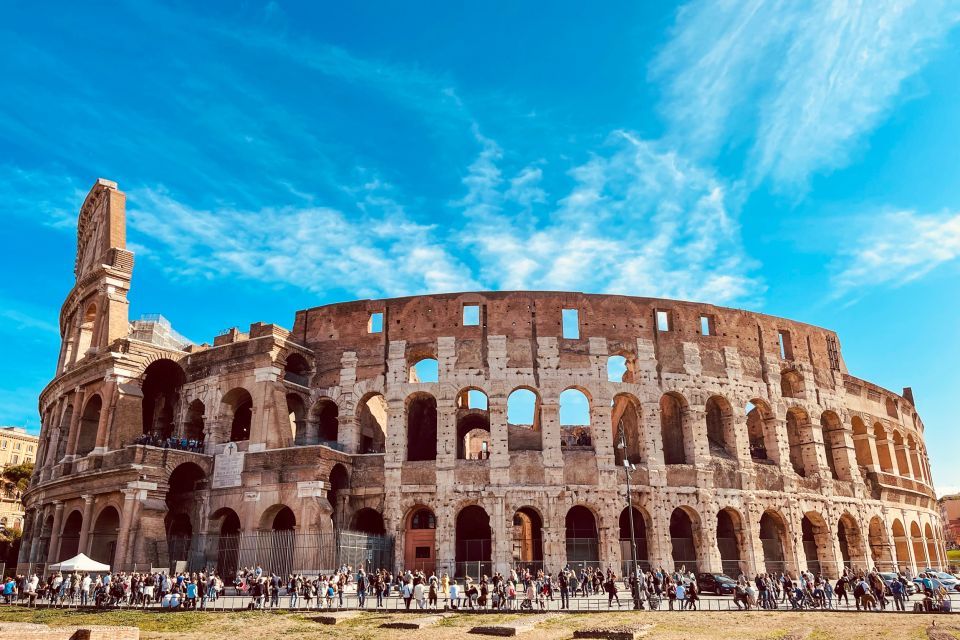
Your tour begins by admiring the outside of the Colosseum, then you learn the story of the monument as it changed across centuries. Before you cross the security threshold, your guide sets the scene: this isn’t just a big ruin, it was engineered for crowd control and massive events.
Once inside, you go through security and then enter the amphitheater. What makes this part work is the pacing. You get a guided sequence: you’re brought to the key interior areas, and you also hear what the space was designed to do. That helps you look past the obvious “wow” and notice details you might miss on your own.
The terrace view: arena and basement floor
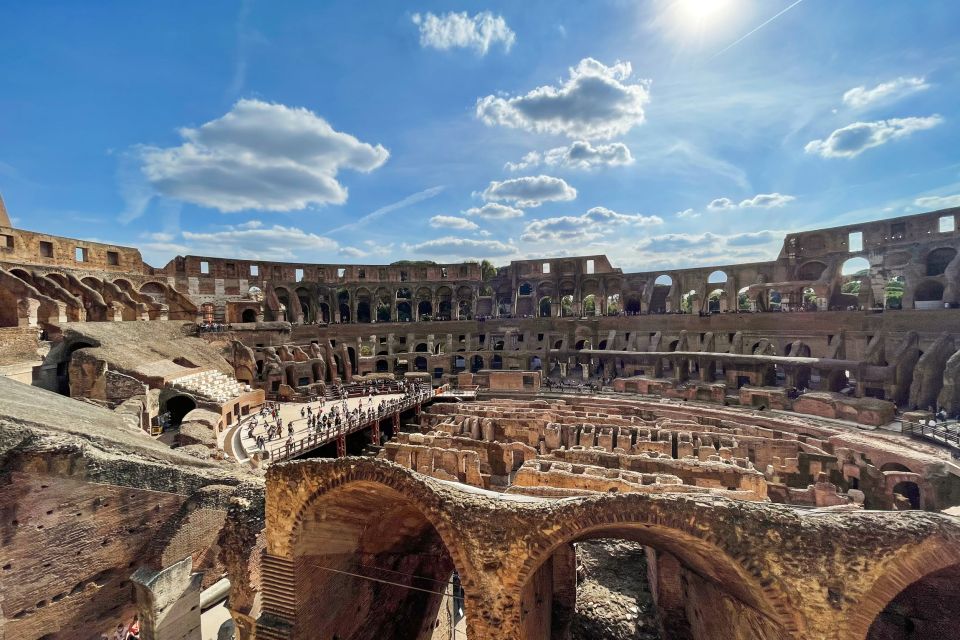
One of the highlights here is the panoramic terrace angle. From this viewpoint, you get a better grasp of how the arena fit into the overall structure, including the sense of height and depth. You’ll also see the basement floor area from above, which makes the space feel more real. Ancient Rome used underground access for a reason—this view helps you understand that logic.
If you’re the type who likes to take photos, this terrace moment is also where you’ll likely get the most useful angles. Instead of random shots, you’ll know what you’re capturing.
Inside the Colosseum: how the guide turns stone into a story
The Colosseum is huge, but it’s not confusing once you get a framework. The guide’s job is to give you that framework quickly: what you’re standing on, why it mattered, and how the building functioned as entertainment infrastructure.
You’ll move through areas on the first floor and see the interior in a guided sequence. If your specific option includes arena access or underground access, those elements can add a lot of impact. Options are clearly tied to the tour title, so check what you booked if those parts matter to you.
Here’s the practical upside: even if you’ve read about gladiators or Roman spectacles, you still need help picturing the crowd flow and the staging. This tour’s structure is designed to do that without making the whole experience feel like a lecture.
The Arch of Constantine and Titus: quick stops, big meaning
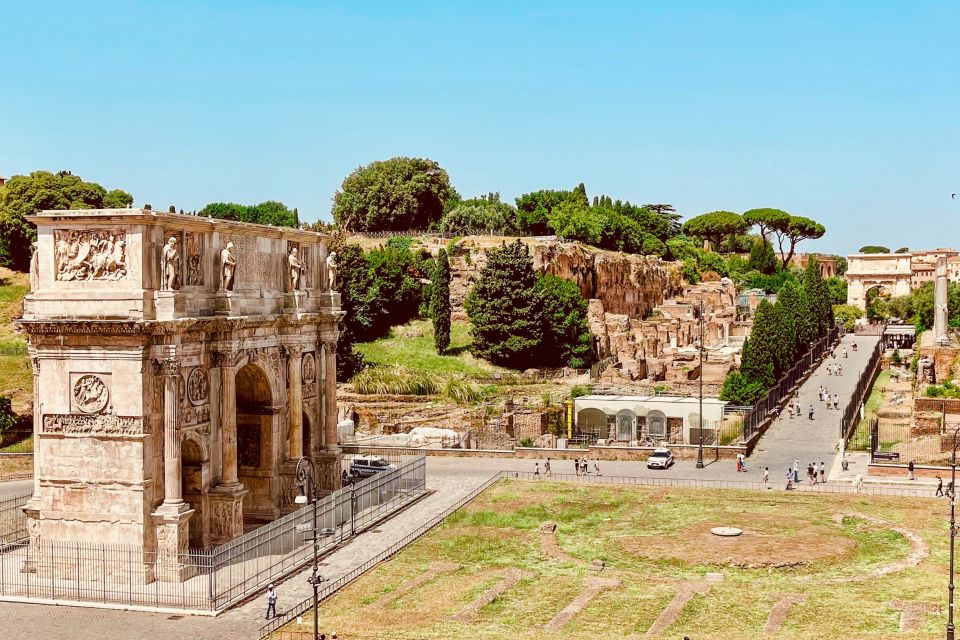
Between the Colosseum and the walk toward Palatine Hill and the Roman Forum, you’ll pause for two major arches: the Arch of Constantine and the Arch of Titus.
These stops are short, but they’re useful. Arches aren’t just decorative. They’re political statements in stone—built to brand victories, leaders, and legitimacy. Having a guide point out the most significant features helps you read the arches as messages, not just background in photos.
This is also a good example of why headsets matter. You can stand still, look around, and still hear the explanation cleanly.





Palatine Hill: the oldest Rome, plus imperial residences
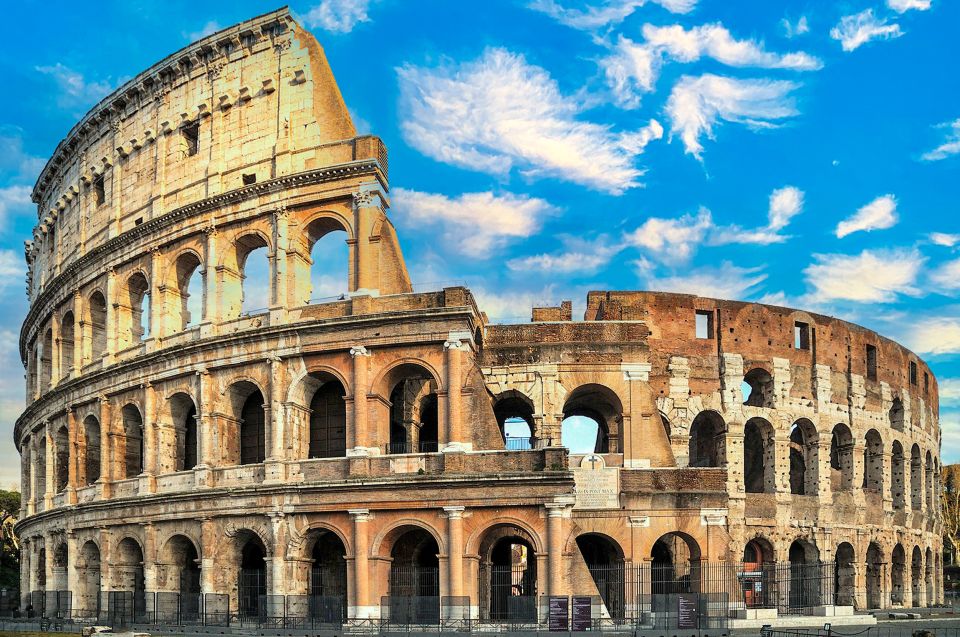
Then you shift to Palatine Hill, the oldest part of the city. The mood changes right away. The Colosseum feels loud even in ruins. Palatine Hill feels like power and privacy—even when you’re surrounded by visitors.
Your route covers the remains of the oldest settlement area, then moves into major imperial contexts. You’ll visit key sites such as:
- Palatine Stadium
- Domus Augustana
- Domus Flavia
What makes Palatine Hill special isn’t only the big names. It’s the sense of continuity. You’re walking through a place that shifts from early settlement to grand residences over time. With a guide, those transitions make sense instead of feeling like separate attractions.
A realism check
Palatine Hill is outdoors and uneven in places. If you’re sensitive to steep walking or uneven steps, keep that in mind when you decide. The tour also runs rain or shine, and some areas of Palatine Hill may be hard to access during bad weather.
Walking the Via Sacra: turning the Forum approach into the main event
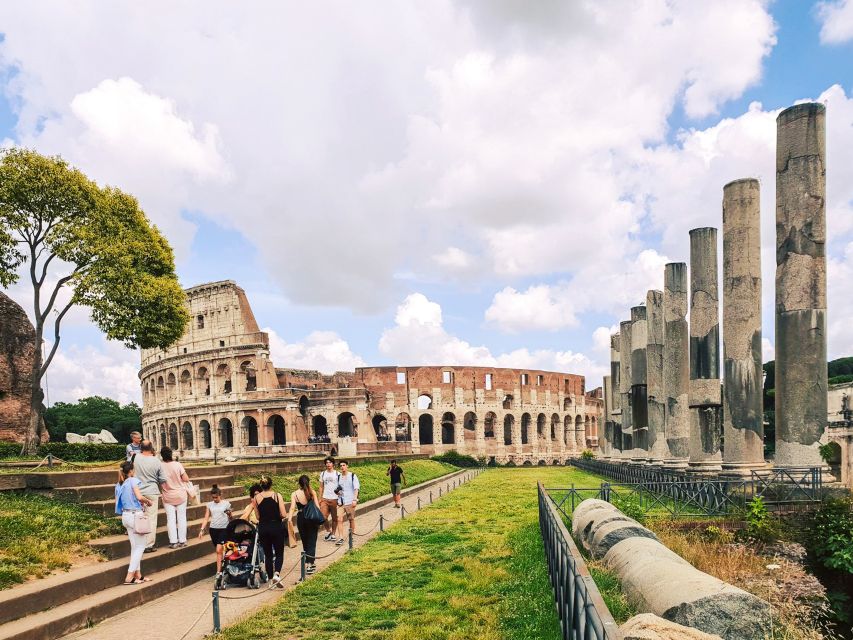
After Palatine Hill, you walk down into the valley that hosts the Roman Forum. Along the way, you’ll follow the Via Sacra, the famous street associated with processions and ceremonial life.
This part is more than a transfer between sites. It’s staged like a tour of themes: religion, government, culture, and daily ritual all layered together. You’ll see the Basilica of Maxentius, the bronze door of the Temple of Romulus, and other notable remnants such as the suspended-door curiosity at the Temple of Antoninus and Faustina, plus the Temple area and the House of the Vestals.
Those details can feel abstract if you’re on your own. A guide helps you attach names to functions and explains why certain architectural choices exist. That turns your walk into a story you can actually follow.
The Roman Forum central area: where Rome’s decisions happened
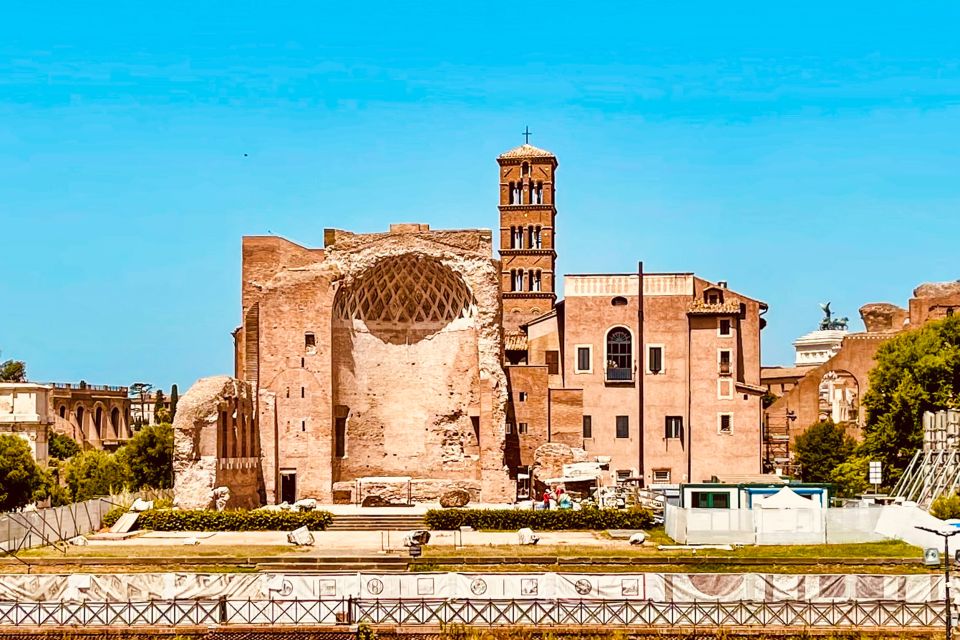
Finally, you arrive in the central area of the Roman Forum. This zone is often described as the beating heart of ancient Rome, and the reason is practical: over centuries, it became the hub for political decisions, religious life, economic activity, legal affairs, and public space.
Here, you’ll stand in the core area and learn about major monuments such as:
- Curia
- Arch of Septimius Severus
- Tabularium
- Temple of Saturn
- plus additional highlights in the central zone
The guide’s explanation matters here because the Forum can look like scattered ruins from a distance. Up close, you start to see how space was organized for crowds, ceremonies, and governance.
Why standing in the center helps
On your own, you might roam and take photos without understanding what you’re “standing in.” In the central area, you’re positioned to understand the geometry of power—where discussions happened, where symbolism was displayed, and how the city’s public life moved through the space.
Headsets and group control: the small tech that makes it better
One of the underrated things in this tour is the headsets. In a place like the Colosseum and Forum, sound can get swallowed by crowds and wind. Headsets help you hear your guide clearly without constantly turning your head or losing the thread.
You also get a pace that’s designed to keep the tour moving without feeling like you’re sprinting. That’s important because the itinerary includes multiple major areas in a short time window.
And group size matters. This tour offers a private group option, which can be a big deal if you want more flexibility and fewer bottlenecks at security and inside sites.
Price and value: is $52 worth it for this lineup?
At $52 per person for a 2.5-hour guided visit, you’re paying for three things that are hard to replicate on your own:
1) Guided interpretation across three separate zones
2) Entry tickets to the Colosseum, Roman Forum, and Palatine Hill
3) Time savings via skip-the-ticket line and a managed flow through security
If you’re trying to do Colosseum + Forum + Palatine as a DIY day, the cost often creeps up once you add timed entries, transportation between sites, and the time it takes to piece together what to look at. This tour bundles the essentials and keeps the focus on the places that matter most.
Is it the cheapest option? Probably not. But if you want Rome’s top ancient stops with clear context in one half-day block, it can be strong value.
Timing, weather, and the security checkpoint reality
Here’s the honest practical part: security check lines are unavoidable. The tour operator can’t control the queue, and on busy days you may experience a delay in the actual start time.
Rain or shine is another factor. The tour runs in all weather, but some areas of the Roman Forum and Palatine Hill might not be accessible during bad weather conditions. If you’re traveling in a wet season, wear shoes you trust and plan for some uneven surfaces.
A final note on routes: the itinerary can vary. Sometimes the tour starts at the Colosseum and ends at Palatine Hill and the Forum. Other times it begins in the Forum area and ends inside the Colosseum. Either way, you’ll hit the same main set of landmarks.
What to bring, and what to leave behind
You’ll want to travel light and prepared. Bring your passport or ID card—the name on the ticket has to match the ID. Wear comfortable clothes, because you’re outdoors through multiple major sites.
The tour has a clear list of things not allowed, including:
- pets
- weapons or sharp objects
- luggage or large bags
- drones
- intoxication or alcohol and drugs
- sprays/aerosols and glass objects
If you’re coming straight from the hotel, keep your bag small. If you’re tempted to bring a tripod or bulky camera setup, you’ll likely run into restrictions at security.
Who this tour is best for (and who should skip it)
This is a great choice if you:
- want the top ancient sites in one guided block
- prefer not to spend time figuring out what you’re seeing
- like a narrative approach that makes ruins feel like places with purpose
It’s less ideal if you need step-free access. The tour isn’t suitable for people with mobility impairments or wheelchair users, and it’s also not suitable for people with altitude sickness.
If you’re traveling with kids, it can still work well because the guide style and pacing are designed to keep people engaged, but you’ll want to manage energy levels for the walking.
Should you book this Colosseum, Palatine Hill, and Roman Forum tour?
Yes, I’d book it if you want a fast, high-impact ancient Rome overview with real structure. This tour is built around the right “three stops” that connect spectacle, elite life, and civic power—so you come away with more than photos.
Skip it only if you’re set on exploring slowly without a guide, or if mobility or weather conditions are a big concern for you. In those cases, a more flexible plan might fit better.
If you do book, pick the option that matches your priorities: arena access and underground access are only included if selected in the tour title. And pack for crowds and security lines—you’ll enjoy the experience more when your expectations are realistic.