REVIEW · ROME
Rome Jubilee Walking Tour of Churches, Bridges & Legends
Book on Viator →Bookable on Viator
This walk turns Vatican ideas into real streets. You get the Jubilee pilgrimage route context while hopping between major churches, bridges, and squares, plus you’ll get practical navigation tips for Rome’s holy sights as you go. If you like stories tied to art and devotion, this tour’s setup works well because each stop links to the next chapter of the pilgrimage journey.
Two things I especially like: the focus on how the area connects—from Hadrian’s era to St. Peter’s—so Vatican City feels less random. And the guides (you might even see names like Alina, Kasia, Domenica, or Dominica mentioned) bring the churches to life with legends and explanations that make the architecture easier to read. One drawback to consider: you’ll view some of the biggest names, like the Pantheon and St. Peter’s Basilica, from outside only, so this isn’t the best choice if you want a long interior visit with ticket access.
In This Review
- Key highlights you’ll actually feel on the walk
- Piazza di Pietra to the Temple of Hadrian: the walk starts with context
- Sant’Ignazio di Loyola: when Baroque art turns into a story
- Saint Mary of Minerva and the Pantheon from outside: two masterpieces, one mindset
- Piazza Navona and Sant’Agnese in Agone: where ancient becomes Baroque
- Via dei Coronari: pilgrims’ street, mixed morals and big imagination
- Ponte Sant’Angelo: angels, the Tiber, and the pilgrim shortcut
- Castel Sant’Angelo and Piazza Pia: the finish line that feels like a climax
- The 2-hour pace: small group, short stops, clear payoff
- Price and value: $120.14 for context, not admissions
- Practical tips for a smooth Jubilee-style evening near Vatican City
- Who should book this walking tour (and who should skip it)
- Should you book this Jubilee churches-and-bridges walk?
- FAQ
- What is the duration of the Rome Jubilee Walking Tour?
- What time does the tour start?
- Where does the tour meet?
- Where does the tour end?
- Is the tour in English?
- Is admission included for places like the Pantheon and St. Peter’s Basilica?
- How many people are in the group?
- What kind of ticket do I receive?
- Is the tour suitable for most travelers?
- What should I wear if I plan to visit St. Peter’s Basilica or the Sistine Chapel?
Key highlights you’ll actually feel on the walk
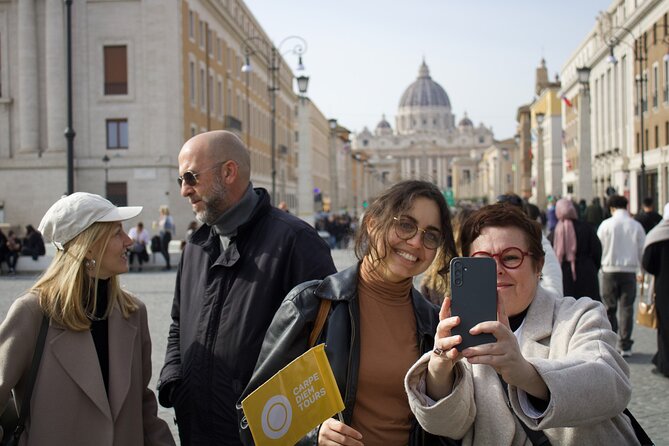
- A pilgrimage-shaped route that connects ancient Rome to the final approach toward St. Peter’s
- Baroque church details explained in plain language, including ceiling and artwork meanings
- Outside-view planning power for the Pantheon and St. Peter’s Square, without ticket stress
- Tiber and angel statue views from Ponte Sant’Angelo, a key pilgrim corridor
- An ending with momentum at Piazza Pia and a panoramic stop near Castel Sant’Angelo
Piazza di Pietra to the Temple of Hadrian: the walk starts with context
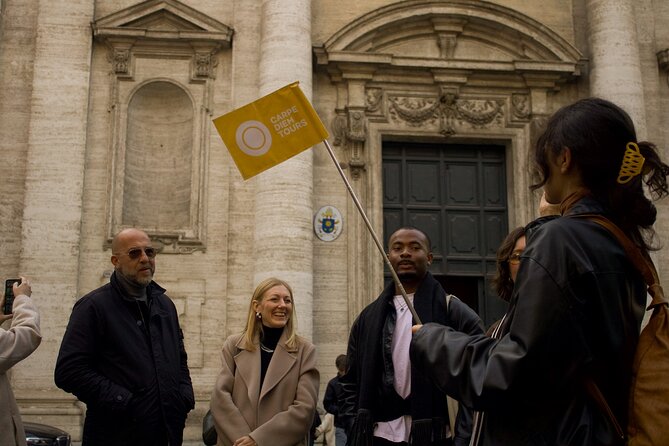
Your evening begins around Piazza di Pietra, at 5:00 pm. From here, you’re not just looking at pretty buildings—you’re getting oriented in the Rome that came before Vatican-era power. The Temple of Hadrian is the early signal: ancient Rome made monuments that still look calm and confident, even after centuries of change.
This first moment matters more than it sounds. If you’ve ever visited Rome and felt like the holy sites were scattered, this route gives them a spine. You’re basically learning how pilgrims and locals would have mentally filed these places into one continuous journey, not a series of unrelated postcards.
Tip that helps right away: arrive with comfortable shoes and a little patience. This is a walking tour with multiple short stops, so your best move is to keep your phone ready for quick photos and your attention ready for quick explanations.
You can also read our reviews of more walking tours in Rome
Sant’Ignazio di Loyola: when Baroque art turns into a story
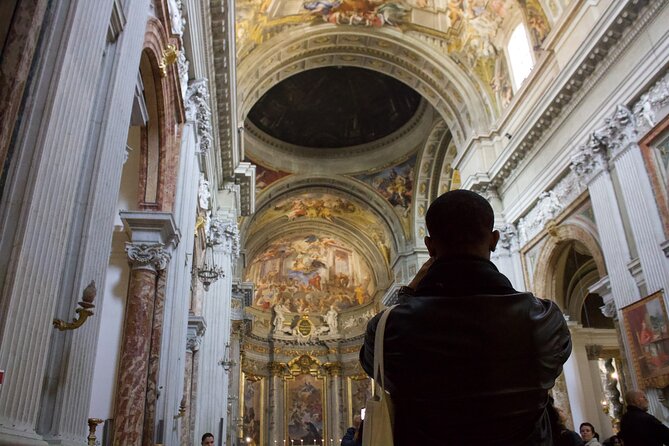
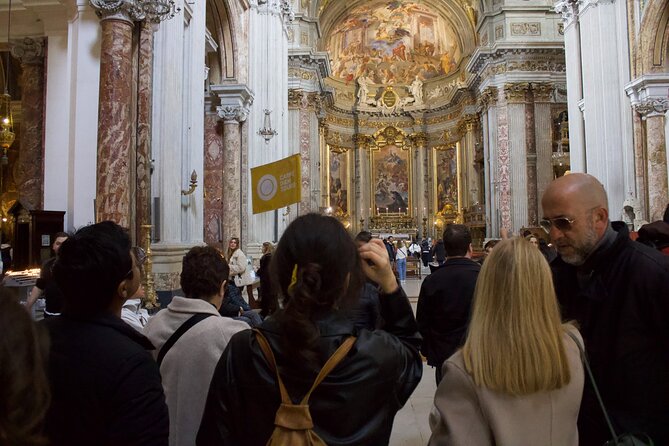
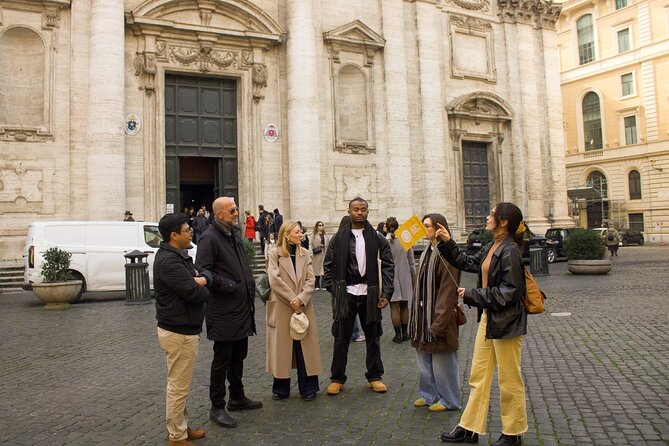
Next up is the Chiesa di Sant’Ignazio di Loyola, a Baroque standout known for its dramatic ceiling and ornate interior. The big value here is learning what to look for before you start guessing. Baroque churches can feel like visual noise if you don’t know what the design is trying to do. On this stop, the guide helps you connect those details to the religious art of the 17th century.
You’ll also get the sense that church design isn’t only about worship—it’s also about persuasion, emotion, and teaching. In other words, it’s not “decor.” It’s communication.
Why this stop fits the Jubilee theme: this is the kind of church that makes pilgrims slow down. Not because it’s far off the road, but because it rewards attention—especially when someone explains what the ceiling and ornamentation are doing.
Saint Mary of Minerva and the Pantheon from outside: two masterpieces, one mindset
The Basilica of Saint Mary of Minerva is a quieter interlude. You’re in a peaceful square setting, and that change of pace is welcome. Inside, you can find major works, including Christ the Redeemer by Michaelangelo, plus the tomb of Saint Catherine of Siena. Even if you’re not going in on this tour, the guide’s framing helps you spot what makes Minerva special and understand why art and faith share space here.
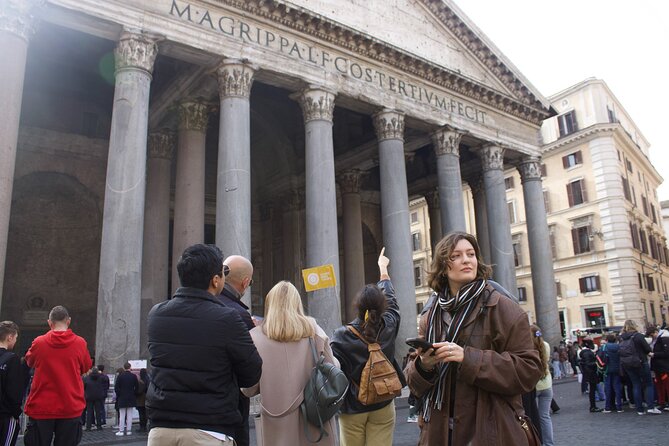
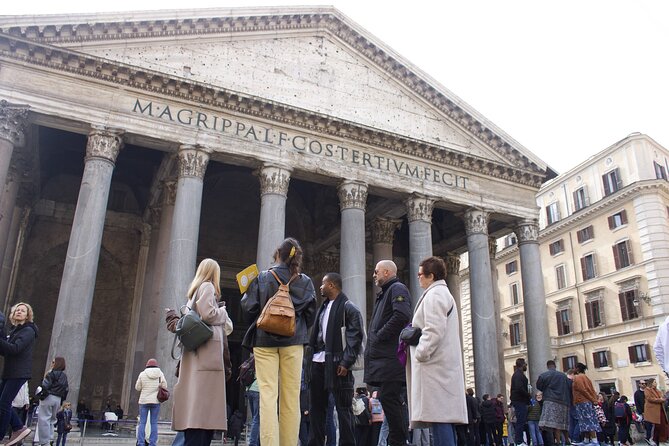
Then you’ll pause for a major exterior view of the Pantheon. The tour doesn’t include entry, but the outside view is still worth it because you’ll understand the building’s purpose and scale without spending time in lines. The Pantheon’s dome and portico are famous for a reason, but the guide helps you read it as a feat of Roman engineering and design discipline, not just a “big old building.”
A consideration: if you love interiors and want to spend time inside, you’ll need a separate plan for Pantheon entry. This tour is built for understanding the route and making your bigger museum day decisions with confidence.
Piazza Navona and Sant’Agnese in Agone: where ancient becomes Baroque
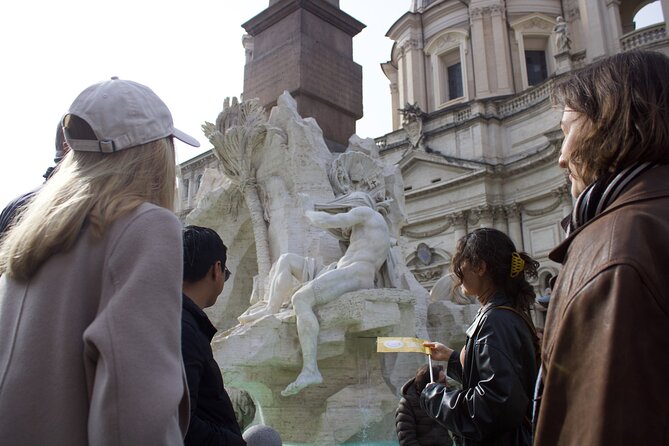
Piazza Navona is one of Rome’s signature squares, and it’s also the kind of place where it’s easy to forget you’re still in “pilgrimage mode.” That’s why the guide’s job matters. You’ll learn that this elegant square was once an ancient Roman stadium, so the space itself carries layers.
You’ll also see the Church of Sant’Agnese in Agone, designed by Borromini and Bernini. This stop is a useful reminder that Rome’s art history isn’t a straight line. It’s a conversation between architects, patrons, and religious goals—played out in stone, statues, and façades you can study while you walk.
Practical feel: because you’re outdoors in a popular square, you’ll want to keep your pace moving. It’s tempting to linger, but your next stops are the ones that really connect to the pilgrimage story.
Via dei Coronari: pilgrims’ street, mixed morals and big imagination
Via dei Coronari is a narrow cobblestone street with views of Renaissance-era buildings. It’s a great “walking interlude” where the details matter because the street itself is the lesson. You’ll learn about pilgrims gathering here to head toward Saint Peter’s Basilica—and you’ll also hear the less-than-holy establishments that once lined these streets.
That contrast is actually one of the most human parts of the whole route. Pilgrimage doesn’t happen in a clean bubble. People needed food, lodging, services, and distractions. The street becomes a snapshot of real life around sacred intentions.
If you’re a first-timer, this is the stop that helps you stop seeing Rome as only grand monuments. You start seeing it as lived-in history, complete with trade, temptation, and movement.






Ponte Sant’Angelo: angels, the Tiber, and the pilgrim shortcut
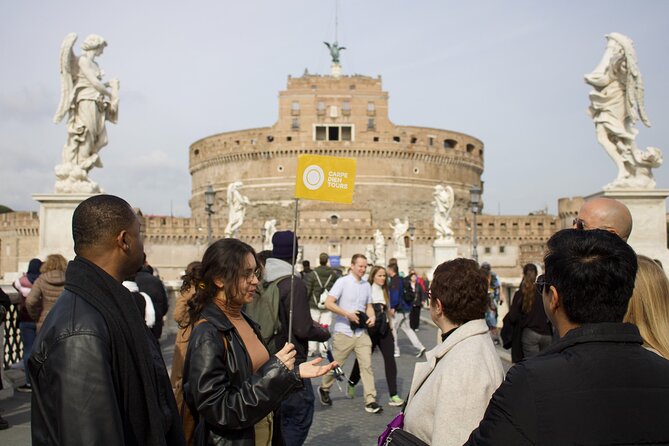
Cross Ponte Sant’Angelo (St. Angelo Bridge) and you get one of Rome’s best visual payoffs: statues of angels and long views toward the Tiber River and Castel Sant’Angelo. But the bridge isn’t just pretty. It was once the entrance route for Emperor Hadrian’s mausoleum, and later it became a main path for pilgrims heading toward St. Peter’s Basilica.
That connection is the point of this tour. The guide turns a single crossing into a timeline: empire to devotion, then back again to power and symbolism.
How to enjoy this crossing: pause for photos, but don’t block the walkway for everyone behind you. The bridge can get crowded, and your best photos come with quick timing rather than standing still too long.
Castel Sant’Angelo and Piazza Pia: the finish line that feels like a climax
The walk ends near Castel Sant’Angelo and Piazza Pia. Before you reach the big “arrive and exhale” feeling of the end, you’ll take in the imposing Castel Sant’Angelo complex. It began as a fortress and later served as a papal residence, even a prison, before becoming a museum. The cylindrical structure and Roman-era presence make it look like it was built for drama—and it basically was.
Then there’s Piazza Pia, a key meeting point for visitors heading toward Saint Peter’s Basilica. This is a smart stop because it turns navigation into meaning. You’re not just walking toward a famous landmark—you’re reaching a symbolic place where pilgrims would have felt the journey tightening into its final moments.
One more important note: you’ll stand at Saint Peter’s Square and see Bernini’s grand colonnades leading up to the façade of St. Peter’s Basilica. Since entry isn’t included, you’ll view it from outside and you can decide after the tour if you want to go in on your own.
The 2-hour pace: small group, short stops, clear payoff
This tour runs about 2 hours and keeps things tight with multiple short stops (around 15 minutes each). That format works best if you’re the kind of traveler who likes structure. You’ll move, you’ll learn, and you’ll avoid the all-day fatigue that hits hard in Rome.
The group is capped at 15 travelers, which is big enough to feel social and small enough for the guide to keep attention. That size also helps with timing at each stop, since you’re mostly sightseeing outdoors and in church exteriors or short interior glimpses where permitted.
Also: this is an evening start at 5:00 pm. One practical upside is that it can feel calmer than midday sightseeing, especially in summer. You’re still walking, but you’re walking at a friendlier hour.
Price and value: $120.14 for context, not admissions
At $120.14 per person, the value isn’t about skipping museum ticket lines. Entry to sites like the Pantheon and St. Peter’s Basilica isn’t included. Instead, you’re paying for a guide-led route that connects the dots so your photos, your architecture spotting, and your later independent visits make more sense.
What you do get included:
- a guided walking tour with a local guide
- city highlights and smaller details along the way
- mobile ticket
- English language tour
- small-group experience, with group discounts
If you want a “stand outside, get the story, and move on” style of Rome visit, this price can be reasonable. If you need lengthy interior time at multiple major sites, you’ll likely want to pair this with separate tickets for the places that interest you most.
Practical tips for a smooth Jubilee-style evening near Vatican City
This route is near public transportation, which helps because you can plan your day without forcing a complicated logistics puzzle. Still, you’ll want to think about comfort.
- Wear shoes that work on cobblestones. Rome loves uneven ground.
- Bring a light layer. Evenings can shift, and you’ll be near big open squares.
- If you plan to visit Saint Peter’s Basilica or the Sistine Chapel before or after the tour, dress modestly with knees and shoulders covered.
If you’re aiming for photos, your best strategy is to let the guide set context first, then take pictures right after. It keeps you from snapping randomly and missing the “why this matters” part of the scene.
Who should book this walking tour (and who should skip it)
You’ll love this tour if:
- you’re in Rome for a first trip and want orientation fast
- you like church art, symbolism, and legends tied to real places
- you want Vatican-area history without spending your whole day in lines
- you’re traveling on a budget but still want a structured, guided experience
You might skip it if:
- you mainly want interior access and long museum-level time at major sites
- you’re looking for a fully ticketed religious sightseeing day
- you prefer to wander without stops or explanations
The sweet spot is someone who wants an informed walk and then the freedom to choose what to do next.
Should you book this Jubilee churches-and-bridges walk?
I think this is a smart booking for your first evening near the Vatican area, especially if you want the holy sights to connect into one story. The route makes sense on foot, the pacing keeps you energized, and the guide style—often praised for being entertaining and story-driven—turns familiar landmarks into something you can actually understand.
If you’re the type who likes seeing a lot without feeling lost, this is a strong fit. Just go in knowing you’re viewing the Pantheon and St. Peter’s Basilica from outside on this tour, so plan any inside time separately.
FAQ
What is the duration of the Rome Jubilee Walking Tour?
It runs for about 2 hours.
What time does the tour start?
The start time is 5:00 pm.
Where does the tour meet?
The meeting point is P.za di Pietra, 45, 00186 Roma RM, Italy.
Where does the tour end?
The tour ends at Piazza Pia (next to Castel Sant’Angelo), Piazza Pia, 00193 Roma RM, Italy.
Is the tour in English?
Yes, the tour is offered in English.
Is admission included for places like the Pantheon and St. Peter’s Basilica?
No. Entry to those sites is not included, and you’ll view them from outside.
How many people are in the group?
The tour has a maximum of 15 travelers.
What kind of ticket do I receive?
You’ll get a mobile ticket.
Is the tour suitable for most travelers?
The tour states that most travelers can participate.
What should I wear if I plan to visit St. Peter’s Basilica or the Sistine Chapel?
Dress modestly with knees and shoulders covered.