REVIEW · ROME
Best of Rome Walking Tour including Trevi Fountain
Book on Viator →Operated by Airotour Ltd - Freetourrome · Bookable on Viator
Rome highlights without the guesswork. This walking tour gives you a tight loop through central sights, including the Trevi Fountain and big-name squares like Piazza Navona, plus stops inside working Rome like Chiesa di Sant’Ignazio di Loyola. It’s a great way to get oriented fast on your first day, and it’s led in English by real guides who help you connect what you’re seeing to what came before.
I especially like that you’re guided through both the “Instagram classics” (hello, Trevi) and the quieter, more character-filled stops (like Sant’Ignazio). You also get a sensible pacing for a 1.5–2 hour walk: enough time for key photos at Trevi, and time to ask questions when the group stays small (the tour tops out at 20).
One drawback to note: the Pantheon interior is not included right now. Entry is only possible if you make an individual reservation under your own name, and the tour won’t enter the building—so plan for a separate ticket if the inside is a must for you.
In This Review
- Key points to know before you go
- Meeting at Piazza Barberini and walking into the city center
- Trevi Fountain: where the crowd is the star
- Piazza Navona: the square that feels like a stage
- Chiesa di Sant’Ignazio di Loyola: a church stop with real payoff
- Temple of Hadrian: where architecture becomes a clue
- Pantheon rule changes: what you’ll learn from outside
- How the pay-what-you-wish price feels in real life
- What guides add: different styles, same big landmarks
- Who this walk is best for
- Practical tips that save your day
- FAQ
- FAQ
- Where does the tour start?
- Where does the tour end?
- How long is the walking tour?
- Is the tour in English?
- Is the Pantheon interior included?
- Do I need to reserve the Pantheon ticket myself?
- Can I still visit the Pantheon after the tour?
- What’s the dress code?
- What do I pay besides the booking fee?
- Does the tour run in bad weather?
- Should you book this Rome walking tour with Trevi and Pantheon exterior?
Key points to know before you go
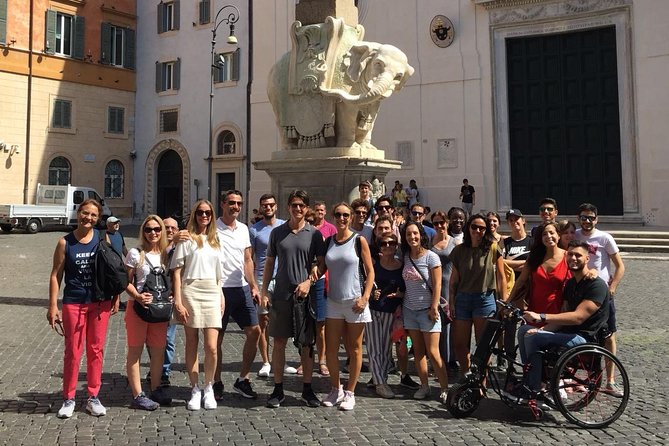
- Trevi Fountain with photo time: You’ll be there long enough to enjoy the moment, throw in coins, and take pictures even when it’s crowded.
- Piazza Navona + Bernini sculptures area: This isn’t just pass-by sightseeing. You’ll get context as you move through one of Rome’s most theatrical squares.
- Sant’Ignazio di Loyola stop: A free-admission church moment that adds variety beyond the usual outdoor ruins-and-fountains route.
- Temple of Hadrian quick hit: A short stop that helps you read Roman architecture instead of just staring at it.
- Pantheon exterior only: You’ll learn from the outside, then decide later whether to reserve for the interior on your own.
Meeting at Piazza Barberini and walking into the city center
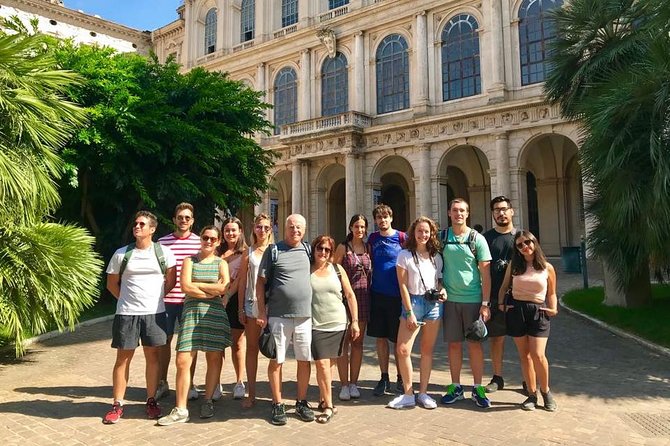
This tour starts at Piazza Barberini and ends at Piazza Navona. That end point matters. You’re not just returning to the same chaos you left—you’ll finish in an area where it’s easy to keep exploring on your own, grab a gelato, or plan your next stop.
The duration is about 1 hour 30 minutes to 2 hours, which is ideal when you want a “greatest hits” afternoon without burning half your day. With a maximum of 20 people, you’re less likely to feel like a numbered passenger in a crowd stampede (though, yes, Trevi and central squares still get packed).
If you’re doing Rome efficiently—say, an early Colosseum visit followed by this walk later—the timing works well. The tour gives you a backbone for the rest of the city: you start matching monuments to names and eras instead of sightseeing as a blur.
You can also read our reviews of more walking tours in Rome



Trevi Fountain: where the crowd is the star
The route includes the biggest fountain of Rome, the Trevi Fountain—and you should assume it’s busy. This stop is set up with enough time for what most people really came for: photos, coins, and a close look at how the fountain’s story connects to Roman myth and power.
A useful practical tip: expect that the “best viewpoint” is not always the easiest one to reach. Guides typically help you position the group so you can see and shoot without losing each other. Some guides also give safety reminders; for example, one guide (Camilla) specifically warned the group about pickpockets.
If you’re traveling with kids or you just don’t want an endurance test, you’re in good shape. The walk is described as not strenuous by multiple guests, and the stop structure supports that. You’ll be moving, but you’re not grinding uphill for hours.
Piazza Navona: the square that feels like a stage
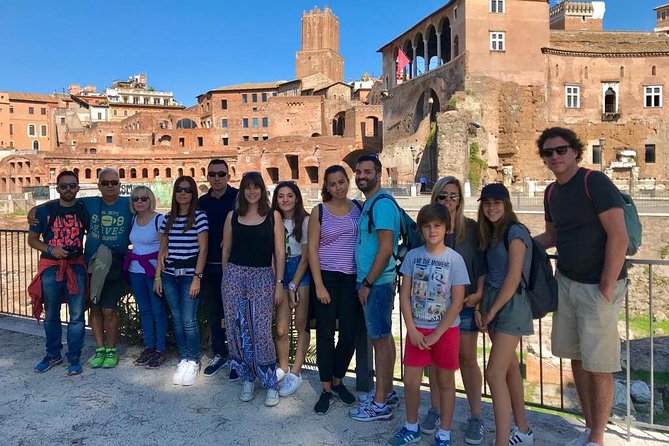
You’ll also make a stop at Piazza Navona, often described as one of Rome’s most dramatic squares. This is where the city starts to feel less like “ancient ruins” and more like everyday Rome with a theatrical edge.
You’ll have a guide explaining what you’re seeing while you walk through the square’s layout. One standout detail from a guide experience: the Bernini fountain sculptures come up during the tour, and that context makes a difference. Instead of looking at sculpture like decoration, you start noticing the design choices—how Roman artists pulled your eye across the space.
One trade-off is the obvious one: public squares attract people. Even when the group keeps moving, the crowd pressure around the center can make it harder to stop for lingering looks. This tour is built for momentum. If you want to sit for 45 minutes and study every angle, you’ll need to come back later under your own schedule.
Chiesa di Sant’Ignazio di Loyola: a church stop with real payoff
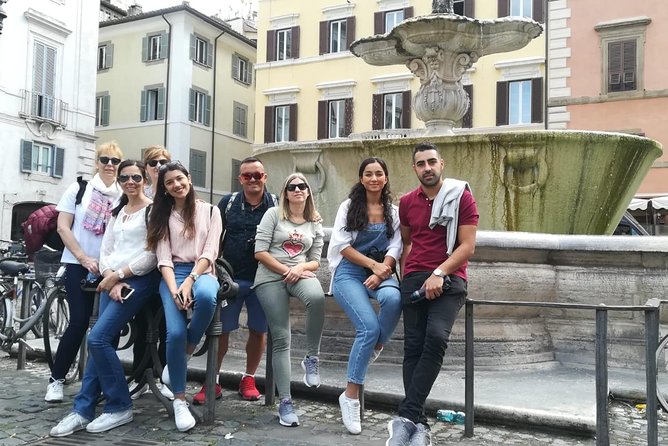
Not every Rome highlights walk includes a church you can actually step into. This one includes Chiesa di Sant’Ignazio di Loyola, with free admission reported for the stop.
Why this matters for you: it gives your itinerary a break from fountains and open squares. Churches also come with their own “Rome skill check,” like dress code. You’ll need shoulders and knees covered—no shorts or sleeveless tops—so plan your outfit accordingly. It’s one of those small things that can save you from that awkward moment of being turned away.
Also, churches often reward people who pay attention to details. The guide helps you look beyond the obvious and understand what the space is doing—how light, layout, and ornament connect to the era. If you like Rome as a living city, this stop is a nice reminder that worship and heritage still overlap here.
Temple of Hadrian: where architecture becomes a clue
Another stop on the walk is the Temple of Hadrian. This is a solid “in-between” moment: not as headline-famous as the Pantheon, but important enough that it helps you see Rome as a city of reused ideas and evolving tastes.
What you’ll get from having a guide here: a way to interpret what you’re looking at. You’re not just passing a structure; you’re learning why it’s shaped the way it is and how it fits into the broader Roman story.
The practical upside is that it fits into the tour’s rhythm. You don’t lose time hunting it down. It’s simply part of the guided route through central Rome, helping the big landmarks feel less random.






Pantheon rule changes: what you’ll learn from outside
Here’s the big heads-up. The tour includes an important update about the inside Pantheon tour:
- Individual reservation is mandatory to gain entry.
- Reservations must be made under your own name.
- The tour operator can’t make those reservations on your behalf due to name requirements.
- Result: the group will not enter the Pantheon, but you will still get explanations and insights from the exterior.
- After the tour, you’re welcome to revisit the Pantheon later on your own.
So what does that mean for you? If the Pantheon interior is your top priority—the dome, the oculus, the full effect—then treat this tour as a setup for later. You can still benefit hugely from the exterior viewing, because a good guide can point out details you’d otherwise miss. But you should not expect the tour to magically “solve” Pantheon entry.
Also, remember the dress code rule applies to places of worship and selected museums, so keep your outfit compliant if you plan a Pantheon revisit.
My practical recommendation: if you want inside access, plan to handle that reservation yourself as soon as your schedule locks in. That way, you don’t end up spending your limited Rome hours stuck outside while everyone else is moving on with their day.
How the pay-what-you-wish price feels in real life
The listed price is $4.62 per person and it’s a pay-what-you-wish style model. In practice, that usually means you pay a small booking fee upfront, then you decide what to offer based on how the tour goes.
The value here comes from three things:
- You’re paying for interpretation, not just movement. Rome is full of signs and stones; the guide helps you connect them.
- You’re getting a structured route that strings together Trevi, Piazza Navona, Sant’Ignazio, and Hadrian in a way that’s easy to follow.
- You’re not paying a premium tour price for the “big sights + context” combo.
Also, the tour format supports a fair tip decision. You’ll only add extra money if you think the guide earned it—many guides described their own way of working with the group, including time for questions and managing busy crowd moments at Trevi.
One quick caution for value-seekers: because it’s group-based and time-limited, if you’re the type who wants long stops at every photo angle, you might feel a bit compressed. The upside is you’ll see a lot without committing the whole afternoon.
What guides add: different styles, same big landmarks
Guide quality is often the difference between a “cool walk” and a “I get Rome now” walk. Here, you’ll see lots of guide names connected to great experiences: Fabian, Akra, Caitlin, Axel, Angela, Camilla, Etienne, and Fabiana.
What tends to show up in the good experiences:
- Clear explanations at each stop so you understand why the place matters.
- A pace that leaves room for questions (including for families).
- Crowd management so you don’t lose the group at the busiest moments.
- Practical tips, like safety reminders near the densest areas.
That said, a couple of guests reported feeling rushed or getting less commentary than expected. That’s not a reason to avoid the tour—it’s a reason to set expectations: this is still a 1.5–2 hour highlights walk. If you want a slow, sit-down experience at every major site, pick something else or plan a second visit afterward.
Who this walk is best for
This is a great match if you:
- Want a first-night orientation or first-day framework for central Rome.
- Like the idea of seeing big landmarks plus at least one indoor or semi-indoor cultural stop.
- Need a manageable plan between other timed tickets (for example, if you already booked the Colosseum area in the morning).
- Prefer a group size that’s not massive (max 20, and you may experience smaller groups).
It also works for families. One of the positive notes included that an 11-year-old enjoyed the tour, which usually means the pacing and stories were engaging enough to keep younger attention.
If you’re a Pantheon superfan and can’t handle the idea of exterior-only learning, then this tour is still useful, but it’s not your single solution. You’ll want to plan separate Pantheon entry.
Practical tips that save your day
A few things to do before you leave the hotel so the tour stays smooth:
- Wear comfortable walking shoes. You’re walking through central Rome—cobblestones and crowd paths happen.
- Follow the dress code rule for places of worship: no shorts, no sleeveless tops, and cover knees/shoulders.
- Expect busy meeting points. Starting at Piazza Barberini means you should arrive early and be ready to spot your guide quickly.
- If you need help during the trip, don’t count on chat being instant. Use a phone call or WhatsApp message if that’s what the operator asks you to do.
- Dress for the weather. The tour runs in all weather conditions, so bring a light layer even if the forecast looks friendly.
If you like taking photos, treat Trevi as a “go time” moment. The guide will help you manage angles and timing, but you should still expect the fountain area to be one of the busiest parts of your whole day.
FAQ
FAQ
Where does the tour start?
The tour starts at Piazza Barberini (P.za Barberini, 00187 Roma RM, Italy).
Where does the tour end?
The tour ends at Piazza Navona (00186 Roma RM, Italy).
How long is the walking tour?
It runs about 1 hour 30 minutes to 2 hours.
Is the tour in English?
Yes, it’s offered in English.
Is the Pantheon interior included?
No. The tour does not enter the Pantheon due to recent rule changes. You’ll get insights from the exterior instead.
Do I need to reserve the Pantheon ticket myself?
Yes. Individual reservation is mandatory, and it must be made under your own name. The tour can’t make reservations on your behalf.
Can I still visit the Pantheon after the tour?
Yes. After the tour, you can revisit the Pantheon on your own and make your own arrangements to explore the interior.
What’s the dress code?
For places of worship and selected museums, knees and shoulders must be covered. No shorts or sleeveless tops.
What do I pay besides the booking fee?
After you pay the booking fee, there is no extra cost except tips to the tour guide (if you liked the tour).
Does the tour run in bad weather?
It operates in all weather conditions, so dress appropriately and wear comfortable walking shoes.
Should you book this Rome walking tour with Trevi and Pantheon exterior?
Book it if you want a smart, efficient orientation walk through central Rome, with real stops beyond just passing photos—especially Trevi and Piazza Navona, plus Sant’Ignazio and Temple of Hadrian. The short 1.5–2 hour format is a good fit when your calendar is tight and you want context, not just sightseeing.
Don’t book it as your only plan if Pantheon interior access is your top goal. This tour won’t enter, and Pantheon entry depends on you making a reservation under your own name.
If you can handle that one constraint, this is a strong value way to start Rome: you’ll leave with a clearer sense of where things are, what you’re looking at, and what to see next.