REVIEW · ROME
Rome by Night Walking Tour – Legends & Criminal Stories
Book on Viator →Operated by City Wonders Ltd · Bookable on Viator
Night turns Rome into a crime scene.
This Rome by Night walking tour swaps daytime crowds and heat for illuminated streets, dramatic piazzas, and stories that lean into the city’s darker side. You start near Piazza di S. Andrea della Valle, then move toward Campo de’ Fiori and finish in the center area by Castel Sant’Angelo, with your guide guiding the mood the whole way.
I love the way the route uses night as part of the storytelling. I also love that the tour isn’t just random spooky stops—it ties landmarks like the Tiber River crossings and Piazza Farnese into the legends, including tales around the Inquisition and notorious criminals.
One thing to consider: this is story-driven history more than a jump-scare horror show. If you’re looking for a lot of step-by-step historical detail or lots of visible artifacts at each stop, you may want to pair it with a daytime museum visit.
In This Review
- Key highlights worth planning around
- Why a 90-minute night walk works in Rome
- Starting at Piazza di S. Andrea della Valle: where the story begins
- The core route: Corso Vittorio to Campo de’ Fiori
- Piazza Farnese and the Tiber River: the scenic pause with a purpose
- Inquisition stories that turn politics into personal fear
- A haunted-bridge legend (and why it works on foot)
- “The house of the most notorious murderer” and the empathy angle
- Guides set the tone: pace, storytelling style, and hearing them in the dark
- Value for the price: $14.48 for a guided night map of Rome
- When you should do this tour (and when to skip it)
- After the tour: using the finish near Castel Sant’Angelo
- Should you book this Rome by Night Legends & Criminal Stories tour?
- FAQ
- How long is the Rome by Night walking tour?
- Where does the tour start and end?
- Is the tour offered in English?
- What’s included in the price?
- How large is the group?
- Can I get a full refund if I cancel?
Key highlights worth planning around
- Corso Vittorio to Campo de’ Fiori: famous areas, experienced after dark
- Piazza Farnese + Tiber River: the scenic route matters as much as the stories
- Inquisition era stories: neighbor-vs-neighbor suspicion, heresy, and brutal punishment
- Haunted-bridge legend: a tragic tale tied to a bridge and religious authority
- A notorious-murderer stop: a surprising angle that makes the story stick
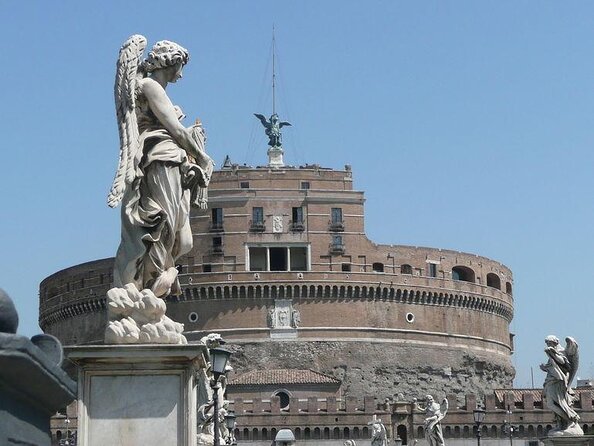
- Finish near Castel Sant’Angelo: easy to continue your night right after the walk
Why a 90-minute night walk works in Rome
Rome after dark has a different rhythm. Daytime is loud with heat, traffic, and tour groups. Night is slower, and you can actually look up at facades and domes without squinting through sweat. That change in pace is exactly why a 1.5-hour walking tour feels smart: you get atmosphere and stories without burning your whole evening.
This format also helps with attention. If a tour is too long, the story layer can fade while you just try to keep moving. Here, the time window is tight enough that the guide can build momentum—emperors and Renaissance politics up front, then darker crime and religious fear as you drift toward the finish near Castel Sant’Angelo.
You’ll also feel the value in the basic setup: it’s a guided walk with an English-speaking guide, with a mobile ticket and a route designed for seeing major landmarks without the daytime crush.
You can also read our reviews of more walking tours in Rome

Starting at Piazza di S. Andrea della Valle: where the story begins
Your meet-up point is Piazza di S. Andrea della Valle. It’s a practical start because it’s easy to reach by public transport and taxis, and the square gives you a natural staging area before you head into quieter back streets and open-air piazzas.
The tour’s opening matters. Many night tours start with a “here’s the city” overview. This one tends to launch you straight into suspicion and desperation—how medieval Rome could feel tense even in ordinary places. That early tone helps you shift gears fast. By the time you hit the main walking stretch, you’re already listening for how everyday spaces connect to bigger events.
Also, being in a central meeting zone means you won’t waste time dragging yourself across town. If you’re doing this on your first night, it’s a good way to get your bearings fast—you’ll be back in familiar territory later, just in daylight.
The core route: Corso Vittorio to Campo de’ Fiori
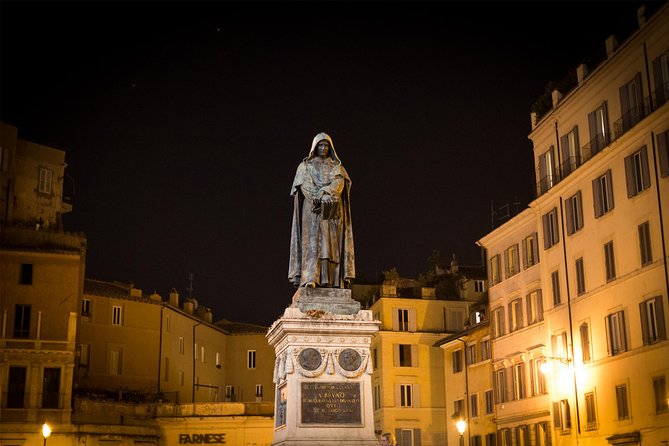
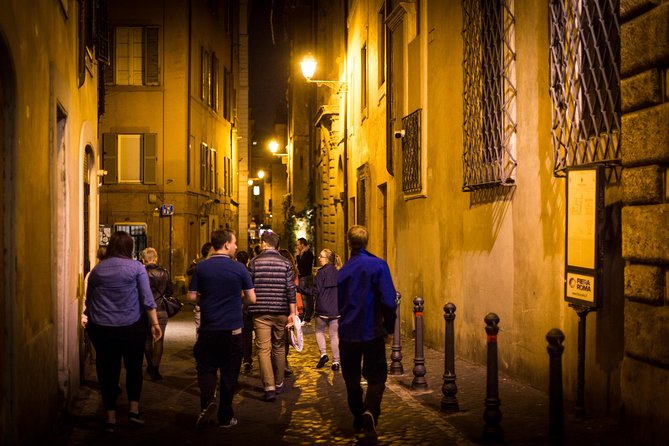
The walk moves from Corso Vittorio toward Campo de’ Fiori, and that stretch is the backbone of the whole experience. Corso Vittorio gives you a sense of Rome as it moves—wide streets, landmark energy, the feeling of “real city” rather than postcard-only views. Campo de’ Fiori shifts to open piazza life, where crowds aren’t gone, but they’re different at night.
At night, you’ll notice how lighting changes everything. Illuminations turn stone into something dramatic instead of flat. That matters for this tour because the stories are about desecration, fear, and punishment—moments when people tried to control others through spectacle. Seeing places lit up makes the “why would someone do that here?” question easier to hold in your mind.
One more detail I’d pay attention to: the tour is designed as a continual walk of connected scenes. You’re not bouncing in and out of transit. You’re building a mental map as you go—useful if you want to return to places later on your own.
Piazza Farnese and the Tiber River: the scenic pause with a purpose
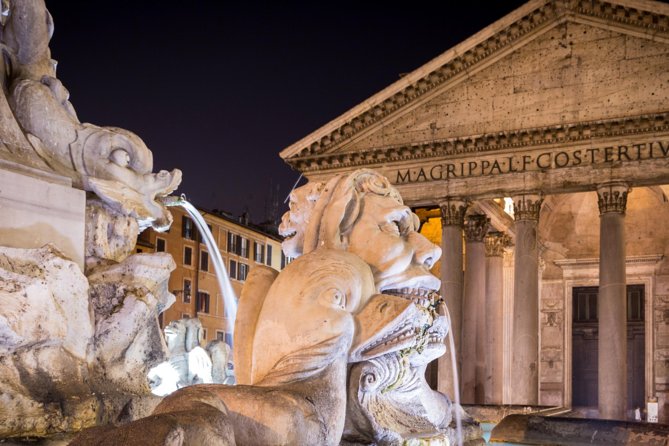
Your route includes Piazza Farnese and a crossing area by the Tiber River. This isn’t just “walk by pretty views.” It’s a key part of how the guide threads the stories through geography.
Piazza Farnese is one of those Roman squares where you can feel the weight of politics and power just from the proportions and setting. At night, the atmosphere becomes almost cinematic. That makes it a strong stage for stories that connect authority, religion, and public behavior.
Then you move toward the river. Rome’s river crossings often feel like natural boundaries between worlds, and that fits the tour’s theme: Rome’s hidden history doesn’t sit politely in museums. It shows up in bridges, routes, and the way people behaved near power.
If you’re someone who gets cold quickly, bring layers. Night air off the river can feel sharper than you expect, especially in the evening.
Inquisition stories that turn politics into personal fear
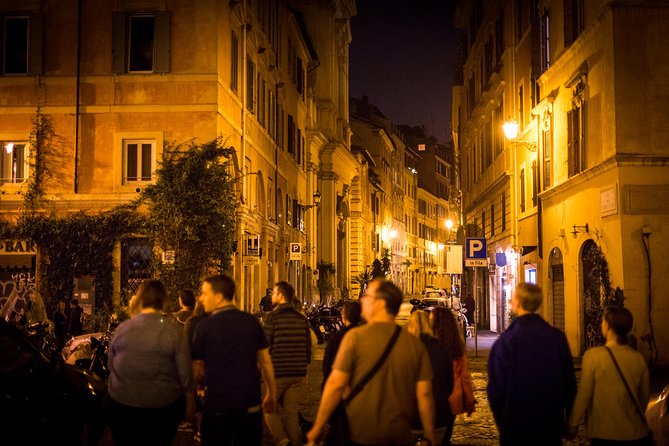
The Inquisition thread is a major draw. You’ll hear how suspicion could spread neighbor-to-neighbor, how violence was staged, and how religion got used to police behavior. The tour includes stories about brutal punishments—heretics and other cases described as horrifying examples meant to suppress crime and dissent.
One vivid detail tied to this theme: the story about hanging paintings of the Virgin Mary on street corners to influence the public. Whether you agree with the politics or not, it’s the kind of detail that makes the era feel less abstract. It also explains why this tour can feel more intense than a typical “sights only” walk—because the emotional stakes are built into the history.
A quick reality check: this is not a lecture with footnotes. It’s storytelling that uses real historical themes and Roman landmarks as anchors. That’s great for atmosphere, and it’s also why some people may wish for more time on specifics or more visible “touch points” at each stop.
You can also read our reviews of more evening experiences in Rome

A haunted-bridge legend (and why it works on foot)
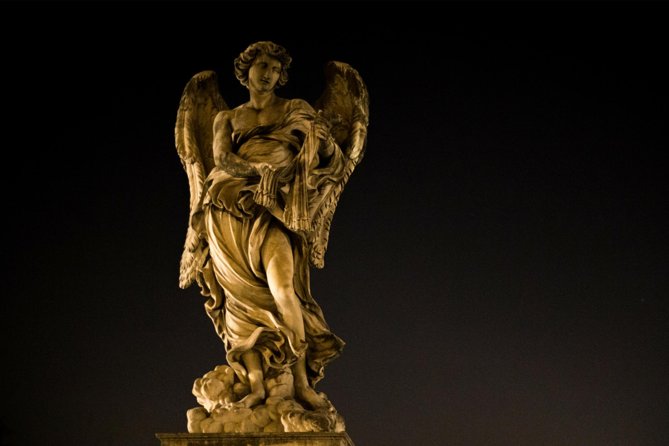
As you traverse the river toward more piazzas, you’ll hear a bridge legend involving a tragic young girl wronged by her family and the Pope. This kind of story is exactly what a night tour does well: it links a physical location to emotion, rumor, and memory.
What I like about this approach is that it doesn’t ask you to believe in ghosts in order to enjoy the experience. It asks you to notice how stories stick in cities—how tragedies get carried forward, repeated, and turned into something local.
Also, walking helps the legend land. You’re not just standing at one spot waiting for a photo op. You’re moving, hearing context, then seeing the space change around you. That flow tends to make the story feel more “lived in.”
“The house of the most notorious murderer” and the empathy angle
One of the most talked-about moments on this tour is the stop at the house of Rome’s most notorious murderer. The guide reveals what made this figure surprisingly empathetic, which is an interesting twist. Instead of treating criminals as pure monsters, the story frames humanity inside the horror—how desperation, motive, and opportunity can blur the lines.
That angle is one reason this tour is fun even if you’re not chasing spooky tales. It pushes you to see Rome’s “dark side” as human behavior, not just supernatural drama.
You’ll also pick up other crime-era themes along the way, including references that sound like “mass poisoner” and other notorious figures. Combined with the Inquisition thread, the tour creates a clear through-line: fear plus spectacle plus power. You start to understand how a city can police itself through rumor as much as through law.
Guides set the tone: pace, storytelling style, and hearing them in the dark
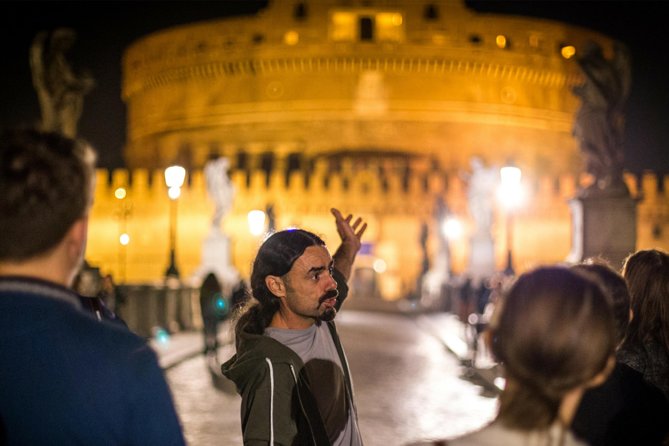
The guide is the engine here. Based on past departures, people often praise guides who bring stories to life with humor and energy, like Alberto and Maria, or who deliver with a more theatrical edge like Rob. Names you may hear in the group include Semi, Liv, Inti, Sammy, Althea/Aletha, Maryam, and Elizabeta—each noted for pacing and performance in different ways.
Here’s the practical part: night walking means sound travels differently. One person noted it can get loud at times and harder to hear. My advice: stand closer to the guide when possible. If your group spreads out, you’ll miss the details that make the stories click.
Pace is another factor. One departure is described as walking briskly at the start, but the guide adjusted when older folks in the group asked for a slower tempo. If you have mobility limits or you tire fast, tell the guide at the beginning. The earlier you speak up, the easier it is to match your group’s comfort level.
Value for the price: $14.48 for a guided night map of Rome
At $14.48 per person for about 1 hour 30 minutes, this is priced like a smart add-on, not a huge “event.” That’s how it should feel. You’re paying for an English-speaking guide and a guided route that connects major landmarks—Corso Vittorio, Campo de’ Fiori, Piazza Farnese, and the finish near Castel Sant’Angelo—into a single narrative.
You’re not paying for a fancy coach or hotel pickup. That’s good for value, but it also means you’re responsible for getting to the start on your own. If you’re already in central Rome and you’re free in the evening, it’s a low-cost way to add something memorable.
Also, it’s popular enough that people book ahead (one data point shows it’s commonly booked about 39 days in advance). If you’re traveling in busy seasons, booking early is your friend.
When you should do this tour (and when to skip it)
I’d book this if you want:
- Night views of famous Rome without spending your whole day in crowds and heat
- A guided walk that mixes landmarks and legends instead of only “what to photograph”
- A storytelling approach to darker themes like suspicion, crime, and the Inquisition
- A practical finish near Castel Sant’Angelo so you can keep going for dinner and bars
I’d think twice if you want:
- A deeply academic, dates-and-documents history session
- A tour that feels truly scary in a horror-movie way
- Lots of stop-and-stare time for artifacts, because this is built around movement and storytelling
After the tour: using the finish near Castel Sant’Angelo
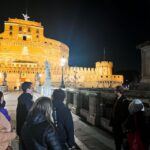
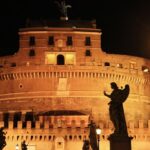
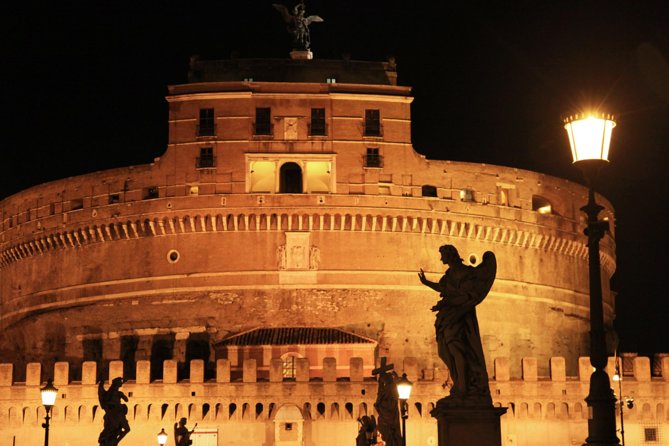
Ending near Castel Sant’Angelo is more than a convenient map pin. It’s a strong strategy. You finish in a lively, central area where it’s easy to find something to eat, drink, or simply continue wandering with your new mental framework.
Some guides also help with practical next steps—like pointing out where people can head next or helping with getting a cab when the walk ends. Even if your guide doesn’t offer it, the location makes it easy to transition to independent exploring.
If you did the tour early in your trip, you’ll likely be able to return to the key squares (like Campo de’ Fiori) with more understanding of what you’re seeing.
Should you book this Rome by Night Legends & Criminal Stories tour?
Yes—if you want a fun, night-focused walk that turns famous streets into story settings. I like that it uses major landmarks and connects them to darker themes like the Inquisition and notorious crime without making you sit through a lecture. It’s also a solid value for the price and time, and the end point near Castel Sant’Angelo sets you up for an easy, satisfying continuation of your evening.
If you’re the type who needs lots of factual detail at every stop, or you’re expecting it to be scary-scary, you might feel underwhelmed. But if you’re open to a story-led Rome with a brisk route and a guide who can really perform, this is a great way to see the city in a different mood—one with secrets, suspicion, and a little theatrical darkness.
FAQ
How long is the Rome by Night walking tour?
The tour runs for about 1 hour 30 minutes.
Where does the tour start and end?
It starts at Piazza di S. Andrea della Valle, 00186 Roma RM, Italy and ends near Castel Sant’Angelo (Lungotevere Castello, 50, 00193 Roma RM, Italy).
Is the tour offered in English?
Yes. The tour includes an English-speaking guide.
What’s included in the price?
The ticket includes an English-speaking guide and a walking tour of Rome by night.
How large is the group?
The group has a maximum size of 20 travelers.
Can I get a full refund if I cancel?
Yes. You can cancel up to 24 hours in advance for a full refund. If you cancel less than 24 hours before the start time, the amount paid is not refunded.