REVIEW · ROME
Rome: Colosseum VR Experience
Book on GetYourGuide →Operated by Artour · Bookable on GetYourGuide
A 360° VR lesson outside the Colosseum helps you see more. This experience pairs IN 8K Meta Quest VR with priority entry, so you’re not just walking past stones—you get an idea of how the Colosseum looked and functioned in ancient Roman times.
I especially liked the way the VR is used before you enter: you start with a guided 360° look at major nearby landmarks and then move into the Colosseum experience with momentum. I also liked that your ticket includes priority entrance and arena access, plus time at the Roman Forum and Palatine Hill without a strict re-entry clock.
One thing to think about: the VR portion isn’t suitable if you have vertigo, and the “self-guided” feel means you won’t have a physical guide sticking with you the whole time.
In This Review
- Key highlights you’ll feel right away
- Starting at the terrace above the Colosseum metro station
- The Meta Quest VR experience: where the tour starts making sense
- Priority entrance to the Colosseum: what it means in practice
- What you do during the Colosseum walk: self-guided with audio support
- Roman Forum and Palatine Hill: your time without a re-entry clock
- The open-top bus panoramic drive: orientation from above ground
- Who this experience fits best
- Price and value: is $62.63 a fair deal?
- Timing, names, and a few “don’t trip over this” tips
- Should you book this Colosseum VR Experience?
- FAQ
- How long is the Rome: Colosseum VR Experience?
- Where do I meet the tour?
- Is there priority entrance?
- What’s included besides the VR video?
- Do I get access to the Colosseum underground?
- Do I need a physical guide during the visit?
- Is it suitable for people with vertigo?
Key highlights you’ll feel right away
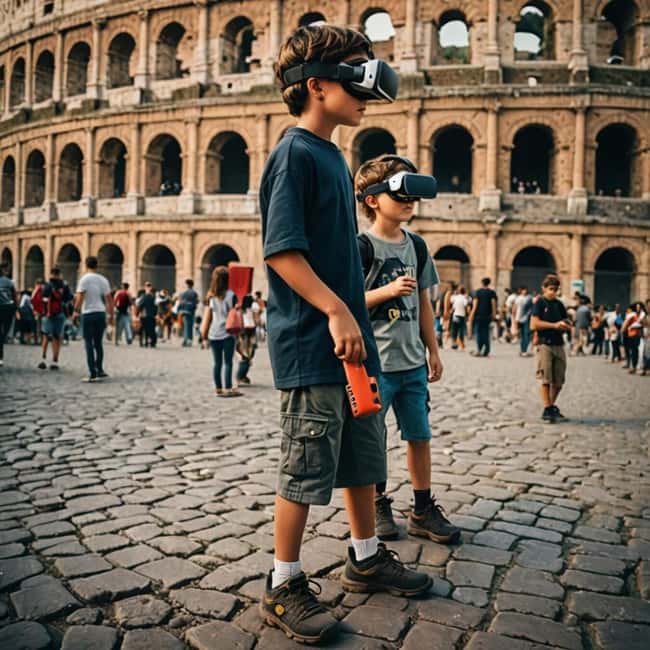
- Meta Quest IN 8K 360° video outside, designed as a first-look orientation
- Priority entrance for the Colosseum, Forum, and Palatine
- Arena access (but not access to the underground)
- VR shows views from above, including the underground area in the video experience
- Small group up to 8 participants for a calmer start
- Audio guide in English, French, or Spanish for your walk inside and around
Starting at the terrace above the Colosseum metro station
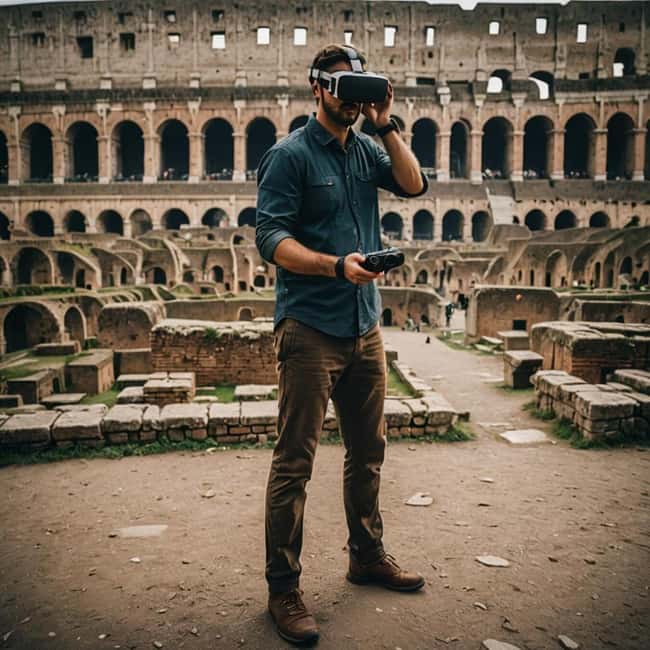
Your tour starts above the Colosseum metro station, after a café called Caffè Roma. It’s only about a 3-minute walk from the Colosseum entrance, but the key is timing: you’re asked to arrive at least 35 minutes before your booked start time.
That early arrival matters because you’re not immediately “ticketing and walking.” The first part is a VR setup outside in front of the monument. You’ll watch an immersive IN 8K VR experience on the latest Meta Quest model, and the whole point is to get your bearings before you step into the real site.
This is one of those tours that rewards the people who show up with a little buffer and a plan to pay attention. If you arrive late, you risk throwing off the flow right at the moment you’d most benefit.
You can also read our reviews of more tours and experiences in Rome.



The Meta Quest VR experience: where the tour starts making sense
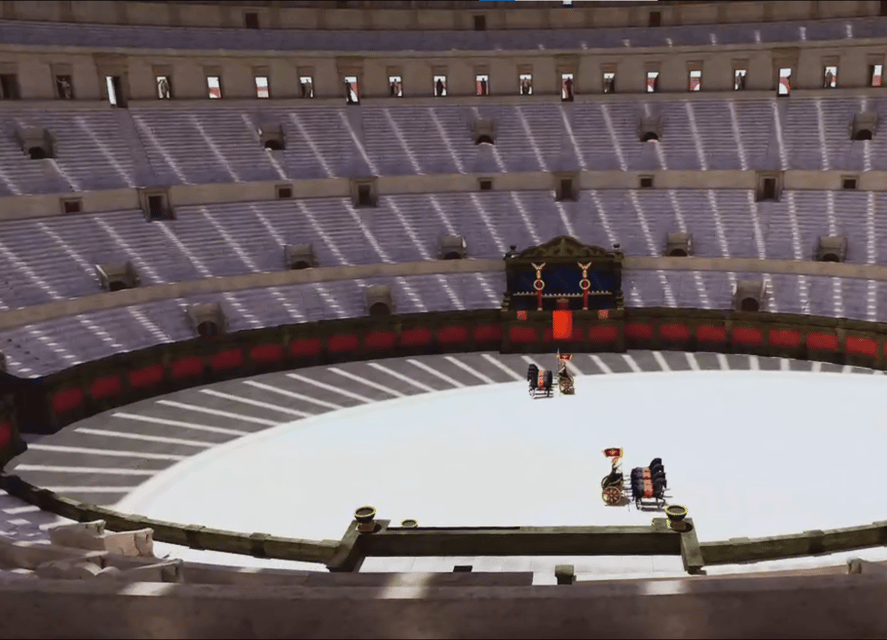
Here’s the clever part: the VR isn’t a gimmick tacked on after the fact. It’s used as a pre-entry “visual primer.” You’ll begin with a 360° look that focuses on important antiquity sights around the Colosseum area, including the Arch of Constantine, the Meta Sudans, and the Temple of Venus and Rome.
Then the experience continues into the Colosseum itself. In the VR, you’ll observe the underground and the arena from above. A virtual guide and period-style music are included, which helps the experience feel like a time-and-place lesson rather than only a modern explanation.
What you’re really doing with this VR segment is learning how to read the site:
- You start noticing where spaces connect, even if the real structure is partly gone.
- You get a mental map that makes the physical walk-through far less confusing.
- You’ll likely find yourself looking at openings, levels, and design details instead of only taking photos.
If you’re the type who loves architecture and wants context, this portion can be the difference between a quick “I saw it” visit and a visit that sticks.
One caveat: VR is VR. If you’re sensitive to motion effects, start thinking early about whether this is a comfortable format for you. The tour specifically notes it’s not suitable for people with vertigo.
Priority entrance to the Colosseum: what it means in practice
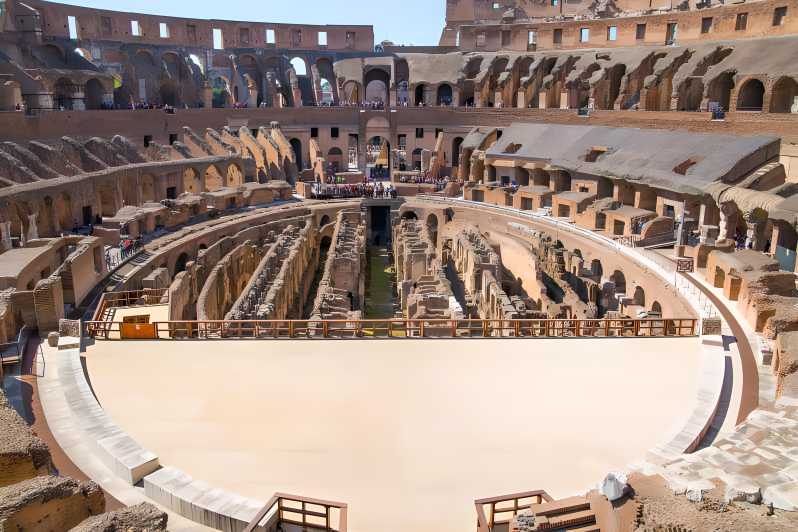
After the VR video ends, you move into the Colosseum with priority entrance. That matters because the Colosseum has lines, and timed entry systems can turn a dream visit into a stressed one. Priority entrance is a straightforward value play: it reduces waiting so you can spend your limited time where it counts.
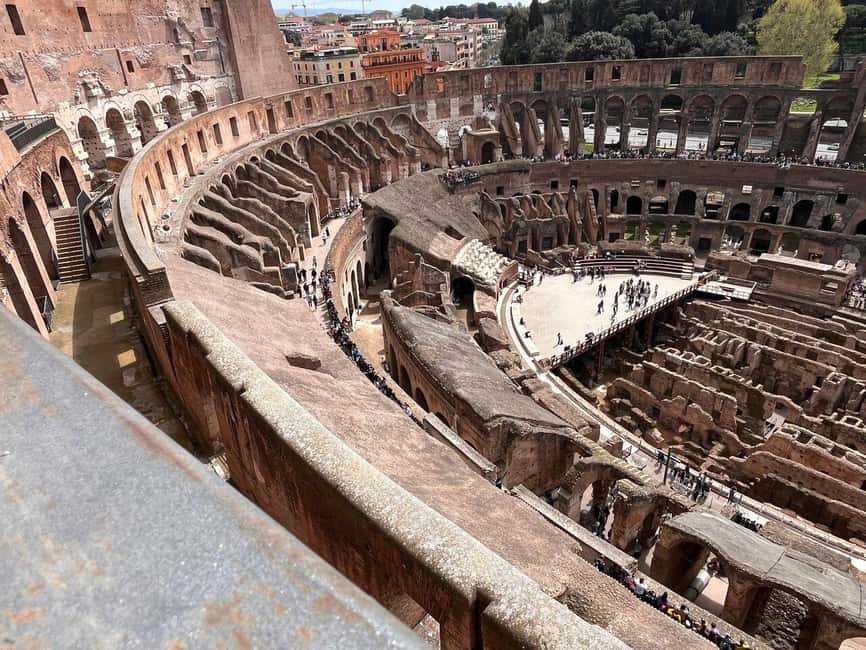
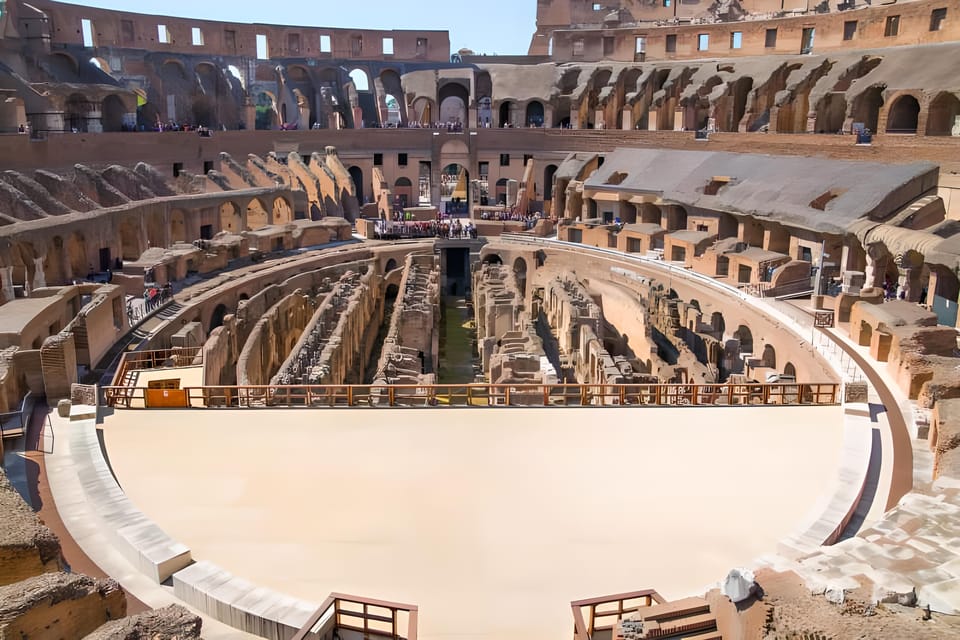
You’ll also get to access the arena. That’s a huge deal for most people, because it’s the level where your view changes from “giant ruins” to a structured space with scale and sightlines. You’ll be standing where performances once happened, even if the arena today is understandably calmer.
Important detail: the tour includes access to the arena, but it does not include access to the underground. That’s worth understanding so you don’t expect to go down there in real life. The underground component is covered via VR (you view it from above in the experience).
Also, because this is Italy and tickets can be strict, bring the right names. When you book, you must provide the full names of all travelers. If you show up with vouchers that don’t match those full names, you may be denied entry at the ticket office for the Colosseum and Roman Forum. That’s not an annoyance to “work around.” It’s a real risk.
What you do during the Colosseum walk: self-guided with audio support
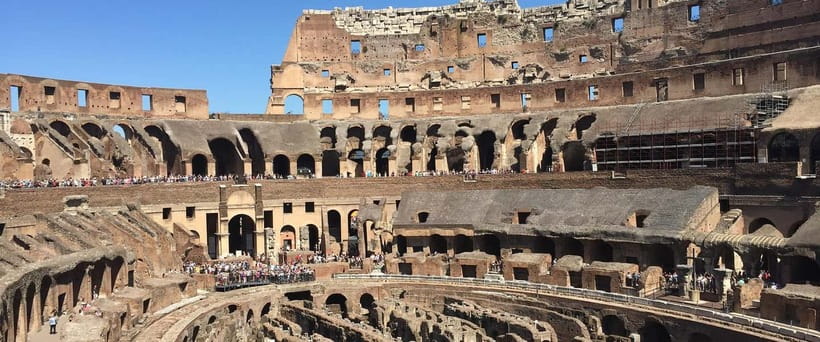
Once you step inside, you shift into a self-guided mode. No physical guide accompanies you through the monument. Instead, you get an audio guide in English, French, or Spanish, plus the priority access that keeps you from losing time to lineups.
For me, that style works best when you already know what you’re interested in. If you want constant human commentary, you might find the experience feels too independent. But if you’re happy exploring at your own pace—stopping when something grabs you, moving when it doesn’t—the audio guide gives you enough structure without crowding your movement.
The audio guide is also one reason this can feel efficient. You’re not stuck waiting for a group pace, and you can spend more time in the areas that match your curiosity: the arena, the viewpoints, the architectural rhythm, and the transitions toward the Forum.
Roman Forum and Palatine Hill: your time without a re-entry clock
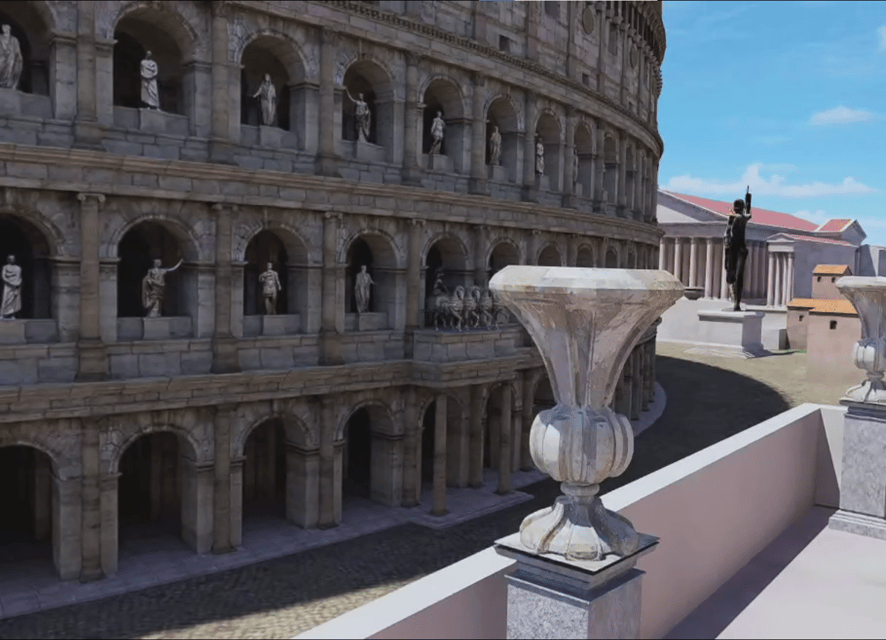
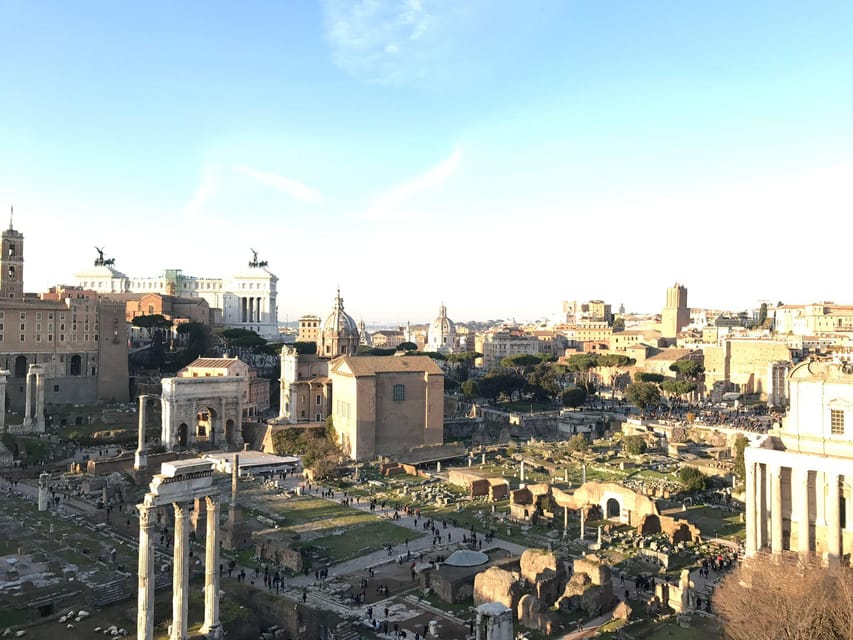
After the Colosseum, the tour continues so you can admire the Roman Forum and Palatine Hill. The big benefit here is that you don’t need to fit your visit into a specific entrance time for every next zone. You can visit after the Colosseum on your own schedule within the overall tour flow.
This is where VR’s value often shows up again. Once you’ve seen the Colosseum with context, it’s easier to understand what you’re walking through around it. The Forum and Palatine area are all about layers—structures built, rebuilt, repurposed, and then gradually turned into what you see today. When you arrive already oriented, you spend less time trying to figure out what goes where.
Practical note: because it’s still a self-guided portion, you’ll get the most out of it if you move with purpose. Pick a few stops you want to see, then let everything else be bonus. If you drift without a plan, the area can feel like “a lot of ruins,” even though it’s actually a lot of meaning.





The open-top bus panoramic drive: orientation from above ground
One of the highlights is an open-top bus panoramic drive around Rome’s highlights. That kind of add-on is useful when you want your first or early day in Rome to feel less scattered.
Even without a detailed route described here, the logic is clear: you get a broader city-view perspective before you’re deep in archaeological spaces. It’s the same idea as map time. You see relationships between neighborhoods and landmarks, so later, your walking routes feel more connected.
If you’re sensitive to sun or heat, bring protection. Open-top transport usually means you’ll feel weather more directly than in an enclosed bus.
Who this experience fits best
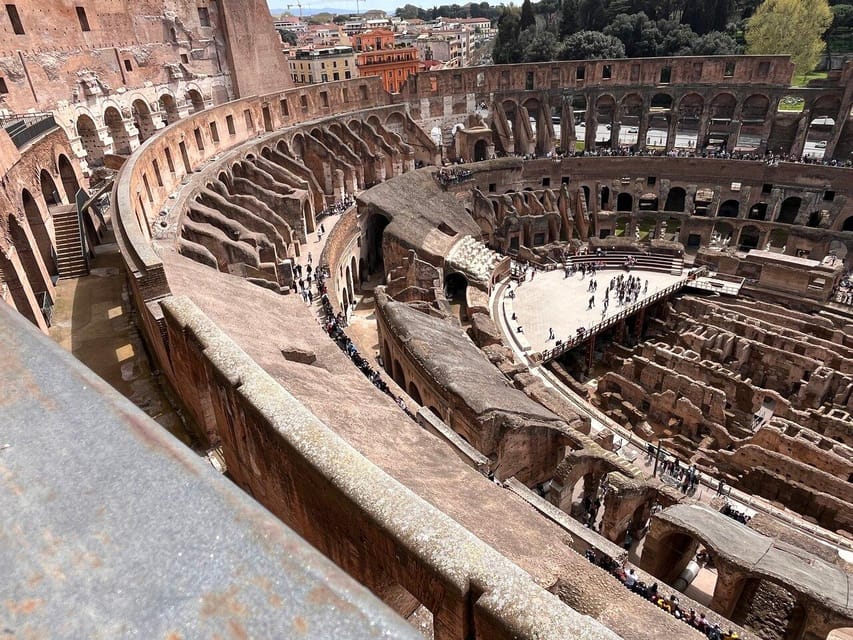
This tour is built around three things: priority entry, VR context, and a self-paced visit supported by audio. So it tends to suit people with a certain travel style.
You’ll probably enjoy it if:
- You want to understand what you’re looking at, not just see it.
- You like a small group start (limited to 8 participants).
- You’re comfortable exploring on your own after you get your orientation.
- You can handle VR comfortably.
You might want to consider another option if:
- You have vertigo or you know VR affects you.
- You strongly prefer a physical guide walking you through every stop with live commentary.
Price and value: is $62.63 a fair deal?
At $62.63 per person, the value comes from combining several paid advantages in one package: priority entrance to major sites, arena access, and a VR 360° IN 8K Meta Quest pre-entry segment, plus an audio guide and agency assistance. That’s not just a “ticket to the Colosseum.” It’s a structured experience that aims to reduce wasted time and improve comprehension.
Here’s how I’d weigh it:
- If you’re the type who would otherwise show up and wander cold, the VR portion can pay for itself by making your visit more readable.
- If you’re worried about lines, priority entrance is a direct savings in stress and time.
- If you already know Colosseum basics and you mainly want time inside, you might decide whether the VR add-on is worth it for you personally.
For most first-timers who want context and don’t want a full guided slog, this price can feel reasonable.
Timing, names, and a few “don’t trip over this” tips
To make the experience smooth, stick to these practical points:
- Arrive early. Be there at least 35 minutes before your booked time. The VR start is part of the plan, not an optional extra.
- Use full names exactly. Provide full traveler names at booking and ensure the voucher matches. Any mismatch can lead to denied entry at ticket checks.
- Plan for self-guided navigation. There’s no physical guide during your on-site wandering. Use the audio guide and decide where you’ll spend your attention.
- Expect arena access, not underground access. The underground is shown in the VR portion, but the real ticket doesn’t include underground entry.
These aren’t “small details.” They’re the difference between a trip that feels organized and one that feels like you’re improvising under pressure.
Should you book this Colosseum VR Experience?
Book it if you want a modern tool that helps you understand what you’re seeing—especially if it’s your first big Colosseum-area visit and you like self-guided freedom after orientation. The combination of IN 8K Meta Quest VR, priority entrance, and arena access, plus audio support, is a smart way to get more out of limited time.
Skip or rethink if you need a full-time physical guide, or if VR isn’t comfortable for you due to vertigo. Also, if you already feel very confident about Colosseum history and structure, you might decide that a more traditional guided approach could better match your style.
FAQ
How long is the Rome: Colosseum VR Experience?
It runs for about 2 hours. Start times vary, so check availability for the exact schedule.
Where do I meet the tour?
You meet above the Colosseum metro station, after Caffè Roma, about a 3-minute walk from the Colosseum entrance.
Is there priority entrance?
Yes. You get priority entrance for the Colosseum, Roman Forum, and Palatine.
What’s included besides the VR video?
Included are entrance to the Colosseum, Forum, and Palatine, access to the arena, VR 360° immersive video, and agency assistance.
Do I get access to the Colosseum underground?
No. The tour does not include access to the underground. (The underground area is part of the VR viewing.)
Do I need a physical guide during the visit?
No. The tour is self-guided after the VR segment. You’ll have an audio guide available in English, French, or Spanish.
Is it suitable for people with vertigo?
No. The experience is listed as not suitable for people with vertigo.