REVIEW · ROME
Sistine Chapel and Vatican Museums Guided Tour Skip the Line
Book on GetYourGuide →Operated by Mltour · Bookable on GetYourGuide
Two hours can change how you see the Vatican. I like the priority access built into the visit plan and the fact that you’ll get earphones for clear explanations as you move through the Vatican Museums and reach the Sistine Chapel. You’re also traveling with an official guide authorized for the Holy See, which helps you feel like you’re in the right hands.
One thing to watch: language and pace. If you’re booking in Portuguese, double-check the language you’ll hear on-site, since at least one past booking reported a mismatch and a guide who moved too fast to keep up with the group.
In This Review
- Key things that make this tour worth your time
- Why This 2-Hour Route Works in the Vatican Museums
- Meeting at Bar Tre Caffe and What Happens Before You Enter
- Express Security and Priority Access: Your First Time-Saver
- Vatican Museums Highlights: Sculptures, Frescoes, and the Big Names
- Sistine Chapel Under a Guide’s Lens (and How to Not Get Lost)
- Small Groups and Earphones: The Difference Between Seeing and Understanding
- Languages, Pace, and the One Thing to Double-Check
- Price and Value: Is $134.81 Worth It?
- Who This Tour Suits Best
- Should You Book This Guided Tour?
- FAQ
- Where is the meeting point for the tour?
- How long does the guided tour last?
- What does skip the line include?
- What’s included with the ticket?
- Do I get a guide and audio support?
- What languages are available for the tour?
- Is there free time during the visit?
- Is cancellation free, and how does reserve & pay later work?
Key things that make this tour worth your time

- Priority access plus an express security path that saves you from the worst bottlenecks
- Earphones so your guide’s explanations stay audible even in crowded galleries
- Small group size that tends to make it easier to follow along
- Sistine Chapel + Vatican Museums in one focused, 2-hour run
- Art history experts using a structured route rather than “wander and hope”
- Free time to re-scan the highlights on your own after the guided portion
Why This 2-Hour Route Works in the Vatican Museums
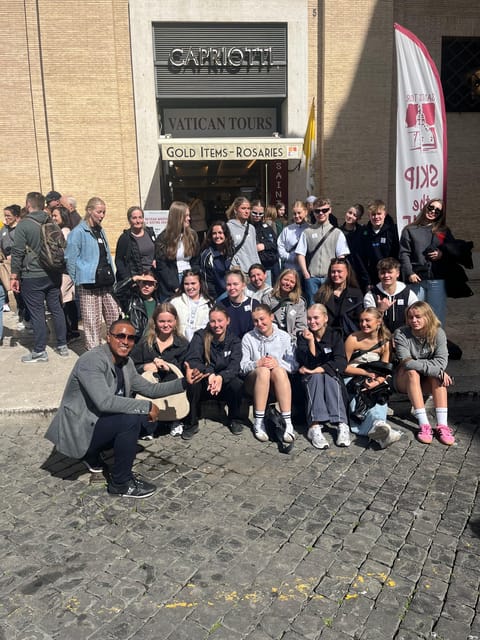
The Vatican Museums can swallow a whole day. This tour takes the opposite approach: a tight 2-hour guided visit that prioritizes the sites most people come for—Vatican Museums and the Sistine Chapel—without asking you to manage every decision once you’re there.
That shorter format is a big deal for real-life travel. If you’re only in Rome briefly, or you’re trying to see the Vatican without turning it into an all-day endurance event, 2 hours can be the sweet spot. You get the key moments, plus a guide to point out what matters and why it matters.
I also appreciate that this is presented as an organized, official-style visit. The description calls out an official guide authorized for the Holy See and “art history experts.” That matters because the Vatican isn’t just a pile of famous art—you’re walking through layers of church history, patronage, and visual storytelling. A good guide helps your eyes connect the dots.
The tradeoff is simple: you can’t expect every room, every corridor, and every side chapel to be covered. If you want total freedom for hours, you may still want a longer self-guided visit later. But if your goal is to understand what you’re seeing fast, this setup is built for that.
You can also read our reviews of more guided tours in Rome
Meeting at Bar Tre Caffe and What Happens Before You Enter

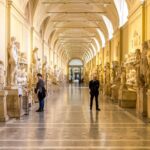
You’ll meet at Bar Tre Caffe about 15 minutes before your scheduled start. That early arrival window is practical. Vatican entry can be unpredictable, and meeting on time gives your group a clean start so you don’t end up chasing the tour in a sea of people.
The tour ends back at the meeting point, which is helpful for planning your day. It keeps you from getting stranded across town after your museum time is done.
While you’re waiting to go in, here’s what I recommend you do to get value from your guide’s limited time. Think about your priorities before you step into the galleries:
- Do you want myth and symbolism (lots of visual storytelling)?
- Do you want famous names (Michelangelo, Raphael, and more)?
- Or do you want a “what am I looking at” explanation so the scenes actually make sense?
When you know what you want, you’ll hear more from the guide instead of just following movement.
Express Security and Priority Access: Your First Time-Saver
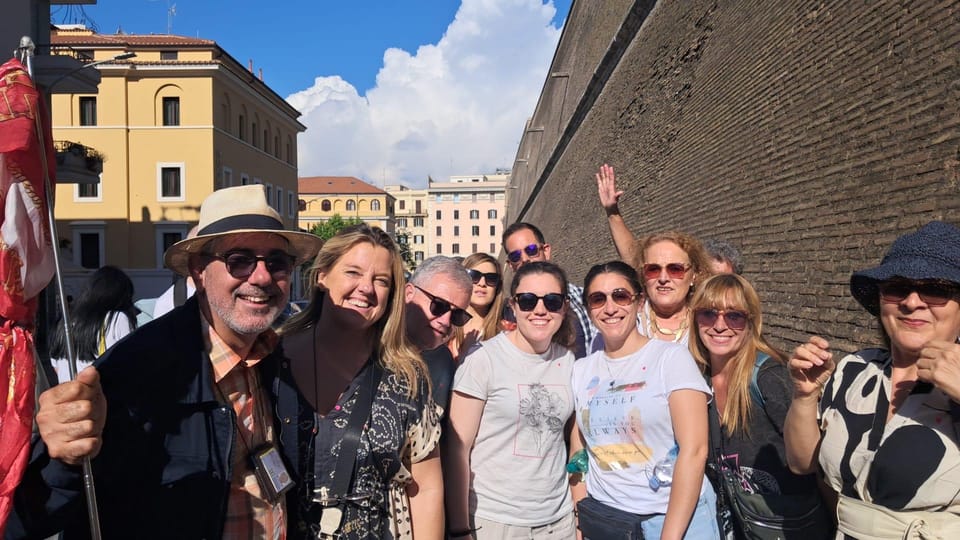
The headline benefit is obvious: skip the line. This tour includes priority access and an express security check, meaning you should spend less time waiting and more time actually looking at art.
In the Vatican, the waiting area is its own stress test. Lines can stretch, and time feels “stolen” while you stand still. Priority entry doesn’t just save minutes—it saves attention. When you start the visit with momentum, you’re more likely to absorb details instead of zoning out.
Also, because this is a small group tour, you’re less likely to get separated from your own explanations. That matters because the Vatican Museums are huge, and landmarks blur together if you’re moving too freely.
One more practical note: priority doesn’t mean no crowds. It means you enter the system faster. Once inside, you’ll still be in public spaces with normal museum congestion, so plan to keep your pace steady and let your guide set the rhythm.
Vatican Museums Highlights: Sculptures, Frescoes, and the Big Names
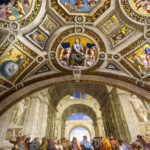
The tour description promises a route through some of the Vatican Museums’ most recognizable categories: ancient sculptures, breathtaking frescoes, and archaeological finds. It also specifically calls out the chance to admire major works connected with Michelangelo, Raphael, and Leonardo da Vinci, plus Michelangelo’s Pietà.
A quick reality check: even on guided tours, the exact sequence can shift based on daily flow, conservation priorities, or what’s accessible that day. But the overall promise is consistent: you’re getting a curated walk through the museum’s most important themes, not a random loop.
Here’s how to think about the “highlights” experience in a helpful way. In a museum like this, the difference between seeing and understanding is often tiny:
- A guide points out the visual trick (how eyes are directed, where the emphasis lands).
- A guide explains the context (who commissioned it, what message it carried).
- A guide connects style to meaning (why the proportions or composition look the way they do).
That’s where your time buys back value. Without commentary, you might recognize names and move on. With commentary, the art turns into a story you can follow with your feet.
I also like that the tour includes time where you can explore on your own. That pause is smart. You’ll want a moment to stand a little longer, take your own angles, and check things the guide can’t fully “slow down” for every person in a group.
Sistine Chapel Under a Guide’s Lens (and How to Not Get Lost)
Reaching the Sistine Chapel is the emotional payoff of this whole experience. The guide’s job here isn’t to talk longer—it’s to help you look better in less time.
Because the tour is guided, you’ll likely get some framing before you’re standing under Michelangelo’s ceiling. Even basic context—what you’re seeing, why it’s arranged the way it is, and what symbols point to—changes how the chapel lands on you.
And here’s another practical reason guidance matters in the Sistine Chapel: the space moves fast. People shift positions, and you often can’t move freely at your own speed. If you’re part of a timed group visit, you need to focus on quick comprehension rather than perfect lingering.
If you’re the type who likes to “read” a scene visually, come in ready for a fast viewing strategy. Take one small goal: choose one or two focal areas to study deeply, then let the rest wash over you. That’s a far better use of limited time than trying to absorb everything at once.
Once the guided portion is done, your free time helps you return for a second look with fresh eyes. If you want the most from the chapel, use that window to compare what you noticed first with what you notice after the guide’s explanation.
You can also read our reviews of more museum experiences in Rome


Small Groups and Earphones: The Difference Between Seeing and Understanding
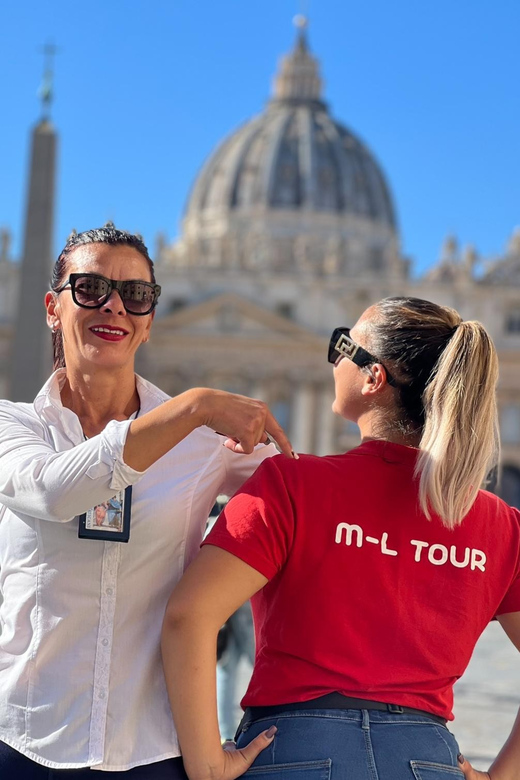
This tour includes small group sizes and provides earphones, which is one of those features that feels minor until you’re in a crowded museum.
Earphones fix a common Vatican problem: you’re standing near the guide, but the room noise plus the crowd distance makes it hard to hear. With earphones, you can stay focused on the message instead of “guessing what they said.”
Small groups also reduce the “herding” effect. Larger groups can stretch out, and people start drifting. A smaller group makes it easier for you to stay oriented—especially when you’re moving quickly between rooms that all look similar at first glance.
There’s also built-in staff support during the visit. That’s not flashy, but it matters. It reduces friction if someone needs a quick reroute or if you’re trying to keep up in a maze-like building.
I’ll add one more useful mindset: use your earphones to learn the museum’s logic. The Vatican Museums can feel like separate exhibits until someone explains the connective themes—religious narrative, artistic purpose, and how patrons shaped what ended up on the walls.
Languages, Pace, and the One Thing to Double-Check
This tour offers live guiding in English, Spanish, Romanian, and Portuguese. That’s excellent on paper, and it can be great in practice.
But the review history includes a warning that you should treat as real advice: one experience described booking in Portuguese, then arriving to a guide who spoke only Spanish, plus a pace that moved too quickly and separated the guide from the group.
So here’s the practical move I recommend if you care about understanding every detail: confirm the language assignment as close to your visit date as possible. Don’t assume “Portuguese option selected” automatically means the on-site guide will match it perfectly.
Also, pay attention to pace. If your Spanish or Portuguese is strong but you’re not comfortable with rapid conversation, you’ll want a tour that keeps the group together and slows down at key moments. Earphones help, but they don’t fix missing translation or a guide who doesn’t wait.
The good side? Another review praised a guide as well prepared and attentive. That tells me the experience quality can be strong when the right guide is running the route. Your job is to reduce the risk factors—especially language—before you arrive.
Price and Value: Is $134.81 Worth It?
At $134.81 per person, this isn’t the cheapest way to see the Vatican. But it also isn’t priced like a luxury private guide who follows you for half a day.
What you’re paying for is the combination:
- Priority access and express security (time savings)
- A guided tour with art history experts
- Small group size
- Earphones for clear audio
- Entrance ticket coverage for Vatican Museums and the Sistine Chapel
- Some time to explore highlights on your own
In other words, you’re not just buying entry. You’re buying a guided path that reduces the time you lose waiting and the time you waste wandering without context. For many people, that balance is the difference between “I saw famous places” and “I understood what I saw.”
If you’re the type who reads labels and wants to go at your own speed, you might find better value in a self-guided plan. If you know you’d otherwise stand in front of big art and feel like you’re missing the point, this guided format can pay off quickly.
Also, the short duration is part of the value equation. You’re spending about 2 hours. That can fit your schedule better than longer museum tours, especially if you have other Roman stops on your list.
Who This Tour Suits Best

This tour tends to fit best if you:
- want the Sistine Chapel and Vatican Museums in one compact visit
- prefer guided interpretation over reading everything alone
- value time savings from priority access
- like small-group pacing instead of big-group chaos
- need earphones to catch explanations in a noisy environment
It may be less ideal if you strongly want total freedom. This itinerary is designed around a guided flow, plus a limited free-explore window. You won’t get the “no schedule, I’ll go wherever” experience.
And if you’re booking in a language other than English or Spanish, do yourself a favor and verify that your selected language is actually what you’ll hear on-site. It’s the only point in the information that clearly relates to dissatisfaction.
Should You Book This Guided Tour?
I’d book if your goal is to make the Vatican feel understandable in a short window. The priority access, earphones, and expert-guided approach are exactly the kind of structure that helps you see more art and remember more of it.
I’d pause and double-check if you care deeply about language. The mixed experience you have to consider isn’t the art—it’s communication. If you’re comfortable with English or Spanish, the risk drops. If you’re counting on Romanian or Portuguese, confirm before you go.
Finally, go in with a mindset of “choose your focus.” Even with the guide, this is still the Vatican in crowds. Pick one or two things to really look at, then let the rest be guided.
If that sounds like your kind of visit, this tour is a practical way to hit the big moments without spending half your day in lines.
FAQ
Where is the meeting point for the tour?
The tour starts at Bar Tre Caffe. You’re asked to arrive about 15 minutes before your visit time.
How long does the guided tour last?
The duration is listed as 2 hours, with starting times available based on your chosen date.
What does skip the line include?
It includes priority access and an express security check to help you avoid the longest waiting.
What’s included with the ticket?
You get the entrance ticket to the Vatican Museum and the Sistine Chapel.
Do I get a guide and audio support?
Yes. The tour includes a live tour guide (art history experts) and earphones for clearer explanations.
What languages are available for the tour?
The tour is offered in English, Spanish, Romanian, and Portuguese.
Is there free time during the visit?
Yes. The tour includes free time so you can explore the highlights on your own.
Is cancellation free, and how does reserve & pay later work?
The tour offers free cancellation up to 24 hours in advance for a full refund. It also offers reserve now & pay later, letting you book your spot without paying today.