REVIEW · ROME
PRIVATE Colosseum, Roman Forum and Palatine Hill tour
Book on Viator →Bookable on Viator
Three Rome icons, one smooth plan. This private tour strings together the Colosseum, Roman Forum, and Palatine Hill with commentary that helps each stop click into place instead of feeling like three separate field trips.
I like that you get a professional licensed guide focused on your group, not a tour herd. I also like that the Colosseum entrance ticket and reservation fee are taken care of, so you spend your energy looking up, not paperwork-wrestling. The main drawback to consider: you cover a lot in about three hours, so it’s best if you’re happy with a focused, “see the key things” pace rather than slow wandering.
In This Review
- Key things that make this tour worth it
- Why this Colosseum–Forum–Palatine route feels better than doing it piecemeal
- Getting started at Via del Colosseo (and why your names matter)
- Colosseum: 70–72 AD to a tight 1.5-hour orientation
- Arch of Constantine: a victory message in stone
- Arch of Titus: Jerusalem in 70 AD, right at the Forum’s entrance
- Palatine Hill in 30 minutes: the legendary start of Rome
- Roman Forum: where meetings, courts, and markets all happened
- Price: what $246.60 buys you (and what you should compare it to)
- The best fit: who should book this, and who might skip
- Should you book this private tour?
- FAQ
- Where do we meet and where does the tour end?
- Is this tour private, and is it offered in English?
- How long does the tour take?
- What’s included in the price, including the Colosseum entry?
- Are headsets provided?
- What ID do I need for entry?
Key things that make this tour worth it
- Private guide, your group only: you get real attention and can ask questions without shouting.
- Headsets for bigger groups: if there are more than 6 people, everyone stays in sync.
- Colosseum ticket included: entrance and the reservation fee are included in the tour.
- Arches built into the flow: Arch of Constantine and Arch of Titus aren’t treated as random photo stops.
- Three sites in one run: you check Colosseum, Palatine Hill, and the Roman Forum without coordinating separate tours.
- Ends inside the Forum near Largo Corrado Ricci: you finish where it’s easy to keep exploring.
Why this Colosseum–Forum–Palatine route feels better than doing it piecemeal
Rome’s “top three” sites can turn into a time-sink if you go the DIY route: tickets, lines, wrong entrances, and the constant guessing of what you’re looking at. This tour keeps it tight. You move through the Colosseum, then hit the arches tied to Roman victories, then continue to Palatine Hill and the Roman Forum—all with a guide walking you through what matters.
The big value here is interpretation. With a guide, the Colosseum isn’t just stone seats. The Forum isn’t just “ruins in a field.” You get context as you look, so your photos mean something later. And because it’s private, your guide can adapt to your pace and questions in a way a large group tour usually can’t.
You can also read our reviews of more private tours in Rome

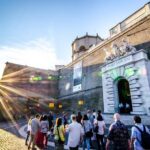

Getting started at Via del Colosseo (and why your names matter)
You meet at Via del Colosseo, 31, 00184 Roma RM. The tour ends inside the Roman Forum near Largo Corrado Ricci—close to the exit, which is handy when you want to keep going without backtracking.
One practical thing I really respect about this experience: the rules are clear. You’ll need to provide the full names of all participants when booking. At the ticket office, the names on your voucher must match your passport or ID exactly, or entry to the Colosseum and Roman Forum can be denied. So before you go, double-check spelling, middle names, and any accents.
Also, you’ll have a mobile ticket, and the meeting point is near public transportation. That helps if you’re staying in central Rome and don’t want to rely on a taxi just to start the day.
Colosseum: 70–72 AD to a tight 1.5-hour orientation
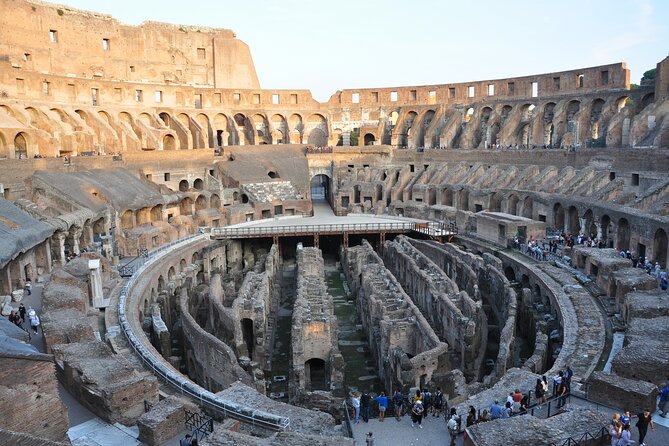
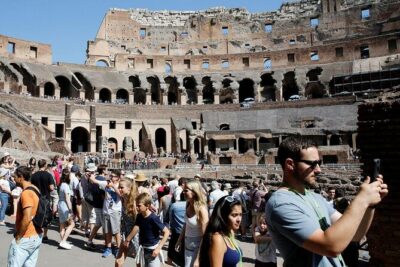
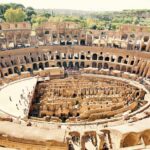
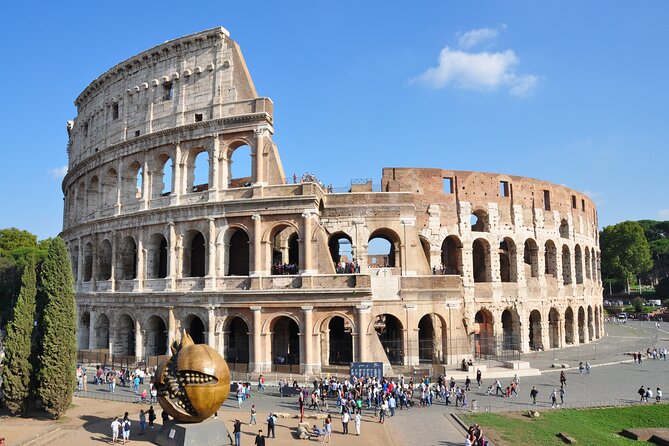
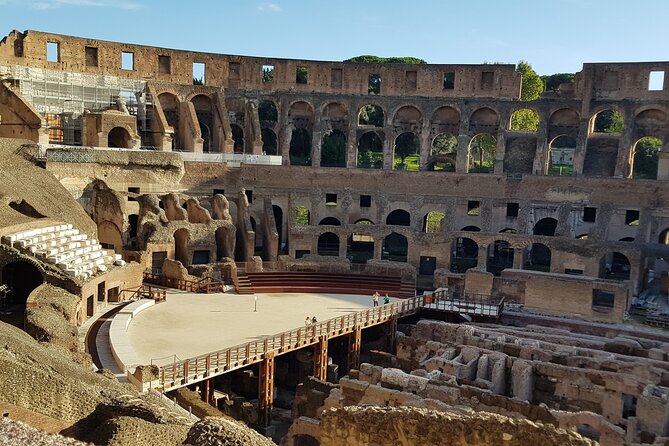
The tour begins with the Colosseum—also called the Flavian Amphitheatre. Construction started sometime between 70 and 72 AD and finished in just 8 years, which is a wild detail to keep in your head while you stand in the arena’s footprint.
You’ll spend about 1 hour 30 minutes at the Colosseum. Even with that time, it’s not an endless wander through every corner. Instead, the guide helps you “read” the building: where you are in relation to how the arena worked, why it looked the way it did, and what Roman emperors and public spectacle were trying to accomplish.
Your ticket part matters too. The Colosseum entrance ticket and the reservation fee are included in the price. So you’re not stuck hunting for tickets or trying to line up access while others move ahead. You just show up with your ID matching the booking.
A final note: the Colosseum is huge, but weather and crowds are real. A guide helps you stay focused on the highest-impact views and viewpoints, rather than spending your limited time walking in circles.
Arch of Constantine: a victory message in stone
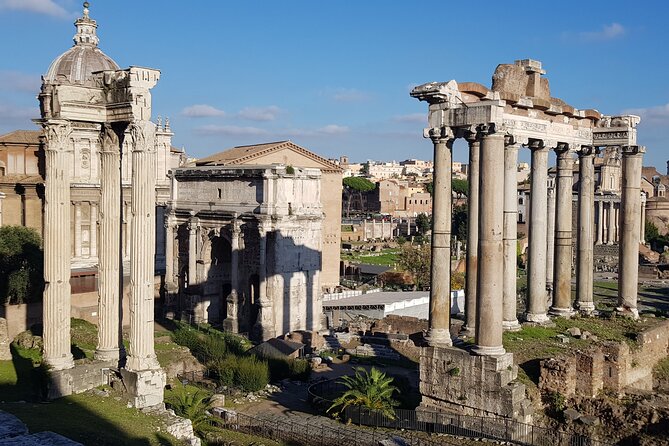
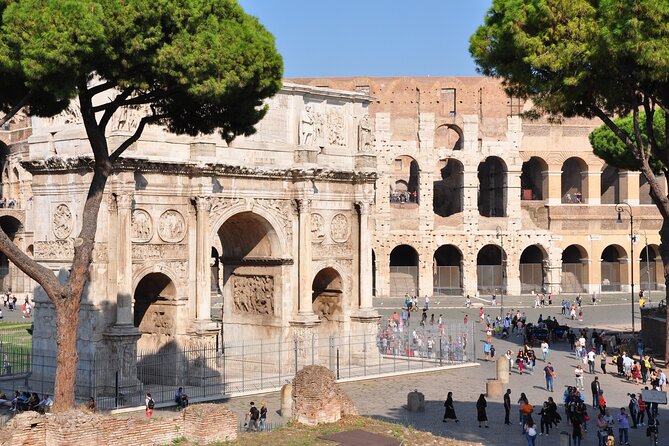
Right after the Colosseum portion, you’ll stop at the Arch of Constantine. It’s one of Rome’s surviving triumphal arches, erected to celebrate Constantine’s victory over Maxentius.
This stop is valuable because it explains how Roman power liked to advertise itself. An arch like this wasn’t made for quiet contemplation. It was made to mark a moment and wrap political legitimacy in a public monument.
In a good guided flow, the arch feels like a bridge between what you saw in the arena and what you’ll see in the Forum. You’re moving from spectacle to state messaging, and that context makes the stone feel less random.
Arch of Titus: Jerusalem in 70 AD, right at the Forum’s entrance
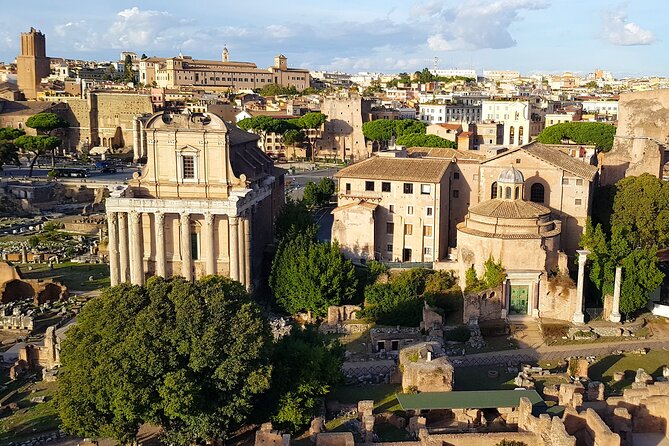
Next up is the Arch of Titus, still standing near the entrance to the Roman Forum. This arch commemorates the conquest of Jerusalem in 70 AD, led by Emperor Titus.
This is a smart addition to the tour because it shows you that the Forum wasn’t just where Romans talked politics. It was also where empire stories were made permanent in the physical landscape. Seeing the arch in place helps you understand how Roman monuments acted like headlines—carved reminders of conquest and authority.
Plus, because the arch sits at the Forum’s entrance, you’re primed to connect it to what comes next: law, meetings, markets, and the day-to-day machinery of public life.






Palatine Hill in 30 minutes: the legendary start of Rome
After the arches, you head to Palatine Hill. The tour gives you about 30 minutes here, which is enough time to grasp the big idea and see the viewpoint logic.
According to Roman legend, Romulus and Remus founded Rome on the Palatine Hill. Whether you treat that as myth or not, it’s still useful. It tells you how Romans explained their own beginnings—through stories tied to specific ground.
Palatine Hill also has impressive topography: it rises about 131 feet south of the Forum and about 168 feet above sea level. When you stand there, it helps explain why this place held prestige. Higher ground means dominance in a city built on layers.
A short stop can be a drawback if you’re hoping for long lingering, but in a focused tour like this, the payoff is that Palatine Hill doesn’t get treated as separate “optional ruins.” It becomes part of the same story: power, origin myths, and the geography that made Rome work.
Roman Forum: where meetings, courts, and markets all happened
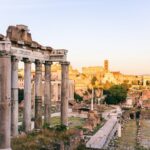
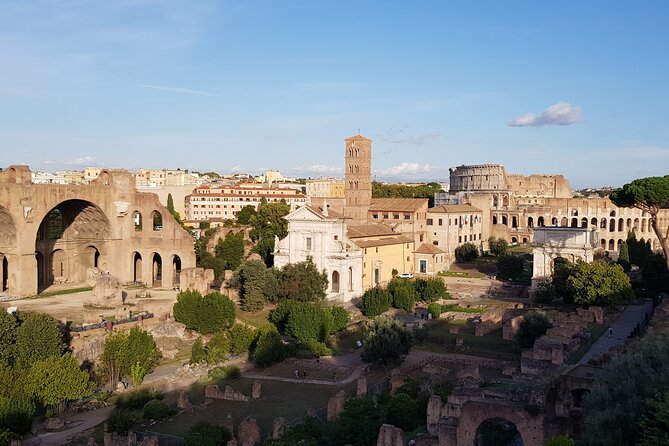
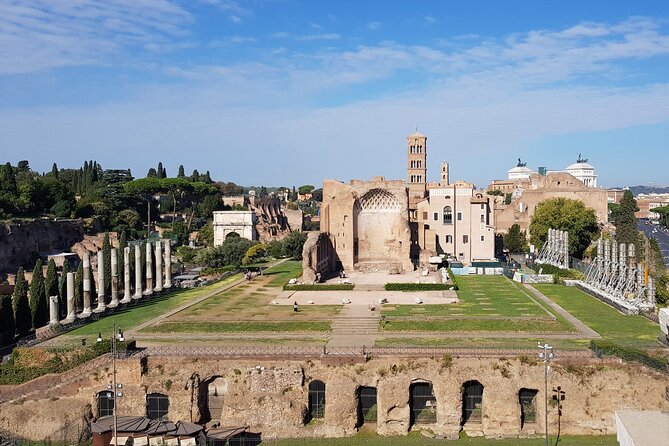
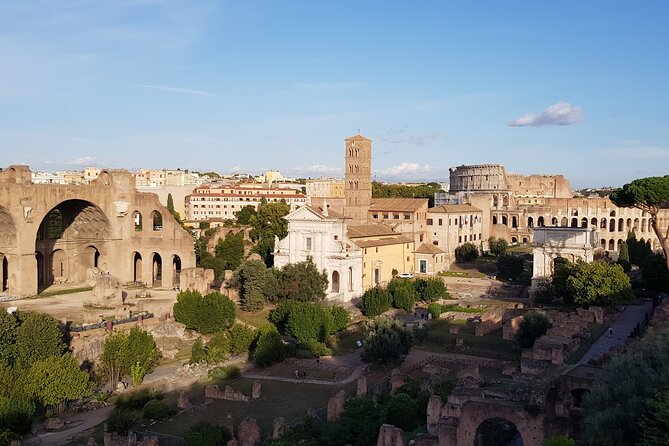
Finally, you reach the Roman Forum for about 1 hour. This is the most important forum in ancient Rome, set on low ground between the Palatine and Capitoline hills. The Forum wasn’t a single-purpose site. It was where the public showed up.
The Forum was the stage for public meetings, law courts, and lined with shops and open-air markets. That’s a lot of roles in one area, and the guide’s job is to keep it coherent while you look at scattered fragments.
For me, the key value is that you learn what you’re seeing in real use terms. Instead of random columns and broken foundations, you get a sense of where people went to argue, vote, trade, and get information. Once you understand that rhythm, the Forum stops feeling like a museum shelf and starts feeling like a lived-in urban hub.
This stop ends inside the Roman Forum near Largo Corrado Ricci, so you’re positioned well to continue exploring on your own after the guide wrap-up.
Price: what $246.60 buys you (and what you should compare it to)
At $246.60 per person, this tour isn’t the cheapest way to see three headline sites. But it does include things that usually cost time and hassle when you handle them yourself.
Here’s what’s explicitly covered:
- A professional licensed guide
- A 3-hour private guided tour
- Headsets if the group is more than 6 people
- Colosseum entrance ticket (valued at €24 per person)
- Colosseum reservation fee (valued at €2 per person)
So yes, part of the price offsets the ticket costs for the Colosseum. The remaining cost mostly pays for the human part: the guide, the private timing, the smooth routing, and the headset support so you can actually hear the commentary when groups get larger.
If you’re short on time or you want a clear “what to see and why it matters” structure, this price can feel fair. If you’re a slow-paced wanderer who likes to spend hours staring at one wall, you might feel the 3-hour window more than the value.
One more detail I like: it’s booked about 75 days in advance on average. That tells me it’s a popular slot. If you’re traveling in peak season, don’t wait until the last week.
The best fit: who should book this, and who might skip
This private tour is best for you if:
- You want to hit Colosseum + Palatine Hill + Roman Forum without coordinating separate tickets and meeting points.
- You like learning as you look, with a guide explaining what you’re seeing.
- You care about hearing the plan clearly, especially with headsets.
It may not be ideal if:
- You want a long, slow, “only one site today” visit. This is built for a focused run across three anchors.
- You’d rather control every step and timing with a DIY approach, even if it means extra planning.
One more reason I’d lean toward booking: the guide attention is the point. In feedback, a guide named Barbara comes up as engaging, and people highlight that she answers questions and helps history feel real instead of distant. That kind of interaction is exactly what makes the sites land.
Should you book this private tour?
I’d say yes if you want a high-impact Rome afternoon that keeps your bearings. The included Colosseum ticket and reservation fee remove one common headache, and the guide-led pacing turns three famous stops into one connected story: empire spectacle, political messaging, founding legends, and civic daily life.
If you’re the type who needs hours at one location, or you’re already confident plotting these sites on your own, then DIY might work. But if you’d rather show up, follow a plan, and come away with clear context, this is a smart way to spend 3 hours in Rome.
FAQ
Where do we meet and where does the tour end?
You start at Via del Colosseo, 31, 00184 Roma RM, Italy. The tour ends inside the Roman Forum near the exit at Largo Corrado Ricci.
Is this tour private, and is it offered in English?
Yes. It’s a private tour/activity, so only your group participates. It’s offered in English.
How long does the tour take?
The tour runs for about 3 hours.
What’s included in the price, including the Colosseum entry?
The tour includes a professional licensed guide and the Colosseum entrance ticket (valued at €24 per person), plus the Colosseum reservation fee (valued at €2 per person). The remainder of the cost covers other services.
Are headsets provided?
Headsets are provided for groups of more than 6 people, so you can hear the guide clearly.
What ID do I need for entry?
You must provide the full names of all travelers when booking, and each person must present a valid passport or ID document that matches the name on the booking voucher. If the names don’t match, entry to the Colosseum and Roman Forum may be denied.