REVIEW · ROME
Rome Highlights by Golf Cart Private Tour
Book on Viator →Operated by Turtle Tours - Golf cart tours in Rome · Bookable on Viator
Rome in 3 hours, on four wheels. This private golf cart tour strings together the big-name sights fast, with hotel pickup in the historic center and a guide who points out what most people miss. The trade-off: it’s sightseeing only, so major sites are viewed from outside, and entry tickets are not included.
If you want Rome without turning your day into a long stair-and-sidewalk workout, this is a strong fit. The cart is street legal, there’s bottled water, and it’s built for comfort (including options that help in cooler or rainy weather). Guides like Mateo and Emiliano have a knack for keeping the pace moving while still answering questions, which matters when you’re doing a lot of stops in a short window.
In This Review
- Key Things That Make This Tour Work So Well
- Why a Street-Legal Golf Cart Feels Perfect for a First Rome Sweep
- Hotel Pickup in the Historic Center: How It Works (and When It Doesn’t)
- Piazza Navona, the Pantheon Area, and Trevi: The Central Triangle Without the Chaos
- Colosseum, Palatine Hill, and the Imperial Viewpoints You Can Actually Access Fast
- Aventine, Circus Maximus, and Bocca della Verità: Rome’s Storybook Side
- Foro Boario and Teatro di Marcello: Temples and the Best-Preserved Theater Vibe
- Castel Sant’Angelo: Your Final Big Photo Anchor
- What You’ll Actually Get: Sightseeing Stops, Not Timed Entry
- Guides Who Make the Stops Make Sense (and Adjust When Rome Gets Messy)
- Price and Value: Is $163.26 a Good Deal?
- Who This Rome Golf Cart Tour Is Best For
- Should You Book This Rome Highlights by Golf Cart Private Tour?
- FAQ
- Is admission to the Pantheon, Trevi Fountain, the Colosseum, or Castel Sant’Angelo included?
- Do I get hotel pickup in Rome?
- What if my hotel is outside the historic center?
- Is the tour private?
- Is the golf cart tour accessible?
- How long is the tour?
Key Things That Make This Tour Work So Well
- Historic-center pickup only makes the first hour smoother (and cuts taxi time)
- Quick, close photo stops instead of parking far away and walking uphill
- Wheelchair and service-animal accessible so more people can see more of Rome
- Street-level routing helps you reach sights while dodging some of the worst traffic
- A private group means you can move at your pace and adjust when needed
- No entry pressure if your schedule or energy is limited
Why a Street-Legal Golf Cart Feels Perfect for a First Rome Sweep
Rome is not shy about hills, cobblestones, and foot traffic. A golf cart changes the math. You get to cover a lot of ground in a few hours, then spend your energy on photos, views, and listening—not on trying to recover between attractions.
This tour also works because it’s designed around “see it, understand it” stops. You’re not stuck in a single museum line for the whole day. Instead, you’ll get short visits that add up into a real sense of how the city’s pieces connect: art and fountains in the center, temple-era architecture, then the imperial monuments.
And the comfort factor is real. One highlight in the feedback is that carts get people closer to sights, which is a big deal if walking is tough. Even if you’re fine on foot, the reduced hustle can make the whole day feel lighter.
You can also read our reviews of more private tours in Rome



Hotel Pickup in the Historic Center: How It Works (and When It Doesn’t)
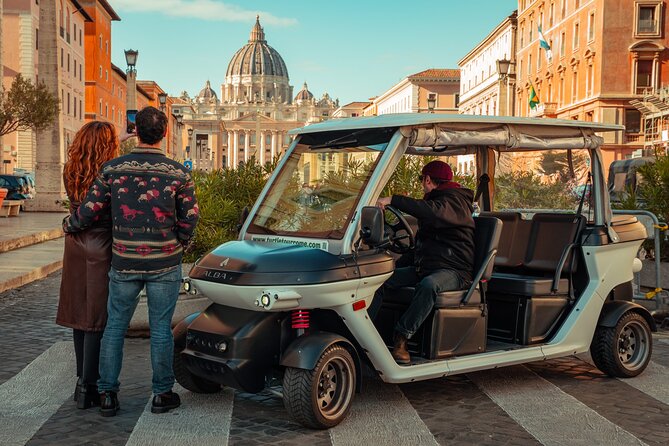
The biggest practical win here is pickup—if you qualify. Pickup is only offered at addresses in Rome’s historic center, limited to these ZIP codes: 00184, 00186, 00187. If you’re outside that zone, you’ll need to select a meeting point.
There’s also an important list of hotels that do not qualify for pickup. If you’re staying at one of those properties, the provider will reach out to set a meeting point instead. If you’re not sure, check your address early so you’re not scrambling on tour day.
Two more things to plan around:
- No airport or cruise port pickup is available.
- Pickup time matches your start time, so you’ll want to be ready a bit before the scheduled hour.
If you’re optimizing for ease, this setup is excellent—especially because Rome traffic and pedestrian-only streets can turn “just going to the next stop” into a detour.
Piazza Navona, the Pantheon Area, and Trevi: The Central Triangle Without the Chaos
Your route starts with Piazza Navona, one of the city’s great people-watching squares. It used to be the setting for athletic events long ago, and today it’s built around three fountains. The showpiece is Bernini’s Fountain of the Four Rivers, which is worth a slow look even if your stop is brief.
Next comes the Pantheon. It’s one of Rome’s architectural masterpieces, with more than 2,000 years of history. Even if you don’t go inside, seeing it in person lands differently than a postcard. It helps to keep your expectations realistic, though: entry isn’t included here, so plan to view from outside during your time with the cart.
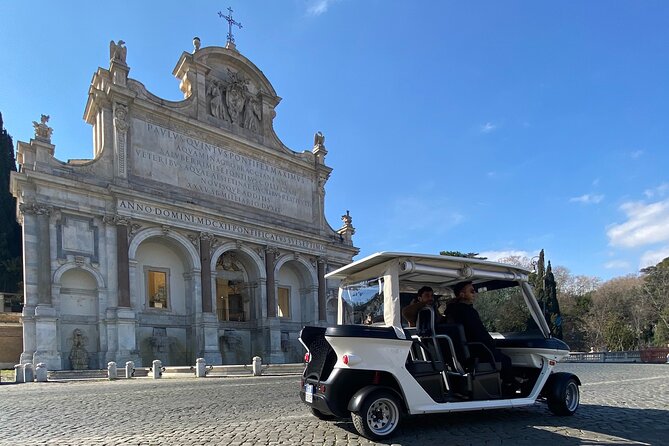
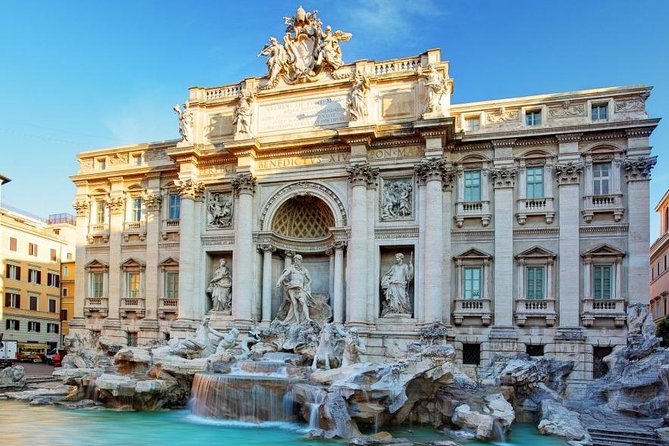
Then you’ll reach Trevi Fountain, the famous baroque cascade everyone knows. This stop is timed for photos, quick legend-sharing, and the classic coin toss moment—so the vibe is part romance, part ritual. Since admission is not included, think of this as your “get the iconic shot and learn the story” stop, not a timed-entry visit.
Practical tip: If you want the best Trevi photos, don’t treat this like a quick glance. Pause, stand where the cart leaves you, and angle for the fountain’s curves. Even with just minutes, you can make your photo look intentional instead of accidental.
Colosseum, Palatine Hill, and the Imperial Viewpoints You Can Actually Access Fast
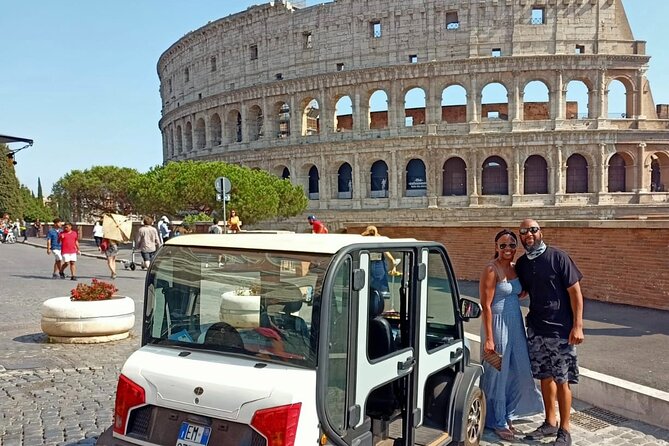
After the center, the tour shifts into Rome’s big-stone era. You’ll stop for Colonna Traiana, a decorated marble column that helps you see how Rome celebrated power and conquest through art. It’s not as loud as the Colosseum, but it’s the kind of detail that makes the whole story feel less like a highlight reel.
From there, you’ll head to the Forum of Augustus. A monumental forum by Emperor Augustus sounds textbook until you’re standing near it. This is where the walking rhythm matters. With a cart, you’re not fighting to cover “just one more forum” on foot across crowds.
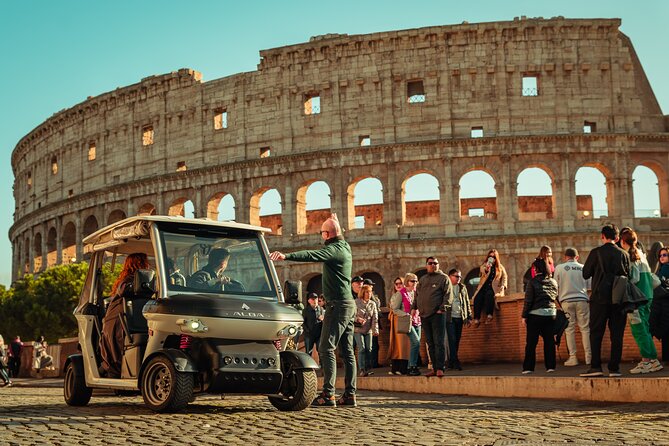
Then comes the big one: the Colosseum. This is a classic “you must see it” site, and you’ll get that moment with a close look and stories that connect it to what’s around it. Like other major sites on this tour, entry tickets are not included, so you’re planning for an exterior look and photo time.
Nearby, you’ll also reach Palatine Hill for views of the imperial palaces. Even if you’ve never studied the Palatine, you’ll feel why emperors liked being here—views, dominance, and proximity to the city’s center.
Why the cart matters here: the area around the Colosseum gets busy, and routes can be slow on foot. The cart helps you keep the momentum so you don’t lose the day to congestion.
Aventine, Circus Maximus, and Bocca della Verità: Rome’s Storybook Side
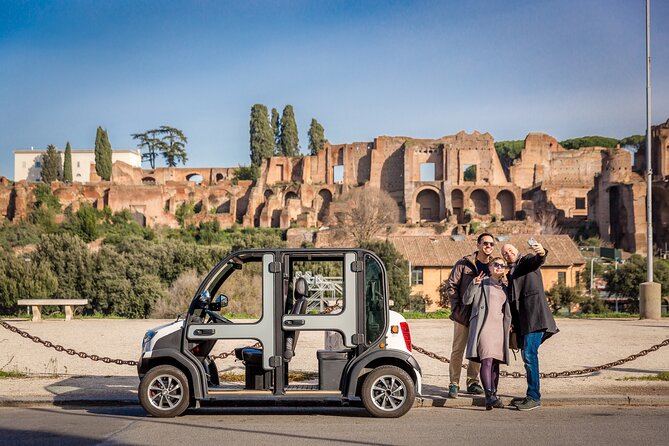
Your itinerary then leans into the quieter, more playful corners of ancient Rome.
You’ll stop at Aventine, known for its city views. It’s a nice change of pace after all the iconic monuments, because it lets you breathe and absorb Rome from a different angle.
Next is Circo Massimo, the remains of the stadium where chariot races once roared. Even from a short stop, you can picture the scale. This is the type of site where a guide’s context turns “ruins” into “a living scene you can imagine.”
Then you’ll hit Bocca della Verità—the legendary Mouth of Truth. This stop works even if you’re not a hardcore mythology person, because it’s fun and instantly recognizable. You’ll hear the story behind it, which makes it more than a quick tourist photo.
Small reality check: These are short stops, so treat them like “brief but meaningful” moments. If a site is the one you care most about, plan to make the photo first, then ask questions while you still have time.






Foro Boario and Teatro di Marcello: Temples and the Best-Preserved Theater Vibe
From there, you’ll move into an area with classic Roman shapes: temples and theatre.
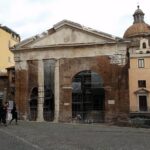
You’ll stop at Foro Boario, where you can see two Roman temples. Even without going inside, it’s the kind of place that helps you understand why Rome’s stonework still feels so “solid” today.
Then comes Teatro di Marcello, described as the best preserved Roman theatre. This stop is especially good if you like architecture details. You’ll see why it lasted when other structures didn’t—plus you’ll get the background that makes the seating and stage feel less abstract.
These stops are also useful because they add variety. After seeing fountains and the Colosseum, theatre architecture brings a different kind of Roman life to the picture.
Castel Sant’Angelo: Your Final Big Photo Anchor
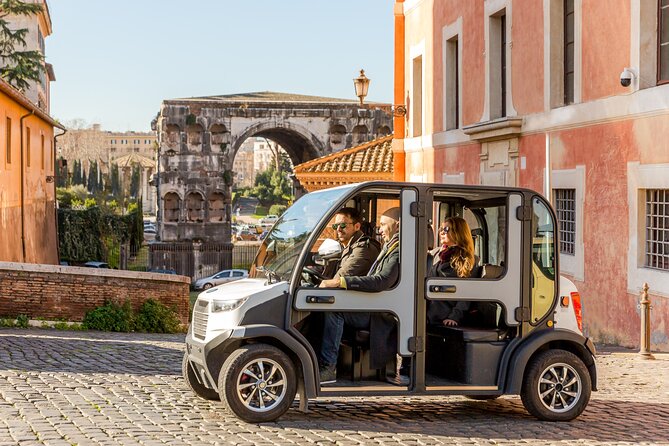
The last major stop on the loop is Castel Sant’Angelo. It’s a landmark building with a long and interesting past, and it tends to make people pause. Even if you don’t go inside, the exterior impression is strong.
This is also a good “closing chapter” sight. After ancient temples, forums, and amphitheatre-scale monuments, you end with a structure that ties Roman history into later layers of the city.
What You’ll Actually Get: Sightseeing Stops, Not Timed Entry
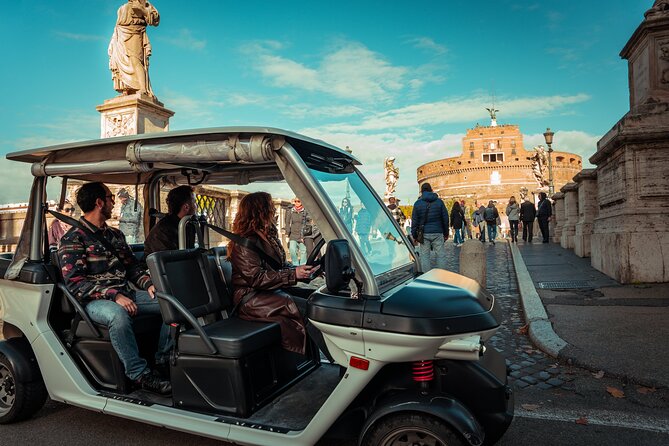
Here’s the deal: this is a sightseeing tour only. You’ll be able to see and photograph major sights, but entry to major sites or museums isn’t included.
That means:
- If you want the Pantheon interior, you’ll need a separate ticket plan.
- If you want to go inside places like the Colosseum or Castel Sant’Angelo, you’ll need to do that separately.
- Your time is meant for views, context, and quick photo opportunities.
For many people, that trade-off is worth it. When your goal is to get oriented fast and leave Rome with a strong mental map, exterior stops can be a smart use of a few hours.
Guides Who Make the Stops Make Sense (and Adjust When Rome Gets Messy)
A golf cart tour lives or dies by the guide. This one has an advantage: the guides shown in the feedback are consistently friendly, helpful, and good at turning short stops into clear takeaways.
I’ve seen examples like Aiman helping someone with mobility needs get closer to major sights without a long walk. Mateo is praised for making history readable and for tying together both famous facts and legends. Emiliano and Vito show up in the feedback as people who handle the city’s chaos with confidence, including rerouting when conditions change.
One standout detail: Rome isn’t always predictable. On days with street closures, guides have tailored the route to help you still see key areas. That flexibility can be the difference between “we mostly sat in traffic” and “we saw the good stuff anyway.”
Small comforts matter too. One guide (Andrea) was mentioned as having blankets, and more than one note highlights that carts can be more weather-friendly than you’d expect.
Price and Value: Is $163.26 a Good Deal?
At $163.26 per person for about 3 hours, the price can feel high at first glance. But value in Rome isn’t only about tickets. It’s also about time saved and walking avoided.
You’re paying for:
- A private experience (only your group participates)
- Pickup within the historic center (when you qualify)
- A street-legal vehicle that can reach closer drop-off points
- A guide who keeps the route moving across multiple neighborhoods in a short window
- Bottled water and all fees included
If you’re traveling with family, someone with limited mobility, or a group that doesn’t want to split up to manage transportation, the value adds up fast. If you’re solo and love museums, this may not beat a ticketed, entry-heavy day. But for a first-timer orientation tour, it’s strong.
Who This Rome Golf Cart Tour Is Best For
This works especially well for:
- Families who want a plan that doesn’t require constant walking breaks
- Couples on a time crunch who want the big icons without spending the day in transit
- Anyone with mobility challenges who needs closer access and an easier pace
- Groups of friends who want one shared plan and minimal coordination
If you love lingering inside sites for hours, you might feel limited by the short stop times. But if you want a guided pass across Rome’s highlights that still leaves room for later exploration, this hits the sweet spot.
Should You Book This Rome Highlights by Golf Cart Private Tour?
Book it if your priority is a fast, comfortable orientation to central Rome—especially if you want close stops, easy pickup, and a guide who can explain what you’re seeing in plain language.
Skip it if you’re building your day around museum-quality time inside specific sites. Because entries aren’t included, you’ll still need a separate ticket strategy for the Pantheon interior, the Colosseum interior, or other major access points.
My practical advice: if you’re staying in the historic center and you can commit to the outside-seeing format, this tour is one of the cleanest ways to make your Rome day feel organized instead of exhausting.
FAQ
Is admission to the Pantheon, Trevi Fountain, the Colosseum, or Castel Sant’Angelo included?
No. This is a sightseeing-only tour, so entry to major sites or museums is not included, and entry or admission tickets are not part of the experience.
Do I get hotel pickup in Rome?
Pickup is offered only at addresses in Rome’s historical center with ZIP codes 00184, 00186, and 00187. There is no airport or cruise port pickup.
What if my hotel is outside the historic center?
If you’re staying outside the historical center, you’ll need to choose a meeting point instead of pickup.
Is the tour private?
Yes. It’s a private tour/activity, and only your group participates.
Is the golf cart tour accessible?
Yes. The tour is wheelchair accessible and service animals are allowed.
How long is the tour?
The duration is approximately 3 hours.