REVIEW · ROME
Rome Street Food Tour with Local Guide
Book on Viator →Operated by Raphael Tours & Events · Bookable on Viator
Suppli in one hand, ancient Rome in the other. This small-group street food tour is a smart mix of eating and strolling, starting at Campo de’ Fiori and building to big sights like the Jewish Ghetto and the Largo di Torre Argentina area. I love the variety—suppli, pizza, cheese, cured meats, seasonal bites, and gelato—because it feels like a Roman greatest-hits playlist. I also like that you do real walking between tastings, so the food comes with place-based context instead of just standing in line. One consideration: it is mostly outdoors and not ideal if you need lots of frequent seating or short walking bursts.
Guides matter here. In the feedback, names like Matao, Mattia, Ramona, Francesca, and Matteo show up again and again for making the history easy to follow and the tastings actually fun, not rushed. You’ll be in a group capped at 15, which helps keep the pace human and the questions coming—just keep in mind the tour runs rain or shine, and tastings can shift with season.
In This Review
- What Makes This Rome Street Food Tour Worth Your Time
- Start at Campo de’ Fiori: where Roman street food has real roots
- Jewish Ghetto to Pompey area: eating while the streets explain themselves
- Passetto del Biscione: a calmer corner for street-food focus
- Largo Argentina: Julius Caesar’s assassination zone and a gelato finale
- What you actually eat: suppli, pizza, pastries, and Roman staples
- Wine, beer, and walking pace: how $54.42 can feel like a win
- Dietary rules, allergies, and how to avoid a bad surprise
- Should you book this Rome street food tour?
- FAQ
- Where does the tour start and end?
- What foods and drinks are included?
- Can the tour accommodate dietary restrictions?
- Is the tour run in bad weather?
- Is this tour suitable for people with limited mobility or who need seating?
- What is the cancellation policy?
What Makes This Rome Street Food Tour Worth Your Time
- Meet at Piazza Campo de’ Fiori under Giordano Bruno and start with market-stall energy
- Morning-focused market tastings happen in the oldest market area, with timing differences for lunch vs dinner
- Stop-by-stop Rome history includes the Jewish Ghetto area and ruins tied to Julius Caesar
- Family-run gelateria finale with an owner explaining how gelato is made
- Wine and beer are included, but extra drinks cost extra
- Small group (max 15) keeps the flow friendly and lets your guide manage pacing
Start at Campo de’ Fiori: where Roman street food has real roots
Campo de’ Fiori is one of Rome’s great “you’re here, right now” places. You meet in the center of the square under the statue of Giordano Bruno, which makes it easy to find the group before you get swept into the food rhythm.
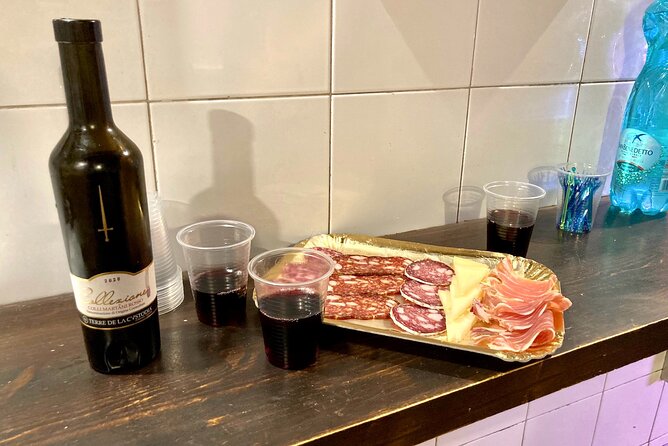
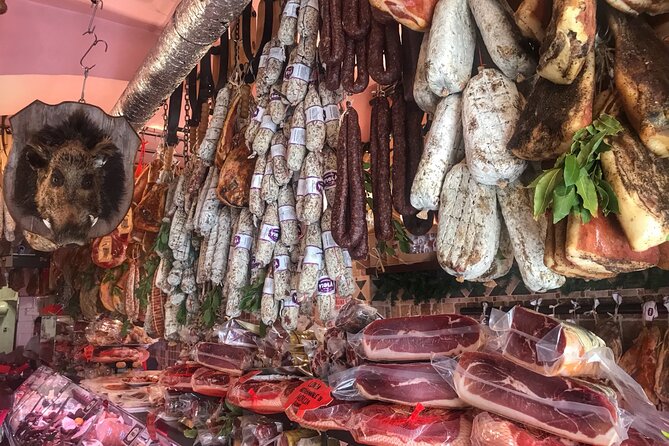
From there, the tour leans into what makes Rome street food work: you’re not just eating random snacks. You’re tasting at a market that locals actually use, so the food feels seasonal and practical. Expect your first tastings to come from stalls around the market—things like cheese, cured meat, and fruit, plus a first round of wine and beer.
Two details are especially useful for your trip planning. First, this tour works best when you choose the right time of day for the vibe you want. Evening time matters because the note that the local market is closed in the evenings is real—so if your goal is maximum market-stall energy, a lunch slot tends to make more sense than dinner. Second, tastings are described as subject to change with the season. That’s not a gimmick. In Rome, “seasonal” often means the food tastes better and costs less than the prepackaged stuff you’ll see elsewhere.
Practical tip: wear comfortable shoes for this start. Campo de’ Fiori itself is fine, but you’re about to spend the next couple hours moving between neighborhoods and viewpoints, and there aren’t guaranteed seats along the way.
You can also read our reviews of more food & drink experiences in Rome
Jewish Ghetto to Pompey area: eating while the streets explain themselves
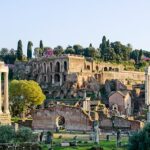
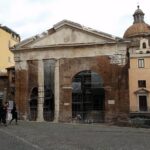
After the market, the walking part turns into the fun part: the city sites are close enough to connect, but different enough to keep you awake. In this stretch, you move into the Jewish Ghetto area and toward the Theatre of Pompey zone, where ancient Roman structures sit alongside the living story of the neighborhood.
What you get here is a guided sequence of “how to look.” Your guide points out what you’re seeing and gives context on why it matters. Then the tour pairs that with a food stop focused on Roman-Jewish specialties. It’s a good way to taste outside the usual tourist triangle of pizza-and-gelato only.
This is also where I think the tour earns its pacing. If you try to do these sights on your own, you’ll often rush through them or read a sign and move on. With a guide and scheduled tastings, you slow down just enough to notice details—architecture, street layout, and the layered history that makes Rome feel like multiple cities at once.
One more thing I like: you are tasting while you walk, not waiting in long lines. That matters on a city weekend or during peak summer, when Rome can feel crowded even when you’re moving between smaller streets.
Passetto del Biscione: a calmer corner for street-food focus
You also spend time around Passetto del Biscione, described as a more low-key historical quarter. This is the part of the tour that’s less about hitting the biggest postcard and more about getting your bearings and tasting what locals reach for.
The tour framing here is simple: stop, taste, move on. You’re guided to what’s considered strong street-food choices in the area, and the group stays tight enough that you don’t lose momentum.
Why this stop is valuable for you: it breaks up the heavier “major sights” moments so the experience doesn’t feel like a history lecture with snacks. You get a breather, a new flavor pattern, and a change of scenery before the next big landmark stretch.
If you’re someone who likes to travel by food logic—what people eat where they live—this stop helps. Rome isn’t one cuisine. It’s dozens of micro-traditions, and this is one of the ways the tour steers you toward that truth.
Largo Argentina: Julius Caesar’s assassination zone and a gelato finale
As the tour moves toward Largo Argentina, you’re walking into one of the most dramatic historical setups in Rome: the area linked to Julius Caesar’s assassination. Even if you’ve read the story before, seeing it in the real street space makes the moment hit differently.
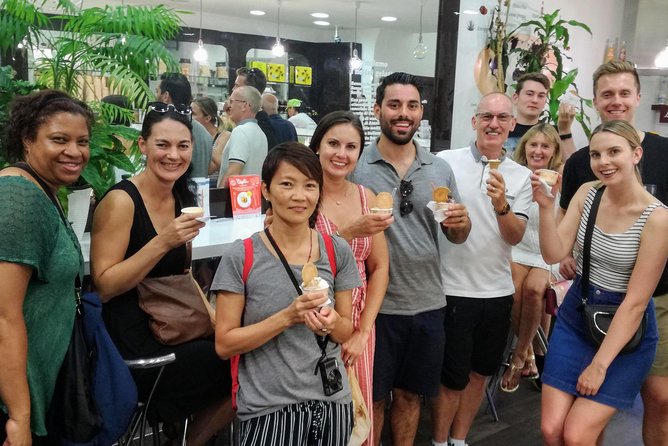
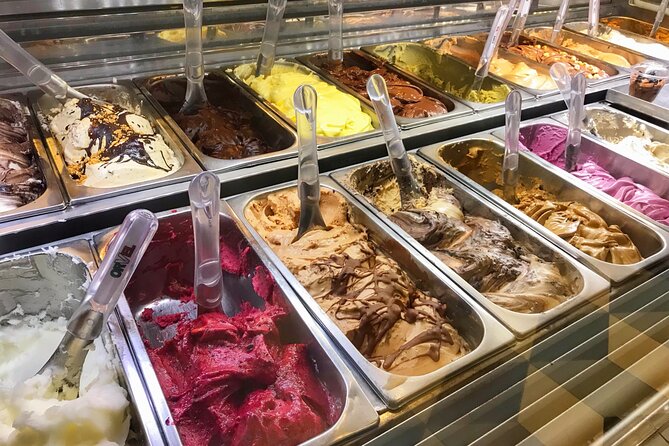
Then the tour pays off with the gelato portion, at a nearby family-run gelateria. This is where you stop being just a “cultural tourist” and become a normal Roman for a few minutes—holding a cold cup and melting into conversation with your guide.
The key detail: you’ll hear how gelato is made from the shop owner. That’s more than a show-and-tell. It gives you a better lens for what you’re tasting, and it helps you compare later gelato stops in Rome with something more than vibes.
Timing matters again. Your tour can be done at lunch or dinner, and the gelato stop is a light meal style finish. So if you already planned a big sit-down dinner, this tour can still work, but you’ll likely want to keep the next meal modest.
What you actually eat: suppli, pizza, pastries, and Roman staples
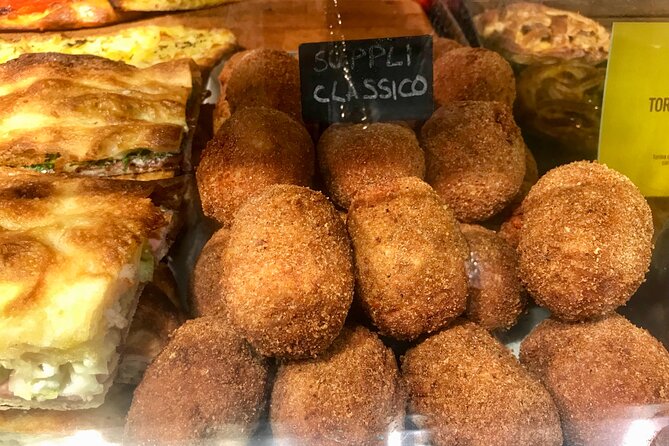
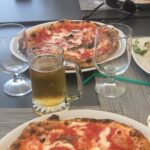
The headline items are the ones you’ll remember: suppli and pizza, plus pastries and seasonal produce.
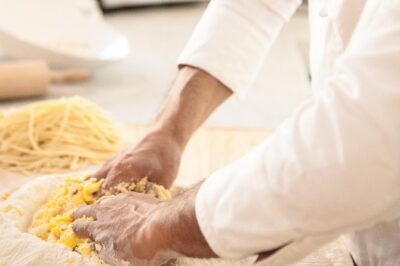
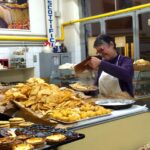
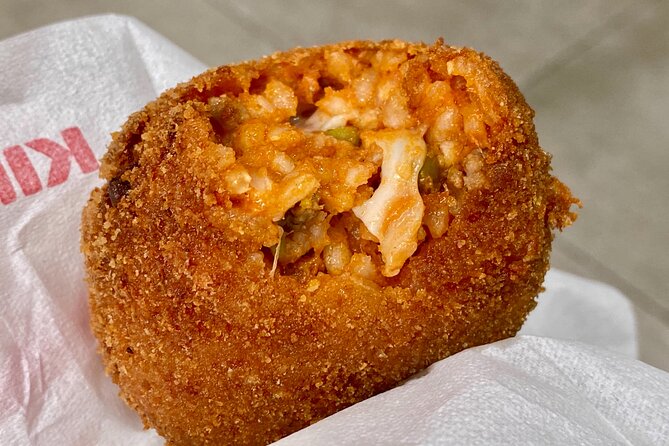
Suppli is the classic Roman street food: a fried rice ball with tomatoes and mozzarella tucked in the center. It’s crispy on the outside, hot and melty inside, and it’s the kind of bite that makes you immediately understand why Rome street food has staying power. If you’ve never tried it, doing it on a guided tour helps because you’re not guessing what to order. You’re eating the local default.
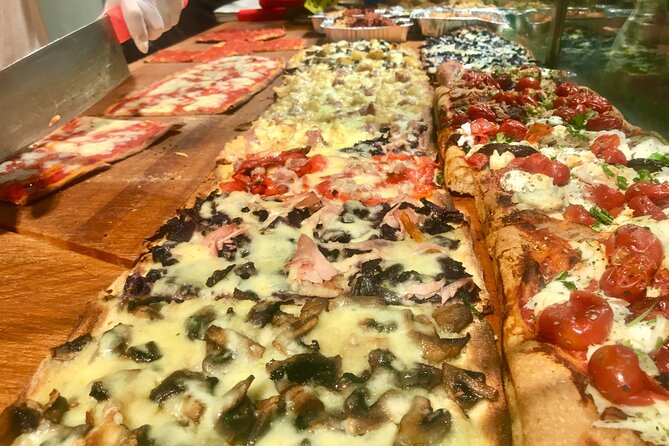
Pizza on this type of tour is usually “street-style” tasting portion size—enough to understand the flavor without turning your tour into a full meal mission. The same goes for other bites like cheese and cured meat early on, and the Jewish specialty later.
Seasonal fruit and produce show up, too. That’s not just variety for variety’s sake. It’s one of the easiest ways to taste what Rome’s markets consider best right now.
Portion reality check: tastings are designed to sample, not to replace dinner. Think of this as a light meal built from multiple moments. If you arrive hungry, great. If you arrive full, you’ll still enjoy the range, but you might feel less of the wow factor.
You can also read our reviews of more tours and experiences in Rome


Wine, beer, and walking pace: how $54.42 can feel like a win
Let’s talk value honestly. At about $54.42 per person for roughly 2 hours 30 minutes, you’re paying for three things: the tastings, the included wine and beer, and the guide-led walking between neighborhoods and ruins.
One reason it can feel like a good deal is that Rome adds up fast. A single gelato plus drinks plus a couple of snack stops can climb quickly. Here, you’re bundling multiple food hits with beverages you didn’t have to choose or hunt down.
The pace is also important. The tour is built so you can enjoy the city without feeling like you’re sprinting. Still, it’s not a sit-down tour. You should be ready for standing and slow walking for most of the experience, and seating is not guaranteed.
Group size (max 15) affects value too. Larger groups often create delays and less guide time. Smaller groups make it easier to keep the tasting schedule tight, which helps you get to the gelato finale without the day dragging.
Also worth noting: extra drinks are not included. That doesn’t make the tour overpriced; it just means you should expect to pass on impulse ordering if you’re trying to stay on budget.
Dietary rules, allergies, and how to avoid a bad surprise
Food tours can be tricky when your dietary needs don’t match what the tour is built for, so read this part carefully.
- The tour can accommodate vegetarians (not vegans), but only if you advise ahead of time.
- It does not accommodate vegans, gluten-free, or dairy-free diets.
- If you have a nut allergy, there’s a risk from cross contamination.
Now, here’s the nuance from the feedback: there are cases where guides tried to help even when the tour cannot fully accommodate a condition. For example, one coeliac visitor praised a guide (Matao) for making sure they had gluten-free items at places where possible. That’s encouraging, but it’s not a promise that everything will be safe for your exact needs.
My practical advice: if you need gluten-free or dairy-free, don’t assume you’ll be covered. Contact the provider before you book and be very specific about your restriction. If the tour can’t guarantee it, you may choose a different kind of food experience where ingredients are easier to control.
For everyone else: go easy on day-one bravado. A negative review described getting sick after very hot weather and fried items, suggesting that your body matters as much as your appetite. Bring water, take your time, and treat fried, melty, or dairy-heavy bites as delicious, not mandatory.
Should you book this Rome street food tour?
Book it if you want a guided, taste-first way to see key Rome neighborhoods without planning every snack stop. It’s also a strong choice for first-timers, because the walk connects major places—Campo de’ Fiori, the Jewish Ghetto area, and the Julius Caesar zone—while you eat the city’s comfort-food hits like suppli, pizza, and gelato.
Skip it or adjust your expectations if you:
- can’t handle standing and walking for a couple hours
- need guaranteed gluten-free, dairy-free, or vegan options
- have nut allergies and require strict avoidance
If you’re flexible and you like the idea of tasting your way through Rome’s street-food culture, this is the kind of outing that can genuinely set the tone for the rest of your trip. Plan for comfortable shoes, choose lunch if you want maximum market energy, and show up hungry enough to enjoy the surprises.
FAQ
Where does the tour start and end?
The tour starts at Piazza Campo de’ Fiori (P.za Campo de’ Fiori, 00186 Roma RM, Italy). The meeting point is in the square under the statue of Giordano Bruno. The tour ends at Piazza di S. Eustachio, 00186 Roma RM, Italy.
What foods and drinks are included?
You get several street food tastings plus local wine and beer. Tastings can include items like suppli, pizza, pastries, cheese, cured meats, and seasonal produce, and the final stop includes gelato.
Can the tour accommodate dietary restrictions?
Vegetarians can be accommodated if you advise in advance. The tour does not accommodate vegans, gluten-free diets, or dairy-free diets. If you have a nut allergy, be aware of cross contamination risk.
Is the tour run in bad weather?
Yes, the tour takes place rain or shine.
Is this tour suitable for people with limited mobility or who need seating?
It is not suitable for travelers with limited standing or walking capacity, and seats are not guaranteed.
What is the cancellation policy?
You can cancel for a full refund up to 24 hours before the experience start time. If you cancel less than 24 hours before, the amount you paid is not refunded.