REVIEW · ROME
Rome Morning Vespa Sidecar Tour in Rome with Cappuccino
Book on Viator →Operated by Vespa Sidecar Tour · Bookable on Viator
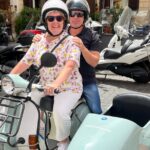
Zipping around Rome on a Vespa sidecar beats the usual bus shuffle. I love the pairing of audio headsets with a guide who narrates the whole route, and I also like that you start with a classic cappuccino plus cornetto breakfast. One thing to think about is the seating setup: if you book a single seat, you’ll likely share the same Vespa with another guest and may swap positions at stops.
This is a morning tour built for speed and comfort. You get a professional driver doing the navigating and parking, while you focus on photos, quick walks at key stops, and listening to the live commentary through clean headsets.
The route packs in a lot in about 3 hours, including the Pantheon (entrance included) plus major highlights like Trevi Fountain, St. Peter’s Square, and the Colosseum. It’s max 12 travelers, so it doesn’t feel like a cattle-car, but it’s still a tight schedule, so arrive ready to move.
In This Review
- Key takeaways before you go
- Rome Vespa Sidecar Morning Tour: the idea behind this ride
- Meeting at Piazza della Repubblica and getting set up fast
- Cappuccino and cornetto breakfast: why this stop is more than fuel
- Audio headsets and live narration: how you actually learn the city
- Stop 1: Piazza della Repubblica and the Fontana delle Naiadi
- Stop 2: Palazzo del Quirinale on Monte Cavallo
- Stop 3: Trevi Fountain with its 19 BC origin
- Stop 4: The Pantheon, oculus light, and why it’s included
- Piazza Navona and Bernini’s Fountain of the Four Rivers
- St Peter’s Square: Bernini scale and the sense of space
- Terrazza del Gianicolo: views, statues, and Garibaldi’s story
- The Jewish Ghetto drive-by and that “real Rome” feeling
- Piazza Venezia and Altare della Patria’s tomb of the unknown soldier
- The Colosseum: Flavian Amphitheatre and Rome’s loud symbol
- Basilica di Santa Maria Maggiore: a major church with a specific Virgin Mary focus
- Price and value: what $163.26 buys you in real terms
- Who should book a Vespa sidecar tour (and who should skip it)
- Practical tips to make the most of your 9:00 am ride
- Should you book this Rome morning Vespa sidecar tour with cappuccino?
- FAQ
- How long is the Rome morning Vespa sidecar tour?
- What time does the tour start and where does it meet?
- What’s included with breakfast on this tour?
- Is the Pantheon entrance included?
- Does the tour use audio headsets and narration?
- What should I know about seating for children and weight limits?
- FAQ
- What happens if the weather is bad?
- Can I cancel for a full refund?
- Is the tour offered in English?
- How big are the groups?
- Is a mobile ticket provided?
- Is this tour suitable for most travelers?
Key takeaways before you go
- Headsets + live narration so you don’t miss the story while you’re riding
- Breakfast with cappuccino and cornetto so you start Rome like a local
- Pantheon entrance included, which makes that stop smoother
- Professional drivers handling traffic, narrow streets, and parking
- Twelve major sights in roughly three hours, with short photo and stretch breaks
- Small group size (max 12) keeps it personal enough for questions
Rome Vespa Sidecar Morning Tour: the idea behind this ride
Rome can be a lot. Lots of walking, lots of lines, and lots of trying to figure out where you are while traffic hisses past. This tour flips the script by giving you transportation that’s fun and practical: you cover big sights quickly, and you get the context while the scenery slides by.
The best part for me is that you’re not multitasking. You don’t have to decode routes, hunt for parking, or walk an endless loop just to see one famous building. Your job is simple: sit back, listen, and be ready when the guide says it’s photo time.
The route also leans into what makes Rome special beyond the postcards. You see not just monuments, but the hills, squares, and neighborhoods that connect them.
You can also read our reviews of more tours and experiences in Rome
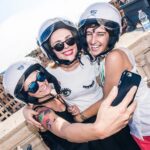
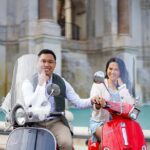
Meeting at Piazza della Repubblica and getting set up fast
You meet at Piazza della Repubblica, 41. Check-in is straightforward, and the tour starts at 9:00 am, which is ideal if you want cooler morning light and fewer midday crowds.
Before you roll, you’ll get proper safety gear: CE-homologated helmets and sterilized disposable head covers. That detail matters. You’re on a moving Vespa in city traffic, and comfort plus hygiene help everyone relax.
You’ll also be issued audio headsets. When you’re bouncing along, it’s easy to miss signage or small details. The headset system keeps the guide’s narration clear so you understand what you’re looking at instead of just admiring facades.
Cappuccino and cornetto breakfast: why this stop is more than fuel
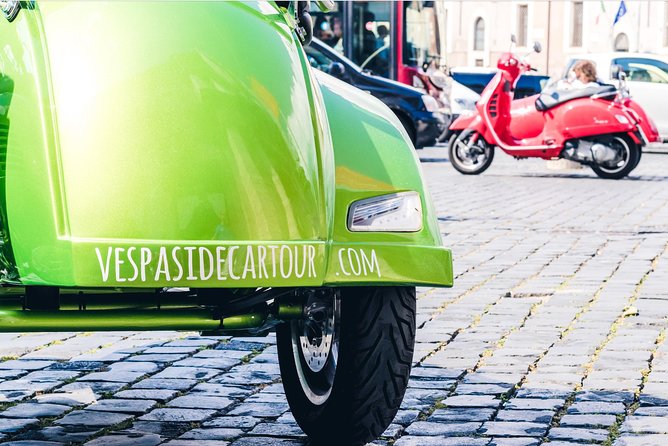
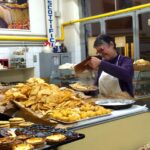
This tour includes breakfast with a traditional cappuccino and cornetto. It’s not just a perk; it’s timing. Starting with food helps you stay focused for the whole morning, especially if you’re hopping between different neighborhoods where walking could otherwise feel harder.
The cornetto tends to be simple and local-feeling, and the cappuccino is exactly what you want before you spend time outdoors for photos. Plus, it gives a natural reset point in a tour that otherwise moves quickly.
A small bonus that shows up in the experience: some riders mention extra comfort from their driver, like a hot water bottle and blanket. That’s not guaranteed, but the takeaway is real—drivers seem attentive to how comfortable people feel.
Audio headsets and live narration: how you actually learn the city
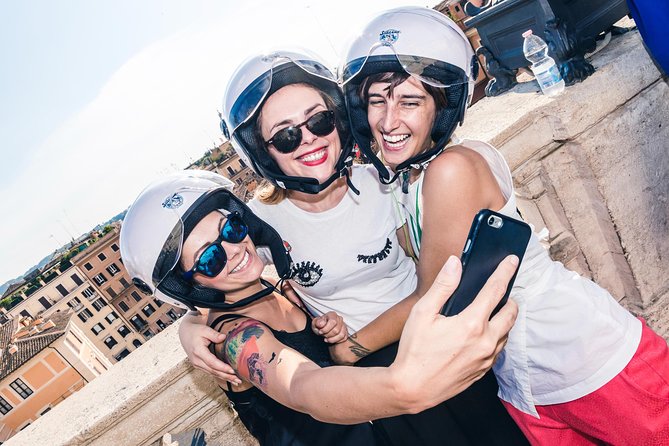
This tour doesn’t make you choose between motion and information. The guide narrates the route through headphones the whole time, so you get the what, where, and why of each stop without stopping your day to read walls.
That format is great if you’re traveling with kids, too, because it keeps everyone engaged during the riding time. The ride becomes part of the “class,” not a dull transfer between spots.
In practice, this kind of storytelling works best with short stops. You arrive, you get the quick context, you take photos, and you’re back on the road. For a first morning in Rome, that’s a smart way to get your bearings fast.
Stop 1: Piazza della Repubblica and the Fontana delle Naiadi
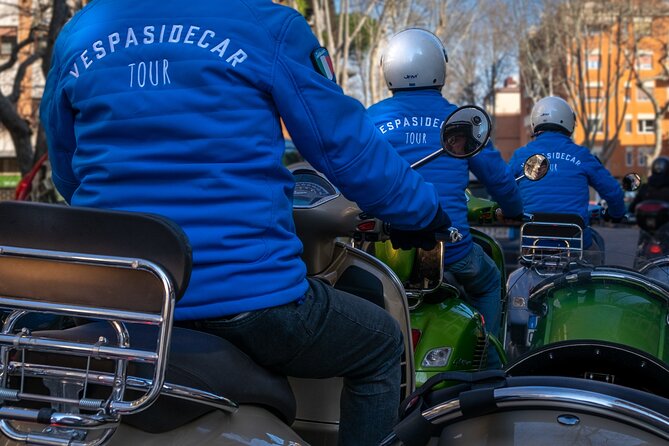
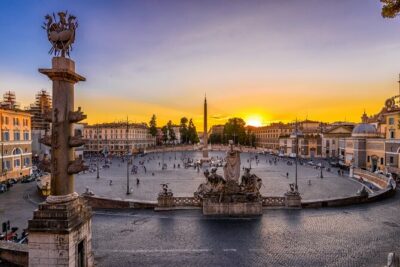
Your first major square is Piazza della Repubblica. It was shaped by urban redevelopment after Rome became the capital, and the square still feels like a grand stage set—roundabout traffic, big buildings, and a dramatic fountain at the center.
The star here is Fontana delle Naiadi. Even if you don’t know the details, the size and composition are instantly impressive. It’s also a good warm-up for how the tour works: you get a quick look, a short moment to absorb the setting, and then you’re off.
If you like history that’s visible in city planning (not just museum walls), this stop hits that sweet spot.
You can also read our reviews of more tours and experiences in Rome
Stop 2: Palazzo del Quirinale on Monte Cavallo
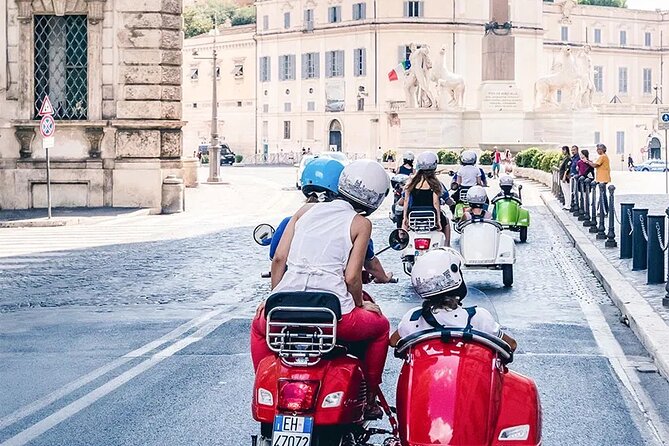
Next comes Palazzo del Quirinale on the Quirinal Hill. This is one of the official residences of the President of the Italian Republic, and it’s also the kind of building that has served many eras—housed popes, kings, and later presidents.
Even though you’re not doing a long indoor visit, the exterior context matters. You’re learning how Rome’s power centers shifted over centuries, and how today’s institutions live on top of older layers.
It’s a short stop, but it works as a bridge from the big public squares into the more “cultural landmark” feel of the rest of the route.
Stop 3: Trevi Fountain with its 19 BC origin
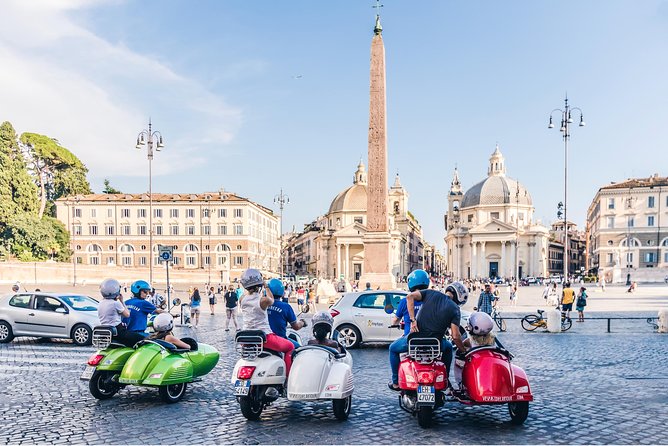
Then you hit Trevi Fountain, and yes, it’s famous for a reason. It measures roughly 20 meters wide and 26 meters high, making it the largest fountain in Rome.
The history starts much earlier than the fountain you see today. It’s connected to the Aqua Virgo aqueduct dating back to 19 BC, and the final look you recognize dates to 1762, with Giuseppe Pannini finishing major work after earlier planning led by Nicola Salvi.
The practical value of stopping here on a morning tour is that you’re not just photographing. You’re learning the story behind the stone, and that makes the experience feel less like a checklist item.
Stop 4: The Pantheon, oculus light, and why it’s included
One of the best moves on this itinerary is the Pantheon stop, because entrance is included. The Pantheon is often called the best-preserved building from ancient Rome, and it completed around 126 AD.
What you’ll notice fast is the oculus—a circular opening at the top that lets in natural light. That light changes during the day, but even in a shorter visit, it helps explain why this building still feels special to modern eyes.
This is also where the tour format shines. You get guided context right when you’re standing in the space, so you understand what makes it work architecturally—without needing a long guided museum session.
Piazza Navona and Bernini’s Fountain of the Four Rivers
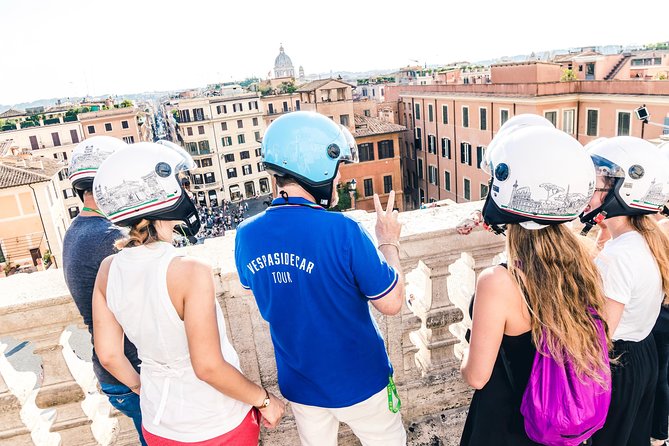
From there, the tour brings you to Piazza Navona, which sits on the site of an ancient Roman stadium. That connection matters because it explains why the square’s shape feels slightly different from other Rome squares.
Piazza Navona is known for Baroque architecture and for its fountains, including Bernini’s Fountain of the Four Rivers. This is another stop where you can see the layering of Rome: ancient footprint underneath, later art and power signals above.
You’ll want to take a few photos, but don’t overdo it. Rome gets you quick—if you linger too long at one corner, you’ll rush the rest of the day’s big moments.
St Peter’s Square: Bernini scale and the sense of space
Next is St. Peter’s Square (Piazza San Pietro) in Vatican City. It’s designed by Bernini and has room for over 300,000 people, which tells you how monumental the space is.
Even when you only get a short look, the square can still feel like a stage. You’re seeing not only architecture, but a feeling of arrival—Rome and the Catholic world doing their grand scale performance.
If you’re sensitive to crowds, morning is your friend. This stop is more manageable when you catch it early, before the day’s full wave lands.
Terrazza del Gianicolo: views, statues, and Garibaldi’s story
Then you shift to a calmer mood at Terrazza del Gianicolo on the Janiculum Hill. This hill is often considered Rome’s eighth hill, and it’s a refreshing change from the busiest central areas.
The reward is the panorama. From up here, you get the city spread out in front of you, which helps you understand Rome’s hills and distances—how one sight connects to another.
You’ll also pass sculptures on paths tied to major stories, including Giuseppe Garibaldi, who repelled an attack from French troops here. Even a short stop works because the views make the history feel real.
The Jewish Ghetto drive-by and that “real Rome” feeling
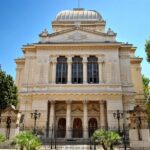
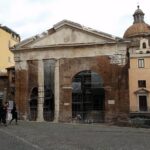
Between the major monument stops, you’ll ride through areas that feel more like neighborhoods than sightseeing sets. One highlight is a drive through the Jewish Ghetto, which helps break up the day so it doesn’t feel like you’re only chasing postcard landmarks.
This type of transit is underrated. When you’re moving through narrow streets and local corners, you’re seeing Rome as a living city, not just a map of famous buildings.
You might not have time for a deep walk here, but the drive helps you spot what you’d want to explore later on your own.
Piazza Venezia and Altare della Patria’s tomb of the unknown soldier
Next is Piazza Venezia and the Monumento Nazionale a Vittorio Emanuele II (Altare della Patria). It was inaugurated in 1911 and built as a tribute to Victor Emmanuel II, the first king of Italy after unification.
It’s an imposing structure for a reason: it’s designed to communicate national scale. And inside, there are spaces tied to Italian history, including the Institute for the History of the Italian Risorgimento.
A powerful detail here is the tomb of the unknown soldier, with an eternal flame guarded by two soldiers. Even if you’re not into military history, the ritual makes the stop feel serious and memorable.
The Colosseum: Flavian Amphitheatre and Rome’s loud symbol
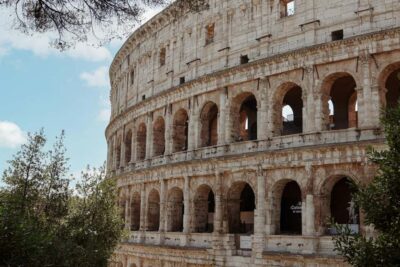
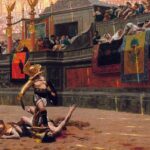
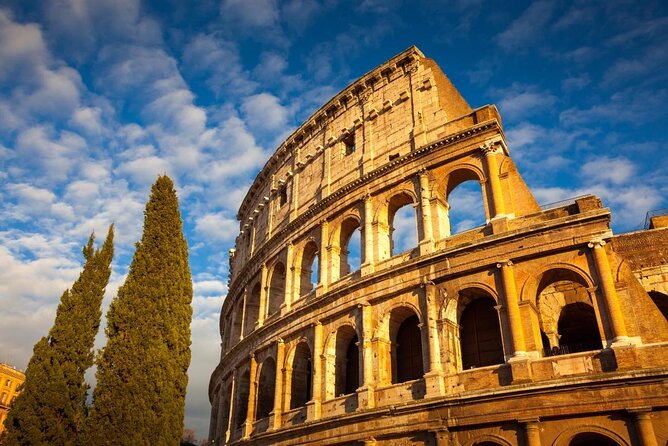
Now for the obvious wow factor: the Roman Colosseum. It’s also known as the Flavian Amphitheatre, and it draws over 6 million visitors each year, which says a lot about its gravity.
This is more than a photo stop. The Colosseum is so big and so recognizable that it anchors the entire morning. Once you’ve seen it, everything else starts to feel like background setup for Rome’s grand center stage.
The tour’s pacing helps here: you arrive with fresh energy, and you’re not exhausted from hours of walking.
Basilica di Santa Maria Maggiore: a major church with a specific Virgin Mary focus
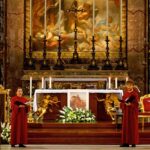
To round things out, you’ll also see Basilica di Santa Maria Maggiore. It’s considered the largest of the churches in Rome dedicated to the Virgin Mary, and it’s one of the city’s four major basilicas.
Even with a brief stop, this is a good final note because it gives you a different kind of Rome than ruins or fountains. It’s religious, ceremonial, and architectural in a way that balances the ancient-meets-empire theme of the earlier stops.
If your day is already packed, this ending helps you feel like you saw the city’s core identity, not just its most famous exterior views.
Price and value: what $163.26 buys you in real terms
At $163.26 per person for about 3 hours, this isn’t a budget half-day. But look at what’s folded in: transport in a Vespa sidecar, a professional licensed guide, drivers, headsets, safety helmets with disposable covers, and breakfast with cappuccino and cornetto.
Then there’s the added value that matters for many first-timers: Pantheon entrance is included. Even if you don’t love buying tickets, this removes a small friction point from your day.
You’re also getting efficiency. In Rome, time is money, and walking between far-flung sights can eat up half a day. This tour replaces some walking with riding, while still giving you short moments to actually stand where the story happened.
For me, the value math works best if you want a guided “map of importance.” If you prefer slow, self-directed wandering only, then a private guide or hop-on-hop-off might match your style better.
Who should book a Vespa sidecar tour (and who should skip it)
This tour fits best if you want:
- a high-impact morning with major sights and guided context
- a fun way to move through traffic-heavy areas without stressing about directions
- a small group vibe (max 12) rather than a huge bus herd
It might not fit if you have these constraints:
- Pregnancy: the tour is not permitted for pregnant travelers.
- Seating and height/weight rules: children must be at least 5 years old. If they’re taller than 150 cm, they can seat behind the driver; otherwise they must sit in the sidecar. The sidecar has limits (up to 110 kg and max height 1.90 m), and the rear saddle has a maximum weight of 118 kg.
Also, if you book only one seat, you may share the Vespa with another guest and swap positions at stops. That’s normal for this format, but it’s good to know so you don’t expect a totally private setup.
Practical tips to make the most of your 9:00 am ride
A few small habits make the biggest difference on a Vespa morning.
First, wear comfortable footwear. Even though it’s not a long hike, you’ll still move on and off at multiple stops, including uphill viewpoints like Janiculum Hill.
Second, bring a light layer. Mornings can feel cool, and you’ll be outdoors at several landmarks. If you’re sensitive to chill, it might be worth asking about extra comfort like a warm bottle or blanket, which some drivers have been known to offer.
Third, keep your phone ready but don’t stop listening. The whole point is that the guide’s narration turns the monuments into a story you can remember. Use photos as a bookmark, not the main event.
Finally, plan for weather. This experience requires good weather, and if it’s canceled due to poor conditions, you’ll be offered a different date or a full refund.
Should you book this Rome morning Vespa sidecar tour with cappuccino?
If you’re doing Rome for the first time and you want a guided “greatest hits” morning, I’d book it. The combo of Vespa-sidecar fun, audio headsets, and a route that hits places like the Pantheon, Trevi Fountain, and the Colosseum is a smart way to get oriented without burning half your day on walking.
If you hate tight timing, prefer long museum-style visits, or don’t want to follow seating/weight rules, then it may feel a bit rushed. But for most people, this tour delivers exactly what it promises: a lively, efficient introduction to Rome with comfort built in.
FAQ
How long is the Rome morning Vespa sidecar tour?
It’s approximately 3 hours, and it ends back at the meeting point near Piazza della Repubblica.
What time does the tour start and where does it meet?
The tour starts at 9:00 am and meets at Piazza della Repubblica, 41, 00185 Roma RM, Italy.
What’s included with breakfast on this tour?
Breakfast includes a traditional cappuccino and a cornetto.
Is the Pantheon entrance included?
Yes. The Pantheon entrance ticket is included.
Does the tour use audio headsets and narration?
Yes. You’ll get headsets to hear the guide clearly, with live commentary throughout the tour.
What should I know about seating for children and weight limits?
Children must be at least 5 years old. If they are taller than 150 cm, they can sit behind the driver; otherwise they must sit in the sidecar. The sidecar can hold up to 110 kg (and max height 1.90 m). The back saddle has a maximum weight of 118 kg.
FAQ
What happens if the weather is bad?
This experience requires good weather. If it’s canceled due to poor weather, you’ll be offered a different date or a full refund.
Can I cancel for a full refund?
Free cancellation is available up to 24 hours before the experience starts for a full refund. If you cancel less than 24 hours before, the amount paid will not be refunded.
Is the tour offered in English?
Yes, it’s offered in English.
How big are the groups?
This tour has a maximum of 12 travelers.
Is a mobile ticket provided?
Yes, it’s listed as a mobile ticket.
Is this tour suitable for most travelers?
Most travelers can participate. Service animals are allowed, and children must be accompanied by an adult.