REVIEW · ROME
Rome: Highlights Vespa Sidecar Tour with Coffee and Gelato
Book on GetYourGuide →Operated by Romaround Tours · Bookable on GetYourGuide
Zip through Rome on a Vespa sidecar. The classic Vespa sidecar ride turns the city into a fast-moving highlight reel, with stops built around major landmarks like the Colosseum and quick stories that help you understand what you’re seeing.
I also love the way the tour plans the food break: coffee or tea plus gelato during a pause in Trastevere, then you get big hilltop payoff on Aventine and Janiculum. One heads-up: the main sights are mostly short photo stops, so this is not a slow, sit-and-stare kind of tour.
In This Review
- Key Things I’d Bookmark Before You Go
- Why a Vespa Sidecar Tour Works So Well in Rome
- Meeting at Piazza di S. Marco: Easy Start, Clear Vibe
- Piazza Venezia to the Colosseum: The Photo Stop That Teaches You What to Look For
- Caracalla and the Pyramid of Cestius: Rome’s “Wait, What Is That?” Stops
- Aventine Hill and Giardino degli Aranci: Orange Trees With Real Panoramas
- Circus Maximus to Trastevere: Big Ruins, Then Coffee and Gelato
- Janiculum Hill and Fontanone: The Best View for Your Last Memories
- What Included Really Means for Your Comfort
- Safety, Rules, and Who This Fits Best
- Price and Value: Is $141.61 Worth It?
- Should You Book This Vespa Sidecar Tour?
- FAQ
- How long is the Rome Vespa sidecar tour?
- Where do I meet for the tour?
- What’s included in the price?
- Is the tour in English?
- Does the tour run in bad weather?
- How does the sidecar seating work for couples and groups?
- What about solo travelers?
- Are there weight limits?
- Are there restrictions on footwear, bags, or walking aids?
- Is it suitable for young children?
- When does the tour end?
Key Things I’d Bookmark Before You Go
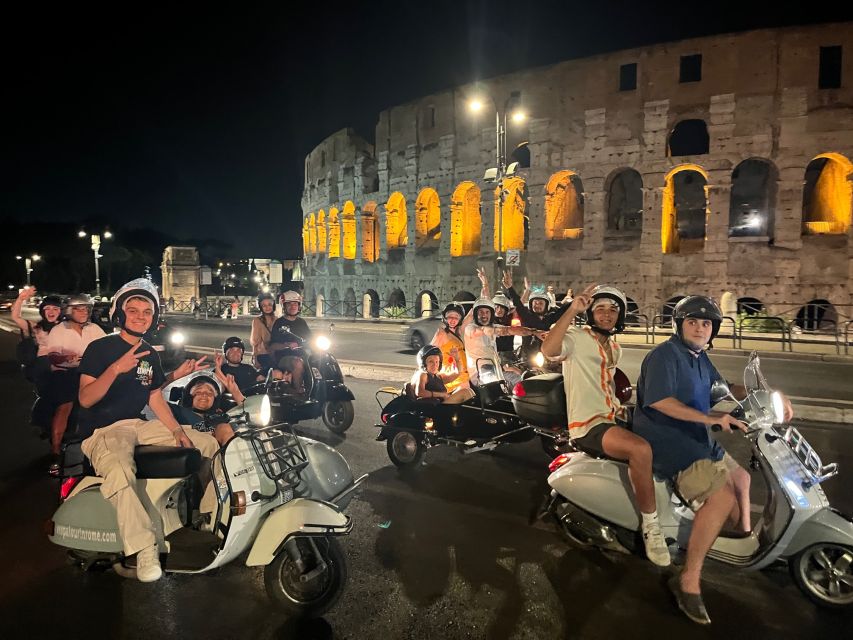
- Sidecar setup that feels safe and fun: one rider in the sidecar while the driver handles the streets.
- Hilltop viewpoints built into the route: Aventine Hill and Janiculum Hill are the payoff moments.
- Gelato and coffee in Trastevere: a real neighborhood break, not just a quick snack.
- Short stops that still add up: you’ll see famous ruins and lesser-known spots without exhausting your legs.
- Rain-or-shine ride: ponchos are provided if weather turns.
Why a Vespa Sidecar Tour Works So Well in Rome
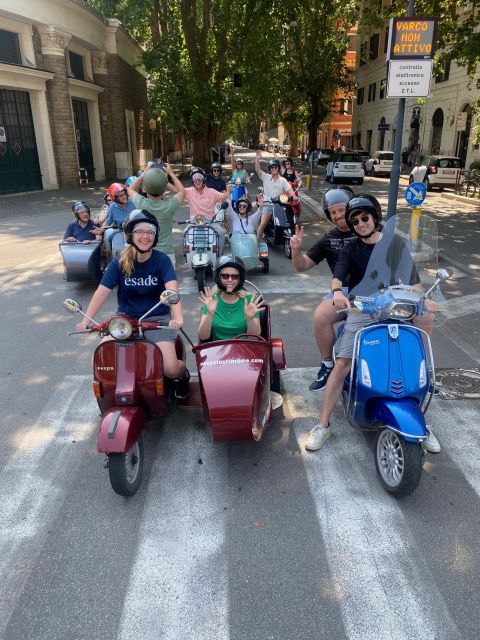
Rome can be a lot. Big ruins, crowded sidewalks, traffic that never seems to sleep. A Vespa sidecar tour cuts through that stress. You’re not stuck in long walking loops or waiting for buses. You move—then you stop just long enough to get your bearings, take photos, and hear how the place fits into the city.
Two things make this tour especially good value for a first or mid-trip day. First, you get both the headline sights and the in-between streets that make Rome feel like Rome. Second, you’re not walking all day. The ride does the work, and your legs get a break while your eyes collect a lot of landmarks.
The one consideration is the pace. The famous stops are brief by design, so you’ll see plenty—but you won’t have time for a deep, museum-style experience at each stop. Think of this as the fast, fun “get the map in your head” day.
You can also read our reviews of more tours and experiences in Rome.



Meeting at Piazza di S. Marco: Easy Start, Clear Vibe
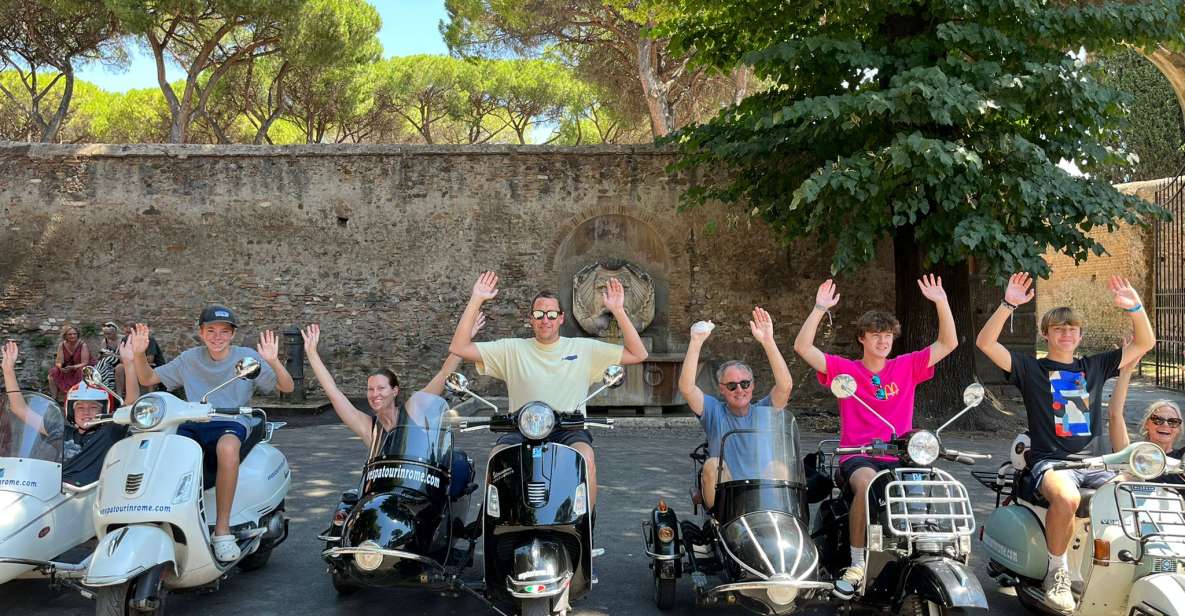
Your tour starts at Piazza di S. Marco, 48. This matters because it’s a central, easy-to-find launch point compared with tours that scatter you across the city. When you arrive, look for the vespa sidecars and your team. The ride setup is part of the experience, not just logistics.
From there, you’re guided through a route that uses Rome’s geography like a feature. You’ll pass major monuments, then cross into areas that feel more local, then climb up for views.
If you’re sensitive to crowds or noise, you’ll still feel Rome’s energy—but the sidecar angle changes how you experience it. Instead of being stuck face-to-face with foot traffic, you’re gliding through the gaps and looking at the city from a higher perspective than most people on foot.
Piazza Venezia to the Colosseum: The Photo Stop That Teaches You What to Look For
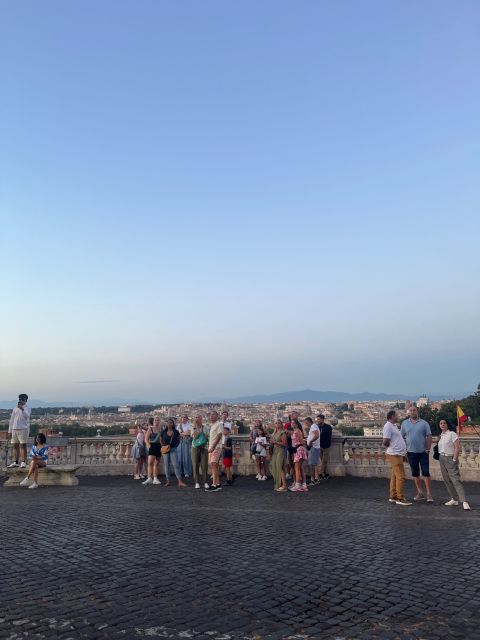
One of the earliest highlights is Piazza Venezia, where you get a scenic drive stretch that helps you transition from “standing in Rome” to “seeing Rome.”
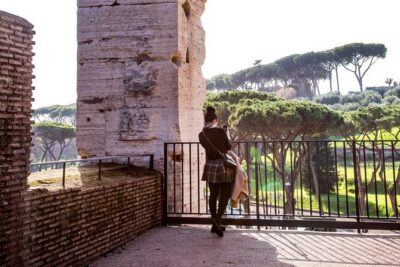
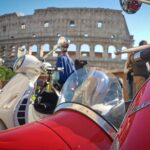
Then comes the Colosseum photo moment: a short stop built around sightseeing and quick guidance, plus time to grab photos. Even if you’ve seen images of the Colosseum a hundred times, this is one of those places where hearing a few key details right before you arrive makes the stone start to mean something.
What I like here is timing. You’re not waiting around forever. You’re not trying to read signage while dodging other groups. You get a guided glimpse, then you roll on—so the Colosseum stays exciting instead of becoming exhausting.
Caracalla and the Pyramid of Cestius: Rome’s “Wait, What Is That?” Stops

After the Colosseum, you’ll swing past the Baths of Caracalla. You get a photo stop and guided look, plus views from the road. This is a smart choice for people who want more than just one famous ruin. The Baths of Caracalla can be overlooked, but seeing them from a quick vantage point gives you that sense of Rome as an empire built to impress.
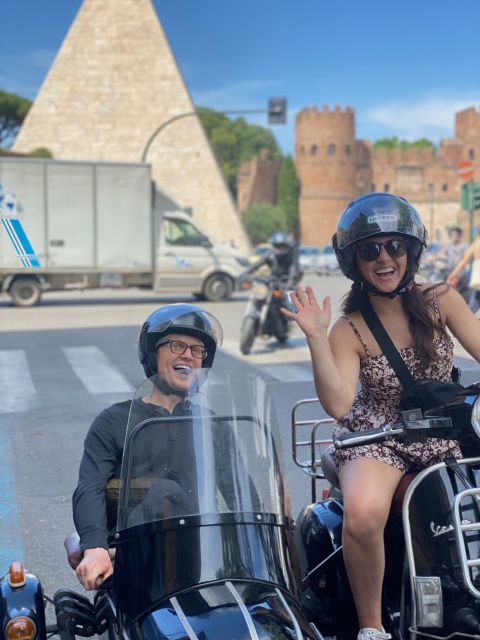
Next up: the Pyramid of Cestius. This is the kind of spot that’s easy to miss on your own unless you know where to wander. Here, you’re guided to it with time for photos and context, so you’re not just snapping a picture of a weird-looking structure—you understand why it sits there.
If you love discovering little corners of the city, these two stops deliver. The vibe is: you get “Roman greatness,” then you get the odd, memorable detail you’ll remember later.
Aventine Hill and Giardino degli Aranci: Orange Trees With Real Panoramas
Aventine Hill is one of the Seven Hills of Rome, and this tour uses it well. You’ll ascend for a break at Giardino degli Aranci—the Orange Tree Garden. The stop includes guided time and photos, but the main payoff is the view.
This is where the sidecar format really shines. On foot, hilltop viewpoints can feel like a slog. By Vespa, you arrive with energy. You get the scenic reward without spending an hour climbing just to stand in line for photos.
At Giardino degli Aranci, expect a calmer moment in the middle of a fast tour. It’s not a long sit-down break, but it’s long enough to cool your brain and reset before the tour turns into a more lively neighborhood stretch.
You can also read our reviews of more tours and experiences in Rome

Circus Maximus to Trastevere: Big Ruins, Then Coffee and Gelato
You’ll pass the Circus Maximus on the way to Trastevere. Even if you’re not staring at it for long, the ride-by moment works because the perspective keeps changing as you move. You see how these ancient spaces shaped the city’s layout, not just what they look like in one direction.
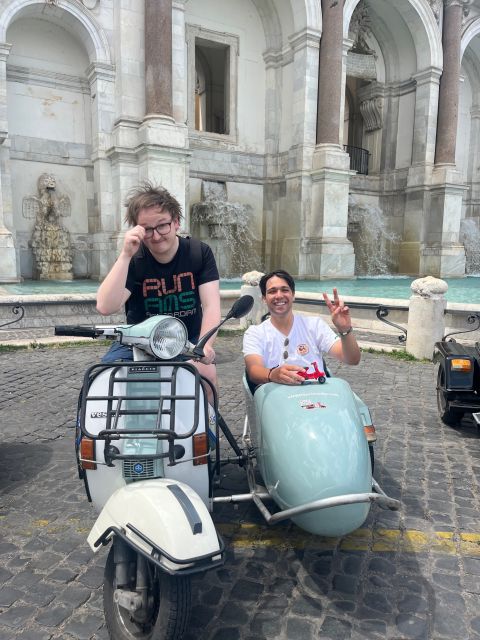
Then comes the break you’ll actually feel in your day. In Trastevere, you get coffee and free time, plus food tasting time built into the tour. Gelato is included, so you can pair your drink with something sweet without hunting for a place.
This is one of the most praised parts of the whole experience. People love it because it’s timed right: you get a neighborhood pause after you’ve done the major monuments and before you climb again. Trastevere also gives you that Rome mood shift—more streetscapes, more energy, more character.
Janiculum Hill and Fontanone: The Best View for Your Last Memories
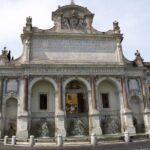
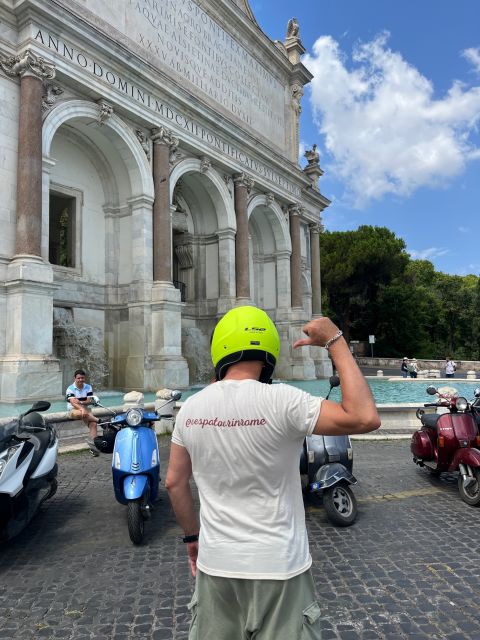
The final panoramic moment is Janiculum Hill. You’ll arrive for a photo stop and guided time, then head to Fontanone for scenic views.
This is a strong ending because it gives you the big-picture view. After you’ve been through Colosseum ruins, baths, pyramids, and coffee streets, Janiculum lets the whole city finally make sense in one look.
Also, this is where the hills can feel like a roller-coaster, in the best way. The ride up and the view over the rooftops are the kind of moment you’ll remember on the flight home, long after the details blur.
What Included Really Means for Your Comfort
This tour includes a guide and a driver, Vespa transportation, helmet, coffee or tea, and gelato. That combination matters more than it sounds.
- The helmet is provided, so you’re not worrying about gear.
- The coffee/tea and gelato stop keeps the tour from feeling like a nonstop sprint.
- The guide handles the storytelling and photo-value moments, so you’re not guessing what’s worth looking at as you pass by.
A big plus: the experience runs rain or shine. If it rains, you’ll be given ponchos. So you’re not stuck rescheduling your whole Rome plan because of one shower.
Safety, Rules, and Who This Fits Best
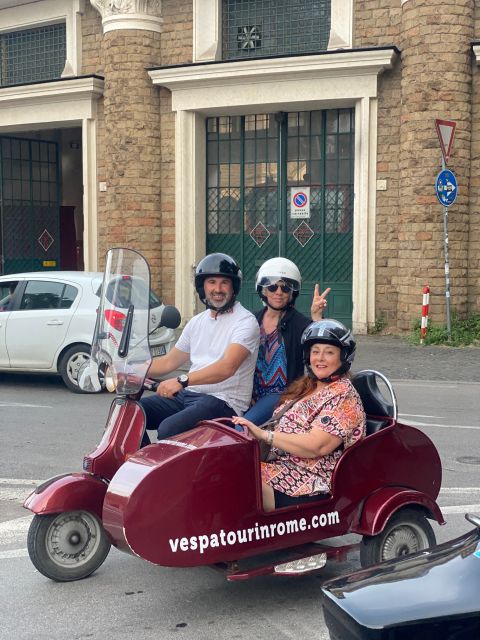
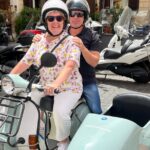
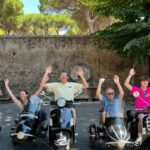
The sidecar ride has a clear layout: one Vespa with sidecar can carry two guests. One person rides behind the driver on the Vespa, and the second guest sits in the sidecar. If your group is an odd number, a single Vespa with driver is added. Solo travelers use a single Vespa with driver.
That’s good to know because it affects how “shared” the ride feels. You’re not just squeezed together; the setup is designed around two-person groups.
There are also a few limits and rules:
- No high-heeled shoes.
- No luggage or large bags.
- No walking sticks or crutches.
- Weight limit is 220 lbs / 100 kg per participant.
- Not suitable for children under 5.
If you want a low-effort, high-reward way to see Rome, this is a great fit. If you want long stays at major sights, or you need mobility aids, you’ll want to choose a different format.
Price and Value: Is $141.61 Worth It?
At $141.61 per person for about 3 hours, this tour isn’t the cheapest way to “see Rome.” But it’s also not paying for just transportation. You’re buying three things at once: guided viewing, a Vespa ride that covers ground quickly, and the included coffee and gelato break.
Here’s how I judge value for something like this:
- You’re saving walking time on steep hills and through busy routes.
- You’re getting context at multiple landmark types (famous ruins, photo points, and quieter surprises like the pyramid).
- You’re ending with a viewpoint that helps stitch the whole day into one story.
If your schedule has limited time, or your feet are tired after a day of museums, the price starts to make sense fast. If you have plenty of time and enjoy slow wandering, you could build a cheaper route. But you’d likely lose the hilltop pacing and the guided “what you’re looking at” moments that make the ride feel smarter than just sightseeing.
Should You Book This Vespa Sidecar Tour?
Yes, if you want a lively Rome overview in a short window and you like the idea of hilltop views without a full walking workout. This tour is at its best when you want variety: Colosseum area landmarks, major ruins, a memorable neighborhood break in Trastevere, and panoramic finishing views.
I’d especially recommend it if:
- You’re visiting for the first time and want geography in your head quickly.
- You prefer short guided moments over spending hours in lines.
- You want gelato and coffee built into the day instead of as an afterthought.
Skip it or pair it with other plans if:
- You need long indoor visits or extended time at major sites.
- Your group needs accessibility accommodations not supported by the rules.
FAQ
How long is the Rome Vespa sidecar tour?
The tour lasts 3 hours.
Where do I meet for the tour?
Meet at Piazza di S. Marco, 48. Look for the Vespa sidecars.
What’s included in the price?
You get a guide, a driver, Vespa transportation, a helmet, coffee or tea, and gelato.
Is the tour in English?
Yes. The live tour guide is available in English and Spanish.
Does the tour run in bad weather?
Yes, it runs rain or shine. Ponchos are provided if it rains.
How does the sidecar seating work for couples and groups?
One Vespa with sidecar is for 2 guests: one person rides behind the driver, and the second guest sits in the sidecar. If your party is an odd number, a single Vespa with driver is added.
What about solo travelers?
If you are a solo traveler, a single Vespa with a driver will be used.
Are there weight limits?
Yes. The maximum weight is 220 lbs / 100 kg per participant.
Are there restrictions on footwear, bags, or walking aids?
High-heeled shoes are not allowed. Luggage or large bags are not allowed. Walking sticks and crutches are not allowed.
Is it suitable for young children?
It is not suitable for children under 5 years old.
When does the tour end?
It ends back at the meeting point: Piazza di S. Marco, 48.