REVIEW · ROME
Rome: Gladiator’s Gate and Arena Special Colosseum Access
Book on GetYourGuide →Operated by Walks of Italy · Bookable on GetYourGuide
Stand where gladiators once fought. This tour gets you into the Colosseum through Gladiator’s Gate and onto the arena floor, then carries you straight into the daily life of ancient Rome at the Forum and Palatine Hill.
I love two things most: you see the Colosseum from the inside in a way most visits can’t match, and you get a smart guided story that makes the ruins feel connected instead of random piles of stone. One thing to consider: it’s a walking-heavy experience on uneven surfaces, so plan on comfortable shoes and don’t expect it to work for mobility limitations.
In This Review
- Key highlights at a glance
- Entering through Gladiator’s Gate: your head start starts now
- Arena floor access: the Colosseum you rarely get to touch
- How the guided Colosseum tour actually works
- Roman Forum and Palatine Hill: where the stories connect
- 3:30 PM SUPER Sites: Casa di Augusto and the extra Forum access
- Small-group comfort, headsets, and what to bring
- Price and value: is this worth $123.48?
- Should you book this Gladiator’s Gate Colosseum tour?
- FAQ
- How long is the tour?
- Does the tour include arena floor access?
- What’s included with the Roman Forum SUPER Sites option?
- What group size should I expect?
- Are headsets provided?
- What should I bring, and what’s not allowed?
- Can I cancel if my plans change?
Key highlights at a glance
- Enter through Gladiator’s Gate for a faster, more theatrical start than the main entrances
- Walk the arena floor (if your departure includes it) and understand how shows were staged
- Small-group pacing with a guide who keeps you moving and explains what you’re seeing
- Roman Forum and Palatine Hill visits that turn empire-scale ruins into everyday stories
- 3:30 PM SUPER Sites option for extra Forum/Palatine access, including Casa di Augusto
- Headsets when the group is larger than 6, so you don’t miss the guide’s key points
Entering through Gladiator’s Gate: your head start starts now

The Colosseum is popular for a reason, but it’s also… well, crowded. The big win here is that you start by meeting near the monument and then you enter through Gladiator’s Gate, the special route that feels closer to what the building was designed for. You’re not just crossing your fingers for good views while dodging shoulder-to-shoulder lines.
What you’ll feel is a quick shift in mood. The guide usually sets the scene—where spectators sat, how the games worked, and why the Colosseum’s design mattered—right before you step in. That timing is key. If you wait until you’re already surrounded by chaos, the place can feel like a photo stop. Here, it feels like a story you’re walking through.
One practical point: meeting points can vary depending on the booked option, and the area is busy. Build a little buffer time so you don’t rush. A calmer start means you spend more time looking up at the architecture—and less time searching for the group.
You can also read our reviews of more tours and experiences in Rome.



Arena floor access: the Colosseum you rarely get to touch
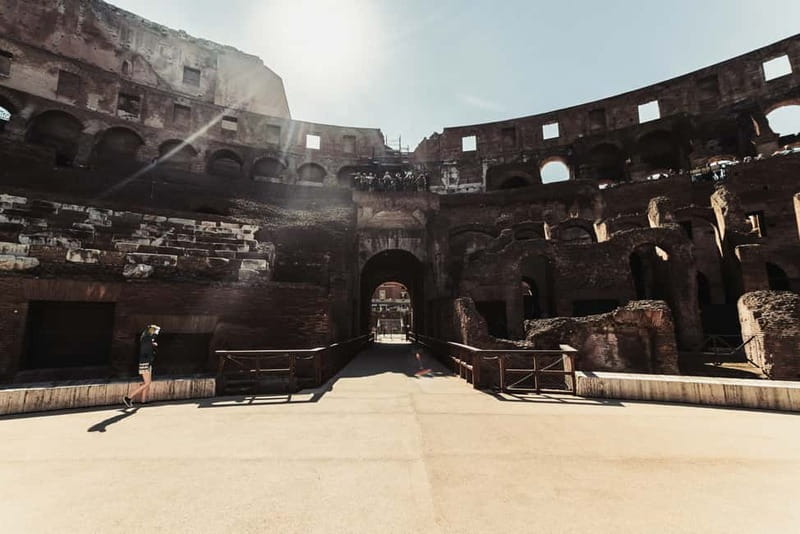
The standout moment is being able to walk onto the arena floor, where gladiators and animals would have appeared for the crowd. You’ll stand in the spot where the drama happened, not just look down at it. It’s the kind of access that changes how you understand the space.
You’ll also get help from the guide to make sense of the scale. From the floor level, the building doesn’t read like an outline; it reads like a machine built for spectacle—walkways, sightlines, and how performances could be staged. The guide’s explanations matter because without them, the arena can look like a flat expanse. With them, it becomes a working stage.
Important catch: if you choose the 3:30 PM SUPER Sites version, this option does not include arena floor access. So you’re trading one kind of wow for another: extra Roman Forum sites versus the arena-floor experience.
If you want the arena moment, double-check your departure time when booking. That small decision changes what you’ll spend your best energy on.
How the guided Colosseum tour actually works
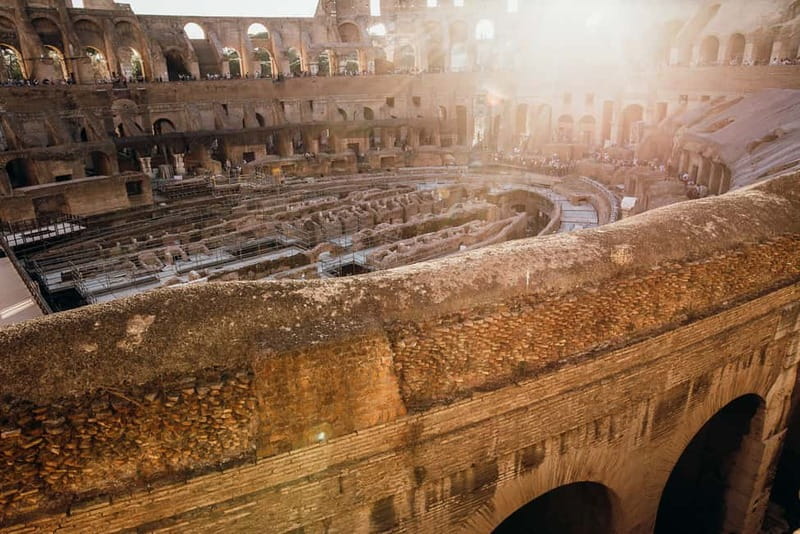
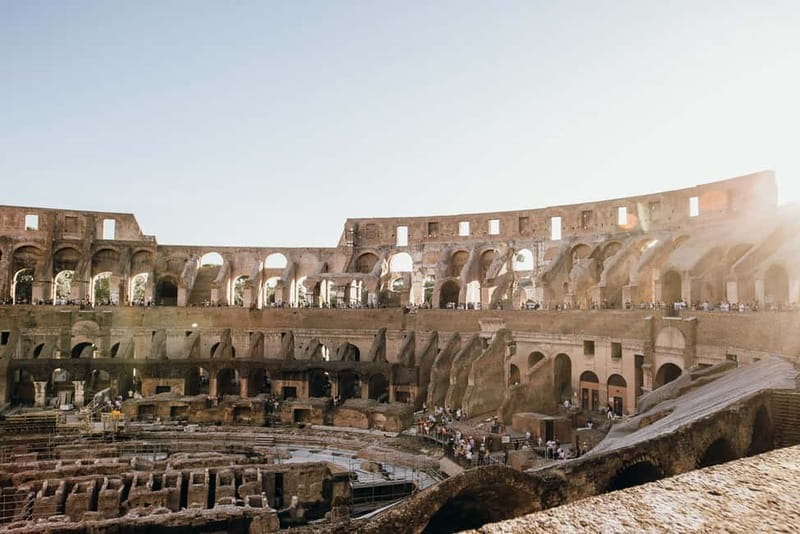
After you get in, the tour is built around moving from the arena experience into the rest of the amphitheater view. You spend time exploring the Colosseum with your guide, including time on the main levels up toward the upper tiers. You’ll learn along the way, but the pacing is also practical—enough structure to stay oriented, with time to look around once you know where you are.
What I like about this approach is that it gives you a map in your head. The Colosseum is huge. With a guide, you’re not trying to figure out on your own where to stand for the best perspective, or which details to notice first. You’re guided to key parts, then you’re handed back control for photos and a bit of free exploring.
There’s also a smart timing element. The tour is designed to help you get through the most frustrating crowd zones by entering using the special gate and starting your visit in an efficient order. Even then, be ready for heat, stairs, and some climbing. The payoff is worth it if you’re comfortable with active travel days.
Also note: the Colosseum can close occasionally, and the operator may adjust in advance if possible. For last-minute changes, updates are given at the start of the tour—so stay flexible and listen closely when you arrive.
Roman Forum and Palatine Hill: where the stories connect
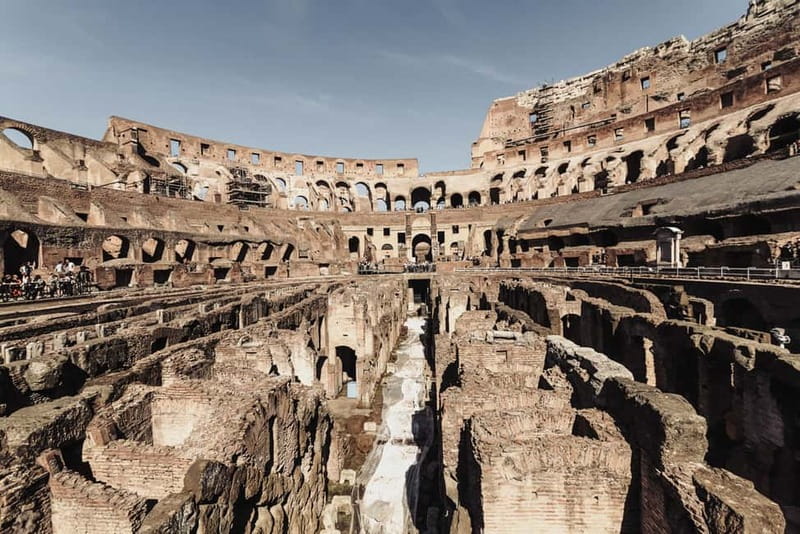
Once the Colosseum part is done, you shift into the Rome that most people miss: the places where politics happened, laws were argued, and ordinary people moved through markets and roads. This is where the guided part really earns its keep.
At the Roman Forum and Palatine Hill, you’re not just walking among columns. You’re tracing how power played out in public spaces—where speeches mattered, where buildings signaled authority, and how the city’s everyday rhythm worked. The guide typically rebuilds ancient Rome step by step, which helps the ruins feel less like isolated stops and more like a single connected world.
Palatine Hill, in particular, gives you a sense of Rome’s “center of gravity.” It’s easier to understand why emperors built there once you’ve walked the ground with someone explaining what you’re seeing.
Group size stays small, and that matters here too. On a big tour, you end up waiting behind the slowest people or rushing through scenes you barely register. With this format, you get a tighter rhythm, more Q&A, and better movement from one zone to the next.
If you’re choosing between tour times, remember the 3:30 PM option changes the emphasis toward SUPER Sites first and may skip arena floor access.
3:30 PM SUPER Sites: Casa di Augusto and the extra Forum access

If you book the 3:30 PM departure, you get the Roman Forum SUPER Sites access, which is usually off-limits with standard tickets. This is the most “special access” feeling part of the day, because you’re stepping into spaces that many visitors can’t reach at all.
A highlight is the Casa di Augusto, known for frescoes that can rival the famous wall paintings you may have seen elsewhere in Italy. Even if you’re not a hardcore art person, it hits because you can connect artwork to a specific lived setting. It helps you see how status and storytelling worked inside a residence tied to power.
This is also a smart choice if you love the Forum/Palatine area and want more time in the most dramatic parts of it. You’ll spend more of the day on elevated, story-rich ruins rather than focusing on the arena floor.
Just plan your expectations: if arena-floor access is your must-have, the 3:30 PM version won’t deliver that part.






Small-group comfort, headsets, and what to bring
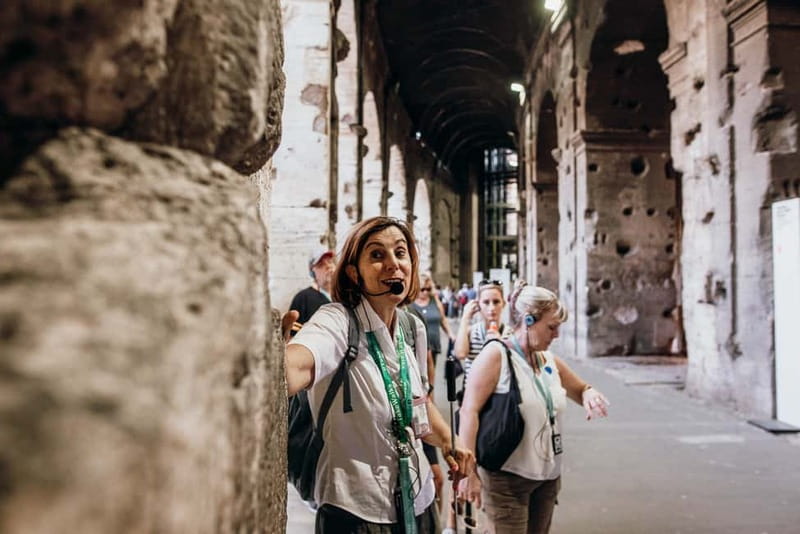
The tour is set up for a small group. The operator notes a maximum of 16 guests, and there are specific departures with even smaller groups (up to 8) for a more intimate pace. Either way, you’re not stuck in the kind of crowd where you can’t hear or move.
Headsets are included when needed. If your group is over 6, you’ll use audio so you can actually follow the guide’s explanation. That matters a lot at the Colosseum and Forum, where wind, echo, and distance can swallow your ability to listen.
What to bring is simple: passport or ID card and comfortable shoes. Security can be strict at major monuments, and without ID, entry can be denied.
What not to bring: oversize luggage, baby strollers, and large bags. Also, this tour isn’t suitable for guests with mobility impairments, wheelchair users, or strollers. It’s not about attitude; it’s about steps, uneven surfaces, and tight ancient layouts.
One more small tip: if you’re heat-sensitive, wear breathable layers and plan for sun exposure. Several guides are praised for keeping the group moving smartly during hot conditions, so your best strategy is to dress for the day, not for comfort in the air-conditioning fantasy.
Price and value: is this worth $123.48?
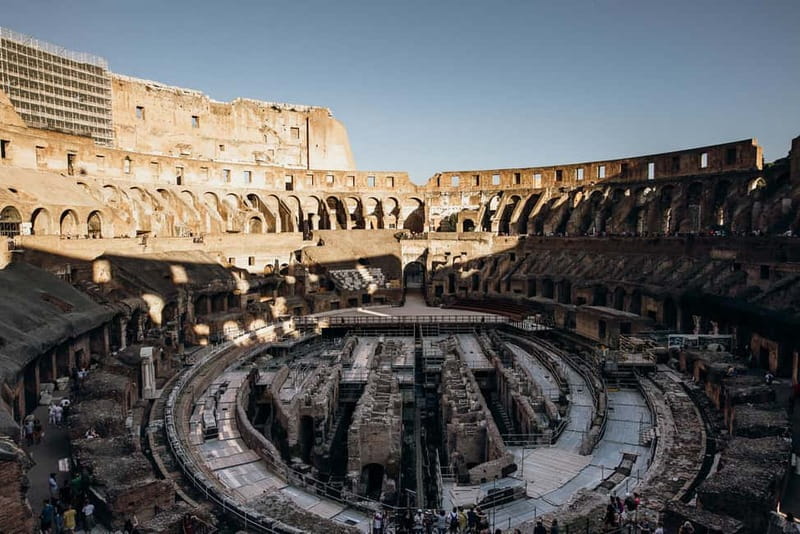
At $123.48 per person, you’re paying for a mix of things that are hard to replicate on your own: special access, a guided route, and entry that skips a lot of the worst bottlenecks. The arena floor is the obvious value driver. If you get that access (and you choose a departure that includes it), the experience feels like a different class of visit, not just another Colosseum ticket with a speech.
The second value driver is the way the day connects Colosseum → Forum → Palatine Hill. Many self-guided visits stay locked in “look mode.” This format pushes you into “understand mode” with an English-speaking guide who explains what you’re standing in front of, then helps you keep your bearings.
Is it pricey? Yes. But this is one of those Roman experiences where you’re buying time, access, and clarity. If your goal is fast photos and you don’t care about context, a standard ticket might be enough. If you want the Colosseum to make sense—and you want the Forum sites to feel meaningful—this is closer to money well spent.
You’ll also want to choose the right departure for your priorities. Want arena floor? Pick a time that includes it. Want extra Forum sites like Casa di Augusto? Choose the 3:30 PM SUPER Sites option.
Should you book this Gladiator’s Gate Colosseum tour?
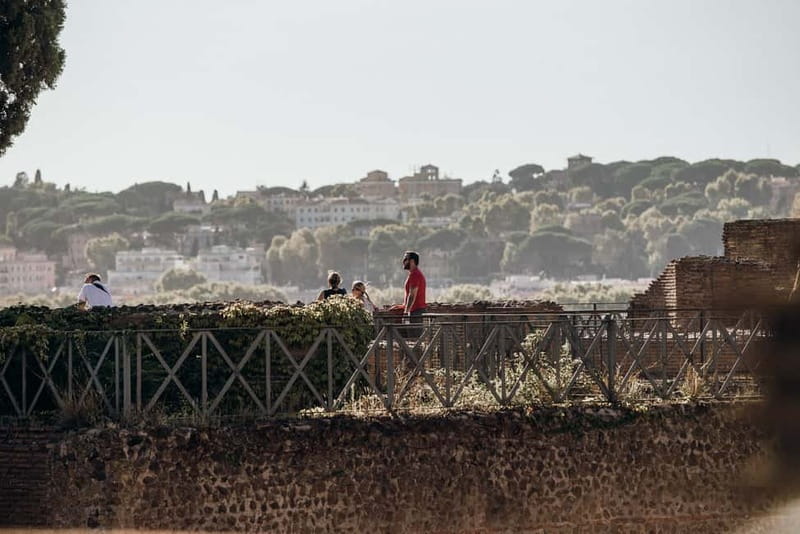
Book it if you want the Colosseum experience to feel intentional, not chaotic. This is a strong fit for history lovers who like stories tied to specific places, and for anyone who hates wasting vacation time in long lines.
Don’t book it if you need wheelchair access or stroller-friendly routes. This tour is built around walking and uneven ancient terrain.
My final advice is simple: pick your priority first—arena floor or SUPER Sites—and then book the departure that delivers that. Do that, wear good shoes, and you’ll leave with a Colosseum you actually understand, not just one you photographed.
FAQ
How long is the tour?
The duration is listed as 2 to 3.5 hours, with exact starting times varying by availability.
Does the tour include arena floor access?
Special arena-floor access is part of the experience, but the 3:30 PM SUPER Sites option specifically notes that it does not include the Arena Floor.
What’s included with the Roman Forum SUPER Sites option?
For the 3:30 PM departure, you get access to SUPER Sites at the Roman Forum and Palatine Hill, including Casa di Augusto. The 3:30 PM option does not include Arena Floor access.
What group size should I expect?
The tour is described as small group, with a maximum of 16 guests. For 9 AM and 11:15 AM tours, it states small groups of maximum eight guests.
Are headsets provided?
Yes. Headsets are included for groups over 6 people.
What should I bring, and what’s not allowed?
Bring a passport or ID card and comfortable shoes. Oversize luggage, baby strollers, and luggage or large bags are not allowed.
Can I cancel if my plans change?
Yes. It’s fully refundable up to 5 days in advance, and within 5 days it is 100% non-refundable.