REVIEW · ROME
Rome Food Tour in the Historic Centre with 8+ Food Tastings
Book on Viator →Operated by Secret Food Tours · Bookable on Viator
Eight bites and a map of old Rome. This 3-hour Historic Centre food tour pairs 8+ tastings with stops tied to Rome’s layers of history, from Piazza Navona to the ancient Campus Martius area. I like that it’s a small group (max 12), which makes it easier to ask questions and actually hear the stories behind what you’re eating.
You’ll get a fast, satisfying run through classic Roman food, including homemade pizza in two styles, supplì, Roman pastas, cold cuts and cheeses, cannoli, and artisanal gelato plus an extra surprise called Our Secret Dish. The main thing to consider is that it’s still a walking tour through central Rome: plan for a lot of steps, and remember the route and menu can shift with weather or availability.
In This Review
- Key things to know before you go
- Price and what makes this Rome food tour feel worth it
- Sant’Agnese in Agone to Piazza Navona: starting where Rome eats in public
- Pizza, supplì, and Roman comfort: what the tastings add up to
- High Renaissance palace to France’s embassy: history you can see while you eat
- The Jewish Ghetto (1555) in Sant’Angelo: food history with real weight
- Fontana dei Quattro Fiumi and the walk between temples: tiny details that make Rome click
- Campo de’ Fiori: the square in the middle of the action
- Largo di Torre Argentina: ending near Pompey’s Theatre and Roman temples
- How long you should plan for, and how to make the walk easier
- Who this Rome food tour suits best
- Should you book this Rome Food Tour?
- FAQ
- How long is the Rome Food Tour in the Historic Centre?
- What foods are included?
- Where does the tour start and end?
- What language is the tour offered in?
- How large is the group?
- Is hotel pickup or drop-off included?
- Can I cancel and get a refund?
Key things to know before you go
- 8+ tastings in about 3 hours: you’ll leave full without having to plan a whole restaurant day
- Food tied to specific Roman landmarks: you’re eating while the city’s history is right next to you
- Small groups (up to 12): easier conversations, less waiting around
- A mix of pizza, pasta, and street bites: not just one category of food
- Several guide names come up often: Massimiliano, Rocio, Luda, Manuel, Eduardo, and Federico are mentioned in past experiences for blending food with place
- Itinerary can change: locations and menu are subject to weather and availability
Price and what makes this Rome food tour feel worth it
At $118.51 per person for roughly 3 hours, this isn’t a “grab a gelato and stroll” kind of deal. What you’re paying for is focused time: a set route, multiple tastings, and someone guiding you through the Historic Centre so you don’t waste your Rome hours hunting for the right spots.
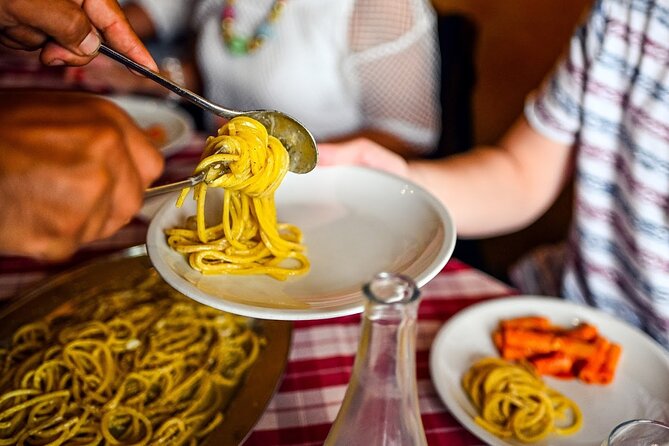
The value gets clearer once you look at the spread. You’re not just sampling one iconic dish. You’re working through a Roman lineup that includes two types of homemade pizza, two Roman pastas, supplì (that classic fried rice-ball street food), Italian cold cuts and cheeses, cannoli, and artisanal gelato, plus a mystery stop called Our Secret Dish. That’s a lot of variety packed into one morning or afternoon loop.
Also, with a maximum of 12 people, you’re less likely to feel like a number. That matters on a food tour. If the group is too large, you spend time waiting instead of eating and listening. Here, the small size is part of the price.
You can also read our reviews of more food & drink experiences in Rome

Sant’Agnese in Agone to Piazza Navona: starting where Rome eats in public
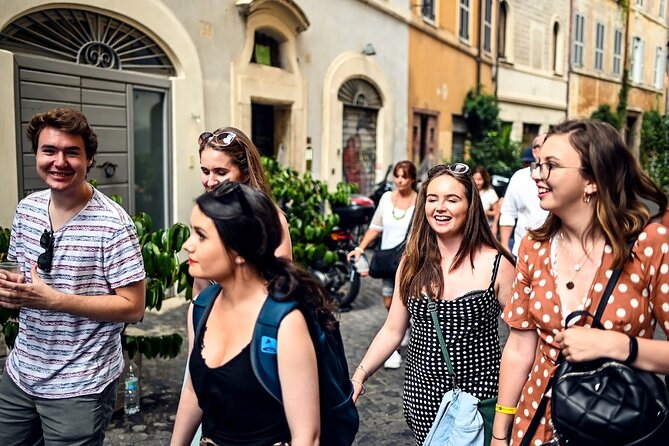
The tour starts at Sant’Agnese in Agone, Piazza Navona and you’ll begin with one of Rome’s most dramatic stages for daily life. Piazza Navona sits on an ancient stadium site, so right away you’re standing on a place that’s been drawing crowds for a very long time.
Piazza Navona is also a food-sight cocktail: fountains and baroque buildings up close, with cafés and trattorias around you. This matters because Roman food culture isn’t hidden. It’s out in the open. You’ll be tasting Roman staples while you’re in the exact atmosphere they belong to.
Practical note: even if you’re a casual walker, Rome’s “easy” squares still mean standing, turning, and short stretches on uneven ground. In one past experience, a family with kids and a pregnant traveler did the tour and said it was a lot of walking, but manageable with pacing. So go in ready to move, not ready to sit.
Pizza, supplì, and Roman comfort: what the tastings add up to
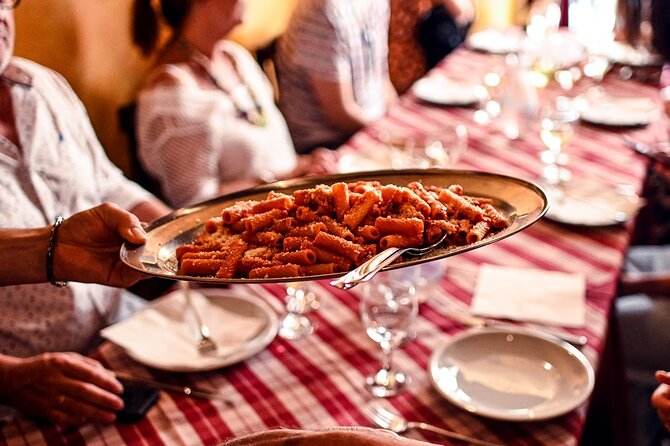
This is the part you’ll feel most after the tour. The tastings aren’t random. They hit Roman favorites that cover different parts of the day’s food culture: pizza, fried street snacks, pastas, cheese-and-cold-cuts, and sweets.
Here’s what you can expect, based on what’s included:
- Two different types of homemade pizza
Think of this as the pizza lesson. One style versus another gives you a clearer sense of what Rome considers worth making well, not just ordering.
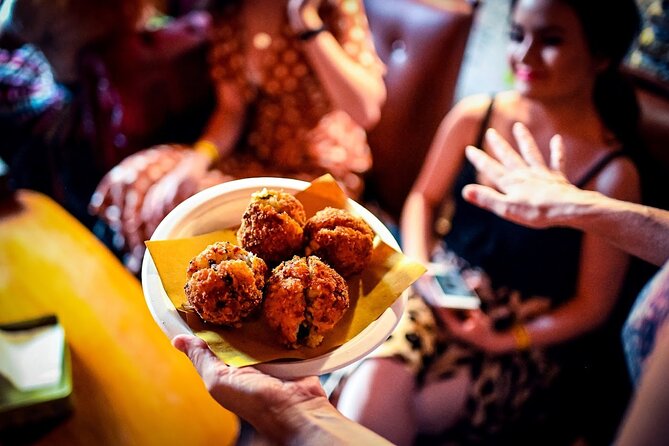
- Supplì
This is the rice-ball street classic—crispy outside, soft inside—often described as one of those foods that disappears fast once you start.
- Italian cold cuts and cheeses
Rome does cured meats and cheeses with confidence. This stop breaks up the carbs so you don’t feel like you’re only on pizza and pasta all afternoon.
- Two Roman pastas
Pasta is where Roman cooking identity comes through. With two different pastas, you get more than a single “yes, pasta” moment.
- Cannoli
Sweet, crisp, and usually the kind of dessert that makes you pause and compare bites.
- Artisanal gelato
Gelato is the right finale flavor when you’re walking and working up an appetite.
- Our Secret Dish
This is the wildcard. Since you won’t know what it is ahead of time, you’ll stay sharp and curious.
The biggest “value” trick here is pacing. You’re not sent from one full meal to another. You’re getting portions at multiple stops, which lets you sample broadly and still enjoy what you’re eating.
And yes, you should come hungry. More than one person said the amount of food was a lot, to the point of leaving very full.
High Renaissance palace to France’s embassy: history you can see while you eat
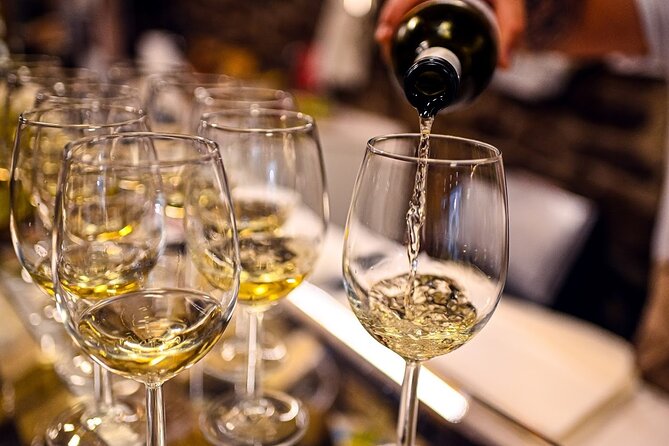
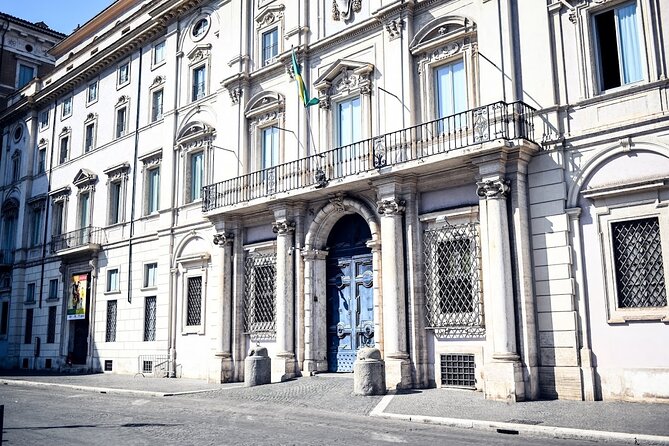
One stop on the route is a major High Renaissance palace that now serves as the French embassy in Italy. That’s a great way to break up the tour’s “food focus.” You’re not just moving between restaurants; you’re walking through the city’s power and influence.
Why I like this kind of stop: it helps you understand why Roman neighborhoods feel the way they do. Rome isn’t one era. It’s layers. Today’s building can be tomorrow’s story, and food often reflects those shifts in population, tastes, and what people consider special.
Even if you’re not into architecture, it’s worth listening for the connection between what the building represents and why certain areas developed a reputation for social life.
The Jewish Ghetto (1555) in Sant’Angelo: food history with real weight
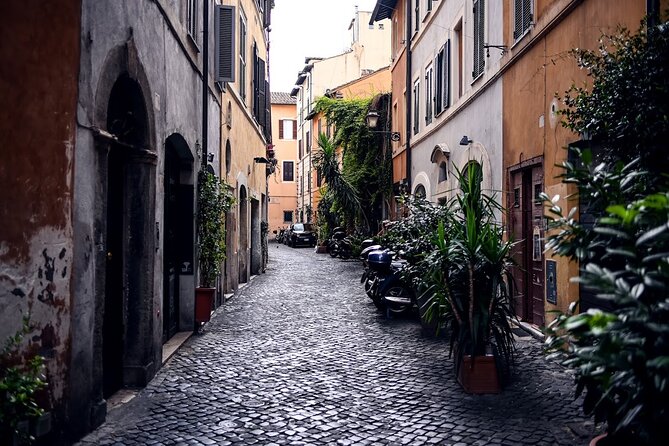
Next comes one of Rome’s most distinctive areas: the Jewish ghetto established in 1555 in the Rione Sant’Angelo. This isn’t just a “pretty neighborhood.” It’s a place where history shaped community life.
When food tours handle this well, you don’t feel like you’re learning trivia. You feel like you’re getting context. Jewish Roman cuisine and local food traditions developed under constraints, and those patterns often show up in what people cooked, traded, and passed down.
This stop also adds contrast to the tour’s more famous grand sights. Piazza Navona is about spectacle. The ghetto area is about lived culture.
You can also read our reviews of more tours and experiences in Rome


Fontana dei Quattro Fiumi and the walk between temples: tiny details that make Rome click
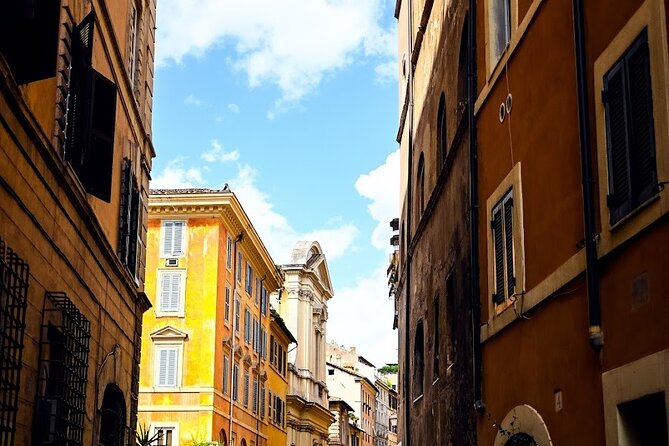
You’ll also see a 17th-century fountain that honors the four rivers, topped with a dove. This is the kind of landmark that looks like a postcard, but the best part is how it connects art, symbolism, and city pride.
From there, the route includes the remains of an ancient walkway originally built in the 2nd century B.C. to link two Roman temples. That may sound like “just ruins,” but it’s actually one of the most Roman things you can see: practical public space serving religion, daily movement, and architecture at the same time.
These stops work because they’re not only about what Rome looks like. They’re about how Romans moved, gathered, and organized space. And when you’re eating street food and classic plates right after seeing how Rome built itself for crowds, the whole city starts to feel like one system.
Campo de’ Fiori: the square in the middle of the action
The tour continues to Campo de’ Fiori, literally meaning field of flowers. Even without trying too hard, the name alone makes you think about how much Rome’s identity is built from language, markets, and everyday life.
In a food tour setting, this square helps reset your senses. After the big landmarks and the ancient connections, you’re back in a lived-in Rome mood, where people still come to see and be seen.
This kind of stop is useful for you if you like two things at once: history and the way locals actually use space.
Largo di Torre Argentina: ending near Pompey’s Theatre and Roman temples
The tour ends at Largo di Torre Argentina, an area in the ancient Campus Martius. Here you can find the remains of Pompey’s Theatre plus four Roman Republican temples.
This finish is a strong move. It gives you a visual “final exam” of sorts: Roman history not as a book, but as stone at street level. You finish the meal run with a sense that you just crossed a long timeline in a short walk.
And since you’ve been eating Roman classics along the way, it feels fitting. Food and ruins share the same story method: both reveal Rome through what survived.
How long you should plan for, and how to make the walk easier
The duration is listed at about 3 hours, and most people can participate. That “most” matters. This is still a walking tour in central Rome. You’ll be moving between squares and landmarks and spending time standing at tasting stops.
A few practical things that help:
- Wear shoes you’d wear for a day of sight-walking. Rome’s uneven surfaces can turn a normal walk into an endurance event.
- If it’s hot, slow down your pace when you can. One past experience mentioned a very hot day over 90°F, and the guide still kept things moving at a reasonable rhythm.
- If you’re traveling with kids, it can work, but you should expect the pace to be active. One family with kids said the tour was fun and engaging while still being a lot of walking.
- If you eat vegetarian, ask ahead. One vegetarian participant reported getting vegetarian pasta options during the tour, so alternatives may be possible.
Also, you’ll have a mobile ticket, and confirmation typically comes within 48 hours of booking, based on availability. If the tour can’t run exactly as planned due to weather or access, the itinerary and menu can shift.
Who this Rome food tour suits best
This is a great match if:
- You want Rome food essentials without building your own restaurant route.
- You like learning context as you eat, not just checking off dishes.
- You prefer small group energy over a big bus-style tour.
- You want a guided day that works as an intro to neighborhoods and food culture.
It’s less ideal if you hate walking, want a sit-down multi-course restaurant meal, or need a fully predictable route every minute.
And if you’re the type who enjoys asking questions mid-tour, you’ll likely appreciate the guides’ style. Names that show up repeatedly in past experiences include Massimiliano, Rocio, Luda, Manuel, Eduardo, and Federico, with people pointing out that guides connect the food to Roman life and history, and keep English explanations clear.
Should you book this Rome Food Tour?
I’d book it if you want a high-impact Rome experience: multiple tastings, classic Roman dishes, and major historic stops in one controlled 3-hour window. At $118.51, the price pencils out when you count what you’re tasting and how much walking you’d otherwise do trying to replicate it on your own.
Skip it if you’re hoping for a mostly seated, low-footprint outing, or if you’re not comfortable with the fact that routes and menus can change with conditions.
FAQ
How long is the Rome Food Tour in the Historic Centre?
The tour lasts about 3 hours.
What foods are included?
Included tastings include two different types of homemade pizza, supplì, Italian cold cuts and cheeses, two Roman pastas, cannoli, artisanal gelato, and Our Secret Dish.
Where does the tour start and end?
It starts at Sant’Agnese in Agone, Piazza Navona, 14, 00186 Roma RM, Italy and ends at Largo di Torre Argentina, 00186 Roma RM, Italy.
What language is the tour offered in?
The tour is offered in English.
How large is the group?
The maximum group size is 12 travelers.
Is hotel pickup or drop-off included?
No. Hotel pickup and drop-off are not included.
Can I cancel and get a refund?
Yes. Free cancellation is available if you cancel at least 24 hours in advance for a full refund. If you cancel less than 24 hours before the start time, it is not refunded.