REVIEW · ROME
Rome: Vatican Museums and Colosseum Private Tour with Transfers
Book on Viator →Operated by Eyes of Rome · Bookable on Viator
Two of Rome’s biggest hits, in one day. This private tour strings together the Colosseum and Roman Forum with Vatican Museums and St. Peter’s, using hotel transfers so your day stays on schedule.
I love the pacing. You get enough time to see the main sights and still hear the stories that make them click. I also like that the Vatican entry is handled with fast-track skip-the-line access, which matters in a place where waiting can eat hours.
One drawback: it’s a full day with a dress code, ID checks, and plenty of walking on uneven ground. Go in prepared, and you’ll have a smoother experience.
In This Review
- Key things you should know before you go
- A “greatest hits” Rome day that’s actually manageable
- Hotel pickup and private transfers: the quiet value
- Walking into the Colosseum zone: setting your mental map
- Entering the Colosseum: design, construction, and what legends add
- Roman Forum: myths, rulers, and the sacred fire idea
- Constantine’s Arch: a fast, smart viewpoint
- Vatican Museums with fast-track access: what “private” really changes
- Gallery walkthroughs you can actually process
- Court of the Pine Cone (Cortile della Pigna)
- Gallery of Tapestries
- Gallery of Maps
- Gallery of the Candelabras
- Sistine Chapel: short time, big impact
- St. Peter’s Basilica and Square: Bernini and Michelangelo in full scale
- Price and what you’re really paying for
- Before you go: shoes, clothing, and ID checks that matter
- Who this private day is best for
- Should you book this private Rome day?
- FAQ
- What time does the tour start?
- Where do you get picked up?
- How long is the tour?
- Is this a private tour?
- What language is the tour offered in?
- Is entrance to the Colosseum and Roman Forum included?
- Do you get into the Vatican Museums without long lines?
- What’s included besides guide time and tickets?
- Is food included?
- What are the dress and ID requirements?
Key things you should know before you go
- Private hotel pickup and drop-off: you’re met in central Rome (within the Aurelian Walls) and moved by private vehicle between sites.
- Skip-the-line Vatican entry: you move faster into the Vatican Museums complex.
- Colosseum and Roman Forum tickets included: plus the Colosseum reservation fee is covered.
- Time for major moments: Colosseum, Forum highlights, Vatican Museums galleries, Sistine Chapel, and St. Peter’s Square.
- Guide-driven storytelling: some guides on this program (such as Benjamin, Marina, Gianluca, or Ellie) are singled out for engaging explanations and good pacing.
- Bring your comfort items: closed-toe non-slip shoes are required, and in warm months a fan or umbrella can be handy.
A “greatest hits” Rome day that’s actually manageable
If you only have one day and you want the big names—Colosseum, Vatican Museums, St. Peter’s—this is the kind of plan that saves your energy. The main reason it works is the mix of guided focus and transportation. You’re not bouncing around Rome trying to “figure it out,” and you’re not stuck in long entry lines if you can avoid them.
The itinerary is also built around two different styles of seeing Rome. The first half leans archaeological and political: the Colosseum’s design, the Roman Forum’s power center, and the way religion and myth show up in everyday life. The second half is art and craft: Raphael-era tapestries, Pope Gregory XIII’s painted maps, classic sculpture galleries, and then Michelangelo in the Sistine Chapel.
This is a private experience, so your guide can adjust the tempo to your group. That flexibility shows up most during the Vatican portion, where crowd pressure can otherwise turn art viewing into survival mode.
You can also read our reviews of more private tours in Rome

Hotel pickup and private transfers: the quiet value
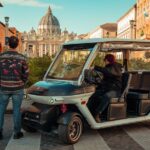
The biggest “quality of life” detail here is pickup. You’re collected from your hotel or accommodation in Rome city center (within the Aurelian Walls), then transported by private vehicle between the Colosseum/Roman Forum area and Vatican City. That matters more than people think because Rome’s traffic and transit mix can turn a day into a guessing game.
You also get a single, guided flow. Instead of you coordinating bus lines, ticket timing, and meeting points, your guide does the choreography. The result is that you can spend your attention on what you came for: the buildings, the carvings, and the stories tying them together.
Because it’s all-inclusive transportation between sites (and private vehicle use is part of the package), it’s especially good for:
- couples who don’t want to “pay and rush” between venues
- families with kids old enough to walk but young enough to get restless
- anyone who wants to see a lot without turning the day into a marathon of logistics
Walking into the Colosseum zone: setting your mental map
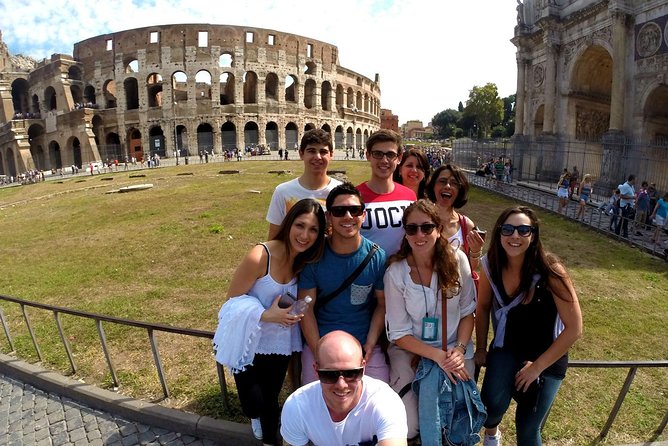
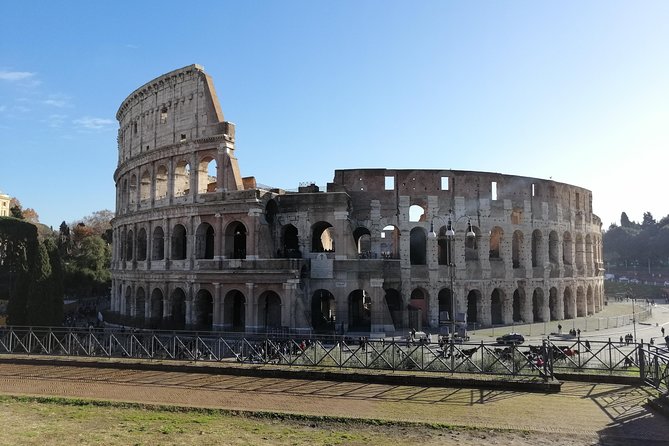
You start near a piazza and walk toward the Colosseum and Roman Forum area. That short walk is more than a warm-up. It helps you orient yourself so you don’t just arrive at ruins and random arches—you arrive with a sense of where you are in the story of ancient Rome.
Your guide sets up one key idea: when you look around, you’re seeing something close to the Roman-era view. That’s a big shift from how many visitors experience Rome, where modern streets can feel like a blur behind the monuments.
Also, note the pace. Even though this is “one day,” the day isn’t designed for strollers and slow wandering. It’s moderate walking, and there can be uneven steps at the archaeological site. Comfortable shoes aren’t a suggestion; they’re part of entry requirements.
Entering the Colosseum: design, construction, and what legends add
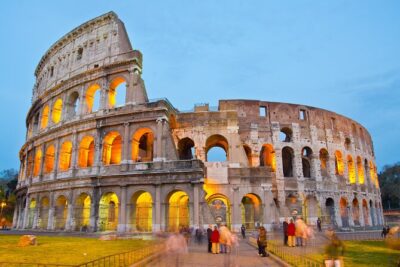
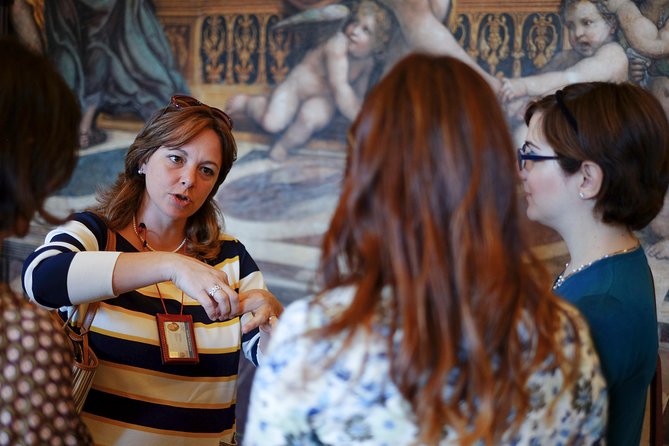
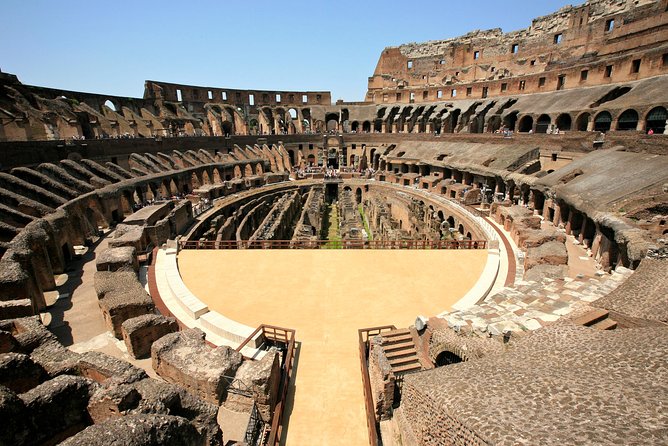
You spend about 1 hour 30 minutes inside the Colosseum with admission ticket included. The guide focuses on why the building looks the way it does—its stone amphitheater design, the scale, and the practical logic behind seeing and being seen.
Two standout points you’ll hear:
- The Colosseum was built in only 8 years (an eye-opener for most people).
- It could seat an estimated 60,000 spectators, which helps you picture how these events functioned as mass entertainment.
Your guide also connects architecture to politics. That’s where the Colosseum goes beyond gladiators. This is a public building that helped rulers shape public life—games weren’t just entertainment, they were messaging.
And then there’s the mix of legend and spectacle. You’ll likely hear references to battles with wild beasts and, according to legend, sea battles. Even when details are legendary, the point is useful: Romans leaned hard into drama, not quiet history tours.
Practical tip: plan to spend some time looking up and around. Don’t only focus on the arena floor. The design features are part of the lesson.
Roman Forum: myths, rulers, and the sacred fire idea
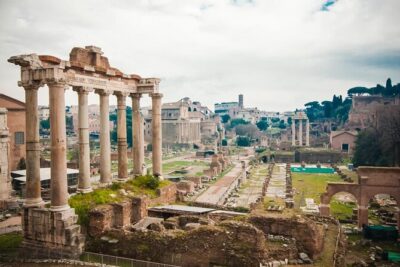
Next comes the Roman Forum for about 1 hour 30 minutes, again with admission included. This part is often the make-or-break moment on a one-day Rome trip because it’s where “ancient Rome” stops being a name and starts being a place you can imagine.
Your guide’s approach ties together:
- mythology and civic life
- major religious figures
- how cultural celebrations influenced later traditions
A few very specific stories you can expect to hear:
- The mythology threaded through the gods of Rome and how that shows up in star signs in contemporary astrology.
- The claim that Saturnalia influenced how Christmas later unfolds on December 25.
- The Lapis Niger, the ancient Latin text associated with a foundation area of a column in the Forum.
Then you’ll hear about the Temple of the Vestal Virgins. The Vestal Virgins served for long stretches—30 years under different emperors—and had a status that felt close to goddesses. Their role wasn’t symbolic only; it was practical religion. Their main duty was maintaining the sacred fire of Vesta, described as the heart of Rome. The idea is simple and powerful: as long as the flame burned, Rome would endure.
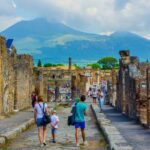
One drawback to know: the Forum is an archaeological site. You’ll be looking at fragments, foundations, and uneven surfaces. This is exactly why a guide helps—without interpretation, it can feel like lots of “old stone blocks.”
You can also read our reviews of more museum experiences in Rome




Constantine’s Arch: a fast, smart viewpoint
Between the Forum area and the Vatican drive, you stop to admire the view of the Triumphal Arch dedicated to Emperor Costantine. It’s a quick stop, but it gives you a visual “hinge” in the story.
You’ll hear it described as a turning point in Roman history and art, with a dividing line between the rise of Christianity and the decline of the Roman Empire. Even if you’re only seeing the arch from a viewpoint, the timing makes sense because it connects what you just saw (Roman public life) with what comes next (Christian Rome).
If you like history that has plot twists, this is a good moment to reset your brain before the Vatican.
Vatican Museums with fast-track access: what “private” really changes
You move to the Vatican portion after the Roman stops, with private transportation included. The Vatican Museums time is about 1 hour 40 minutes, and tickets are included with skip-the-line fast-track entry.
This is the section where private touring pays off the most. Standard museum days can feel like a long funnel: you enter, then you’re swept along with everyone else. Here, the tour focuses on key rooms while you’re still able to slow down for the details your brain will actually keep.
Your guide also includes elements that are unusual for typical visitors:
- some hidden gems
- access to rooms closed to the general public at all times (as part of the curated flow)
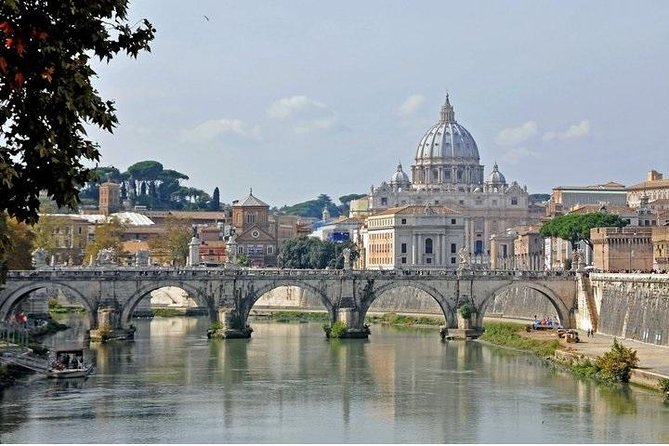
Inside, you’ll pass through places like the Belvedere Courtyard and then hit major sculpture and art highlights. One of the most famous moments you’ll hear about is the Laocoön and the Belvedere Torso, sculptures that later Renaissance artists held in high esteem.
For many people, this is the first time they understand the Vatican as more than one chapel. The Museums are the long setup. You’re seeing how ancient sculpture and Renaissance craft feed into the Vatican’s spiritual storytelling.
Gallery walkthroughs you can actually process
After the main museums entry, you hit a sequence of galleries that cover different kinds of creativity. Each one is short enough to keep energy up, but long enough to take in the point.
Here are the stops that stand out:
Court of the Pine Cone (Cortile della Pigna)
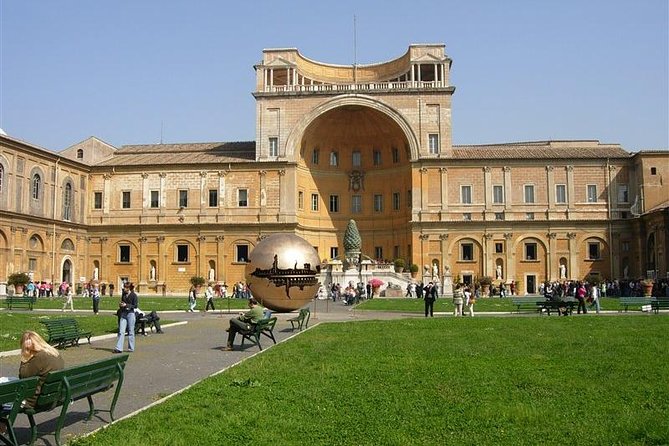
This is a calm courtyard inside Vatican City called the Court of the Pine Cone. It centers on a huge bronze pine cone from ancient Rome. The story goes that it once served as a fountain, and the courtyard sits between the Belvedere Palace and the Apostolic Palace. It’s a nice mental breather before the heavier art rooms.
Gallery of Tapestries
You see 15th and 16th-century tapestries with biblical and historical scenes woven in. These designs were inspired by Raphael’s school, which is a key detail because it ties the work back to Renaissance design thinking, not just craft.
Gallery of Maps
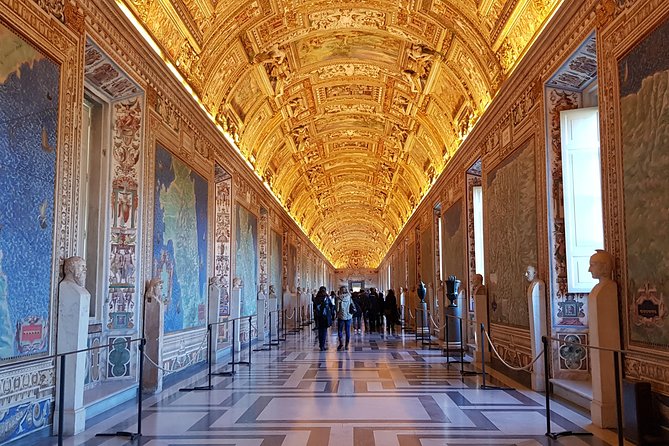
This is one of the most oddly satisfying stops on the day. The maps gallery contains topographical maps of Italy created in the 16th century under Pope Gregory XIII. The painted length is about 120 meters, so even without counting every detail, you get the sheer scale of how ambitious this documentation project was.
Gallery of the Candelabras
This gallery focuses on Greek and Roman statues, sarcophagi, and reliefs. It’s named for a large marble candelabra that divides the space into thematic sections. The tour balances art with architecture here, which helps you see why the museum feels “designed,” not just stuffed.
Practical note: these galleries can overlap with other crowds depending on the day. The fast-track approach helps, but it still means you’ll want to pay attention to your guide’s signals about where to look and when to move.
Sistine Chapel: short time, big impact
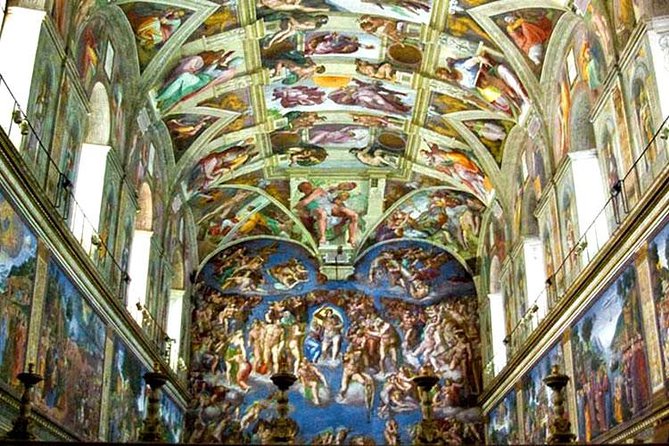
You’ll spend about 30 minutes in the Sistine Chapel, with admission included. The guide frames it in a way that’s easy to remember: it’s not only famous for Michelangelo’s frescoes; it’s also the place where papal conclaves and official ceremonies take place.
Yes, the art is the main event. But knowing the chapel’s role in how the Catholic Church functions makes your eyes track differently. The building becomes more than artwork storage; it becomes a functioning symbol with political and religious weight.
In practice, 30 minutes is enough if you don’t try to look at everything equally. Follow your guide’s direction for what to notice first. That strategy keeps the experience from turning into frantic photo-taking.
St. Peter’s Basilica and Square: Bernini and Michelangelo in full scale
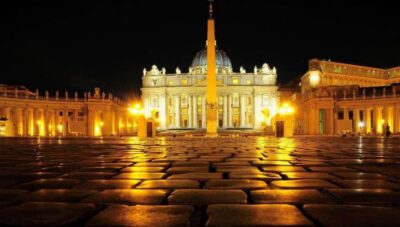
The final artistic and spiritual segment is St. Peter’s Basilica plus time around St. Peter’s Square. You’ll get about 20 minutes in the basilica area, with key highlights called out.
You’ll learn the basilica is built over the traditional tomb of Saint Peter, and its construction history involves figures like Bramante, Michelangelo, and Bernini. That lineage matters because it’s why the basilica feels like layers of artistic eras arguing with each other—in a good way.
Inside, the tour focuses on two big pieces you should absolutely look for:
- The Baldachin: a bronze canopy over the high altar, designed by Gian Lorenzo Bernini. It’s described as over 90 feet tall, so even if you’re not a Baroque superfan, your eyes will catch it immediately.
- Michelangelo’s Pietà (1498–1499): a Renaissance sculpture housed in the basilica.
Then you step into St. Peter’s Square (Piazza San Pietro). The square is designed by Bernini between 1656 and 1667, with a double colonnade, a central obelisk, and two fountains flanking it. It’s also the gathering point for large crowds during papal addresses, so you’re seeing it as both architecture and staging.
Price and what you’re really paying for
At $1,078.44 per person, this isn’t a casual add-on. It’s priced like a premium private day.
So is it worth it? Here’s how I’d judge value using what’s included:
- Private Blue Badge guide
- Hotel pickup and drop-off in central Rome area, plus private vehicle transfers between sites
- Colosseum and Roman Forum entrance fees, including the Colosseum reservation fee
- Vatican Museums tickets
- Fast-track entry at the Vatican Museums
The big cost you’re avoiding is your own time and hassle. If you’ve tried to coordinate tickets and entry lines for the Vatican and the Colosseum in one day, you know it can turn into a stress test. This tour buys you planning, coordination, and guided navigation.
The major thing not included is food and drinks. You’ll likely want a pre-planned lunch stop on your own schedule after the tour, or you can handle it as a light day if you’re used to touring.
Before you go: shoes, clothing, and ID checks that matter
This tour comes with strict requirements because two high-control sites are involved: the Colosseum and Vatican areas.
Plan for these:
- Dress code: no shorts or sleeveless tops. Knees and shoulders must be covered for men and women. If you don’t follow it, you risk being refused entry.
- Shoes: closed-toe, non-slip shoes are required. Access to the Colosseum may be denied without proper footwear.
- Names and ID: you must provide full names when booking. If your voucher doesn’t match the names presented at the ticket office, entry can be denied. Each traveler needs a valid passport or photo ID matching the booking name.
- Walking: expect moderate walking and uneven steps.
- Season and crowds: if it’s hot, a fan and umbrella can be practical. Rome weather is unpredictable, and comfort keeps your attention on the sights.
- Jubilee/closures: some monuments may be under restoration or closed due to extraordinary celebrations. Pay attention to messages you receive if anything changes.
If you handle these ahead of time, the tour feels smooth. If you don’t, you’ll spend the day dealing with preventable problems.
Who this private day is best for
This experience is a strong match for:
- first-timers who want the biggest Roman landmarks without splitting the trip into two separate days
- people who like structure and guidance, especially at the Vatican Museums
- families with older kids who can handle walking but still benefit from pacing breaks
- anyone who wants a single guide threading Colosseum-to-Forum-to-Vatican with a clear narrative
It may feel intense if you:
- prefer slow museum wandering with lots of free time
- hate crowds even when entry lines are skipped
- struggle with dress-code rules or have mobility concerns on uneven ground
Should you book this private Rome day?
Book this tour if your priority is high-impact sightseeing with minimal friction. The combination of private transfers, fast-track Vatican entry, and guided time at the Colosseum, Roman Forum, and St. Peter’s Square makes it one of the more efficient ways to see Rome’s headline attractions in a single day.
Skip it only if you want lots of free time to roam on your own, or if strict dress/ID/shoes rules sound like a headache you’d rather avoid. For the rest of you, this is the kind of day that earns its price by buying back time and mental energy, not just by handing you tickets.
If you do book, do one thing that pays off immediately: wear your entry-safe outfit and shoes, and be ready to move. You’ll get more out of every gallery, arch, and chapel view.
FAQ
What time does the tour start?
It starts at 8:45 am.
Where do you get picked up?
Pickup is from your hotel or accommodation in Rome city center within the Aurelian Walls.
How long is the tour?
It runs for about 8 hours.
Is this a private tour?
Yes. It is private, and only your group participates.
What language is the tour offered in?
The tour is offered in English.
Is entrance to the Colosseum and Roman Forum included?
Yes. Colosseum and Roman Forum entrance fees are included, along with the Colosseum reservation fee.
Do you get into the Vatican Museums without long lines?
Yes. You have skip-the-line fast-track entry to the Vatican Museums complex.
What’s included besides guide time and tickets?
You also get hotel pick-up and drop-off, private transportation between sites, and the guide is a Blue Badge guide.
Is food included?
No. Food, drinks, and lunch are not included.
What are the dress and ID requirements?
You need knees and shoulders covered (no shorts or sleeveless tops). Each traveler must bring a valid passport or photo ID that matches the full names provided at booking. Closed-toe non-slip shoes are required for safety and may be needed for entry.