REVIEW · ROME
Private Rome in a Day Tour with Colosseum & Sistine Chapel: Essential Experience
Book on Viator →Operated by Through Eternity Tours · Bookable on Viator
One day, all the big hitters. This private Rome in a Day Tour strings together the Colosseum and Vatican Museums without wasting your hours in aimless wandering, and I like that a private guide helps you move fast with the right shortcuts. The main catch is you’ll cover a lot of ground on foot, with steps and staircases, so you’ll want solid shoes and a water bottle.
I also like the way the big sights are handled in focused chunks. You get meaningful time at the Colosseum, Roman Forum, Vatican Museums, Sistine Chapel, and then the key moments inside St. Peter’s Basilica, instead of a rushed drive-by. Just be aware that the day is full—think marathon, not stroll—and you won’t have much downtime to slow everything down.
In This Review
- Key highlights worth caring about
- A full-day route from the Colosseum to St. Peter’s
- Entering The Colosseum: fast access and real explanations
- Arena floor upgrade: worth considering if it’s available
- Roman Forum stop: Via Sacra and the buildings you can actually picture
- Trevi Fountain and Piazza Navona: short time, big impact
- Vatican Museums: time-managed entry into a maze
- Sistine Chapel: seeing it in the right context, not as a rush
- Raphael Rooms: a quick but meaningful detour
- St. Peter’s Basilica: Pieta, Baldacchino, and the feeling of scale
- St. Peter’s Square and the final orientation moments
- Price and value: what your money is really buying
- Guide quality matters: Camilla, Urburk, Guia, and Thomas
- What to pack and how to pace yourself
- Who this private day tour suits best
- Should you book this private Rome-in-a-day tour?
- FAQ
- Is this tour private?
- How long is the tour?
- What language is the guide?
- What tickets are included?
- Do I need to bring anything for entry?
- Are food and drinks included?
- Is the tour mostly walking?
- Where does the tour start and end?
- Are there options for accessibility?
Key highlights worth caring about
- Private guide, your pace: You’re not stuck with other groups’ timing, and you can ask questions as you walk.
- Tickets and timed access built in: Colosseum, Roman Forum, Vatican Museums, Sistine Chapel, Raphael Rooms, and entry-related items are included.
- Skip-the-stress routing: The tour is designed to cut lines and reduce waiting, which is huge when you have one day.
- Headsets if needed: For groups of 6 or more, headsets help you hear your guide clearly.
- Big monuments, short stops: Trevi Fountain and Piazza Navona are quick hits, so you still get the must-sees.
A full-day route from the Colosseum to St. Peter’s
Rome is two cities in one day: ancient stone near the Tiber, then marble and power at the Vatican. This tour is built to do that whole arc in about 7 hours, with a private guide guiding you from the Colosseum area to St. Peter’s Square.
The tour’s value is in the way it compresses planning. Instead of you figuring out ticket timing, routes, and where to stand to actually understand what you’re looking at, your guide handles that. You still get to linger where it matters, but the structure keeps you from missing key sights.
You can also read our reviews of more private tours in Rome

Entering The Colosseum: fast access and real explanations
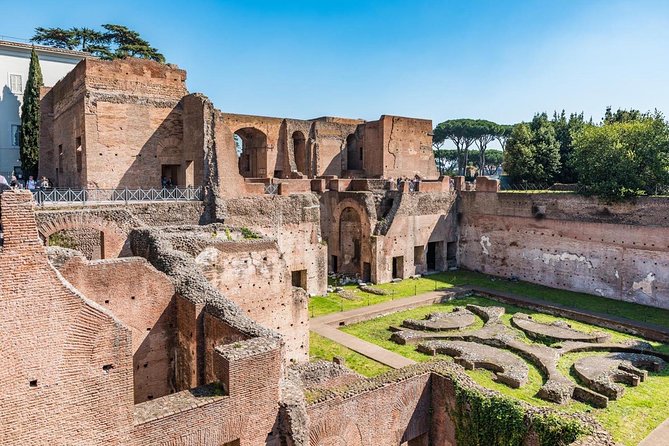
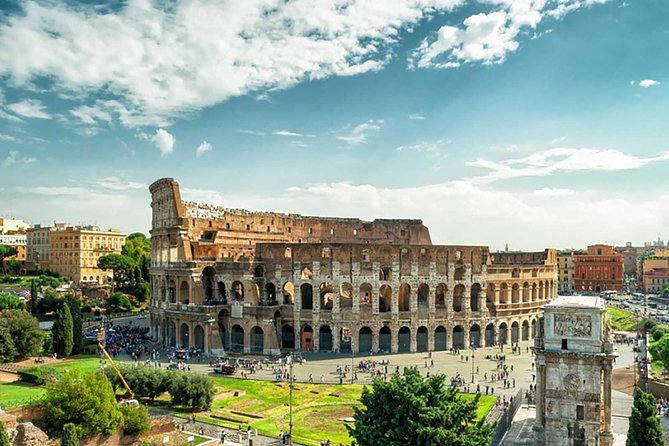
You start with the Colosseum—about one hour on site—with admission ticket included. The best part of this setup is that you’re not arriving cold and guessing which entry point or viewing angle makes sense. You get directed right away, and that helps you absorb what you’re seeing instead of wrestling logistics.
The Colosseum isn’t just big. Your guide can help you connect what’s left on the stone to what the building was designed to do. Even if you’re not a Roman history specialist, a good walkthrough turns the site from impressive shapes into a working story: entrances, movement, seating layout, and why the arena mattered.
Practical note: the day is walking-heavy, and the Colosseum involves navigating inside an active attraction area. Comfortable shoes matter here more than at most Rome stops.
Arena floor upgrade: worth considering if it’s available
One tip I’d take from real experience is this: if you have the option to add arena floor time at the Colosseum, it can be worth paying for. Being closer to where events took place changes the scale fast. That said, the core tour includes Colosseum entry, so you can still have an excellent visit without extras.
Roman Forum stop: Via Sacra and the buildings you can actually picture
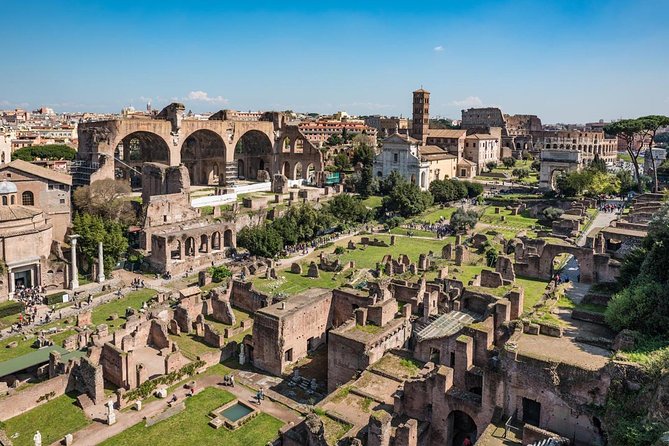
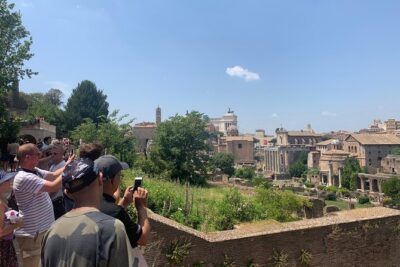
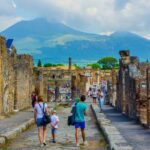
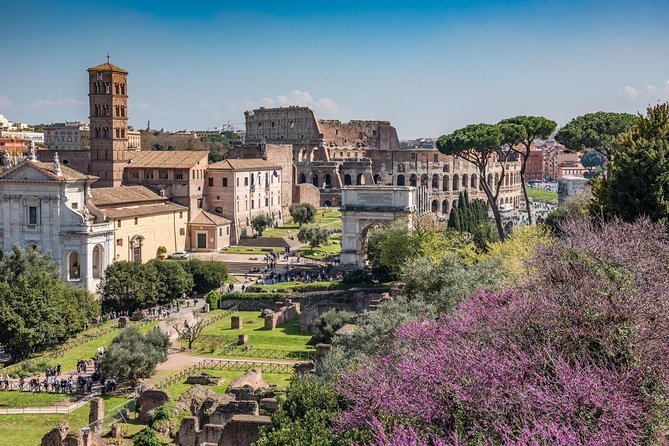
Right after the Colosseum, you move into the Roman Forum for about 1 hour 30 minutes. The tour includes highlights you can wrap your head around: Temple of Saturn, House of the Vestal Virgins, Via Sacra, and the Arch of Titus.
What makes this more than a “see-it” stop is the way the Forum rewards guided order. The Forum is ruins spread across a wide, confusing space. With a guide, you learn what to look for and why it’s arranged the way it is—so the stones stop being random and start forming a city.
You’ll also get time with several inside/nearby moments that help you orient yourself, including viewpoints and brief interior-style segments. This is one of those places where standing at the wrong angle can make everything feel like rubble. A guide helps you stand in the right spots.
Trevi Fountain and Piazza Navona: short time, big impact
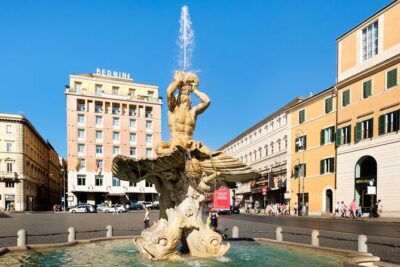
After the Forum, you’ll hit Trevi Fountain for about 15 minutes. Then Piazza Navona for another 15 minutes, with Bernini’s Four Rivers Fountain as a key focus. These are fast stops on purpose.
Here’s the tradeoff: you won’t have hours to wander down every side street. But you will hit two of the most famous baroque scenes in Rome without sacrificing your “real time” for the Vatican.
If you love photography, this format is still useful. Your guide can point out where to stand to get the best sightlines without wasting your energy circling. And if you care more about atmosphere than selfies, 15 minutes is often enough to feel the energy and move on while the day still feels manageable.




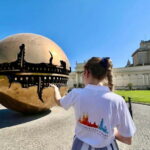
Vatican Museums: time-managed entry into a maze
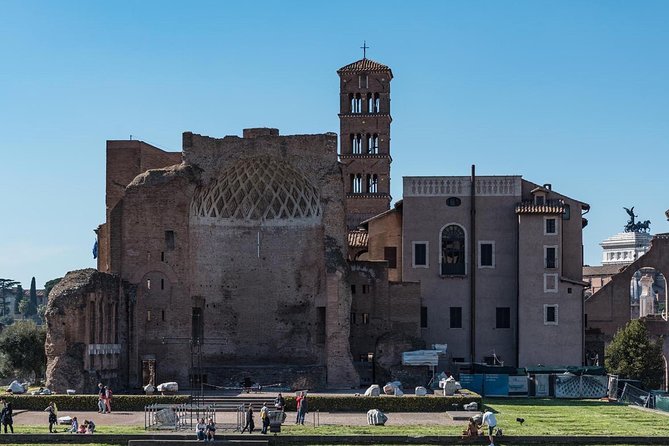
Next up is the Vatican Museums, about 2 hours with admission ticket included. This is the part of the day where planning matters most. The Museums can turn into a time drain if you’re wandering without a plan.
With a private guide, you get a focused route through the sections that connect naturally to what you’ll see later. You don’t just walk from room to room. You learn how the Museums set up the big finale.
One nice detail: the day includes a stop called Cortile della Pigna inside the Vatican Museums, about 15 minutes. That helps break up the indoor flow and gives you a spot where the scale feels different and easier to take in.
Sistine Chapel: seeing it in the right context, not as a rush
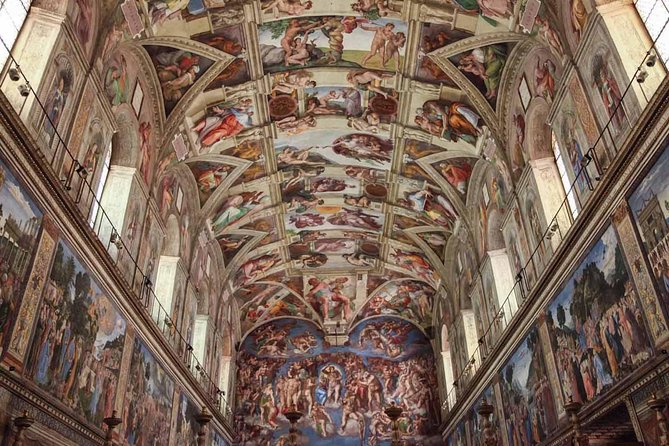
After the Museums, you go to the Sistine Chapel for about 30 minutes, with entry included. This is short by design, because the real goal is to experience it without letting the day collapse into exhaustion.
The Sistine Chapel feels overwhelming if you treat it like a quick photo stop. A guide helps you focus on what to notice first—so you leave with a stronger mental picture of what the scenes are doing, instead of just remembering ceiling images.
Raphael Rooms: a quick but meaningful detour
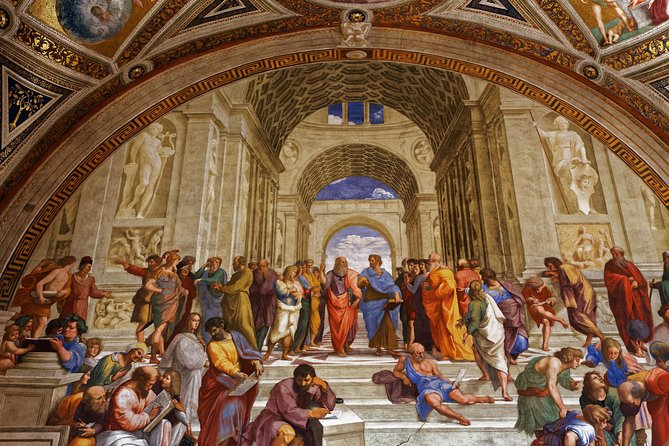
Then you’ll visit the Stanze di Raffaello—Raphael Rooms—for about 20 minutes, with admission included. These rooms matter because they connect to the Vatican’s art power beyond the Sistine Chapel ceiling.
The time here is limited, so I’d treat it like an “essential highlights” stop. A good guide can help you spot what makes these rooms significant and how to read them as complete spaces, not just frames on walls.
St. Peter’s Basilica: Pieta, Baldacchino, and the feeling of scale
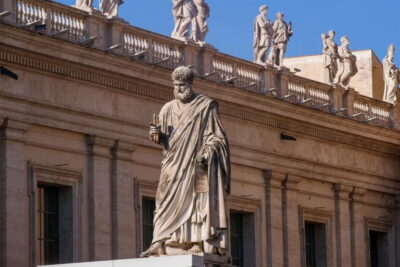
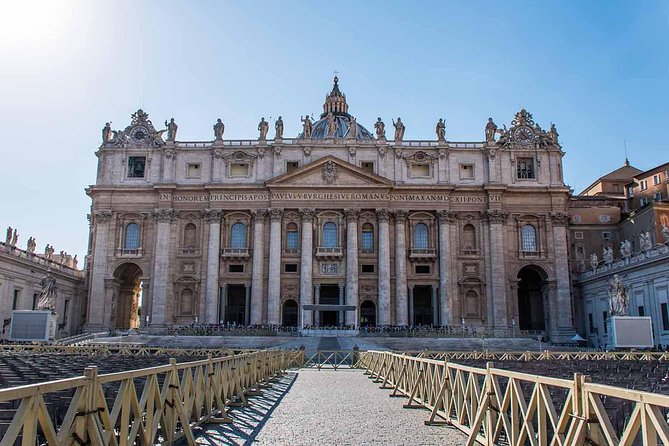
After the Vatican content, you shift to St. Peter’s Basilica for about 1 hour. You’ll also see Michelangelo’s Pieta inside the Basilica, with a stop time around 10 minutes for La Pieta.
This is the moment in the day where Rome goes from ancient spectacle to religious monumentality. St. Peter’s can be visually loud, so the value of a private guide is in helping you pick your way through the space. If you know where to look, it’s easier to notice details without losing yourself in the size.
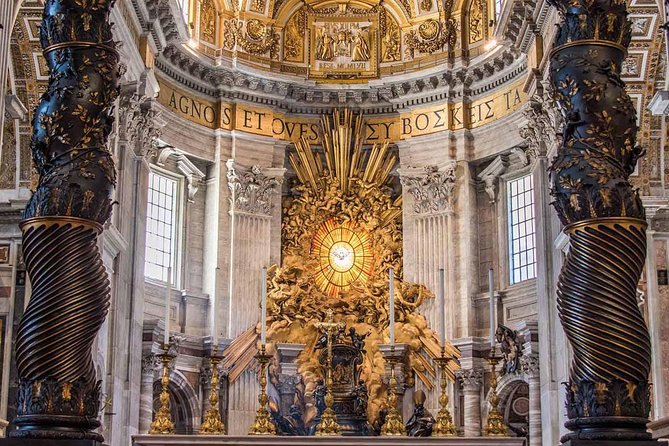
The tour also includes a viewpoint of the Baldacchino di San Pietro by Bernini, about 10 minutes, including an inside view from within the Basilica. That’s one of those stops that can change how the church feels. It’s dramatic, and when you understand what you’re looking at, it turns into more than decoration.
St. Peter’s Square and the final orientation moments
You end at St. Peter’s Square (Piazza San Pietro). There’s a short stop—about 10 minutes—where you get your bearings in the space.
This finale is useful because it helps tie the whole Vatican visit together. You’re not just walking through rooms and corridors. You close the loop by stepping into the public face of the Vatican complex.
There’s also a Colosseum/Forum “view” moment built into the schedule, which is a smart touch. Viewpoints help your brain organize what you saw earlier, instead of letting the day turn into nonstop entry lines and room navigation.
Price and value: what your money is really buying
At $748.91 per person for a private tour lasting about 7 hours, this is not a budget option. But the price starts to make sense when you look at what’s included: expert English-speaking private guide, all fees and taxes, headsets for groups of 6+, and admission tickets plus reservation fees for major stops.
The Colosseum entrance ticket and reservation fee are explicitly included (valued at €18 and €2 per person). That’s only part of the equation. The rest of the cost covers the services that usually eat up your time when you DIY: coordination, entry handling, and guide-led pacing across a long day.
So the real value question is simple: do you want to spend your one day solving Roman ticket puzzles and route decisions, or do you want the itinerary handled and your time spent looking at monuments?
If your schedule is tight, a private guide can be worth it. If you’re traveling slowly with flexible plans, a self-guided approach might feel cheaper. But if this is your only shot at the Colosseum and the Vatican in the same trip, you’re paying to make that happen smoothly.
Guide quality matters: Camilla, Urburk, Guia, and Thomas
One thing that clearly shows up in strong experiences with this tour style is the guide. Names you might encounter include Camilla, Urburk, Guia, and Thomas. The consistent thread is not just facts, but how the information lands while you’re walking in the exact spot connected to the story.
When the guide is doing it well, the day stops feeling like checklists. The Colosseum and Forum become understandable, and the Vatican visit becomes less of a blur. A guide can also help you avoid the worst timing mistakes, which is where people often lose hours.
If you care about learning while seeing, this kind of private setup is exactly what you’re paying for.
What to pack and how to pace yourself
This tour is a walking experience with steps and staircases. That means your comfort affects your enjoyment.
Bring:
- Comfortable walking shoes
- A bottle of water
Food and drinks are not included, so plan how you’ll handle breaks before and after the tour window. Also keep your energy in mind: the schedule moves from the Colosseum area to Trevi and Piazza Navona to the Vatican, with major indoor moments after.
You’ll get mobile ticketing, but still keep your documents ready. You’ll need a valid passport or ID document that matches the name provided at booking for entry to the Colosseum and Roman Forum. Missing names can also cause entry issues at ticket offices.
Who this private day tour suits best
This is a strong fit if:
- You have limited time in Rome and want the top sights in one day
- You prefer a guide-led plan rather than chasing directions and entry times
- You want a private pace with your own questions
It’s also a good choice if you want a structured day that still leaves room for meaning. The stops include focused durations at major sites, plus shorter “icon” stops at Trevi Fountain and Piazza Navona.
If you hate walking, or you need long rests every hour, this schedule may feel too tight. While the tour says accommodations are possible if you alert them during booking about mobility concerns, the route still includes steps and staircases.
Should you book this private Rome-in-a-day tour?
Book it if you’re trying to do the Colosseum and the Vatican in one tight window and you want your time managed. The private guide, included admissions, and the way the day is segmented for understanding make it a practical choice for first-timers and time-strapped visitors.
Consider something else if you’re traveling at a slower pace, you want long free time for wandering, or you’re not comfortable with a full day of walking and stairs. This tour is efficient, not leisurely.
If your priority is maximum sights with minimum friction, this is the kind of itinerary that turns Rome from confusing into clear, fast.
FAQ
Is this tour private?
Yes. It’s a private tour/activity, so only your group participates.
How long is the tour?
The duration is about 7 hours.
What language is the guide?
The tour is offered in English.
What tickets are included?
Admission tickets are included for the Colosseum, Roman Forum, Vatican Museums, Sistine Chapel, and Stanze di Raffaello. The St. Peter’s Basilica-related stops are also included as listed in the tour details.
Do I need to bring anything for entry?
Yes. You must present a valid passport or ID document that matches the full name provided at booking for successful entry to the Colosseum and Roman Forum.
Are food and drinks included?
No. Food and drinks are not included.
Is the tour mostly walking?
Yes. It’s a walking tour with steps and staircases, so comfortable walking shoes and a bottle of water are strongly recommended.
Where does the tour start and end?
It starts at Angelino Ai Fori dal 1947, Largo Corrado Ricci, 40 (Via dei Fori Imperiali area). It ends at St. Peter’s Square, Piazza San Pietro.
Are there options for accessibility?
You should advise during booking if anyone has mobility concerns so the provider can best accommodate you. Also, the Vatican Museums provide free entrance for visitors who meet the stated disability requirements; you should inform the provider when booking if you qualify so the entry ticket pricing can be removed.