REVIEW · ROME
Rome Private Double Decker Open Bus Panoramic GuidedTour | Exclusive Sightseeing
Book on Viator →Operated by Tour In Rome by Tour in the City · Bookable on Viator
Rome moves fast. This private bus tour helps you keep up. You get an open double-decker with a guide on board, so you’re not stuck piecing together transit and viewpoints on your own. In about 75 to 90 minutes, you’ll cover major sights across several of Rome’s neighborhoods without the usual foot-sore scramble.
I like two things a lot. First, the private format means it’s just your group, so the guide can pace things to your needs. Second, the route is packed with landmark variety—Vatican views, imperial-era ruins, and even a pass through the stylish streets around Via Veneto—so you get a true snapshot of the city, not just one bubble of ancient Rome.
One drawback to weigh: at big-name stops, you can still run into crowd energy and long lines nearby. This tour is designed for panoramic seeing and guided orientation, but if your plan is to go inside several sites, Rome’s queues can still slow things down.
In This Review
- Key things to know before you board
- Why a private double-decker works so well in Rome
- From the Tiber to the Holy Castle: where the skyline starts to make sense
- St. Peter’s Square and the Theatre of Marcellus: two worlds, one guided thread
- The Tiber Island pause: healing vibes in the middle of the river
- Piazza Venezia, Aventine Hill, and Circus Maximus: Rome’s scale without the slog
- Forum Boarium and the surrounding temples: where commerce met empire
- Capitoline Hill and Palatine Hill: the emperors’ neighborhood, explained in plain terms
- Piazza Barberini, Via Veneto, and Villa Borghese: Rome after dark energy, in daylight
- Piazza della Repubblica and Santa Maria Maggiore: a dignified finale
- The $1,029.57-per-person value question (and when it makes sense)
- Time on the clock: 75–90 minutes, plus the one rule to avoid regret
- Should you book this Rome private double-decker panoramic guided tour?
- FAQ
- How long is the Rome private double-decker panoramic tour?
- What’s included in the price?
- What’s not included?
- Where do we meet for the tour?
- Is this tour private?
- Can I cancel for a full refund?
Key things to know before you board
- Private double-decker: your group only, with guided commentary on board
- A 75–90 minute hit list: multiple major monuments across Rome’s core areas
- Tiber River and Vatican approach: views from the Holy Castle area to St. Peter’s Square
- Real ancient landmarks: Theatre of Marcellus, Palatine Hill, and Capitoline Hill viewpoints
- A well-placed break at Circus Maximus: about 15 minutes, and it’s free
- Style stops included: Piazza Barberini, Via Veneto, Villa Borghese, and Piazza della Repubblica
Why a private double-decker works so well in Rome
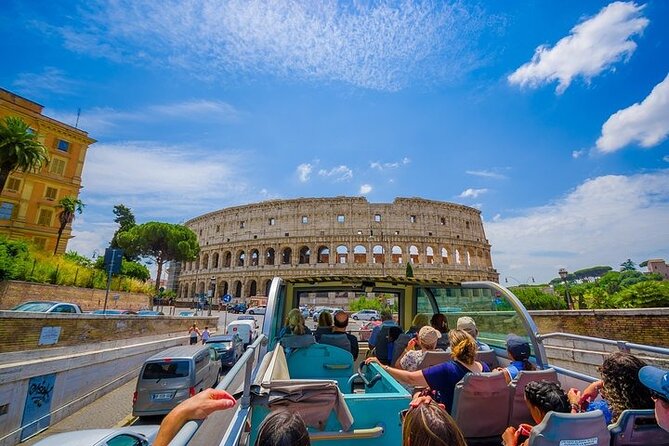
Rome is huge, and the sights you want are scattered. This is one of those rare city tours that respects that reality. Instead of trying to sprint between monuments and hope you catch the good angles, you ride high on a panoramic open bus while a guide ties the story together.
The private part matters more than you might think. With only your group aboard, you’re less likely to feel rushed by other schedules, and the guide can spend time on the parts you care about—whether that’s the Vatican’s layout, Rome’s imperial setting on the Palatine, or the everyday vibe of areas like Via Veneto.
Also, this is a good option if you’re traveling with kids or a small mixed-age group. The itinerary is designed for seeing a lot in a short window, and the bus keeps the energy up without constant stairs and walking.
You can also read our reviews of more private tours in Rome

From the Tiber to the Holy Castle: where the skyline starts to make sense
A big part of why this tour feels efficient is that it begins along the Tiber. From the river approach, Rome’s geography starts clicking into place: ridges, hills, and key landmarks line up in a way that’s hard to grasp when you’re walking street by street.
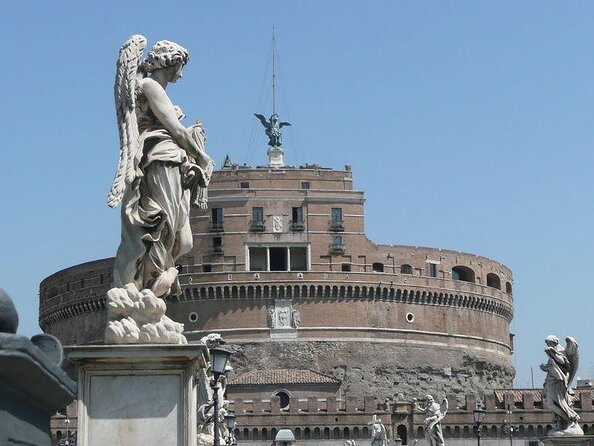
You’ll pass Castel Sant’Angelo, known as the Holy Castle. It’s one of the city’s most iconic “time-travel” buildings because it began as Hadrian’s tomb. Later, it was transformed into a fortress for the popes. That mix of imperial and papal power is basically Rome in one silhouette—part ancient, part medieval, and always photogenic.
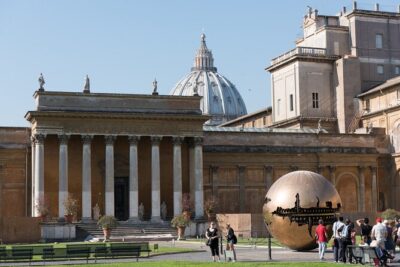
Then the route brings you toward the Vatican side, which means you get that classic ceremonial feel. When you reach St. Peter’s Square, the guide can point out the elements that make the place work visually: the large Egyptian obelisk standing in the center and the massive colonnades designed by Gian Lorenzo Bernini. If you’ve ever wondered why the space feels welcoming and dramatic at the same time, this is the spot to notice it.
Practical tip: if you’re aiming for the best photos, plan to look for the bus angles that give you a clean line to the obelisk and the colonnade sweep. The route is short, so you’ll want to be ready when the guide cues the moment.
St. Peter’s Square and the Theatre of Marcellus: two worlds, one guided thread
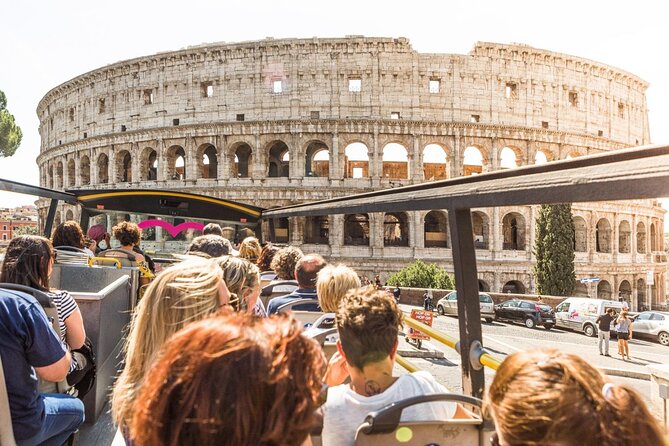
After the Vatican approach, the tour pivots into Rome’s ancient performance culture with a stop near the Theatre of Marcellus (Teatro di Marcello). This is a powerful stop because the structure is open-air and still reads as a theater—built in the late Roman Republic era and completed under Augustus. You can almost picture spectators leaning in from different levels.
The guide framing here helps. The theater is named for Marcellus, and it ties into the wider story of Augustus shaping Rome’s public spaces. There’s also a layered point that’s easy to miss on your own: spaces around the theater weren’t just theater-only. The nearby colonnaded walks connect to temples like Jupiter Stator and Juno Regina as part of the older portico setting (including references to Octavia Minor and the Porticus Metelli).
This is where guided context pays off. From the bus, you might initially see “more old stone.” With the right explanation, you start seeing how Rome’s public life shifted over centuries—Republic to empire to later transformations.
The Tiber Island pause: healing vibes in the middle of the river
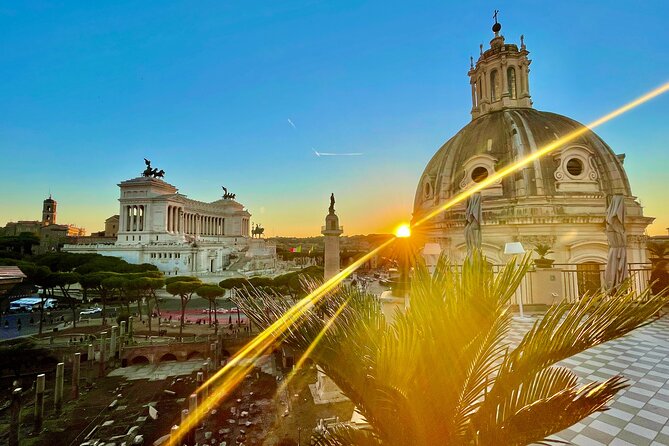
One of the most interesting “off-the-radar” parts of the route is the Tiber Island (Isola Tiberina), the only river island in the section of the Tiber that runs through Rome. It’s shaped like a boat and has been connected to both sides by bridges for centuries, so it has always mattered as a crossing point.
The tour context here is especially good for understanding why Rome keeps reusing places. The island is associated with medicine and healing. It was once home to an ancient temple of Asclepius, and later it became linked with hospitals—like the Fatebenefratelli Hospital (16th century) and San Bartolomeo all’Isola dating to the 10th century.
You may not spend a long time here, but the short stop does something useful: it breaks up the big monument focus and reminds you Rome isn’t only ruins and grand squares. It’s also where everyday functions—health care, crossings, work—have continued to matter.
Piazza Venezia, Aventine Hill, and Circus Maximus: Rome’s scale without the slog
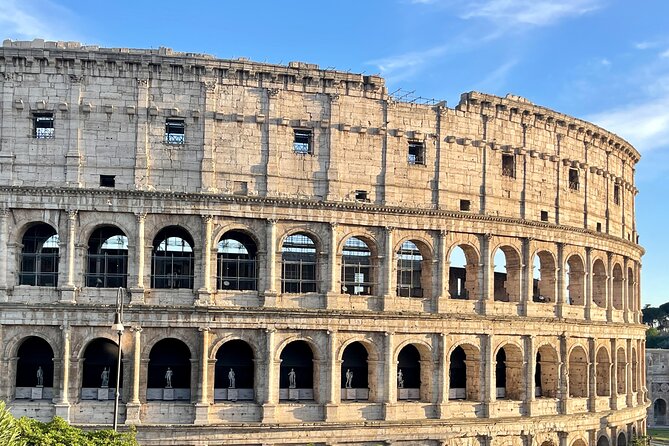
From the river and Vatican zone, the bus moves toward Piazza Venezia, which is basically a hub where major streets intersect. Even if you’re not getting out for long, this stop helps you understand how Rome funnels movement through key squares. Piazza Venezia is named for Palazzo Venezia, associated with the Venetian Cardinal Pietro Barbo (who later became Pope Paul II).
Next comes Aventine Hill, Rome’s southernmost of the seven hills. This area is one of those places where the view and the terrain tell you something. The hill has two distinct heights (Aventinus Major and Aventinus Minor) separated by a steep cleft, and the guide can connect that physical split to the old road boundaries between Roman neighborhoods.
Then you hit Circus Maximus. This is a star stop for anyone who likes scale. Circus Maximus was the biggest chariot-racing and mass entertainment venue in ancient Rome, and it could hold over 150,000 people in its prime. Today, it’s a public park, and the tour includes about 15 minutes there, with admission ticket-free.
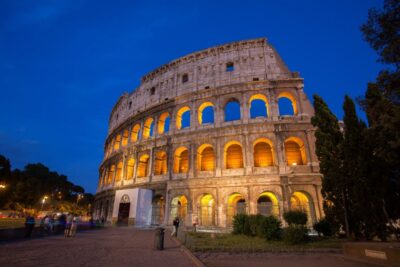
That brief stop is smart value. You get a mental picture of the arena without spending hours navigating museum lines or ticket offices. If you’ve only seen colosseum-type sights in photos, Circus Maximus shows you a different kind of Roman spectacle: long-track racing and crowd energy on a huge flat plan.






Forum Boarium and the surrounding temples: where commerce met empire
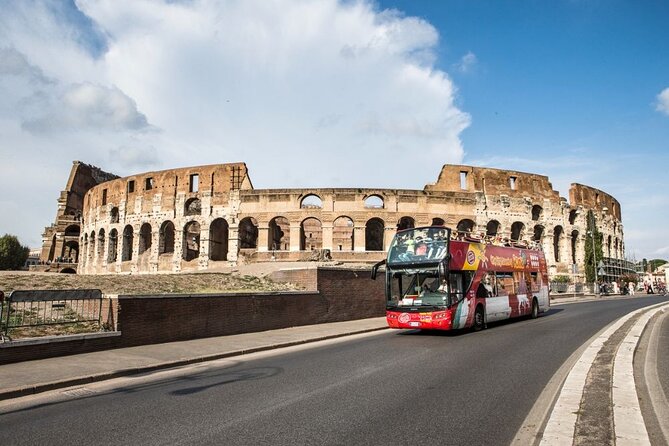
Near Circus Maximus, you’ll pass by the Forum Boarium area. This wasn’t a forum in the “elected politicians” sense people think of today. It was a cattle forum and a commercial hub near the Tiber. It also sits near the original docks area (Portus Tiberinus), which helps explain why this neighborhood was active and practical.
The guided angle also connects the Forum Boarium to entertainment and religion. It’s associated with the early gladiatorial contest at Rome in 264 BC and major religious spaces such as the Temple of Hercules Victor and the Temple of Portunus (also linked with Fortuna Virilis). If the names feel academic, don’t worry—watch how the guide ties them into what the Romans were doing there: trading, worship, and spectacle all in the same broader zone.
Even if your bus view is quick, this stop adds variety. It prevents the tour from becoming only “the big-ticket monuments.” You see how Rome functioned.
Capitoline Hill and Palatine Hill: the emperors’ neighborhood, explained in plain terms
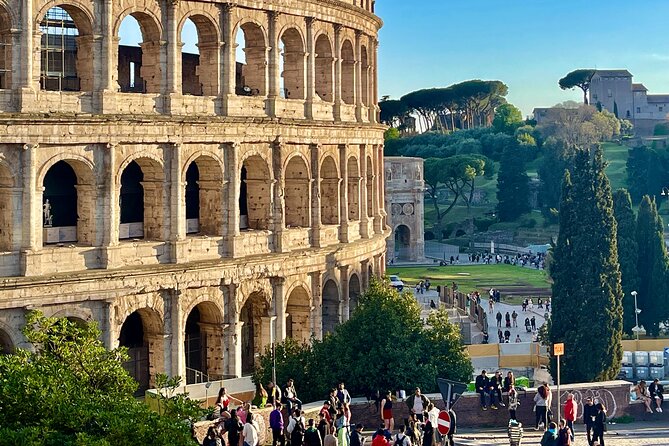
The tour then shifts to the heart of ancient Rome with stops tied to the Capitoline Hill and Palatine Hill.
First, Capitoline Hill (Campidoglio) is about power and permanence. It originally tied to the temple of Jupiter Optimus Maximus, and the “Capitolium” name eventually broadened to mean the hill itself. It’s also described as indestructible in Roman thinking, which is a useful mindset to bring into this stop: Romans weren’t just building. They were trying to make their world last.
Next is Palatine Hill, one of the most ancient parts of Rome and a key reason the city feels like it’s on top of itself. Palatine is where imperial palaces rose, starting with Augustus. Before imperial times, it was associated with the wealthy. Today, it’s mainly an open-air museum area, and the tour specifically includes a stop where you can admire the ruins of those imperial palaces—where emperors lived.
This is one of the best “guided interpretation” moments on the whole route. From ground level, Palatine can feel like a jumble of stones. From a viewpoint, and with the guide explaining how the palaces unfolded, it becomes a place where you can picture authority moving through space.
If you’re short on time, this is the moment to focus your attention. Palatine gives you the “Rome at the top” feeling—power concentrated on a hill.
Piazza Barberini, Via Veneto, and Villa Borghese: Rome after dark energy, in daylight
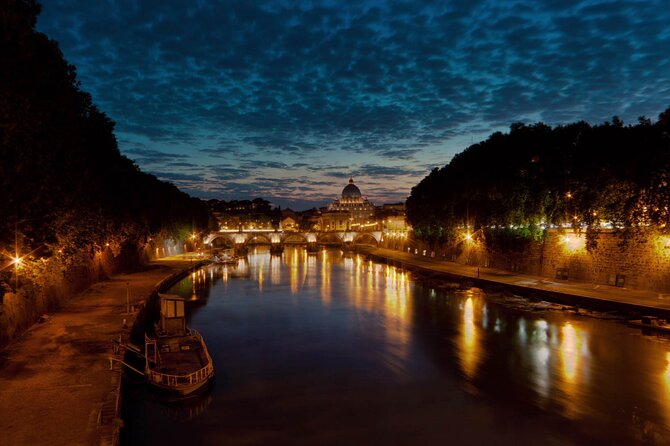
Not every Rome tour does this, and I appreciate it. The route includes a move into the more modern-feeling center with Piazza Barberini and the baroque touch of the Triton Fountain (Fontana del Tritone), sculpted by Bernini. The piazza itself is tied to the Palazzo Barberini and the larger 17th-century rebuilding era, so it’s not just a pretty photo spot—it’s part of how Rome reinvented itself.
Then the tour passes along Via Veneto, famous for la dolce vita. The street gained international fame especially in the 1950s and 60s, when it became a meeting place for bars, restaurants, and jet-set personalities. The details matter here: the street’s fame was helped by the film La Dolce Vita by Federico Fellini, and it’s also associated with big-name cafés and hotels such as Café de Paris, Harry’s Bar, Regina Hotel Baglioni, and The Westin Excelsior. The U.S. Embassy is also located along the avenue.
Even if you’re not chasing celebrity history, Via Veneto is a helpful contrast after all the ancient stops. It shows you Rome’s layers keep going—not just “ruins then modern.”
Finally, you’ll reach Villa Borghese, a major landscaped garden and park area containing museums and attractions. It’s described as the third largest public park in Rome (after Villa Doria Pamphili and Villa Ada). The guide context here is useful because the gardens were developed for the Borghese villa suburbana, tied to the Borghese family’s art collection and later garden remakes in the late 18th century. You’re not just looking at greenery—you’re seeing how Rome planned leisure.
Piazza della Repubblica and Santa Maria Maggiore: a dignified finale
The tour heads toward Piazza della Repubblica, a circular piazza at the top of the Viminal Hill next to Termini. This is one of those places that looks like “city center traffic,” until you realize the shape is inherited from older Rome: the old name Piazza dell’Esedra came from the exedra of the Baths of Diocletian.
Later changes like the construction of Via Nazionale cut through the area, but the basic form still tells you something about how Rome keeps using old foundations.
Then the finale brings you to Basilica di Santa Maria Maggiore. This is one of the Seven Pilgrim Churches of Rome and the largest Catholic Marian church in Rome. The basilica enshrines Salus Populi Romani, an image of the Virgin Mary described as health and protectress of the Roman people. The tour context also includes a key religious milestone: the canonical coronation by Pope Gregory XVI in 1838.
You may also find it helpful to know this basilica sits in Italian territory (not Vatican territory) even though the Holy See fully owns it. In other words, Rome’s religious geography isn’t as simple as a single border line.
The $1,029.57-per-person value question (and when it makes sense)
Let’s talk price honestly. At $1,029.57 per person, this isn’t a budget bus tour. For a solo traveler, it can feel steep fast. But private tours in Rome usually price for two things you’re buying at the same time: dedicated transport and a guide’s time, working as efficiently as possible.
What you’re getting that supports the cost:
- Private transportation and the behind-the-scenes costs to run in the city center (taxes, fuel, parking fees, permits)
- An official guide on board, meaning you get interpretation while you ride—not just at a stop
- A short, high-density route designed to show a lot of major attractions in a single block of time
Who tends to get the best value:
- Small groups and families who want everyone together and don’t want to split up to navigate
- People with limited time who still want Vatican + ancient Rome highlights
- Travelers who hate wasting hours on transit logistics and would rather pay to reduce stress
What you should factor in:
- Food and drinks aren’t included
- The tour is about panoramic seeing and guided orientation, not a long “inside every site” plan
- If you’re traveling at peak times, crowd lines can still happen near the biggest landmarks
Think of it like this: you’re paying to buy back time and reduce stress. In Rome, that can be worth a lot.
Time on the clock: 75–90 minutes, plus the one rule to avoid regret
This tour runs about 1 hour 15 minutes to 1 hour 30 minutes. That’s quick, so come ready. The meeting point is Largo di Villa Peretti, 00185 Roma RM and you’ll want to arrive 15 minutes early. The rule is strict: if you arrive at the departure time or later, you will not be able to attend and won’t receive a refund.
That matters because Rome loves to swallow time. A missed bus is painful. If you’re arriving by train or metro, build in margin. The good news: the start point is described as near public transportation.
Also note this is a private tour/activity, so you don’t need to worry about blending into a larger group. It’s just your party. That often means the guide’s pacing feels smoother.
Should you book this Rome private double-decker panoramic guided tour?
I’d book it if your goal is simple: see the top Rome highlights fast, with a guide, from an open double-decker, without spending your day calculating routes. It’s especially smart if you want a mix of Vatican sights, ancient landmarks like Palatine and Circus Maximus, and Rome’s central vibe around Via Veneto and Villa Borghese.
I’d hesitate if you’re traveling solo with a tight budget, or if your main plan is to spend lots of time entering indoor sites. This experience is built for panoramic seeing and guided storytelling, not a long museum marathon.
If your group is small and your calendar is tight, this is the kind of Rome tour that pays you back quickly.
FAQ
How long is the Rome private double-decker panoramic tour?
It runs about 1 hour 15 minutes to 1 hour 30 minutes (approx.).
What’s included in the price?
The price includes private transportation, taxes, fuel, parking fees, permits to enter the city centre, and an official tour guide on board.
What’s not included?
Food and drinks are not included.
Where do we meet for the tour?
You meet at Largo di Villa Peretti, 00185 Roma RM, Italy.
Is this tour private?
Yes. It’s a private tour/activity, and only your group participates.
Can I cancel for a full refund?
Yes. You can cancel up to 24 hours in advance for a full refund. If you cancel less than 24 hours before the experience starts, the amount paid is not refunded.