REVIEW · ROME
The Ultimate Golf Cart Tour Adventure
Book on Viator →Operated by Rome Tours · Bookable on Viator
A golf cart is how you skip Rome’s leg-burn. In 2 to 3 hours, you get a guided loop past major icons like the Colosseum area, Trevi Fountain, and the Spanish Steps—without turning your day into a stair workout. I like that it keeps the pace friendly, and I also like that the guide puts real story behind what you’re looking at, not just dates on a sign.
The trade-off is time: this is a fast, outdoor-focused tour. You’ll be seeing monuments largely from the outside, and some sites do not include admission, so if you want long interior visits, you’ll need a separate plan.
In This Review
- Key things I’d focus on before you go
- Why a Rome golf cart tour works so well
- Price and what the package includes (and what it doesn’t)
- Where you start and where you finish
- The ride sets up the Arch of Constantine stop
- Piazza Venezia: your map in marble
- Circus Maximus: the scale hits hard
- Bocca della Verità: legend you can’t miss
- Piazza di Spagna without the all-day stair grind
- Trevi Fountain: timing matters, and the photos are worth it
- Piazza Navona: where the tour turns into real Rome
- Pantheon from the outside: the dome trick you can still see
- How the guide and driver change the experience
- Comfort tips so your 2–3 hours stay enjoyable
- Who this Rome golf cart tour is best for
- Should you book this Rome golf cart tour?
- FAQ
- How long is the Rome golf cart tour?
- What is the price per person?
- What’s included in the tour?
- What is not included?
- Is admission included for the main sites?
- Where do I meet the tour and where does it end?
- Is this a private tour?
- Do I need a printed ticket?
- Is free cancellation available?
Key things I’d focus on before you go
- 2–3 hours, max 6 people: small group feel without spending the whole day in a bus line
- Licensed guide + golf cart: you ride close to the action, then stop for photos and explanations
- Outside-monuments approach: great for comfort, but plan for exteriors rather than deep museum time
- Big-name stops plus legends: from the Arch of Constantine to Bocca della Verità and its famous hand test
- Flexible route if something closes: if a spot is shut, they extend the tour to keep you within the advertised length
Why a Rome golf cart tour works so well
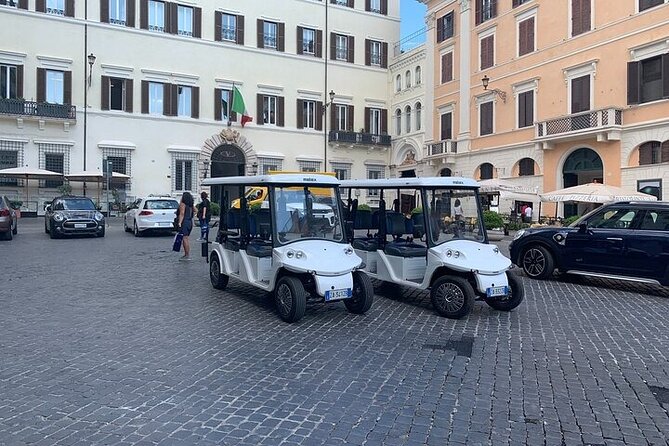
Rome can be gorgeous and exhausting in the same breath. The sidewalks are busy, the distances add up, and the heat has a way of turning sightseeing into a slog. This kind of tour is built for the reality of a first visit: you want your bearings fast and you want to see the skyline-defining landmarks without paying in sore feet.
A golf cart also changes the rhythm. You don’t just look at big sights—you’re able to connect the geography. When you’re moving at a comfortable pace and stopping at the right moments, you start to understand how Rome fits together: hill against hill, forum area versus grand piazzas, and why so many famous structures cluster where they do.
One more practical plus: the cart keeps the experience smooth if you’re doing a packed day. The tour ends in a central spot near Piazza Navona, so you can roll right into dinner plans without needing to backtrack across the city.
You can also read our reviews of more tours and experiences in Rome.



Price and what the package includes (and what it doesn’t)
At $370.18 per person, this is not a budget add-on. But it can feel like good value if you compare what’s actually included: a professional licensed guide, the golf cart, and all fees and taxes. You’re also getting the “closer to the sights” part, which matters in Rome where parking and walking can be the real time-killers.
What’s not included is exactly the stuff that adds up if you’re doing everything separately: food and drinks, and tips. And while you’ll make stops at famous monuments, the tour includes visits outside the monuments, and some locations note that admission is not included. So if your idea of a Rome day includes long interior time, treat this as your overview pass—the foundation you build with optional visits later.
I’d also consider the group size. The tour caps at 6 travelers, which usually translates to a calmer pace and more personal attention than the larger group formats you’ll find elsewhere.
Where you start and where you finish
Your start is Via del Cardello, 31, 00184 Roma RM, and you finish at Piazza Navona, 00186 Roma RM. That end point is a big deal. It’s central, atmospheric, and perfect for continuing your day on foot or grabbing a meal nearby.
The meeting spot being near public transportation is another plus. If your Rome day gets shuffled—late train, early arrival, that kind of thing—you’re more likely to be able to adjust without stress.
And since you get a mobile ticket, you’re not juggling printouts. Just make sure your phone battery is healthy before you leave your hotel.
The ride sets up the Arch of Constantine stop
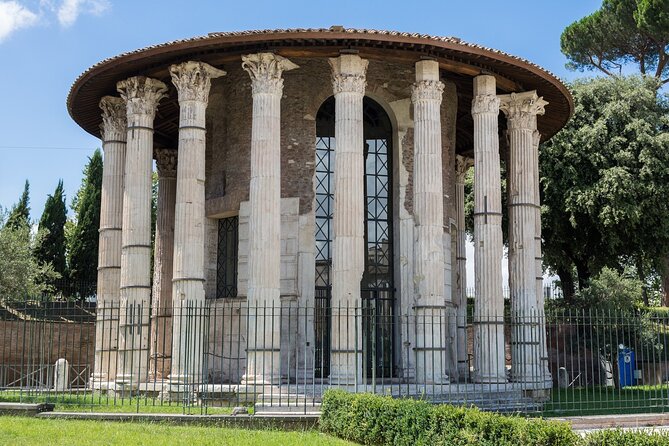
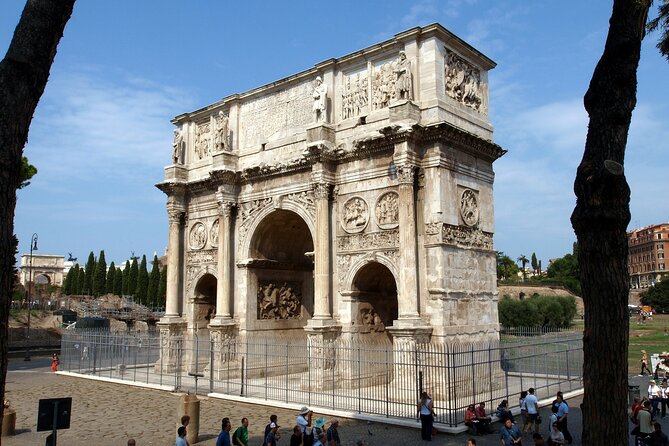
The tour starts with a monument that’s both impressive and story-rich: the Arch of Constantine. It’s the largest and best-preserved of Rome’s three triumphal arches, raised to mark Constantine’s victory at the Battle of the Milvian Bridge in 312 AD.
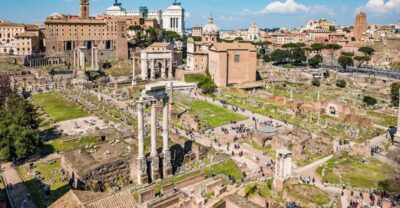
What I love about this first major stop is the way it connects eras. The arch is between the Colosseum and Palatine Hill, so you’re already in the zone where Rome’s layers overlap. The reliefs and inscriptions celebrate Constantine and also include elements from earlier emperors, with artistic styles from different periods showing up in the stonework. It’s a physical reminder that Rome didn’t change overnight—it got reworked.
If you’re the kind of person who likes photos with context, this is a great early anchor. You’ll have enough mental framework by the time you reach the major piazzas.
Piazza Venezia: your map in marble
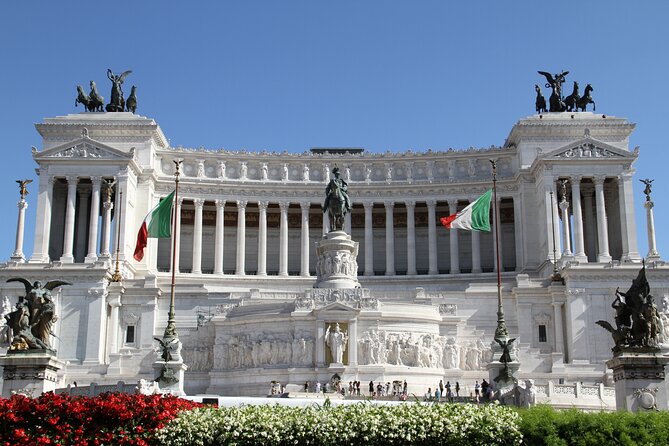
Next comes Piazza Venezia, a prime junction where key roads converge, including Via dei Fori Imperiali and Via del Corso. It’s one of those squares where you can stand and feel how the modern city organizes itself around the ancient one.
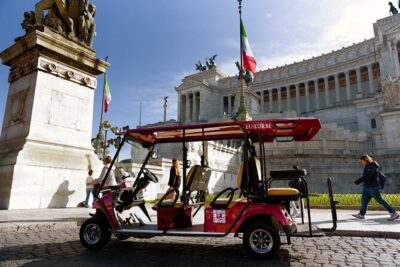
Dominating the view is Altare della Patria, Italy’s first king memorial to Victor Emmanuel II. Even if you don’t go inside anything, it’s still a major visual landmark that helps you orient your next moves—toward the Roman Forum direction, toward Capitoline Hill, and into the heart of central Rome.
Timing here is about staying nimble: you’ll have roughly 15 minutes. That’s enough to take a few clear photos and absorb the layout, but not long enough to treat it like a standalone destination. For me, that works well since the whole tour is designed as an overview loop.



Circus Maximus: the scale hits hard
Then you’re at Circo Massimo, Rome’s massive chariot stadium in ancient times. It stretches about 600 meters and sat between the Palatine and Aventine hills, with an estimated capacity of up to 150,000 spectators.
Even if you never watch a chariot race today, the size alone tells you how large Roman civic life could be. This is the kind of stop where you glance around and suddenly the geography makes sense. You can picture the crowds, not because it’s a museum display, but because the shape of the space still gives you clues.
You’ll have around 15 minutes, with admission noted as not included. Treat this as a “see it, get the idea” stop, then move on while your energy is still high.
Bocca della Verità: legend you can’t miss
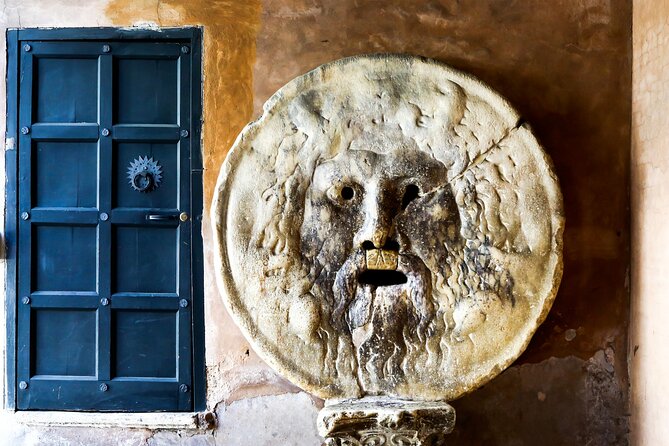
Right after Circus Maximus, you’ll reach Bocca della Verità, the famous marble mask nicknamed the Mouth of Truth. It’s set against the left wall of the portico of Santa Maria in Cosmedin, at Piazza della Bocca della Verità, near Forum Boarium.
Dating back to the 1st century AD, this is where Rome’s famous storytelling becomes interactive. The legend says if someone puts their hand in and is lying, the hand gets taken—so it’s become a go-to photo spot because the folklore is simple and human.
You’ll have about 15 minutes for this stop. It’s plenty if your goal is the key experience: see the mask, take the photo, and keep your momentum.
Piazza di Spagna without the all-day stair grind
Piazza di Spagna is next, and it’s one of the most practical stops on this route if you want the vibe of the Spanish Steps area without turning it into a full climbing session. The square sits in a neighborhood tied to the Spanish Steps, plus high-end shopping streets like Via dei Condotti, Via Frattina, and Via del Babuino.
You’ll also see the way the area is framed by 17th and 18th-century villas, which helps explain why this spot stays popular year-round. And at the top of the stairs is Trinità dei Monti, which you can use as a mental waypoint for your future exploring.
Expect about 20 minutes here. That’s enough for photos and a quick look around, but it won’t turn into a long shopping detour unless you decide to extend your day on your own after the tour.
Trevi Fountain: timing matters, and the photos are worth it
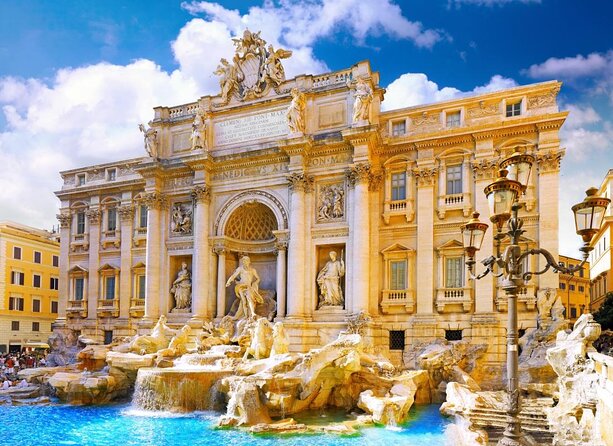
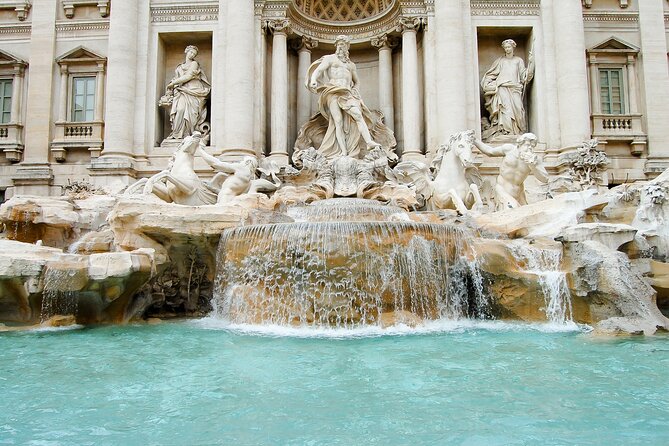
Next is Fontana di Trevi, one of Rome’s most recognizable pieces of Baroque art. It was completed in 1762 and features Neptune driving a chariot pulled by sea horses, a theme tied to taming the waters.
The tradition is simple: toss a coin into the fountain over your shoulder to help ensure a return to Rome. Even if you skip the myth part, the fountain is still a strong reason to stop—especially because you’re usually close enough to see details clearly and to feel the spot’s pull.
You’ll have about 20 minutes. If you’re thinking about the best photos, this is the moment to slow down inside your head even if you don’t physically slow down. Choose one angle and then take a few shots while the light looks good on the stone.
Admission is not included, but since the tour includes outside monument visits, you’re in the right mode for quick, high-impact sightseeing.
Piazza Navona: where the tour turns into real Rome
Piazza Navona brings the day back to street level. It’s known for Baroque architecture and the lively atmosphere of a working square, and the centerpiece is Fontana dei Quattro Fiumi. The fountain includes sculptures representing the four major rivers of the world, topped with a towering obelisk.
There’s also Sant’Agnese in Agone nearby, which adds an extra architectural layer if you like spotting church facades between big monuments. And yes, you’ll see the café and street-performer energy around the edges, which makes this a good place to pause and breathe.
You’ll have about 20 minutes, which is usually enough time to enjoy the scene without feeling like you’re sacrificing the rest of your route.
Pantheon from the outside: the dome trick you can still see
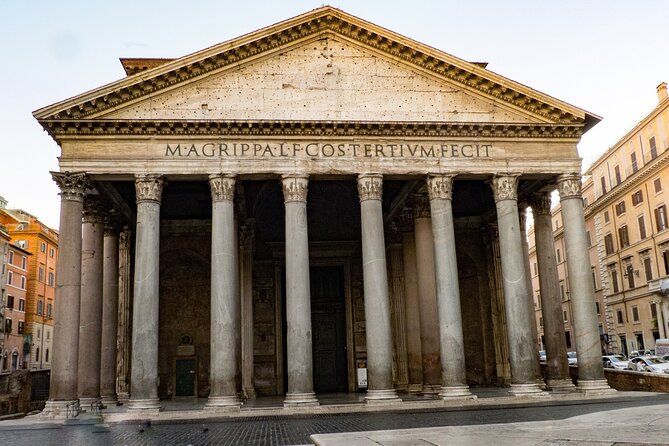
Finally, you reach the Pantheon, one of the best-preserved ancient monuments. It was completed around 126–128 AD under Emperor Hadrian, and it’s famous for its domed ceiling and the large open oculus at the top.
Even without an interior ticket, the structure’s power is hard to miss. The rotunda shape, the sense of space, and the engineering concept of light coming through the opening all show up in the way the building reads from outside. It’s the kind of stop that makes you want to come back later, once you’re done with your overview loop.
You’ll have about 20 minutes, with admission noted as not included. Think of it as the finale photo stop that also sparks future planning.
How the guide and driver change the experience
A big part of the value here is the human team. The experience uses a professional licensed guide and a driver who gets you around efficiently. In the reviews, I’ve seen names like Marco for the driver and Elaine for the guide, and the consistent theme is pace plus personality.
What matters for you is how that pace feels during a short tour. You’ll typically be stopping often enough to capture key sights, but not so often that you lose time. The guide also has the freedom to point out details you might otherwise miss, like what to look for on a façade or how a monument ties into a broader story.
One specific perk from the experience feedback: people talked about a secret and special stop. You should expect that the route can include a small extra moment beyond the main icons, which can make the whole thing feel less like a checklist.
Also, because you can hop on and off at stops, you’re not stuck waiting in the same traffic spot for long stretches. That flexibility is especially helpful in Rome where timing and crowd flow can change quickly.
Comfort tips so your 2–3 hours stay enjoyable
This is a cart tour, so comfort is the selling point—but you still want to set yourself up for success.
- Think rain first. One review noted golf cart rules and not getting caught in the rain. If weather looks iffy, bring a light layer you can handle quickly.
- Wear shoes you can stand in. Even if you walk less, you’ll still step out for photos and a few short sightseeing minutes.
- Plan your phone power. The stop flow is short. You’ll want photos at multiple monuments, so keep your battery topped up.
- Use the cart as a breather. Treat the ride time as recovery. Sit back, look, then step out when the guide calls the moment.
Your time here is limited by design—about 2 to 3 hours—so the best approach is to stay mentally flexible. If you’re trying to squeeze in extra shopping stops during the tour, you may feel rushed.
Who this Rome golf cart tour is best for
This experience is a strong fit if you:
- want to see major landmarks like Trevi Fountain and the Spanish Steps without turning the day into a long trek
- prefer getting context from a licensed guide rather than wandering and guessing
- like small group tours, with a cap of 6 people, so the experience doesn’t feel like a cattle call
- have limited mobility or just don’t want to plan a stair-heavy day
It’s not the best pick if you want lengthy time inside major attractions. Since the tour includes outside-monuments visits and some admissions aren’t included, treat it as a high-impact overview. Also note it’s not suitable for babies/children, so plan accordingly if traveling with young kids.
Should you book this Rome golf cart tour?
Yes, I think you should book it if your goal is simple: see Rome’s biggest hits in a short window, with a guide who makes the stops make sense. The combination of a small group, licensed guidance, and the comfort of a golf cart is a smart match for first-time Rome visits or for days when you’re already planning more than one activity.
Skip it or pair it with other plans if your top priority is long interior time at major monuments. This tour is designed for outdoor viewing and quick storytelling stops, so you’ll likely want a second day for deeper museum-style exploration.
If you’re trying to lock in a time that fits your schedule, book early. The tour is commonly reserved about 26 days in advance, and multiple departure times exist to work around your day. In short: if you want a low-stress Rome overview that still feels personal, this is a very reasonable way to do it.
FAQ
How long is the Rome golf cart tour?
The tour lasts about 2 to 3 hours.
What is the price per person?
The price is $370.18 per person.
What’s included in the tour?
It includes a professional licensed guide, the golf cart, all fees and taxes, and visits outside the monuments.
What is not included?
Food and drinks and tips are not included, and personal expenses are also not included.
Is admission included for the main sites?
Admission is not included for some stops, based on the tour details. The tour experience includes visits outside monuments.
Where do I meet the tour and where does it end?
You start at Via del Cardello, 31, 00184 Roma RM and end at Piazza Navona, 00186 Roma RM.
Is this a private tour?
It is listed as a private tour, and the group size has a maximum of 6 travelers.
Do I need a printed ticket?
No. You get a mobile ticket.
Is free cancellation available?
Yes. There is free cancellation, and you can cancel up to 24 hours in advance for a full refund.