REVIEW · ROME
4H Private Golf Cart Tour with Local Guide and Gelato
Book on GetYourGuide →Operated by Aromatour srls · Bookable on GetYourGuide
A golf cart can make Rome feel simple. This is a private 4-hour tour with a local guide, rolling you past Rome’s big hits like the Colosseum, Pantheon, and Trevi Fountain—then finishing with gelato at a shop that’s been in business since 1947. You’re not stuck walking all day, and the guide fills the ride with stories, curiosities, and the kind of angles you’d miss on your own.
I especially like the private format—only your group—so you can set the pace and ask questions. I also like the “Rome in one loop” approach: Trevi, Pantheon, Roman Forum sights, and more, plus a stop at a world-champion ice cream shop.
The main consideration: it’s not suitable for pregnant women, and the itinerary can shift due to seasonal or holiday availability and bad weather.
In This Review
- Key takeaways before you go
- How this golf cart tour keeps Rome fast and friendly
- Meeting point and the “private car” mindset
- Your route: the “greatest hits” loop, with Roman details in motion
- Colosseum area (outside): the big wow, without the crush
- Trevi Fountain: photos plus a guide’s version of the story
- Pantheon: a stop that benefits from stories, not just sights
- Roman Forum area (outside) and Column of Trajan: context that ties it together
- Venice Square, Marcellus Theater, and more street-level Rome
- Suburra and Aventine Hill: a different Rome mood
- Papal Basilica of Saint Mary Major: a graceful finale
- Gelato stop: world champion ice cream since 1947
- Outside views, moving quickly: what to expect in practice
- Guides make the difference: local stories, real pacing
- Value check: is $155.20 worth a private 4-hour Rome loop?
- Optional extras: wine and Apulian snacks at Orange Garden, plus longer options
- Who this tour fits best
- Should you book it?
- FAQ
- How long is the golf cart tour?
- Is this tour private?
- What’s included in the price?
- Where do we meet for the tour?
- Which languages are available for the live guide?
- What are some of the stops during the route?
- Is pick-up available everywhere in Rome?
- Is the tour wheelchair accessible?
Key takeaways before you go
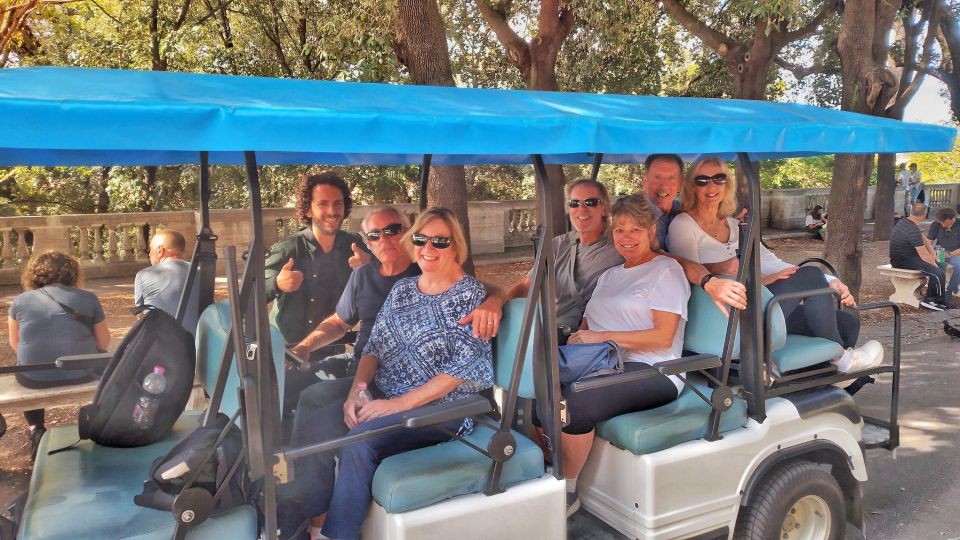
- Private group, local guide: Only your group rides, with a native Roman telling the stories.
- Major sights, outside views: You see the Colosseum and Roman Forum from the outside while still keeping the day manageable.
- A gelato stop that matters: Ice cream from a shop operating since 1947, described as world-champion.
- Plenty of variety in one route: From Trajan’s column area to Suburra, Aventine Hill, Mouth of Truth, and Saint Mary Major.
- Languages on offer: Italian, English, Russian, and Spanish live guiding.
- Pick-up is limited: No pick-up outside the ZTL area, so plan to meet at the starting point.
How this golf cart tour keeps Rome fast and friendly
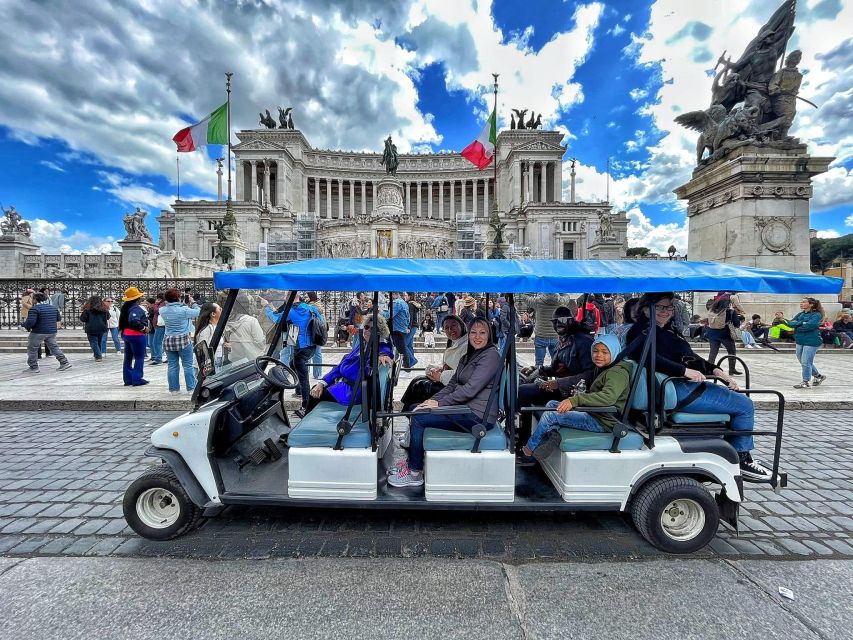
Rome can be a lot. Hills, crowds, long walks between landmarks—it’s easy to lose time before you even reach the famous stuff. This 4-hour private golf cart tour is built to stop that problem early. You get a guided pass around Rome’s most recognizable monuments without turning your day into a marathon.
The biggest value is the mix of sightseeing and interpretation. The guide doesn’t just point out buildings; they share anecdotes, curiosities, and hidden treasures that feel like they belong to a real Roman routine, not a script. In practice, that means you’ll understand what you’re looking at faster—especially at stops like Colosseum, Pantheon, and Trevi Fountain, where the vibe is iconic but the details can be confusing if you’re only reading signs.
One nice bonus: it includes a souvenir, so you’re not scrambling for a last-minute “we did it” moment at the end.
You can also read our reviews of more guided tours in Rome



Meeting point and the “private car” mindset
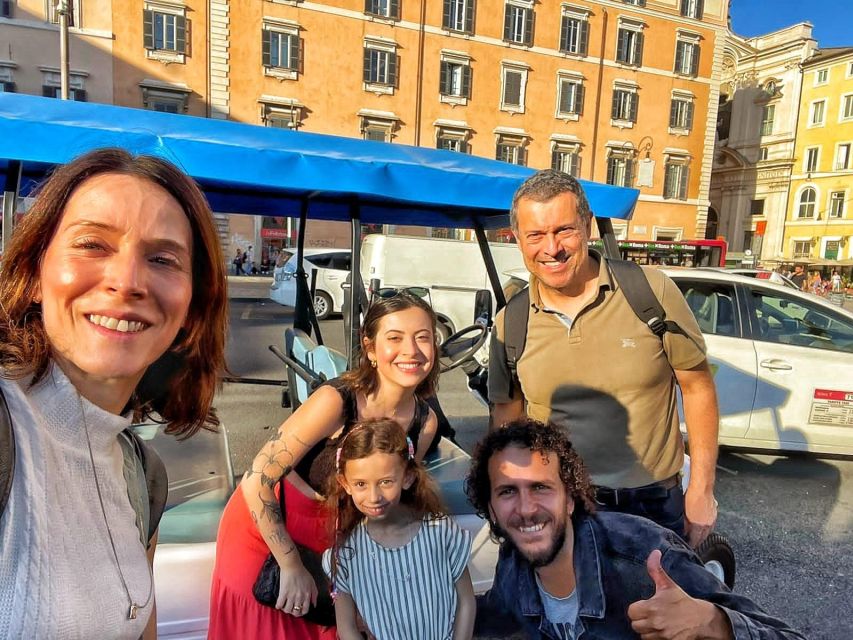
You meet at the front of the Anantara hotel at Piazza della Repubblica, 48, and you return to that same meeting point at the end.
Because it’s a private group, you’re not squeezed into a shared schedule with strangers. That matters in Rome. Even small changes—how long you want to pause, whether your group wants more story time or just photos—are easier when you’re not managing a larger group.
A quick practical note: the tour mentions that there’s no pick-up outside the ZTL area. ZTL is Rome’s restricted-traffic zone. Translation for your planning: arrive on your own to the meeting point area, and don’t count on the operator to come fetch you farther out.
Your route: the “greatest hits” loop, with Roman details in motion
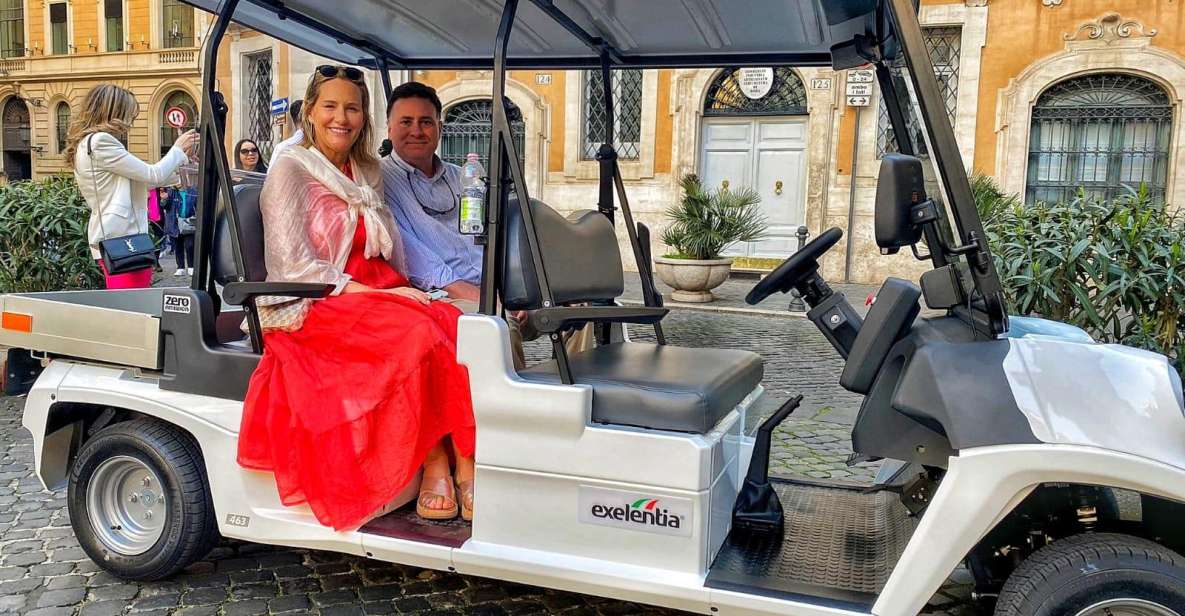
This tour is designed as a smooth, guided loop. You’ll ride between stops and get context along the way, with multiple outside-view segments. Here’s how the route works in real-life terms—what each stop adds, and what to watch for.
Colosseum area (outside): the big wow, without the crush
The route starts with the Colosseum (outside). This is the right first stop for two reasons. One: seeing it early helps you frame the rest of the day. Two: outside views let you keep moving without turning the tour into a long ticket line situation.
Even if you’ve seen photos, the scale lands differently in person. From the cart, you can take in the monument and still keep the day flowing—exactly what you want from a short, private format.
Trevi Fountain: photos plus a guide’s version of the story
Next up is Trevi Fountain. This stop is famous for a reason, and it’s also the kind of place where you can end up just staring at the crowd. With a guide, you get more than visuals. You get curiosities—the sort of small, memorable facts that make Trevi feel less like a postcard and more like a living part of Rome.
Tip: if your group likes photos, decide quickly what you want (classic angle, wider street context, night-style vibe if you’re doing a sunset option) so the time doesn’t evaporate while you’re still debating.
You can also read our reviews of more private tours in Rome





Pantheon: a stop that benefits from stories, not just sights
Then you’ll go to Pantheon. This is a great match for a guided cart tour because the monument is both instantly recognizable and full of details you might not notice on your own.
The guide’s job here is key: explain the history, culture, and architecture in a way you can follow while you’re moving through the day. That’s what turns a “quick stop” into a real understanding.
Roman Forum area (outside) and Column of Trajan: context that ties it together
The route includes Roman Forum (outside) and Column of Trajan. These stops work well after you’ve already anchored yourself at Colosseum and Pantheon. You start to connect the dots between monumental Rome and daily public life.
A common issue with Rome is jumping from one landmark to the next without a thread. This tour helps because it doesn’t treat the sights as separate worlds. The guide’s stories—about epic battles, writers, and poets—are meant to connect the architecture to the people who used it.
Venice Square, Marcellus Theater, and more street-level Rome
You’ll pass through Venice Square and see Marcellus Theater along the way. These are the stops where the tour starts to feel more like Rome as a city, not just Rome as a museum.
Then the route takes you to Insula (first condominium in the world). That’s a standout inclusion for people who like the human side of history—how people actually lived and built communities.
Suburra and Aventine Hill: a different Rome mood
Next you’ll go by Suburra and Aventin Hill. These parts of the itinerary add variety, shifting the tone from headline monuments to neighborhoods and viewpoints.
Then you reach the Mouth of Truth, which is one of those Rome landmarks that people recognize instantly, even when they can’t place it. A guide can give you the framing so it lands as part of the day rather than a random stop.
Papal Basilica of Saint Mary Major: a graceful finale
The route ends at Papal Basilica of Saint Mary Major. It’s a fitting close: a major religious landmark that feels grounded, ceremonial, and distinct from the ancient-world stops earlier in the loop.
If you’re choosing between options (4h vs 6h), this is the part that makes sense to keep—because the tour ends on something that feels different, not just another “again, more ruins.”
Gelato stop: world champion ice cream since 1947
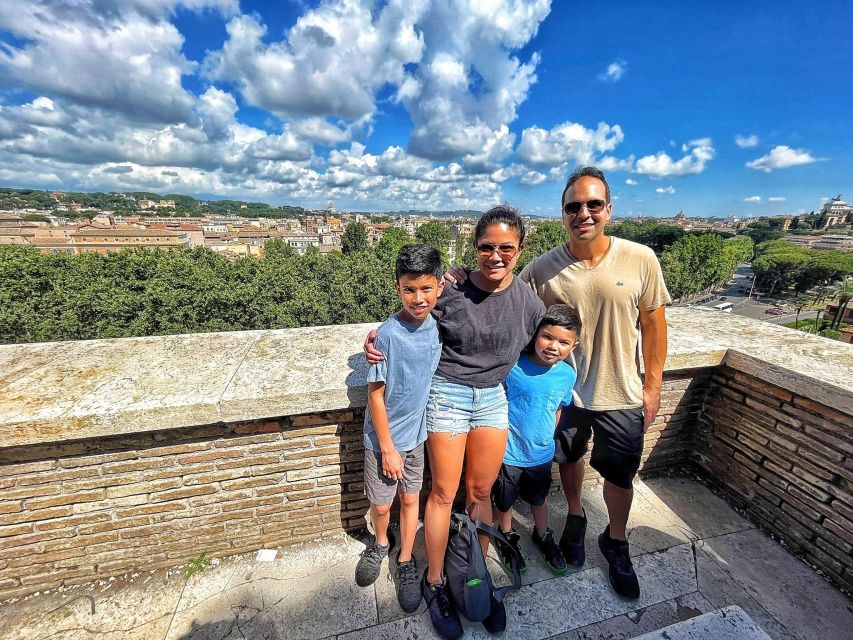
You finish with a stop for gelato at a world championship ice cream shop that’s been operating since 1947.
What this adds to the tour is simple: it gives you a payoff that matches Rome’s own rhythm. You’re not just touring monuments—you’re also tasting the city. And because you’re with your guide, you’ll likely get helpful advice on where to eat after you’re done.
If your group has a sweet tooth, this is the kind of included stop that makes the tour feel complete. It also helps you decompress after a concentrated 4 hours.
Outside views, moving quickly: what to expect in practice
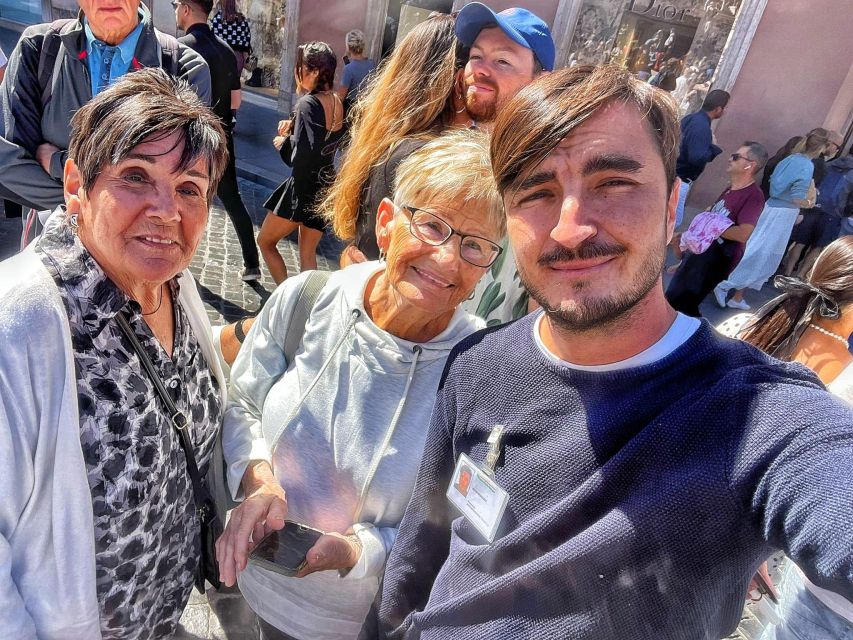
This tour is built around comfort and efficiency, and that shows in the wording: you’ll see major sites from the cart, and some of the route is explicitly listed as outside views.
That matters for two reasons:
- You save time and energy, especially if you’re traveling with kids or anyone who doesn’t want hours of walking.
- You keep the flow of the day. Rome is full of stops that steal time. This format is meant to prevent that.
The downside is also predictable: you won’t get the full “inside-the-building, sit-and-read” experience at every stop. If your dream Rome day is mostly museum-level time inside, you’ll probably prefer a longer format (the operator offers options like 6h, Sunset, or a Combo Golf Cart + Vatican Museums option).
Guides make the difference: local stories, real pacing
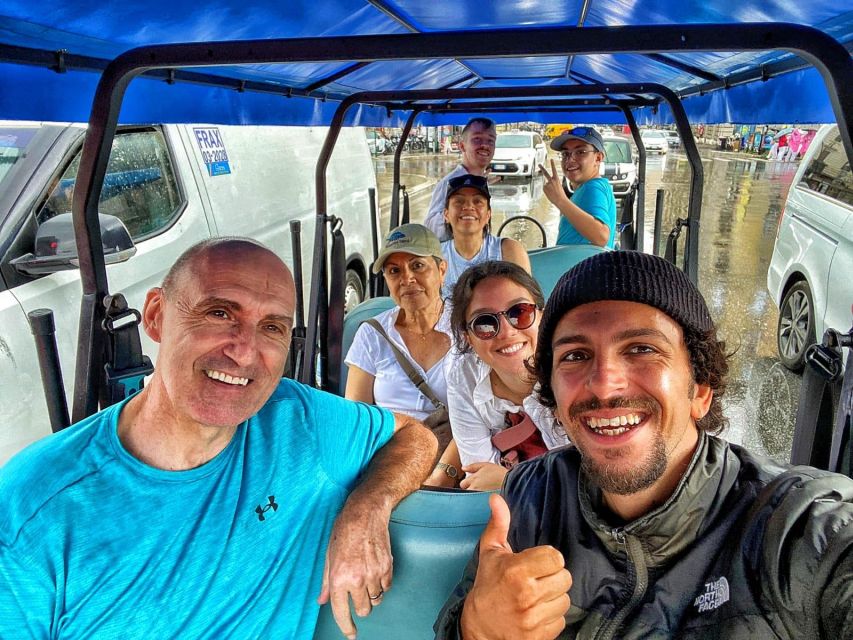
The guides are natives of Rome, and the tour emphasizes that they’ll share anecdotes, curiosities, and hidden treasures. That’s more than marketing. On a short tour, it’s what separates “we drove past stuff” from “we actually understood it.”
You can also see the human touch in the guide notes from real experience: Stefano is described as funny, open, and knowledgeable, and Marta is praised for being great with bambinis (kids). So if you’re traveling with family, this is the type of guided style that can keep attention from slipping.
Practical takeaway: bring a few questions you actually care about—how old something is, what a name means, why a monument looks the way it does—and you’ll get more out of the ride.
Value check: is $155.20 worth a private 4-hour Rome loop?
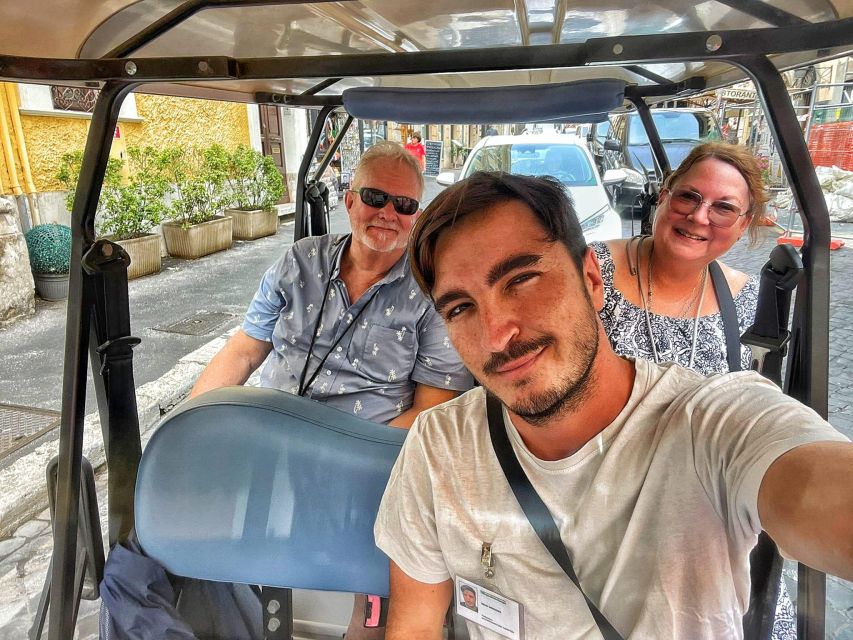
At $155.20 per person for 4 hours, this isn’t the budget “hop-on, hop-off” style option. But it’s also not priced like a private driver plus separate guides for every stop.
Here’s the value math you can use:
- You’re paying for private transportation (golf cart), not just commentary.
- You get a live local guide with multiple language options (Italian, English, Russian, Spanish).
- You’re getting gelato included, plus a souvenir.
- You’re saving the walking time between stops, which can be worth a lot in Rome.
If you’re traveling as a couple, with family, or in a small group, private format often becomes the smarter deal because the per-person cost drops compared with paying separate services. And if you’re on a tight schedule, the 4-hour loop can be the difference between seeing the classics and skipping them entirely.
Optional extras: wine and Apulian snacks at Orange Garden, plus longer options
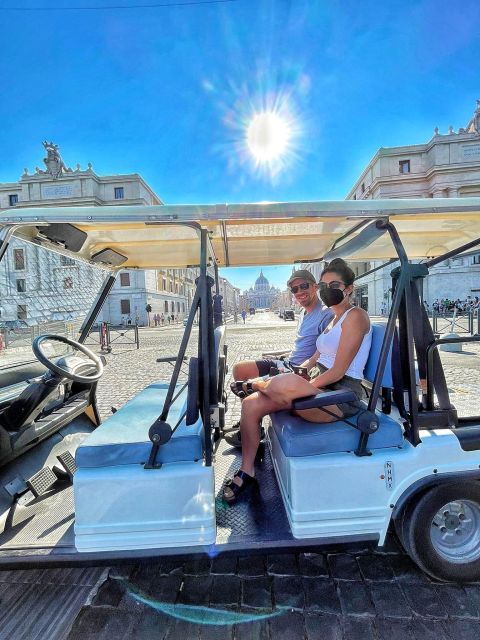
The tour also mentions an option to choose wine and a small snack from Apulia at the Orange Garden, described as a beautiful panoramic point over Rome.
That’s a good match if you want the sightseeing portion to feel a bit more “Rome evening” even during the day. It also adds a local food angle without turning your trip into a full meal plan.
If you want more time, the provider lists upgrades like 6h, Sunset, and a Combo Golf Cart + Vatican Museums. If Vatican is on your must-do list, that combo option can save you from spending half your trip coordinating separate days.
Who this tour fits best
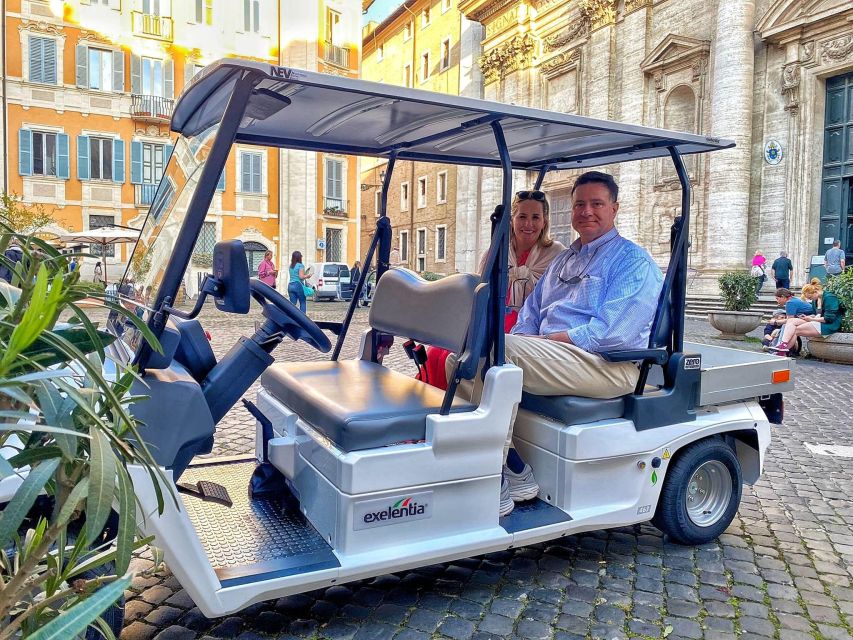
This golf cart format is a strong choice if:
- You want the main monuments in a short amount of time
- You prefer a private guide over a group scramble
- You’re traveling with kids and need an easier pace (Marta is noted for being great with bambinis)
- You want gelato included rather than treating it as a bonus search
- You’d rather spend your energy on stories and photos than long walking legs
It’s not a fit if you’re pregnant, since the tour explicitly notes it’s not suitable for pregnant women.
Should you book it?
I think you should book if your Rome plan includes the classics—Colosseum, Trevi, Pantheon, Roman Forum area—but you don’t want to burn your day on logistics and walking. The private golf cart format plus live guiding is the core win, and the gelato stop at a shop running since 1947 feels like a real payoff, not an afterthought.
If your idea of a perfect day is slow museum time and lots of inside access, you may want the 6h or the Combo Golf Cart + Vatican Museums option instead, so the schedule gives you enough room.
FAQ
How long is the golf cart tour?
The tour duration is 4 hours.
Is this tour private?
Yes. It’s a private group, so only your group participates.
What’s included in the price?
Included are a local guide, transportation by golf cart, gelato, and a souvenir.
Where do we meet for the tour?
You meet at the front of the Anantara hotel, Piazza della Repubblica 48, and the tour ends back at the meeting point.
Which languages are available for the live guide?
The tour offers Italian, English, Russian, and Spanish.
What are some of the stops during the route?
Stops include the Colosseum (outside), Trevi Fountain, Pantheon, Roman Forum (outside), Venice Square, Marcellus Theater, the Insula (first condominium in the world), Aventine Hill, Mouth of Truth, and Papal Basilica of Saint Mary Major.
Is pick-up available everywhere in Rome?
Pick-up outside the ZTL area is not included, so you’ll need to plan to reach the meeting point.
Is the tour wheelchair accessible?
Yes, it’s wheelchair accessible.