Rome looks different at cart speed.
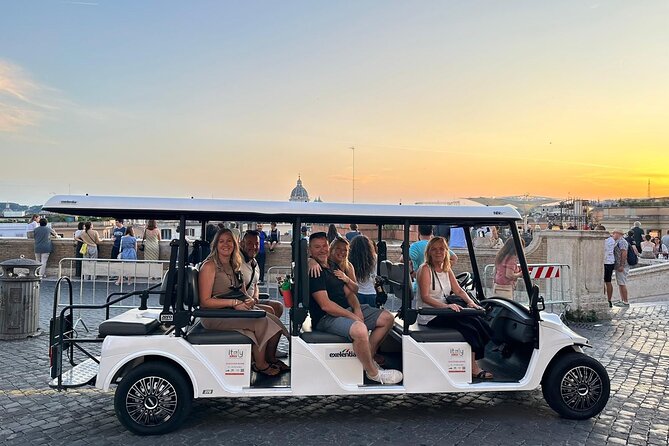
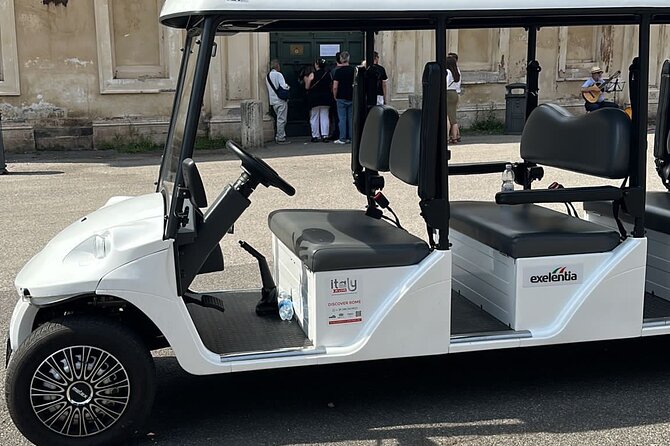
This private 2–3 hour loop is a smart way to see major landmarks without burning the whole day on transit and foot traffic. You get an English-speaking guide, pickup when available, and a route that’s built on what you want to focus on.
What I like most is that it stays family-friendly and flexible. Your guide discusses the plan early and calculates the route based on time, so you’re not stuck with a rigid checklist. The second big win for me is practical sightseeing value: key stops come with included admissions, plus water, coffee/tea, and snacks to keep you comfortable.
One possible drawback: it’s designed for good weather, and the route includes iconic areas where some spots may require walking from the cart. If anyone in your group has limited mobility, it’s worth clearly stating that up front so the guide can shape the stops accordingly.
In This Review
- Key highlights at a glance
- Why a 3-Hour Private Golf Cart Tour Works in Rome
- Price and What You Actually Get for $266.28 per Person
- The Ride Setup: Pickup, Mobile Ticket, and a Guide Who Sets the Plan
- Centro Storico and the Colosseum: Quick Access to Rome’s Biggest Icon
- Circo Massimo: Ancient Chariot Racing Without the Long Detour
- Bocca della Verità: The Marble Mouth Moment
- Piazza Venezia, Campidoglio Terrace, and the Pass-By Scenes
- Spanish Steps and the Pantheon Plan: See It Outside, Choose Whether to Go In
- Trevi Fountain and Piazza Navona: Two Big Squares, One Smooth Flow
- Food, Water, and a Small Taste Treat That Makes It Feel Less Like a Checklist
- Who This Tour Suits Best (and When You Might Skip It)
- Should You Book This Rome Golf Cart Tour?
- FAQ
- How long is the 3-Hour Private Golf Cart Tour around Rome?
- How much does the tour cost?
- Is the tour private?
- Is pickup available?
- What language is the tour guide?
- Are admissions included for the stops?
- Can I enter the Pantheon?
- What’s included for food and drinks?
- What happens if the weather is bad?
Key highlights at a glance
- Private golf cart comfort: your group rides together, with a route built around your interests.
- Included admissions at major stops like the Colosseum and Circus Maximus.
- English commentary throughout, with time for quick questions as you move between sights.
- A classic Rome mix: ancient arenas, myth-bits, and baroque squares in one circuit.
- Coffee/tea plus a treat: you’ll get water and snacks, with an ice cream taste option.
Why a 3-Hour Private Golf Cart Tour Works in Rome
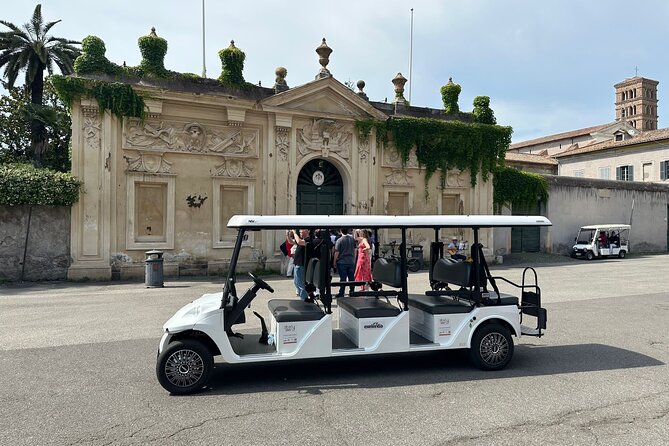
Rome can be a love story and a stair workout at the same time. This tour is built to keep you moving, so you can hit the highlights fast and still have energy left for dinner and gelato later. The total time window is about 2 to 3 hours, which is ideal when you’re trying to balance sightseeing with jet lag, heat, or crowds.
Because it’s private, the guide isn’t trying to manage dozens of people at once. That matters. You can ask for more time near a viewpoint, or you can shorten a stop if you’re more interested in seeing the big picture than standing in line.
Also, this is not only about monuments. You’ll get quick, story-driven context as you go, so the sites connect in your head instead of turning into a random stack of postcards.
You can also read our reviews of more private tours in Rome



Price and What You Actually Get for $266.28 per Person
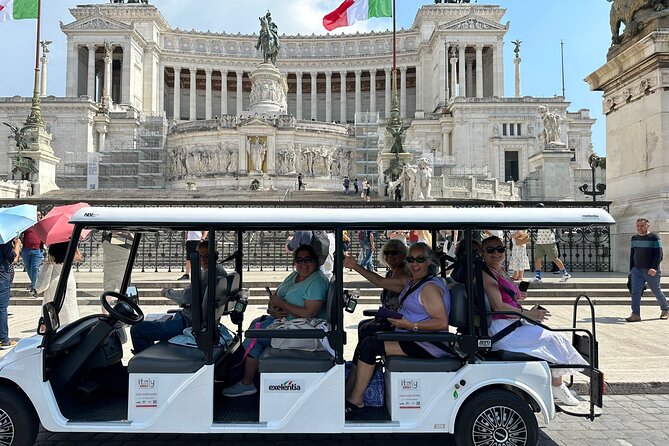
At $266.28 per person, you should think of this as a convenience-and-guidance package, not just a ride. The value comes from what’s bundled: all fees and taxes, water, coffee or tea, snacks, and included admissions for several standout locations.
If you’re traveling with a second person or a small group, the “private” part starts to feel less pricey, because you’re essentially buying fewer hassles. The cart handles the distance between the central sights, and the guide handles the route planning and timing.
The other value factor is time. In a city like Rome, losing an hour to navigation and slow-moving foot traffic is common. This tour is designed to avoid that kind of drift.
One more thing to consider: Pantheon entry is optional and not included. You’ll see it from outside, and if you want to go in, you pay a separate ticket price.
The Ride Setup: Pickup, Mobile Ticket, and a Guide Who Sets the Plan
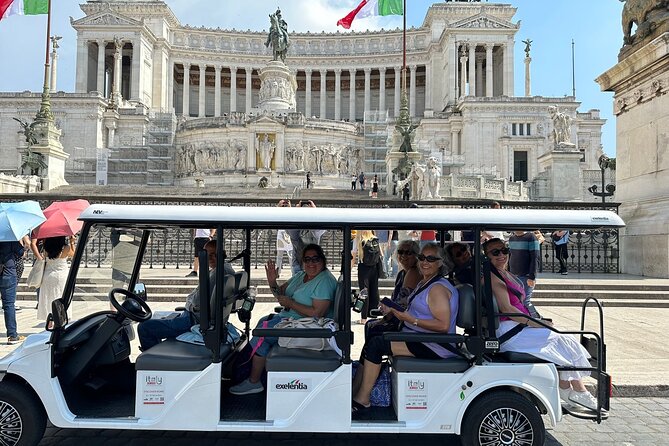
This is a private activity, so only your group participates. That usually means less pressure and more flexibility in how long you linger at each stop.
You can also get pickup offered, and the tour is set up to be easy to reach via public transportation. You’ll receive a mobile ticket, which helps if you’re juggling schedules and don’t want to worry about printed documents.
At the start, your guide walks you through the itinerary and then calculates a route based on how much time you have. That’s where the “choose your own pace” vibe comes from. If you want more photo time at a square or you’d rather skip a stop that involves extra walking, you can often adjust within the tour’s time limits.
One guide name that shows up in feedback is Daria, praised for helping multigenerational groups see more of Rome with comfort in mind.
Centro Storico and the Colosseum: Quick Access to Rome’s Biggest Icon
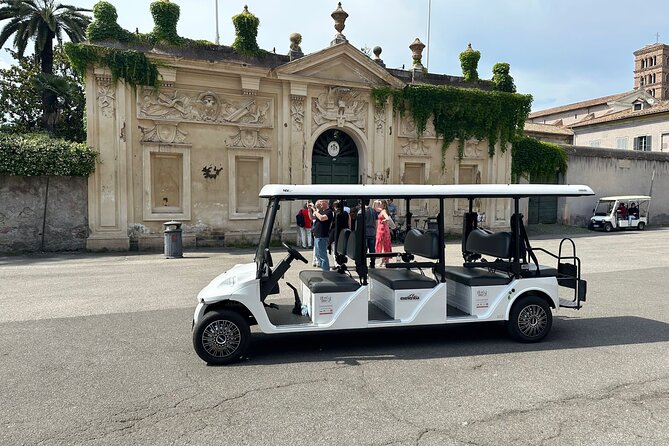
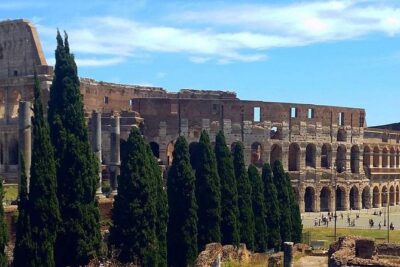
The tour begins in the Centro Storico zone and includes a stop that centers on the Colosseum. The Colosseum isn’t just famous because it’s impressive. It’s famous because it’s huge, old, and specific—like a history lesson you can walk around.
You’ll get a guided look at the Colosseum as a symbol of Rome’s Roman Empire era. The key dates are part of the story: construction began in 72 AD under Vespasian and was finished in 80 AD during Titus’s rule. The amphitheater’s scale is part of the awe too, with measurements around 188 meters long, 156 meters wide, and 57 meters high.
The stop is planned for about 30 minutes, and admission is listed as included. That usually works well because it gives you enough time to take in the structure, get the context, and still keep the tour on schedule for the next sights.
A consideration: the Colosseum area can involve walking around the perimeter and navigating busy surroundings. If you or your group needs gentler pacing, tell your guide at the start so they can factor it into the route.
Circo Massimo: Ancient Chariot Racing Without the Long Detour
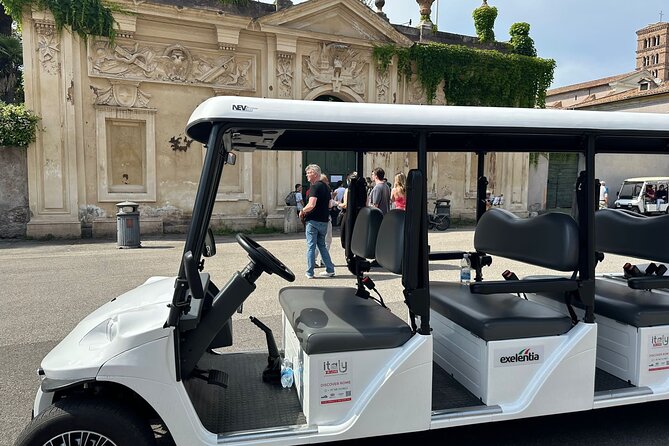
Next up is Circo Massimo, the site where famous chariot races took place. The tour’s framing here is great because it connects the location to its real function: this was the largest stadium ever built in its time and used for centuries.
Your stop is shorter here—about 10 minutes—but it’s focused. You’re not trying to “do everything.” You’re getting the big idea of what this space was for, and then moving on.
Admission is listed as included, so if your plan is to keep sightseeing tight and avoid extra ticket stops, this slot helps.
You can also read our reviews of more tours and experiences in Rome

Bocca della Verità: The Marble Mouth Moment

Bocca della Verità is one of those Rome stops that feels like a legend made physical. The tour includes the classic idea: you put your hand inside the ancient marble mouth, and it’s tied to a medieval “lie detector” folklore story.
The stop is about 10 minutes, and admission is included. That length is about right here. You don’t need a long hang; you need a quick, fun moment, a photo, and then the next landmark.
One practical tip: because this is a popular photo spot, you’ll want to be ready when it’s your turn. If the cart waiting time is tight, a guide who keeps the pacing moving is genuinely helpful.
Piazza Venezia, Campidoglio Terrace, and the Pass-By Scenes
The tour moves to Piazza Venezia / Ancient City, a busy crossroads full of layers. This stop is described as a place where it’s hard to decide what to look at first, and that’s accurate. You’re surrounded by landmarks that have held attention for centuries.
This segment also includes the Terrace of Campidoglio, which is a nice payoff because you get a slightly elevated perspective without having to commit to a long trek.
There’s another “bonus” type of viewing here. You’ll pass by Largo Argentina, and you’ll also have a chance to see a smaller version of the Colosseum area described as being privately owned today. Your guide will use the route to show how different sections tell different parts of the story.
Time allocation here is about 15 minutes, and the stated admission for this portion is free.
Spanish Steps and the Pantheon Plan: See It Outside, Choose Whether to Go In
After the Roman forum-adjacent sights, you’ll head to the Spanish Steps. This is where Rome does baroque drama. The steps are an irregular design and a famous gathering place, made of curves, straight flights, and terraces.
Your stop is about 15 minutes, with admission listed as included for this segment. Even if you’re not climbing every step, it’s worth using the time to find a good viewing angle and orient yourself for what comes next.
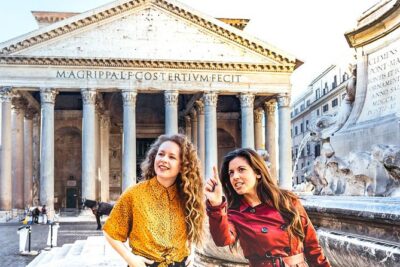
Then comes Pantheon. Here the plan is clear: you’ll see it from outside. The Pantheon’s story is part of the guided narrative, with origins credited to Agrippa between 25 and 27 BC, and the present building linked to a major reconstruction under Hadrian between 118 and 125 AD.
If you want to go inside, you can—but the ticket is not included. The stated cost is 5€ for adults and 3€ for under 18.
This arrangement is a smart trade-off. It keeps the tour moving for people who prefer not to wait or walk more, while still giving you the option to step into one of Rome’s most famous interiors.
Trevi Fountain and Piazza Navona: Two Big Squares, One Smooth Flow
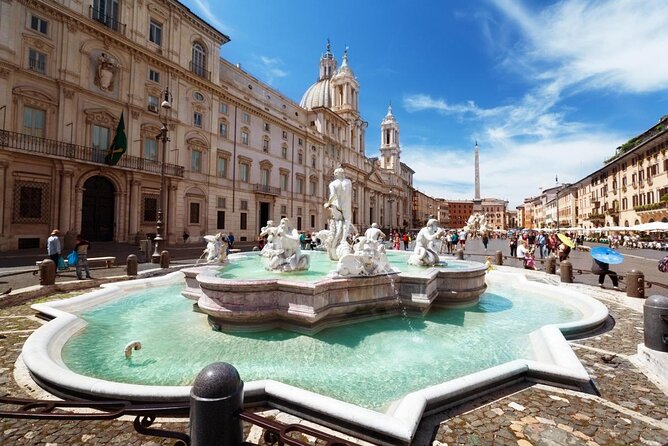
Your next stop is Fontana di Trevi, one of Rome’s most recognizable fountains. The tour’s description focuses on the scale and key sculptural elements, including the statue of Oceanus and sea-horse imagery, plus figures tied to themes like abundance and health.
The stop is about 15 minutes, and admission is listed as included for this segment.
Then you’ll finish with Piazza Navona, dominated by the fountain of the four rivers. The shape of the square connects to ancient architecture too, since it maintains the form of the old stadium of Domitian.
This final sightseeing stretch is another about 15 minutes with admission included.
If you’re the type who likes to end on a high-energy scene, Piazza Navona is a strong closer. It’s easy to keep exploring on your own afterward, because there are cafés nearby and plenty of photo spots just off the main fountain view.
Food, Water, and a Small Taste Treat That Makes It Feel Less Like a Checklist
This tour doesn’t just hand you sights. It also gives you a comfort buffer. You’ll have water during the tour, plus coffee and/or tea, and you’ll get snacks.
There’s also a fun extra: an ice cream taste is offered in one of the best ones in the city. The details say you can choose an ice cream, a coffee, or a snack of traditional Roman foods. That’s a nice way to add something local without turning it into an extra stop that eats up time.
For me, this is practical. When you’re moving fast between Rome’s center points, hunger can turn sightseeing sour. Having food and drink included keeps the tone relaxed.
Who This Tour Suits Best (and When You Might Skip It)
This tour is a good match if you want to see a lot without committing to a full day of walking. It’s also a strong option for families because it’s described as family-friendly, and the stops are short and photo-ready.
It’s especially helpful for visitors with mobility concerns. One of the standout pieces of feedback tied to this style of tour is that it let an elderly parent see more sights than she could do on foot. In that case, the route was adjusted so not every stop was fully taken in, including some bigger walking commitments like the Colosseum area and nearby ruins.
So if someone in your party has limited mobility, treat this as a “route planning” tour, not a “stamp every monument” tour. Tell the guide what’s realistic for your group early.
When it might not be ideal: if you’re hoping for long, slow museum-style visits, a short cart loop won’t replace that. Also, because the tour requires good weather, plan to be flexible if conditions are questionable on the day.
Should You Book This Rome Golf Cart Tour?
Book it if your goal is simple: see major Rome highlights in a private format with guidance, included admissions for key stops, and comfort touches like water and coffee/tea. The route planning and short stop lengths are built to keep you happy, not tired.
Skip it (or consider a different style of tour) if you want deep indoor time—especially at places like the Pantheon, where entry isn’t included and costs extra. Also, if your group prefers long walking routes and quiet corners, you might enjoy a slower, on-foot itinerary instead.
If you do book, I’d start with this mindset: communicate mobility limits and priorities at the beginning. Then let the guide do what they’re good at—getting you to the right views without wasting time.
FAQ
How long is the 3-Hour Private Golf Cart Tour around Rome?
The tour runs about 2 to 3 hours.
How much does the tour cost?
The price is $266.28 per person.
Is the tour private?
Yes. It’s a private tour/activity, and only your group participates.
Is pickup available?
Pickup is offered.
What language is the tour guide?
The tour is offered in English.
Are admissions included for the stops?
Admissions are included for several listed stops, including the Colosseum, Circo Massimo, Bocca della Verità, and other segments on the route. The Pantheon is specifically listed as not included for entry.
Can I enter the Pantheon?
You’ll see the Pantheon from outside. If you want to go inside, a separate ticket costs 5€ for adults and 3€ for under 18.
What’s included for food and drinks?
The tour includes water, coffee and/or tea, plus snacks. An ice cream taste or another choice (coffee or a traditional snack) is also offered.
What happens if the weather is bad?
The experience requires good weather. If it’s canceled due to poor weather, you’ll be offered a different date or a full refund.