Rome makes sense when you’re not rushed. This private Rome tour is built for orientation and character, pairing big-name landmarks like the Pantheon and Colosseum with quieter streets that feel local. You also get the kind of pacing that lets your guide steer the day, like the memorable storytelling style reported with guides such as Simone or Nico.
I love that it’s truly private—just you and your guide—so you can ask questions, pause for photos, and follow what interests you instead of marching with a crowd. I also like the small break built into the route: you get a local drink or snack, which turns the walk into something you can actually enjoy, not just survive.
One drawback to plan around: the tour focuses on sights from the outside. Entrance tickets for landmarks aren’t included, so if you want interiors, you’ll need to arrange that separately.
In This Review
- Key things to know before you go
- Choosing Walking vs Vespa: Your Rome Pace
- Piazza Sant’Apollinare Start and a Trastevere Warm-Up
- Piazza Navona to Campo de’ Fiori: Squares That Teach You How Rome Lives
- The Pantheon Area: Seeing Scale Without Paying for Interiors
- Spanish Steps: A Classic Stop With a Better Reason to Be There
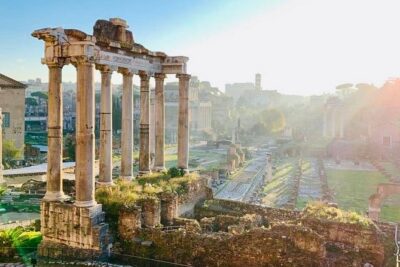
- Colosseum Area Orientation: Getting Your Bearings Fast
- What the “Local Drink or Snack” Actually Does for Your Day
- Price and Value: What $318.19 Buys You in Rome
- Meeting Point Reality: How to Avoid the Most Common Headaches
- Who This Tour Suits Best
- Should You Book This Private Highlights and Hidden Corners Tour?
- FAQ
- What sights will we see during the tour?
- Is this tour only for outside views or does it include entrance tickets?
- Where do we meet for the walking and vespa options?
- What’s included besides the guide?
- Do we need hotel pickup?
- How does free cancellation work?
Key things to know before you go
- Choose your pace: walking route is slower and chatty; the vespa option covers more ground.
- You start in the local world: Trastevere is part of the early rhythm for real neighborhoods.
- Big sights, practical context: you get “how it fits together” explanations around the Pantheon and Colosseum areas.
- A break is built in: you’ll stop for one local drink or snack rather than rushing straight through.
- Outside views are the norm: landmark entrances aren’t included, so plan expectations accordingly.
- Communication matters: if your meeting time shifts, having the tour’s messaging/app on hand helps.
Choosing Walking vs Vespa: Your Rome Pace
The biggest decision here is simple: walk and linger, or ride and cover more ground. On the vespa tour, you put on a helmet and get on the scooter, which is great if you want to see more in 3 hours—but it also means you’ll want comfort with traffic, narrow streets, and the whole “scooter day” mindset.
On the private walking tour, you start at Piazza di Sant’Apollinare (a clear landmark meeting point), and the guide sets a conversational tempo. Walking tends to work best if you want to talk history, hear street-level stories, and stop often for photos and quick “what should we do next?” advice.
Either way, the goal is the same: Rome through a local lens. And the route isn’t just a checklist; it’s designed to help you understand how the city’s layers connect—ancient to modern, monuments to neighborhoods.
You can also read our reviews of more private tours in Rome



Piazza Sant’Apollinare Start and a Trastevere Warm-Up
If you’re on foot, your morning (or afternoon) kicks off at Piazza Sant’Apollinare. From there, the route often leans into Trastevere early, a neighborhood with that working-class roots feel that still shows up in everyday life. It’s the kind of area where you’ll notice little shop fronts, old-stone streets, and trattorias that don’t behave like theme restaurants.
Trastevere is also a smart way to start because it breaks the “Rome is only monuments” spell. After a first neighborhood pass, the rest of the city starts to make more sense. You’re not just seeing Rome; you’re learning the geography and vibe so the famous places feel connected instead of random.
A practical note: Trastevere streets can be busy, and some corners have uneven pavement. Wear shoes that handle cobblestones and plan for short stops where your guide can orient you.
Piazza Navona to Campo de’ Fiori: Squares That Teach You How Rome Lives
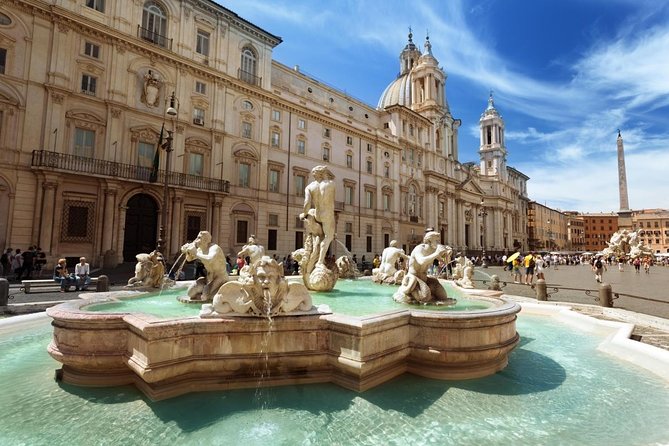
Next up, you’re likely to hit Piazza Navona, one of the most lively squares in central Rome. It’s famous for Bernini’s fountains, plus the surrounding churches and monuments that create that classic Roman stage-set feel. What makes Navona useful on a tour like this is your guide’s ability to explain what you’re seeing without turning it into a lecture.
Then the route often moves toward Campo de’ Fiori, a rectangular square that sits south of Piazza Navona. It’s a great pivot point because it’s less about postcard perfection and more about everyday “this is where people gather” energy. The name literally means field of flowers, and the square’s layout makes it easy to understand how the area works.
The best part here isn’t just the scenery. It’s the way your guide can point out where locals actually eat, what streets to avoid when you’re short on time, and how to plan your next stop so you don’t backtrack across the city.
The Pantheon Area: Seeing Scale Without Paying for Interiors

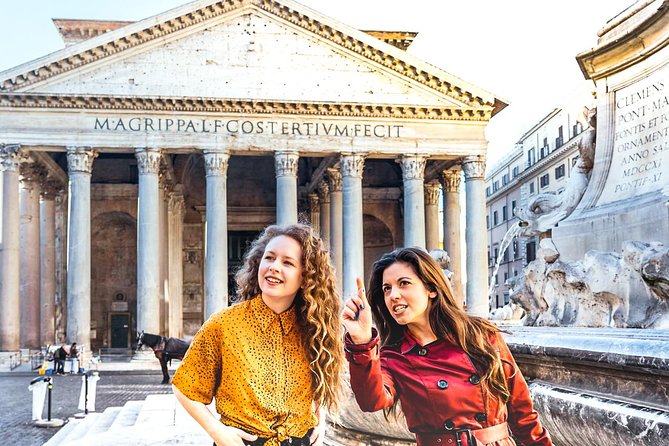
The Pantheon is the kind of monument that stops you mid-sentence. Even without entrance tickets included, you can still get extremely close to the building’s presence, and your guide’s job is to help you see it the way Romans would have recognized it.
The key value here is orientation. The Pantheon helps you understand Roman engineering scale—how they could create a massive interior space with a dome and still make it feel harmonious. Your guide can usually connect the dots between architecture, city priorities, and why this spot became such a symbol.
Drawback to keep in mind: since entrance tickets aren’t included, you should treat it as an outside-and-context stop. If you’re hoping for a full interior visit, plan that separately (and don’t assume your guide will have tickets on hand).
Spanish Steps: A Classic Stop With a Better Reason to Be There
The Spanish Steps are famous for good reason, but on a private tour they’re not just a photo-op. Your guide’s explanations (and pacing) help you understand why this stretch became so central and how the surrounding area functions as a connection point between neighborhoods.
This is also where a private guide really pays off. If you already know the basics, your guide can tailor the angle: traffic patterns, viewpoints worth seeking, and nearby streets that are less crowded at certain hours. If you’re new, they can give you the quick mental map that makes your remaining days easier.
One practical consideration: the steps get busy. If the guide can steer timing or pick the best angles for pictures, you’ll feel the difference. If not, at least you’ll know how the area fits into the rest of your Rome day.






Colosseum Area Orientation: Getting Your Bearings Fast
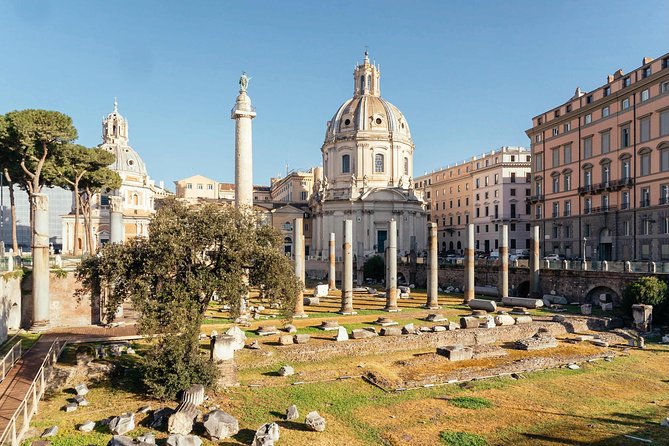
You’ll end up at the Colosseum area—an essential anchor for any first trip. The goal here isn’t to turn this into a ticket-and-line day (entrances aren’t included). Instead, it’s to give you a clean orientation loop so you understand where the Forum sits, how the amphitheater relates to the surrounding streets, and what’s nearby that’s worth seeing later.
Even from the outside, the Colosseum is powerful. And the real “win” of doing it with a guide is context: your guide can explain what you’re looking at and help you read the city around it so you’re not just staring at stone.
Based on guide styles highlighted in feedback, some guides like Frank or Daniele are especially good at connecting what you see to stories you can carry with you for the rest of your trip. That means your later self-guided visits feel smarter, not repetitive.
What the “Local Drink or Snack” Actually Does for Your Day
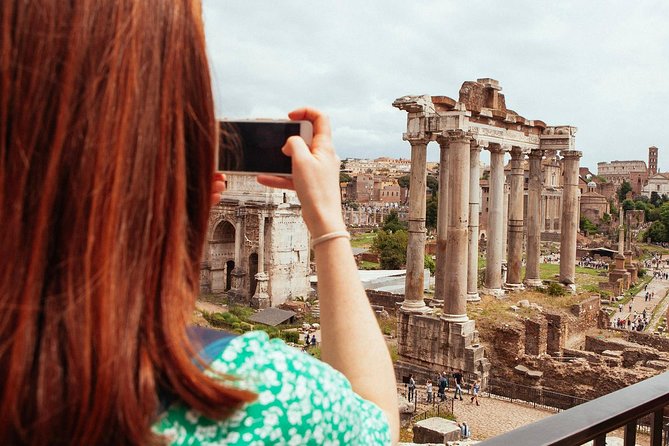
This tour includes one local drink or snack, and that small detail matters more than it sounds. Rome can be physically draining—heat, walking pace, cobblestones, and the constant “where am I going next?” feeling.
A snack break:
- helps you reset before another cluster of sights
- gives you a chance to ask your guide where to go for dinner
- keeps the day from turning into a checklist march
In feedback, guides like Paula were also described as attentive to families, which fits this approach: breaks and flexibility help everyone stay comfortable.
If you have dietary needs, ask ahead or bring it up early in the walk. Your guide can usually suggest options nearby without derailing the route.
Price and Value: What $318.19 Buys You in Rome

At $318.19 per person for roughly 3 hours, this isn’t a “cheap and cheerful” tour. You’re paying for private time, local expertise, and the flexibility to tailor the route. In practice, that can be excellent value if:
- you’re in Rome for a short stay and want fast orientation
- you hate waiting in lines or being rushed
- you want a guide to explain what you’re seeing instead of just pointing
- you can’t easily piece together the best route on your own
It’s also a deal relative to private planning, because the tour includes a drink/snack and a guide who knows how to shape the pace. Carbon neutral positioning is a bonus angle too (it’s listed as a sustainable, carbon neutral experience under a B-Corp label).
What you’re not getting (and should not expect) is included landmark entrance tickets. If your dream Rome day is mostly about interiors—museums, formal entries, guided inside visits—this tour may feel like it’s leaving something out. Think of it as a smart “get your bearings and learn the city’s logic” experience.
Meeting Point Reality: How to Avoid the Most Common Headaches
This tour is private, so finding your guide matters. The meeting point depends on your option:
- Walking: Piazza di Sant’Apollinare, 46
- Vespa: Via in Selci near Cavour Metro Station
A practical tip: open the map and pin the exact meeting point the moment you get confirmation. Some feedback mentioned meeting instructions that weren’t clear, causing delays. You can avoid that with one minute of prep.
Also, keep your phone ready. One experience described communication delays and shifting timing, and the key lesson was using the provider’s app for messages. Even if that’s rare, it’s still good travel hygiene.
Who This Tour Suits Best
I’d book this if you want Rome to feel navigable, not overwhelming. It’s especially good for:
- first-timers who already want a few big monuments, but also want to feel neighborhood life
- couples who prefer conversation over group pace
- families who need flexibility and comfort breaks
- travelers who want ideas for where to eat afterward
It’s less ideal if you’re mainly chasing ticketed interiors during your short window. Since the tour is set up for outside views, you’d want to pair it with another activity that includes entrance access if that matters to you.
Should You Book This Private Highlights and Hidden Corners Tour?
If you want a smoother first week in Rome, I think this is an easy yes. The biggest strength is the structure: big landmarks for bearings, paired with neighborhood texture so the city doesn’t feel like separate attractions. Add in the included drink or snack and the truly private format, and the day feels less like work.
Book it if you:
- like getting oriented early
- want local street context, not just famous names
- are comfortable with outside viewing for the major sights
Skip or adjust expectations if you:
- need included interior entrance tickets for the Pantheon/Colosseum
- want to move fast with zero stops (this tour is meant to breathe)
- have trouble with scooter riding if choosing the vespa option
FAQ
What sights will we see during the tour?
You’ll visit a mix of Rome highlights and neighborhood areas, including the Pantheon, Piazza Navona, Campo de’ Fiori, the Spanish Steps, and the Colosseum area. The exact route can change depending on walking versus vespa, and you might also pass by places like Isola Tiberina, Piazza della Rotonda, and Palazzo Madama.
Is this tour only for outside views or does it include entrance tickets?
Entrance tickets are not included. The tour is designed to visit the landmarks from the outside.
Where do we meet for the walking and vespa options?
For the private walking tour, the meeting point is Piazza di Sant’Apollinare, 46, 00186 Roma. For the vespa option, the meeting point is Via in Selci near the Cavour Metro Station.
What’s included besides the guide?
The tour includes a private local multilingual guide and one local drink or snack. It’s also listed as a sustainable carbon neutral experience (B-Corp).
Do we need hotel pickup?
No. Hotel pickup and drop-off are not included.
How does free cancellation work?
You can cancel for a full refund as long as you cancel at least 24 hours before the experience start time. If you cancel within 24 hours of the start time, the amount paid is not refunded.