REVIEW · ROME
Rome by Golf Cart Private Tour: Beyond the Landmarks
Book on Viator →Operated by Rolling Rome · Bookable on Viator
Rome, but faster and more fun.
A private golf cart tour is a smart way to see central Rome without turning every day into a marathon, because you’re guided street by street with quick stops and real stories. You can also steer the day toward what matters most to you, instead of being herded into a fixed route.
I love the control you get. You start with pickup in central Rome (or from Rolling Rome’s shop), then your guide maps a realistic route based on your interests, from big-name classics to smaller surprises. And in the best cases, you’ll get narration that makes the stones feel less random, with guides like Oscar, Julio, Francesca, and Gabriel repeatedly singled out for making the city click.
One thing to weigh: this is sightseeing without ticketed entry. You’ll stop at places like the Colosseum and Mouth of Truth for views and photos, but entries for ticket sites are not included, so plan any inside visits separately.
In This Review
- Key points to know before you ride
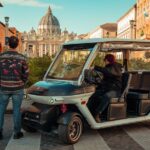
- A covered golf cart that makes Rome feel doable
- Private routing: picking your priorities instead of following a script
- How the timing works: stops, photos, and what you do (and don’t) enter
- Ancient Rome highlights: Colosseum, Circus Maximus, and the emperors’ signatures
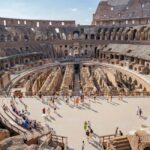
- Colosseum (quick stop, big impact)
- Circus Maximus (easy, open, and free)
- Arch of Constantine (the Christian-era pivot)
- Trajan Column (history told in stone)
- Teatro di Marcello (the Colosseum’s older sibling)
- Baroque Rome photo stops: Spanish Steps, Piazza Navona, and Bernini’s fountain rivalry
- Spanish Steps (Scalina Spagna)
- Piazza Navona (stadium shape + Fontana dei Quattro Fiumi)
- Fontana dei Quattro Fiumi (Bernini vs Borromini story)
- Fontana della Terrina (romantic folklore)
- Churches and art surprises: dome views and Michelangelo’s Moses
- Chiesa di Sant’Ignazio di Loyola (the dome surprise)
- Basilica of San Pietro in Vincoli (Michelangelo’s Moses)
- Views from the hills: Giardino degli Aranci, Villa Borghese, and Rome’s rooftop lines
- Giardino degli Aranci (Aventine Hill views)
- Villa Borghese (park + overlook pass-bys)
- Janiculum fountains and Garibaldi’s hill stop for dramatic city panoramas
- Fontana dell’Acqua Paola (Il Fontanone)
- Giuseppe Garibaldi Monument (with a possible noon cannon)
- Knights of Malta Keyhole, the Mouth of Truth, and Rome’s playful side
- Knights of Malta Keyhole
- Mouth of Truth
- Trastevere alleys and Rome’s after-hours flavor
- Ghetto streets and Caelian Hill: the city’s layered neighborhoods
- The Ghetto
- Caelian Hill and Hadrian’s remnants
- Piazza Venezia / Ancient City
- Monumento a Giordano Bruno
- Price, comfort, and who this tour makes sense for
- Should you book this Rome by Golf Cart tour?
- FAQ
- How long is the Rome by Golf Cart private tour?
- Is this tour private?
- Is hotel pickup included?
- What’s the start and end point?
- Does the tour include entry tickets for the Colosseum or other ticketed sites?
- Is there a lunch included option?
- What language is the guide?
- Does the tour run in bad weather?
- Is free cancellation available?
Key points to know before you ride
- Hotel pickup in central Rome means you start relaxed, not hunting for your meeting point with a map in your hand.
- A guide builds your route live at the start, so you’re not locked into a one-size-fits-all loop.
- Short stops keep momentum—great for covering many highlights in limited time.
- Most stops are free to enter (with key ticket exceptions), which helps you avoid surprise costs.
- Covered, street-legal carts with rain covers keep the experience workable in bad weather.
A covered golf cart that makes Rome feel doable
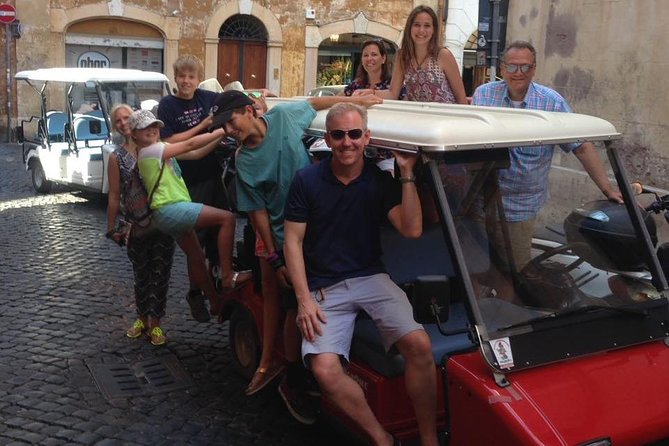
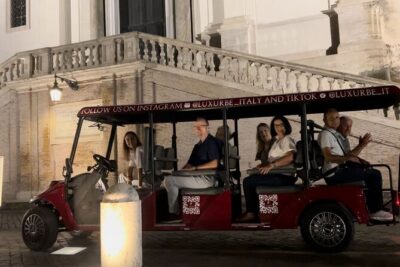
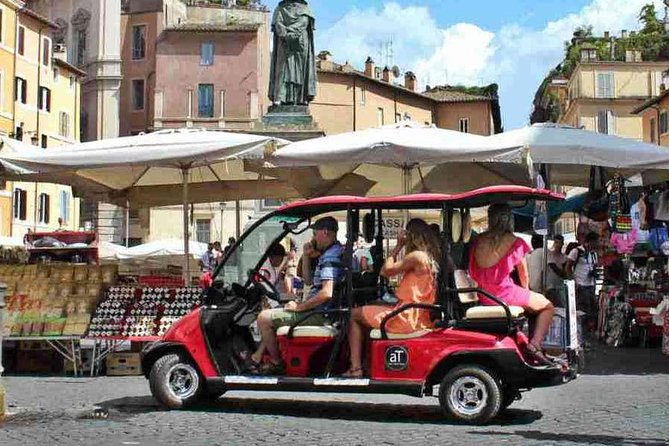
Rome is stunning, but it’s also tiring—cobbles, hills, crowds, and long walks between the “obvious” stops. This tour trades that grind for a street-legal, covered golf cart that lets you move quickly across neighborhoods.
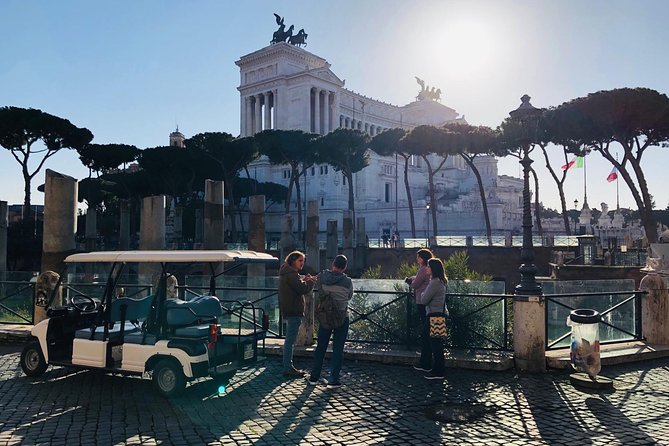
You’ll still step out for each stop, so it’s not zero walking. But the cart is doing the heavy lifting, which is why this format works so well for people who want the highlights without betting their feet on a full day of sightseeing.
You can also read our reviews of more private tours in Rome
Private routing: picking your priorities instead of following a script
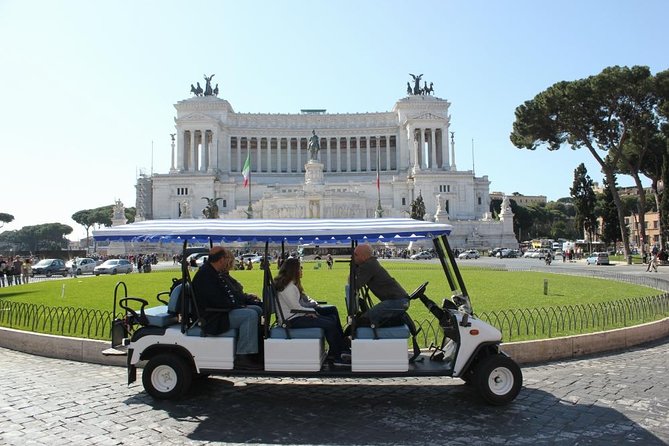
The core value here is simple: it’s private and it’s flexible. Your guide starts by asking what you want most, then calculates a route that fits your time and what you want to see.
In practice, this means you can do things like:
- Focus on ancient Rome stops first, then pivot to viewpoints and fountains
- Spend more time where you’re most curious (for example, architectural details or a specific church)
- Skip a stop if it’s not landing for your group
That flexibility is also what makes the cart tour feel less like a checklist and more like a curated day with a local guide—especially when you get one of the guides praised in the past for stories and pacing (names you’ll hear often include Julio, Francesca, and Gabriel).
How the timing works: stops, photos, and what you do (and don’t) enter
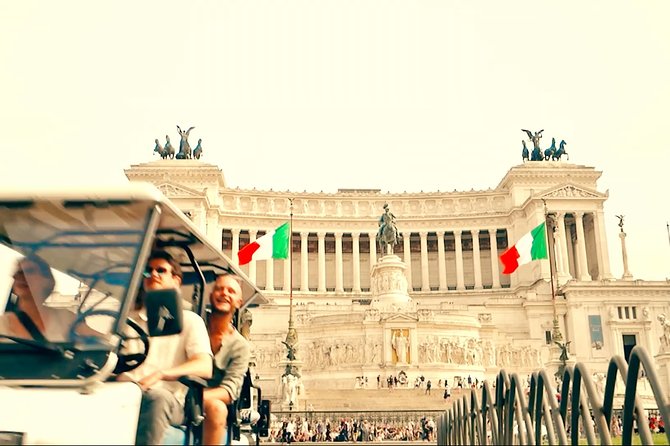
This is a sightseeing tour, not an all-in-one ticket package. Many listed locations are free to visit, and your guide can bring you to places where you can go inside at no admission cost—but ticketed entries are not included.
Here’s what that means for your expectations:
- For ticketed sites (the Colosseum is the big one on the menu), you’ll have time for a stop and views, but not included entry.
- For free sites (many fountains, viewpoints, and churches), you’ll get more of a “hang out and look” experience.
- Stops are timeboxed, often around 5 to 20 minutes depending on the location.
So if you dream of spending an hour inside the Colosseum or doing a museum-level visit at other major landmarks, you’ll want to pair this tour with separate ticketed time.
Ancient Rome highlights: Colosseum, Circus Maximus, and the emperors’ signatures
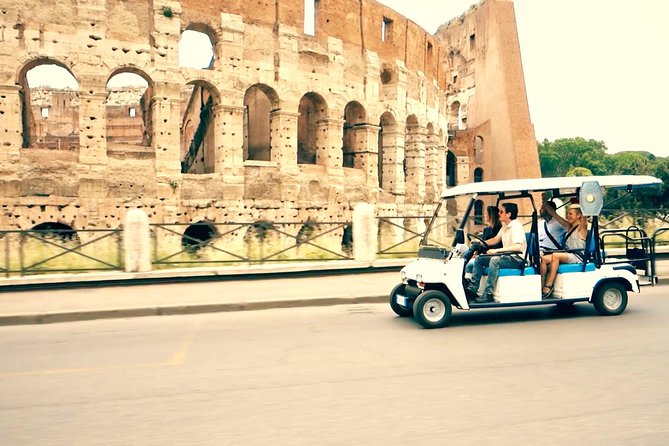
The tour’s ancient set pieces are the main reason to book it, even if you’ve visited Rome before. You’ll see the monuments from a perspective that’s hard to recreate when you’re stuck waiting in lines or stuck on foot.
Colosseum (quick stop, big impact)
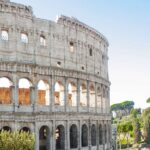
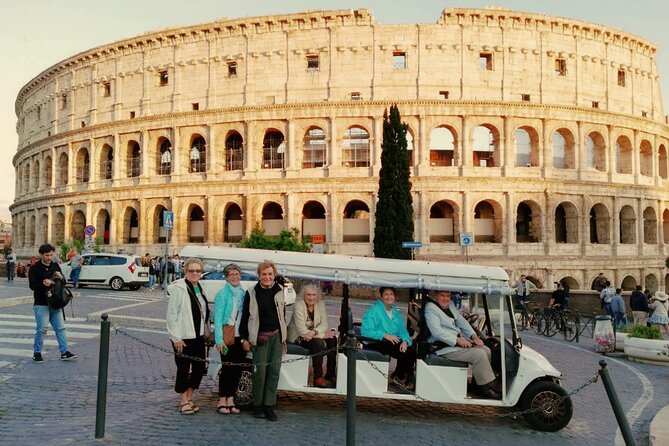
The Colosseum is the headline stop, with about 15 minutes for photos and context. The catch is the practical one: the admission ticket isn’t included, so treat this as a viewing stop unless you’ve planned an inside visit separately.
If you want the mood to hit hardest, ask your guide about timing for better light. One of the best-loved moments described in past tours was the Colosseum at dusk when it’s illuminated—so it’s worth mentioning that your group prefers golden-hour visuals.


Circus Maximus (easy, open, and free)
Next up is Circus Maximus, a massive chariot-racing site now known mostly as an open green space. It’s listed with free admission and about 10 minutes.
Even with a short stop, it’s memorable because you can grasp the scale. The key is your guide’s narration—helpful for understanding why this place mattered before Rome’s crowds and empire moved the spotlight elsewhere.
Arch of Constantine (the Christian-era pivot)
The menu also includes one of Rome’s surviving victory arches, tied to Constantine the Great and the larger shift toward Christianity. It’s a short stop designed for seeing the structure and understanding why the monument is still relevant.
Think of this as a “connect the dots” stop: you’ll feel less like you’re bouncing between unrelated ruins.
Trajan Column (history told in stone)
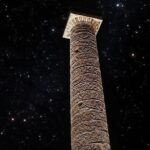
Trajan Column is another standout, listed for about 10 minutes. It’s the kind of place where a quick look can feel random—unless someone explains the Dacian War storyline that’s carved along the column.
If your group likes war-and-empires context, this is a great stop because the monument is basically a timeline you can read along the spiral.
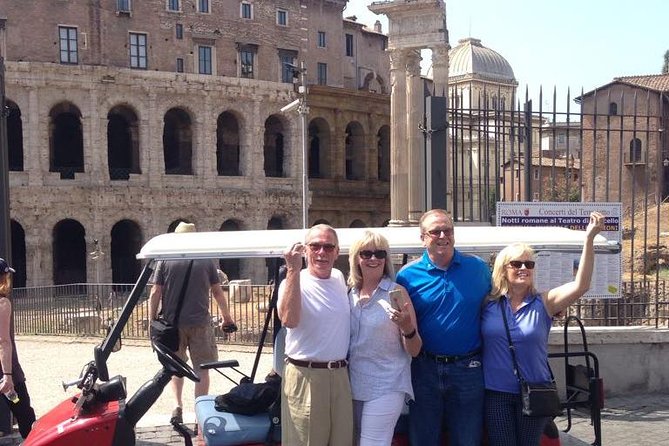
Teatro di Marcello (the Colosseum’s older sibling)
The Teatro di Marcello is framed as the older “little brother,” built into a complex of layers older than the Colosseum’s era. It’s listed for 10 minutes and is described as privately owned today.
This is where the cart format helps: you can hop between ancient rhythms without losing half your day in transit.
Baroque Rome photo stops: Spanish Steps, Piazza Navona, and Bernini’s fountain rivalry
Rome’s Baroque and High Renaissance energy shows up clearly in the fountain-and-square stops. This section is where you’ll slow down for views—even if the stop times are short.
Spanish Steps (Scalina Spagna)
Spanish Steps are listed as about 10 minutes, and the tour highlights their irregular, layered design and Roman Baroque style. The value isn’t just the steps; it’s the surrounding streetscape you can spot from the cart route.
If you’re short on time, this is one of the places where stopping briefly still pays off.
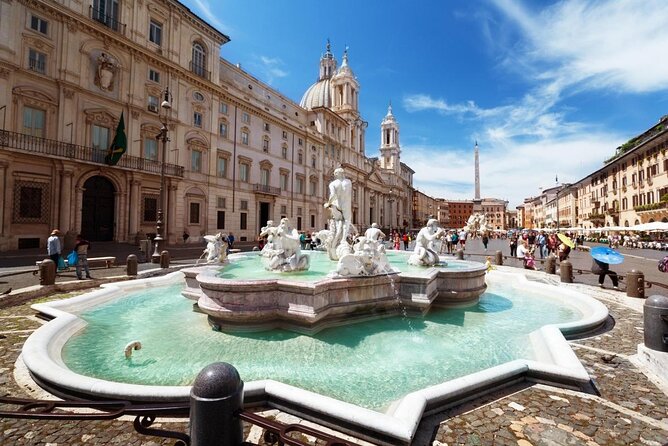
Piazza Navona (stadium shape + Fontana dei Quattro Fiumi)
Piazza Navona is a favorite stop type because it blends architecture and drama. You’ll spend around 10 minutes, and the tour’s focus is the famous fountain of the four rivers.
The extra detail to look for is the square’s shape—elliptic and linked to the ancient stadium of Domitian. With a guide explaining that connection, Navona stops feeling like just another pretty square.
Fontana dei Quattro Fiumi (Bernini vs Borromini story)
This is described as Bernini’s masterpiece, with the added layer of rivalry lore between Bernini and Borromini. The stop is about 10 minutes and is listed as free.
The quick advice: give your eyes 2 minutes to pick out the figures and symbolism, then let your guide talk. It’s the fastest way to make a fountain feel like a story, not just water and stone.
Fontana della Terrina (romantic folklore)
Fontana della Terrina is listed for about 10 minutes and described as a romantic spot with a great story. It’s one of those stops that can feel small—until you hear what’s behind it.
This is a good choice if your group prefers texture and character over sheer size.
Churches and art surprises: dome views and Michelangelo’s Moses
One of the nicest parts of this style of tour is that it often includes church stops without turning it into a formal long visit. You get the visual moments, plus the context.
Chiesa di Sant’Ignazio di Loyola (the dome surprise)
This Jesuit church is listed at 10 minutes with free admission. The highlight is the dome and the idea that you’ll get a real surprise while looking up.
If your group likes architecture and optical tricks, you’ll probably enjoy this stop more than you expect.
Basilica of San Pietro in Vincoli (Michelangelo’s Moses)
Another church stop is San Pietro in Vincoli, also listed for about 10 minutes and free admission. The big draw here is Michelangelo’s Moses holding the Ten Commandments.
This is the kind of place where a short visit can still be satisfying because the famous sculpture anchors the entire room. If you’re trying to understand why Rome’s Renaissance art still feels powerful, this stop gives you a clean introduction.
Views from the hills: Giardino degli Aranci, Villa Borghese, and Rome’s rooftop lines
Rome’s best “wow” moments often come from stepping slightly upward. The tour includes several viewpoint-style stops that work well with a golf cart approach.
Giardino degli Aranci (Aventine Hill views)
Giardino degli Aranci is listed for 10 minutes and free. The point is the rooftop view spread from the Aventine hill.
This is a high-payoff stop for photos, because Rome’s rooflines and church domes create depth fast—no long hike required.
Villa Borghese (park + overlook pass-bys)
Villa Borghese is listed for about 15 minutes, free admission, and described as a park environment with statues and fountains, plus viewpoints overlooking Piazza del Popolo and toward St Peters and the historic center.
The cart helps here because you can get both park atmosphere and skyline orientation in a single stop, instead of trekking uphill repeatedly.
Janiculum fountains and Garibaldi’s hill stop for dramatic city panoramas
If you like fountains plus a view, this itinerary’s Janiculum segment is worth planning around.
Fontana dell’Acqua Paola (Il Fontanone)
Fontana dell’Acqua Paola is listed for 5 minutes, free, and described as the monumental Il Fontanone on Janiculum Hill. It marks the end of the Acqua Paola aqueduct and overlooks the Trastevere area.
Even with only a few minutes, your guide can tie it into how water powered the city’s growth—then you can look over the neighborhood below.
Giuseppe Garibaldi Monument (with a possible noon cannon)
The Garibaldi monument stop is 5 minutes and free, located on Janiculum hill. The menu notes that if you arrive by 12pm, you could see the famous canon shooting the city.
That “if” matters. If your schedule lines up, it’s a fun local timing detail to ask your guide about.
Knights of Malta Keyhole, the Mouth of Truth, and Rome’s playful side
These are stops that feel like folklore. They’re quick, free to visit depending on the site, and they give Rome a sense of humor that big ruins alone can miss.
Knights of Malta Keyhole
The Knights of Malta keyhole is listed for 10 minutes and free. The fun part is the view through a keyhole that frames a beautiful surprise—and the stop comes with the story about another tiny country inside Rome.
If you have kids, it’s a great attention grab. If you don’t, it’s still one of the most distinctive “only-in-Rome” moments you’ll get for almost no time cost.
Mouth of Truth
Mouth of Truth is about 5 minutes, but the admission ticket isn’t included. The experience here is iconic: you put your hand inside the ancient marble mouth, and it’s tied to medieval lie-detector folklore.
Practical advice: since entry isn’t included, check in advance whether you want to do this as a standalone paid stop or just enjoy the exterior context during the cart tour.
Trastevere alleys and Rome’s after-hours flavor
This menu includes a pass through tiny, colorful alleys tied to what used to be a fisherman neighborhood, now known for bars, cocktail spots, restaurants, and nightlife. It’s listed as a flexible stop where your guide can give you a sense of the neighborhood texture.
Even if your group isn’t planning to go out, this is a nice change from only seeing monuments. It’s also a helpful “where to wander later” compass, because you’ll get a feel for streets that are different from the center’s grand squares.
Ghetto streets and Caelian Hill: the city’s layered neighborhoods
Rome isn’t just empire monuments. The tour includes stops that help you see daily-life layers and shifting cultures.
The Ghetto
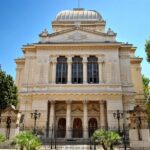
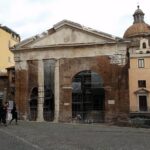
The Ghetto stop is listed for about 10 minutes and free, describing the name’s origin and how a Roman Jewish neighborhood became a closed area. It’s framed as the oldest continued Jewish community in the world.
This stop tends to land well when your guide explains the historical word meaning and why it matters in Rome’s story.
Caelian Hill and Hadrian’s remnants
Caelian Hill is listed for about 20 minutes, free, with mentions of the church Santissimi Giovanni e Paolo, remaining parts of a Temple of Hadrian, and Villa Celimontana.
It’s a longer, slower stop in the menu. If you want a break from quick photo moments, this is often the right place.
Piazza Venezia / Ancient City
Piazza Venezia is listed for 10 minutes, free. The menu describes it as a busy hub full of history, and it’s a useful stop if you want to orient yourself across central Rome.
Monumento a Giordano Bruno
This is listed for about 15 minutes and free, with a description of colorful streets marked by shops, bars, and restaurants, plus the story behind the monument.
If your group likes political or intellectual history, this is a good “human story” anchor between larger ruins.
Price, comfort, and who this tour makes sense for
The price is listed at $180.67 per person, and that number matters only if you’re clear about what’s included. You get a private guide/driver, golf-cart transport as part of the tour, hotel pickup and drop-off in central Rome (when selected), English-speaking narration, insurance, bottled water, and a lunch break on the full-day option.
You also need to accept what’s not included: admission entry for ticketed sights like the Colosseum, Roman Forum, Vatican Museums, or Pantheon. So this tour is best used as an efficient way to see a lot from the outside and learn the context fast.
Who I’d book it for:
- First-time visitors who want the lay of the land without rushing from stop to stop on foot
- People who want stories and side streets rather than a rigid drive-by list
- Groups with mixed mobility, because the cart reduces the walking load
- Anyone who wants to customize the day, then build separate paid time around the 1–2 sights they care about most
One more comfort note: the golf carts usually seat six (four facing forward and two facing backward). If you’re sensitive to motion or just prefer a certain orientation, it’s worth mentioning seating preference to the operator when you start.
Should you book this Rome by Golf Cart tour?
If you want a practical first-day Rome win, I’d say yes—with one condition. Use it to build your mental map and understand what each landmark means, then handle any inside ticketed visits separately.
It’s especially worth booking if your priorities include quick pacing, views from the hills, and a guide who turns “I’ve seen it on Instagram” into something you actually understand. With the private setup and route flexibility, the day feels less like a schedule and more like your itinerary—just with the work of planning and driving taken off your plate.
FAQ
How long is the Rome by Golf Cart private tour?
The duration is listed as approximately 2 to 7 hours, depending on the option you choose and how many stops your guide can fit in.
Is this tour private?
Yes. It’s a private tour/activity, meaning only your group participates.
Is hotel pickup included?
Hotel pickup and drop-off are offered for hotels in central Rome when communicated up to 24 hours in advance. If no pickup location is selected, the tour starts from Rolling Rome’s office at Piazza del Gesù 47.
What’s the start and end point?
The meeting point is Piazza del Gesù, 47, 00186 Roma RM, Italy (Rolling Rome). The tour can end at your hotel, anywhere within Rome’s historical center, or at the Rolling Rome office.
Does the tour include entry tickets for the Colosseum or other ticketed sites?
No. Admission to ticketed sites is not included. The Colosseum stop lists tickets as not included, and the tour also notes that ticketed entries such as the Colosseum are not and cannot be included during this sightseeing format.
Is there a lunch included option?
Lunch break is offered on the full-day tour only.
What language is the guide?
The tour includes an English-speaking tour guide/driver.
Does the tour run in bad weather?
Yes, it runs rain or shine. The golf carts are equipped with rain covers for wet weather.
Is free cancellation available?
Yes, free cancellation is available. You can cancel up to 24 hours in advance for a full refund.