REVIEW · ROME
Rome: Houses of Augustus and Livia Private Tour
Book on GetYourGuide →Operated by Through Eternity Tours · Bookable on GetYourGuide
Rome’s secret rooms have a pulse. On this private Rome tour, you’ll move from the Roman Forum into the Palatine Hill area and step inside two of the most famous surviving imperial homes—painted, preserved, and full of political meaning. It’s a focused way to get past the usual look-and-leave crowds and actually see how emperors wanted Rome to feel.
I like two things a lot here. First, the House of Augustus experience centers on some of the best-preserved ancient Roman painting, including Augustus’ study, with frescoes featuring plants and fantastical creatures. Second, the private guide format means you’re not stuck with one-size-fits-all narration; I’ve seen guides such as Brian Green and Patrick praised for their academic training and context that works even when your group starts with very different knowledge levels.
One thing to consider: the House of Livia is temporarily closed (subject to change), so your plan should include the possibility that you’ll see an alternate arrangement or revised timing.
In This Review
- Key takeaways
- Why the Palatine Hill houses matter more than big-ticket sights
- Meeting at Angelino ai Fori and getting into the Forum quickly
- Roman Forum first: from daily life to imperial power moves
- Palatine Hill views plus the Domitian and Caligula stops
- House of Augustus: frescoes, the emperor’s study, and controlled image
- House of Livia: mythological frescoes, preserved marbles, and the closure reality
- Private guide value: hearing the story behind the stones
- Price and what you’re really paying for
- Who this tour suits (and who should choose differently)
- Should you book the Houses of Augustus and Livia private tour?
- FAQ
- How long is the Rome Houses of Augustus and Livia private tour?
- Where do I meet the guide?
- What sites are included in the tour?
- Is there skip-the-line access?
- Are headsets included?
- Is the House of Livia open?
- Is the tour wheelchair accessible?
Key takeaways
- Skip-the-line access through a separate entrance means less waiting and more seeing
- House of Augustus is the star for surviving frescoes, including Augustus’ study
- House of Livia is often the highlight, but it’s temporarily closed, so confirm timing
- Palatine Hill layers legendary origins with real imperial power sites like Domitian’s palace ruins
- Roman Forum + Santa Maria in Antiqua connect daily life, imperial sites, and sacred reuse of ancient spaces
- Headsets for groups of 6+ help you hear your guide clearly on busy ruins
Why the Palatine Hill houses matter more than big-ticket sights
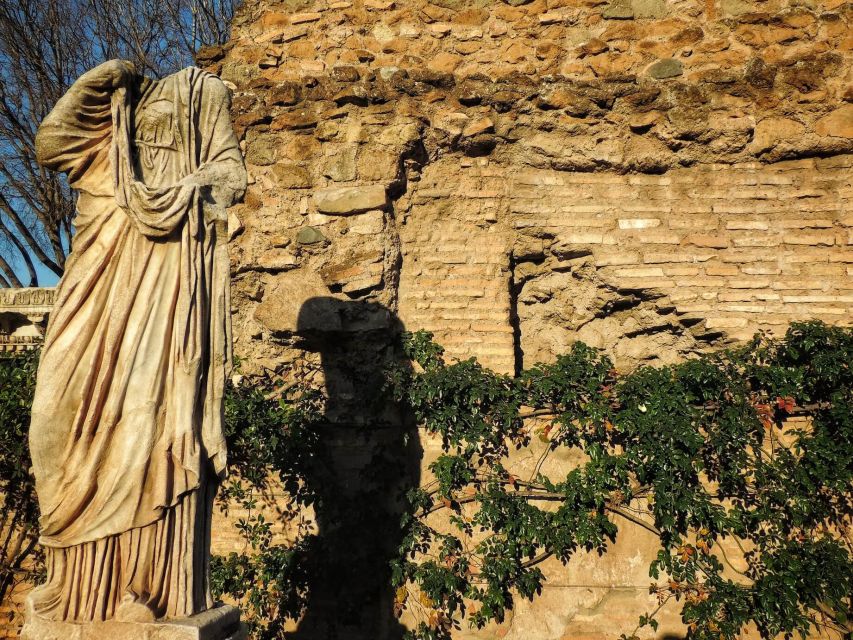
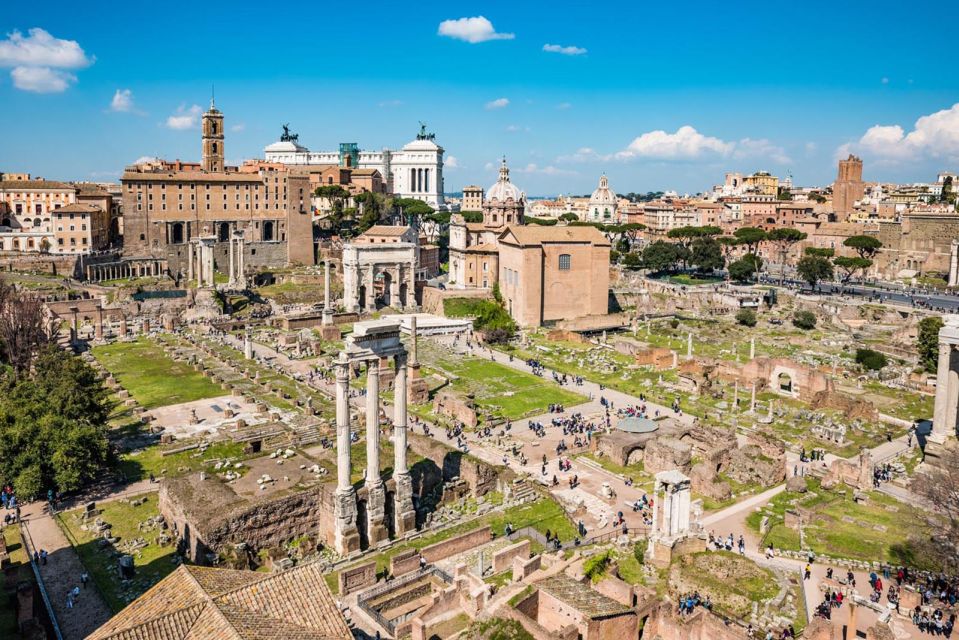
Rome has plenty of statues, columns, and sweeping views. This tour takes a different path: you focus on homes—specifically the residences tied to emperors—where politics stops being abstract and becomes architecture, decoration, and controlled atmosphere.
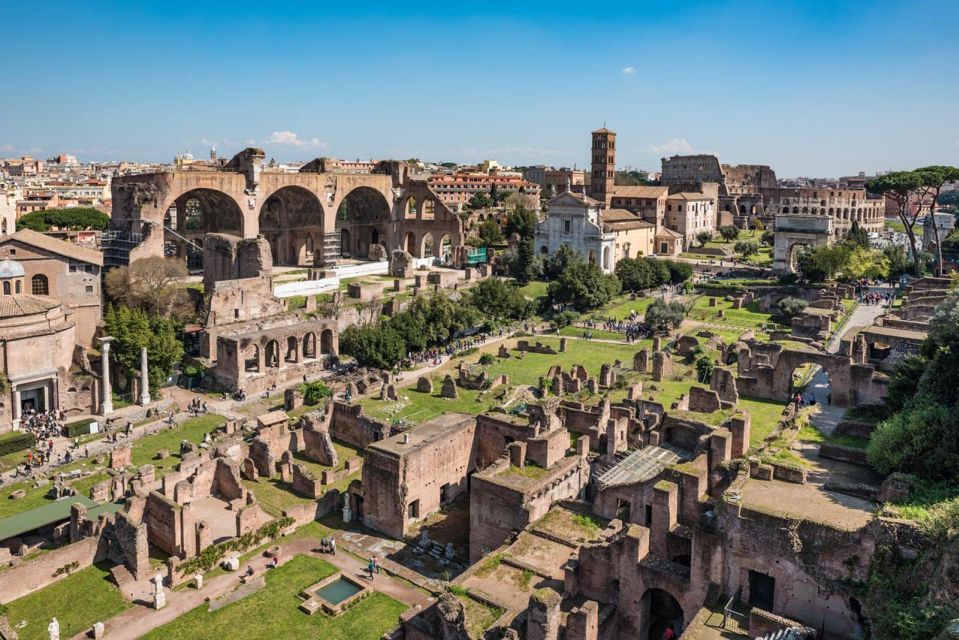
The Palatine Hill is where the story of Rome begins in myth (Romulus and Remus), and it’s also where real rulers built their legitimacy. Watching how Augustus and later the imperial family lived—then seeing how those rooms were decorated—helps you understand why the Romans cared about image so much. It’s not just “ancient stuff.” It’s ancient marketing, with frescoes.
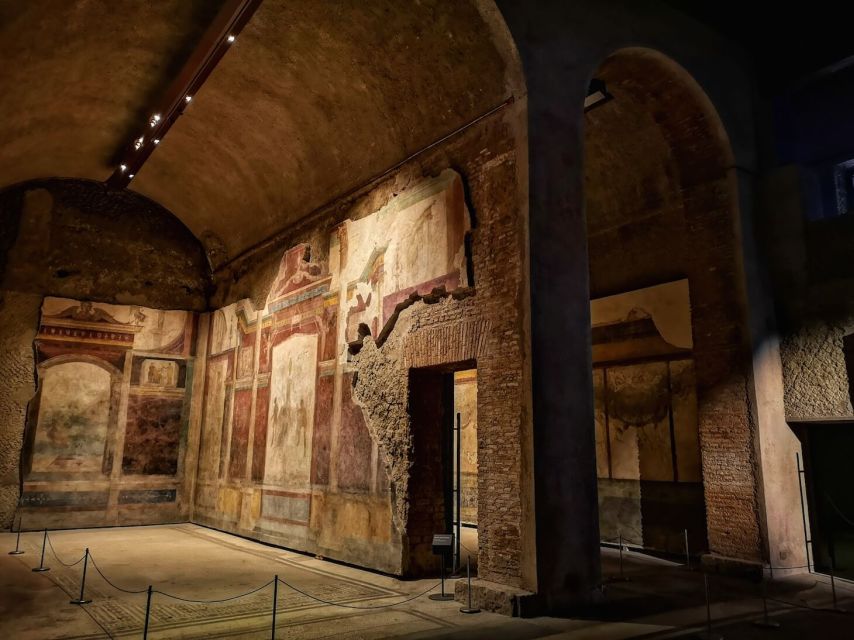
What makes the Houses of Augustus and Livia so valuable is that you’re not only looking at ruins. You’re walking through rooms that preserve the ancient paint language: plants, myth, and idealized scenes meant to make the owner look cultivated and in control. And because this is a private tour with an expert guide, you’re more likely to notice the details that make those rooms feel strangely intimate for something that’s over 2,000 years old.
You can also read our reviews of more private tours in Rome



Meeting at Angelino ai Fori and getting into the Forum quickly
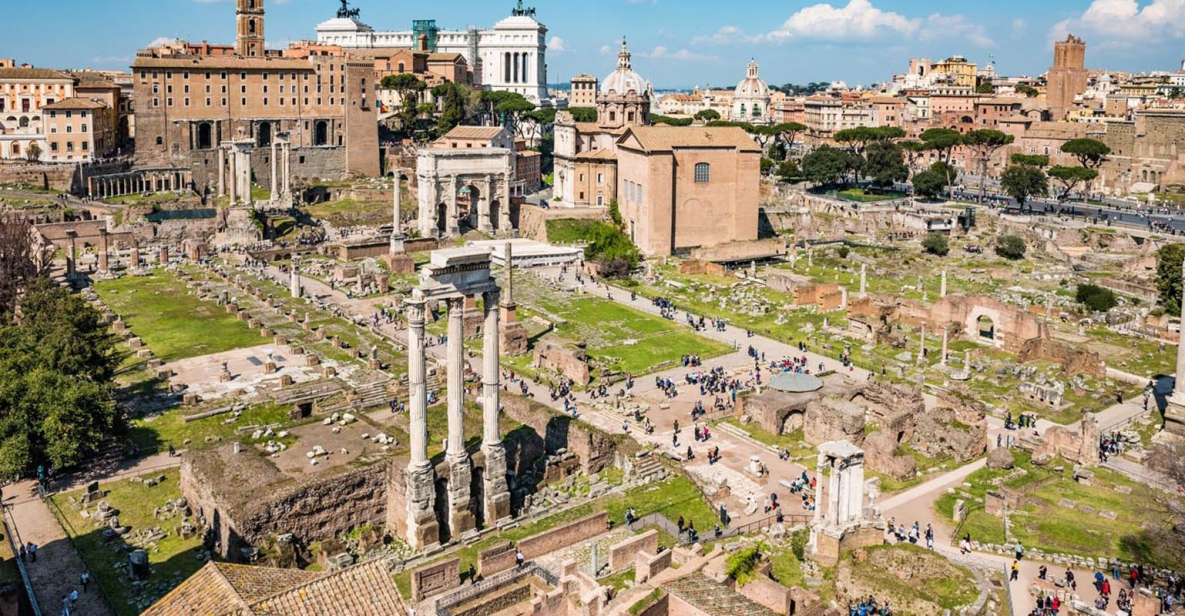
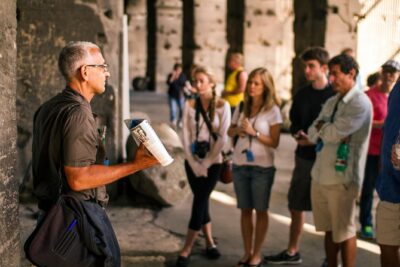
You start at Largo Corrado Ricci, 43a, in front of the Café/Restaurant Angelino ai Fori. Your guide will be holding a Through Eternity sign or flag. This matters because it’s easy to arrive looking for the “right entrance” and end up wandering.
Once you meet up, you’ll move on foot to your first major focus area. The tour is built around short walking segments, but you should still plan on uneven ground and stairs in places. Comfortable shoes aren’t optional advice here—they’re how you actually enjoy the Roman ruins instead of thinking about your feet.
A big practical plus: you’ll get skip-the-line access via a separate entrance. When you’re trying to see the Forum and the Palatine Hill in about three hours, that saved time can be the difference between catching the best parts of the houses and feeling rushed.
Roman Forum first: from daily life to imperial power moves
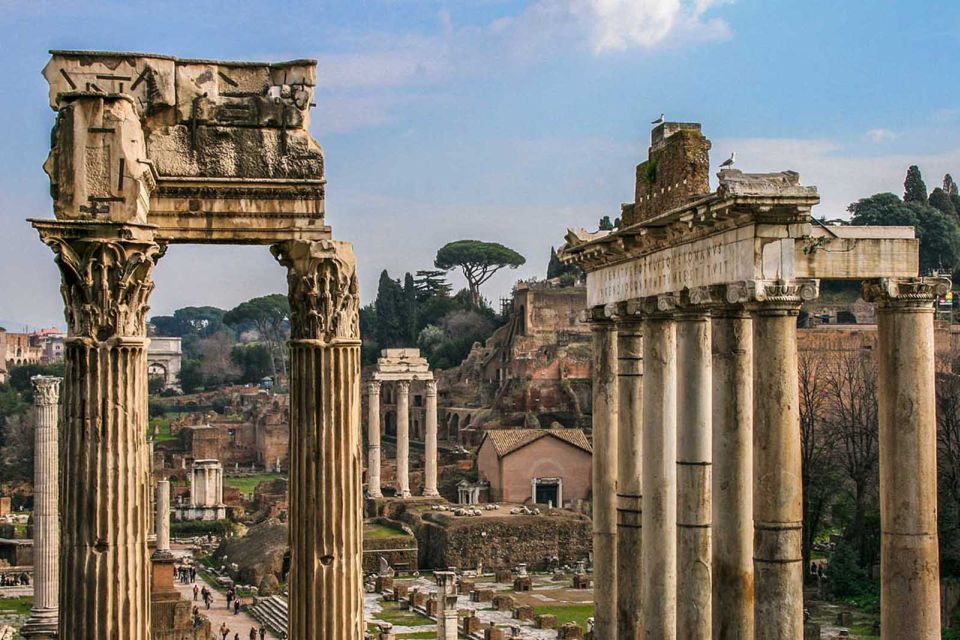
The Roman Forum stop runs about 35 minutes with a guided explanation. This is a smart start because it sets the “why” before you go upward to the Palatine.
Your guide will bring daily life in the ancient empire into focus, then connect it to the political figures you recognize from history—names tied to the Forum story such as Julius Caesar and Cicero. Even if you don’t consider yourself a history person, the guide’s job is to translate what’s in front of you into what it meant.
One especially useful element of the Forum segment is the idea of movement and access. You’ll have a chance to climb the monumental ramp that once led emperors from the Palatine into the Forum below. That ramp isn’t just a stairway; it’s a visual of power. It tells you: the ruler’s world is organized, staged, and designed for public dominance.
You’ll also visit Santa Maria in Antiqua, a church created from parts of the imperial palaces. This is the kind of reuse that makes Rome feel like a layered living museum. It’s not time travel as a fantasy—it’s time travel as a practical reality: centuries building on centuries, without asking permission.
Palatine Hill views plus the Domitian and Caligula stops
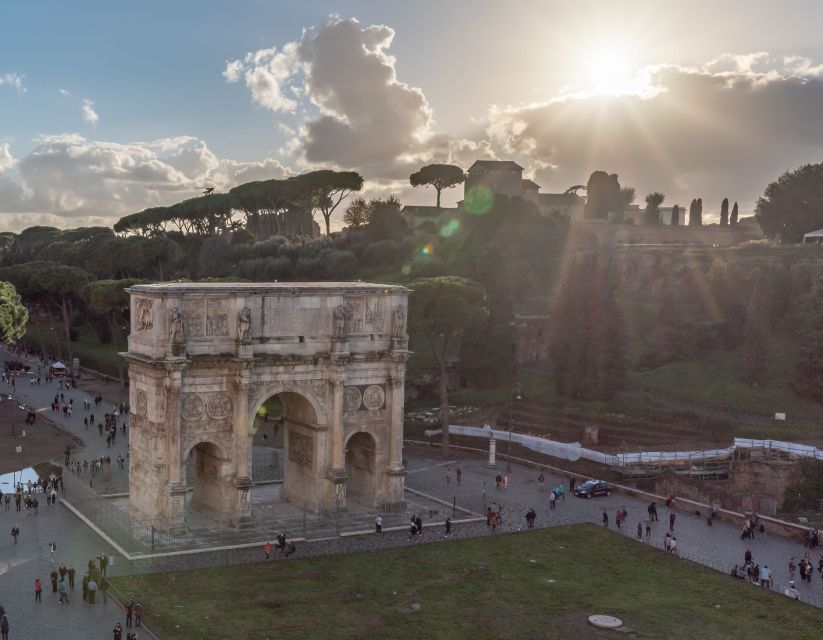
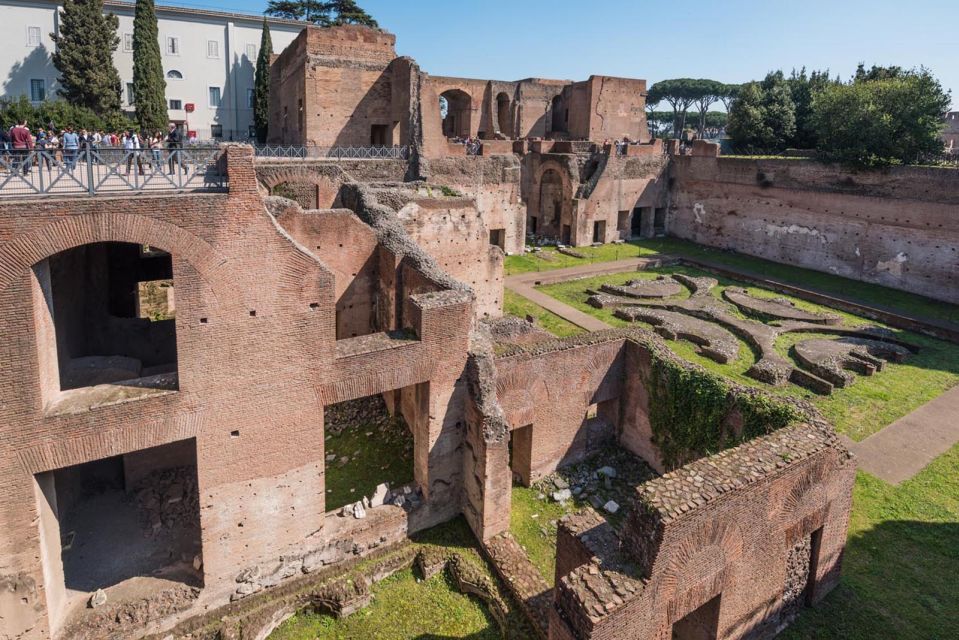
Next comes the Palatine Hill portion, again about 35 minutes with guiding. This is where the tour becomes more of a walking narrative—legends at the top, then evidence of emperors and power right beside them.
You’ll explore beyond just the house entrances. The tour includes stops such as:
- the ruins of Domitian’s luxurious palace
- the site connected with Caligula’s assassination
- the wider Palatine area with the kind of views that make you understand why emperors wanted to live up here
The Domitian and Caligula references are valuable because they break the “Augustus only” frame. You see that the Palatine wasn’t a one-emperor brand. It was a strategic address across successive reigns—each trying to shape Rome’s story in a slightly different way.
For the views, don’t treat them as a photo break. Treat them as orientation. When you look down from the Palatine, the Forum’s layout starts to make sense. Then when your guide references the ramp and the flow between hill and city, you’ll get the physical logic.
House of Augustus: frescoes, the emperor’s study, and controlled image
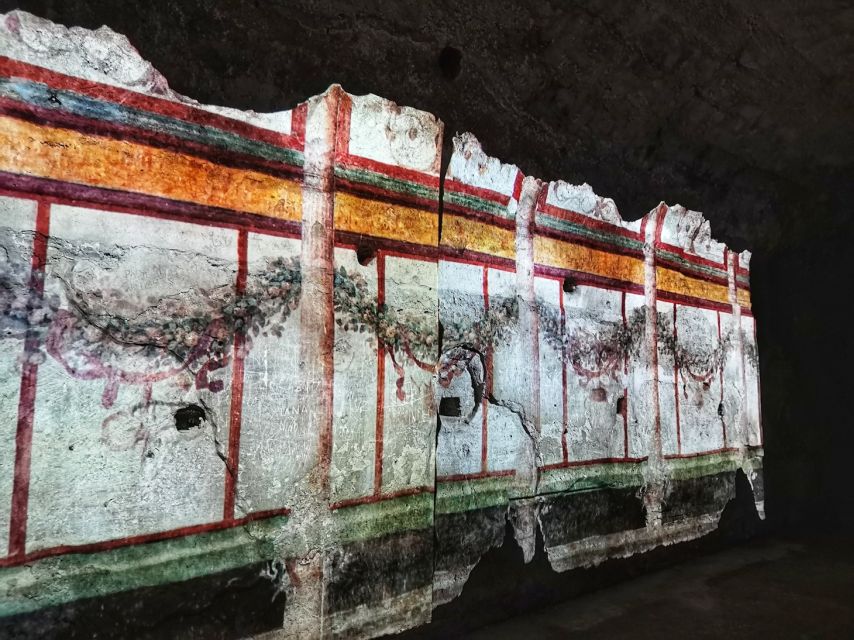
The House of Augustus visit is around 45 minutes, and it’s where this tour earns its reputation. This isn’t an empty room lecture. It’s a guided walk through spaces decorated to communicate status.
The tour description emphasizes something important: the house Augustus chose on the Palatine slopes is still standing. So when you walk through the refined domus rooms, you’re not looking at a generic reconstruction. You’re seeing some of the best surviving ancient Roman painting on the original walls where the owner—or his world—would have interacted with those images.
Your guide will likely point you to the highlights, including Augustus’ study. The frescoes there are described as unforgettable, featuring plants and fantastical creatures. That matters because it’s not random decoration. Roman elite spaces used imagery to imply sophistication, education, and the right relationship to nature and myth.
If you enjoy visual detail, slow down mentally even if you’re walking. Look for how the decoration changes the room’s mood. Even when you only have a short time in each space, noticing the difference between a hall feel and a study feel helps you understand the psychological purpose of the architecture.
One more value point: because this is private guiding, you can ask questions in context. If you’re curious about what Augustus’ “subtle” style signals compared with later emperors, you’ll be able to steer the conversation rather than watching and hoping a group guide mentions what you care about.






House of Livia: mythological frescoes, preserved marbles, and the closure reality
The House of Livia is described as a special jewel on the Palatine Hill, identified through an inscription found on a lead pipe in the 19th century. That’s a fun and practical bit of context: it shows how archaeology turns fragments into stories.
Inside, the tour highlights mythological frescoes and the presence of original marbles underfoot. It also emphasizes that the frescoes were protected underground for thousands of years, which is why they can still feel vivid once you’re inside.
The key reality check is the closure. The House of Livia is temporarily closed, subject to change. That means your experience could be affected in timing or in what’s accessible at the moment you arrive. People who plan carefully will treat this as a confirm-in-advance item, not a surprise.
From the reviews you’re likely to read, it’s clear that the House of Livia being under construction has happened for some departures. So if this house is your top priority, I’d suggest contacting the provider ahead of time and asking what the current plan is for your dates. A good private operator can often adjust the pacing or offer nearby alternatives, but the closure itself is outside your control.
Still, even when the Livia stop is limited, the rest of the tour is built around strong anchors: Palatine Hill context and the House of Augustus fresco experience.
Private guide value: hearing the story behind the stones
This tour is private, and that’s not just a comfort perk. It changes how the sites connect.
With a private guide, you get narrative continuity across the Forum and the Palatine. Instead of hearing separate “talks” at each stop, you get a single storyline: Rome’s founding myth, emperors setting up authority, public access and controlled staging, and the way decoration and architecture reinforce power.
The tour offers English and Italian guiding, and for larger groups (six or more) headsets are included. Even if your group stays small, the guide’s clarity matters on ruins. Sound carries weirdly between stone and open air, and you don’t want to strain to catch every explanation.
In the feedback about guides, Brian Green is highlighted for being a gem and for exceptional academic training. Patrick also gets praise for detailing history with context. While you can’t control who you’ll get, that kind of guidance style shows what the operator values: explanation that goes beyond dates and into meaning.
If your group is mixed—someone who loves ancient Rome and someone who mainly wants the highlights—this format helps a lot. You can ask the “why should I care” questions without slowing down a whole busload of people.
Price and what you’re really paying for
At $149.54 per person for a 3-hour tour, the price can look like a splurge at first glance. But here’s what’s included that often costs you time (or money) on your own:
- Expert, English-speaking private guide
- Skip-the-line access through a separate entrance
- All fees and taxes
- Headsets for groups of 6 or more
- The focus areas themselves: Roman Forum, Palatine Hill, and interior house visits
Not included is transportation to and from the meeting/end points and food and beverages. That’s normal, but it matters for value: your total day cost will depend on how you’re getting to Largo Corrado Ricci and whether you snack before or after.
There’s also the reality of the Jubilee/restoration note. Some monuments may be under restoration, and you might get messages about changes. That’s a good reason to keep your expectations flexible—then the guide can compensate when possible.
Overall, you’re paying for access plus interpretation. If you’re the kind of person who wants to see the houses but doesn’t want to spend your time guessing which wall matters, this price starts making sense.
Who this tour suits (and who should choose differently)
This is a great match if you want:
- interior house access, especially the House of Augustus fresco focus
- a tight route in about three hours
- a guide who can connect myth, politics, and architecture without drowning you in dates
It’s also smart for first-time Rome visitors who are curious about the empire beyond Colosseum photos. You’ll get a more personal look at imperial self-presentation than you might expect.
One practical limit: it’s not suitable for wheelchair users. That’s not a judgment call; it’s a logistics reality with old surfaces and steps.
Also, bring the mindset of “ruins on stone floors.” You’ll want comfortable shoes and patience for uneven ground. This isn’t a lounge tour.
Should you book the Houses of Augustus and Livia private tour?
If your travel dates can be flexible and you’re especially interested in ancient Roman interior painting, I think this tour is a strong choice. The House of Augustus segment alone gives you a real reason to book: surviving frescoes in rooms that connect directly to Augustus’ private world.
Just build one safety check into your plan. Since the House of Livia is temporarily closed (subject to change), confirm what your departure will do for that stop. If Livia is unavailable, the rest of the Palatine and Forum content still has enough depth—Domitian’s palace ruins, the Caligula assassination site context, the monumental ramp, and Santa Maria in Antiqua—to keep your visit valuable.
If you want Rome’s imperial story told in the places where rulers actually lived and displayed themselves, this is the right kind of private tour.
FAQ
How long is the Rome Houses of Augustus and Livia private tour?
The tour lasts about 3 hours.
Where do I meet the guide?
You meet your guide at Largo Corrado Ricci, 43a, in front of Café/Restaurant Angelino ai Fori. The guide will have a Through Eternity sign or flag.
What sites are included in the tour?
The tour includes the Roman Forum, Palatine Hill, and guided visits connected to the Houses of Augustus and Livia on Palatine Hill, plus the ancient church of Santa Maria in Antiqua and the Palatine areas described in the tour details.
Is there skip-the-line access?
Yes. You get skip-the-line access through a separate entrance.
Are headsets included?
Headsets are included for groups of 6 or more.
Is the House of Livia open?
The House of Livia is temporarily closed, subject to change. You should contact the provider for the latest update and possible arrangements.
Is the tour wheelchair accessible?
No. This activity is not suitable for wheelchair users.