REVIEW · ROME
Skip-the-line Villa Farnesina and Raphael’s Paintings private tour led by a local guide
Book on Viator →Operated by Raphael Tours & Events · Bookable on Viator
Raphael comes indoors, and it’s close. This private skip-the-line visit to Villa Farnesina puts you in a Renaissance palace where the art was meant to be seen in real rooms.
I love the way the guide makes the paintings make sense. You’ll get stories, symbolism, and context for what you’re looking at, not just dates and names. I also like the practical “see it, then understand it” approach, with a professional art historian and visual aids like an electronic tablet to guide your attention.
One possible drawback: it’s about 2.5 hours total, so if you want to slow-walk every fresco like it’s your personal study room, you may feel the time limit—especially if you add the Trastevere extension.
In This Review
- Key highlights you’ll actually care about
- Villa Farnesina: the Rome art stop that feels calmer
- Skip-the-line entry and what “private” changes
- Stop 1: Villa Farnesina and Raphael’s world inside the palace
- The artists and fresco themes your guide will connect for you
- What the electronic tablet adds (and what you still do with your eyes)
- Stop 2: Trastevere in a short, guided time window
- Price and value: is $288.05 worth it?
- Who this tour fits best (and who might want more time)
- How to get the most from your 2.5-hour visit
- Should you book this Villa Farnesina and Raphael tour?
- FAQ
- How long is the Villa Farnesina private tour?
- Is the entry line skipped?
- Is the tour private?
- What’s included in the price?
- Can I add Trastevere to the tour?
- Where do we meet and where does the tour end?
- Are children allowed?
Key highlights you’ll actually care about
- Skip-the-line entry so your time goes to art, not waiting outside.
- Raphael and his circle in the original rooms at Villa Farnesina, not a photocopy experience.
- Guided symbolism for mythological scenes like Cupid and Venus, explained in plain language.
- Modern viewing support using an electronic tablet/iPad while you look closely.
- Off-the-main-drag Roman atmosphere in and around Trastevere if you have time.
- A palace with real power behind it, tied to Agostino Chigi and later the Farnese family.
Villa Farnesina: the Rome art stop that feels calmer

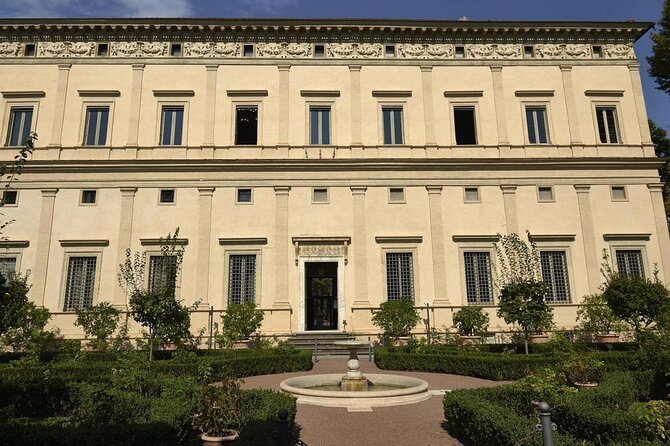
Rome has a lot of big-name museums. Villa Farnesina isn’t trying to compete with them. That’s exactly why I’d pick it. It’s a Renaissance residence and museum experience where the art sits in rooms with the kind of scale and setting that helps you understand why it was commissioned in the first place.
You’re looking at 16th-century Rome through a very specific lens: patronage (who paid), mythology (what the stories meant), and interior design (how those stories were placed for maximum impact). The result feels more human than the usual “stand and stare” approach, because you’re guided through how the decoration works as a whole.
You can also read our reviews of more guided tours in Rome



Skip-the-line entry and what “private” changes
This is a private tour, so you’re not getting squeezed into the flow of a larger group. That matters at busy Rome sites. Here, the “skip the long lines” promise is built into the experience, which is a real value in a city where every hour counts.
You’ll meet at Villa Farnesina, Via della Lungara, 230, 00165 Roma RM, Italy. The tour ends back at the same meeting point. In practice, that keeps things simple: you’re not hunting for a new rendezvous spot, and you can plan your post-tour coffee or gelato nearby without stress.
You’ll also get a mobile ticket. That usually means less fumbling at the entrance and fewer paper hassles. Near public transportation, the meeting area is workable even if you don’t want to start your day with a long walk.
Stop 1: Villa Farnesina and Raphael’s world inside the palace
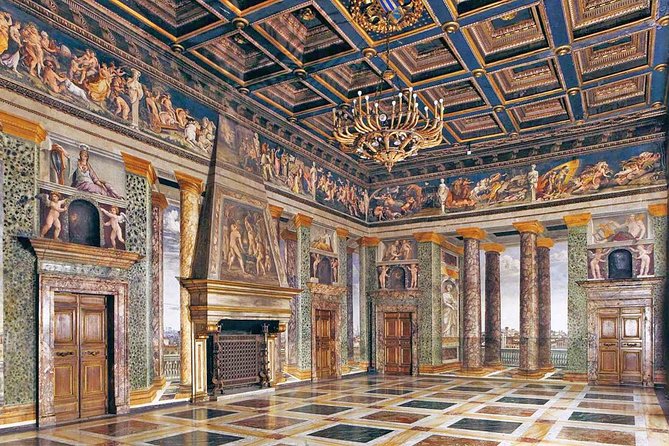
Villa Farnesina is one of the most precious examples of Italian Renaissance architecture and painting in Rome. What makes it special is that you’re not just viewing a collection—you’re moving through the kinds of rooms where frescoes and decorative cycles were designed to shape how you think and feel as you walk.
Your guide takes you through about 2 hours inside Villa Farnesina, with the overall stop running roughly 2.5 hours including viewing and explanations. Expect an organized route through the decorated spaces, with commentary on major artists and what each work is doing.
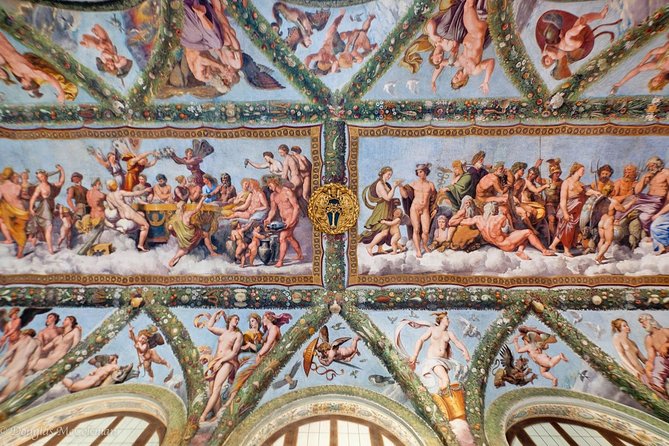
This is also where you’ll see Raphael-related masterpieces and themes associated with his workshop. The villa includes famous cycles such as the Stories of Cupid and Venus and the Triumph of Galatea. The key here isn’t only that these names are famous. It’s that you’ll be pointed to specific visual cues—how figures interact, what the scenes imply, and how the myths connect to the people who commissioned the artwork.
If you love Renaissance art but find it hard to “translate” what you’re seeing, this is where the guide earns their fee. For example, a guide like Sara (a native of Trastevere, in one case) leans into storytelling so the villa fits into the wider story of Rome. Another guide, Francesco, is described as an excellent art historian with an engaging personality who can switch gears to match the group. Either way, the point is the same: you’re learning while you look, not after.
The artists and fresco themes your guide will connect for you
Villa Farnesina is packed with major Renaissance names. You’ll see mythological and classical frescoes linked to artists such as Sebastiano del Piombo, Giulio Romano, Sodoma, and Peruzzi.
Here’s why that matters for your experience: Renaissance painting isn’t random decoration. It’s usually a carefully planned program, with scenes chosen to communicate status, education, taste, and sometimes political or philosophical ideas. When your guide points out how the scenes relate—how one myth’s symbolism echoes another—you start to see the whole interior scheme instead of a bunch of individual panels.
It also helps that this palace had serious financial backing. Villa Farnesina was associated with Agostino Chigi, the Pope’s banker, and later connected to the Farnese family. When you hear that kind of context while you’re standing in the rooms, it changes your reading of the art. You start to understand why mythological subjects were so popular for elite patrons. These weren’t just bedtime stories. They were a language for culture and power.
What the electronic tablet adds (and what you still do with your eyes)

The tour uses modern multimedia tools, including an electronic tablet, to enhance the viewing experience. I like this because it solves a common problem: frescoes and wall paintings can be hard to decode if you don’t know what to focus on.
With tablet-based aids, you’re more likely to notice details that support the story—gestures, facial expressions, how scenes are composed across a room, and the way decorative elements guide your movement. You still do the main work with your eyes, but the guide helps you aim your attention.
This is especially helpful for cycles like the ones tied to Raphael’s themes. If you’ve ever walked into a Renaissance room and thought, I can’t tell where to start, the tablet and guided pacing make it easier to get your bearings fast.
You can also read our reviews of more private tours in Rome






Stop 2: Trastevere in a short, guided time window

If you have time, you can extend the tour into Trastevere for about 30 minutes. Admission is listed as free for this extension, and the tone is more “Roman stories on the street” than “museum viewing.”
Your private guide takes you back in time with facts, anecdotes, and curiosities, using multimedia tools and an iPad to keep the walk lively. Because the extension is short, you shouldn’t expect a full neighborhood tour with major landmark stops. Think of it as a snapshot: enough to connect what you saw at the villa to the wider urban vibe around it.
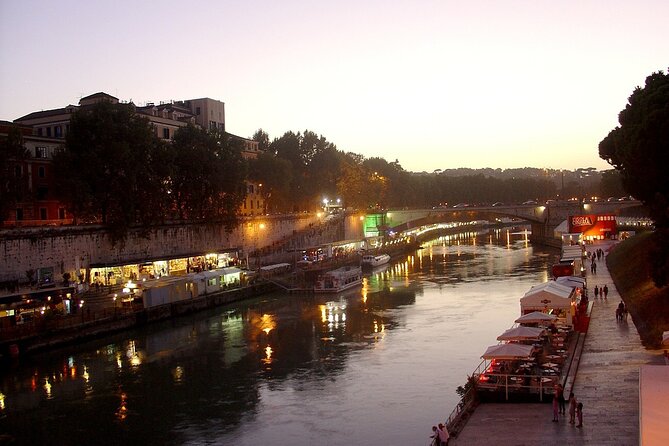
Trastevere is also a smart pairing with Villa Farnesina because the villa sits in that broader riverside/Trastevere-adjacent world. You leave the palace decoration and step back into living Rome, where you can feel the layers of the city rather than treating art as a sealed-off object.
Practical note: since you’re limited to about a half hour for the extension, if your goal is pure wandering, build in extra time on your own after the tour ends.
Price and value: is $288.05 worth it?
At $288.05 per person, this isn’t a budget activity. But it’s priced like what you’re getting: a private, skip-the-line art historian guide in a top-tier Renaissance setting.
Here’s where the value comes from:
- Skip-the-line access is guaranteed, which helps you protect time. In Rome, that’s often worth more than people expect.
- Admission is included for the main Villa Farnesina portion, saving the hassle of coordinating tickets separately.
- Private guidance is doing the heavy lifting. If you’re the type who likes art but needs context to make it click, this tour is built for you.
- The tour includes modern aids that help you understand what you’re seeing while you’re still in front of it.
If you were to do this on your own, you might save money, but you’d likely lose the “why this scene here” explanations and the quick orientation that makes Renaissance interiors easier to read.
If you love art enough to visit multiple sites in one day, this price can start to feel more reasonable, because it buys one focused, high-quality stop instead of spreading attention across places that may be less guided.
Who this tour fits best (and who might want more time)
This works best if you like Renaissance art and want a guide to translate it in real time. It’s also ideal if you’re trying to avoid the most chaotic Rome logistics and you’d rather spend your energy on paintings and symbolism.
It’s a strong choice for couples, small groups, and anyone who prefers a private pace. Since the experience is private and the guide can tailor how they explain, you get a better chance of asking questions on the spot.
If you’re the type who enjoys slow, unstructured museum time, you may want either a longer overall visit or a plan to return on your own later. The fixed timing means you’re choosing guidance over lingering.
Children must be accompanied by an adult, and the experience notes that most travelers can participate, with the site being near public transportation.
How to get the most from your 2.5-hour visit
To maximize your payoff, show up with a small mindset shift: don’t just look at famous names. Look for the story the room is telling.
A few practical ways to do that:
- Before you enter each room, listen for what the guide is about to connect. Then you’ll know what to look for as you stand there.
- When you see mythological scenes, ask yourself the basic question your guide is answering: what does this symbolize in that setting?
- Use the tablet aids as a compass. They’re there to help you focus, not replace your own looking.
- If Trastevere is offered and you’re curious, take the extension. Even 30 minutes gives you a nice aftertaste of the neighborhood.
Should you book this Villa Farnesina and Raphael tour?
Book it if you want a focused, high-impact Renaissance art experience in Rome with skip-the-line convenience and a guide who explains symbolism in plain language. You’ll get to see major Raphael-related themes like the Stories of Cupid and Venus and the Triumph of Galatea, plus work tied to other big Renaissance names.
Skip it (or plan differently) if you’re chasing a long, slow day of wandering with no structure. At this price point, you’ll feel the time limit if you’re not actively engaged.
If your ideal Rome day is art first, logistics second, and you like understanding what you’re seeing, this one fits your taste.
FAQ
How long is the Villa Farnesina private tour?
The duration is about 2 hours 30 minutes (approx.), with the main visit at Villa Farnesina lasting around 2 hours.
Is the entry line skipped?
Yes. The experience is designed to guarantee skipping the long entrance lines.
Is the tour private?
Yes. It’s a private tour/activity, meaning only your group participates.
What’s included in the price?
The tour includes a private professional art historian guide and skip-the-line entry. Admission is included for the Villa Farnesina portion.
Can I add Trastevere to the tour?
You can extend the tour to nearby Trastevere if there’s time, for about 30 minutes. Admission for this part is listed as free.
Where do we meet and where does the tour end?
You meet at Villa Farnesina, Via della Lungara, 230, 00165 Roma RM, Italy, and the tour ends back at the same meeting point.
Are children allowed?
Children must be accompanied by an adult.