REVIEW · ROME
Rome: Private Caravaggio Tour
Book on GetYourGuide →Operated by Through Eternity Tours · Bookable on GetYourGuide
Caravaggio followed Rome’s light and shadow. This private tour strings together his most famous works with the people, politics, and drama that made Baroque art hit so hard. You’ll move through landmark churches and an art stop, guided by an English-speaking expert art historian, with skip-the-line entrances so you spend more time looking and less time waiting.
I especially like how the guide ties paintings to place. At San Luigi dei Francesi (St. Louis of the French) and Santa Maria del Popolo, you’re not just seeing famous images like The Calling of St. Matthew or Narcissus—you’re learning what Caravaggio was doing with light, emotion, and shock. The one possible drawback is that this is real walking in the city center, and some monuments can be affected by Jubilee restoration, so you should plan for a bit of change.
In This Review
- Key things I’d plan around
- Starting near Via del Corso: the quick, clear meeting point
- Doria Pamphili Gallery: context before you hit the churches
- San Luigi dei Francesi: The Calling of St. Matthew in plain sight
- Basilica of St. Augustine (Sant’Agostino): where St. Peter gets weight
- Santa Maria del Popolo: a concentration of Caravaggio you’ll feel
- The Palace of the Propaganda of the Faith: politics in the background
- How the guide’s approach makes Caravaggio feel personal
- Price and logistics: what $117.82 buys you
- Timing that works: three hours, multiple big stops
- Comfort tips: shoes, water, and Jubilee restoration changes
- Who this Caravaggio tour suits best
- Should you book this Rome Caravaggio private car tour?
Key things I’d plan around
- Skip-the-line entry into the museums/churches so your time stays focused on art.
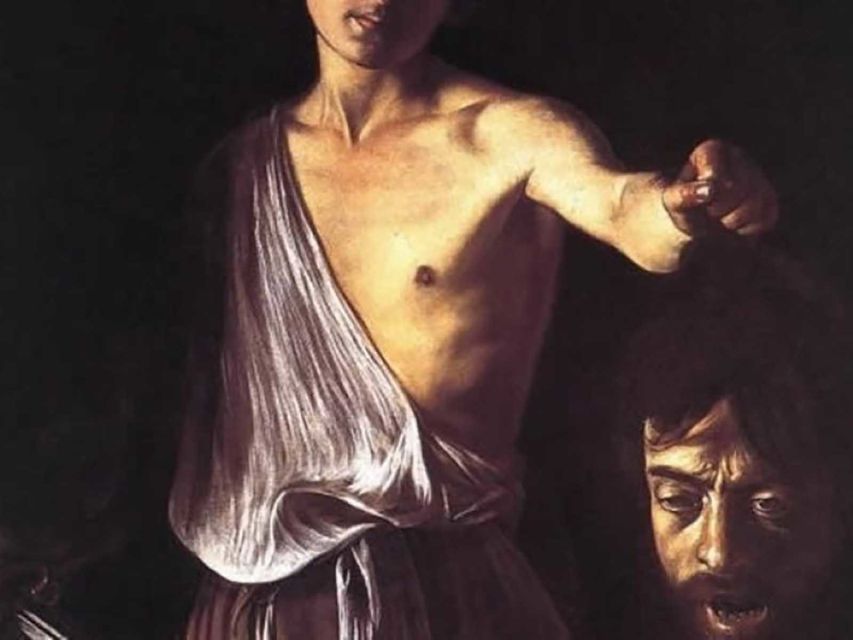
- Caravaggio’s major works in multiple churches, including St Matthew, Saul, St. Peter, Narcissus, and Judith.
- A private, English/Italian guide who connects the paintings to the life and myths around Caravaggio.
- A tight 3-hour arc that starts near Galleria Pamphilj and finishes near Piazza del Popolo.
- Comfort matters: bring sturdy shoes and water for indoor/outdoor transitions.
Starting near Via del Corso: the quick, clear meeting point
This tour starts in central Rome, right where it’s easy to orient yourself. Your guide meets you in front of Galleria Pamphilj, with a Through Eternity sign or flag, in the area around Via del Corso 305. That matters because Rome can be confusing fast—this setup helps you get going without hunting.
The tour is designed as a walk-and-look route. Because the total time is only about three hours, you’ll want to show up on time and be ready to move. If you’re coming by transit or on foot, I’d give yourself a little extra buffer so you don’t feel rushed right at the start.
You can also read our reviews of more private tours in Rome
Doria Pamphili Gallery: context before you hit the churches
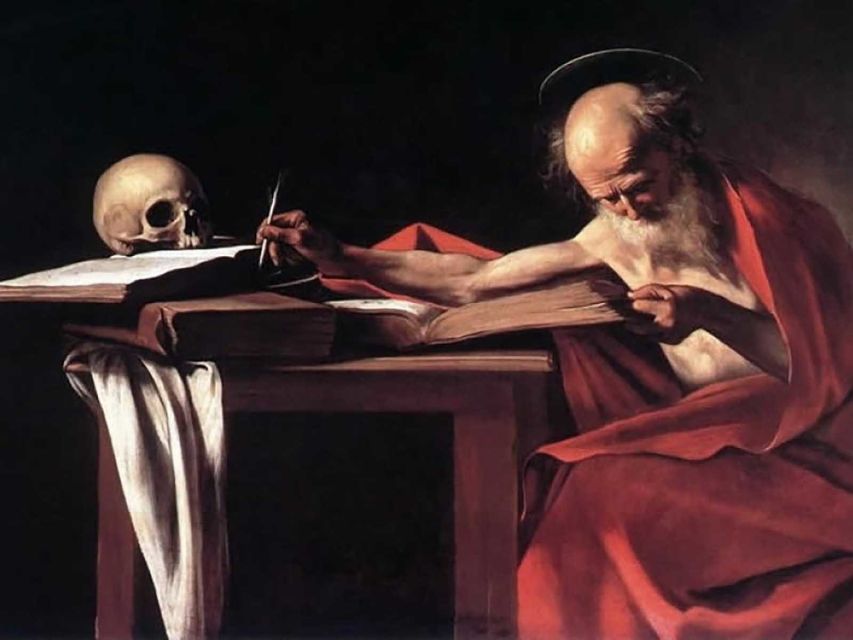
One of the smartest parts of this tour is the opening stop at the Doria Pamphili Gallery (about one hour). Even if your main goal is Caravaggio, the guide uses this time to set the stage for Baroque Rome—how patrons wanted art to feel, and why dramatic religious scenes mattered to people living in the same city.
Think of this as the warm-up. You’re not just learning dates and names; you’re learning how to read what you’re about to see. Baroque painting can look like it’s trying too hard if you only see it once. With an hour of guidance first, your eyes start spotting the tactics: where the figures pull you, how the gestures guide emotion, and how the light acts like a spotlight.
San Luigi dei Francesi: The Calling of St. Matthew in plain sight
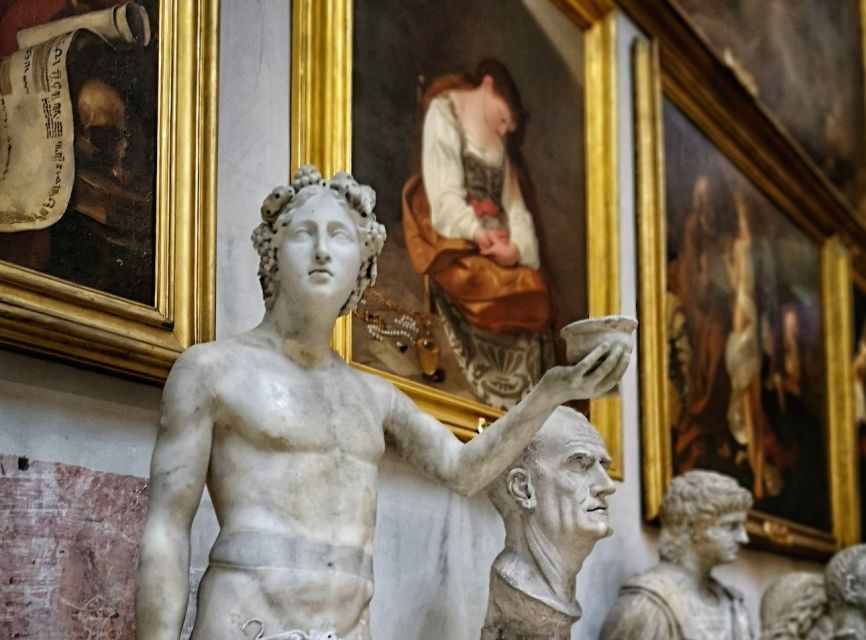
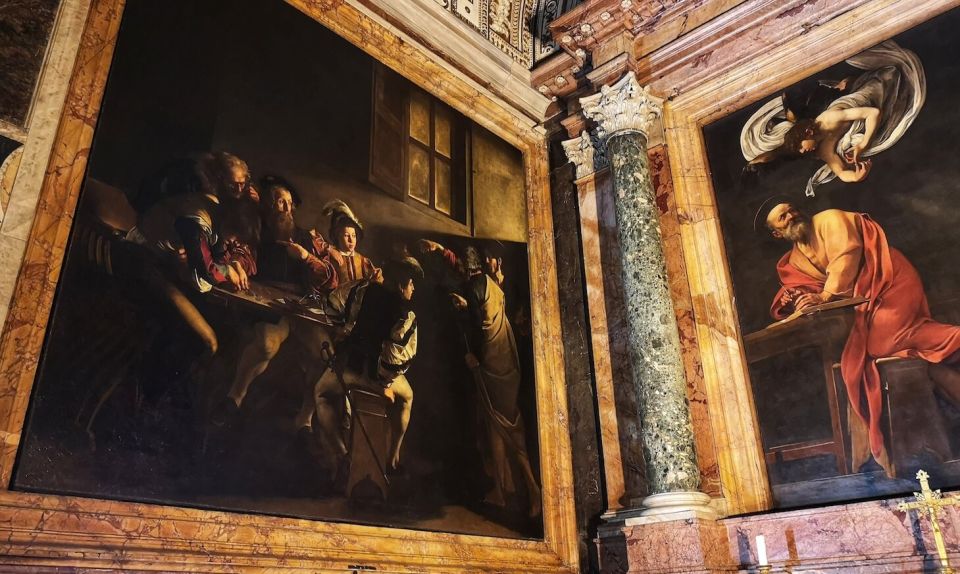
Your church stop for St. Louis of the French is San Luigi dei Francesi (about 40 minutes). This is where you get The Calling of St. Matthew, one of the scenes people cite for a reason. Caravaggio’s skill here is not just technical. It’s human. The moment feels immediate—like something interrupted in real time.
What I like about doing this in a guided setting is that the guide helps you notice details you might otherwise miss. You’ll pay attention to how the scene is staged, and how Caravaggio makes the action readable even though it’s painted in a fixed frame. The point isn’t to memorize everything. The point is to learn how the painting works, so the next churches start clicking.
Practical note: churches are usually quieter and dimmer than streets. That’s good for the art, but it also means you should take your time adjusting your eyes when you walk in.
Basilica of St. Augustine (Sant’Agostino): where St. Peter gets weight
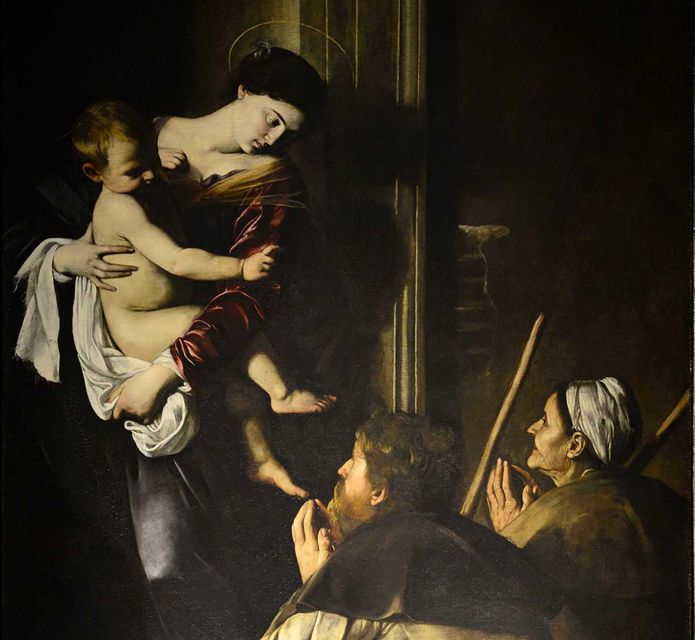
Next up is the Basilica of St. Augustine (around 40 minutes). This stop connects strongly to Caravaggio’s St. Peter theme, including The Crucifixion of St. Peter. You’ll see how Caravaggio treats suffering and authority in a way that feels less like distance and more like confrontation.
If you’ve ever wondered why Baroque religious art can feel so intense, this is one of the answers. The guide focuses on what the painting is communicating—fear, duty, recognition—and how those emotions are built from body language, composition, and contrast. You also get a sense of how the artwork’s location affects its impact. Caravaggio’s figures don’t feel like museum subjects here. They feel like part of a space built for devotion and argument.
Santa Maria del Popolo: a concentration of Caravaggio you’ll feel
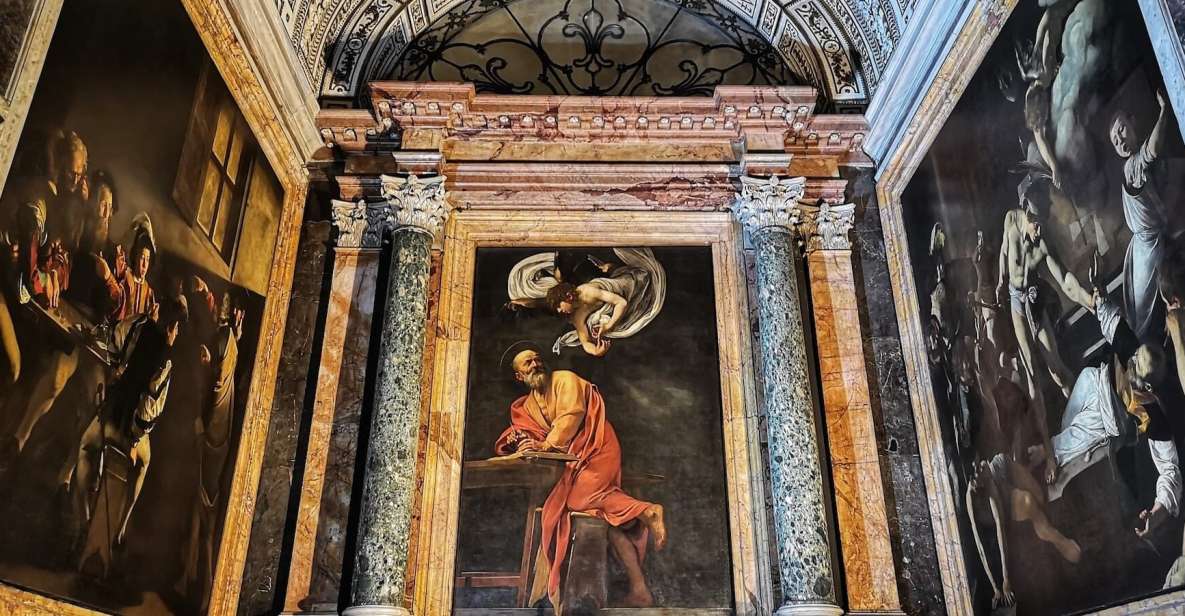
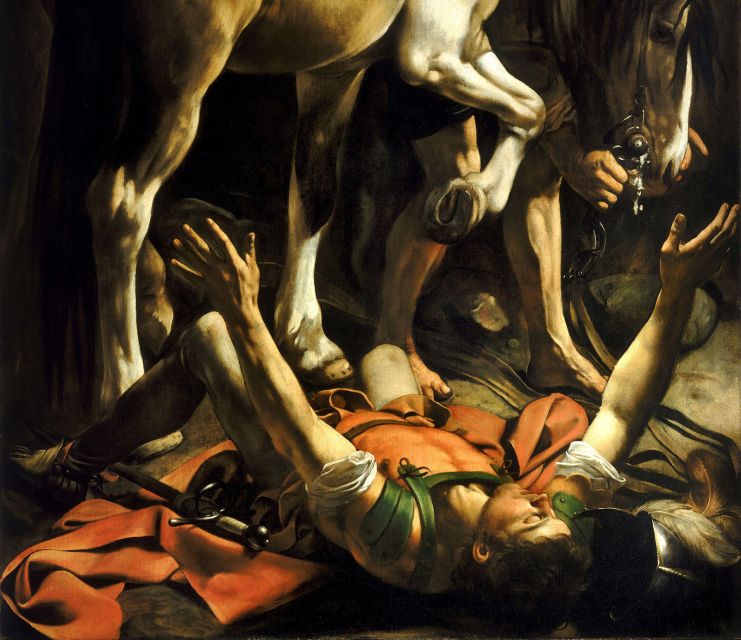
Santa Maria del Popolo is a key stop (about 40 minutes), and it’s where the tour really earns its name. This church is famous for bringing multiple Caravaggio works together, including The Conversion of Saul, Narcissus, and Judith Beheading Holofernes.
I like this stop because it changes your perspective on Caravaggio. After seeing one major religious scene, you can compare it to a mythological subject like Narcissus, then to a violent biblical drama like Judith. The guide helps you track what stays consistent: the realism, the dramatic lighting, and the emotional tension. At the same time, you’ll notice how the themes shift the mood.
Here’s the practical advantage: because you’re seeing several signature works in one place, you can contrast them while the tour is still fresh in your mind. That makes the guide’s explanations stick.






The Palace of the Propaganda of the Faith: politics in the background
The highlights also include the Palace of the Propaganda of the Faith. Even when you’re not inside a major room, I like knowing what surrounds the art. Baroque Rome wasn’t only about painters and patrons—it was also about institutions shaping belief, and the Palace of the Propaganda of the Faith is tied to that world.
On this kind of tour, the value is in the connections. You’ll hear how Caravaggio’s image and reputation lived in a city where religion, power, and public reputation mattered. The guide frames it so the paintings don’t feel like isolated masterpieces. They feel like messages sent through art.
How the guide’s approach makes Caravaggio feel personal
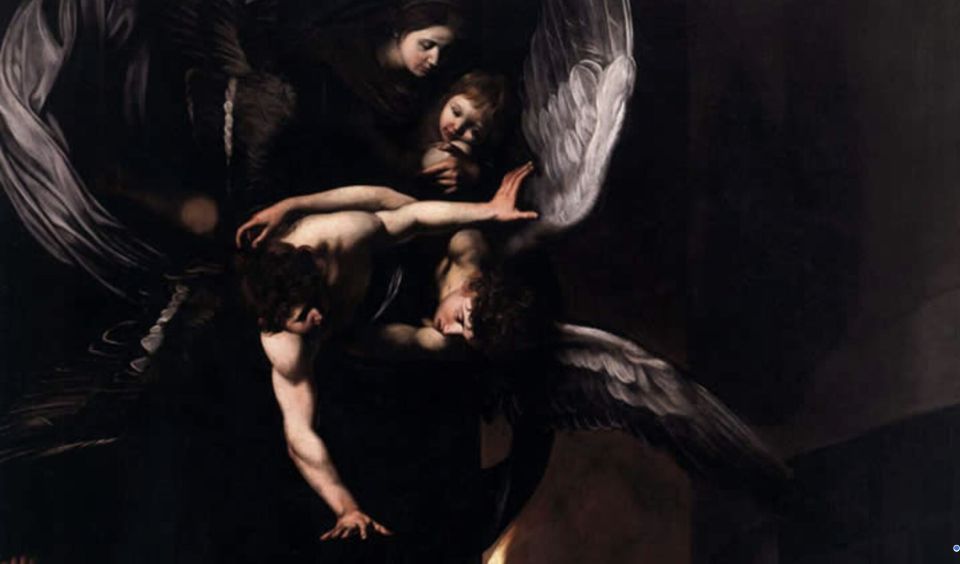
This tour is built around the story of Caravaggio as both artist and character—his brilliance paired with trouble, and how people in Rome kept repeating that mix in the popular imagination. Even if you’re not an art-history person, that narrative approach makes the stops easier to process.
You’ll retrace his steps through churches and the kind of city spaces tied to the gritty and glamorous parts of life. That theme isn’t there for shock value. It’s there to help you see why the artwork hits the way it does: Caravaggio painted people as they seemed, not as they wished to be.
The timing helps too. With a three-hour structure, the tour keeps momentum. You’re not stuck in one building for too long, but you’re also not rushing through everything without explanation.
Price and logistics: what $117.82 buys you
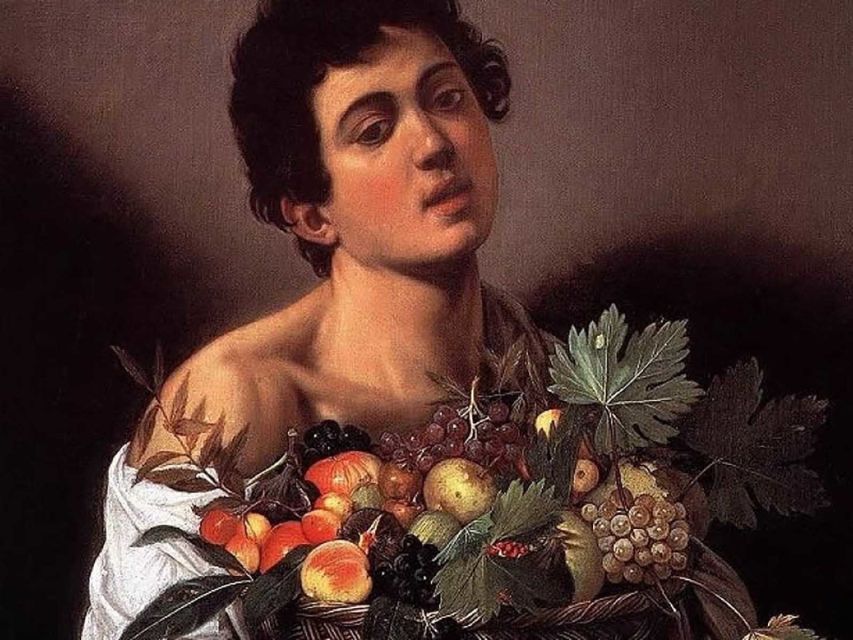
At $117.82 per person for about three hours, the value is mostly in three things: a private English-speaking guide, skip-the-line access, and a route that hits multiple major Caravaggio sites efficiently.
Here’s the honest math for your planning:
- Skip-the-line helps protect your time. In Rome, delays inside or outside churches can eat your day.
- Private guide time means you’re not competing with a loud group for attention. That matters when you’re learning how to look at Baroque art.
- The route is concentrated. If you tried to do this on your own, you’d spend more time figuring out what to see and how to connect it.
What’s not included is transportation to and from the meeting and end points, plus food and beverages. So you’ll want to build a simple plan for getting there and grabbing a bite after.
One more note: headsets are provided for groups of 6 or more. This is a private group, but if your booking is on the larger side, the headset system is an easy win for hearing the guide clearly.
Timing that works: three hours, multiple big stops
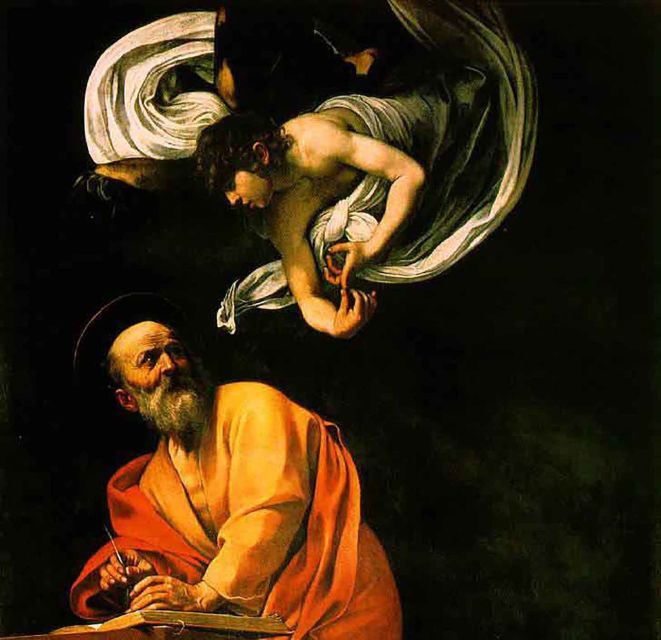
This is a compact tour. Expect around one hour at Doria Pamphili Gallery, then about 40 minutes each at St. Louis of the French, Basilica of St. Augustine, and Santa Maria del Popolo. The rest of the time is the walk between sites and guided context.
Because the duration is short, it works best if you’re not trying to pack extra museum visits the same day. I’d treat it as a centerpiece activity. After you finish near Piazza del Popolo, you’ll likely want a relaxed meal rather than immediately sprinting to another major church.
Also, starting times depend on availability. If you’re traveling during peak season, pick the slot that best matches your energy level for walking in the center of Rome.
Comfort tips: shoes, water, and Jubilee restoration changes
Bring comfortable shoes. The tour moves through city center streets and several church interiors. Also bring water, since you’ll be outside between stops.
One “Rome in 2026” reality check: due to the Jubilee, some monuments may be under restoration. That can mean minor route adjustments or changes, so keep an eye on any messages you receive before you go. If you’re photo-dependent, plan for the fact that scaffolding or closures can happen.
Who this Caravaggio tour suits best
This works especially well if:
- You want major Caravaggio paintings in a short, well-paced route.
- You like art more when someone explains what to look for, not just where the artworks are.
- You’re curious about Baroque Rome’s blend of religion, power, and public image.
- You prefer a private guide who can answer questions and keep you moving.
It may be less ideal if you dislike walking or you want lots of free time inside churches. This tour is focused. You’ll be guided to the key works and the key meaning, not wandering for long stretches on your own.
About mobility: the information includes notes about wheelchair accessibility, but also a note that it is not suitable for wheelchair users. Because that’s a mismatch, I’d contact the provider before booking to confirm what can be accommodated on the day of your tour.
Should you book this Rome Caravaggio private car tour?
If your goal is Caravaggio in the most efficient way—major works across multiple churches, guided context, and skip-the-line access—then I’d say yes. The price is reasonable for a private, art-focused route that doesn’t waste time.
I’d think twice only if walking in central Rome is a problem for you, or if you’re visiting during a period when restorations could disrupt your expectations and you’d rather build flexibility into your plans.
If you want a tour that turns famous paintings into something you can actually read and remember, this one is built for that.