REVIEW · ROME
Borghese Gallery Small-Group Tour with Canova’s Masterpieces
Book on Viator →Operated by Walks - Italy & Spain · Bookable on Viator
One staircase, and suddenly Rome turns into a gallery lecture. This small-group tour takes you into Villa Borghese for a calm, close-up look at major works like Pauline Bonaparte, John the Baptist, and The Rape of Proserpina, explained by an art historian guide. I love the intimate size (max 15) and the way pre-reserved entry keeps the rooms from getting crowded. The main thing to think about: the tour is tightly timed, so if a guide spends extra time on an early piece, you may not see every room you hoped to.
You start outside the museum at the double staircase, then move through the collection at a moderate walking pace. If you’ve got questions, this is the kind of tour where you can actually ask them, not just hear facts and rush out. And because the museum spaces entry in about 2-hour intervals, you’re less likely to feel like you’re being herded through.
In This Review
- Key Points at a Glance
- Villa Borghese Double Staircase: Where the Tour Starts to Feel Special
- Skip the Line, Not the Experience: How the Entry System Shapes Your Visit
- What Makes This Tour a Smart Value at $65.33 for 90 Minutes
- Villa Borghese Itself: The 1600s House of Cardinal Scipione Borghese
- The Collection’s Core Stories: How Your Guide Keeps It Coherent
- Canova’s Pauline Bonaparte: Beauty as Power, Not Just Pose
- Caravaggio’s Drama in the Middle Rooms: Light, Shock, and Belief
- Bernini at Full Volume: The Rape of Proserpina and Beyond
- Raphael’s Presence: Painting Slows You Down
- When Floors Are Closed: How Your Route May Change
- Timing and Pace: The Tour’s Strength and the Trade-Off
- Dress, Bags, and Room Rules: What to Expect Inside
- Who This Tour Fits Best (and Who Might Want a Different Style)
- Guides You Might Get: Art History That Feels Like a Story
- Should You Book This Borghese Gallery Small-Group Tour?
- FAQ
- What’s the duration of the Borghese Gallery small-group tour?
- What language is the tour offered in?
- Where do I meet, and where does the tour end?
- How big is the group?
- Are admission tickets included?
- Do I get a headset?
- Is hotel pick-up or drop-off included?
- Is the tour wheelchair accessible?
- Can I cancel for a full refund?
Key Points at a Glance
- Pre-reserved entry for a calmer museum visit with entry spaced by the museum in 2-hour windows
- An art historian guide who connects sculpture and painting to the people and ideas behind them
- Close viewing of major masters including Bernini, Caravaggio, Raphael, and Canova
- Small groups (max 15) so you can ask questions and hear the explanations
- Headsets included when groups are over 6, which helps in crowded rooms
Villa Borghese Double Staircase: Where the Tour Starts to Feel Special
The meeting point is the Galleria Borghese at Piazzale Scipione Borghese, 5, right by the museum’s double staircase. Even before you enter, the location signals what you’re walking into: this is not a huge, chaotic museum hall. It’s a grand 1600s setting built for a high-status collection, and the architecture sets the tone for the art.
Once inside, you’ll notice the atmosphere right away. The museum limits the number of visitors, and your pre-reserved time slot helps you avoid the worst of the queue energy. The result is that you can actually stand in front of works long enough to see details that you’d miss at a “look-then-go” pace.
You can also read our reviews of more museum experiences in Rome



Skip the Line, Not the Experience: How the Entry System Shapes Your Visit
This tour leans on a simple advantage: pre-reserved tickets plus the museum’s entry management. The collection is arranged so that groups move in waves, typically tied to 2-hour entry intervals, and that keeps the space from feeling packed.
Why that matters: at the Galleria Borghese, you’re not just looking at famous names. You’re seeing art that rewards time—especially with sculpture, where the angles and expressions change how you read the story. A calm pace makes it easier to follow what your guide is pointing out.
You also get a headset when the group is larger than 6, which is handy in rooms where sound bounces. It won’t turn it into a private lecture, but it helps you stay with the guide without craning.
What Makes This Tour a Smart Value at $65.33 for 90 Minutes
$65.33 for about 1 hour 30 minutes is not a “cheap and cheerful” add-on, but it’s also not overpriced for what you get. Your ticket is included, and the big portion of the value is the guide—an art historian who explains context, symbolism, and the building’s backstory.
If you’re visiting Rome with limited time, this is also a practical kind of value. The Galleria Borghese requires timed entry, so a guided small-group tour can remove guesswork. You’re not trying to line up tickets, negotiate check-in stress, or spend time figuring out where to stand for the best views.
The sweet spot for price/value is simple: you’ll feel the benefit if you care about how art works, not just that it’s famous. If you only want a quick glance at highlights, you might find the time feels strict.
Villa Borghese Itself: The 1600s House of Cardinal Scipione Borghese
The museum isn’t just a container for art. It’s a carefully staged environment tied to Cardinal Scipione Borghese and his 1600s collecting. Your guide will connect the collection to the ambitions, tastes, and personality of the man who built this world around art.
In plain terms, you’re stepping into a period setting where the art wasn’t chosen randomly. Many works were commissioned for this kind of space, and the collection’s design encourages you to read the sculptures like scenes. That’s why the tour’s explanations land—your guide helps you understand what the art was designed to do in this setting.
The Collection’s Core Stories: How Your Guide Keeps It Coherent
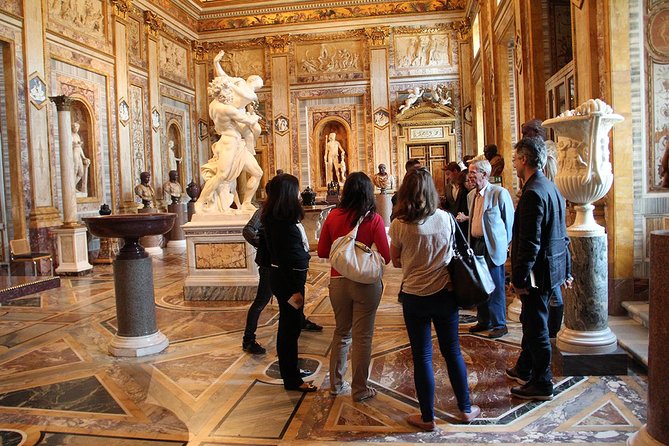
A good tour here isn’t just “artist facts.” It’s about narrative. You’ll move through paintings and sculptures in a sequence that helps you connect themes: myth and power, religious drama, and the theatrical intensity of Baroque art.
Your guide’s job is to interpret what you’re seeing. That can mean stories about the subject matter, but it also means practical reading tips: how to notice gesture, how light and shadow changes mood in painting, and what you might miss if you only focus on the most famous faces.
And because groups are capped at 15, you’re more likely to hear the guide’s explanation clearly and catch the small “why it matters” details. The headset support, plus room control from the museum, makes a real difference in how much you absorb.




Canova’s Pauline Bonaparte: Beauty as Power, Not Just Pose
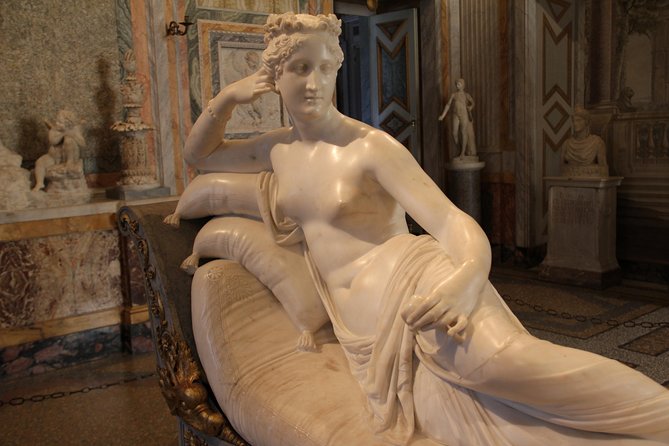
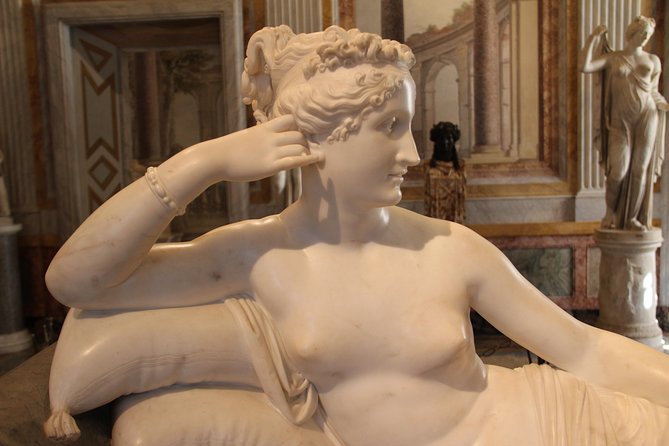
One of the highlights you’ll likely spend time on is Antonio Canova’s Pauline Bonaparte. This is the kind of sculpture where the surface finish almost fools you. The subject is recognizable, but what makes it interesting is how Canova turns image into statement.
Your guide should help you read the posture and expression as more than aesthetics. You’ll get context for why this work fits the Cardinal’s world of status and display, and how it connects art to politics and identity.
If you’re new to sculpture, this is a strong starting point because it gives you an entry into the collection’s style. It also makes an easy comparison point: later on, you’ll see how Bernini’s drama plays differently than Canova’s controlled elegance.
Caravaggio’s Drama in the Middle Rooms: Light, Shock, and Belief
Caravaggio shows up through works like John the Baptist (and also pieces associated with scenes like David and Goliath). Caravaggio’s art is often about contrast—what’s illuminated versus what’s left in shadow, and what that does to emotion.
With your guide’s help, you’ll learn to look at Caravaggio’s choices as storytelling tools. It’s not only about the subject. It’s about the moment the painting captures and how the composition pulls you into the scene.
This tour tends to work well if you like when art history meets narrative. Caravaggio’s religious scenes can feel intense, and the guide’s explanations help connect that intensity to the era’s worldview, not just to modern taste.
Bernini at Full Volume: The Rape of Proserpina and Beyond
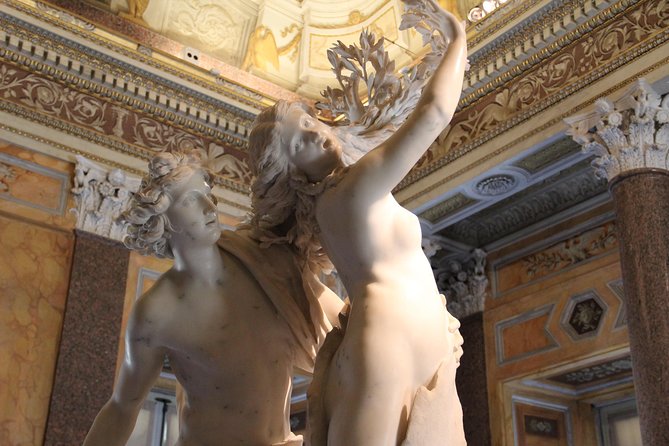
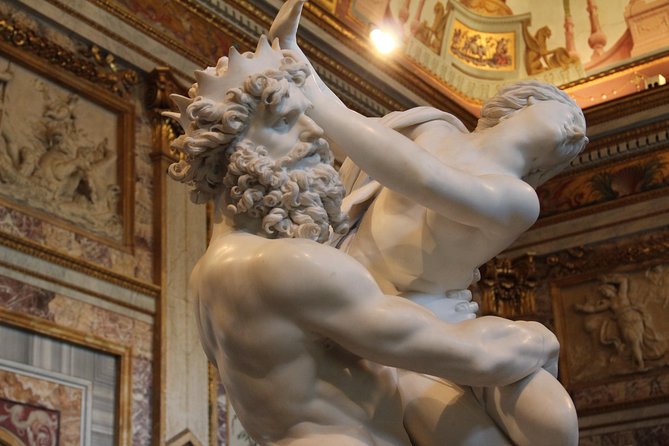
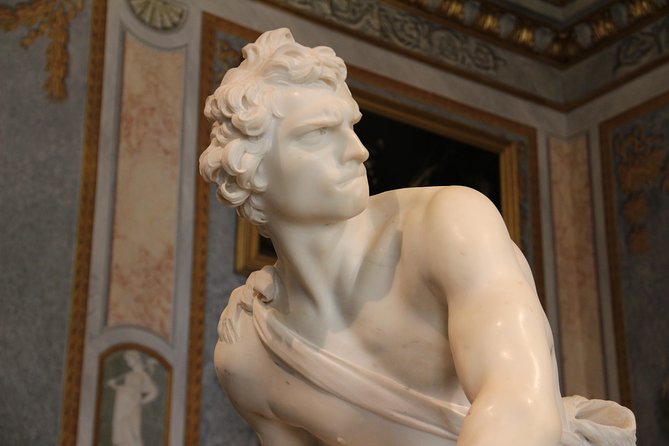
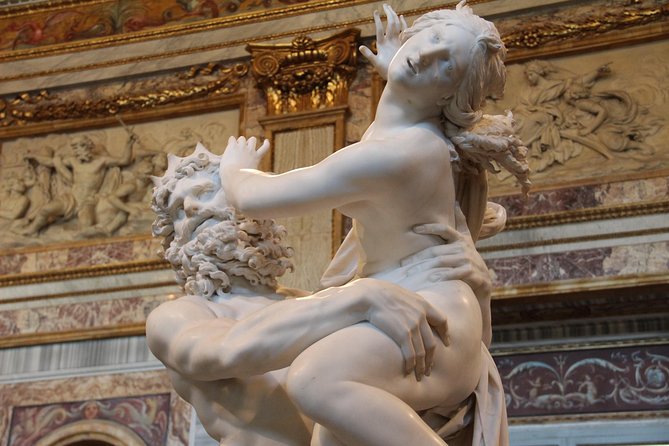
If you came for one name, it’s probably Bernini. Here you’ll see major Bernini works such as Apollo and Daphne, The Rape of Proserpina, and David.
Bernini is theatrical. Your guide should point out how motion is carved into stone—how the body looks caught mid-act, how expressions read as drama, and how myth becomes physical presence in front of you.
This is also where small-group attention pays off. When you can ask a question—about symbolism, about technique, about what to notice—you get a more personal understanding of the sculpture. Multiple guides in this tour style are praised for making Bernini’s stories feel alive, not academic.
One practical thought: if your guide is spending extra time early, Bernini scenes may become the moment you’re still glad you stayed for. Bernini is the part most people remember on the walk back out.
Raphael’s Presence: Painting Slows You Down
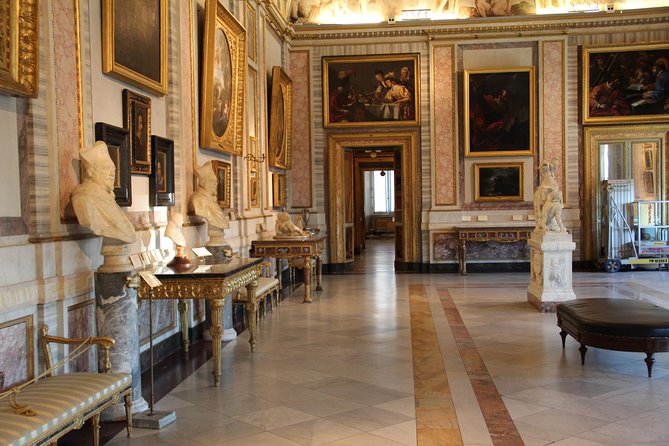
Raphael’s works (like The Deposition) add a different rhythm. Sculpture is all around you; painting asks you to slow down and focus. Your guide will help you connect Raphael’s approach to the collection’s larger mood—how different schools and artists show different ways of reaching emotion and meaning.
This “slow down” effect is good, as long as the schedule still gives you time for everything you came to see. If a part of your day feels rushed, Raphael can be the section you skip mentally—even though it’s the one that lets you actually see how the artists designed narrative through composition.
When Floors Are Closed: How Your Route May Change
On some dates, parts of the gallery may be unavailable. That can mean sections you planned to see won’t be on the day’s route, such as closure of the second or third floor. When that happens, the tour still focuses on the works that are accessible.
Here’s how I’d plan for it: treat the tour as a guided way to see the most important works that are open, not a guarantee of every room. If seeing a specific floor is critical for your trip, you might want to double-check the museum’s status right before your visit.
Timing and Pace: The Tour’s Strength and the Trade-Off
This is a short, structured tour. About 90 minutes sounds generous until you’re inside rooms where it’s easy to linger—especially if your guide is connecting stories to what you’re seeing.
The best-case scenario is that you move through the major works with enough time at each to notice details. The possible downside is that if a guide spends extra time on the first sculpture or early room, the later areas can feel compressed. That’s not a deal-breaker, but it’s worth knowing.
If you’re the type who wants to stand quietly and look for yourself, go with a mindset of “guided overview first, self-exploration later.” This tour covers the why; then you can return on your own time for the where you linger.
Dress, Bags, and Room Rules: What to Expect Inside
Plan for practical museum rules. One common friction point is bags and restrictions on what you can bring into rooms. Some visitors report needing to check bags before entry, and that the museum can be strict about even small items like water bottles.
So pack light. If you’re carrying a day bag, be ready to handle it at the entrance. Also, wear shoes you’re comfortable walking in, because this is a walking tour at a moderate pace.
Who This Tour Fits Best (and Who Might Want a Different Style)
This works best if you’re excited by explanation—symbolism, mythology, and art-making choices—rather than just checking off famous names. The tour is also a great match if you want a calm museum visit without a big group.
You might also like it if you enjoy asking questions. With headset support and a max group of 15, you’re not stuck listening to a one-way talk for the whole time.
If you’re someone who hates guided time limits or you only want a quick photo stop, you may feel squeezed. In that case, consider mixing this tour with a separate self-guided visit so you can control the pace.
Guides You Might Get: Art History That Feels Like a Story
This tour’s quality comes down to the guide. In the world of art tours, the strongest guides are the ones who explain choices clearly and add stories that make the works easier to remember.
You’ll see names like Marta, Emily, Francesco, Siri, Angela, and Laura stand out for clear explanations, engaging delivery, and strong focus on themes like Bernini’s symbolism and Caravaggio’s intensity. One guide style that gets praise: asking the group’s opinions and treating answers as part of the lesson, not a test.
That kind of engagement matters in a museum like this. It turns the art into something you can understand, not just admire.
Should You Book This Borghese Gallery Small-Group Tour?
Book it if you want the best shot at understanding the Borghese collection in a short time—especially if Bernini, Caravaggio, Canova, and Raphael matter to you. The included ticket, the small-group cap, and the quiet effect of timed entry combine into real value.
Skip or rethink it if your top priority is wandering slowly without guidance. Also consider waiting for a self-guided option if you’re very sensitive to strict time limits inside museums, since this tour is designed to cover highlights within about 90 minutes.
If you do book, bring two mindsets: first, let the guide give you the story; then, if your schedule allows, plan a little extra time on your own to revisit the works that hooked you most.
FAQ
What’s the duration of the Borghese Gallery small-group tour?
It runs about 1 hour 30 minutes.
What language is the tour offered in?
The tour is offered in English.
Where do I meet, and where does the tour end?
Meet at Galleria Borghese, Piazzale Scipione Borghese, 5, 00197 Roma RM, Italy, and the tour ends back at the same meeting point.
How big is the group?
The maximum group size is 15 travelers.
Are admission tickets included?
Yes. The all-inclusive ticket for Galleria Borghese is included.
Do I get a headset?
Headsets are included for groups over 6.
Is hotel pick-up or drop-off included?
No, hotel pick-up/drop-off isn’t included.
Is the tour wheelchair accessible?
The experience can accommodate guests with mobility impairment or a wheelchair, but you need to email the Guest Experience team at booking for proper arrangements.
Can I cancel for a full refund?
Yes. You can cancel up to 24 hours in advance for a full refund. If you cancel less than 24 hours before the start time, the amount paid isn’t refunded.