REVIEW · ROME
Rome: Hadrian’s Villa and Villa d’Este Half-Day Tour
Book on GetYourGuide →Operated by Green Line Tours · Bookable on GetYourGuide
One trip, two worlds. I love the contrast between Hadrian’s Villa ruins and Villa d’Este’s famous fountains, both set just outside Rome in Tivoli. The tour’s biggest win is how much you pack into one half day without needing a car. The main drawback is time: you’ll only get about an hour in each villa area, so you may feel slightly rushed if you want to linger.
What I especially like is that the guide connects the dots between eras, from Roman water-engineering to Renaissance garden design. You also get roadside context as the bus travels toward Bagni di Tivoli, including glimpses of the travertine marble quarries that helped shape the look of many buildings across Italy. My one caution: this isn’t ideal if you have limited mobility, since the tour is listed as not suitable for people with mobility impairments (with a specific note about wheelchair access requiring a companion to assist).
If you want a straightforward way to see two standout villas from Rome, this tour makes it easy. It’s also a good choice if you’re here on a tight schedule and prefer a guided route over trying to stitch together transport and tickets on your own.
In This Review
- Key highlights to look forward to
- How this Tivoli half-day tour feels in real time
- Timing from Rome: morning vs afternoon departures
- Meeting point and getting comfortable on the bus
- Hadrian’s Villa Adriana: ruins that feel bigger than Rome
- En route to Tivoli: countryside views and travertine marble
- Villa d’Este gardens: fountains, grottoes, terraces, and water engineering
- The guide factor: why local expertise changes what you see
- Price and value: what $113.29 covers
- Practical advice: how to get the best out of limited time
- Who should book this tour (and who should skip it)
- Should you book Hadrian’s Villa and Villa d’Este Half-Day Tour?
- FAQ
- How long is the Rome: Hadrian’s Villa and Villa d’Este Half-Day Tour?
- When does the tour depart from Rome?
- Where do I meet the tour?
- What’s included in the price?
- Are food and drinks included?
- What languages are the guided tours offered in?
- Is the tour wheelchair accessible?
Key highlights to look forward to
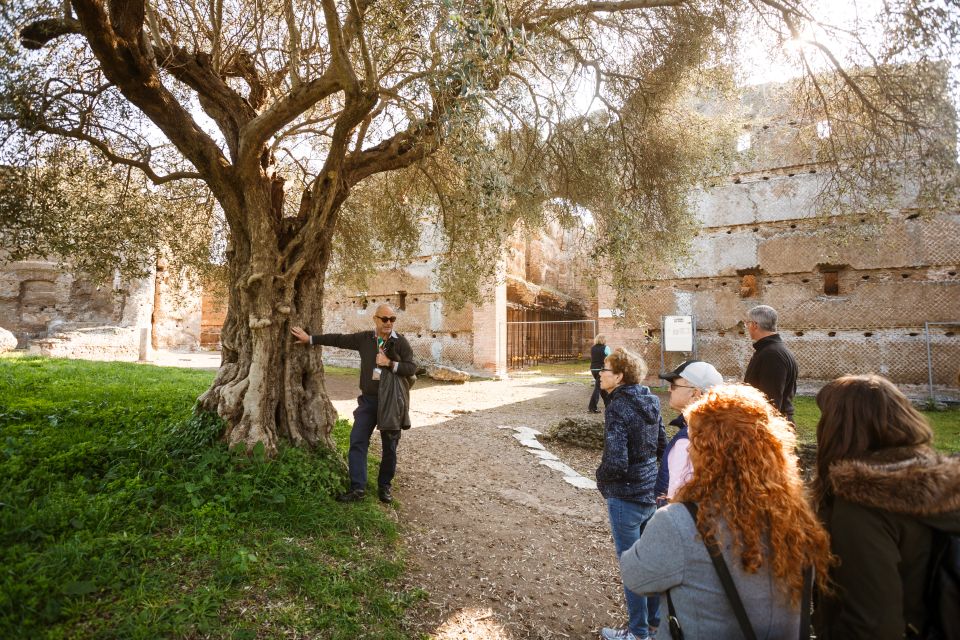
- Two villas, one half day: Hadrian’s Villa ruins plus Villa d’Este gardens, both with timed visits.
- Roman architecture details: caryatids, columns, and the Canopus and Serapeum areas at Hadrian’s Villa.
- Serapis-themed grotto: an artificial grotto named for Serapis, which helps you understand the villa’s myth-and-water vibe.
- Renaissance fountain spectacle: grottoes, frescoes, mosaics, and fountains across terraces designed for drama and shade.
- Travertine context: along the way, you’ll see where the region’s travertine marble comes from.
- Small boosts from the guide: a live guide (English/French/Spanish) adds clarity fast, including names and what to look for.
How this Tivoli half-day tour feels in real time
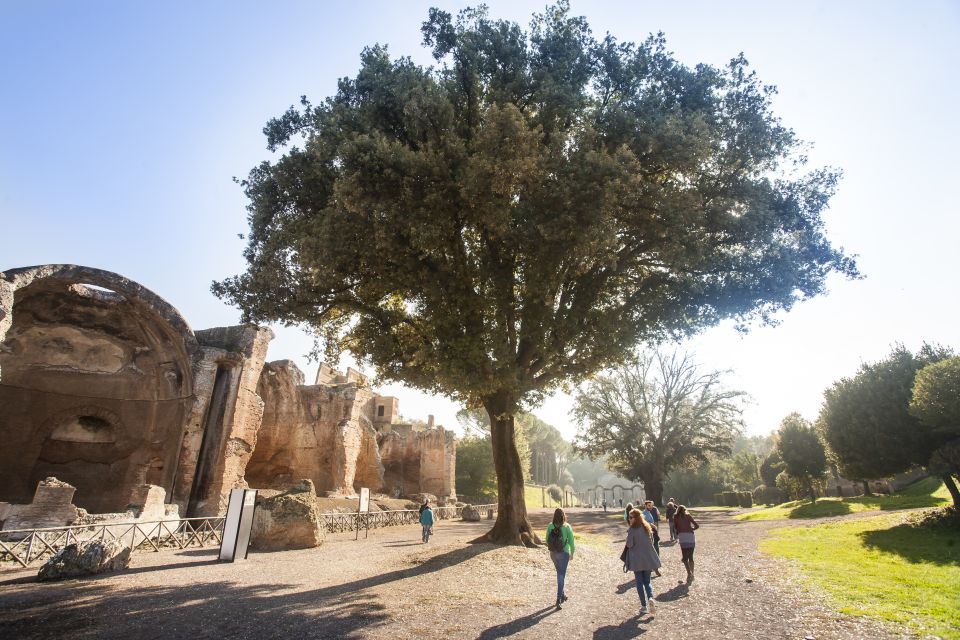
This is a coach tour from Rome to historic Tivoli in the Roman Campagna. The schedule is built around two major stops: Hadrian’s Villa (Villa Adriana) and Villa d’Este. You’ll move by bus between the sites, then spend most of your time on foot with a local guide pointing out what matters.
Because it’s only about 4 hours, the pace stays brisk. That can be exactly right if you like seeing a lot and then planning a longer second visit another day. If you’re the type who wants to slowly read every inscription and soak up every terrace, you’ll likely feel the clock.
You’ll also want to mentally switch modes between the two villas. Hadrian’s Villa is about ruins, scale, and water systems hidden in plain sight. Villa d’Este is about showmanship—fountains, grottoes, and terraces that turn a walk into a sequence of moments.
You can also read our reviews of more tours and experiences in Rome


Timing from Rome: morning vs afternoon departures
The departure time depends on the season. From April to September, the tour starts at 2:15 PM. From October to March, it starts at 7:45 AM. Either way, it’s designed so you’re back at the meeting point in Rome at the end of the tour.
This timing choice matters more than it sounds. If you go in the morning, you’ll often get cooler walking conditions and lighter crowds. If you go in the afternoon, you may enjoy nicer late-day light for the gardens—just be ready for the fact that your time inside each villa is still limited.
A practical tip: plan your day around the tour start, not around what you think you can “squeeze in” beforehand. The half-day format can feel short until you’re counting your minutes between entrances and viewpoints.
Meeting point and getting comfortable on the bus
You meet at 32, Via Giovanni Amendola (GLT Terminal), Rome. The tour ends back at the same meeting point, so you don’t have to figure out a second transport plan.
The route uses transportation included in the price. That’s a big value point for this specific area of Lazio. Tivoli is close enough to make day trips easy, but the villas themselves are spread out, and walking plus transit adds friction when you’re doing it alone.
Comfort matters. You’ll likely want sturdy shoes because you’ll be walking around villa grounds and ruin paths. If you’re sensitive to uneven ground, keep an eye on your footing near older stone surfaces.
If you’re using a wheelchair, the tour is described as wheelchair accessible with a companion who can assist you on and off the bus; wheelchairs are stored in the luggage area. At the same time, it’s also listed as not suitable for people with mobility impairments, so it’s worth matching your needs to the exact support available before booking.
Hadrian’s Villa Adriana: ruins that feel bigger than Rome
Hadrian’s Villa sits on the hills of the Tiburtini area, in the Roman Campagna. This is the kind of site where scale hits you fast. Even though you won’t have unlimited time, the ruins are spread out enough that you get a sense of how much planning went into the layout.
The tour’s Hadrian stop includes entry and guided exploration of key areas. I like that the route doesn’t treat the villa as one vague ruin field. Instead, you’re guided toward standout features such as the Canopus and Serapeum, including caryatids and columns. These details help you picture the villa as a functional “palace landscape,” not just leftover walls.
You’ll also get a close look at the artificial grotto connected to Serapis. That matters because Hadrian’s villa wasn’t only about Roman power; it also borrowed symbols and moods from beyond Rome. When you see the grotto explained in context, the weirdness feels purposeful.
One more feature worth knowing: the setting includes natural springs that fed the spa town of Bagni di Tivoli. That link between water, wellness, and engineering makes it easier to understand why the villa is so tied to waterways and fountains, even in ruins.
En route to Tivoli: countryside views and travertine marble
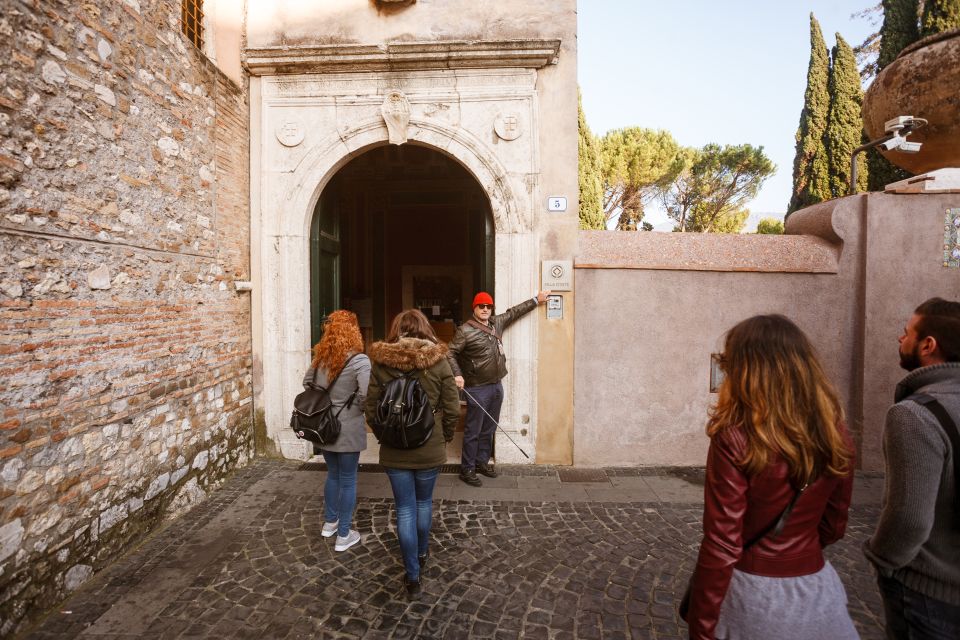
The bus ride is part of the experience here. You’ll travel toward Bagni di Tivoli along the ancient Roman road called the Via Tiburtina, and the tour includes “en route” sights along the way.
I like this because it gives you a sense of place. You’re not just teleporting between ticketed entrances—you’re learning where the landscape and materials come from. The tour specifically mentions looking out for the vast travertine marble quarries, and that’s a nice reminder that Italy’s famous building stone isn’t magic. It was extracted here, transported, and turned into architecture.
If you want photos, this is where you’ll probably get your quickest “wide view” shots before you’re back into garden paths and ruin walkways. Don’t expect long stops for photo breaks, though. The half-day schedule keeps moving.






Villa d’Este gardens: fountains, grottoes, terraces, and water engineering
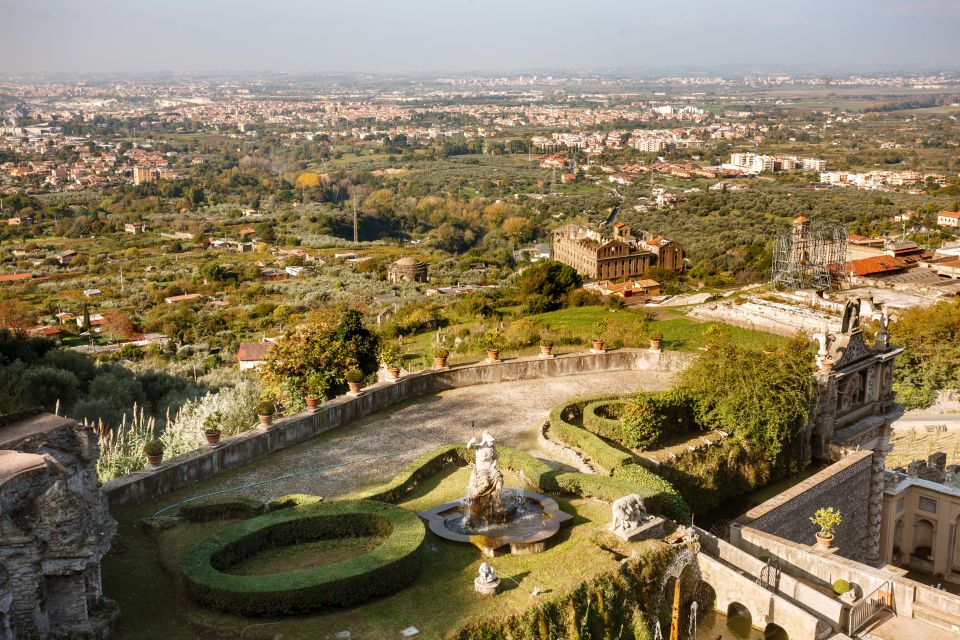
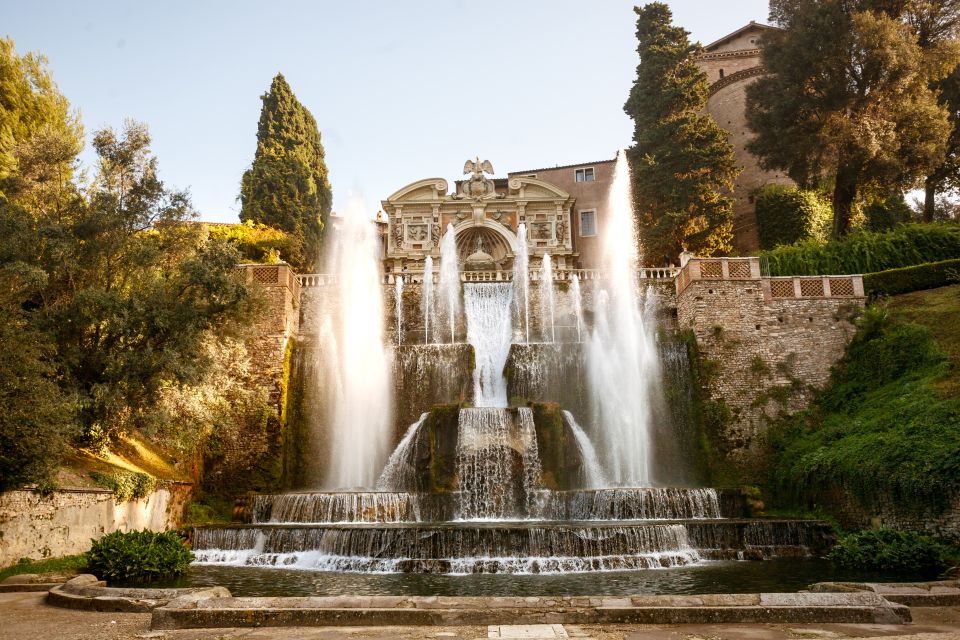
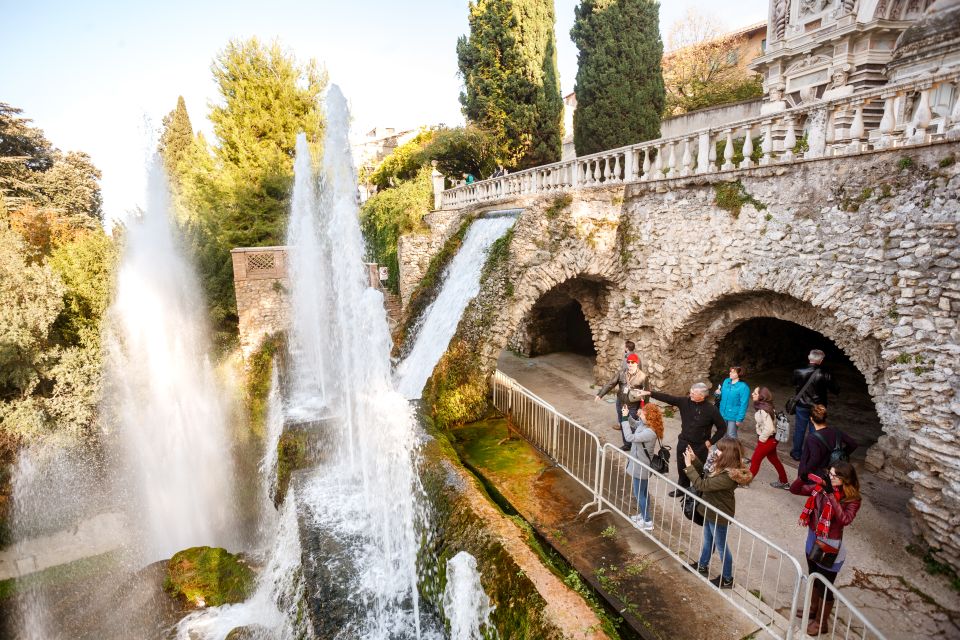
Then comes Villa d’Este, and this is often the moment people start smiling more. The gardens are known for their fountain collection, and you’ll have time to wander among grottoes and water features with a guide.
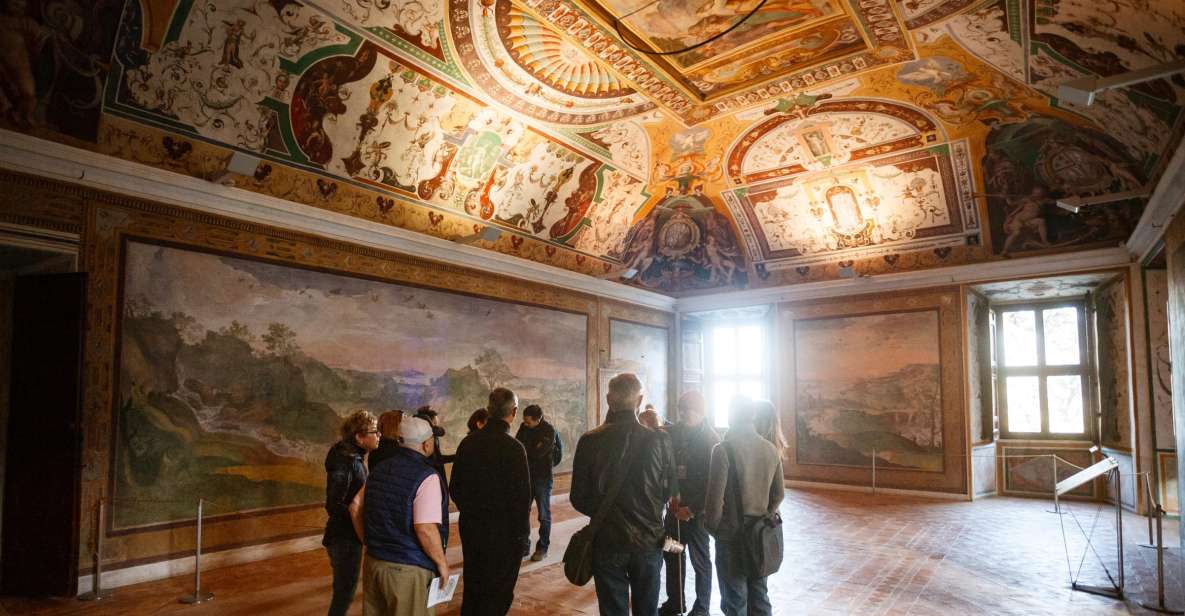
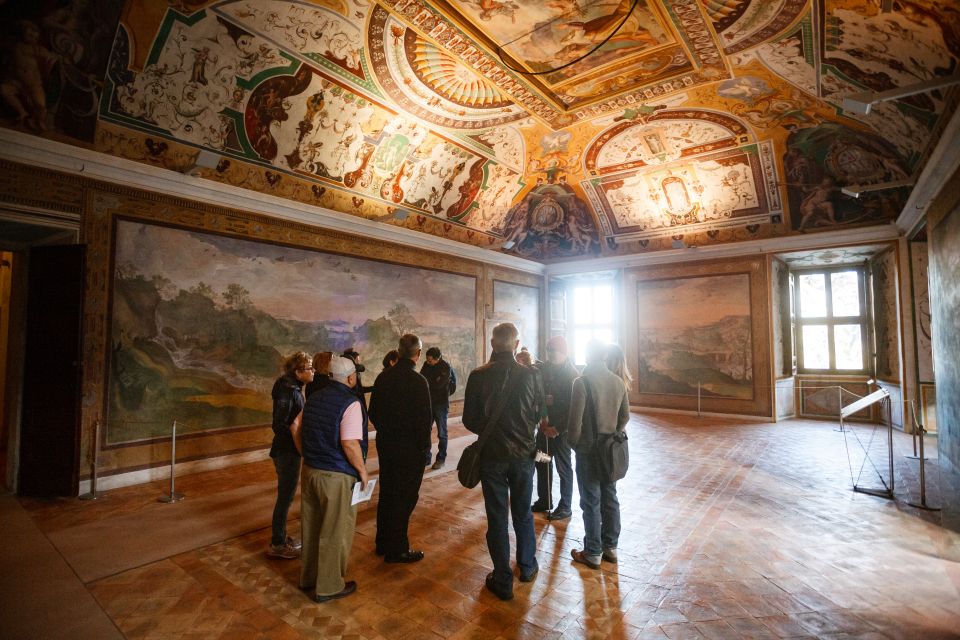
What you’ll see at Villa d’Este includes grottoes, frescoes, and mosaics, plus fountains that create a kind of choreography of sound and movement. You also get terraces designed to evoke the Hanging Gardens of Babylon, which is a fun idea to keep in mind as you climb and descend.
I also appreciate the way water is explained as design, not just decoration. The tour mentions an underground aqueduct, and that’s exactly the kind of Roman engineering that makes the gardens feel believable. Without the water system, those fountains would just be stubborn imagination.
The practical trade-off is time. You’ll likely get around an hour at Villa d’Este. That’s enough to hit the highlights, but not enough to treat it like a slow afternoon stroll. If Villa d’Este is your top priority, keep your energy for the garden walk and don’t spend too long at every stop.
The guide factor: why local expertise changes what you see

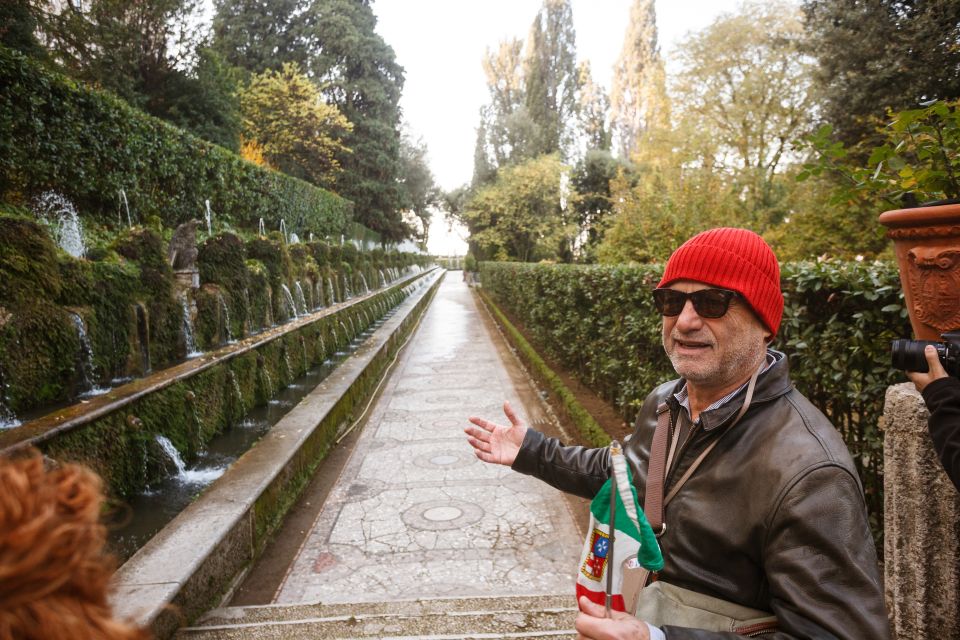
This tour includes a live local guide with language options of English, French, or Spanish. Guides do two essential things well on short tours: they point you to the right places fast and they tell you what to look for so the time feels earned.
One guide name that stands out from the tour’s feedback is Antonio, who provided rich information in English and Spanish. Even if your guide isn’t Antonio, you can expect the same role: translate what you’re seeing into a story.
The value here isn’t just facts. It’s wayfinding. At Hadrian’s Villa especially, it’s easy to wander and miss the parts that make the site click. A guide helps you understand why the Canopus and Serapeum areas matter, why the Serapis-themed grotto isn’t random, and how water shaped the villa’s identity.
At Villa d’Este, the guide helps you read the gardens as a sequence. You’ll notice how terraces, shade, sunlight, and sound all work together, which is harder to spot when you’re just moving from fountain to fountain.
Price and value: what $113.29 covers
At $113.29 per person, you’re paying for a packaged deal: transportation by coach, entrance fees for both villas (Hadrian’s Villa and Villa d’Este and gardens), and a local guide.
For this kind of day trip, that’s often where value lives. If you tried to do it alone, you’d be covering transit and ticketing in separate steps, and you’d still need to solve how to move between sites efficiently. Here, the structure is already built in.
What’s not included is food and drinks, so plan to bring your own water. You might also want a snack if your timing lands you between meals, especially with a morning departure in colder months.
Also, don’t ignore your biggest hidden cost: your attention. With only about an hour per villa, you’ll want to go in with at least a mental checklist—ruins + Roman details at Hadrian’s Villa, then fountains + terraces + water systems at Villa d’Este—so the time feels satisfying instead of rushed.
Practical advice: how to get the best out of limited time
Here’s how to make a short tour feel longer.
Wear comfortable shoes. Villa d’Este’s paths and Hadrian’s ruin areas can be uneven. You’ll walk enough that flip-flops just don’t make sense.
Bring something for sun and heat. If you’re going in April to September, you’ll want sunscreen and a hat, since you’ll be outdoors in both sites.
Pick your priorities ahead of time. If you love Roman architecture and engineering, focus on Hadrian’s Villa features like Canopus and the Serapeum zones. If you came for the fountain spectacle, set your expectations for a highlight pass at Hadrian’s Villa and save your time for Villa d’Este.
Expect some shopping to be limited. There’s not a long window built into the schedule for browsing souvenirs near the villas. If you want that, plan it carefully around the tour or add an extra stop on another day.
Finally, keep your schedule flexible for your evening plans. The tour is designed as a half day, but it can run a little over, which matters if you booked dinner or a show immediately afterward.
Who should book this tour (and who should skip it)
This half-day format fits best if you want a high-impact day without the hassle of planning transport and timing. It’s ideal if you’re:
- visiting Rome with limited time
- curious about how Roman water engineering influenced later garden design
- the type who likes “see the big stuff first” tours and then returns on your own for slower exploration
It’s less ideal if:
- you know you need 2–3 hours per villa to enjoy it properly
- mobility constraints make walking difficult (the tour is marked as not suitable for people with mobility impairments)
- you’re hoping to spend time shopping or eating on-site between long museum-style pauses
If Villa d’Este is your main draw, this tour can still work. Just be ready to focus on the main garden highlights during your limited time there.
Should you book Hadrian’s Villa and Villa d’Este Half-Day Tour?
I’d book it if you want the best mix of convenience and iconic sights. You get two major villas in one guided push from Rome, with entrance fees and transport included, and you’ll come away understanding how Romans and later Renaissance designers used water to create atmosphere.
Skip it if you’re aiming for a leisurely, deep, slow visit. The format is short, and if you hate feeling rushed, you may feel under-satisfied with the time at each site.
My best advice: treat this as your fast, guided introduction. Then decide whether either villa deserves a second visit on your own with more time to roam.
FAQ
How long is the Rome: Hadrian’s Villa and Villa d’Este Half-Day Tour?
The tour duration is about 4 hours.
When does the tour depart from Rome?
From April to September, it departs at 2:15 PM. From October to March, it departs at 7:45 AM.
Where do I meet the tour?
Meet at 32, Via Giovanni Amendola (GLT Terminal), Rome.
What’s included in the price?
Entrance fees for Hadrian’s Villa and Villa d’Este and gardens, transportation, and a local guide are included.
Are food and drinks included?
No. Food and drinks are not included.
What languages are the guided tours offered in?
The live guide is available in English, French, and Spanish.
Is the tour wheelchair accessible?
Wheelchair access is listed as available if you travel with a companion who can assist you on and off the bus. The wheelchair will be stored in the luggage area of the bus. The activity is also listed as not suitable for people with mobility impairments.