REVIEW · ROME
From Rome: Ostia Antica Guided Half-Day Trip by Train
Book on GetYourGuide →Operated by City Wonders Ltd. · Bookable on GetYourGuide
Ostia Antica feels close to Rome. This guided half-day trip is interesting because you’ll trade traffic for a smooth train ride and spend your time on well-paced Roman ruins. I love how much you can understand about everyday Roman life in just a few hours, and you’ll love walking the port-city streets like a Roman citizen, not a museum-goer.
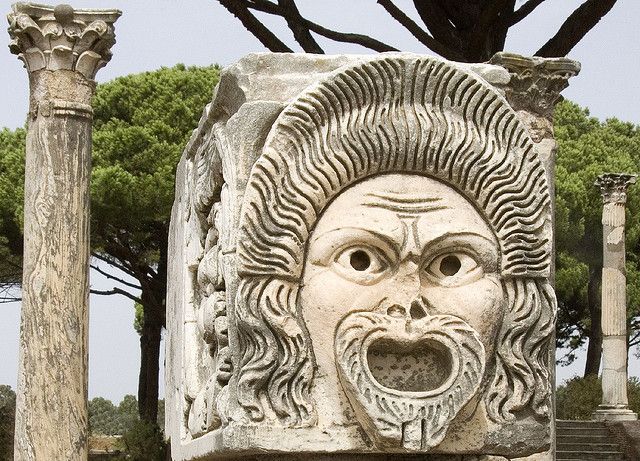
The site is big enough to feel like a real town, yet small enough for a tight tour. You’ll move along the main thoroughfare (Decumanus Maximus), spot everyday-looking spaces like taverns and warehouses, and then slow down for the places that show how Romans lived—baths, public toilets, and entertainment. The standout stops are the Baths of Neptune mosaic, the communal Forica, and the amphitheater seating that hints at crowd energy from more than 2,000 years ago.
One consideration: the tour ends back in Rome at Piramide Metro, and your return train is unescorted, so you’ll want to feel comfortable navigating transit on your own.
In This Review
- Key highlights in plain terms
- From Rome to Ostia Antica: the train part that makes this worth it
- What your guide adds (and why small groups help)
- Strolling the Decumanus Maximus: reading a Roman town like a map
- Baths of Neptune: the mosaic stop you’ll actually remember
- Forica public washrooms: Roman hygiene, up close and surprisingly direct
- Amphitheater seating and the sound of crowds
- Time after the ruins: stay in Ostia or head to the beach
- Price and value: what $58 buys you in real terms
- Logistics that can make or break the day
- Should you book this Ostia Antica train tour?
Key highlights in plain terms
- Fast train logistics: Rome to Ostia Antica round-trip includes your tickets, so you’re not piecing together routes.
- Decumanus Maximus walk: the main street route helps you “read” the town layout as you go.
- Baths of Neptune mosaic: sea god pulled by a 4-horse chariot gives you a clear anchor image.
- Forica public washrooms: marble bench with 20 spaced holes is a very human stop.
- Amphitheater context: built for 3,500 spectators; you stand where crowds once roared.
From Rome to Ostia Antica: the train part that makes this worth it
The best feature here is the order of operations. You start in central Rome, ride out by train, and reach a site that’s close enough to fit cleanly into a half-day plan. At this price, you’re not just buying a guide—you’re also getting the return train ticket and entry, which matters when you’re trying to keep the day simple.
Meeting is at Cafe Piramide near the Piramide Metro stop (Line B, the blue line). When you face the metro, step to the right-hand side: the café is in view of the train tracks, with white umbrellas outside. City Wonders guides will carry a sign with the tour name, which helps you avoid that classic travel panic of scanning faces.
Plan for a short transit glide plus a longer walk inside the archaeological park. Ostia Antica is spread out, but the guide’s route keeps it from feeling like you’re wandering without direction. You’ll still want good walking shoes, because ancient surfaces have a way of testing your ankles.
You can also read our reviews of more guided tours in Rome

What your guide adds (and why small groups help)
Ostia Antica rewards two things: context and pace. Without context, the ruins can feel like a set of scattered walls and mosaics. With a good guide, you start recognizing how a port city functioned—where commerce happened, how people relaxed, and where they gathered for spectacle.
This tour is limited to a small group (up to 12), which makes questions easier and the walking more manageable. Many guides on this route are praised for clear explanations and animated storytelling—names like Rob, Cat, Alberto Terrasi, Liv, Laura, Angellina Militello, and Catarina pop up in the guide roster. The common thread isn’t just facts; it’s the way they connect architecture to everyday Roman routines.
The other practical win: the group moves efficiently, but you still get room to breathe. You’ll have a toilet break plus time at a snack bar for a drink and/or a snack, and you may also get short pauses to wander on your own. That mix keeps the tour from turning into a nonstop march.
Strolling the Decumanus Maximus: reading a Roman town like a map
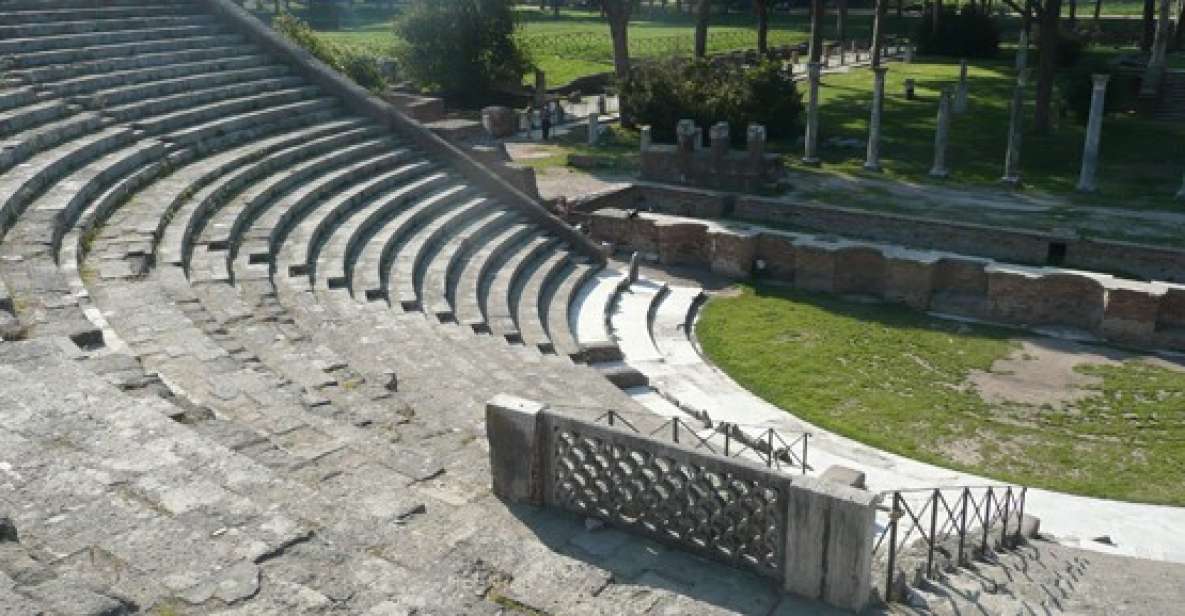
The heart of the experience is walking the main street, Decumanus Maximus. The route isn’t random; it helps you understand how Ostia Antica was organized as a working port town. As you go, the guide ties building types to real life—so a row of storefront-like spaces becomes something you can picture in use.
Along the street, you’ll see Roman statues lining walkways. These are small details that help you feel how public space worked in the Republic era. The street itself also gives you a “height” sense, because the walls are still there enough to suggest scale without needing heavy imagination.
You’ll also encounter well-preserved remains tied to daily commerce: taverns, thermal baths, warehouses, and theater spaces. That’s a big reason Ostia Antica can feel more relatable than sites that are mostly rubble. It’s not just heroic monuments; it’s the machinery of ordinary city life, set in stone.
Baths of Neptune: the mosaic stop you’ll actually remember
The Baths of Neptune are one of the most striking parts of the day, mainly because of the mosaic. It’s impressively intact and shows the sea god being drawn by a 4-horse chariot. Even if mosaics aren’t your thing, this one works as a visual anchor: you can look at the image and then connect it to why baths mattered to Romans.
Baths weren’t only about washing. They were social space, gossip space, and a place where you could see other people’s status and style. When you look at the bath complex with that mindset, the architecture stops feeling decorative and starts feeling functional.
One drawback to keep in mind: mosaics and uncovered stone can mean sun and heat, especially outside the shoulder seasons. Bring the gear you can actually use—comfortable shoes first, and if you’re planning a beach add-on, you’ll want a towel later.
Forica public washrooms: Roman hygiene, up close and surprisingly direct
Then comes one of the most memorable stops: the Forica, the communal public washrooms. This is the part that makes Ostia Antica feel human in a way many ancient sites don’t manage. You’ll see a marble bench lined with 20 well-spaced holes along four walls of a large open room.
It’s the kind of detail that can feel awkward at first—then you realize it’s exactly what you came for. Ostia Antica shows Roman daily life, not just elite politics and temples. The Forica is a reminder that public infrastructure was part of how Romans lived together, handled routine needs, and maintained order in shared spaces.
A good guide helps you make sense of what you’re seeing without turning it into a gimmick. The best tours here use this stop to shift your focus from art to routine. When you finish the Forica, you’ll likely notice other small “everyday” choices throughout the city layout.
You can also read our reviews of more tours and experiences in Rome




Amphitheater seating and the sound of crowds
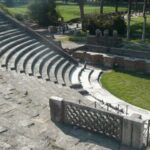
Next up: the amphitheater. Your guide will help you picture the energy of the place—crowds, noise, and performance. You’ll even hear the basic scale: it was built around 3,500 spectators back in 12 BC.
What’s useful about learning the capacity as you stand there is that it changes your physical sense of the space. You’re no longer looking at seating blocks; you’re standing inside a room built for a specific social event. That turns the ruins into a living scene, even when only part of the structure remains.
This stop is also a nice pacing reset. After baths and toilets (both very “life on the ground”), you get the big public event space where people came together. It’s Roman society in miniature: routine, leisure, and spectacle all in one relatively compact arc of the tour.
Time after the ruins: stay in Ostia or head to the beach
At the end of the guided portion, you have choices. You can stay in Ostia for more time around the modern town and archaeological area. Or you can head to the beach afterward if you packed for it.
This matters because Ostia Antica can feel like the start of a day, not the end. If you want a slower finish, you can linger near the site and explore at your own speed. If you want a contrast—ancient city then salt air—beachwear and a towel make that easy.
One practical heads-up: there’s also mention of a museum inside the area, and in winter it may close earlier (around 1:30 PM, depending on the season). If you’re doing this in colder months, plan your independent exploration around shorter hours.
Price and value: what $58 buys you in real terms
At $58 per person for a half-day, the value isn’t only the guide. You’re getting three key pieces bundled together: return train ticket, entry ticket, and a live English-speaking guide.
If you tried to recreate that independently, you’d spend time figuring out transit timing, buying entry separately, and piecing together a route that covers the site effectively. Here, the guide’s job is to make the big place feel readable in limited time. That matters most for Ostia Antica because the site is large, and you can’t easily guess which buildings are the best “story anchors” without help.
The small group also adds value. With fewer people, the tour feels less like a conveyor belt and more like a walk you can shape with questions. It’s the difference between seeing walls and understanding why those walls matter.
Logistics that can make or break the day
This is a train-first experience. You’ll be moving between Rome and Ostia Antica on scheduled rail, and the tour service provides your return train tickets. You won’t have a guide accompanying you on the way back, so treat it like a self-navigated ride home.
If something unusual happens—like a transportation strike—you’re not completely stuck. A minibus can be provided at no extra cost to transfer participants to and from Ostia Antica.
What to bring is straightforward:
- Comfortable shoes with grip
- A towel and beachwear if you plan to stop at the sea
- Sports shoes if your feet need support for longer walking
Also note: baby strollers are not allowed, and the tour isn’t suitable for wheelchair users. If you need mobility support, consider other Rome-Ostia options that match your accessibility needs.
Should you book this Ostia Antica train tour?
I’d book it if you want an easy Roman day that focuses on everyday life, not just big-ticket monuments. Ostia Antica is quieter than the headline ruins, and the route here is built to show the town as a working port: the street plan, baths, public services like the Forica, and the public entertainment of the amphitheater.
Skip it if you need step-free access for mobility needs, or if unescorted return transit feels stressful. This tour is best when you’re comfortable walking across an archaeological park and using local transit on your own for the final stretch.
If your goal is a smart, guided way to understand Roman city life in half a day, this one has the right mix of logistics, pacing, and must-see stops.