REVIEW · ROME
Pompeii: Entry Ticket w/ Guide and Transfers or Audio Guide
Book on GetYourGuide →Operated by Show Me Italy · Bookable on GetYourGuide
Pompeii feels close enough to touch. This Pompeii entry ticket pairs live guide or English audio with a clear route through the 79 AD ruins, so your time stays focused. You can also choose round-trip transfers from Rome to cut down the logistics stress.
I love the way the visit lands on the site’s emotional anchors, especially the plaster casts and the public heart of the city, the Forum. I also like that you get a mix of big sights and smaller streetside details, like homes, baths, bakeries, and shops that show Roman daily life.
My main caution: this experience is not suitable for wheelchair users or people with mobility impairments, and the group will not wait for latecomers. Pompeii is real-world walking over uneven ground, so plan for plenty of steps and tight timing.
In This Review
- Quick hits on this Pompeii ticket experience
- Ticket Options: Guide vs Audio for Pompeii’s 79 AD Story
- Rome Transfers: Bus or Train Without the Timing Guesswork
- Meeting Point to Return: What the Day Feels Like
- First Steps in Pompeii: Where to Put Your Attention
- Forum and Amphitheatre: Roman Power and Public Spectacle
- House of the Vettii and Villa of the Mysteries: Art in the Rooms
- Baths, Bakeries, and Shops: How Roman Days Worked
- Plaster Casts: The Moment Pompeii Stops Being History
- Pacing, Weather, and Staying On Schedule
- What You Pay For: Value Beyond the Ticket Price
- Who This Pompeii Plan Fits Best (And Who Might Want Another Approach)
- Should You Book This Pompeii Entry Ticket w/ Guide and Transfers or Audio?
- FAQ
- What does this Pompeii entry ticket include?
- Can I choose a guided tour or an audio guide?
- Is round-trip transportation from Rome available?
- How long is the experience?
- What languages are available?
- Is this tour suitable for wheelchair users?
- What items are not allowed during the experience?
- Does it run in bad weather?
- Will the tour wait if I arrive late?
Quick hits on this Pompeii ticket experience
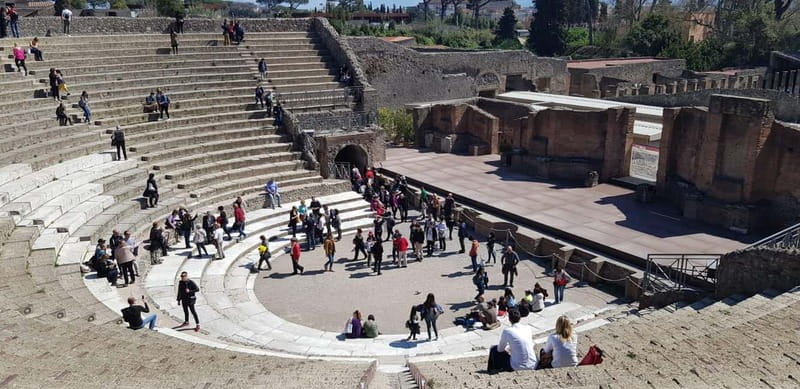
- Guide or audio choice: go structured with a host, or travel at your own pace with the included English audio guide
- Forum + amphitheatre combo: public power and spectacle, side by side
- High-impact stops: the House of the Vettii and the Villa of the Mysteries, plus the plaster casts
- Daily-life details: baths, bakeries, and shops that make the city feel lived-in
- Optional Rome transfers: bus or train access if you want a low-stress day trip
Ticket Options: Guide vs Audio for Pompeii’s 79 AD Story
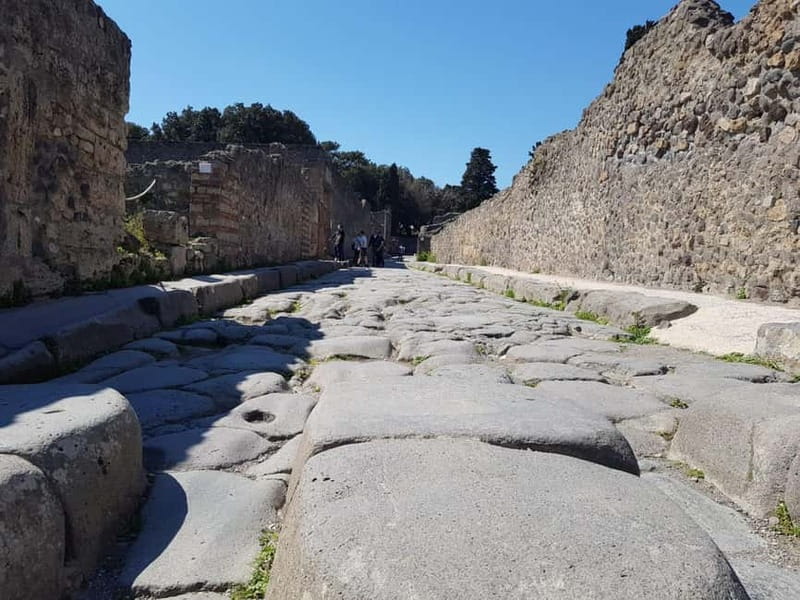
This ticket is built around one big idea: Pompeii makes the Roman world easy to understand when you know what you’re looking at. You can either follow a guide through the major zones, or use the audio guide to steer yourself.
If you choose the guided tour, you get someone who can connect the dots while you walk. That matters at Pompeii because the buildings look similar at first glance. A guide helps you read the layout: where people gathered, where work happened, where wealth displayed itself, and where danger waited outside the city walls.
If you go with the audio guide, you trade storytelling for flexibility. You’ll likely spend more time lingering on the details that catch your eye, like fresco fragments, mosaics, and doorways worn smooth by centuries of foot traffic. This option tends to work best if you enjoy pacing yourself and you already know you want extra time in the key areas.
Either way, your ticket includes entry to the Pompeii Archaeological Park, and the visit is structured enough that you won’t feel like you’re wandering without a plan.
You can also read our reviews of more tours and experiences in Rome


Rome Transfers: Bus or Train Without the Timing Guesswork
If you want a true day trip from Rome, the option with round-trip transportation is the practical move. You’ll travel by bus or train through the Italian countryside and return after your Pompeii time.
This is valuable if you’d rather not spend your morning figuring out schedules, stations, and getting from a drop-off point to the park entrance. The route also makes the day feel more like an outing than a DIY logistics project.
One consideration: transport options tie you to the group’s rhythm. Pompeii is a big site, so you’ll want to treat the schedule as part of the experience, not an annoyance. You’ll still have time for personal exploring during the day, but it won’t be the kind of total freedom where you can show up whenever you want.
Meeting Point to Return: What the Day Feels Like
Meeting points can vary depending on which option you book. The key thing to remember is that the day starts at a designated location and ends back at that same meeting point.
That structure is helpful because it keeps you from losing half your day between sights. Pompeii is famous, yes, but it’s also spread out enough that getting “just one more stop” can quietly snowball into long walks.
Plan on a full day of moving. Even with a guide, Pompeii rewards momentum. The ruins are where you learn fastest, especially when you’re walking from one public area to another and noticing how the city’s purpose changes from place to place.
First Steps in Pompeii: Where to Put Your Attention
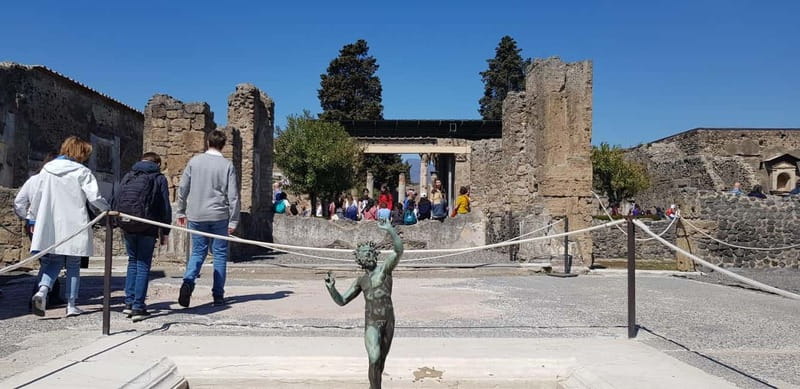
Once you’re inside, the biggest advantage of a guided route or a well-run audio flow is that it helps you orient fast. Pompeii is not only “old buildings.” It’s a city with zones that did different jobs.
I like starting with the forum area mindset: ask what decisions got made here, who used the space, and what that says about power. Then you move outward to places where people lived, worked, or were entertained.
As you walk, keep an eye on the little things that signal function: entrances that suggest daily foot traffic, spaces that feel designed for crowds, and rooms where art appears in ways that imply wealth. With Pompeii, the meaning is often in the layout.
You’ll also be working within the real conditions of the park. The experience runs rain or shine, unless officials close parts of the monument for safety. So bring a plan for weather, but also expect that you’ll still be walking through wind, sun, or drizzle.
Forum and Amphitheatre: Roman Power and Public Spectacle
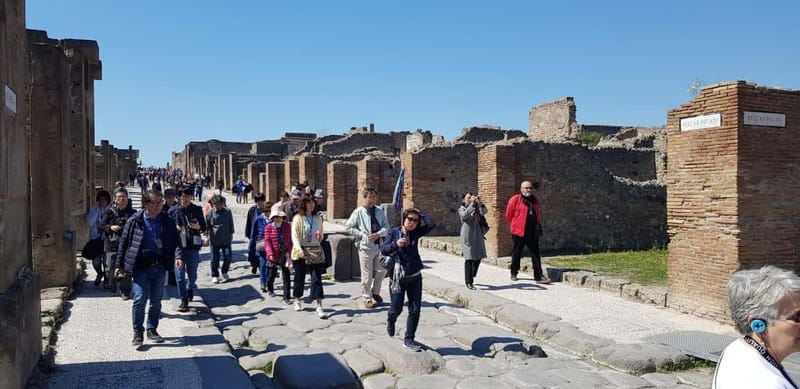
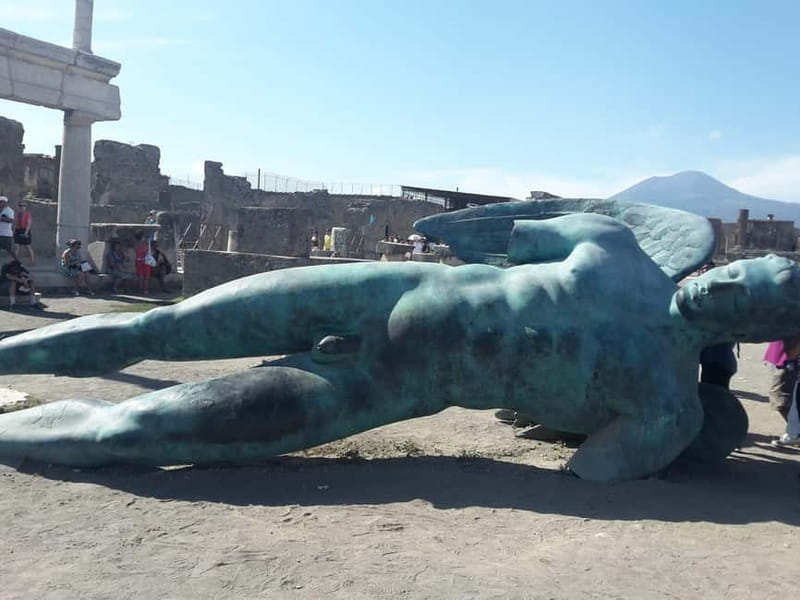
The Forum is the political and social center of Pompeii, and it’s a great starting anchor because it clarifies how the city organized itself. You’re essentially stepping into the Roman idea of public life: the place where community identity formed through gatherings and public decision-making.
Right after that kind of civic gravity, you head toward the amphitheatre. This is where Pompeii shifts from politics to entertainment. The amphitheatre connects to what people did for fun and spectacle, and it gives you a human timeline for gladiatorial events you’ve probably only seen in films.
The best part of pairing the Forum and amphitheatre is that it shows the full range of the city’s social life. Rome wasn’t only arguments and laws. It was also crowd energy, performances, and a shared sense of how the community spent its attention.
You can also read our reviews of more guided tours in Rome






House of the Vettii and Villa of the Mysteries: Art in the Rooms
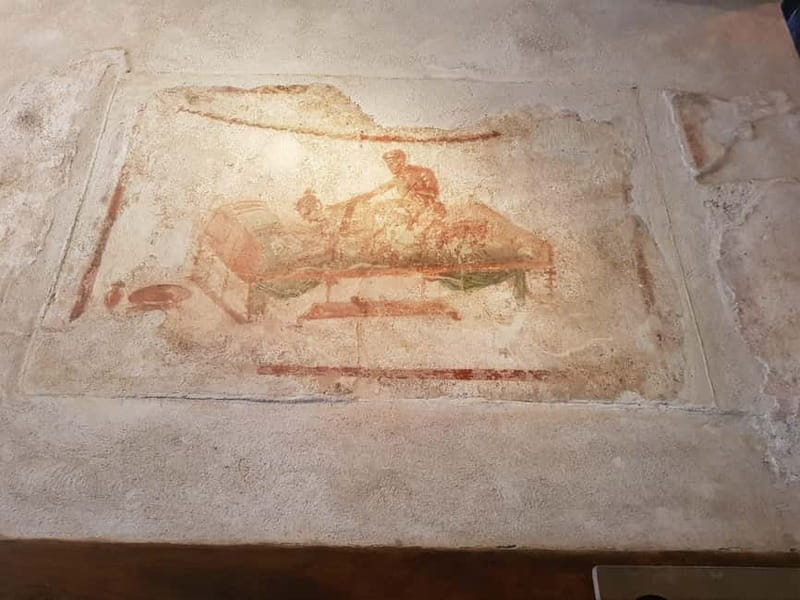
Pompeii’s villas and homes are where the site becomes personal. The House of the Vettii is one of the stops that helps you understand wealth beyond money numbers. The way rooms are arranged, and the presence of decorative surfaces like mosaics and frescoes, points to how elite families signaled status day to day.
Then you move to the Villa of the Mysteries, which is especially famous for its wall painting. The emotional effect here comes from the fact that this art is not in a museum. It’s on the walls where people lived and looked up at it while going about their routines.
A guide or audio track makes a difference in these spaces because you get context for what you’re seeing and why it matters. Without help, it’s easy to treat fresco scenes like a pretty backdrop. With guidance, you’re more likely to notice themes and the social meaning behind the artwork.
If you’re the type who likes to linger, plan a bit of time for the interiors. Homes and villas demand slower looking than plazas do.
Baths, Bakeries, and Shops: How Roman Days Worked
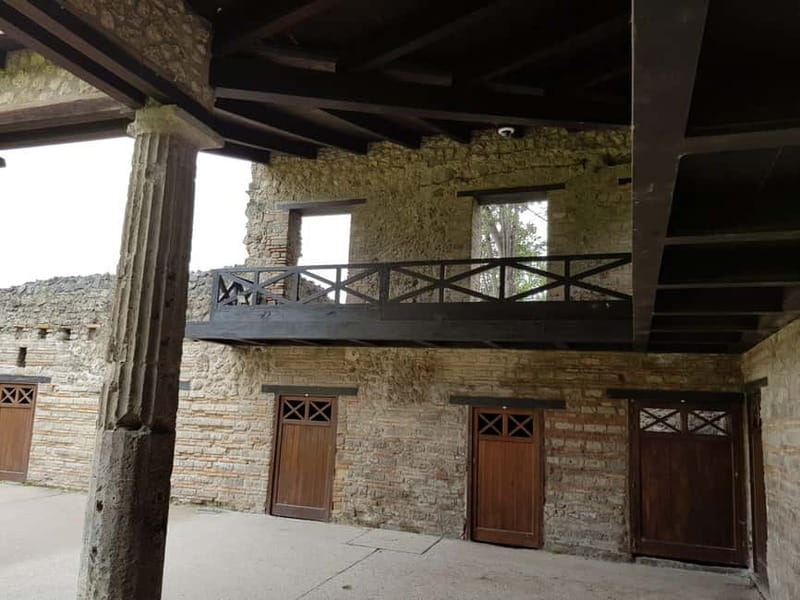
One of my favorite aspects of this Pompeii experience is that it doesn’t stop at monuments. The visit also includes places linked to everyday life: ancient baths, bakeries, and shops.
These stops are the difference between seeing Pompeii as a set of big highlights and seeing it as a city with routines. Baths tell you about hygiene and social mixing. Bakeries point to food habits and daily consumption. Shops explain how commerce played out on foot, close to where people lived.
When you see these sections during the same day as the forum and amphitheatre, Pompeii becomes more believable. You understand the city as an ecosystem: governance, entertainment, work, and leisure happening side by side.
Plaster Casts: The Moment Pompeii Stops Being History
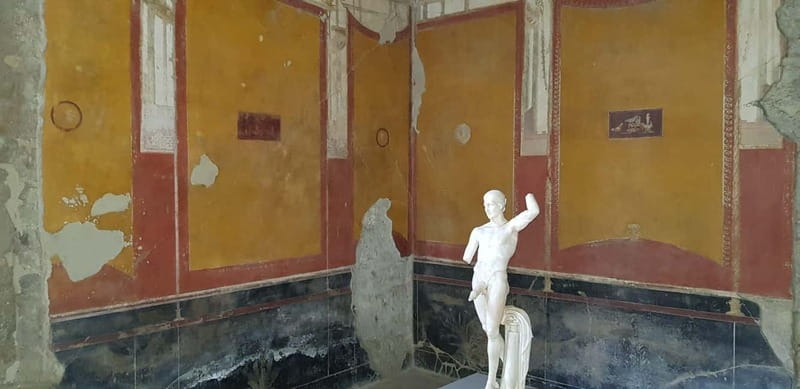
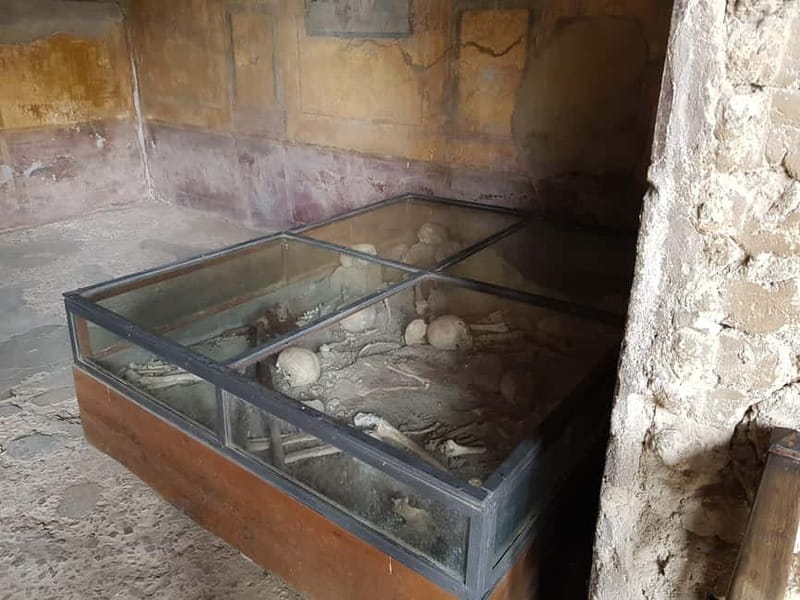
No matter how you feel about ruins, the plaster casts of the victims are the part that tends to linger. They turn the eruption story into something visible and immediate.
This stop is poignant because it forces you to confront the human reality behind the site. You’re not just touring ancient architecture. You’re seeing the preserved outcome of catastrophe, and it changes how everything else feels once you’ve seen it.
I’d treat this area with extra patience. Don’t rush through it while you’re thinking about lunch or your next photo. Give it a moment. Even brief stillness helps your brain connect the city’s life to its sudden end.
Pacing, Weather, and Staying On Schedule
Pompeii is famous for being stunning, but it’s also famous for being logistically demanding. This experience helps with pacing, yet it still includes the key rule that makes or breaks a tour: it will not wait for latecomers.
That means you should plan your arrival time early and keep your head clear when you’re moving between transport and meeting points. Also, avoid assuming you’ll be able to bounce away for one quick detour without consequences.
Weather-wise, tours run rain or shine unless the monument is closed by officials for safety reasons. Rain doesn’t stop the ruins, but it can make ground conditions slippery. If you’re visiting during wet weather, wear shoes that grip and accept that you’ll be walking in less-than-perfect conditions.
And one more reality check: this experience is not suitable for wheelchair users and people with mobility impairments. If you have mobility concerns, you’ll want to consider a different format or a different route that matches your needs.
What You Pay For: Value Beyond the Ticket Price
The price is listed at $5.55 per person, and the real value depends on the option you select. The ticket clearly includes entry to the Pompeii Archaeological Park, and then it can add a guided tour and/or round-trip transportation from Rome depending on booking choice.
Even when you strip out the romance, Pompeii is a major destination. Entry alone usually isn’t the hard part. The hard part is making your day run smoothly: getting there, fitting in the right stops, and having someone explain what you’re seeing.
That’s why the guide or audio component matters for value. At Pompeii, understanding transforms the experience. A guide can make the Forum, amphitheatre, and villas click as a system. Audio can help you enjoy the site at your own speed without losing context.
So if your goal is maximum learning with minimal planning, the guided option tends to be the best value. If your goal is flexibility and you prefer to control your own pacing, the audio route can feel like a win—especially if you don’t need a lot of back-and-forth group coordination.
If you’re the solo type, this format also has practical advantages. You get a plan and safe transport (when the transfer option is selected), while still having room for personal exploring.
Who This Pompeii Plan Fits Best (And Who Might Want Another Approach)
This is a strong match if you want a structured Pompeii day trip with clear highlights. The mix of the Forum, amphitheatre, homes like the House of the Vettii, the Villa of the Mysteries, and the plaster casts gives you both spectacle and human emotion.
It’s also a good fit if you like learning while you walk. The experience is led in English, French, Spanish, and German, and the guide style tends to focus on historical context and stories that make daily Roman life easier to picture.
You’ll also appreciate that the company provides host or greeter support in multiple languages, which can reduce stress if your Italian is rusty.
It may not be the best fit if you rely on step-free access or need wheelchair-friendly routes. The provided note is clear: it’s not suitable for wheelchair users or people with mobility impairments.
Should You Book This Pompeii Entry Ticket w/ Guide and Transfers or Audio?
Yes, I think you should book it if you want the best chance of a satisfying Pompeii visit without turning the day into logistics homework. The site is huge, and this experience focuses you on the most meaningful zones: civic life in the Forum, public spectacle at the amphitheatre, elite homes like the House of the Vettii and Villa of the Mysteries, and the emotional impact of the plaster casts.
Choose guided if you want context fast and you like getting the stories as you walk. Choose audio if you want control over pacing while still keeping Pompeii from turning into a blur of ruins.
Just be realistic about walking and timing. Bring comfortable shoes, show up on time, and treat the day as a full immersion in ruins that still feel painfully human.
FAQ
What does this Pompeii entry ticket include?
It includes entry to the Pompeii Archaeological Park. If you select the guided tour option, you also get a guided tour. If you select the round-trip transport option, you also get transportation from Rome.
Can I choose a guided tour or an audio guide?
Yes. You can book with a guided tour or choose the optional audio guide. The audio guide language is English.
Is round-trip transportation from Rome available?
Yes, round-trip transportation from Rome is included if you select the option that offers transfers. The activity can run by bus or train for the Rome route.
How long is the experience?
The duration is listed as 2 to 12 hours. You’ll need to check availability to see the starting times for your chosen option.
What languages are available?
The host or greeter languages include English, French, Spanish, and German. The optional audio guide is available in English.
Is this tour suitable for wheelchair users?
No. The tour is not suitable for people with mobility impairments and it is not suitable for wheelchair users.
What items are not allowed during the experience?
Oversize luggage and large bags are not allowed. Alcohol and drugs are also not allowed. Food and drinks are not allowed in the vehicle.
Does it run in bad weather?
The tour runs rain or shine unless officials close the monument for safety reasons.
Will the tour wait if I arrive late?
No. The tour will not wait for latecomers.