REVIEW · ROME
Vatican Museums & Sistine Chapel Skip-the-Ticket-Line Tour
Book on GetYourGuide →Operated by Gray Line I Love Rome · Bookable on GetYourGuide
Skip-the-line is the only sane move here. This Vatican Museums & Sistine Chapel tour uses a privileged partner entrance so you can start seeing Papal treasures fast, instead of standing in the crush outside. I especially like the Sistine Chapel focus (including Michelangelo’s Creation of Adam) and the smart inclusion of the Raphael Rooms—where the School of Athens makes the art feel like a living argument, not just paintings on a wall.
Two things I’d watch before you book: when Sistine Chapel access is blocked during special religious ceremonies (like the Jubilee Year), there’s no partial refund. Also, Vatican rules are strict, so you’ll need to plan for the dress code and no hats/shorts/sleeveless tops.
In This Review
- Key things I’d plan around
- Why this Vatican tour starts with a partner entrance
- The 3 to 3.5 hour pacing: fast, but not random
- Cortile del Belvedere: your “I get it now” starting point
- Gallery of Maps: how the Vatican thinks about power
- Vatican Museums stops: Papal collections in a practical order
- Raphael Rooms and the School of Athens: where art turns into ideas
- Sistine Chapel: how to look for Creation of Adam
- Finishing at St Peter’s Basilica: good timing for a big finale
- Who this tour suits best (and who might want something else)
- Price and value: is $130.05 worth it?
- Should you book this skip-the-line Vatican Museums tour?
- FAQ
- What is included in the tour price?
- How long does the Vatican Museums and Sistine Chapel tour take?
- Is pickup available from my hotel?
- What languages are the guides available in?
- What should I wear or not wear?
- What happens if the Sistine Chapel isn’t accessible?
Key things I’d plan around
- Small group limit (max 20) keeps the pace human and gives you real chances to ask questions
- Exclusive partner entrance + skip-the-line can save hours when the public queues are brutal
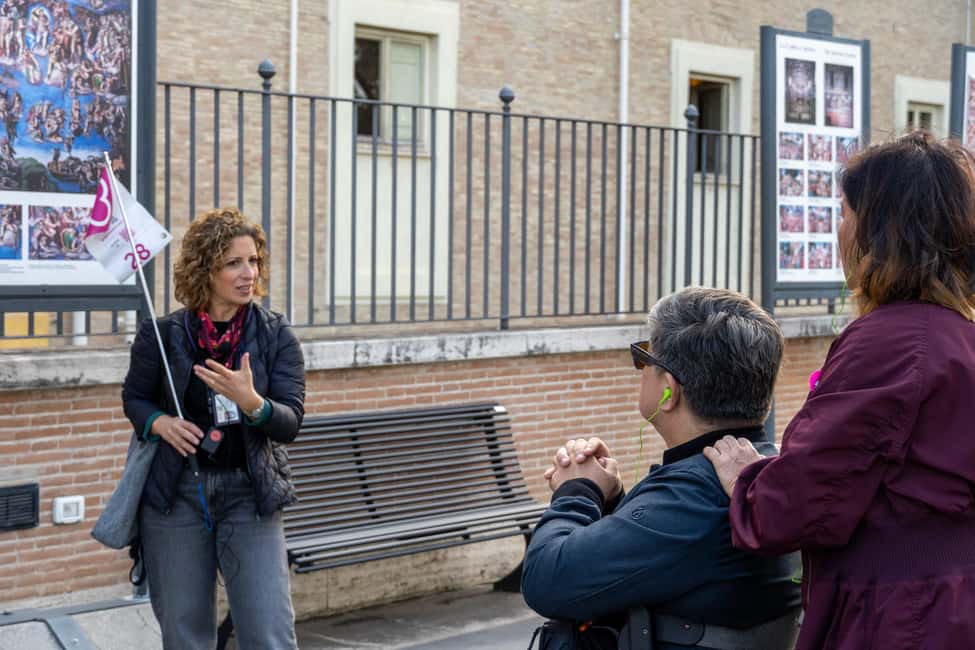
- Official headsets help you hear your guide clearly through the noise and crowds
- Raphael Rooms and the School of Athens turn a famous ceiling-and-painting stop into real context
- Sistine Chapel highlights include Michelangelo’s Creation of Adam and key ideas your guide points out
- Ends at Basilica di San Pietro, so you’re not forced to make a separate plan for St Peter’s
Why this Vatican tour starts with a partner entrance
The Vatican Museums are famous for one thing: lines. Even if you buy tickets ahead, the queues outside can still eat up your energy. This tour’s big advantage is the exclusive partner entrance, which gets you moving without the normal wait. That matters because the Vatican is not a place for slow sightseeing—you’re walking through rooms that are all trying to be the most important.
You also get guided flow through the collections. Instead of drifting room to room, you’re nudged into an order that makes the art and Church history connect. That’s where the value usually shows up: you’re not paying for the Sistine Chapel photo moment only, but for the “how did we get here” story your guide ties to what you’re seeing.
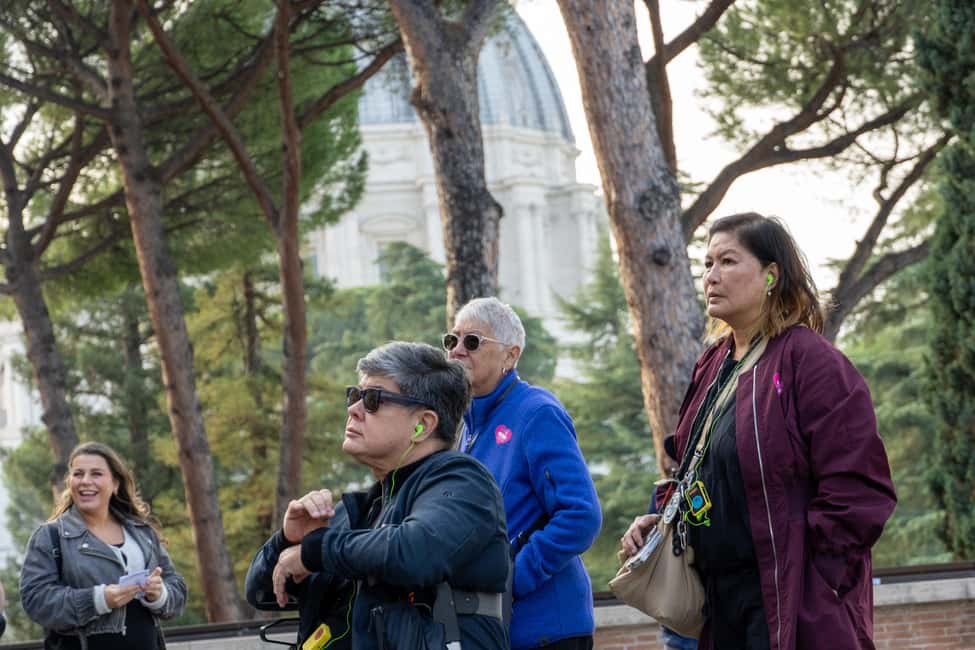
One more practical bonus: the group is kept to 20 people maximum, so your tour doesn’t feel like being shoved through a theme park maze.
You can also read our reviews of more tours and experiences in Rome
The 3 to 3.5 hour pacing: fast, but not random
This is a short, focused tour—about 3 to 3.5 hours—so you’ll feel the pace. The upside is you’re not spending half a day inside, and you’re not stuck in lines. The downside is you won’t linger at every corner like you would on a self-guided visit.
Here’s how the timing tends to land:
- You start with key courtyard and map-room wayfinding, so you understand where you are.
- Then the route accelerates through major museum stops.
- You finish in the Sistine Chapel area, where your guide helps you look at details that people often miss.
- From there, you end at St Peter’s Basilica, which is a great way to keep the day coherent.
If you’re sensitive to crowds, choose your time slot carefully. The afternoon can be busier than you expect, and the Vatican is still a Vatican—expect tight passages and shoulder-to-shoulder moments.
Cortile del Belvedere: your “I get it now” starting point
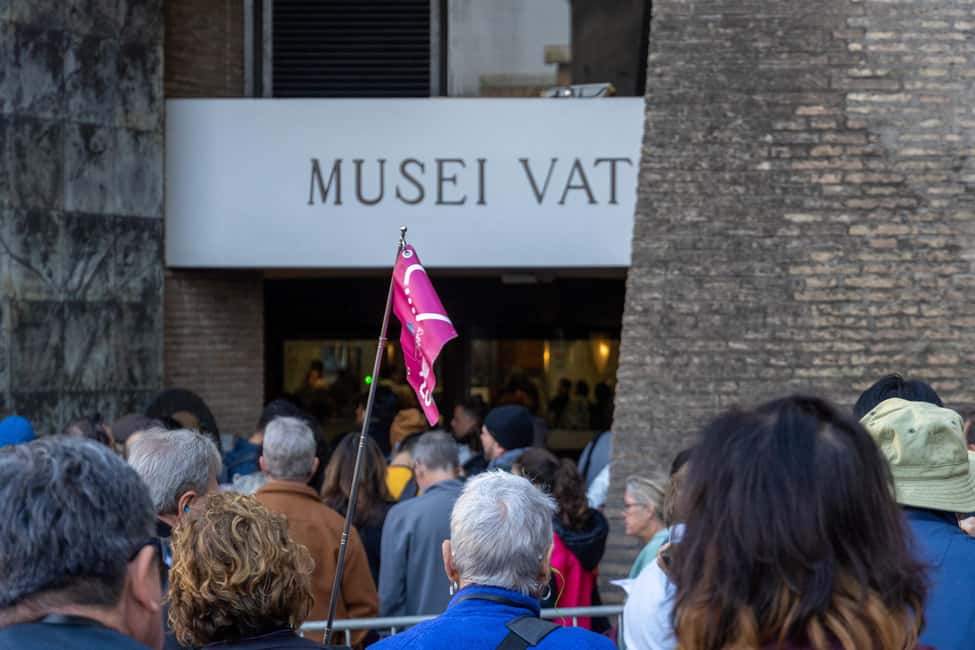
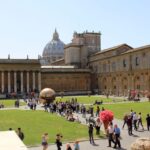
The tour kicks off with the Cortile del Belvedere. This courtyard is one of those places where the architecture gives you orientation. Even if you’re not a museum person, you’ll feel why this space mattered to the Vatican’s art world. It’s like a visual warm-up: you’re getting the lay of the land before you rush into gallery intensity.
A good guide also sets your expectations here. You’ll learn what to look for as you move from room to room—so later, when a famous painting appears, it doesn’t hit as just a brand name. It lands as a piece in a bigger machine: patrons, popes, artists, politics, and theology.
Gallery of Maps: how the Vatican thinks about power
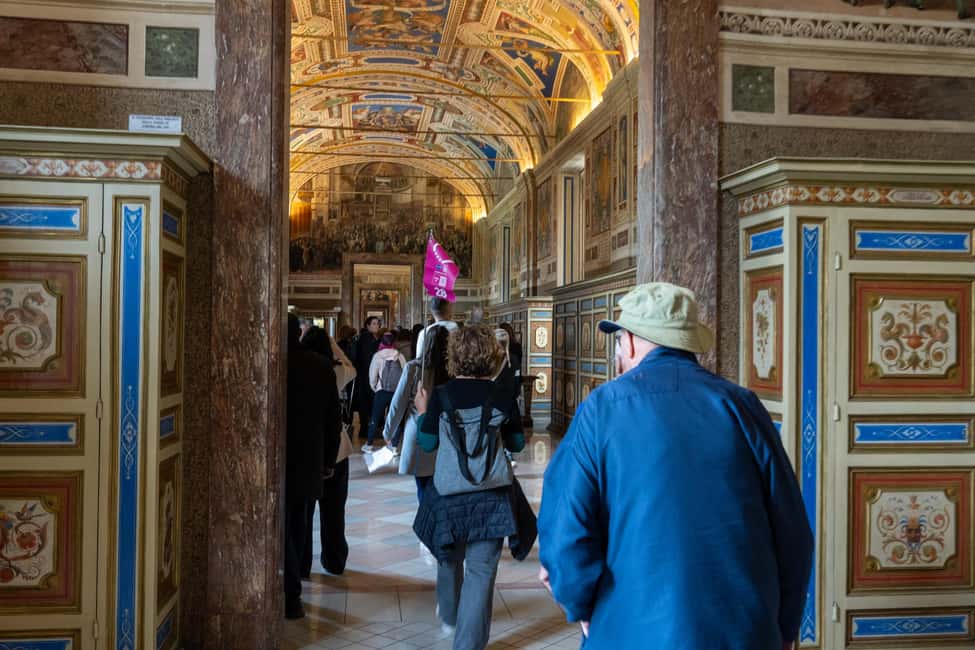
Next is the Gallery of Maps. It’s not just a pretty wall of geography. It’s a statement about knowledge, authority, and how the world was framed by the people funding and collecting art.
When you’re guided through this room, it helps you stop treating the Vatican Museums like one huge grab bag. Instead, you start seeing a pattern: each gallery has a purpose, and the Vatican’s art choices were rarely accidental.
This stop is also useful for the group energy. You get a defined “breather” moment before the tour gets more intense. And since you’re in a small group with headsets, you can actually hear what your guide is pointing out rather than shouting over random audio from other visitors.
Vatican Museums stops: Papal collections in a practical order
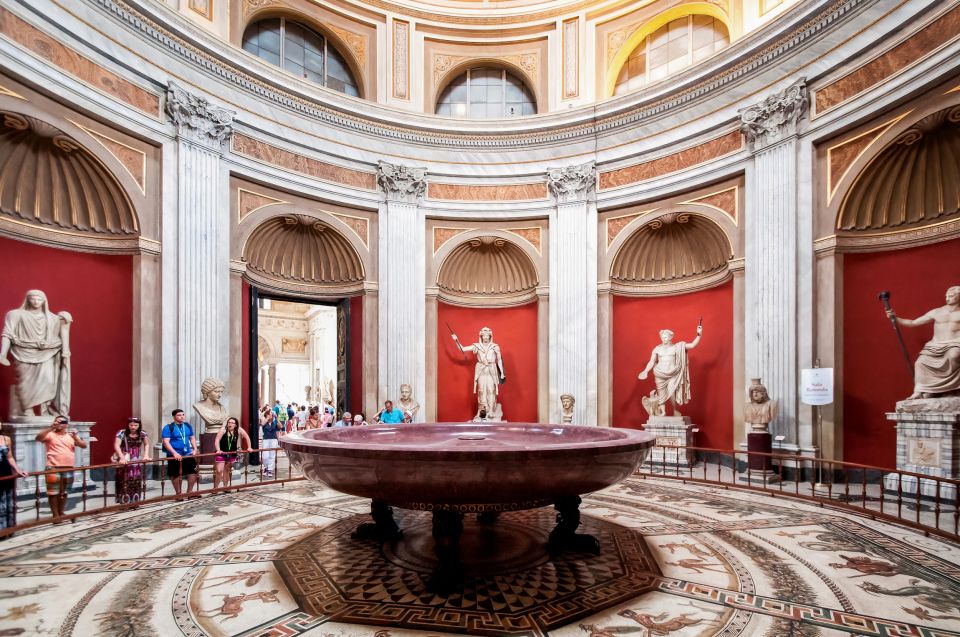
After the early setup, you move into the core Vatican Museums sequence. The big thing I like here is that the tour doesn’t try to cover everything. It picks the most meaningful “anchor” artworks and explains why they matter.
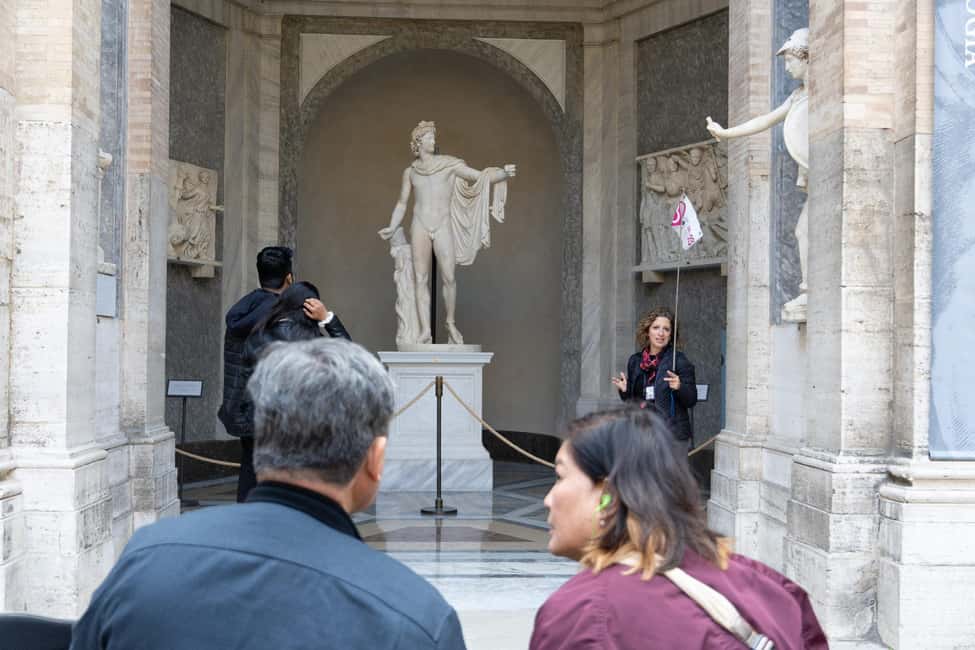
You’ll see renowned sculptures and Renaissance art, and the tour is framed around the idea of Papal treasures—how different popes built collections over centuries. That context changes your whole experience. A statue stops being just a statue. A painting stops being just a famous face. You start noticing how artists were commissioned, how styles developed, and how religious messages were shaped for specific audiences.
Based on the tour’s structure, you’ll also get references to major artists you’ve heard about in school, including work connected to painters like Raphael and Michelangelo, plus others named in the tour’s messaging such as Giotto, Leonardo da Vinci, and Caravaggio. You don’t need a degree in art history to follow along, because your guide’s job is to translate the details into plain ideas.
And because the group is limited to 20 people, you’re less likely to end up completely separated from your guide or stuck staring at the backs of someone’s coat.
You can also read our reviews of more museum experiences in Rome




Raphael Rooms and the School of Athens: where art turns into ideas
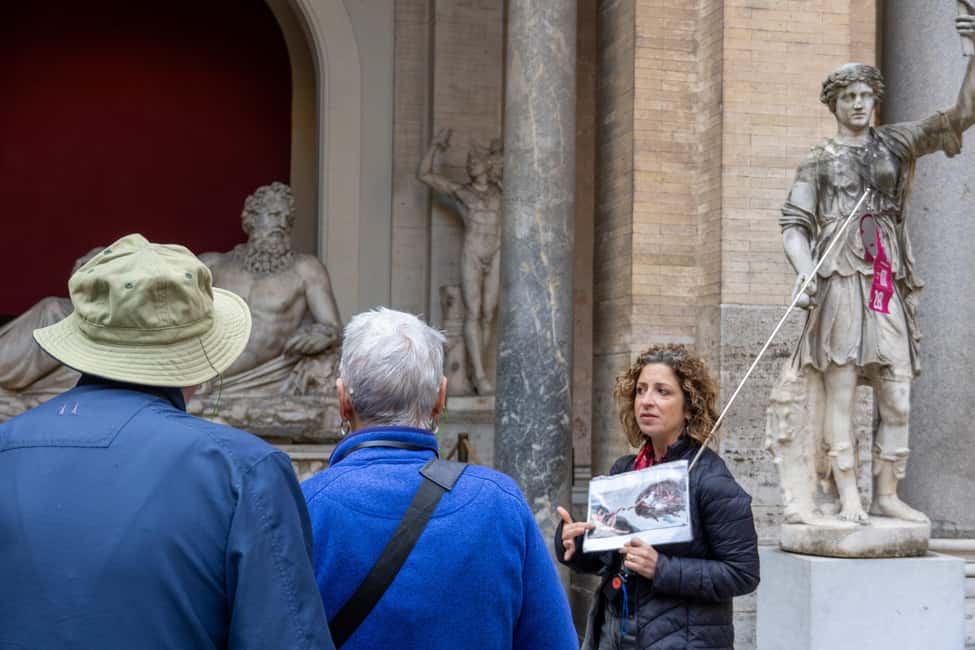
The Raphael Rooms are a highlight, and the tour calls out the School of Athens in particular. This is where the guided portion really earns its keep.
Why? Because the School of Athens can feel intimidating at first—too many people, too many gestures, too many famous names. A good guide helps you connect what you’re seeing to the big themes: philosophy, reason, learning, and the way Renaissance artists staged ideas like theater.
Even if you can’t identify every figure instantly, you’ll understand the structure and symbolism. That makes the room more satisfying than a quick glance ever could be.
And here’s the practical part: Raphael rooms are visually dense. Without guidance and headsets, it’s easy to get overwhelmed and leave with only one or two impressions. With a guide steering the group, you get a handful of “aha” moments that you’ll remember later on.
Sistine Chapel: how to look for Creation of Adam
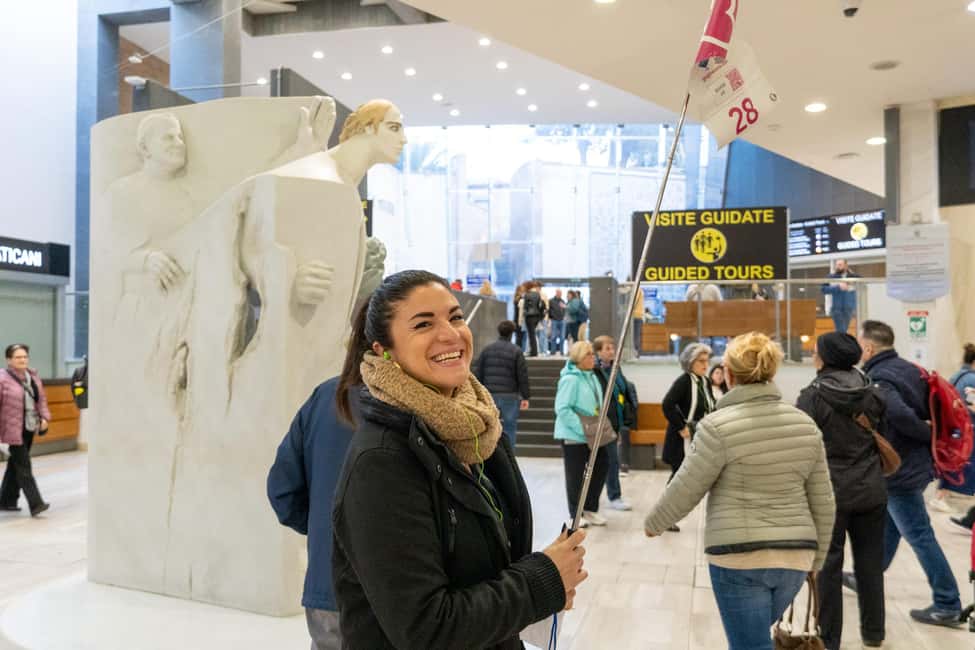
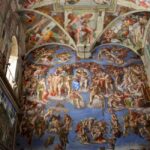
The centerpiece is the Sistine Chapel, reached with priority access. The tour is built to focus you on the moments that matter most, including Michelangelo’s Creation of Adam.
This is the hardest place in the Vatican to see calmly because the crowd pressure is real. But that’s exactly why skip-the-line matters. When you arrive without spending hours in the queue, you’re more likely to be present for what you’re seeing instead of mentally exhausted.
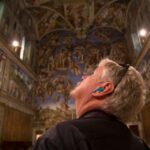
Inside, your guide will direct your attention to key details—composition, scale, and the particular visual storytelling that makes Michelangelo’s ceiling feel alive. If you only look at it like a postcard, you’ll miss the craft. Guided looking helps you slow down your eyes even though the clock is moving.
Important caution: during the Jubilee Year, certain areas may be inaccessible due to religious ceremonies. If the Sistine Chapel is not accessible for reasons beyond control, there is no partial refund. So if you’re booking primarily for the Sistine, keep this risk in mind and plan emotionally for the possibility of an imperfect outcome.
Finishing at St Peter’s Basilica: good timing for a big finale
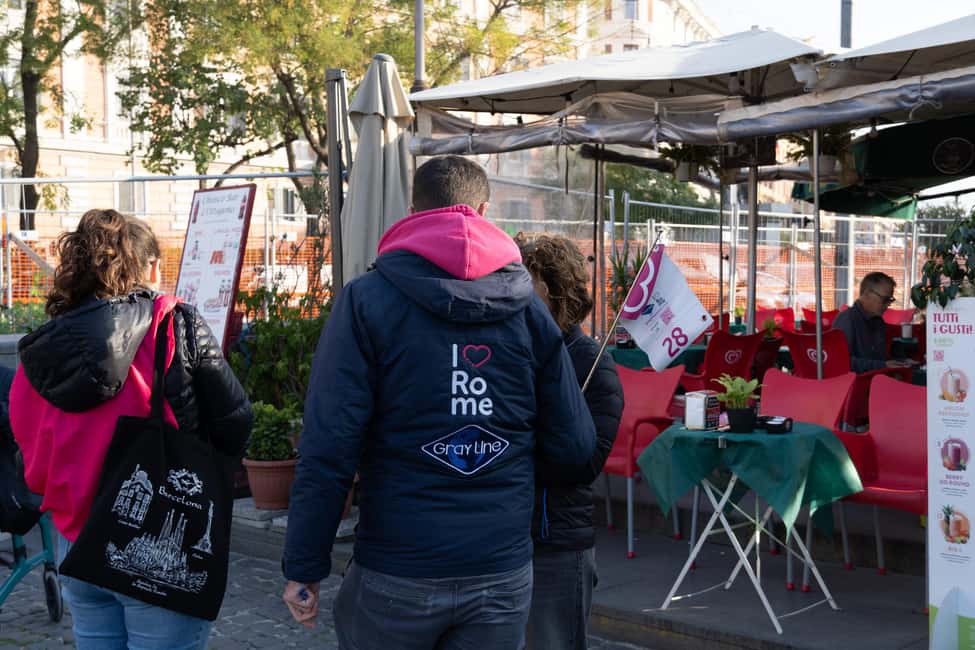
The tour ends at Basilica di San Pietro. Even though this is a separate iconic place, it fits the day because you’re coming from the Sistine Chapel mindset: awe, sacred art, and the Vatican’s visual language.
What you’ll get is not a long “half-day in the basilica” experience, but a strong handoff. You’ll be in the right emotional zone to keep exploring once you step into St Peter’s.
In practice, finishing here also helps your logistics. Instead of mapping two separate Vatican days, you get a coherent route: museums first, Sistine next, then basilica to cap it off.
Who this tour suits best (and who might want something else)
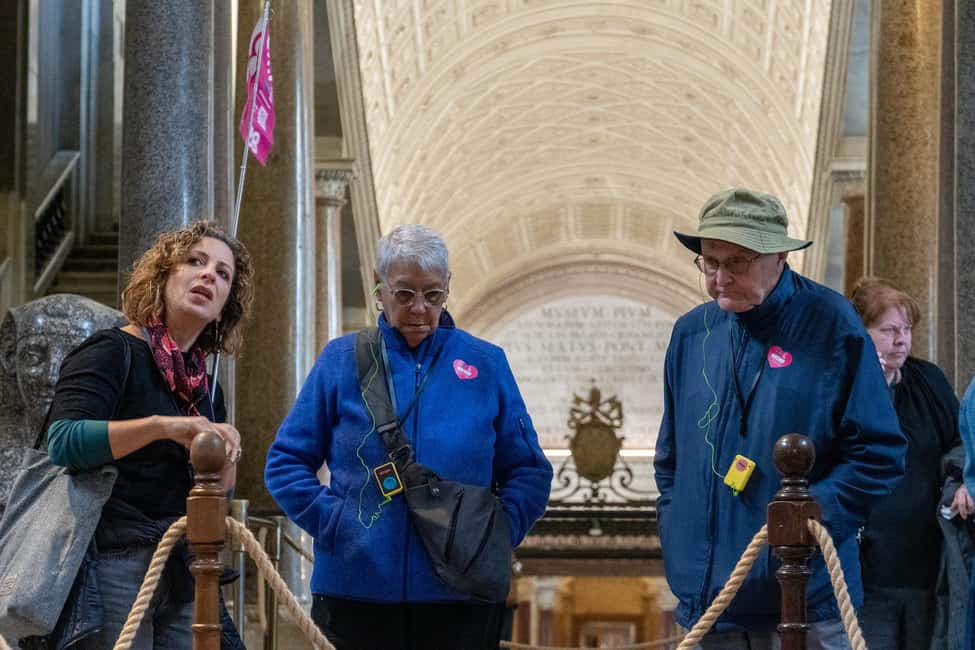
This is a great fit if:
- you want the big highlights in a single, tight window (3 to 3.5 hours)
- you hate lines and want a privileged skip-the-line route
- you like your museum time guided, with headsets so you can actually follow the story
It may be less ideal if:
- you want to wander slowly and spend lots of quiet time in every room
- you need wheelchair access (the tour is noted as not suitable for wheelchair users)
- you are traveling with clothing that doesn’t meet Vatican rules
Also, plan for strict attire: no shorts, no hats, no short skirts, no sleeveless shirts, and no baby strollers.
Price and value: is $130.05 worth it?
At $130.05 per person, this isn’t a “cheap museum entry” type of booking. But it’s also not just paying for one room. Here’s what you’re really buying:
- Vatican Museums entrance ticket (you’re not just booking a guide)
- Exclusive partner entrance access for the Museums
- Priority entrance for the Sistine Chapel
- Official Vatican Museums headsets, which is huge for comfort and clarity
- A group guided tour that covers Raphael Rooms plus the Sistine Chapel focus
For value, the key factor is time. Skip-the-ticket-line access is described as saving up to 2–3 hours. If those hours would otherwise get swallowed by waiting, then the math starts to make sense fast—especially if you’re only in Rome a short time.
Yes, it’s pricier than buying tickets directly. But in the Vatican, the difference between waiting and walking in can change the whole experience from “tired crowd management” into actual sightseeing.
Should you book this skip-the-line Vatican Museums tour?
I’d book it if you want a guided, highlights-first Vatican day that respects your time. The small group size, the headsets, and the partner entrance are the trio that turns a chaotic place into something you can actually enjoy.
I’d think twice (or at least go in with eyes open) if the Sistine Chapel is your one non-negotiable goal and you’re traveling during the Jubilee period, since access can be affected and there’s no partial refund if the Sistine Chapel can’t be accessed.
FAQ
What is included in the tour price?
The tour includes the Vatican Museums entrance ticket, priority entrance for the Sistine Chapel, an exclusive partner entrance, a group guided tour, and official Vatican Museums headsets. It also includes a visit to the Raphael Rooms. Hotel pickup is included only if your selected option offers it.
How long does the Vatican Museums and Sistine Chapel tour take?
The duration is 3 to 3.5 hours, depending on the starting time available.
Is pickup available from my hotel?
Hotel pickup is optional and depends on the option you select. If included, you should be ready 45 minutes before departure in the lobby (or 60 minutes before for non-central hotels). If your hotel isn’t covered, you’ll need to go to the meeting point on your own.
What languages are the guides available in?
The live tour guide is offered in English, Portuguese, and Spanish.
What should I wear or not wear?
The tour rules do not allow shorts, hats, baby strollers, short skirts, or sleeveless shirts.
What happens if the Sistine Chapel isn’t accessible?
If the Sistine Chapel is not accessible for reasons beyond control, there is no partial refund. This can happen during the Jubilee Year when some Vatican Museums areas may be inaccessible due to religious ceremonies.
If you want, tell me your travel month and preferred start time (morning vs afternoon), and I’ll help you choose the safest slot for fewer crowds and smoother walking.