REVIEW · ROME
Eternal Rome: Exploring the city with Pantheon entry ticket
Book on GetYourGuide →Operated by Rome - Tour · Bookable on GetYourGuide
Rome rewards the curious. This 90-minute walk ties together the Pantheon and the streets that make Rome feel real, with stories you’ll actually remember. You start at Piazza Venezia, then drift past iconic squares and churches before ending at the Pantheon for guided entry—so you’re not standing there guessing what you’re looking at.
What I especially like is the mix: big landmarks plus a standout church stop at Chiesa Sant’Ignazio di Loyola. And the guide format matters here. With a small group and a fluent local guide (Arabic, English, French, German, Italian, Portuguese, Persian, Russian, Spanish available), the tour stays focused and you can ask questions. The main drawback to plan for: it’s a walking tour with standing, and it’s not suitable for people with mobility impairments—plus there are clothing and bag restrictions.
In This Review
- Key things that make this tour worth your time
- A 1.5–2 Hour Route That Actually Fits a Day in Rome
- Starting Near Foro Traiano: Where the Walk Gets Real
- Piazza Venezia and Piazza dei Santi Apostoli: Rome’s Symbols in Plain Sight
- Trevi Fountain: The Legend Moment You’ll Want to Time Right
- Chiesa Sant’Ignazio di Loyola: Frescoes and Architecture That Change How You Look
- Pantheon Entry: The Dome, the Big Shift, and Raphael’s Name
- Price and Value: What $53 Buys You (and What It Doesn’t)
- The Guide Factor: Fluent Language and Q&A-Friendly Storytelling
- Practical Tips Before You Go: Dress, Bags, and Comfort
- Who This Tour Fits Best (and Who Should Rethink It)
- Should You Book Eternal Rome With Pantheon Entry?
- FAQ
- How long is the Eternal Rome tour with Pantheon entry?
- What is included in the price?
- Where do I meet the guide?
- Is food included?
- What languages are available for the guide?
- Is the tour suitable for people with mobility impairments?
- Are there any dress code or bag restrictions?
Key things that make this tour worth your time

- Pantheon entry ticket included, so you can focus on the architecture and stories rather than handling access
- Small-group pace with a local guide who keeps the flow tight for 1.5 to 2 hours
- Trevi Fountain legend time, including the famous coin-toss tradition during your guided stop
- Sant’Ignazio di Loyola is the surprise stop: Jesuit church + frescoes + intricate interior details
- Multiple viewpoints in one loop, from Piazza Venezia down through central Rome highlights
A 1.5–2 Hour Route That Actually Fits a Day in Rome
This tour is built for real life: you get a packed highlights route without turning your day into a full-day endurance test. The total time is 1.5 to 2 hours, and the itinerary includes a short walk segment plus guided stops where you can slow down and look closely.
The value isn’t just that you see places. It’s that you move between them with context. When you hit the Pantheon at the end, the earlier stops help you understand how Rome’s meaning changes by the block—monuments, legends, church art, and then one of the most influential buildings in Western architecture.
You can also read our reviews of more tours and experiences in Rome


Starting Near Foro Traiano: Where the Walk Gets Real
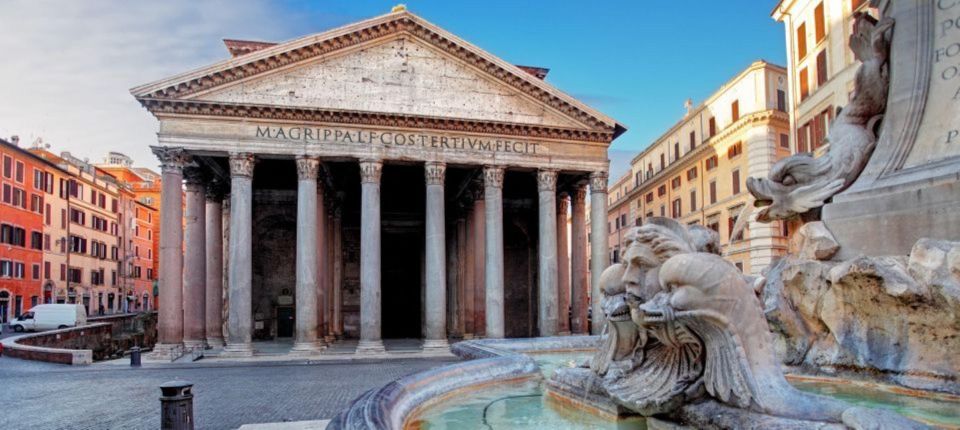
You meet your guide at Foro Traiano, 84, in front of the museum Le Domus Romane di Palazzo Valentini. Your guide holds a sign with the company name, which is handy in a city where every corner looks historic.
From there, you head toward Piazza Venezia. This is a smart way to begin because you get a major visual anchor quickly. Instead of spending the first hour trying to orient yourself, you’re immediately in the part of Rome where big symbols sit side by side with everyday movement.
Practical tip: comfortable shoes matter. The tour isn’t designed for a slow stroll with constant breaks, and you’ll be on your feet for the guided walkthrough.
Piazza Venezia and Piazza dei Santi Apostoli: Rome’s Symbols in Plain Sight
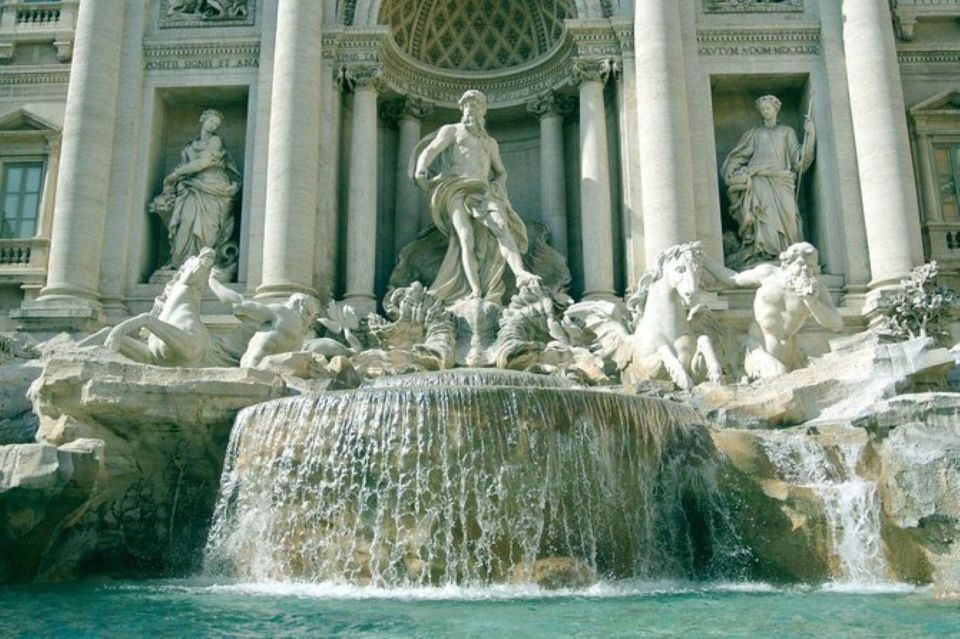
The first major stop is Piazza Venezia, with a guided introduction and a walk of about 20 minutes. Piazza Venezia is one of those squares that helps you understand Rome’s layout fast: it’s a crossroads moment, where you can feel how the city organizes itself around monuments and views.
You’ll also spend time looking at the Altare della Patria, a memorial tied to Italy’s first king. Even if you’re not here for modern history, it’s useful context. It reminds you that Rome isn’t frozen in ancient time—it keeps reworking itself, adding meaning as centuries pass.
Then you move to Piazza dei Santi Apostoli for another guided segment (about 20 minutes). This stop is less famous to first-timers than Trevi or the Pantheon, but it helps keep the tour from feeling like a straight checklist. When you travel this way, the city starts making more sense because it’s connected, not just “landmark jumping.”
Trevi Fountain: The Legend Moment You’ll Want to Time Right
Next up is the Trevi Fountain. You’ll get a guided visit and story time of about 20 minutes, and you’ll also walk through the streets that connect these sights—so the fountain doesn’t feel like an isolated photo spot.
The big payoff here is the legend. During your guided stop, you’ll do the classic coin-toss tradition. It’s simple, but that’s exactly why it works on a short tour. You’re not just looking at a famous scene; you’re participating in a ritual that keeps the place alive.
One helpful note for your expectations: since this is a guided stop, you’ll spend time listening and looking rather than rushing through. That’s great for understanding what you’re seeing. The only downside is that it can feel a bit less flexible if you like to linger longer for photos in one exact spot.
Chiesa Sant’Ignazio di Loyola: Frescoes and Architecture That Change How You Look
After Trevi, you’ll visit Chiesa Sant’Ignazio di Loyola, again with a guided stop of about 20 minutes. This church is described as a Jesuit church known for stunning frescoes and intricate architecture, and it’s the kind of place that rewards a guided explanation.
Why it’s worth your time: churches in Rome can look like beautiful interiors until someone points out what to notice. Here, the guide helps you uncover what’s happening inside, so you don’t walk away with only vague impressions. You get a sense of the spiritual atmosphere too, not just the visuals.
Also, this stop is a nice rhythm change. You go from outdoor monuments and fountains into an indoor space with art details that need slower viewing. It’s one of those moments where your brain switches gears from sightseeing to observation.
Quick heads-up for comfort: Rome churches can have specific dress rules. Sleeveless shirts and skirts are not allowed on this tour, and luggage or large bags are also not allowed—so plan your clothing and pack light.
You can also read our reviews of more city tours in Rome





Pantheon Entry: The Dome, the Big Shift, and Raphael’s Name
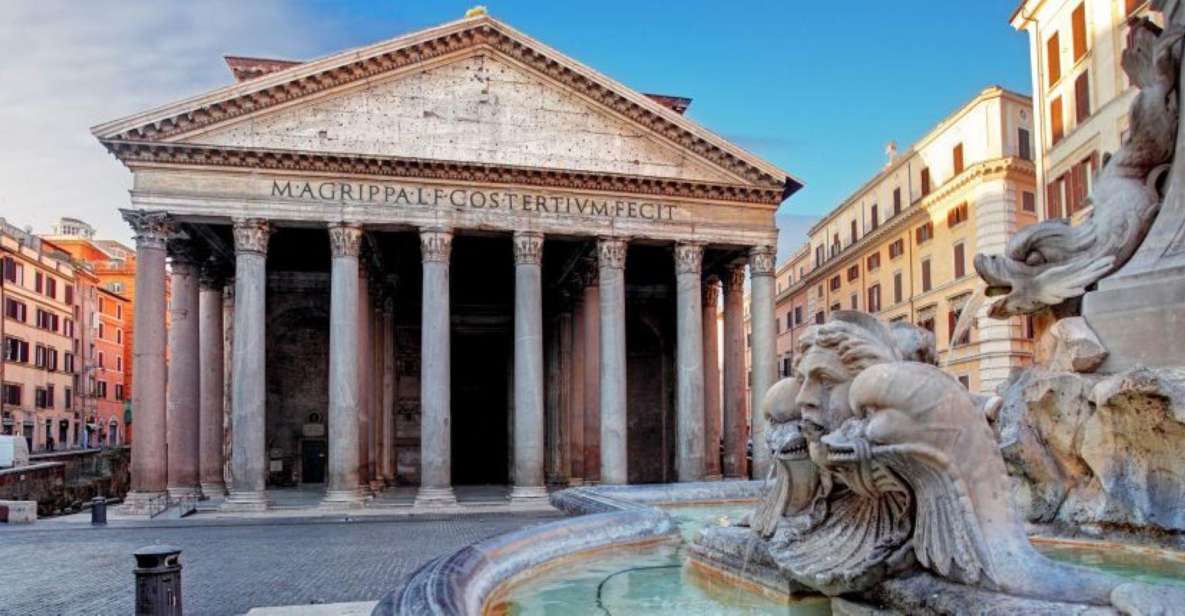
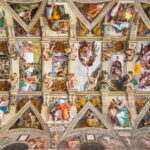
Your tour ends at the Pantheon with guided visit time of about 30 minutes. This is where the title promise really matters, because the Pantheon entry ticket is included and you get a guided tour rather than a self-guided wander.
The focus is the dome: it’s described as the world’s largest unreinforced concrete dome. Even if you’ve seen pictures, the physical scale lands differently in person. You’re not just admiring something old—you’re experiencing how Roman engineering achieved something that still makes people pause.
Then the guide connects the building to its dramatic transformation. You’ll learn about how the Pantheon shifted from a pagan temple to a Christian church. That shift matters because it’s not only religious history. It’s also how reuse changes meaning, art, and function over time.
You’ll also hear about influential figures laid to rest within its halls, including the painter Raphael. That detail keeps the experience human. You’re not just looking at architecture; you’re hearing how famous names became part of this place’s story.
Price and Value: What $53 Buys You (and What It Doesn’t)
The price is listed at $53 per person. For a short tour, that’s not just paying for a walk. You’re paying for three things that are hard to replicate on your own in the same way.
First, you’re paying for Pantheon entry included in the tour. Second, you’re paying for a local guide who ties stops together, so the day feels coherent instead of fragmented. Third, you’re paying for the small-group format, which usually means you spend more time listening and looking—and less time stuck behind a crowd trying to catch up.
What you should still plan for: food and beverages are not included. If you’re hungry, Rome will happily let you snack on the move, but it’s better to finish this tour and then grab a proper bite nearby. Also, there’s no hotel pickup or drop-off, so you’ll be responsible for getting yourself to the start at Foro Traiano, 84.
The Guide Factor: Fluent Language and Q&A-Friendly Storytelling
This kind of tour lives or dies by the guide, and the description emphasizes a fluent English-speaking local guide. You can also choose among many languages: Arabic, English, French, German, Italian, Portuguese, Persian, Russian, and Spanish.
What helps most is that the guide is described as an expert local guide who tells legends and interesting stories, and the format is small group. In practice, that combination tends to mean fewer awkward moments where you’re trying to hear over other people, and more time for questions that make the sites click.
Past feedback highlights that guides often bring real enthusiasm and clear explanations, with people specifically praising guides by name like Alma, Gabriela, and Camila. The takeaway for you: if you’re choosing this tour, you’re not buying into generic facts—you’re opting into someone who enjoys making Rome understandable.
Practical Tips Before You Go: Dress, Bags, and Comfort
This tour has clear rules, and they’re easy to plan around if you read them now instead of later at the meeting point.
- Bring comfortable shoes. You’ll be walking and standing through multiple stops.
- Avoid luggage or large bags. If your bag is big, you may run into trouble with the tour rules.
- No sleeveless shirts and no skirts. Dress in a way that keeps you comfortable, but also tour-compliant.
- Plan for indoor art and outdoor walking. You’ll switch between open squares and church interiors.
One more honest consideration: it’s not suitable for people with mobility impairments. That’s important because the stops are in central Rome and the walking component is part of the experience.
If you’re traveling with someone who uses mobility aids, it’s worth checking options before you book. Here, this tour is clearly built for guests who can handle walking.
Who This Tour Fits Best (and Who Should Rethink It)
I think this tour fits best if you want a structured way to hit major Rome highlights quickly. It’s ideal for first-timers who like stories and context, not just photos. The route also suits people who care about how the Pantheon got repurposed through time, and anyone who enjoys church art without needing to be an architecture specialist.
If you prefer long unhurried exploration, you might feel slightly constrained by the 1.5 to 2 hour window. The itinerary includes set visit times at each stop, including about 20 minutes at Trevi and Sant’Ignazio and about 30 minutes at the Pantheon.
But if you’re the type who likes to learn while you walk, this tour is a strong match.
Should You Book Eternal Rome With Pantheon Entry?
If you’re thinking about it, here’s the simple decision rule I’d use: book it if you want Pantheon entry plus guided context in a short time frame. The included ticket is a real benefit, and the route through Piazza Venezia, Trevi, and Sant’Ignazio gives you variety so the day doesn’t feel one-note.
I’d skip it if you need a fully accessible experience, or if you dislike walking/standing for guided stops. Also, if you’re planning to bring luggage or you’re likely to show up in sleeveless tops or skirts, make changes before you go—this tour has restrictions.
For most visitors, though, this is a practical way to experience Rome’s big names and the stories behind them, ending with the dome that keeps pulling people back in.
FAQ
How long is the Eternal Rome tour with Pantheon entry?
The duration is listed as 1.5 to 2 hours.
What is included in the price?
The included items are the Pantheon entry ticket, a small group setting, and an expert local guide.
Where do I meet the guide?
You meet in front of the museum Le Domus Romane di Palazzo Valentini, with the guide waiting holding a sign with the company name. The starting location is listed as Foro Traiano, 84.
Is food included?
No. Food and beverages are not included.
What languages are available for the guide?
The tour lists live guide options in Arabic, English, French, German, Italian, Portuguese, Persian, Russian, and Spanish.
Is the tour suitable for people with mobility impairments?
No, the tour is not suitable for people with mobility impairments.
Are there any dress code or bag restrictions?
Yes. Luggage or large bags are not allowed, and sleeveless shirts and skirts are not allowed. Comfortable shoes are recommended.