REVIEW · ROME
Divine Masterpieces: Guided Tour of Rome’s Churches and Art
Book on Viator →Operated by Rome Tours · Bookable on Viator
Roman churches tell stories you can walk into. This guided, small-group route links four standout basilicas in central Rome, where you’ll get clear explanations of what you’re seeing and why it mattered. It’s a smart way to experience Christian Rome without getting lost in the usual museum-style crowd flow.
I especially like the small group size (max 10) and the relaxed pace, which leaves room to ask questions. And you don’t just stand outside either; entry inside all four churches is included, so you can focus on the art and architecture instead of ticket lines.
One thing to plan for: it is still a walking tour with multiple stops, and the churches only get about 30 minutes each. If you hate moving on quickly, you may wish you had more time inside your favorite building.
In This Review
- Key highlights I’d plan around
- Why this church-focused walk beats a church checklist
- Getting your bearings at the start point in central Rome
- San Pietro in Vincoli: St. Peter’s chains and Michelangelo’s Moses
- Santa Maria Maggiore: Marian devotion, papal importance, and the snowfall story
- Basilica of Santa Pudenziana: early Christian Rome and mosaic storytelling
- Arcibasilica di San Giovanni in Laterano: the first basilica in Rome and the pope’s cathedral
- Pace, walking, and why the group size matters
- Price and value: what you actually get for $202.58
- Practical tips to make church time feel worth it
- Who this tour fits best (and who might want a different option)
- Should you book Divine Masterpieces for your Rome trip?
- FAQ
- How long is the guided church tour?
- How many people are in the group?
- What’s included in the price?
- Do I need to buy tickets for the churches?
- Where does the tour start and where does it end?
- Is the ticket mobile?
- What kind of walking is involved?
- Do I get confirmation after booking?
- Can I cancel for a full refund?
Key highlights I’d plan around
- Four churches, four time periods: from early Christian Rome to later monumental worship spaces
- Tickets are handled: entrance included for every stop, so you can spend your energy looking
- Questions are welcome: the format feels more like a guided walk-and-talk than a lecture
- A calmer route: it’s designed to give you church art and architecture without the same intensity as major headline sites
- Michelangelo’s Moses is a bonus: paired with the story of St. Peter’s chains at San Pietro in Vincoli
- Max 10 people: easier to keep track of what the guide is pointing out
Why this church-focused walk beats a church checklist
Rome’s churches can feel like a blur when you visit on your own. One day you’re chasing a famous facade, the next you’re inside a dim hall squinting at details you don’t fully understand. This tour is built to fix that problem with a guided sequence that connects art, architecture, and religious meaning in plain language.
What makes it work is the choice of stops. You’re not just seeing four pretty interiors. You’re watching Rome’s Christian identity evolve—how emperors, popes, and local devotion shaped what later visitors (including you) come to admire. And because it’s a small-group walking tour, you tend to get the kind of attention that helps you notice what matters instead of rushing.
Also, the timing is efficient: about 2 hours overall, with roughly 30 minutes per church. That gives you a real taste of each place without turning the day into an all-day endurance event.
You can also read our reviews of more guided tours in Rome



Getting your bearings at the start point in central Rome
You meet at Via del Cardello, 31 (00184 Roma), and the tour ends at Basilica di San Giovanni in Laterano in P.za. San Giovanni in Laterano. That matters because Rome days are wonky: metro lines, long walks, and “why is this alley so steep?” moments happen. Ending at Lateran can be convenient if you’re already planning to explore that area afterward.
The tour uses a mobile ticket, and you’ll receive confirmation at the time of booking. Since it runs near public transportation, you can usually build it into a day without dedicating your entire schedule to logistics.
San Pietro in Vincoli: St. Peter’s chains and Michelangelo’s Moses
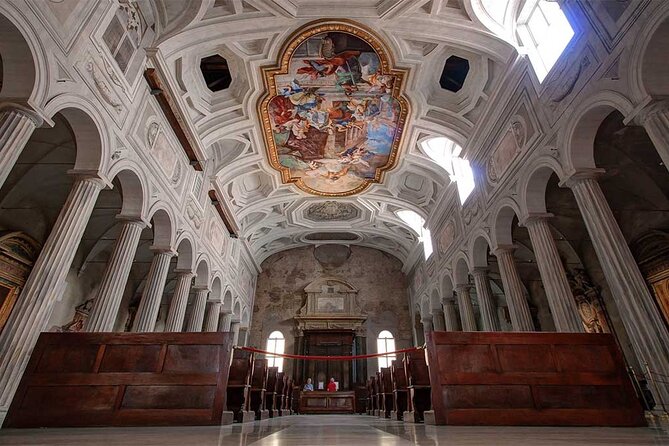
Most people come to San Pietro in Vincoli because it’s tied to a famous relic story—and they’re right to. This basilica dates to the 5th century and was built to house the chains believed to have held Saint Peter during imprisonment in Jerusalem. Even if you don’t know all the theology, the guide-style explanation makes the relic story feel grounded in how early Christianity claimed space and meaning in Rome.
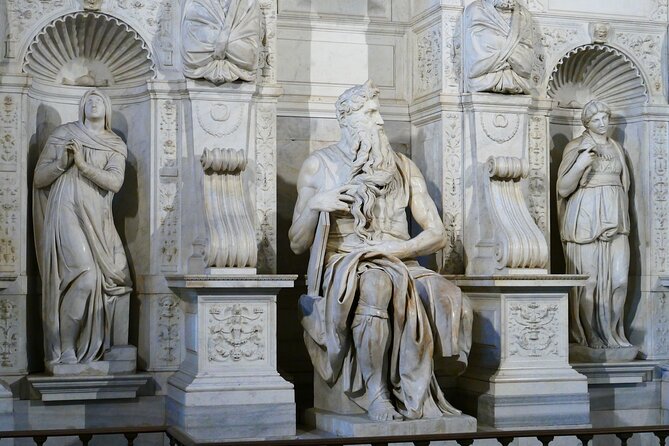
Then comes the part that stops many first-time visitors: Michelangelo’s statue of Moses. The Moses figure is often discussed as a masterpiece of Renaissance sculpture, but on this tour it lands differently because it’s placed inside a much older sacred setting. You get to see how later art and earlier devotion can share the same room.
Expect a focused half-hour: enough time to take in the architecture and then shift your attention to the art piece the church is known for. If you like sculpture details—textures, posture, and expressive hands—this is a strong stop.
Possible drawback: if your favorites are super-detailed churches where you want to linger 45–60 minutes, this stop may feel like it runs fast. The tradeoff is that you’ll get three more major interiors afterward.
Santa Maria Maggiore: Marian devotion, papal importance, and the snowfall story
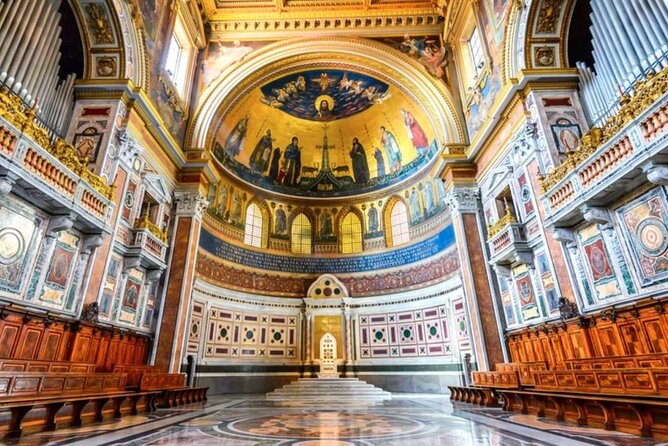
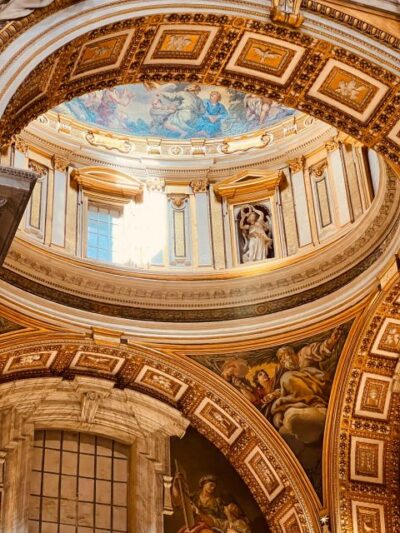
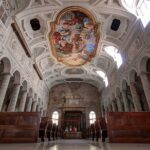
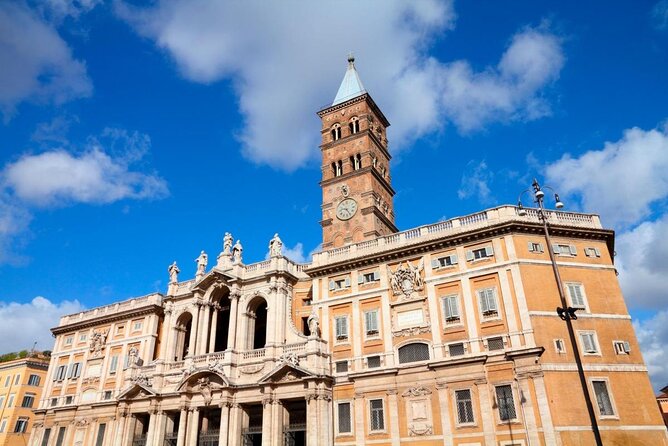
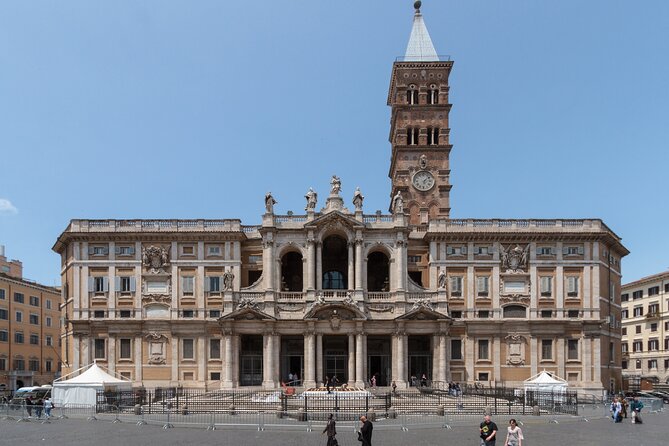
Next is Basilica di Santa Maria Maggiore, the largest church in Rome dedicated to the Virgin Mary and one of the four papal basilicas. It’s the kind of church that has “important” written all over it—scale, decoration, and a long paper trail of why popes and worshippers cared.
There’s also a tradition behind the location: Pope Liberius reportedly dreamed of the Virgin Mary, who instructed him to build a church. The famous detail is the miraculous snowfall story tied to August 5. The basilica celebrates it annually by dropping white flower petals from the ceiling to mark the event.
On a guided tour, that kind of tradition isn’t just trivia. It gives you a framework for what to look for—how legends and liturgy shape the way a church becomes part of community memory. You’ll also notice how the basilica’s layout and grandeur support centuries of ritual, not just modern tourism.
What I like for you to know: if you’re visiting Rome during a busy season, this stop tends to feel calmer than the biggest headline sites because you’re focusing on a different district of the city and a different type of experience—religious art viewing rather than photo-queue sightseeing.
Basilica of Santa Pudenziana: early Christian Rome and mosaic storytelling
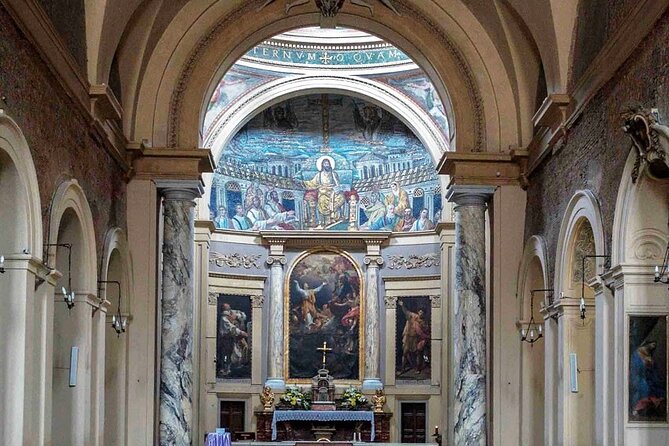
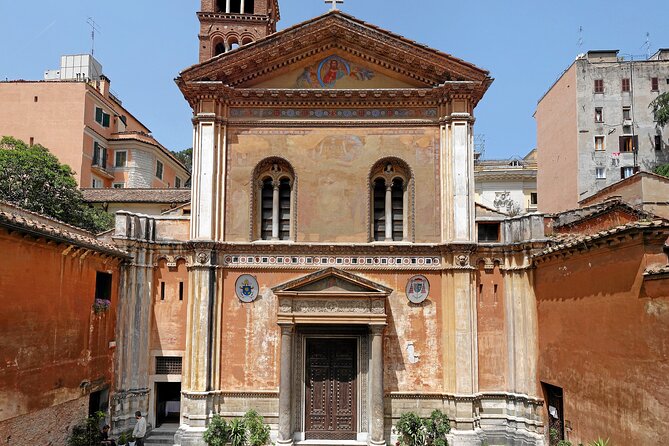
At Santa Pudenziana, you step into a 4th-century church with a dedication that connects to early Christian families and Roman household traditions. The background is interesting: Saint Pudentiana is traditionally described as connected to Saint Praxedis and Saint Praxedis’s circle, but some scholars suggest the name may function as an epithet tied to the Domus Pudentiana (the house of Pudens).
Here’s why this stop is worth your time: it’s especially noted for its mosaics. Mosaics aren’t just decoration. They’re a visual language for belief—figures, scenes, and symbols designed to teach and reinforce faith in a time when most people didn’t have books in hand.
With about 30 minutes, you won’t have time to become a mosaic scholar, but the guide framing helps you see patterns you’d miss alone. You’ll leave with a clearer sense of how early Christian Rome adapted Roman artistic forms and materials for religious storytelling.
Possible consideration: mosaics can be visually intense. If you’re tired, you might need a brief reset moment to keep your eyes fresh.




Arcibasilica di San Giovanni in Laterano: the first basilica in Rome and the pope’s cathedral
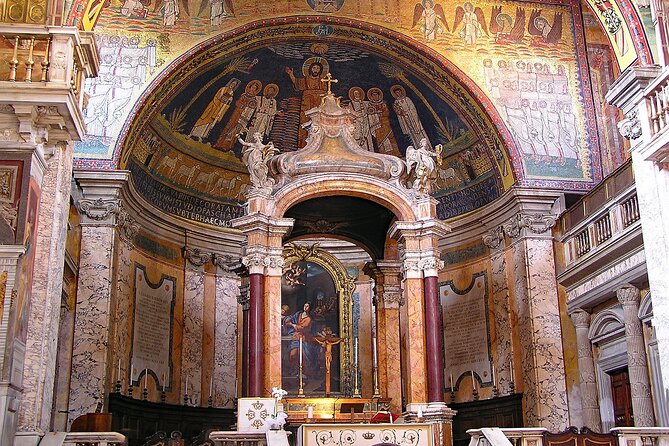
The final stop is Arcibasilica di San Giovanni in Laterano (St. John Lateran). This is one of those Rome anchors you can’t really skip if you care about how Christianity organized itself in power.
What makes it historically massive: it’s described as the first Christian basilica in Rome, commissioned by Emperor Constantine and consecrated in AD 324. For about a millennium, it held the title of the most important church in Christendom, and it served as the pope’s main place of worship until the late 14th century.
Today, it continues to function as Rome’s official cathedral and the papal seat. That’s a big deal when you’re standing there. You’re not just looking at an old building; you’re seeing an active center of religious authority with centuries of continuity.
You get about 30 minutes here as well, and the focus tends to land on meaning: why this place mattered, how it influenced other church building choices, and how the papacy’s role evolved while Lateran remained central.
Practical note: since this is also a working cathedral, it’s smart to plan your clothing and behavior accordingly (covering shoulders and respecting quieter spaces).
Pace, walking, and why the group size matters
This is scheduled as a 2-hour small-group tour, max 10 travelers, and it’s marked as a moderate physical fitness level. The design is simple: walk between churches, then spend a focused chunk of time inside each.
That format is a plus if you like clarity and structure. It’s also practical because Rome’s churches can be hard to read without context. A guide helps you connect the dots quickly: which elements are symbolic, which are architectural features, and which are tied to specific historical moments.
One note from real-world timing: the tour can run a bit longer than the estimate. In at least one recent instance, a 2-hour schedule ran closer to 3 hours. I’d plan your day with a little cushion after the tour, especially if you have a dinner reservation or another timed ticket.
Price and value: what you actually get for $202.58
At $202.58 per person, this isn’t a budget “wander with a map” activity. The value is in what’s included and what’s avoided:
- Professional licensed guide
- All fees and taxes
- Entrance inside all monuments (meaning you’re not paying separately for each church visit)
If you were doing this on your own, you’d likely spend time planning entries, figuring out which churches are open when, and paying individual entrance costs. Here, the guide builds an efficient route across major sites, and you get time inside each one with explanations that help you understand what you’re looking at.
I think this price makes the most sense if you:
- want guided context (not just photos),
- care about art and architecture meaning,
- prefer small groups over big coach tours.
Practical tips to make church time feel worth it
A church tour is most enjoyable when you walk in with a few expectations right from the start.
- Wear comfortable shoes. You’ll be moving between stops and spending most of your time indoors, but that walking still adds up.
- Bring a light layer. Churches can be cooler than the street, and the air can feel noticeably different once you’re inside.
- Go in with a short “what am I looking for?” checklist: relic story, architecture cues, and the specific artwork tied to that church. The guide will point things out, but your focus helps you catch more.
Also, with only about 30 minutes per stop, it helps to avoid spending the first 10 minutes just figuring out where to stand. Let the guide lead the first sweep, then you can return to your favorite area afterward.
Who this tour fits best (and who might want a different option)
This tour is ideal for you if you want an efficient, church-focused Rome experience with real guidance.
You’ll especially like it if:
- you want four major churches in one guided walk,
- you care about how early Christianity shaped Rome’s later religious art,
- you prefer quiet, interior-focused sightseeing over huge outdoor monuments.
It might not be perfect if:
- you want lots of free time inside the church of your dreams,
- you’re sensitive to time pressure (each stop is structured and you move on).
Should you book Divine Masterpieces for your Rome trip?
Yes, if your goal is to understand Rome’s Christian art and architecture without wasting time. This is a well-structured way to hit San Pietro in Vincoli, Santa Maria Maggiore, Santa Pudenziana, and San Giovanni in Laterano with entrance included and a guide who keeps the experience clear and question-friendly.
Book it if you want something calmer than the biggest headline sites and more meaningful than a checklist. Skip it only if you hate walking and would rather wander slowly with no schedule at all.
FAQ
How long is the guided church tour?
The tour is listed at about 2 hours total, with roughly 30 minutes at each of the four churches.
How many people are in the group?
The tour has a maximum of 10 travelers.
What’s included in the price?
You get a professional licensed guide, all fees and taxes, and entrance inside the monuments (all four churches).
Do I need to buy tickets for the churches?
No. Entrance to the monuments is included as part of the tour.
Where does the tour start and where does it end?
It starts at Via del Cardello, 31, 00184 Roma RM, Italy, and ends at Basilica of San Giovanni in Laterano, P.za. San Giovanni In Laterano, 00184 Roma RM, Italy.
Is the ticket mobile?
Yes. The tour provides a mobile ticket.
What kind of walking is involved?
This is a walking tour with a moderate physical fitness level, since you’ll move between the churches and spend time inside each one.
Do I get confirmation after booking?
Yes. Confirmation is received at the time of booking.
Can I cancel for a full refund?
Free cancellation is available. You can cancel up to 24 hours in advance for a full refund (based on the local start time).