REVIEW · ROME
Tour of Rome on board a Vintage Fiat 500
Book on GetYourGuide →Operated by Rome500Tour · Bookable on GetYourGuide
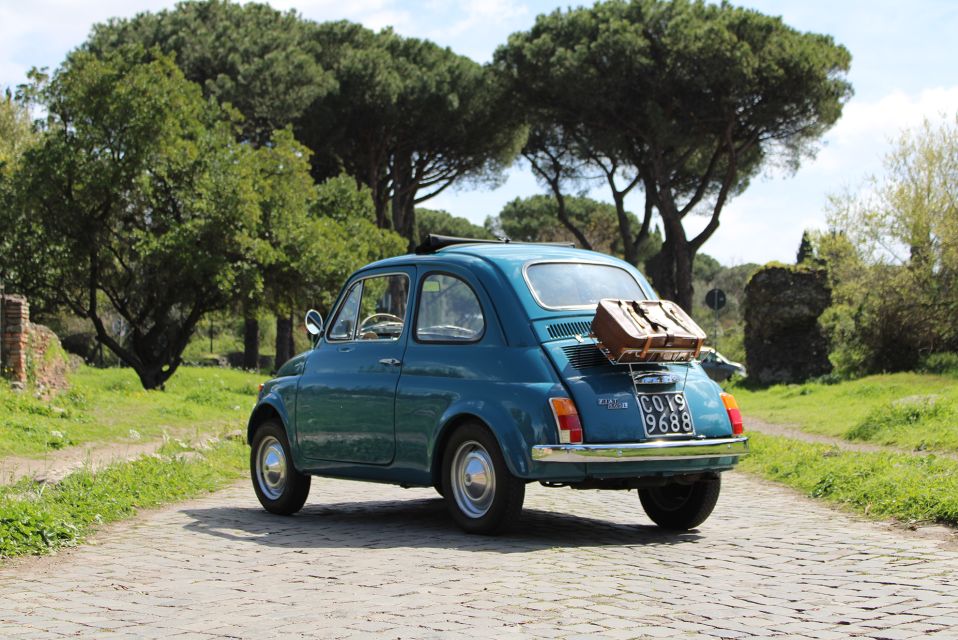
A classic Fiat makes Rome feel different. You’ll cruise in a restored 1967 Fiat 500 for a guided loop of Rome’s major sights plus hidden corners you can’t reach (or can’t enjoy) the same way on foot.
I love the way this tour cuts down on the tired, sun-baked walking while still giving you real stops to look, photograph, and ask questions. I also like the guide approach, with David showing up in standout moments for strong Roman architecture know-how and a friendly, easy pace.
One thing to weigh: tickets aren’t included, and the car is sized for up to 3 guests, so the price can sting if you’re traveling solo or with a large group.
In This Review
- Key highlights I’d plan around
- Why a 1967 Fiat 500 changes Rome for you
- Picking up at Piazza Venezia (and why the meeting point matters)
- The first stops: Colosseum and Pantheon without the marathon
- Piazza Navona, St. Peter’s area, and a smart rhythm of stops
- The Roman power zone: Imperial Fora, Palatine Hill, and Piazza Venezia
- Vatican City + Santa Maria Maggiore: big spiritual stops in a small window
- Trastevere, Janiculum Hill, and the quieter “Rome-after-hours” feeling
- Food and drinks: espresso breaks plus a Prosecco aperitif
- How long is it, and why timing is the real value
- What to know before you go: tickets, languages, and car comfort
- Tickets
- Languages
- Group size and comfort
- Wear and bring
- Should you book the Rome on board a Vintage Fiat 500 tour?
- FAQ
- How long is the Rome 500 Tour?
- Is this tour private?
- What car do you ride in?
- Are attraction or museum tickets included?
- Where does the tour start?
- What guided stops are included?
- How many people can fit in the Fiat 500?
Key highlights I’d plan around
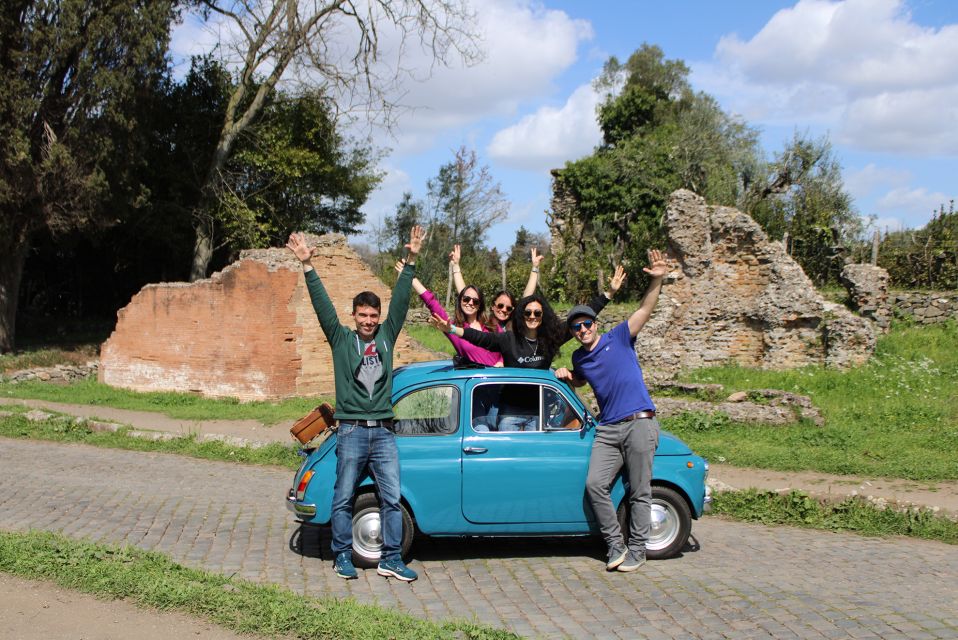
- Restored 1967 Fiat 500: classic-car fun with practical city driving instead of a slow sightseeing crawl
- Tight, guided timing at each stop: you get context at the Colosseum, Pantheon, Vatican area, and more
- Piazza Venezia as the launch point: a central, photogenic start before you head into quieter streets
- Photo stops plus espresso and an aperitif: you’re not racing nonstop; you’re taking Roman breaks
- Small private group: the experience stays personal inside the car
- Multi-language guide support: English, French, Italian, Japanese, Spanish
Why a 1967 Fiat 500 changes Rome for you
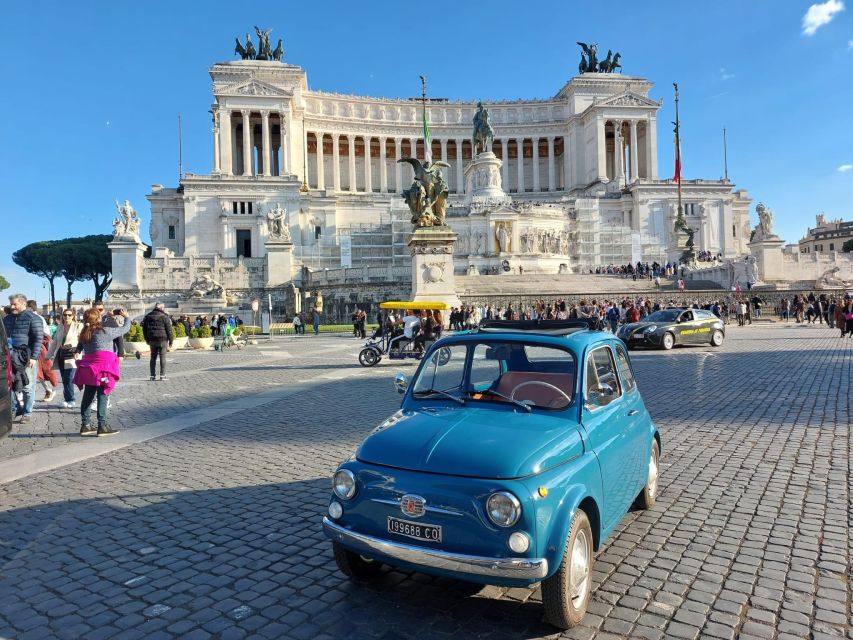
Rome can be a lot. The crowds hit you, the distances add up, and suddenly you’re just trying to survive from one famous facade to the next. This tour tackles that head-on by turning the commute itself into part of the experience.
The 1967 Fiat 500 is the big reason. You’re not stuck in a modern bus rhythm where everyone looks down at their own schedule. Instead, you feel the old-school Roman pace: slow enough to take in views, quick enough to cover major areas in a short window. The cobbled streets don’t feel like an obstacle here—they feel like the point.
And the format is smart: the tour mixes major landmarks with smaller, scenic detours. That combination matters in Rome, because the best moments are often the in-between ones: a viewpoint you didn’t plan, a quieter side street, a viewpoint angle you wouldn’t get from the main path.
You can also read our reviews of more tours and experiences in Rome.



Picking up at Piazza Venezia (and why the meeting point matters)
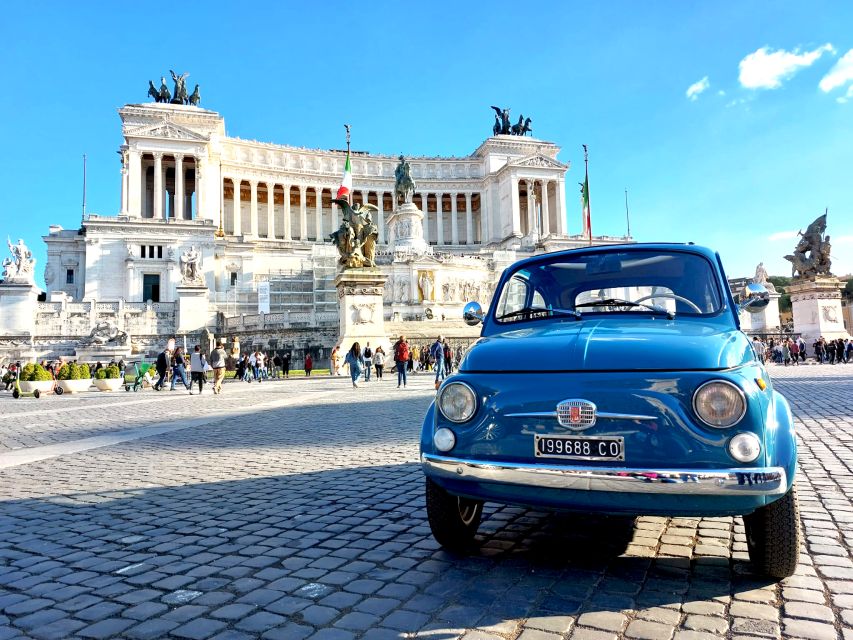
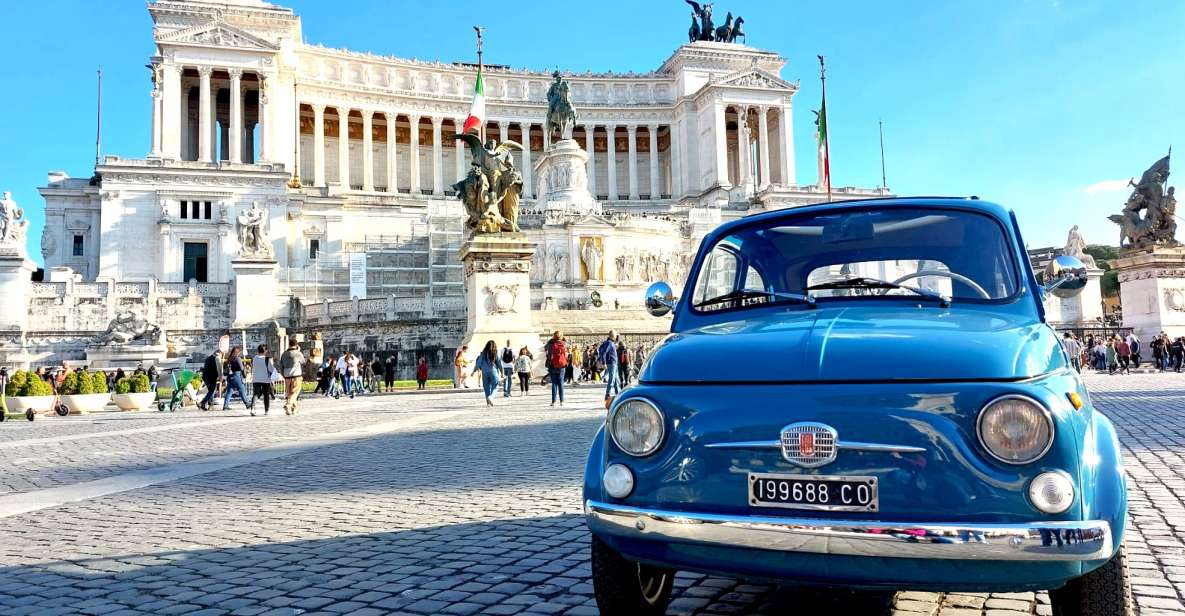
This tour starts from Piazza Venezia, which is a great anchor point for first-time visitors. It’s central, easy to orient yourself, and it puts you close to several big-name zones right away. Even better, you can request customized pickup planning, so you’re not forced to navigate the city with a heavy day plan.
Because this is a private group and the car is small, you’ll feel the difference in pace immediately. You’re not part of a crowd that constantly shuffles and waits. The guide can keep things moving while still stopping for photos and quick looks.
Practical tip: Rome streets can be tight and change block-to-block. I’d arrive a few minutes early, especially if your pickup is customized, so you’re not stressed when the car is ready.
The first stops: Colosseum and Pantheon without the marathon
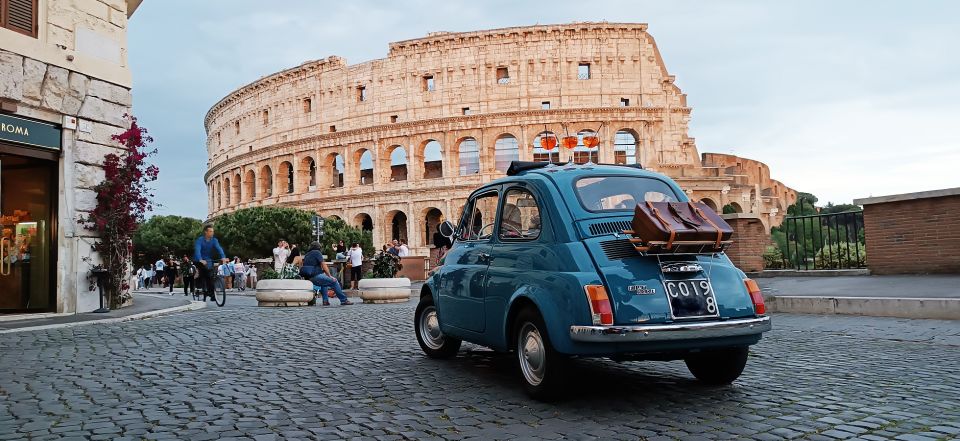
The itinerary is built to get you grounded fast. The classic early pairing is the Colosseum and the Pantheon, with guided time at each.
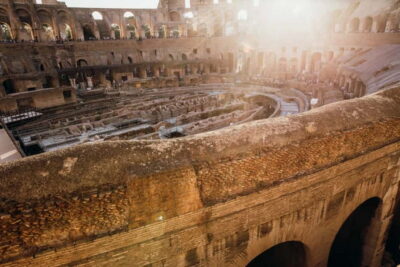
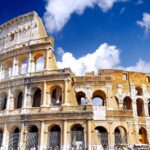
At the Colosseum, your visit isn’t just a look-and-go. You get about 30 minutes with a guide, which is a useful amount of time when you’re doing a route tour by car. You’ll get oriented to what you’re seeing—how the building relates to Roman power and how it still reads at street level today.
Next comes the Pantheon, where you get a shorter guided stop (about 20 minutes). The trick with the Pantheon is that the place rewards focus. You don’t need an all-day museum schedule. You need a quick guide-led framework so you know where to look and what details matter, then you can enjoy the space as you walk around it.
What you gain by doing these early: you’re not saving the hardest mental landmarks for late afternoon. You’re seeing them while your energy is still high, and you can still enjoy the photo moments as “wow” instead of “okay, time to move.”
Piazza Navona, St. Peter’s area, and a smart rhythm of stops
After the Pantheon, the route shifts into classic Rome-vibes territory.
Piazza Navona gets about 15 minutes with guidance. This isn’t just about the big visual hits. It’s about understanding how the square functions and why it looks the way it does from different angles. You’ll likely find that a short guided stop here is the right length, because your time then goes into more meaningful monument zones.
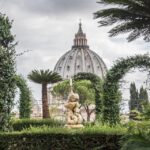
Then comes St. Peter’s Basilica with about 20 minutes guided. The key value in this tour format is that you don’t waste the day trying to do everything at Vatican area scale on your own timetable. Instead, you get a focused window where your guide can point out what to notice so you don’t walk past the most important details.
One note to set expectations: this is time-efficient. That’s the point. If you love slow, long museum-style wandering, you’ll probably want separate ticketed time later. If you want a well-structured overview, this length fits.
The Roman power zone: Imperial Fora, Palatine Hill, and Piazza Venezia
The route includes the areas where Rome’s government and elite life made their mark—so you get context beyond “famous ruins exist.”
You’ll pass through the Imperial Fora with about 15 minutes guided, then Palatine Hill for about 15 minutes. These stops work best when you accept one simple truth: you can’t “finish” ancient Rome in a car tour. What you can do is get the map in your head—the relationships between sites, why certain views matter, and what story the city is telling you through ruins.
This is where a guide matters. You’re not just looking at stones. You’re learning what made the spaces valuable, what shifted over time, and how the layout influences what you see from the street.
Then you circle through Piazza Venezia again (with about 10 minutes guided). That second look is helpful because it gives you a “re-grounding” moment. You get a clearer sense of how Rome is layered—how you can move from ancient sites to more modern streets without feeling totally lost.






Vatican City + Santa Maria Maggiore: big spiritual stops in a small window
The tour continues toward Vatican City with about 20 minutes guided, then moves to Basilica Papale di Santa Maria Maggiore with about 10 minutes guided.
In a shorter tour format, Vatican area stops can either feel rushed or genuinely useful. Here, the guide time is what keeps it from becoming just photo-taking. You’re getting enough context to know what you’re looking at and why it’s significant.
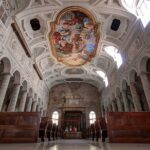
Santa Maria Maggiore is a good addition because it diversifies the day beyond the Vatican’s most obvious spotlight. Even in a short visit, you’re exposed to another major church space without having to commit to a full separate outing.
If you’re the type who likes to linger, you’ll probably want to come back later and do more independently. The tour sets you up for that. It helps you decide what deserves your extra time.
Trastevere, Janiculum Hill, and the quieter “Rome-after-hours” feeling
One of the best parts of Rome is the way some neighborhoods feel different from the big-name zones. This route builds that shift by including Trastevere (about 10 minutes guided), then Janiculum Hill (about 15 minutes guided).
Trastevere is often where you start imagining dinner plans and evenings that stretch longer than you meant them to. In a car tour, you get a taste instead of a full walking immersion, but it’s still valuable—you get the “this is why people come back” feeling fast.
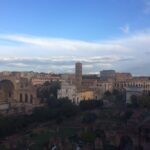
Janiculum Hill is the kind of stop that helps you understand why locals love their viewpoints. Even with a short guided window, the time is enough to catch the view and learn what you’re looking at.
Then there’s Basilica di San Giovanni in Laterano (about 10 minutes guided). It’s a practical, smart inclusion because it brings in another major religious landmark without forcing your day into a separate full itinerary.
Food and drinks: espresso breaks plus a Prosecco aperitif
This tour isn’t all monuments and traffic. It includes planned pauses that make the day feel Roman in a real way.
You’ll get an espresso coffee during the route, and you’ll also enjoy a Prosecco and refreshing aperitif while admiring a panoramic view. That combination is exactly how you keep energy steady on a short 2.5-hour (give or take) sightseeing plan.
I like this because it’s not just a “free drink so everyone stays quiet” setup. It’s timed to moments where you can actually enjoy the view and reset your attention. Rome works better when you stop to taste and look, not just move.
How long is it, and why timing is the real value
The tour is listed at 2.5 hours. The included description also talks about a 3-hour tour feel. Realistically, plan for a short half-day commitment with guide time at each stop.
That matters because it changes who the tour is for:
- You want the big sights, but you don’t want to build a whole day around tickets and long walks.
- You’d rather spend more energy learning what you’re seeing than keeping your feet moving nonstop.
- You care about photos, but you also want the stories behind the stones.
At a per-person price of $181.26, it’s not the cheapest sightseeing option in Rome. The value comes from the combination: a small private group experience, guided stops across multiple major areas, and the classic-car ride itself, plus the espresso and Prosecco aperitif.
If you’re traveling as a couple or small group (and sharing the car effectively), the price can feel more reasonable. If you’re solo, it’s more of a splurge—but still a fun, efficient way to get a lot of Rome in a short time.
What to know before you go: tickets, languages, and car comfort
A few practical notes so your expectations match the experience.
Tickets
At least the big attractions are guided with time on-site, but attractions and museum tickets aren’t included. You’ll want to plan any additional ticketed entry separately if you want more time inside than the guided window allows.
Languages
Your guide can be English, French, Italian, Japanese, or Spanish, depending on the tour language you select.
Group size and comfort
The tour is suitable for up to 3 guests due to the size and safety standards of the car. If you like a private, close-feeling tour where the guide can respond fast to questions, this setup works.
Wear and bring
The day is short, but Rome weather and street surfaces still matter. I’d wear comfortable shoes anyway, even if the whole point is less walking than a typical walking tour. Bring sunglasses and water if it’s warm—Rome can still surprise you.
Should you book the Rome on board a Vintage Fiat 500 tour?
If you want Rome in one efficient, well-guided circuit—without turning the day into an endurance test—this is a strong pick. The classic Fiat 500 ride adds joy, the stop plan gives you context at major landmarks, and the espresso + Prosecco aperitif makes it feel like an actual outing, not just transportation with a lecture.
Book it if:
- you like private tours and small groups
- you care about iconic sights but want less walking
- you want a guide who can explain what you’re looking at (David’s architecture-focused approach is a good sign)
Consider skipping or pairing it with a longer follow-up if:
- you want long, self-paced museum time at any one site
- you’re starting the day with big ticket priorities you want to control fully
If your goal is a memorable Rome highlight tour with a distinctly Italian twist, this one is easy to recommend—especially if you’ll enjoy the “short stop, good story, move on” rhythm.
FAQ
How long is the Rome 500 Tour?
The tour duration is listed as 2.5 hours. Starting times vary, so checking availability will show when you can book.
Is this tour private?
Yes. It’s described as a private group experience.
What car do you ride in?
You ride in a restored 1967 Fiat 500 F.
Are attraction or museum tickets included?
No. Tickets for attractions and museums are not included.
Where does the tour start?
The tour departs from Piazza Venezia, and pickup is customized and can be planned based on your needs.
What guided stops are included?
The itinerary includes stops with guided time such as the Colosseum, Pantheon, Piazza Navona, St. Peter’s Basilica, Circus Maximus, Imperial Fora, Piazza Venezia, Pyramid of Cestius, Palatine Hill, Vatican City, Santa Maria Maggiore, Trastevere, Janiculum Hill, and Basilica di San Giovanni in Laterano.
How many people can fit in the Fiat 500?
Because of the car size and safety standards, it’s suitable for up to 3 guests.