REVIEW · ROME
Rome: Fountains and Squares small-group guided Walking Tour
Book on GetYourGuide →Operated by City Walks · Bookable on GetYourGuide
Rome’s wishes are best made with a plan. This small-group guided walk strings together the city’s most famous squares and fountains—so you’re not just “seeing” Rome, you’re understanding why each spot matters and how to enjoy it without getting buried in lines. I love the way the guide turns big landmarks like Trevi Fountain and Piazza Navona into stories you can actually picture, right where you stand.
I also like that the tour handles the real-life part: crowds, timing, and where to be for the best moments. The guide even helps you reach the Trevi water’s edge for photos and the classic wish (coin toss, or swipe-your-card style). One possible drawback: Pantheon entry tickets aren’t included, so you’ll need to plan for that extra step if you want to go inside.
In This Review
- Key moments you’ll remember
- Before you go: what this 2-hour route really does
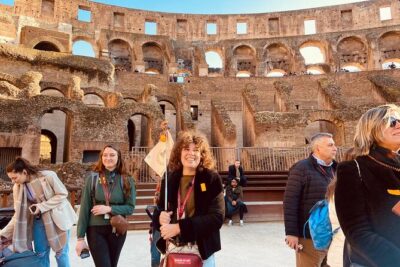
- Starting at Piazza Barberini: the red scarf and the smart way to meet
- Trevi Fountain: coin or card wish, plus a plan for the crowd
- The Pantheon stop: seeing it from the outside, with context for what you’re looking at
- Piazza Navona: oval shape, ancient stadium roots, and the Four Rivers Fountain
- Spanish Steps: Fontana della Barcaccia and the views you earn
- Price and value: is $78.57 worth it for two hours?
- What this tour is best for (and who should skip it)
- How to get more out of it on the day
- Should you book this Rome Fountains and Squares walking tour?
- FAQ
- How long is the Rome Fountains and Squares small-group walking tour?
- How much does the tour cost?
- Where do I meet the guide?
- Where does the tour end?
- Is the tour in English?
- Is a Pantheon ticket included?
- What are the main stops on the route?
- Can I throw a coin in Trevi Fountain during the tour?
- Is the tour wheelchair accessible?
- Who can’t join this tour?
Key moments you’ll remember
- Trevi Fountain wish made easier: the guide helps you get to a good spot even when it’s packed.
- Pantheon time with key context: you’ll see it with explanations, but tickets aren’t part of the price.
- Piazza Navona, four rivers, one obelisk: you get the symbolism behind Bernini’s Fountain of the Four Rivers and the Obelisk of Domitian.
- Spanish Steps with the right viewpoint: you connect the stairs to Spanish Square and the views above.
- A red-scarf meeting point that’s easy to find: start at Piazza Barberini, just outside Metro Barberini.
Before you go: what this 2-hour route really does

This is a fast, focused “greatest hits” tour. You get a guided pass through the center of Rome’s most photo-heavy locations—Trevi Fountain, the Pantheon, Piazza Navona, and the Spanish Steps—in just about two hours.
That speed is the point. If you’re short on time (or you want to balance sightseeing with time to wander on your own after), this format helps you see the highlights without losing your whole day to logistics. You’ll also get enough context at each stop that the places feel less like background scenery and more like living city landmarks.
You can also read our reviews of more walking tours in Rome



Starting at Piazza Barberini: the red scarf and the smart way to meet
The tour starts at Piazza Barberini, right by the Metro Barberini station. The guide will be easy to spot with a red scarf, standing just outside the metro entrance.
Why that matters: Rome can be confusing for first-timers, and meeting points that are hard to find waste your energy. Starting in this central area also keeps your walking efficient. You’re not doing a long warm-up just to reach the first famous fountain.
The tour ends back at the meeting area as well, which is handy if you’re trying to avoid the “now what?” feeling when your sightseeing day is already moving fast.
Trevi Fountain: coin or card wish, plus a plan for the crowd
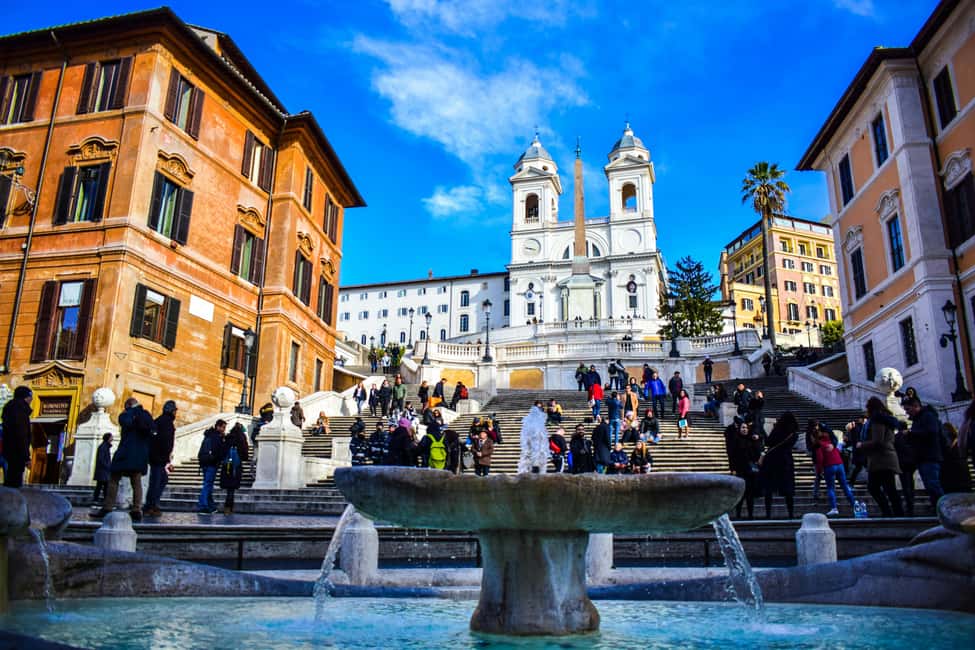
Trevi Fountain is the headline. It’s Piazza di Trevi and the famous baroque façade of Fontana di Trevi, with legends attached to almost every detail. The tradition is simple: toss a coin into the fountain for a return trip to Rome. Two coins are tied to romance, and three coins are linked with marriage or a fresh start.
You’ll also get the more grounded angle: Trevi Fountain helps raise about €1.4 million per year for local families in need. So yes, it’s a wish ritual—but it’s also a working part of the city.
Now the practical part: Trevi is crowded. The best thing about this tour is that the guide doesn’t just point—you’ll be moved through the busy area with a route that gets you to the water’s edge for a picture and the coin toss (or the modern twist: swipe your card to make a wish). You’ll spend less time stuck behind bodies and more time actually enjoying the moment.
What to watch for at Trevi
Keep your expectations realistic. You may not stand in perfect “movie scene” space, but with the guide’s positioning, you can still get a great angle and do the ritual properly.
The Pantheon stop: seeing it from the outside, with context for what you’re looking at

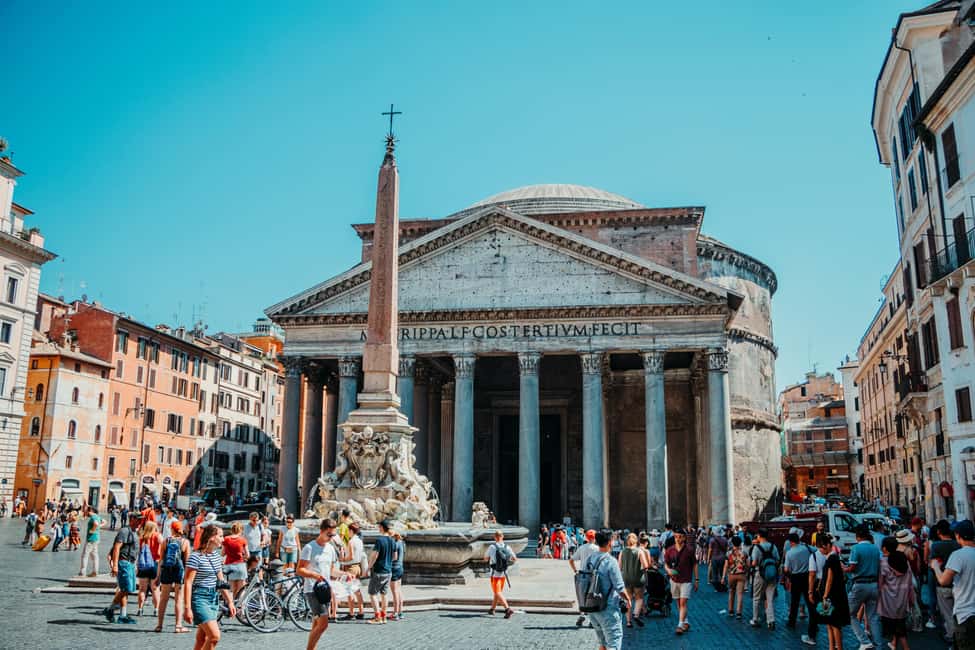
Next up is the Pantheon. Even if you only pass it at street level, it’s hard not to feel something here. This is the famous temple that dates back to around 27 BCE, commissioned by Marcus Agrippa. The name comes from Greek roots meaning devoted to all gods.
The building’s condition is famous, too—people notice how intact it looks—and the interiors are even more surprising. One detail worth knowing before you arrive: its original purpose still isn’t fully explained, which is part of the Pantheon’s mystery.
Important for your plans: Pantheon tickets are not included. The tour includes a visit time, but you’ll need to handle entry separately if you want to go inside. This matters because timed entry windows can affect your day. If you’re hoping to experience the interior and not just the exterior, build that in early.
How this stop helps you as a traveler
At Rome’s top sites, it’s easy to turn into a checklist tourist. The guide’s explanations help you notice features instead of just taking photos. That way, when you look up at the architecture—or when you compare how it feels from outside vs. inside—you’ll actually understand what you’re seeing.
Piazza Navona: oval shape, ancient stadium roots, and the Four Rivers Fountain
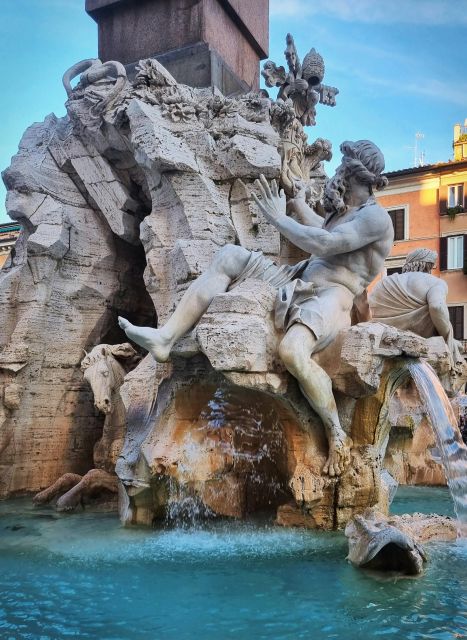
Then you reach Piazza Navona, one of Rome’s most recognizable public spaces. It’s famous for its oval shape, and the reason is history: it was built on top of the Stadium of Domitian.
This isn’t just trivia. Knowing that helps you understand why the square looks the way it does, and why it feels like an old arena even though it’s now a place for strolling, shopping, and hanging out.
At the center is Bernini’s Fountain of the Four Rivers, topped with the Obelisk of Domitian. The combination makes the square feel dramatic—part sculpture, part architecture lesson. You’ll also hear how Romans once cheered the agones, the games, in this kind of arena setting.
Why the guide’s timing matters here
Piazza Navona tends to have constant movement—people flowing around performers, fountains, and café areas. The benefit of a guided stop is that you’re not wandering aimlessly while the best viewpoints disappear. You’ll get time to look, then move on with enough context to remember what you saw.
You can also read our reviews of more guided tours in Rome






Spanish Steps: Fontana della Barcaccia and the views you earn
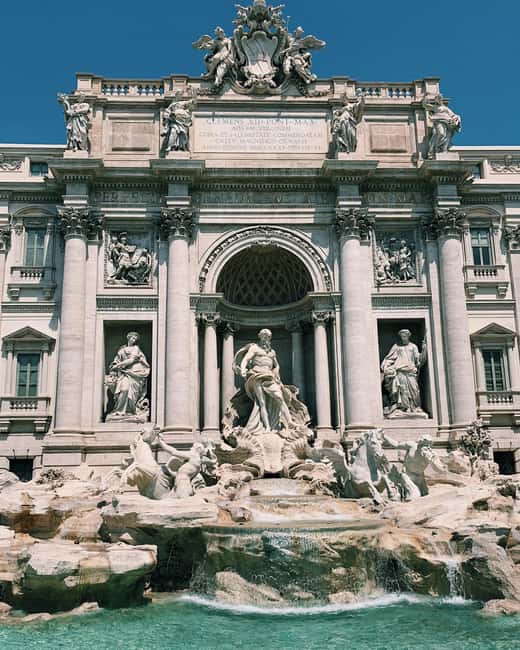
You finish at the Spanish Steps area, with the tour ending back at Piazza di Spagna. The stairs connect Spanish Square below with higher viewpoints above. That change in elevation is the whole point: you get a city view payoff, not just a photo.
While you’re around, you’ll also see Pietro Bernini’s Fontana della Barcaccia (the Fountain of the Ugly Boat). It’s playful in a way that feels very Roman—art that doesn’t take itself too seriously even while it’s impressive.
This stop is a good reminder that Rome isn’t only ancient ruins. It’s also Baroque design, street-level life, and clever public art you meet while walking.
A small tip for your own pace
At the Spanish Steps, you can easily rush. Try to pause halfway and look back down toward where you started. That’s when the stairs stop being just steps and become a viewpoint system.
Price and value: is $78.57 worth it for two hours?
At $78.57 per person for about 2 hours, this tour isn’t the cheapest way to see Rome’s center—but it’s also not priced like a luxury day trip. The value comes from three places:
First, you’re paying for an experienced guide who knows how to talk at each stop, not just where to go. That’s what turns the Pantheon and Piazza Navona into more than landmarks.
Second, you’re paying for time efficiency. In a city where you can easily spend an hour getting oriented or stuck behind crowds, a guided route helps you see key highlights without losing the day.
Third, you get practical crowd help at the most chaotic stop: Trevi Fountain. Getting to a good spot for the coin toss and photos is one of those “small” things that changes your whole experience. If you’ve tried to do Trevi on your own, you already know how quickly it becomes frustrating.
The one cost caveat is that Pantheon tickets aren’t included. If your plan includes going inside, you should expect an additional expense beyond the tour price.
What this tour is best for (and who should skip it)
This tour fits well if:
- You want the biggest central sights in a short time
- You like your sightseeing with stories and clear explanations
- You’d rather manage crowds with a plan than wrestle with them alone
It may not be the best match if:
- You want long, slow time inside the Pantheon. With tickets not included, and the overall tour being timed, you might prefer a tour that’s designed specifically for interior time.
- Mobility limits matter for you. The tour is listed as wheelchair accessible, but it also isn’t suitable for babies under 1 year and people over 95 years. If you’re near those limits, it’s worth thinking carefully.
How to get more out of it on the day
Even with a guide, your choices affect your experience. Here’s how to make the most of two hours:
Wear comfortable shoes. You’ll be walking between major stops.
Bring cash only if you want the traditional Trevi coin ritual. The tour also includes a modern option—swipe your card—so you’re not limited either way.
If you care about the Pantheon interior, plan for tickets ahead of time. Since tickets aren’t included, you don’t want to reach the Pantheon and realize your timing is off.
And at each stop, give yourself one job: look for one detail the guide mentions, then take your photo only after you spot it. That simple rhythm keeps the tour from becoming a blur.
Should you book this Rome Fountains and Squares walking tour?
I’d book it if you want a tight, guided hit list that includes exactly the landmarks most people dream about: Trevi Fountain, the Pantheon, Piazza Navona, and the Spanish Steps—with enough context to make the sights feel real.
Book with confidence if Trevi Fountain crowds stress you out. The guide’s crowd navigation (including getting you to the water’s edge) is the kind of help that’s hard to reproduce on your own.
The main reason to pause is the Pantheon ticket issue. If your priority is a long interior visit, you’ll need to add that planning step. If you’re okay with that, this tour is a solid use of time in central Rome.
FAQ
How long is the Rome Fountains and Squares small-group walking tour?
The tour lasts about 2 hours.
How much does the tour cost?
The price is $78.57 per person.
Where do I meet the guide?
You meet just outside the Metro Barberini. The guide has a red scarf.
Where does the tour end?
The tour ends back at the meeting point.
Is the tour in English?
Yes, the live guide provides the tour in English.
Is a Pantheon ticket included?
No. Pantheon tickets are not included.
What are the main stops on the route?
You’ll see Trevi Fountain, the Pantheon, Piazza Navona (including the Fountain of the Four Rivers and the Obelisk of Domitian), and the Spanish Steps.
Can I throw a coin in Trevi Fountain during the tour?
Yes. The tour includes the Trevi wish ritual, with either a coin toss or the option to swipe your card.
Is the tour wheelchair accessible?
Yes, the tour is wheelchair accessible.
Who can’t join this tour?
It’s not suitable for babies under 1 year, and it’s not suitable for people over 95 years.