REVIEW · ROME
Rome Walking Tour with Local Guide
Book on GetYourGuide →Operated by Vivicos International Travel · Bookable on GetYourGuide
Rome looks different when you walk it. I like how this 2.5-hour route stacks major sights close together, with a local guide keeping the story moving from Piazza Venezia to Trevi. The two parts I especially enjoy are getting context at Trajan’s Column and then switching gears for the baroque drama of Trevi Fountain without feeling lost.
You should know one potential drawback before you book: some recent bookings have been cancelled close to the start time, and refund timing didn’t always feel instant. If Rome is tight on your schedule, keep a Plan B for that day and book with enough flexibility.
In This Review
- Key things to know before you go
- Start Options: getting on the route at Piazza di S. Agostino or Piazza di San Marco
- Piazza Venezia and Palazzo Venezia: Vittoriano and the political Rome backdrop
- Trajan’s Column and the market area: ancient Rome with a commercial angle
- Trevi Fountain: baroque drama at walking-tour speed
- “Sightseeing” time between stops: useful, but don’t expect full detail on everything
- St. Ignazio di Loyola Church: the fresco focus you’ll remember
- Pantheon from outside and Piazza Navona: finish near two big public stages
- How the 2.5 hours feel in real life (pace, terrain, and timing)
- Price and value: is $29 worth it?
- Who should book this tour (and who should skip it)
- Should you book this Rome Walking Tour with Local Guide?
- FAQ
- How long is the Rome Walking Tour with Local Guide?
- How much does the tour cost?
- Where does the tour start?
- What languages are the guides?
- Is the tour wheelchair accessible?
- Are entrance fees included?
- What should I bring?
- What is the cancellation policy?
Key things to know before you go
- 2.5 hours on foot: expect a steady pace and lots of sidewalk time, not museum-lounge time
- Spanish or English guide: you’ll get live commentary throughout the walk
- Start locations vary: you may meet at Piazza di S. Agostino, Piazza di Sant’Agostino, or Piazza di San Marco
- Big “outside” viewing: you see the Pantheon from outside, not as an entry visit
- Comfort matters: uneven surfaces are part of the deal, so wear shoes with grip
- Entrance fees aren’t included: plan on paying for any sites you want to enter on your own
Start Options: getting on the route at Piazza di S. Agostino or Piazza di San Marco
The tour’s meeting point can change depending on which start option you choose, including Piazza di S. Agostino (also listed as Piazza di Sant’Agostino) or Piazza di San Marco. That matters because Rome can be confusing at first glance. Different piazzas mean different neighborhood vibes and different walking approaches once the group sets off.
Before you leave your hotel, I’d do two simple things: check the exact meeting point you selected and give yourself buffer time to arrive early. When a tour is only 2.5 hours, being late can feel like you’re cutting into the best parts.
You can also read our reviews of more walking tours in Rome



Piazza Venezia and Palazzo Venezia: Vittoriano and the political Rome backdrop
The day’s tempo starts at Piazza Venezia, where you’ll spend time with the guide focusing on the area around the Vittoriano and historic Palazzo Venezia. I like this opening because it sets the stage fast. Rome isn’t just ancient ruins; it’s also the way later eras framed themselves using Roman symbols and space.
You’ll get guided time here, then move on to Palazzo Venezia for a shorter guided stop. Even if you’ve seen photos, this is one of those spots where the scale lands in person. The plaza layout makes it easier to understand why rulers, ceremonies, and monuments were built so deliberately around public sightlines.
One practical note: this is the kind of place where you’ll want a quick camera pull-out, then keep moving. Long stops turn into slow breathing and slow group pace. Think of it as the tour’s opening act—catch the big visual beats and let the guide explain the why.
Trajan’s Column and the market area: ancient Rome with a commercial angle
Next up is Trajan’s Column, where you’ll get about 20 minutes with the guide. This is a strong stop because the column isn’t just decorative. It’s a storytelling mechanism, and a guide can help you read the structure and imagery in plain language.
From there, the tour also includes time in the market area. I appreciate that the tour doesn’t only hit emperor-and-temple Rome. Market space is where city life actually happened: trades, traffic, and everyday movement. That commercial angle helps you connect the monuments to how the city functioned.
As you walk, you’ll also see elegant architecture mentioned as part of the experience, including the Sciarra Gallery and Palazzo delle Assicurazioni Generali (described as the Palazzo delle Assicurazioni). You may not get long guided explanations on every façade, but seeing these buildings adds variety. It also reminds you that the modern city is layered right over older bones.
Trevi Fountain: baroque drama at walking-tour speed
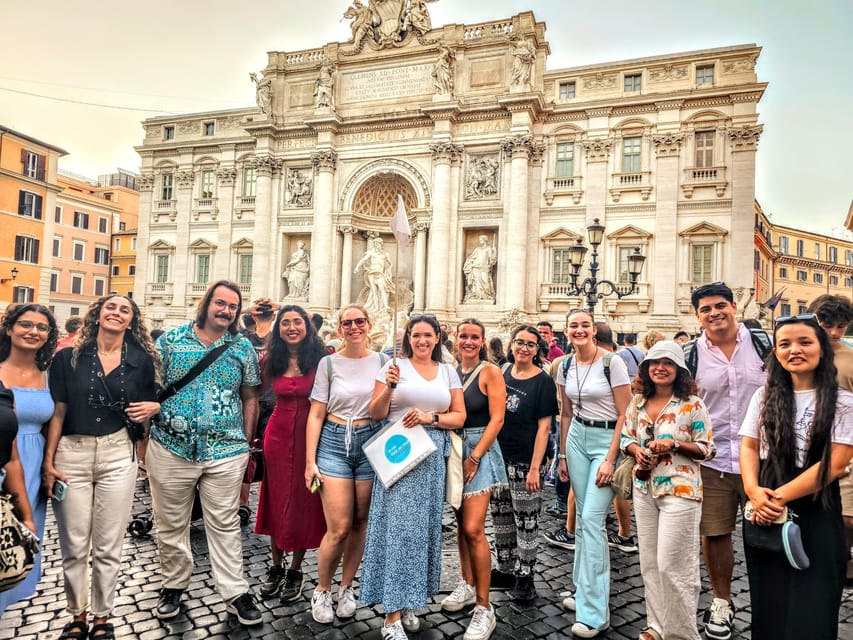
Then comes Trevi Fountain, with guided time (about 20 minutes). I like Trevi on a walking tour for one reason: it’s easy to spend your whole trip standing in one spot. Here, you’re guided to look at the details and then keep the flow going.
You’ll be focusing on the baroque beauty of the fountain, plus the kind of visual storytelling that makes Trevi feel theatrical. The guide helps you look past the postcard version and notice the sculptural rhythm—figures, motion, and the way the fountain fills the corner of the streetscape.
A realistic drawback: Trevi can be crowded. Even without getting stuck, you’ll want to hold onto your patience. The tour pace is designed to keep things moving, but the square itself may not cooperate.
Tip for your comfort: if you can, position yourself for photos quickly, then step slightly aside. That gives you a better view and keeps you from becoming part of someone else’s camera tripod choreography.
“Sightseeing” time between stops: useful, but don’t expect full detail on everything
There’s a short 10-minute sightseeing segment along the route. That’s where the tour can cover extra exterior views and small architecture beats. It’s also the time when you’ll want to be ready with your eyes and not your phone.
The best way to use this time is simple: listen to the guide for context, then capture a photo only if it adds to your memory. Rome is full of impressive scenes, and if you photograph everything, you may miss what the guide is trying to teach you.
You can also read our reviews of more guided tours in Rome






St. Ignazio di Loyola Church: the fresco focus you’ll remember
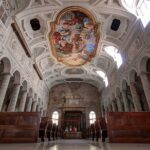
The standout church stop is the Church of Sant’Ignazio di Loyola, with guided time (about 20 minutes). This is where the tour shifts from outside monuments to an interior experience with more atmosphere and more narrative.
I enjoy church stops like this when a guide explains what you’re seeing in practical terms—what the artwork is trying to do and how to notice key elements without needing art-history homework. The tour specifically mentions mesmerising frescoes, so expect the guide to point out what makes the church visually special.
If you’re deciding whether to buy a ticket for other church interiors later in your trip, this stop helps you calibrate your interest. If you like it, you’ll feel motivated to go deeper on your own. If you’re not a fresco person, at least you’ll have a guided entry that gives you a reason to care.
Pantheon from outside and Piazza Navona: finish near two big public stages
The tour ends in the area of the Pantheon (with sightseeing time, about 20 minutes) and then Piazza Navona (with guided time, about 20 minutes). You’ll view the Pantheon from outside, not as an entry visit. That matters because the Pantheon is one of those places where inside access changes the whole experience.
Finishing at Piazza Navona is a smart move for first-time orientation. This piazza is all about public space: fountains, open sky, and the kind of street life that makes Rome feel like a living city, not just a photo set.
The tour mentions stunning fountains at Piazza Navona, and I think that’s exactly why this ending works. It gives your legs something pretty to walk toward, and it gives your camera a clear finale before you head off on your own.
Drop-off locations are listed as Piazza Navona, Piazza del Colosseo, and Piazza del Colosseo (the last two being the same drop point listed twice). Either way, you’ll be positioned to continue exploring—just plan your next stop with the reality that you’ll still be in central Rome streets.
How the 2.5 hours feel in real life (pace, terrain, and timing)
A 2.5-hour walking tour is long enough to see real variety, short enough to keep you from burning the whole day. Still, you should assume steady walking between clusters of landmarks.
The tour info flags uneven surfaces and a lot of walking, and I agree with treating that seriously. Rome sidewalks can be bumpy and cobblestone transitions are common. Good shoes aren’t optional if you want to enjoy the architecture instead of focusing on foot placement.
Also, the order matters. You’ll start with large monuments in big open squares, then move into denser streets and narrow church interiors, and finish back in larger public space. That rhythm helps you keep mental energy. If you’re tired, you’ll notice it most at the transitions, not in the big stops.
Price and value: is $29 worth it?
At $29 per person for a 2.5-hour guided walk, the value depends on one big condition: that the tour actually runs.
When the experience runs as described, you get a lot of landmark coverage for the money: Piazza Venezia, Palazzo Venezia, Vittoriano area, Trajan’s Column, Trevi Fountain, Sant’Ignazio di Loyola, plus outside viewing near the Pantheon and guided time at Piazza Navona. Add in the fact that entrance fees are not included, and you can treat it as a guided sightseeing package rather than a ticket-based day.
The guide being live and the route being concentrated is what makes the price feel reasonable. You’re not just looking at monuments; you’re being guided through what to notice.
But here’s the careful part. The available feedback attached to this activity includes cases of last-minute cancellations close to start time, and refund timing issues. For a low-cost tour, you should still protect yourself. If this is your only planned activity for that day, book with cushion time and consider scheduling something independent as backup.
Who should book this tour (and who should skip it)
This is a good fit if:
- you’re in Rome for the first time and want a focused walking route through central landmarks
- you prefer a guided narrative (rather than wandering without context)
- you can handle uneven surfaces and comfortable walking time
It’s not a good fit if:
- you have mobility impairments or use a wheelchair (the tour is not suitable for wheelchair users)
- you hate walking through crowded squares like Trevi without an escape route
If you’re traveling with older family members, I’d be cautious. The tour is short, but the terrain can still be an issue.
Should you book this Rome Walking Tour with Local Guide?
I’d book it if you want a guided hits-of-central-Rome walk and you’re comfortable with uneven pavement and crowds at the end points. The combination of Trajan’s Column, Trevi Fountain, and a guided church interior stop is a solid mix of ancient storytelling and art you can see up close.
But I’d also be smart with your planning. Because there’s a risk of last-minute cancellation reported for this activity, don’t treat it like the only plank holding up your day. If you do book, give yourself buffer time and have a backup idea within easy reach—maybe a self-guided loop around Piazza Navona and the Pantheon area if things change.
If your schedule is flexible and your priority is walking with a guide through Rome’s core monuments, this is a fair-value way to do it for $29.
FAQ
How long is the Rome Walking Tour with Local Guide?
The tour lasts 2.5 hours.
How much does the tour cost?
The price is $29 per person.
Where does the tour start?
The meeting point may vary depending on the option booked, including Piazza di S. Agostino (listed also as Piazza di Sant’Agostino) or Piazza di San Marco.
What languages are the guides?
The live guide operates in Spanish and English.
Is the tour wheelchair accessible?
No. It is not suitable for people with mobility impairments or wheelchair users.
Are entrance fees included?
No. Entrance fees to attractions are not included.
What should I bring?
Bring comfortable shoes, a camera, sunscreen, and water.
What is the cancellation policy?
You can cancel up to 24 hours in advance for a full refund.