REVIEW · ROME
Ostia Antica Private Guided Tour with Optional Transfer from Rome
Book on Viator →Operated by Raphael Tours & Events · Bookable on Viator
Ostia Antica can feel like time travel. This private guided walk shows you Rome’s ancient port through the eyes of an expert guide, with skip-the-line tickets so you spend more time looking and less time waiting.
I like that it’s built around an easy rhythm: you’re moving through major monuments, but you also get stops to sit, look closely, and make sense of what you’re seeing.
The second big plus is the mix of sights: the monumental gate, the main street, and then the Neptune mosaics and thermal-bath area. You also get an unhurried pace with breaks, even though it’s still a proper walking tour.
One thing to consider: this is about 2 km of walking in around 3 hours, and you’re outdoors. If you’re heat- or weather-sensitive, plan your day carefully and be ready for change if conditions aren’t great.
In This Review
- Key highlights you’ll care about
- Why Ostia Antica beats Rome for atmosphere
- Getting there from Rome: meeting point and return choices
- Porta Romana to Decumanus Maximus: reading the ancient city layout
- Terme di Nettuno and the amphitheater zone: mosaics and water culture
- Temple of Rome and Augustus, Guild Square, and the Capitolium
- Walking distance, pacing, and comfort tips that matter
- Price and value: why $318.36 can make sense here
- Optional transfer from Rome: when it’s worth it
- Who this Ostia Antica tour is best for
- Should you book this Ostia Antica private guided tour?
- FAQ
- How long is the Ostia Antica private guided tour?
- Is admission included?
- What language is the tour offered in?
- How much walking is involved?
- Where do we meet the guide?
- What are the main places you’ll see?
- Can I choose morning or afternoon?
- Is there an optional transfer from Rome?
- Is it a private tour?
- What happens if the weather is bad?
- Is free cancellation available?
Key highlights you’ll care about
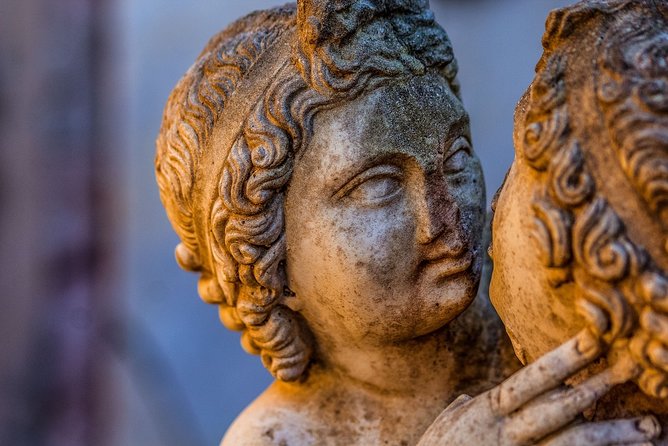
- Private group pace with an expert guide guiding your questions (not a rush-through)
- Skip-the-line entry so you start seeing monuments sooner
- Port-city highlights like Porta Romana and the main boulevard, Decumanus Maximus
- Terme di Nettuno area including the theater, amphitheater remains, and thermal baths
- Religious and civic stops at the Temple of Rome and Augustus, the Guild Square, and the Capitolium
Why Ostia Antica beats Rome for atmosphere
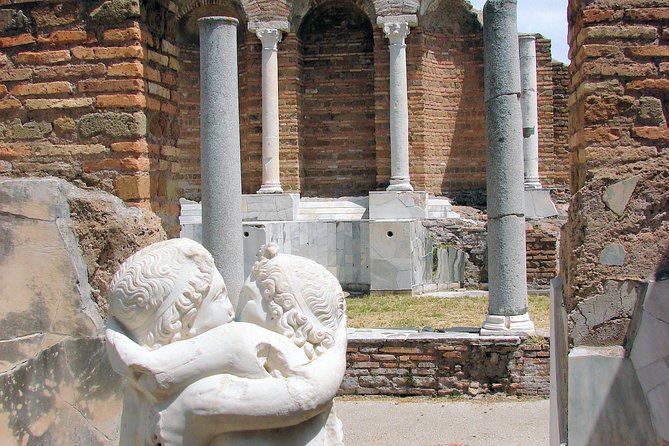
If Rome is the poster child of empire, Ostia Antica is the supporting actor who makes the whole story feel real. It’s the ancient port city—once busy with movement of goods, people, and money—and now it’s a quiet maze of ruins.
What makes this tour feel satisfying is that you don’t just see stone. You connect it to daily life. As you walk, your guide frames how the city worked: routes, public spaces, and the kind of community that formed around a port. The result is that the site stops feeling like a list of landmarks and starts feeling like a place.
Another reason this works so well in practice: Ostia Antica is not overwhelming in the same way some major cities are. In a few hours, you can cover a meaningful chunk of the town and still feel calm enough to focus.
You can also read our reviews of more guided tours in Rome



Getting there from Rome: meeting point and return choices
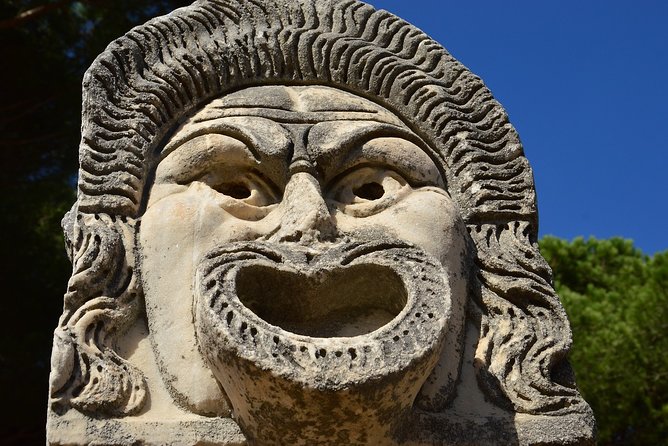
You’ll start at the Ostia Antica area near public transportation: Viale dei Romagnoli, Lido di Ostia RM, Italy. The tour begins at the Ostia Antica ticket office, where you meet your local guide before heading out on the walk.
At the end, you have two practical options. The experience can end back at the meeting point with a return by train, or you can meet your driver for the trip back to Rome if you arranged the optional transfer. That flexibility matters because Rome day plans can be messy—timing train schedules can be fine, but a driver can save hassle if you’re coordinating multiple parts of your trip.
If you’re building a day around this site, morning or afternoon departures give you a way to pick the best light and the least crowded feeling.
Porta Romana to Decumanus Maximus: reading the ancient city layout
The walk starts with a focus on orientation, which is what turns ruins into a story. You pass through the Porta Romana gate, a monumental entry point that helps you picture arrival and movement into the city.
From there, you head down Decumanus Maximus, the main boulevard. Seeing the street as the city’s backbone is one of the smartest uses of a guided tour. Without context, you might treat it like any other long road. With context, you understand why the layout mattered—where foot traffic went, how the city organized activity, and how the port’s life spilled into public spaces.
A guided route also helps you spot what’s visually important versus what’s simply there. Ostia Antica has a lot of openings, walls, and outlines. Your guide’s job is to point out what these spaces likely were for—so you can look with purpose.
Terme di Nettuno and the amphitheater zone: mosaics and water culture
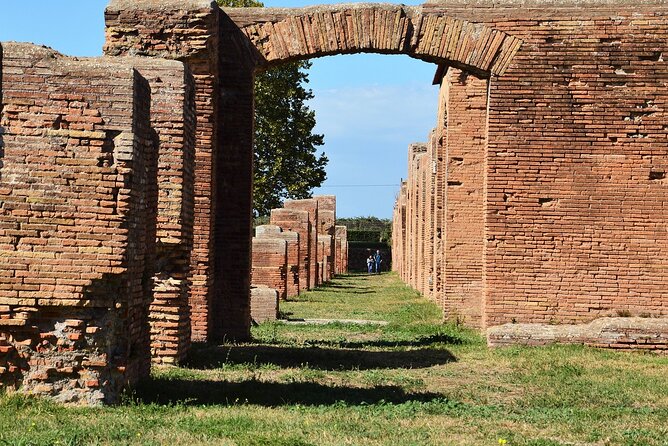
Next comes one of the stops that most people remember: the Terme di Nettuno area, where you’ll find the remains connected to the amphitheater and the thermal-bath setting.
This part is great because it adds texture to the Roman idea of public life. You get to peek into the thermal baths area, then connect it to adjacent performance and gathering spaces. Baths weren’t only about cleaning; they were social hubs, conversation engines, and a way to show status without saying much.
One of the most vivid details you’ll likely see here is the black and white mosaics featuring Neptune and Amphitrite. Those designs aren’t random decoration. They fit the port-city identity: the sea gods connect naturally to a place built around maritime life.
In practical terms, this stop is also where the guide’s explanations can slow you down—in a good way. You pause, look longer, and actually try to imagine how the complex might have sounded and felt when people were around.
Temple of Rome and Augustus, Guild Square, and the Capitolium
After you’ve seen the civic and social side of Ostia, the tour shifts toward the city’s power centers—religious and political spaces that anchored public identity.
You’ll visit the Temple of Rome and Augustus, which is a big deal for understanding Roman loyalty and public messaging. Even if you only catch fragments of the original structure, the location and symbolism help you grasp how emperors and the state showed up in everyday life.
Then you continue through the Square of the Guilds. This is where the “port city as a workplace” idea really clicks. Guild-related areas point to how trades organized themselves, how commerce stayed connected to community, and how business life was part of the city’s public rhythm—not hidden in back rooms.
Finally, you’ll see the Capitolium. It’s one more anchor point that helps you understand why towns built on Roman models weren’t just places to live. They were places to participate in the empire’s shared ideas.
The key value here: your guide ties these stops together. You’re not hopping from one monument to the next. You’re seeing a pattern—how religion, civic life, and trade fit into the same urban map.
You can also read our reviews of more private tours in Rome





Walking distance, pacing, and comfort tips that matter
This tour is about 2 km of walking with breaks built in, and it runs around 3 hours total. That’s short enough to feel doable, but long enough that comfort will make or break your day.
Here’s what I’d do before you go:
- Wear comfortable shoes with good grip. Grounds can be uneven where ruins are exposed.
- Plan a light pack: water, a hat, and sunscreen if the forecast looks bright.
- Bring your patience for a site that’s outdoors and partially open to elements.
The pacing is part of the appeal. Reviews and word-of-mouth style feedback around this experience often mention a leisurely feeling while still covering a lot. That’s not magic—it’s the guide taking time at the right moments, then keeping the route moving when it counts.
Also note the tour is offered in English, and it’s designed so most people can participate, with the important caveat that children must be accompanied by an adult.
Price and value: why $318.36 can make sense here
At $318.36 per person, this isn’t a budget activity. So the question isn’t whether it’s expensive—it’s whether it buys you something you can’t easily recreate on your own.
Here’s the value logic that holds up:
- You get a local guide focused on turning ruins into real understanding, not just reciting facts.
- You get a private tour, meaning your group’s questions and pace don’t get lost in a crowd.
- You get skip-the-line tickets, which can save time at the start so your morning or afternoon doesn’t stall.
You also get admission included, and that matters for total cost. Once you add up what you’d pay for entry plus the guide’s interpretation time, the price can start to feel more reasonable—especially if you care about context.
If you’re the type who loves wandering museums with a guidebook and good Wi-Fi, you might feel you can DIY this. But if you want to walk a focused route and understand how the pieces connect—port life, street layout, baths, civic power—then a private guided approach is usually the cleanest way to do it.
Optional transfer from Rome: when it’s worth it
The title mentions an optional transfer, and the experience supports both a train return and a driver return. If you value predictability, a driver can make the day easier, especially if you’re juggling other timed plans in Rome.
If you’d rather keep things flexible (and you don’t mind coordinating transit), you can also return via train after the tour ends back at the meeting point.
Either way, choose based on your style: logistics-first or exploring-first. Don’t force yourself into a complicated plan that makes you stressed. Ostia Antica is more enjoyable when your head is clear.
Who this Ostia Antica tour is best for
This is a great match if you:
- want Roman urban life explained through a working port-city lens
- like your tours structured around a route, not a free-for-all
- prefer private time with a guide so you can ask questions
- want a strong “see and understand” day without spending half your time in transit
It’s less ideal if you:
- hate walking on uneven ground
- need a very sedentary tour
- are traveling with tight timing and can’t handle outdoor conditions
Also consider it a solid choice for people who like architecture, urban planning, and how public spaces reflect society. Porta Romana, Decumanus Maximus, the baths area, and the civic/religious stops all support that kind of curiosity.
Should you book this Ostia Antica private guided tour?
I’d book it if you want Ostia Antica to feel like a place you understand, not just a set of ruins you pass through. The combination of a 2.5-hour walking route, skip-the-line entry, and a private guide focused on how Romans actually lived is a strong setup for real learning without feeling exhausting.
I wouldn’t book it if you’re hoping for something mostly indoors or very short. This is a walk—just a well-paced one—and you’ll want your shoes and your weather plan to be solid.
If your goal is to leave with a mental map of how the ancient port city functioned—street layout, social life, and civic power—this experience fits the bill.
FAQ
How long is the Ostia Antica private guided tour?
It runs for about 3 hours total, including a 2.5-hour walking tour.
Is admission included?
Yes. Admission ticket(s) are included, and skip-the-line tickets are provided.
What language is the tour offered in?
The tour is offered in English.
How much walking is involved?
Plan for about 2 km of walking, with breaks to sit and enjoy the site.
Where do we meet the guide?
Meet at the Ostia Antica ticket office area near Viale dei Romagnoli, Lido di Ostia RM, Italy.
What are the main places you’ll see?
You’ll pass Porta Romana and the Decumanus Maximus, and explore the Terme di Nettuno area, including thermal baths and amphitheater remains, plus the Temple of Rome and Augustus, the Square of the Guilds, and the Capitolium.
Can I choose morning or afternoon?
Yes, you can choose either a morning or afternoon departure.
Is there an optional transfer from Rome?
Yes. At the end, you can either return to the train station or meet your driver for the return journey to Rome if you arranged the transfer.
Is it a private tour?
Yes. It’s private, so only your group participates.
What happens if the weather is bad?
The tour requires good weather. If it’s canceled due to poor weather, you’ll be offered a different date or a full refund.
Is free cancellation available?
Yes. You can cancel for a full refund up to 24 hours in advance of the experience’s start time.