REVIEW · ROME
Rome City Small Group Bike Tour with quality Cannondale EBike
Book on Viator →Operated by TopBike Rental and Tours · Bookable on Viator
E-bikes turn Rome into a two-wheeled buffet. I love how the Cannondale e-bike makes the city feel manageable, and I love the way the tour mixes top landmarks with calmer side lanes. The trade-off: Rome is still busy with pedestrians, so you’ll want at least basic bike confidence even on limited-traffic routes.
This is a small-group tour (up to 10), so you’re not stuck watching from far back. In the past, guides like Bita, Megan, Arina, Sina, Pablo, Carmen, Anna, Nima, Zak, and Khaled have led groups with a steady rhythm, plenty of photo time, and clear explanations at the stops.
One more reality check: you’ll cover about 8.5 miles (14 km) in roughly 4 hours. For most people that’s an easy, leisure pace, but Rome’s sidewalks and crossings can still feel intense if you’re not comfortable on a bike.
In This Review
- Key takeaways before you book
- Why a 4-hour e-bike loop feels like a shortcut to Rome
- Cannondale e-bike comfort: anti-puncture tires, helmet, and carry space
- Pace, distance, and group size: what the ride really feels like
- Stop-by-stop ride: Colosseum views, Trevi, and the streets between
- Piazza del Colosseo: a Colosseum look without the chaos
- Piazza Venezia: three layers of Rome in one stop
- Trevi Fountain: the legend, plus time to pause
- Spanish Steps: Piazza di Spagna and the staircase views
- Piazza del Popolo: arriving from the north, as pilgrims did
- Villa Borghese: a scenic breather in the park
- Piazza Navona: cycle around a Baroque showpiece
- Pantheon: a longer pause in one of the best-preserved antiques
- Antico Quartiere Ebraico: archaeology, culture, religion
- Teatro di Marcello: an ancient theater and a prototype
- Piazza del Campidoglio: view from Capitoline Hill, Michelangelo’s layout
- What you gain from the mix: famous sights plus the connecting neighborhoods
- Safety reality check for Rome bikes: plan for people, not just traffic
- Photo and comfort tips that make the day easier
- Value check: is $102.79 worth it for 4 hours?
- Who this tour suits (and who should consider another plan)
- Should you book this Rome e-bike tour?
- FAQ
- How long is the Rome City Small Group Bike Tour?
- What is the meeting point and where does the tour end?
- How far will we ride on the e-bikes?
- Are helmets provided, and are they required?
- What’s included in the tour price?
- Can children ride, and what equipment is provided?
- What if the weather is bad?
Key takeaways before you book
- Cannondale e-bike power keeps you cruising without draining your legs on hills and stop-and-go streets
- Up to 10 riders means more individual attention and easier regrouping at photo stops
- Planned limited-traffic routes help you ride with more comfort than a solo bike adventure
- Big landmarks plus “in-between” streets gives you speed and variety in a short window
- Helmet, water, and a handlebar bag are included, so you roll out ready
- Morning vs afternoon lets you match your ride to cooler temps and lighter crowds
Why a 4-hour e-bike loop feels like a shortcut to Rome
Rome spreads out, and walking everywhere gets tiring fast. This tour is built for people who want the wow-factor sights without spending your whole day in lineups and on sore feet. You get movement plus frequent stops, so you’re not just riding past history—you’re actually pausing to look, listen, and take photos.
I also like that it’s timed like a day starter or a day finisher. You can pick a morning or afternoon departure, and that choice matters because Rome can get crowded quickly. If you tend to overheat, the morning slot is usually the calmer bet. If you’d rather have more daylight for photos, the afternoon can feel more satisfying.
The big picture: this is a “see a lot, but don’t rush yourself into exhaustion” plan.
You can also read our reviews of more cycling tours in Rome
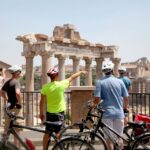
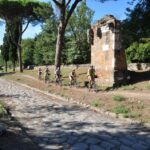
Cannondale e-bike comfort: anti-puncture tires, helmet, and carry space
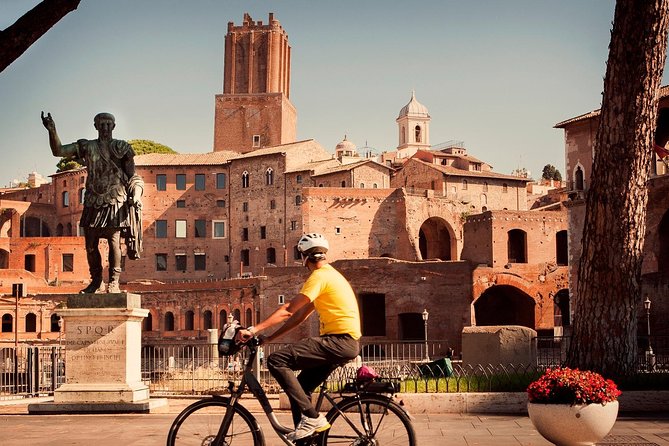
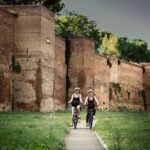
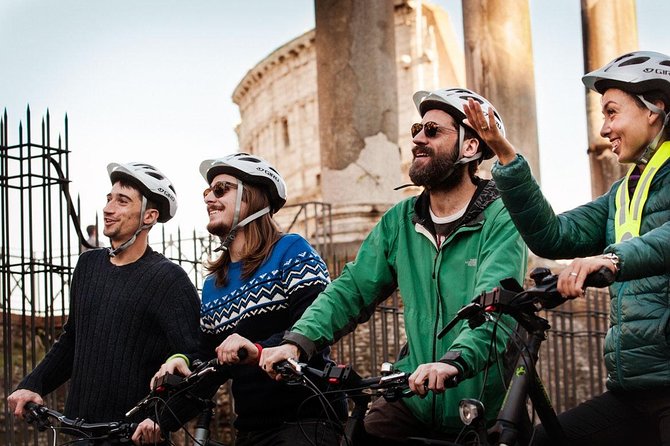
The star of the show is the quality Cannondale e-bike. You’re not dealing with sketchy rental bikes that feel wobbly or underpowered. The tour includes anti-puncture tires, a comfortable saddle, a helmet (mandatory and provided), and a handlebar bag—which is useful because you’ll want a safe place for your phone, sunscreen, and a small camera.
E-bike assistance is the whole point here. Even if you’re not a confident cyclist, the motor helps you keep up with the group and handle the stop-and-go rhythm of the city. One recurring theme from past riders: the bikes are smooth, and the power assist makes the experience feel effortless compared with pedaling the same route by hand.
A practical note: there’s an equipment weight limit of 300 lbs (136 kg). If you’re close to that, it’s worth checking directly with the operator before booking.
Pace, distance, and group size: what the ride really feels like
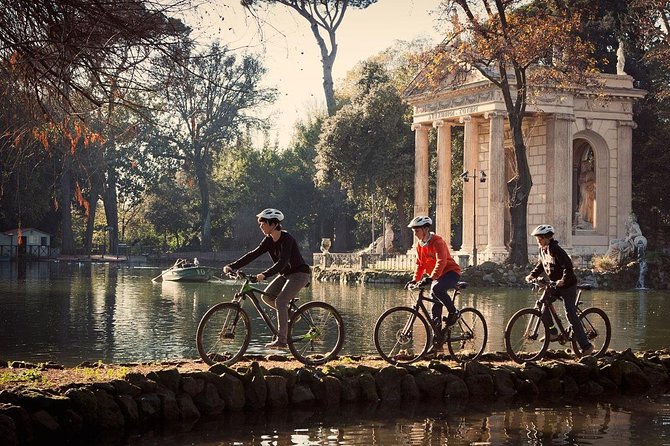
This tour runs about 4 hours and covers roughly 8.5 miles (14 km). The difficulty is listed as leisure (or intermediate with a child seat/extension). In real terms, that means you should expect a steady riding rhythm, with multiple short stop-and-photo moments.
The group size is capped at 10 travelers, and the minimum is 4. That’s a sweet spot: big enough to feel like a real tour, small enough that the guide can actually keep eyes on everyone. You’ll also return to the starting point at the end, which makes it easier to plan the rest of your day.
If you’re the type who hates waiting around, this structure helps. You’re constantly moving, but the stops are built in rather than improvised.
Stop-by-stop ride: Colosseum views, Trevi, and the streets between
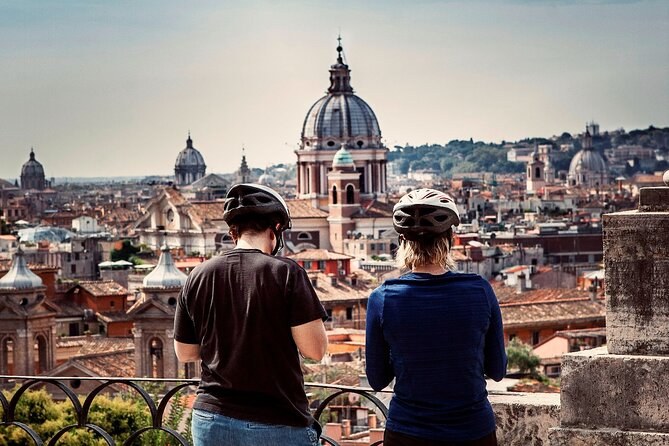
The route is a smart mix: major landmarks first, then connective streets and neighborhoods that help Rome feel like one city instead of ten disconnected postcards.
Piazza del Colosseo: a Colosseum look without the chaos
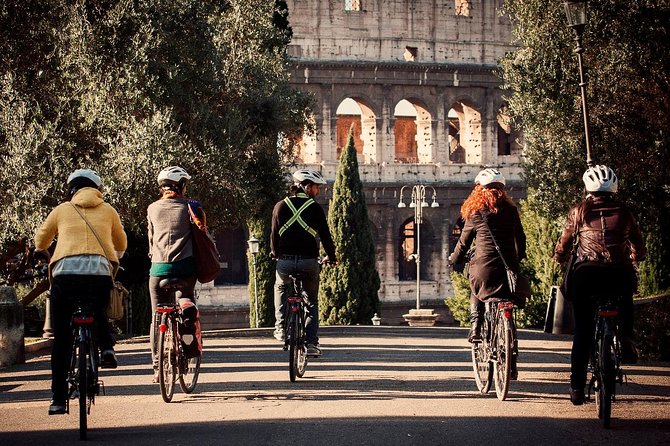
You start at Via Labicana 49 and head to Piazza del Colosseo. Here you get a strong view of the Colosseum while your guide sets the stage with the landmark’s roughly 2,000-year story. It’s a good opening because it gives you a mental map before you start weaving through the city.
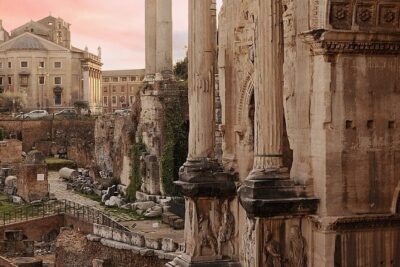
From there, you ride on a large road that runs through the Roman Forum and Imperial Forum area. The value isn’t just speed. It’s that you’re gliding through the same broad corridor that shaped ancient Rome’s movement, with the sites rolling past in context.
Potential drawback: this is still Rome—expect busy intersections at some points. The route is planned to limit traffic, but you’ll want to stay alert and keep your line steady.
You can also read our reviews of more city tours in Rome


Piazza Venezia: three layers of Rome in one stop
Next comes Piazza Venezia, with sweeping views and a layered lesson. The focus is Trajan’s Column, the Vittoriano monument, and Palazzo Venezia—all tied to nearly 2,000 years of change in the city. This stop is short, but it’s efficient: you get the “why this matters” part without losing your half-day to one site.
If you like historical connections (not just facts), this is one of the moments that makes the tour feel more than sightseeing.
Trevi Fountain: the legend, plus time to pause
At Trevi Fountain, you learn the story behind the fountain and have time to actually see it up close. Trevi is busy in every direction, so I like having a guided arrival and a scheduled stop—less scrambling, more looking. You’ll get enough time to take photos from a good angle and then move before you get swallowed by the crowd.
Spanish Steps: Piazza di Spagna and the staircase views
Then it’s on to the Spanish Steps, specifically Piazza di Spagna and the monumental staircase down from Trinità dei Monti. This stop is brief, which means you’ll want your camera ready. The upside is that you won’t burn your whole tour waiting around in bottlenecks.
Piazza del Popolo: arriving from the north, as pilgrims did
Piazza del Popolo is one of those stops that feels simple until you get the context. You’ll hear how this was the first major sight for visitors and pilgrims arriving from the north on the Via Flaminia. It’s a neat way to connect modern sightseeing with an ancient arrival moment.
Villa Borghese: a scenic breather in the park
Then you move to Villa Borghese for a camera-friendly view over Rome. This is a welcome change of tempo: after dense landmark clusters, the park setting gives your eyes a little rest while still keeping you moving.
Piazza Navona: cycle around a Baroque showpiece
At Piazza Navona, you cycle around the oval space and get a first-row look at the central Baroque fountain. Even if you know the square already, seeing it from a bike route angle helps you notice details you might miss standing in one spot.
Pantheon: a longer pause in one of the best-preserved antiques
Pantheon comes next with a longer stop—about 15 minutes—in front of one of the oldest and best-preserved buildings from Antiquity. This isn’t just a quick photo stop. It gives you enough time to look up, walk a few steps, and still keep the tour moving on schedule.
If you’re the type who likes to take in architecture slowly, this is one of your better moments in the itinerary.
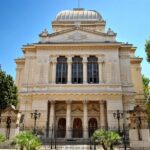
Antico Quartiere Ebraico: archaeology, culture, religion
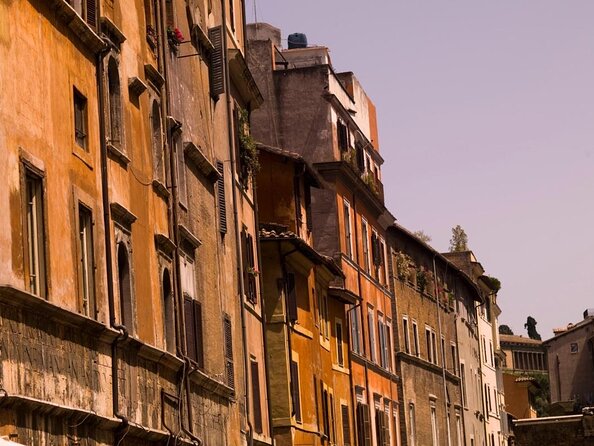
Next is the Antico Quartiere Ebraico, where you’ll see a part of Rome that feels quieter than the big fountain and colosseum areas. The focus is the neighborhood’s archaeological, cultural, and religious heritage.
This is the kind of stop that makes the tour feel local instead of theme-park Rome. Even with a short time on the schedule, you get a real change of atmosphere.
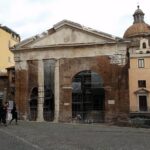
Teatro di Marcello: an ancient theater and a prototype
Then you’re at Teatro di Marcello, tied to the idea that it was a prototype for the Colosseum. This stop is short, but it works because Rome is full of “look-alike” ancient structures—having the connection in your head helps you see why the building mattered.
Piazza del Campidoglio: view from Capitoline Hill, Michelangelo’s layout
Finally, you climb into the Piazza del Campidoglio area on the Capitoline Hill for a sweeping view toward the Roman Forum and the 16th-century piazza designed by Michelangelo. This ending is strong because it ties everything together: the ancient sites below, the city around, and the Renaissance planning overhead.
It’s the kind of finale that makes the whole loop feel intentional.
What you gain from the mix: famous sights plus the connecting neighborhoods
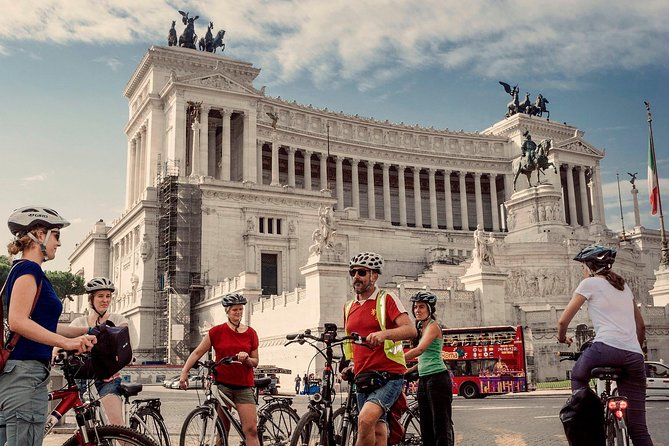
Big Rome landmarks are the obvious draws, and this tour hits them: Colosseum area, Trevi, Spanish Steps, Pantheon. But the value comes from what happens between them.
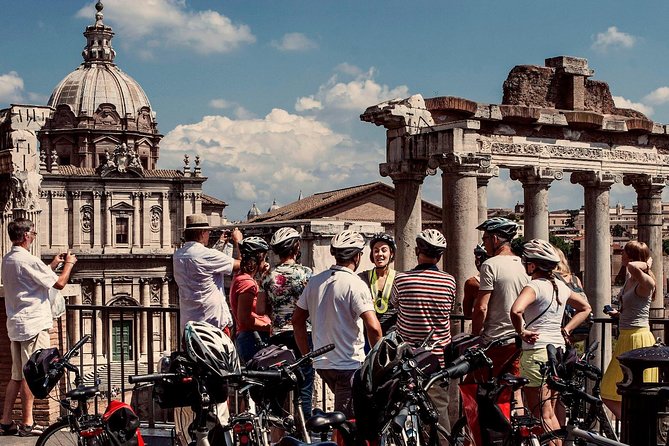
Stops like Antico Quartiere Ebraico and Teatro di Marcello help you feel the city’s layers instead of treating Rome as a checklist. You also get plenty of chances to break the ride with short walks and photo stops, so you’re not stuck in one mode all morning or afternoon.
In other words, you get a fast overview and a few moments that feel like you actually wandered. And in Rome, that matters.
Safety reality check for Rome bikes: plan for people, not just traffic
The tour operator states routes are carefully planned, with limited access to traffic and some stretches with no traffic at all. That’s a good start.
Still, Rome isn’t a car-only problem. It’s a people problem: pedestrians step out, scooters weave, and groups move unpredictably. One rider even noted Rome can feel like close calls even with a cautious guide. The lesson for you is simple: treat this as a guided cycling route where staying alert is part of the deal.
If you’re comfortable riding a bike (and starting/stopping smoothly), you’ll likely find this far less stressful than you expect.
Photo and comfort tips that make the day easier
A few practical things I’d do if I booked again:
- Wear sunscreen and bring sunglasses. You’ll be outside for the full ride and stops.
- Keep your hands free. The handlebar bag is meant for that, and it helps you stay stable when you pause for photos.
- Use your stop time well: at places like Trevi and the Spanish Steps, the crowd density can change fast, so take your pictures early in the stop window.
Also, even though food isn’t included, you may want to plan a simple snack afterward. Some tours you’ll find more stopping time than expected, and it’s nice to have something ready when you’re done.
Value check: is $102.79 worth it for 4 hours?
At $102.79 per person for about 4 hours, the value is strong if your goal is efficient sightseeing with real structure. You get:
- A premium Cannondale e-bike
- A mandatory helmet (provided)
- A professional guide
- Water (biodegradable bottle)
- A ride distance that’s hard to cover by foot without burning hours
This isn’t a budget “grab a bike and go” situation. You’re paying for guidance, a managed route, and the extra context that helps landmarks stick in your head. If you only want one afternoon of Rome, it’s a smart use of time.
If, on the other hand, you love slow wandering and don’t mind walking, you could build a self-guided route. But you’ll likely miss the “between stops” connective rhythm this tour provides.
Who this tour suits (and who should consider another plan)
This tour is a great fit if you want:
- A fast way to orient yourself on your first day
- Easy movement between major sights
- Enough stops to take photos and do short walks
- A pace that’s active, not exhausting
It’s also family-friendly in a limited way. For children aged 5–8, a child extension is provided and attached to an adult bike. For ages 9 and above, kids can ride autonomously on an appropriately sized e-bike.
If your kid is very small or you’re not comfortable with children on bikes, you’ll want to confirm what’s available on your date. (The tour notes child equipment, but it’s still best to ask questions ahead of time.)
Should you book this Rome e-bike tour?
Yes—if you want a structured way to see the big Roman highlights plus a few calmer corners without turning your legs into houseplants.
Book it if you:
- Want e-bike ease with a small-group vibe
- Prefer a route that’s planned for limited-traffic riding
- Value multiple short stops over one long museum day
Skip it (or switch plans) if you:
- Hate being around other pedestrians and cyclists
- Need a fully car-free experience at every moment
- Want a slow, linger-all-day style trip with no riding rhythm
If your schedule allows, I’d choose the morning for lighter crowds and cooler temps. Either way, you’ll come away with a clearer map of Rome and a better sense of how the ancient parts connect to the modern city.
FAQ
How long is the Rome City Small Group Bike Tour?
It lasts about 4 hours.
What is the meeting point and where does the tour end?
The tour starts at Via Labicana, 49, 00184 Roma RM, Italy, and it ends back at the same meeting point.
How far will we ride on the e-bikes?
You’ll cover about 8.5 miles (14 km).
Are helmets provided, and are they required?
Yes. Helmets are provided for free and are required for all participants.
What’s included in the tour price?
Included are the Cannondale e-bike, helmet, professional guide, handlebar bag, and water in a biodegradable bottle.
Can children ride, and what equipment is provided?
For ages 5–8, a child extension is provided and attached to an adult’s bike. Children aged 9 and above can ride autonomously on an appropriately sized e-bike.
What if the weather is bad?
This experience requires good weather. If it’s canceled due to poor weather, you’ll be offered a different date or a full refund.