REVIEW · ROME
Rome Cooking Class: Make Pasta, Dine & Drink Wine With Local Chef
Book on Viator →Operated by Walks - Italy & Spain · Bookable on Viator
Homemade pasta in Rome beats cooking shows. I love the focus on handmade fettuccine and ravioli taught by chefs like Luca and Jamila, plus the meal that turns your work into dinner with aperitivo, prosecco, and wine. The main drawback to plan around: the class can adapt to most diets, but it does not accommodate celiacs.
You’ll start in the Trastevere area at Piazza di San Giovanni della Malva, and you’ll finish back at the same meeting spot. It’s an English-led experience in a small setup with room held just for your group (maximum 14), and you can either linger with your new pasta crew or head out to explore nearby streets afterward.
In This Review
- Key Points You’ll Care About
- Where You Start in Trastevere (Piazza di San Giovanni della Malva)
- Aperitivo Hour: Prosecco and Nibbles Set the Tone
- The Hands-On Pasta Lesson: Fettuccine from Scratch
- Ravioli Plus Two Sauces: White and Red Come Together
- Gelato Workshop: The Sweet Finish You Help Create
- Wine With Dinner: What the Pairing Adds
- How Small-Group Size Changes Everything
- Price and Value: Is $65.30 Worth It?
- Dietary Needs: What You Can and Can’t Expect
- Where Your Pasta Skills Go After the Class
- Pizza Instead: A Good Backup Plan
- Who Should Book This (and Who Might Not)
- Should You Book This Rome Pasta Class?
- FAQ
- How long is the Rome pasta cooking class?
- Is the class offered in English?
- What do I make and eat during the class?
- Are drinks included, or do I pay extra for wine?
- Where do I meet, and does it include hotel pickup?
- Can the class handle dietary restrictions?
- What if I need to cancel?
Key Points You’ll Care About
- Small-group attention (up to 14), so you’re not just watching from the back row
- Aperitivo and prosecco first, then wine with your pasta meal
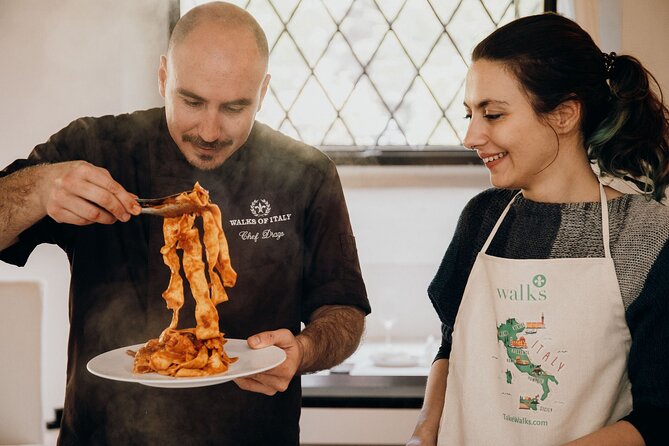
- Two pasta types from scratch: fettuccine and ravioli
- Two classic sauces (white and red) that change with the season
- Gelato is part of the work, not just a store-bought finish
- Pizza-making is an option at booking if you’d rather skip pasta
Where You Start in Trastevere (Piazza di San Giovanni della Malva)
This experience is built for a relaxed evening that starts in the Trastevere area and stays there. Your meeting point is Piazza di San Giovanni della Malva (P.za di S. Giovanni della Malva, 00153 Roma). There’s no hotel pickup, so you’ll want to get yourself there using public transportation or walking.
The upside of meeting in a square like this: it’s easy to orient yourself before the class. Trastevere is a neighborhood you’ll want to spend time in anyway, and after the meal, you’re free to wander the nearby streets with a full stomach and a new skill set.
One more practical note: the class ends back at the same meeting point. That keeps the logistics simple. You don’t need to figure out how to get home from somewhere obscure after wine.
You can also read our reviews of more cooking classes in Rome

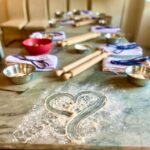
Aperitivo Hour: Prosecco and Nibbles Set the Tone
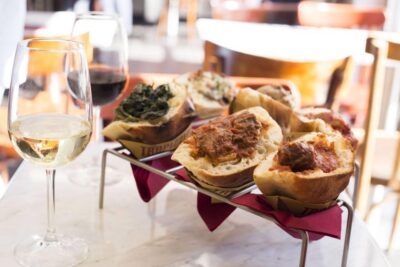
Before you touch dough, you’re welcomed with a classic Italian aperitivo setup: prosecco and small bites. The starter typically includes cured meats, cheese, bruschetta, and classic aperitivi-style snacks.
This part matters more than it sounds. It’s not just a casual pre-game; it’s your chance to slow down, chat with your group, and get in the rhythm of an Italian meal. Handmade pasta is hands-on, and you’ll be glad you’re already fed and in a good mood when the flour starts flying.
Aperitivo also works as an informal icebreaker. Many classes can feel stiff at the start. Here, you’re easing into the night with food and bubbly, and the mood tends to stay warm through dinner.
The Hands-On Pasta Lesson: Fettuccine from Scratch
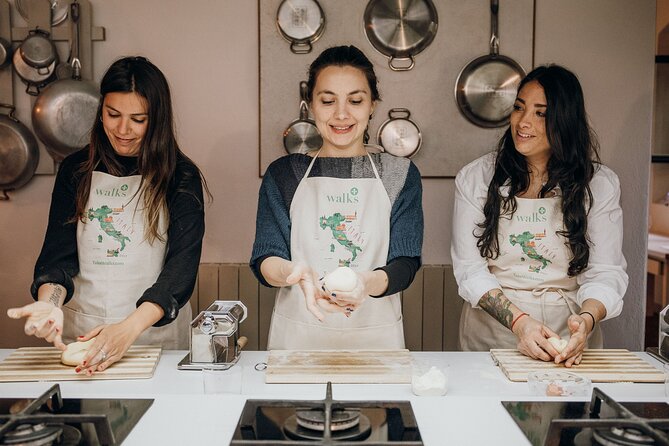
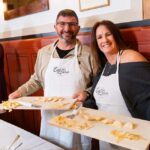
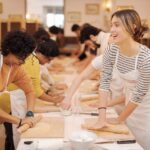
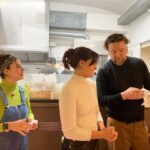
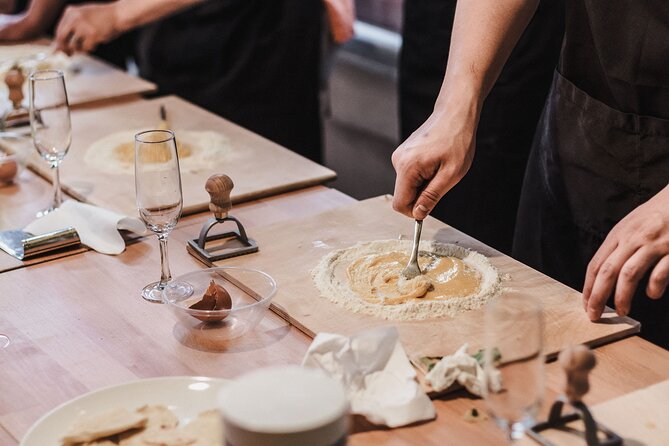
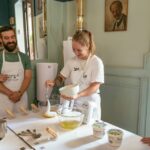
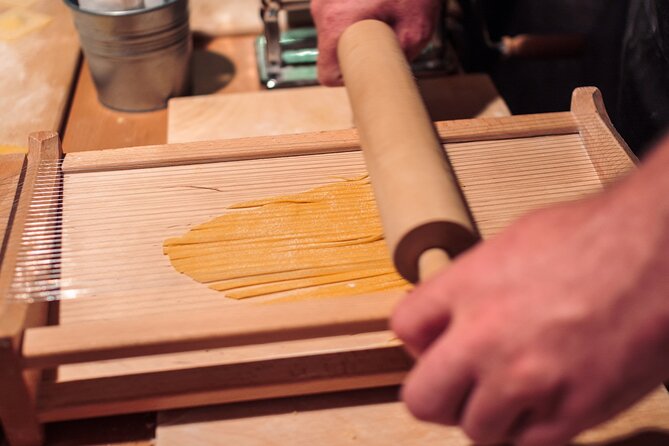
The main event is making pasta by hand with a local chef in a modern cooking school setup with a dining area reserved for your small group. You’ll learn the fundamentals of working the dough and shaping pasta—specifically fettuccine and ravioli—with guidance that’s meant to be repeatable at home.
Expect the chef to teach you the basics, then help you keep going until your pasta looks right. In the accounts of past participants, chefs often combine clear instruction with personality. You’ll see the teaching style vary by instructor, but the common thread is patience: people come in with different levels of confidence, and you’re not expected to already know what you’re doing.
You’ll also learn small, practical tips that Italian home cooks obsess over—things like texture, timing, and how to handle the dough so it doesn’t turn into a sticky mess.
Then there’s the pacing: the class is long enough to do real work, but not so long that it turns into a marathon. With a total duration around 3 hours, you should feel productive by the end rather than just tired.
Ravioli Plus Two Sauces: White and Red Come Together
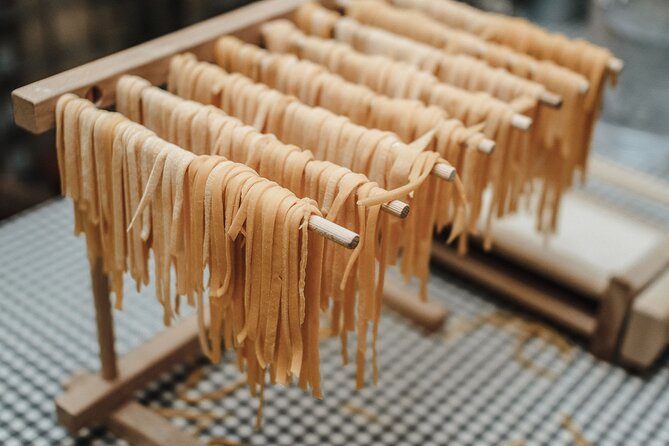
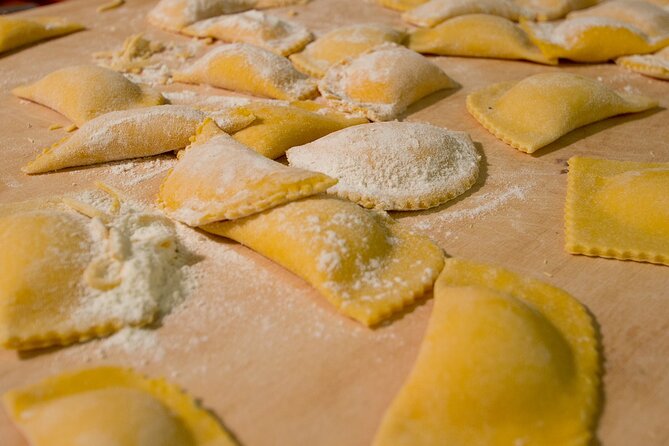
Next up is ravioli, another pasta shape that rewards practice. The chef will walk you through what to aim for as you assemble the filling and close the pasta properly.
You’ll also prepare two traditional sauces: one white and one red. The specific flavors can shift seasonally, but you’ll have both on the table so you can see how pasta changes with sauce style. That makes it easier to replicate later. Instead of memorizing one dish, you’re learning how Italian cooking builds combinations: shape + sauce + technique.
There’s also a real value in pairing sauces with the pasta you made. It turns the class into an actual meal you understand, not just a cooking lesson with food as an afterthought.
Gelato Workshop: The Sweet Finish You Help Create
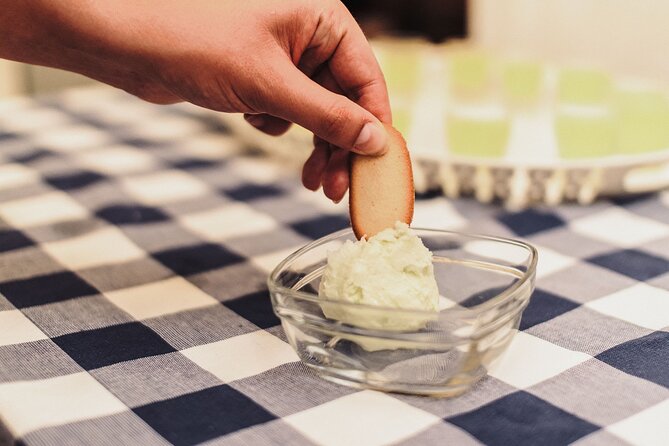
Once the pasta has done its thing and you’ve got time to transition, the chef prepares dessert: homemade gelato. This isn’t framed as a separate sugar party; it’s part of the same evening’s workflow.
Gelato is a great finale because you’ll feel the contrast right away. You start with dough and savory techniques, then end with something cool and creamy. It also gives the class that complete, story-like arc: aperitivo, work, dinner, dessert.
And since you’re eating what you made, you don’t have that letdown some cooking classes create. The night stays connected from start to finish.
You can also read our reviews of more wine tours in Rome
Wine With Dinner: What the Pairing Adds
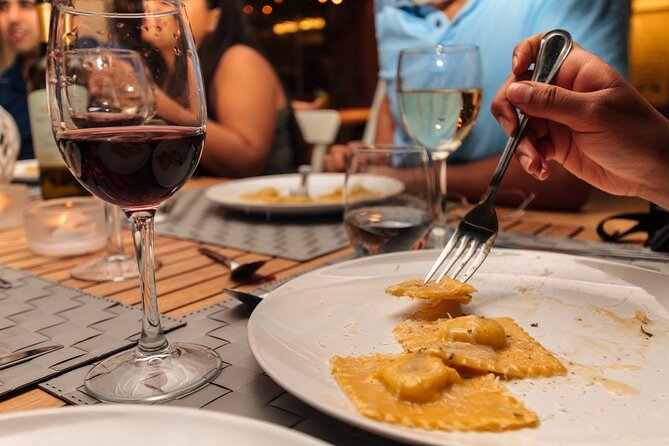
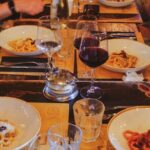
Your homemade pasta meal comes with wine. The menu includes bottomless wine as part of the dining portion, along with the two pasta dishes served with their sauces.
This matters for two reasons:
- It makes the meal feel like an actual Roman evening, not a classroom lunch.
- It helps you relax into the food after hours of cooking.
Just be sensible. You’re drinking during a hands-on activity, and you’ll want to stay sharp enough to enjoy the final gelato stage and have the energy to wander afterward if you feel like it.
How Small-Group Size Changes Everything
This class is capped at 14 travelers, which is a big deal. Handmade pasta is touch-and-feedback work. When the group stays small, the chef can spot issues quickly—whether it’s dough thickness, shaping, or sauce balance—and help you fix it before frustration kicks in.
Based on what’s been shared by prior participants, chefs often use names, keep things interactive, and bring energy to the room. You might meet instructors like Stefano, Gianmaria, Elisa, Asia, Manuella, or Julia depending on the day. The common theme is that the teaching style stays friendly and practical, with plenty of guidance for first-timers.
If you’re traveling solo, small-group settings also tend to feel like a dinner plan rather than a crowd event. You’re more likely to talk with people instead of staying separate.
Price and Value: Is $65.30 Worth It?
At about $65.30 per person for roughly 3 hours, you’re paying for more than recipes. You’re paying for a professional chef, a small-group teaching setup, ingredients, and a full meal built from what you make.
Here’s what’s included:
- Chef instruction
- Prosecco and wine
- Aperitivi (meats, cheese, bruschetta style snacks)
- Two homemade pasta dishes (fettuccine and ravioli) plus two sauces (white and red)
- Homemade gelato
That’s a lot of food for the price, and it avoids the usual trap where you spend money on a class and then get a small bite of food afterward. You leave with a real dinner plus dessert, not just a sample.
The only time it might feel pricey is if you’re the type of traveler who mainly wants to eat at top restaurants and doesn’t care about learning. If you do want skills, hands-on fun, and a meal that feels connected to your effort, this is strong value.
Dietary Needs: What You Can and Can’t Expect
The class is adaptable to all dietary needs except for celiacs. If you have restrictions, contact the operator before joining so they can arrange your food.
Practical takeaway: if you’re gluten-free and not celiac, ask early so the kitchen can plan. If you are celiac, you’ll want to pick another food experience that can handle strict needs.
Also remember: pasta and sauce are core parts of the menu. Any accommodation has to work through those ingredients, not just the gelato or drinks.
Where Your Pasta Skills Go After the Class
The big question is always: will this help you back home? The best answer here is that you’re learning technique, not just eating a finished dish.
You’ll pick up:
- How dough feels when it’s ready to work
- How to shape pasta like fettuccine and ravioli
- How to match two sauce styles with your pasta
- How to get a dessert finish that doesn’t feel like an afterthought
One detail that comes up in the experience feedback: people like getting a recipe list after the class. A small wish was mentioned about adding bread recipes too, but the core point is clear—there’s support for practicing what you learn.
If you try this at home, you’ll likely do best if you treat it like a short experiment: make a dough, shape, rest, cook, then compare your results with the guidance you were given.
Pizza Instead: A Good Backup Plan
If you prefer pizza over pasta, you can choose the pizza-making class option at booking. That version includes making pizza from scratch and includes unlimited wine and beer, plus a Nutella-topped dessert.
So if you’re torn between pasta vs. pizza, pick based on what you’re most excited to learn. Either way, the core idea stays: hands-on cooking, a meal with drinks, and a sweet finish.
Who Should Book This (and Who Might Not)
This class is a great fit if:
- You like hands-on experiences where you actually do the work
- You want a meal that feels authentically Italian and not just a staged tourist stop
- You’ll enjoy meeting a small group and learning from a chef with personality
- You want something fun that also gives you skills you can repeat later
It might not be the best fit if:
- You need celiac-safe dining (this option doesn’t accommodate celiacs)
- You hate being around alcohol during a cooking session, since wine is included
- You want a mostly sightseeing evening rather than a hands-on activity (this is centered on cooking)
Should You Book This Rome Pasta Class?
Yes, if your ideal Rome evening includes learning something real and then eating it while the wine is flowing. The combination is hard to beat: aperitivo first, fettuccine and ravioli from scratch, two classic sauces, and gelato to close it out—plus the small-group size that keeps the chef’s attention on you.
If you’re debating purely based on cost, treat it as a chef-led dinner experience with a lesson attached. If you’re debating based on time, remember it replaces a restaurant meal with an experience that also teaches you technique. For many first-timers, that’s the best kind of value: you eat well and you leave with something you can use.
If you share any dietary restrictions, confirm them early—especially if gluten is a strict issue. Once that’s handled, this is the sort of Rome activity you can talk about at home because you’ll have the story of the dough, not just the memory of a plate.
FAQ
How long is the Rome pasta cooking class?
It lasts about 3 hours (approx.).
Is the class offered in English?
Yes, it’s offered in English.
What do I make and eat during the class?
You’ll make handmade fettuccine and ravioli, then eat them with two traditional sauces (white and red, with seasonal menu changes). Gelato is included for dessert, and you’ll also have aperitivi at the start.
Are drinks included, or do I pay extra for wine?
Prosecco is included at the start, and wine is included with your meal (bottomless wine is listed). Aperitivi also come with the experience.
Where do I meet, and does it include hotel pickup?
You meet at Piazza di San Giovanni della Malva (P.za di S. Giovanni della Malva, 00153 Roma). Hotel pickup/drop-off is not included.
Can the class handle dietary restrictions?
The class is adaptable to all dietary needs except celiacs. If you have dietary restrictions, contact the operator before joining so they can arrange your food.
What if I need to cancel?
You can cancel for a full refund up to 24 hours before the experience’s start time. If you cancel within 24 hours of the start time, the amount paid is not refunded.