Rome, but calmer and quieter. This private Hidden Rome route mixes the Roman countryside leftovers with church mosaics and a few classic neighborhoods, all with hotel pickup so you lose less time to transit stress.
I like two things a lot: the door-to-door pickup and drop-off (you meet your driver right where you’re staying), and the focus on places most people skip, like the Appian Way road surface and Parco degli Acquedotti’s long aqueduct lines.
One thing to keep in mind: guidance quality can vary by driver/guide style, and admission for Terme di Caracalla isn’t included, so you’ll want to budget extra if you want to go in fully.
In This Review
- Key highlights you’ll feel on the day
- Price and logistics: paying for time, not just sites
- Hotel pickup to Trastevere energy: how the day flows
- Appian Way on Via Appia Antica: walking a road called the Queen of Roads
- Catacombe San Sebastiano: an underground city of loculi and colombari
- Parco degli Acquedotti: aqueduct ruins you can actually breathe next to
- Terme di Caracalla and a Tiber pause: Roman power, then river life
- Trastevere and Santa Maria in Trastevere: short dose of local Rome
- Colle del Gianicolo: where the skyline clicks into place
- Who should book this Hidden Rome private tour
- How to get the most out of your driver-guide
- Should you book Hidden Rome with a private driver?
- FAQ
- FAQ
- What time does the tour start?
- How long is the Hidden Rome tour?
- Is hotel pickup and drop-off included?
- Is this a private tour?
- Are admission fees included for all stops?
- What language is the tour offered in?
- Are food and drinks included?
- Can I cancel for a full refund?
Key highlights you’ll feel on the day
- Hotel pickup + private vehicle cuts the hassle of hopping between far-flung sites
- Via Appia Antica (Appian Way) lets you walk parts of a road built in 312 BC
- Catacombe San Sebastiano includes admission and takes you underground to loculi and colombari
- Parco degli Acquedotti is a near-crowd-free aqueduct park that locals actually use
- Trastevere + Santa Maria in Trastevere gives you mosaics and an octagonal gold ceiling in a short window
- Colle del Gianicolo wraps the day with skyline views over central Rome
Price and logistics: paying for time, not just sites
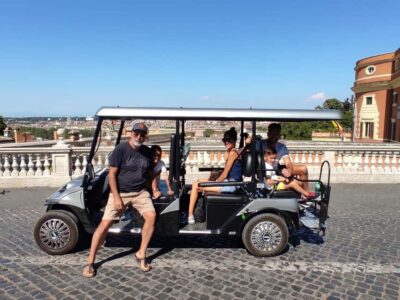
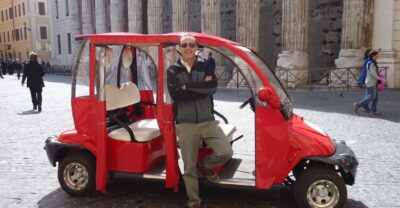
At $330.40 per person for about six hours, this isn’t a bargain tour. But you’re paying for the thing that costs the most in Rome: reliable movement. A private vehicle plus hotel pickup and drop-off means less “where is the bus stop?” and more “why didn’t I do this sooner?”
Also, several stops are low-cost or free to enter (Appian Way, Parco degli Acquedotti, Trastevere sights, and Santa Maria in Trastevere are listed as free). The catacombs admission fee is included. The one notable add-on is Terme di Caracalla, where entry isn’t included.
If you’re traveling with a small group, private transport can start to feel fair because you’re splitting the cost of a dedicated ride and guide attention. If you’re solo, it’s still doable, but I’d frame it as a comfort-and-access purchase—especially if you want to see several scattered areas in one go.
You can also read our reviews of more private tours in Rome



Hotel pickup to Trastevere energy: how the day flows
You start at 9:00 am, and the whole tour is designed like a route, not a checklist. The idea is simple: your driver gets you out of the crowded historical center, then circles you through several Roman layers—roads, underground burial space, aqueduct engineering, and everyday neighborhoods.
Expect short stop times mixed with a couple longer stretches. That can be great if you like variety and photo stops. If you prefer slow museum-style visits, you might want to ask your guide to prioritize walking time at the Appian Way and the aqueduct park, where you’ll naturally want your legs.
This is a private tour, so it’s just your group. You’re not waiting on strangers, and you’re less likely to get rushed by a big-group schedule.
Appian Way on Via Appia Antica: walking a road called the Queen of Roads
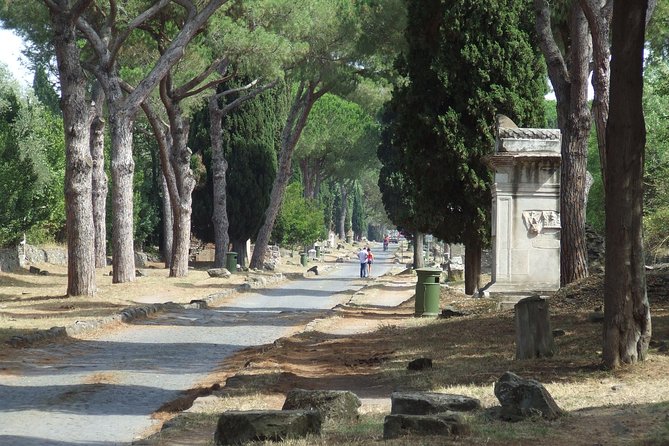
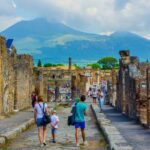
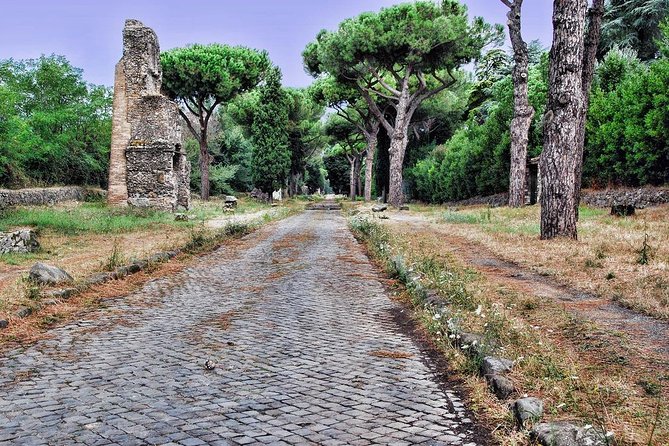
The Appian Way is one of Rome’s best “you feel it in your feet” experiences. Your first stop is Via Appia Antica, where the road was once the Empire’s crucial connector—Rome to Capua, and eventually stretching more than 300 miles all the way toward Brindisi.
What makes this stop special is how well preserved it feels. You’re not just looking at ruins behind glass. You’re walking on large, flat stones set down centuries ago, shaped by rain, wheels, and constant traffic.
Practical tip: wear comfortable shoes with real traction. Even if the time is set around an hour, you’ll probably want to linger where the road texture feels most dramatic. And since this is an early part of the day, you’ll often catch it before the area gets busier.
Catacombe San Sebastiano: an underground city of loculi and colombari
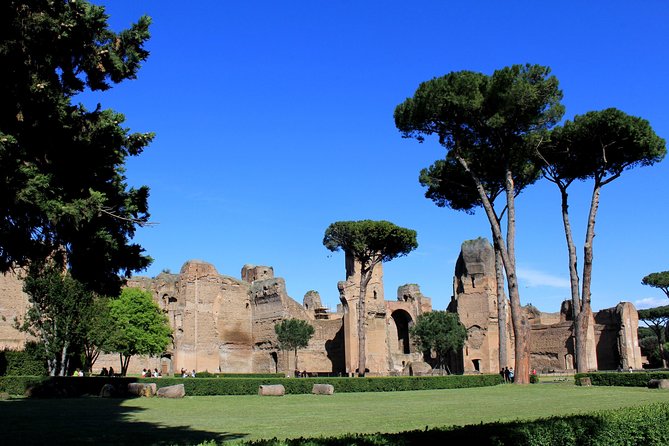
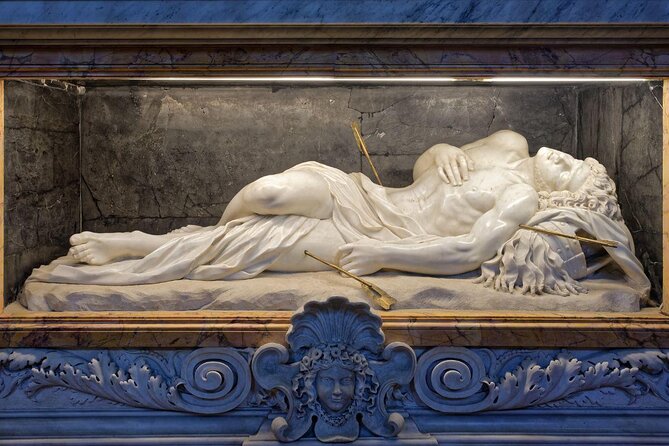
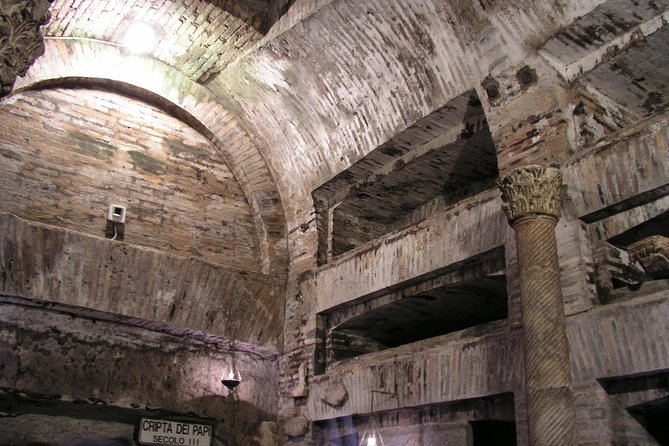
Next comes a completely different Rome: subterranean. Catacombe San Sebastiano is named for St. Sebastian, and the term catacombs connects back to the idea of being near hollows—tied to the tuff mining in the area.
This cemetery wasn’t only for one era. From the first century onward, it saw intense use and construction, with caves and tunnels turned into burial spaces. You’ll encounter tombs in different forms, including rectangular wall tombs called loculi and smaller urn-holding spaces referred to as colombari. Aboveground buildings also existed, some with interior wall paintings.
Why this matters on a Hidden Rome-style route: it’s a strong counterpoint to the daylight sites. The acoustics, the tight passages, and the sheer age of the setting make it feel like you’ve stepped into Roman religious and daily life at the same time.
Parco degli Acquedotti: aqueduct ruins you can actually breathe next to
After the underground visit, you get a big open-air break at Parco degli Acquedotti, part of the archaeological park on the Appia Antica outskirts. The selling point here is the atmosphere. It’s described as a near-tours-free area, with families picnicking on weekends and plenty of room to stroll on your own pace.
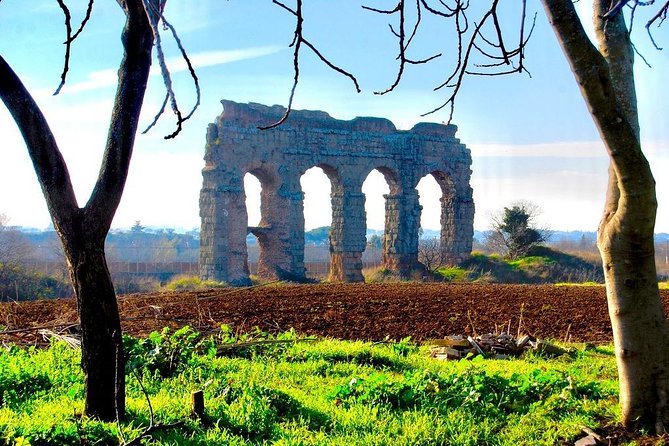
This park preserves long stretches tied to famous aqueducts, including Aqua Felix and portions of Aqua Claudia. You get that “how did they build this?” feeling without fighting a crush of people at every turn.
What I’d plan for: a comfortable walking loop. The space has meadows under the aqueducts, umbrella pines, and broad sightlines that make the ruins feel almost cinematic. If you prefer biking, rentals are mentioned, but walking is the easiest way to enjoy it without feeling rushed.
If you want photos, bring your phone camera strap or keep your hands free. You’ll be stopping often—mostly because the structures are so long and the angles keep changing as you wander.
You can also read our reviews of more tours and experiences in Rome





Terme di Caracalla and a Tiber pause: Roman power, then river life
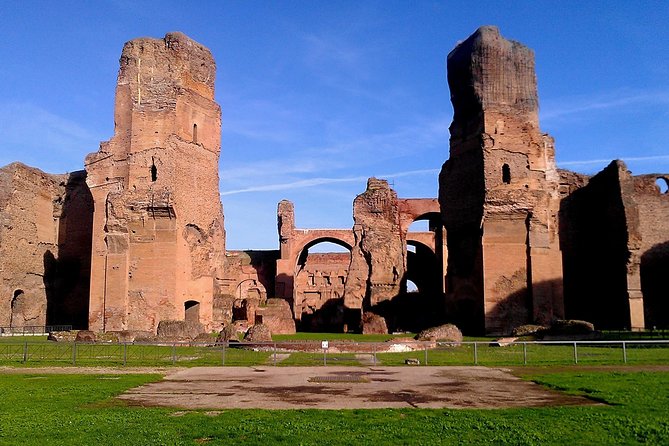
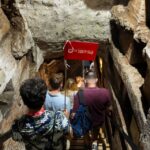
The tour then shifts to Baths of Caracalla. Construction is dated to 212–216 under Emperor Caracalla, and even with much of the complex in ruins, what remains still reads as huge. Brick walls and collapsed vaults are the visible evidence, and it’s enough to understand the scale of how these thermal complexes worked.
Entry for Terme di Caracalla isn’t included. So if you want to go inside and see more than the exterior remains, budget for that and expect it to add to your overall time.
Between major stops, there’s also time to ground the day with the Tiber. The river is about 250 miles long, runs through Rome, and flows into the Tyrrhenian Sea at Ostia. Most of Rome sits east of the Tiber, while the west side includes the island area Insula Tiberina (also called Insula Sacra). It’s a useful reminder that Rome’s layout is basically geography first, monuments second.
This “river pause” helps the whole day feel connected instead of like you’re hopping between unrelated attractions.
Trastevere and Santa Maria in Trastevere: short dose of local Rome
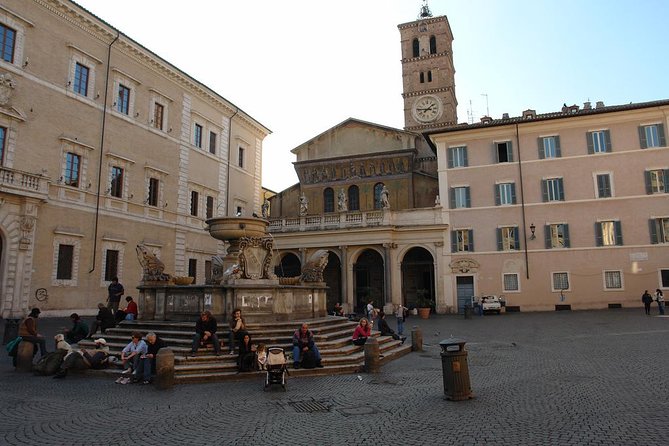
Then you cross into Trastevere, south and west of the Vatican area, and the vibe changes immediately. Trastevere is described as a city within a city, with Medieval piazzas and cobbled vicoli that still feel like a lived-in neighborhood rather than just a sightseeing corridor.
Your stop here is brief, around half an hour, so think of it as atmosphere plus one or two quick moments rather than a full neighborhood exploration. Sit for a moment in a piazza if you can, even if it’s just to watch everyday Rome do its thing.
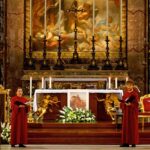
From there, you visit Basilica di Santa Maria in Trastevere, where recent restorations brought new life to 12th-century Pietro Cavallini mosaics, including his Vita della Vergine. You also see Domenichino’s 16th-century octagonal gold ceiling and his painting L’Assunzione della Vergine.
The church is said to date back at least to the 3rd century, giving it a strong claim as one of the early Christian places of worship in the city. Even if you’ve seen other Roman churches, this one often hits differently because the mosaics and ceiling details reward close looking.
Practical note: in a short stop, you’ll enjoy it more if you decide in advance what you want to focus on—mosaics or the Baroque ceiling—so you don’t end up sprinting for photos.
Colle del Gianicolo: where the skyline clicks into place
The last major moment is Colle del Gianicolo, also known as the Janiculum Hill. It’s one of Rome’s best spots for a scenic view of central Rome, with domes and bell towers lining up across the city.
This hill also connects to other famous points: San Pietro in Montorio (associated with a traditional site of St. Peter’s crucifixion), Bramante’s Tempietto, and the Fontana dell’Acqua Paola fountain built by Pope Paul V. The hill area also ties into research and educational institutions, including academies in Rome and university sites.
Your time here is short—around 10 minutes—so go in ready to look, not ready to wander. If you want the best views, move to a position that gives you a clear skyline immediately. Then spend your remaining time taking it in and grabbing a few steady photos.
Who should book this Hidden Rome private tour
This is a smart fit if you:
- Want a less-crowded route that still hits major Roman themes: roads, burial culture, engineering, and neighborhoods
- Prefer a dedicated driver who handles getting you between distant areas
- Are traveling with kids, mobility limits, or anyone who hates transit math
- Have already seen the busiest center sights and want something different
It’s less ideal if you:
- Want deep, slow museum time at each site
- Expect every stop to feel like a long guided lecture (the day is built for movement)
- Care a lot about paying only for included admissions, since Terme di Caracalla is not included
Also, the tour notes a moderate physical fitness level. Appian Way walking and outdoor strolling in the aqueduct park both add up, even if no single stop is extremely demanding.
How to get the most out of your driver-guide
Because this is private, your best move is to treat the guide like a resource. Ask what’s under restoration if any Jubilee-related changes affect access. The tour warns that some monuments may be under restoration, so having your guide confirm what you can actually see that day helps.
If you care about church interiors or specific art details, mention it early. In the past, some guides have been able to incorporate additional church visits around major calendar moments, including access through main doors in Jubilee settings. Even if your plan doesn’t change, you’ll get better attention when you tell your priorities upfront.
Finally, don’t ignore logistics talk. Guides often point out where to pause, where to stand for photos, and where walking saves you time. Those small choices matter a lot in a route like this.
Should you book Hidden Rome with a private driver?
If your goal is to escape heavy crowds and still get a full, varied Roman day, I’d book it. The mix of Appian Way stones, San Sebastiano underground passages, aqueduct park space, and Trastevere’s neighborhood feel is exactly the kind of routing that turns Rome from overwhelming into manageable.
I’d hesitate only if you’re hoping for lots of long, in-depth guiding at every stop, because the day is built around moving between several areas. If you do book, go in with realistic expectations: it’s a fast-moving “Rome route with smart stops,” not a slow sit-down tour.
FAQ
FAQ
What time does the tour start?
The tour start time is 9:00 am.
How long is the Hidden Rome tour?
It runs for about 6 hours.
Is hotel pickup and drop-off included?
Yes. Hotel pickup and drop-off are included.
Is this a private tour?
Yes. It’s a private tour, and only your group participates.
Are admission fees included for all stops?
Catacombs admission is included, and several other listed stops are free. Terme di Caracalla is not included in admission.
What language is the tour offered in?
The tour is offered in English.
Are food and drinks included?
No. Food and drinks are not included.
Can I cancel for a full refund?
Yes, free cancellation is offered. You can cancel up to 24 hours in advance for a full refund.