REVIEW · ROME
World War II Sights in Rome Private Walking Tour with Guide
Book on GetYourGuide →Operated by Roso Travel · Bookable on GetYourGuide
Rome’s WWII story starts with a street ambush. This private walking tour strings together the rise of Italian Fascism, the Nazi occupation, and the raid and devastation that hit Rome’s Jewish community, all on foot through central neighborhoods. You’ll follow the thread through key places tied to the war years, guided by a licensed history expert who can answer your questions in real time.
I really like the way the route uses specific street-level moments to explain big events. Via Via Rasella is the kind of place where your guide can connect politics, violence, retaliation, and fear in a way that feels real, not like a textbook. I also appreciated the late-tour focus in the former Jewish Ghetto and the stop at the Great Synagogue, where the story is told with respect and context—my guide, Massimo, was especially strong at making the human side clear.
One consideration: if you expect lots of obvious, preserved WWII buildings to photograph, you may find the tour leans more toward what happened than toward what still stands. Rome doesn’t hand you wartime remnants on a platter, so you’ll get the most value if you’re comfortable with heavy history and you like guided interpretation.
In This Review
- Key highlights you’ll care about
- Where the tour begins: Hotel Stendhal near Piazza Barberini
- Via Rasella: when a street becomes part of a resistance story
- Trevi Fountain to Piazza Venezia: Fascism in the scenery
- From Fascism to occupation: how your guide connects the WWII timeline
- The former Jewish Ghetto and the Great Synagogue: a stop that demands attention
- The 4-hour option: Museum of the Liberation in a former Nazi-era prison
- Price and value: what $194.17 per person buys you
- Who this tour suits best (and who might want a different approach)
- Should you book this private WWII tour in Rome?
- FAQ
- What’s the duration of this tour?
- Where does the tour meet?
- How many people are on the tour?
- What languages are available for the guide?
- What’s included in the tour?
- Is the Museum of the Liberation included?
- Do you get transportation to the museum?
- Can I get a refund if I cancel?
Key highlights you’ll care about
- Via Rasella to Fosse Ardeatine: the 1944 ambush and Nazi retaliation are explained with clear numbers (28 SS killed; 335 Italians killed).
- Mussolini’s power stops: Piazza Venezia and the palace used as Mussolini’s headquarters, plus the balcony moment from May 1936.
- Monuments with wartime echoes: you pass major landmarks like Trevi Fountain and the Altar of the Fatherland to frame how Fascism used public space.
- Jewish Ghetto + Great Synagogue: you’ll learn what changed for Roman Jews when Germany occupied the city.
- Optional Museum of the Liberation: a free add-on in a former police headquarters and Nazi prison, with 3 floors of exhibits.
- Private format, guide-led Q&A: you can ask follow-ups and go at your own pace across the 2-hour or 4-hour options.
Where the tour begins: Hotel Stendhal near Piazza Barberini
You start at the meeting point in front of Hotel Stendhal on Via del Tritone (Via del Tritone, 113). It’s in the right zone for an easy start: you’re close to Piazza Barberini and the Fontana del Tritone area, so you’re not crossing the city just to begin.
The first minutes matter. With a private walking tour, you get oriented fast—where you’re going, why each stop exists, and how your guide will connect Fascism, German occupation, and the Holocaust-era events that affected Rome. If you like history on a timeline, this format works because your guide can keep tightening the story as you move.
Expect a focused walk, not a museum-style lecture. You’ll be outside most of the time, so wear shoes you can walk in without thinking about it. Rome’s streets are full of surprises, but you’ll want your attention on the guide’s explanations.
You can also read our reviews of more walking tours in Rome

Via Rasella: when a street becomes part of a resistance story

The tour’s early anchor is a stretch connected to Via Rasella. Your guide brings you there to discuss the 1944 ambush in which an attack on a column of Nazi SS troops was carried out by Italian partisans—killing 28 SS policemen.
What I like about this stop is the cause-and-effect your guide builds. You’re not just hearing the incident; you’re seeing how the response was designed to terrorize and control. And because the tour is private, you can ask the kind of questions that usually get ignored on group tours: why resistance took certain forms, how occupiers used retaliation, and how ordinary people reacted in the moment.
Then you get the darker, retaliatory side of the story: the Nazi response included the Fosse Ardeatine massacre, where 335 Italians were killed. That number isn’t just a statistic. Your guide frames it so you understand what it meant for families and for the city’s sense of safety.
Trevi Fountain to Piazza Venezia: Fascism in the scenery

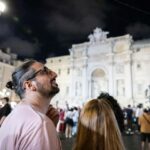
From there, the walk keeps you moving through central Rome, including a pass by Trevi Fountain. This isn’t there to turn the tour into sightseeing bingo. It’s there to help you feel the geography of power—how the city’s most famous public spaces sit close to the sites where political messaging played out during the Fascist era.
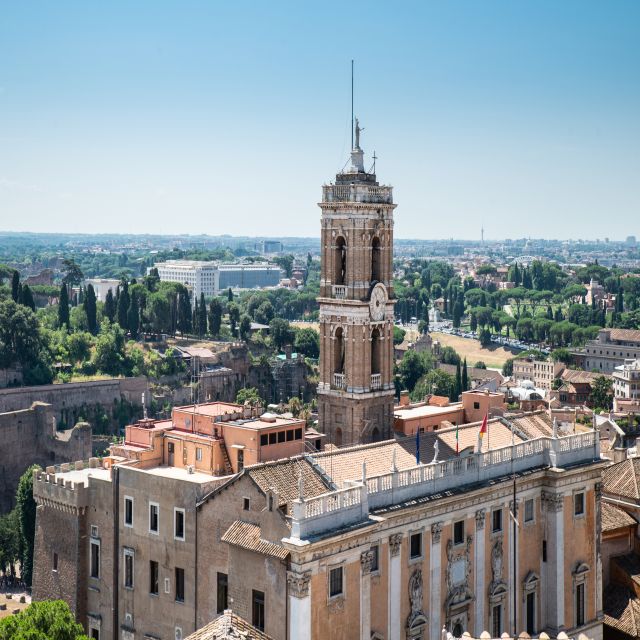
Next comes Piazza Venezia, one of the tour’s big storyline switches. This is where you find the palace that served as Mussolini’s headquarters. Standing in this area is a reminder that Fascism wasn’t just ideology. It was a performance, with locations chosen for visibility and symbolism.
Your guide also connects the political theater to a specific moment in May 1936, when Mussolini declared the creation of the new Italian empire from a balcony opposite the Altar of the Fatherland. The tour uses that backdrop to show how public monuments and state narratives were used to shape identity—especially in a country trying to redefine itself under Fascist rule.
And yes, this is where you may notice a practical reality of Rome: a lot of what you’re seeing looks timeless. That’s why the guide’s job is crucial. Without commentary, the places can feel like postcard scenery. With commentary, they start telling a different story.
From Fascism to occupation: how your guide connects the WWII timeline
A major value of this tour is the thread it keeps tying together: the rise of Italian Fascism led by Benito Mussolini, the alliance with Adolf Hitler, the German occupation, the bombing of Rome, liberation, and the raid of the Jewish Ghetto. Your guide isn’t just listing events. The tour is built to show the progression—how one phase leads into the next.
This matters because WWII in Italy can feel scattered if you only study it through dates. On this walk, you get a route-based version of the story. Each location acts like a bookmark, so you can remember the key turns: Fascism’s consolidation, the escalation into war, the tightening grip of occupation forces, and the consequences that fell on specific communities.
If you’re someone who likes context, you’ll get a lot here. The guide is fluent in multiple languages (English, French, Italian, Russian, and Spanish), so they can explain names, terms, and relationships clearly without oversimplifying.
You’ll also hear the story through the eyes of Roman people. That phrase can sound marketing-ish, but in practice it helps. It steers the conversation toward what it felt like to live through those years, not only what happened on paper.
The former Jewish Ghetto and the Great Synagogue: a stop that demands attention
The tour ends in the former Jewish Ghetto area, where you’ll see the Great Synagogue and learn what happened to Roman Jews when Germany occupied the city.
This is the part of the tour I think deserves the most mental space. It’s not a quick photo stop. The guide explains the raid and the broader impact of occupation, tying Rome’s Jewish community to the wider Holocaust-era story. The goal is to help you understand that this wasn’t abstract tragedy. It was targeted harm that reshaped daily life.
When I value a tour like this, it’s usually because it handles sensitive history carefully—and because it gives you enough context to avoid confusion. Here, your guide’s commentary is the difference between simply seeing a landmark and understanding why that landmark matters in WWII history.
If you want to be prepared, take a moment before the walk to decide what questions you want answered. Things like how occupation policies changed life, how the ghetto functioned, or how Roman communities were affected can lead to a richer, more personal experience with your guide.
You can also read our reviews of more guided tours in Rome
The 4-hour option: Museum of the Liberation in a former Nazi-era prison
If you book the longer version, you add the Museum of the Liberation. It’s included for the 4-hour option, with free admission, and your tour also includes one-way public transport tickets because it’s a short walk from the center of old Rome.
The museum is housed in former police headquarters and Nazi prison buildings. That fact alone changes the mood. You’re not just learning about history in a neutral space—you’re walking through structures that were part of repression.
Inside, you’ll explore 3 floors of exhibitions. The highlights your guide points out include the original conference room, a library, and prison cells. There’s also a hall commemorating the victims of anti-Semitism in Italy and Rome, which ties the broader story of hatred and persecution back to local reality.
Artifacts on display help you feel like you’re back in time. This is one of those add-ons where the walking tour does what it should: it sets the context so the museum doesn’t feel like disconnected rooms. Together, they create a fuller picture of what happened and how it was carried out.
Price and value: what $194.17 per person buys you
At $194.17 per person, this isn’t a cheap impulse booking. But the price makes more sense when you focus on what you’re actually getting: a private, licensed history guide for a 2-hour (or 4-hour) experience, built around very specific WWII locations and a sensitive, heavily contextual story.
This kind of tour tends to be worth it if you fit one of these situations:
- You want answers, not just facts, and you’ll use the private format to ask follow-ups.
- You care about how events connect—Fascism’s rise, Nazi occupation, retaliation, and the Jewish community’s experience.
- You’re traveling with one or two people and would rather pay for clarity than sit through a larger-group pace.
If you’re traveling solo with a strong self-guided history habit, you might feel the price more sharply. But for most people, the guide’s job—turning locations into understanding—is exactly what you’re paying for.
Also note the duration is listed as 2–3 hours depending on the start time. That means your walking pace and stop rhythm can vary, which is another reason the private guide format can feel smoother than a fixed-group tour.
Who this tour suits best (and who might want a different approach)
This works best for:
- People who like narrative history and want it tied to real places.
- Travelers who prefer asking questions rather than decoding information from placards.
- Anyone interested in WWII as it played out in Italy, with particular attention to Rome.
It might not fit as well if:
- You’re expecting a photo-heavy tour of preserved WWII infrastructure. This is more about interpretation and memory than about roaming ruined sites.
- You want light, entertainment-style Rome sightseeing. The Jewish Ghetto material and the retaliation story are heavy.
If you do book it, go in with a small mindset shift: treat each stop like a chapter break, not like a checklist item. When you do that, the tour feels less like history you pass through and more like history you understand.
Should you book this private WWII tour in Rome?
I’d book it if you want a private guide to connect Mussolini’s Fascism, Nazi occupation, Rome’s bombing-era reality, and the raid and persecution of Roman Jews into one coherent walk. The Via Rasella and Fosse Ardeatine framing, plus the careful ending in the Jewish Ghetto, gives you a strong spine for the story.
I’d think twice if you’re mainly chasing visible WWII artifacts and want lots of surviving wartime spaces to see on your own. In that case, you may get frustrated if you expected more physical ruins.
One last practical tip: bring a couple of questions on your phone before you start. Ask them early. In a private tour, a good question often changes how the rest of the walk lands.
FAQ
What’s the duration of this tour?
The tour is listed as 2–3 hours, depending on the starting time. There’s also a 4-hour option that adds the Museum of the Liberation.
Where does the tour meet?
Meet your guide in front of Hotel Stendhal, Via del Tritone, 113, 00187 Rome, Italy. You do not enter the hotel; it’s only a meeting point.
How many people are on the tour?
It’s a private group tour, so it’s not a large group experience.
What languages are available for the guide?
The live guide is available in English, French, Italian, Russian, and Spanish.
What’s included in the tour?
Included are a private walking tour with an expert guide, expert commentary, and the number of attractions depends on the option you choose. The Museum of the Liberation is included only with the 4-hour option.
Is the Museum of the Liberation included?
Yes, but only for the 4-hour option. Admission is free with that option.
Do you get transportation to the museum?
For the 4-hour option only, you receive one-way public transport tickets to get to the Museum of the Liberation.
Can I get a refund if I cancel?
Free cancellation is available up to 24 hours in advance for a full refund.