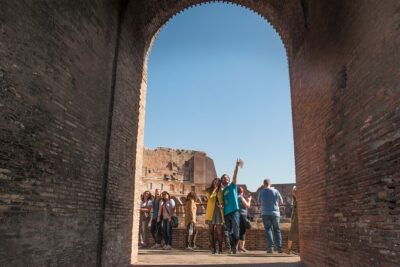
REVIEW · ROME
Roman Domus of Palazzo Valentini Ticket
Book on Viator →Operated by Weekend in Italy · Bookable on Viator
Rome hides luxury under your feet.
This 1- to 1.5-hour guided visit to the Domus Romane di Palazzo Valentini is a special mix of archaeology and showmanship: I loved the mosaic-studded rooms and the light-and-video reconstructions that bring ruined spaces back to life. The one real catch is that you’ll spend plenty of time walking and standing, including sections over a glass floor that can feel a little airy for some people.
You’re guided through excavations preserved beneath a 16th-century palace, built over older Roman residential layers. With a maximum group size of 15, it’s not a cattle-call experience—you get enough time to ask what you’re looking at and why it matters.
In This Review
- Key Highlights You’ll Actually Notice
- Le Domus Romane di Palazzo Valentini: What You’re Really Seeing
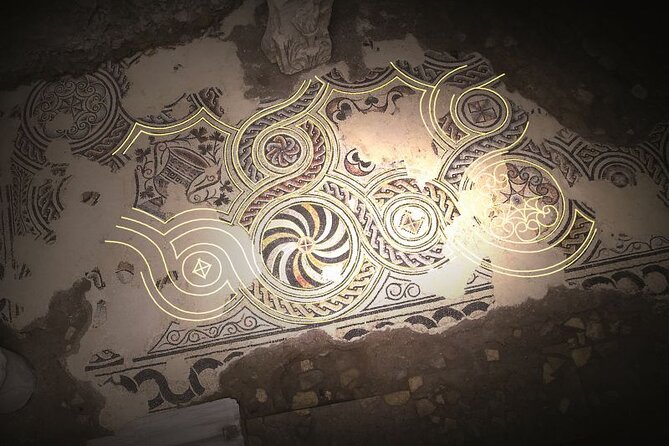
- The Best Part: Mosaics, Floors, and the Texture of Daily Luxury
- Glass Floors and Standing Time: The Main Trade-Off
- Virtual Reconstructions That Actually Help You Understand
- The Palazzo Valentini Story: How Rome Layers Its Past
- What You’ll Walk Through During the 1–1.5 Hour Route
- Price and Value: How to Judge If It’s Worth It for You
- Getting There: Via delle Terme di Traiano Meeting Point
- Who This Tour Is Best For (and Who Might Want a Different Option)
- Should You Book Roman Domus of Palazzo Valentini?
- FAQ
- How long is the Roman Domus of Palazzo Valentini tour?
- How big is the group?
- Where does the tour meet?
- Where does the tour end?
- Is the ticket price free?
- What’s included in the tour?
- What isn’t included?
- Do I need to print and bring my voucher?
- Do I need to pick up tickets in advance?
- How will I know my confirmation time?
- Is the tour refundable or changeable?
Key Highlights You’ll Actually Notice
- A Roman house beneath a palace: the 16th-century Palazzo Valentini sits over imperial-age domestic remains
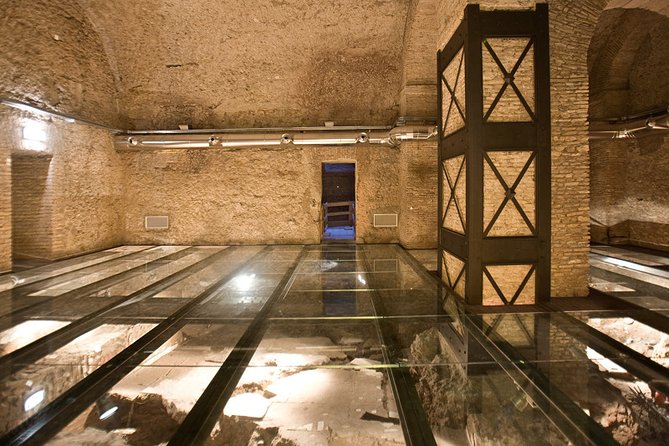
- Glass-floor walking over excavations: safe and designed for viewing, but height-sensitive visitors should take note
- Light, projections, and virtual rooms: multimedia brings walls, rooms, and courtyards back to scale
- Mosaics and floor details you can’t guess from street level: polychrome floors, paving blocks, and decoration fragments
- Baths, kitchens, and peristyles in one route: you’ll see the parts that made a domus run
- A small-group setting (15 max): you’re more likely to get personal attention
Le Domus Romane di Palazzo Valentini: What You’re Really Seeing
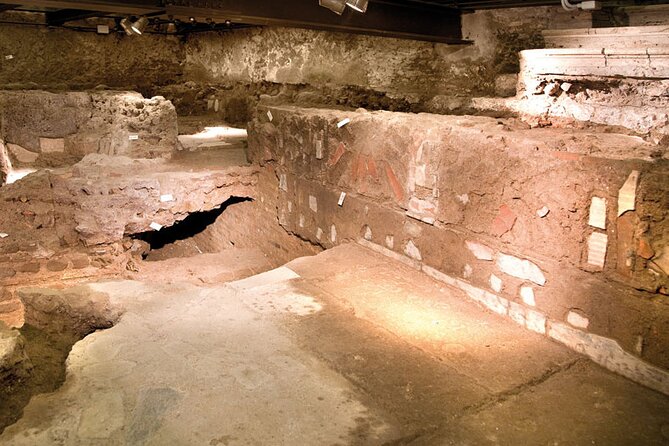
The Domus of Palazzo Valentini is one of those Rome experiences that changes how you see the city. Street level in Rome can look like a timeline written in stone blocks and random eras stacked on top of each other. Here, the layering is literal: the Roman residential complex sits below a later building, and the excavated remains have been kept and presented as a permanent exhibition.
In the domus route, you’re not just passing by ruins—you’re moving through the footprint of real spaces that once belonged to powerful families. The highlights focus on domestic “behind the scenes” too, not only grand rooms. You’ll encounter the kinds of areas that made daily life work, including spaces connected to baths and food preparation, plus architectural features such as peristyles (those columned porches/courtyards that helped shape the home’s rhythm).
What makes this experience stand out is that the site doesn’t ask you to guess. The building is a frame for explanation. As you walk, the exhibit’s multimedia tools translate fragments—mosaic sections, wall remnants, floor tiles—into a more complete picture. If you’ve ever looked at ruins and thought, I have no idea what this used to look like, this is built for that exact problem.
You can also read our reviews of more tours and experiences in Rome



The Best Part: Mosaics, Floors, and the Texture of Daily Luxury
A lot of Roman sightseeing zooms in on the “big ticket” monuments. This tour works differently. It teaches you how a wealthy Roman home looked and felt at ground level—where the luxury was in surfaces and layout, not just marble statues.
You’ll see mosaics and wall decorations, plus floor fragments that include polychrome elements. You’ll also come across paving blocks and other small construction remains that feel minor until you realize how much work went into making a home look polished every day of the year. The route is designed so you’re constantly comparing what you see now (ruins and fragments) with what you’re told it once represented.
One thing I like about this approach is that it trains your eye. After you’ve spent time here, mosaics in other parts of Rome become easier to read. You start noticing patterns, materials, and the way decoration changes from one kind of room to another.
Glass Floors and Standing Time: The Main Trade-Off

This is the one practical consideration to plan for. Parts of the walk take place on a glass floor suspended over the excavations. It’s designed to be safe, but it’s still glass—if you’re sensitive to heights or shaky footing, you may need to move slowly and keep your eyes on the ground level rather than looking down.
Also, this is not a sit-and-stare museum tour. Expect to stand and walk through multiple areas as lighting and projections do their job. Comfortable shoes matter more than you’d think. Even when the visuals are excellent, the pacing means you’ll be on your feet.
If that sounds like your least favorite style of sightseeing, you may want to pair this with more flexible stops elsewhere. But if you’re okay with walking and can handle a glass-floor moment, you’ll likely think the whole setup is brilliant.
Virtual Reconstructions That Actually Help You Understand
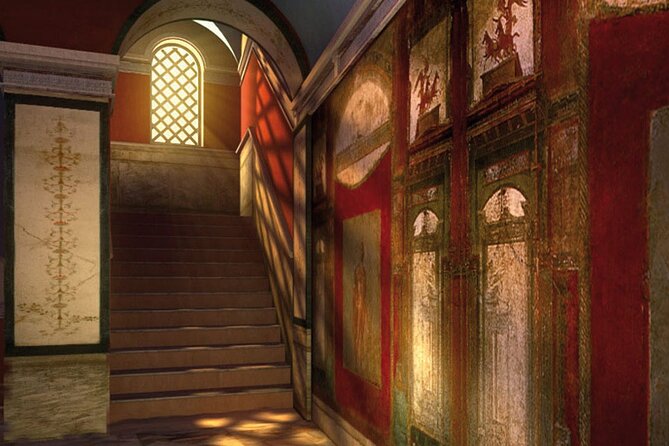
Here’s where the experience earns its reputation. The excavations are enhanced with virtual reconstructions, graphics, and videos. Then, instead of delivering that as a lecture, the presentation is built into the space.
At key points, projections and light effects reconstruct where walls, rooms, and decorative elements likely stood. The goal isn’t to pretend the past is fully intact. It’s to give your brain a scaffold—so the fragments stop being random and start matching up to a layout you can picture.
As you move, you’ll get glimpses of how areas such as rooms, peristyles, and key functional spaces fit together. The tour also references how furnishings and decorations would have been arranged, which helps you understand how much of a wealthy household was planned for comfort, status, and everyday use—not just occasional entertaining.
Think of it like a map you can walk through. Once it clicks, the domus route becomes far more than “pretty lighting.” It becomes a guided way to learn the logic of an imperial-age home.
The Palazzo Valentini Story: How Rome Layers Its Past
The Palazzo Valentini is not just a backdrop. It’s part of the lesson.
This 16th-century palace was built over the ruins of the earlier Roman residential complex. That’s a huge theme in Rome, but it’s usually hard to see clearly because so many eras are separated by streets and distance. Here, the layering is right under you, and the exhibition connects it to the broader topography—how the city’s character changed across ancient, medieval, and modern periods.
You’ll also learn that these excavations were improved with the help of later discoveries and documentation. The result is a permanent exhibition that enriches both the historical and artistic understanding of what was found and how it can be interpreted.
One of the more interesting “Rome trivia” angles is timing: the remains connected to the domus were discovered in the mid-2000s, and the computer visualization elements feel like a newer layer of storytelling. That combo—recent excavation with modern reconstruction tools—helps explain why the site can feel so vivid compared to older, more static exhibits.





What You’ll Walk Through During the 1–1.5 Hour Route
The tour route is designed as a steady progression through the most readable parts of the domus. While exact room order can vary, you can expect a path that follows the layout of two major household areas and their relationship to baths, kitchens, and formal spaces.
You’ll spend time on:
- Mosaic and wall decoration fragments that show how rooms were decorated
- Floor and paving remnants that reveal day-to-day “infrastructure”
- Architectural elements like peristyles that explain how space was organized
- The areas described as baths and kitchens, which help you understand the home’s routine
- Multimedia moments where the guide points out what the projections reconstruct
The pacing is intentional: you see something physical, then the presentation helps your mind match it to a former room. That’s also why the tour can feel like “a lot of standing.” The exhibit is doing work, and so is your attention.
If you’re visiting on your first full day in Rome, this can be a useful anchor. It’s not competing with the Forum on scale; it’s preparing you to notice domestic life when you later walk past other ruins.
Price and Value: How to Judge If It’s Worth It for You
The ticket you book includes admission and booking fees. Food and transportation are not included, so you’re paying for access plus a guided experience through the exhibition.
Even when you compare it to bigger headliners, the value logic is straightforward:
- You’re getting curated access to a specific excavation site
- The tour includes guided explanation plus multimedia reconstructions
- You’re touring a domus layout, not just looking at isolated artifacts
That said, a note for your planning brain: some people have reported confusion when booking through third-party platforms, including concerns about meeting-point details and whether extra payment was clearly tied to service. I’d treat this as a reminder to double-check what you’re buying and confirm the meeting location matches your voucher.
Also, think about your learning style. If you learn well through visuals and guided interpretation, this tends to feel worth every minute. If you prefer traditional museums with minimal tech, you might want to keep expectations flexible.
Getting There: Via delle Terme di Traiano Meeting Point
The meeting point is Via delle Terme di Traiano, 85, 00184 Roma RM. The tour starts there and ends back at the same place.
This start point isn’t always obvious on first pass. Plan to arrive a little early and take a careful look at the building entrance area rather than assuming it will look like a major landmark. One practical trick: use your phone map with the exact street number, then walk the last block slowly.
The good news is that it’s near public transportation, so you can fold it into your day without a complicated logistics puzzle.
Who This Tour Is Best For (and Who Might Want a Different Option)
This one fits best if you:
- Want a clearer picture of how an elite Roman home worked
- Like mosaics and interior details more than monumental exteriors
- Learn well through guided explanation plus multimedia visuals
- Are bringing kids—some visitors found the tech and lighting kept younger attention engaged
It can be less ideal if:
- You dislike glass-floor sections or strong height sensations
- You need lots of breaks and quiet sitting time
- You’re expecting a fast-moving, outdoors-only walkthrough
If you’re traveling with a mix of interests, this is a smart compromise. History fans get real ruins. Visual learners get the reconstructions. People who only “half care” about Roman architecture often still enjoy the way the rooms come back to life.
Should You Book Roman Domus of Palazzo Valentini?
Yes, if you want the Roman past shown in a way your brain can actually assemble. The combination of mosaics, virtual reconstructions, and a guided route through rooms and functional spaces makes this far more than a static ruin visit.
Book it if you:
- Like guided interpretation that turns fragments into layout
- Are comfortable with a glass-floor moment
- Want a short, high-impact experience that doesn’t require a full day
Skip it (or plan an alternate option) if you know you struggle with heights or you hate standing for long stretches.
FAQ
How long is the Roman Domus of Palazzo Valentini tour?
It’s listed as about 1 hour, with the experience often running around 1.5 hours.
How big is the group?
The maximum group size is 15 travelers.
Where does the tour meet?
The start point is Via delle Terme di Traiano, 85, 00184 Roma RM, Italy.
Where does the tour end?
The activity ends back at the meeting point.
Is the ticket price free?
The price shown is $0.00 in the provided info, but always check what you’re actually being charged on the booking page you use.
What’s included in the tour?
It includes the visit of Palazzo Valentini and booking fees.
What isn’t included?
Food and drinks are not included, and transportation to and from attractions isn’t included.
Do I need to print and bring my voucher?
Yes. You must print and present your confirmation voucher to redeem tickets at the time of your visit.
Do I need to pick up tickets in advance?
Reserved tickets must be picked up no later than 30 minutes before the confirmed time slot. After that, reservations can be canceled.
How will I know my confirmation time?
Confirmation is sent within 48 hours of booking, and the time you select is your preferred time. If that time isn’t available, the closest available slot during opening hours on your selected date is automatically confirmed.
Is the tour refundable or changeable?
No. The experience is non-refundable and cannot be changed for any reason.