REVIEW · ROME
Exploring Rome’s Rich Heritage: Pantheon and Jewish Ghetto
Book on Viator →Operated by Checkandgo Tours · Bookable on Viator
Rome can feel like one long museum. This tour connects the Pantheon to the Jewish Ghetto in a tight, well-guided walk, and the best part is you get skip-the-line Pantheon entry plus headsets so you don’t miss a word. I also like how the guide keeps the story moving, from Roman religion to the Jewish community’s historic center. One thing to plan for: Pantheon entry is strict about covered shoulders and knees, or they won’t let you in.
You’ll spend about 2 hours total, starting at Piazza della Rotonda at 9:00am and ending at the Portico of Octavia area. The group stays small (max 25 travelers), which helps the tour feel calm and makes it easier to ask questions when you hit a detail you actually care about.
In This Review
- Key Highlights Worth Clocking
- Pantheon First: Getting Inside One of Rome’s Most Famous Domes
- The one drawback at Stop 1
- Piazza della Minerva: Bernini’s Elephant and Gothic Church Contrasts
- Largo di Torre Argentina: Temple Ruins and Caesar’s Shadow
- How to get more out of the short time
- Piazza Mattei and the Turtle Fountain: A Pause With Personality
- Through the Jewish Ghetto: Via del Portico d’Ottavia to the Portico of Octavia
- Why this section is such good value
- Timing, Group Size, and Where You’ll Feel the Pace
- Price and Value: Is $43.29 Worth It?
- Logistics You Should Actually Care About
- Who This Tour Fits Best
- Things That Can Make or Break Your Day
- Should You Book This Pantheon and Jewish Ghetto Tour?
- FAQ
- How long is the Pantheon and Jewish Ghetto tour?
- What time does the tour start and where does it meet?
- What is the price per person?
- Is skip-the-line Pantheon entry included?
- Are headsets included?
- What should I wear for Pantheon entry?
- How many people are in the group?
Key Highlights Worth Clocking
- Skip-the-line Pantheon tickets so you spend your time looking up, not waiting.
- Headsets included, meaning the guide’s explanations stay clear through crowds and footsteps.
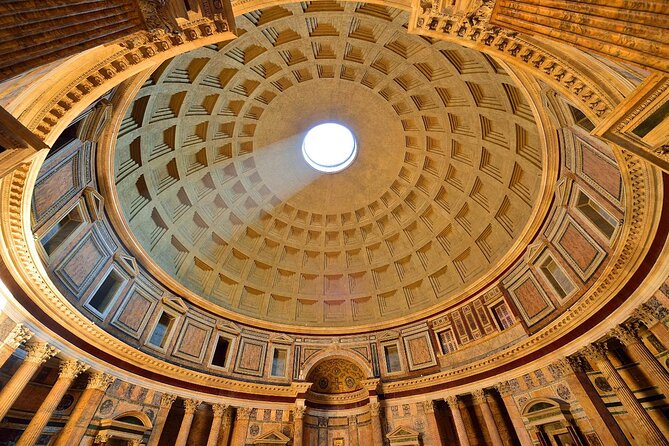
- Pantheon specifics you can picture fast: the dome, the oculus, and its later role as a resting place for major figures.
- A smart route across Rome’s layers: ancient temples near Largo di Torre Argentina, then straight into the Jewish Ghetto core.
- Small-group pacing (up to 25) that works well for a 2-hour heritage sprint.
- Iconic details at each stop like Bernini’s obelisk elephant and the Turtle Fountain in Piazza Mattei.
Pantheon First: Getting Inside One of Rome’s Most Famous Domes
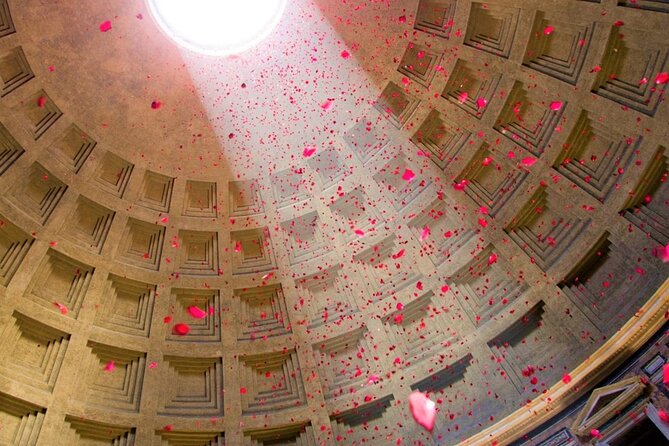
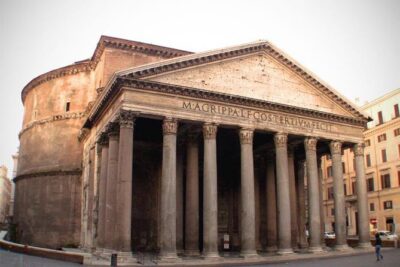
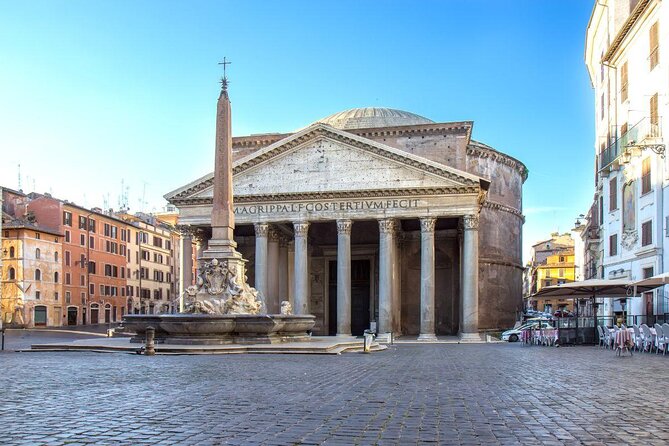
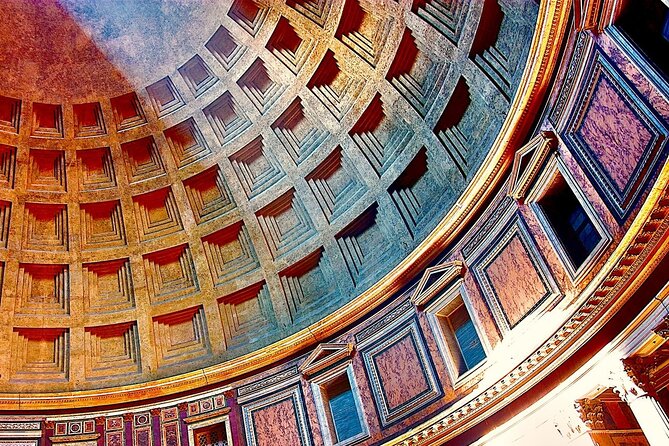
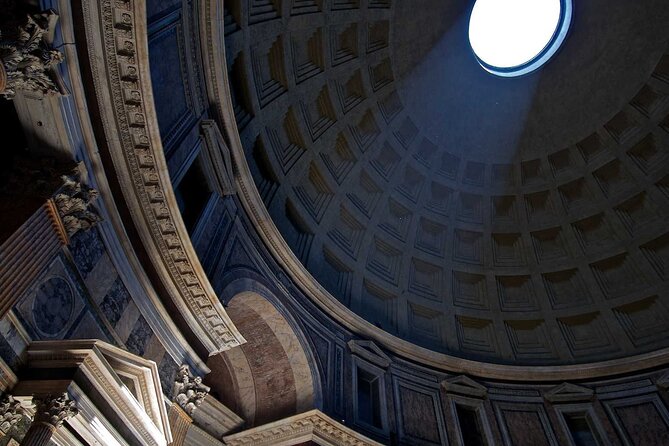
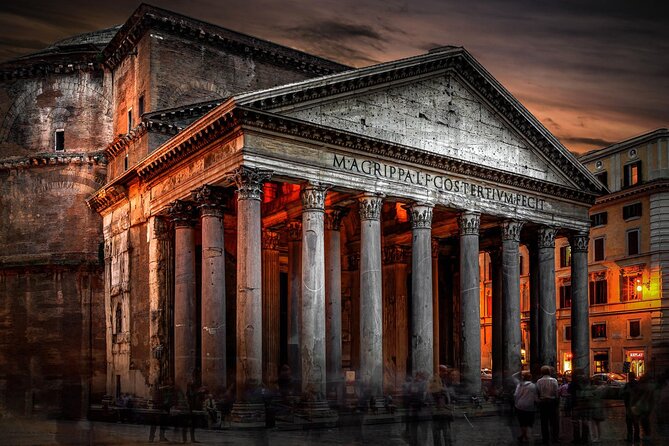
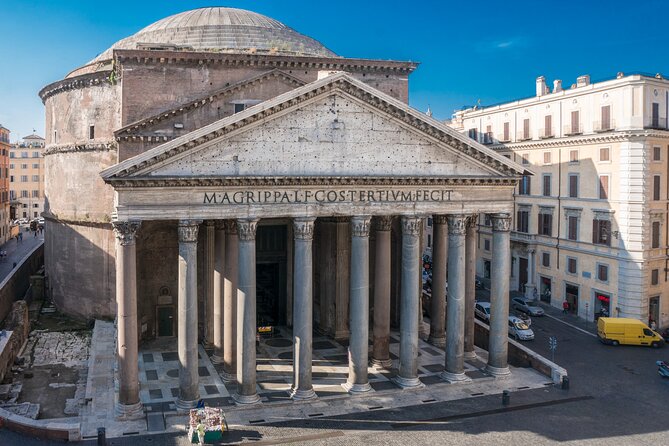
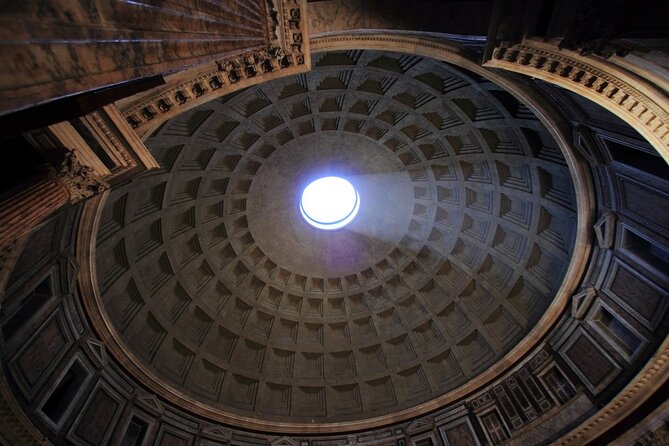
Start at Piazza della Rotonda, where the Pantheon basically runs the neighborhood. This is one of those places where your brain goes from what you’ve seen in photos to what you’re actually seeing in real life. The tour focuses on the structure you came for: a huge domed interior with an oculus at the top. That open circle does more than look cool. It’s the reason light falls through the space in a way that feels intentional, like the building is still doing its job as a temple.
You’ll also learn how the Pantheon’s purpose changed over time. It was originally built as a temple for the Roman gods. Later, it became a place of burial for notable people, including Renaissance artist Raphael and the kings of Italy. That alone gives you a different lens as you stand there, because you’re not only looking at Roman engineering—you’re seeing how power and memory got stored in stone.
Practical note: Pantheon entry has a dress rule. Knees and shoulders must be covered. If you show up in shorts or a tank top, expect refusal, and that’s not a small inconvenience. Before you go, I’d rather you adjust clothing than gamble with the door.
You can also read our reviews of more historical tours in Rome



The one drawback at Stop 1
Even with skip-the-line, the Pantheon area can get busy. Your best move is to arrive a few minutes early so you can settle without rushing—especially if you need to adjust what you’re wearing.
Piazza della Minerva: Bernini’s Elephant and Gothic Church Contrasts
Right behind the Pantheon, the tour slides to Piazza della Minerva, where the vibe shifts from classical Rome to a more layered mix of styles. The big visual here is an obelisk supported by a small elephant, a work associated with Gian Lorenzo Bernini. It’s such an odd pairing that it sticks in your mind. That’s the point.
The stop also includes Santa Maria sopra Minerva, known for being a rare Gothic note in Rome. You’ll see how the city’s look depends on time periods stacking on each other, not replacing one style with one clean winner.
This isn’t a long stop (about 20 minutes). The value is using the time to train your eye: look for how artists and architects kept reusing Rome’s old identity while layering new tastes on top.
Largo di Torre Argentina: Temple Ruins and Caesar’s Shadow
From there, you head to Largo di Torre Argentina, an archaeological area with ruins of four ancient Roman temples. The setting is a little different from the Pantheon: less polished, more fragmented, with that open-air feel where you have to do some mental reconstruction.
This is also the spot tied to one of history’s sharpest moments. It’s famous as the place where Julius Caesar was assassinated in 44 BC. You’re not walking through a dramatic reenactment. You’re standing near leftover architecture that helps explain why political power in Rome was so tightly bound to public space.
How to get more out of the short time
With only about 20 minutes here, don’t treat it like a long museum visit. Treat it like a field stop. Focus on where you’re standing, what you can still recognize as structure, and let the guide connect the ruins to the larger story. That way the time feels full, not rushed.






Piazza Mattei and the Turtle Fountain: A Pause With Personality
Next is Piazza Mattei, a small square with one of those details you’d miss if you weren’t being pointed at it. The star attraction is the Turtle Fountain, created in the 16th century by Giacomo della Porta and later enriched with sculptures attributed to Bernini.
Even if fountains aren’t your thing, this stop works because it teaches a Rome habit: the city likes to hide talent in plain sight. A tiny public square can carry major artistic effort, and it’s a nice counterbalance after the heavyweight history at Largo di Torre Argentina.
Expect about 15 minutes. That’s enough to see it properly, read the visual cues, and reset your attention before the tour moves into a more personal, community-focused area.
Through the Jewish Ghetto: Via del Portico d’Ottavia to the Portico of Octavia
Now the route turns into something you can feel more than just see. You’ll walk along Via del Portico d’Ottavia, described as a historical center of Rome’s Jewish community. This street is where the tour shifts from ancient civic power to lived culture—how people built community and continuity in the same city that had earlier ruled them with force.
You’ll also get guided context that leads directly to what’s left of the Portico of Octavia, an ancient monumental complex commissioned by Emperor Augustus. The tour ends in front of the Portico area, which is notable not just for architecture, but because it once housed a library and a place of worship. Standing there gives you a clear sense of how public buildings could serve many roles at once.
Why this section is such good value
The Jewish Ghetto walk is included as a guided portion, not a self-guided wander. That matters. In this kind of historic neighborhood, the story isn’t always obvious from street level. With the guide’s explanations and your headsets keeping everything audible, you can connect the physical landmarks to the human timeline.
Timing, Group Size, and Where You’ll Feel the Pace
The tour runs about 2 hours total, with short, purposeful stops:
- Pantheon gets the most time (about 45 minutes) because it needs it.
- The other sites are lighter lifts: 20 minutes, 20 minutes, 15 minutes, then 20 minutes in the ghetto area.
The group max is 25 travelers, which is a sweet spot for Rome walking tours. Big enough to be lively, small enough that you’re not swallowed by a crowd.
What you’ll likely feel: this is not a slow, linger-in-every-church kind of day. It’s a structured Rome sampler that helps you get bearings fast. If you want deep museum-level time at any single site, plan a second visit after.
Price and Value: Is $43.29 Worth It?
At $43.29 per person for an about 2-hour guided route, the deal hinges on one thing: the Pantheon component. You’re getting skip-the-line tickets for the Pantheon, plus a guide and headsets. For Rome, that combination matters because it saves time and stress at a popular stop.
Is it a bargain compared with a free self-walk? Sure, if your goal is only to see buildings. But if you want the context that turns a dome and ruins into a timeline, this price starts to look fair. The included route across both Roman ancient landmarks and the Jewish Ghetto’s historic center is what you’re paying for—your guide turns scattered locations into a coherent narrative.
Also, the tour tends to book ahead (on average 77 days in advance). If you have dates locked in, don’t wait for a last-minute “maybe.” Rome sells out, and popularity here makes planning worth it.
Logistics You Should Actually Care About

This tour starts at 9:00am at Piazza della Rotonda and ends in front of the Portico of Octavia at Via del Portico d’Ottavia, 29. There’s no pickup/drop-off, so you’ll be walking from public transport.
The meeting point and ending area are both in central Rome, but this is still a “show up on time” tour. With the Pantheon dress rule and an included ticket process, being late can cost you more than just missing a minute.
Two other practical points:
- You’re asked to bring a copy of your ID.
- The tour is near public transportation, which helps if you’re combining it with other stops the same morning.
Who This Tour Fits Best
This is a strong choice if you:
- Want a guided mix of ancient Rome and the Jewish Ghetto without hopping between distant neighborhoods.
- Like seeing the major highlights, but also want the story connecting them.
- Prefer small-group pacing and clear audio (headsets help a lot in Rome streets).
It’s also good for people on a tight schedule. If you’re balancing work, hotel check-in chaos, or meetings, this gives you a high-impact Rome slice in about 2 hours.
Things That Can Make or Break Your Day
The Pantheon entry rule is the biggest make-or-break item. Shoulders and knees covered is not optional. If you need to rethink what you’re wearing, do it the day before. Also keep your expectations realistic: most stops are short. If you’re the type who wants to slow down for every detail, you’ll need extra time later on your own.
One more thing: any guided plan can face disruption on a given day, and I’ve seen at least one account describe a last-minute cancellation that caused a scramble for tickets. That doesn’t mean it’s typical. It just means you should build a small buffer into your schedule if you’re on a strict timeline.
Should You Book This Pantheon and Jewish Ghetto Tour?
I think you should book it if you want a clean, efficient way to connect Rome’s major landmark energy with the Jewish Ghetto’s historic street-level reality—without spending half your day sorting tickets and standing around. The skip-the-line Pantheon entry, headsets, and small-group size make the format feel practical, not like you’re just paying for someone to point at buildings.
Skip it (or plan around it) if you absolutely need deep, unhurried time at one location. This tour is designed to move. It gives you the core story, then leaves you room to return on your own for the sites you love most.
If you can manage the Pantheon dress code and you’re ready for a focused 2-hour route, this is a smart way to experience Rome’s layers in one morning.
FAQ
How long is the Pantheon and Jewish Ghetto tour?
The tour lasts about 2 hours.
What time does the tour start and where does it meet?
It starts at 9:00am at Piazza della Rotonda, 2, 00186 Roma RM, Italy.
What is the price per person?
The price is $43.29 per person.
Is skip-the-line Pantheon entry included?
Yes. The Pantheon skip-the-line tickets are included, along with admission to the Pantheon site entry.
Are headsets included?
Yes. You get headsets so you can hear the guide clearly.
What should I wear for Pantheon entry?
For entry into the Pantheon (Santa Maria ad Martyres), knees and shoulders must be covered. If not, entry can be refused.
How many people are in the group?
The tour has a maximum of 25 travelers.