REVIEW · ROME
Heritage Site: Villa d’Este and Hadrian’s Villa in Tivoli Tour from Rome
Book on Viator →Operated by Gray Line I Love Rome by Carrani Tours · Bookable on Viator
Tivoli is Rome’s quick escape. In one smooth morning, you’ll see the fountain-filled Villa d’Este and Hadrian’s Villa (Villa Adriana), with a guide and included entrance fees. I like that this is built for first-timers who want big-ticket UNESCO sights without planning, but the tradeoff is a time-boxed schedule and a bit of walking on uneven ground.
What makes this tour feel worth it is the structure. You start at 8:30 am, ride in an air-conditioned vehicle, and keep the group small (up to 20 people). Guides you may encounter, like Valentina, Maja, Matteo, or Monica, can make the sites feel like a story instead of a checklist. Still, do keep expectations realistic: you’re seeing a lot in a short span, and on some days the pacing or language mix may not match what you hoped for.
In This Review
- Quick hits before you go
- Why Tivoli works as a day trip from Rome
- Morning logistics: pickup, meeting point, and timing that matters
- Price and value: what $159.70 buys you (and what it doesn’t)
- Villa d’Este: Renaissance terraces, famous fountains, and real walking
- Villa Adriana (Hadrian’s Villa): an emperor’s retreat across massive ruins
- The guide can make or break the day (so watch for language)
- Transport comfort and group size: why it feels manageable
- What to pack and how to enjoy Tivoli more (without rushing)
- Who this tour is best for
- Should you book this Villa d’Este and Hadrian’s Villa tour?
- FAQ
- Is hotel pickup included for this tour?
- Where is the meeting point for the tour?
- What time does the tour start?
- How long do you spend at each UNESCO site?
- Are entrance fees included?
- Is food included?
- Is the tour actually in English?
Quick hits before you go
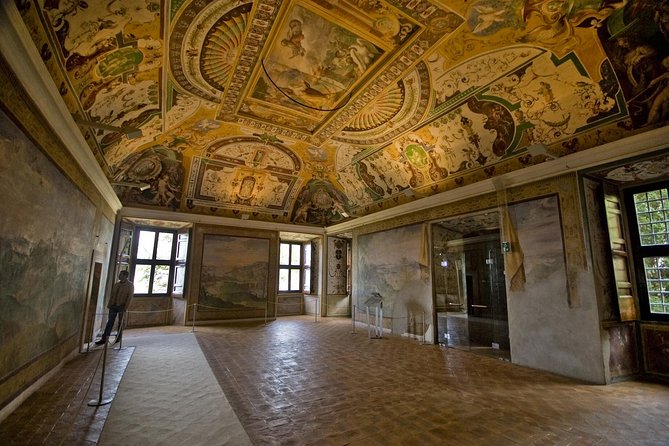
- Two UNESCO sites in one morning: Villa d’Este (gardens + fountains) and Hadrian’s Villa (Roman power and engineering).
- Included entry and a guide: you’re not just wandering; you get the who/why behind what you’re seeing.
- Air-conditioned transport from Rome: a real comfort upgrade in warm months.
- Small group size (max 20): easier questions, less crowd pressure during key explanations.
- Early start helps: you’re touring before Tivoli gets fully loud.
- Wear grippy shoes: you’ll handle steps/uneven ruins, especially around Villa d’Este.
Why Tivoli works as a day trip from Rome
I love day trips that feel like a bargain in time and energy. Tivoli is ideal for that. You get a real change of scenery—hills, terraces, and sprawling Roman ruins—without spending your whole day commuting.
This tour is designed for that sweet spot: long enough to matter, short enough to stay sane. With a total duration around 5 hours, you’re back in Rome early, which leaves you time for a proper lunch instead of surviving on espresso and regret.
The biggest advantage is that both stops are UNESCO-listed and famous for different reasons. Villa d’Este is about Renaissance waterworks and garden design. Hadrian’s Villa is about an emperor’s retreat—and the way Roman architecture could feel both theatrical and practical. Put together, it gives you a strong “then-and-now” contrast.
You can also read our reviews of more historical tours in Rome



Morning logistics: pickup, meeting point, and timing that matters
The tour begins at 8:30 am, and the meeting point is listed near Via di Villa Ruffo in Rome (00196). If you select hotel pickup for a centrally located hotel, pickup is arranged from your lobby with a “be ready” window before departure.
If your hotel isn’t covered, you’ll go to the designated meeting area instead (the instructions point to the Viale Giorgio Washington entrance, with metro access at Flaminio). That’s not just trivia—getting this right saves stress.
Here’s the practical advice I’d follow:
- Plan to arrive early even if you have pickup. A small delay at the start can ripple through the whole day.
- Bring your patience. One review mentioned the bus arriving late, and another noted a delay waiting for a couple who were late from their hotel connection.
- If your pickup matters to you, confirm it in writing. One review described uncertainty around whether pickup would happen after payment. You don’t want that kind of scramble on a travel day.
Once you’re moving, the ride is part of the comfort story: you’re on an air-conditioned vehicle, not a sweltering bus ride that drains your energy before you even reach the gates.
Price and value: what $159.70 buys you (and what it doesn’t)
This tour is priced around $159.70 per person for roughly 5 hours. The value comes from three things that are usually extra on DIY trips:
- Entrance fees are included for both Villa d’Este and Hadrian’s Villa.
- A guide is included, so you’re not left decoding floor plans and ruins alone.
- Transport is included via an air-conditioned vehicle (plus pickup if you choose that option).
What’s not included is also important. Food and drinks are on you, and the tour does not include drop-off back at your hotel. The experience ends back at the meeting point area.
In plain terms: this is a good deal if you want guided context and time efficiency. If you love free roaming and you’re comfortable getting yourself around with transit and tickets, you might do it cheaper on your own. But if you’d rather spend your morning actually seeing things—this price is competitive for what you get.
Villa d’Este: Renaissance terraces, famous fountains, and real walking
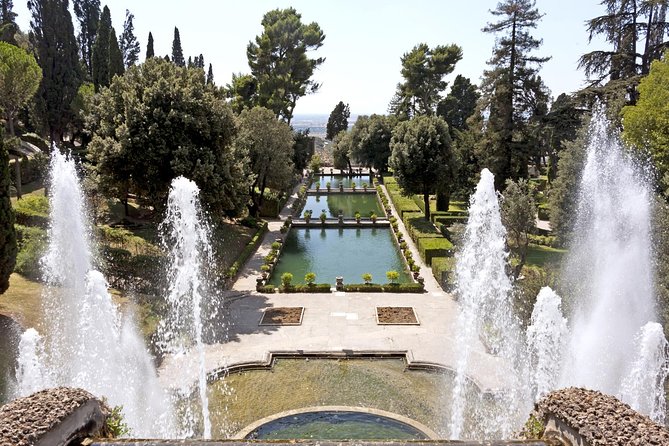
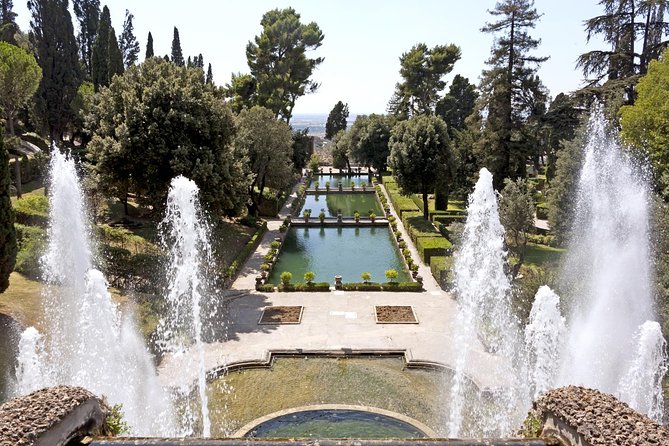
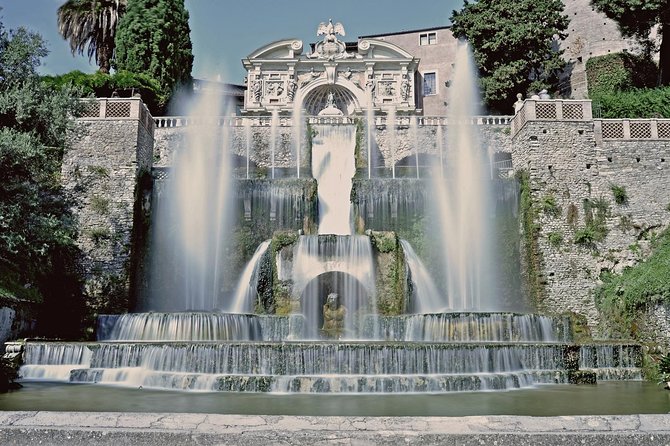
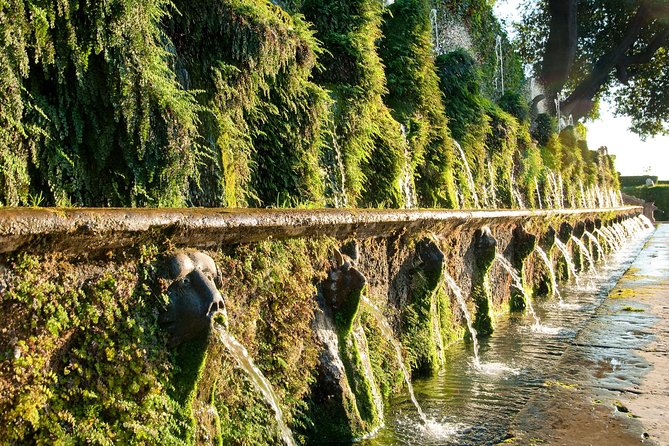
Villa d’Este is a 16th-century Italian Renaissance garden on a hillside. The headline feature is the fountain show: water is used with theatrical design, and the whole place feels staged like a sequence.
On this tour, you’re there for about 2 hours, with admission included and a guided introduction. That time is generally enough to grasp why the villa is famous and to experience the gardens at a comfortable pace.
What makes Villa d’Este special:
- The terraced layout means you’ll keep looking at new angles and viewpoints.
- The fountains create that wow factor fast—especially early in the day when the atmosphere feels fresh.
- Even when you’re walking, the guide can help you read the place: why certain water features are placed where they are, and how design creates movement through the garden.
A couple of considerations based on real-world experiences:
- If the weather turns, some fountains may be switched off. One review mentioned that during a downpour, spectacular fountains weren’t running, and the group got soaked.
- Some tours focus more on the gardens than on inside areas. One review described a quick inside walkthrough with limited explanation, followed by more independent time in the garden.
- A lift may be unavailable on some days. One review called out a broken lift, which matters if you were counting on it for easier movement.
My practical tip: plan for steps and uneven stone paths. Bring shoes that won’t slip. If you’re the type who can enjoy a “slower roam,” use your free time well—Villa d’Este is where you’ll want extra minutes.
Villa Adriana (Hadrian’s Villa): an emperor’s retreat across massive ruins
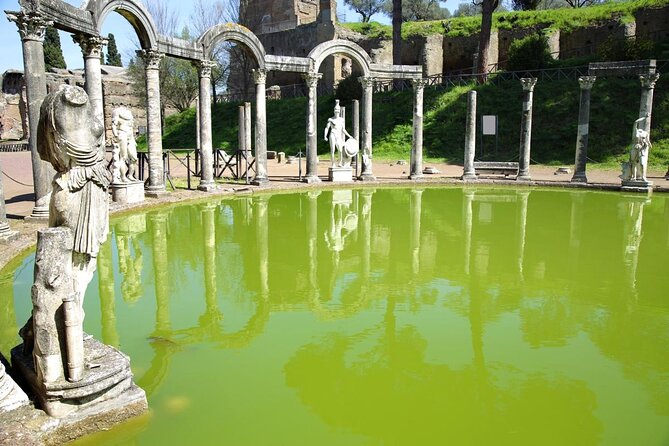
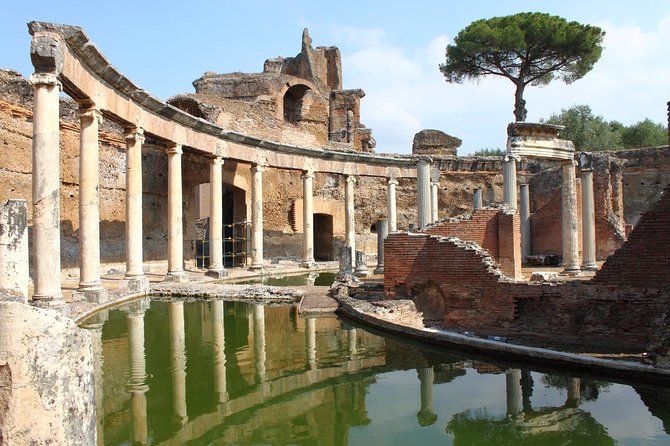
Hadrian’s Villa—also known as Villa Adriana—is a large Roman archaeological site in Tivoli. This is not a single building you look at from one spot. It’s a vast complex, and even the basic layout can feel mind-bending.
You get about 1 hour here. That’s the shortest stop, and it’s the one you’ll feel most if you’re a “slow reader” of ruins.
Still, Hadrian’s Villa is a top pick because it’s about scale and imagination:
- It was Hadrian’s grand getaway, built for leisure, status, and Roman-level engineering.
- The villa’s remains show how power expressed itself through spaces—courts, halls, and areas that helped the complex function as a lived-in world.
If you want a quick mental picture: think of this as an archaeological map where your guide points out the key landmarks so it doesn’t all look like random stones.
The drawback: an hour can feel short, especially if your guide takes extra time on explanations you don’t connect with yet. One review complained about pacing and said the guide spent time on parts they felt didn’t add much. Another review praised the guide and described it as staggering in scope—so the experience can vary depending on the guide’s style and how the day’s schedule shakes out.
If you’re history-focused, I’d treat this stop like a guided primer. You’ll likely leave wanting more time. But as a “from Rome” morning, it does the job.






The guide can make or break the day (so watch for language)
This is a guided tour, and the guide’s job is hard: they’re covering two UNESCO sites in one half-day, plus keeping the group moving. When it works, you get clear storytelling and smart context.
You might see guides such as Valentina, Maja, Matteo, or Monica—and many reviews highlighted how informative and engaging they were. One review even praised Monica for managing a mixed language approach.
Here’s the heads-up: although the tour is offered in English, at least one review reported a language mix—half in English and half in Spanish—when the traveler expected English only. That doesn’t mean it always happens, but it does mean you should be prepared that some days can run multilingual.
My advice if language matters to you:
- If the booking says English, still be ready for the possibility of bilingual narration.
- If you’re sensitive to unclear audio or accents, choose your seat spot wisely near the front (if the bus setup allows it) so you can hear instructions.
Transport comfort and group size: why it feels manageable
A big win here is comfort. You’re on an air-conditioned vehicle, and the day is structured so you aren’t constantly transferring between public transit lines.
The group size (max 20) also helps. With fewer people, the guide can keep a tighter rhythm and answer questions without losing everyone.
One review mentioned a bus mechanical issue and described bad seating and difficulty opening a door. That’s not something you can plan around, but it’s a reminder to show up a little early and keep expectations flexible if anything breaks.
If your priority is a calm, organized experience in the morning, this tour’s structure is built for that. You’ll likely get back to Rome early enough to enjoy the rest of your day.
What to pack and how to enjoy Tivoli more (without rushing)
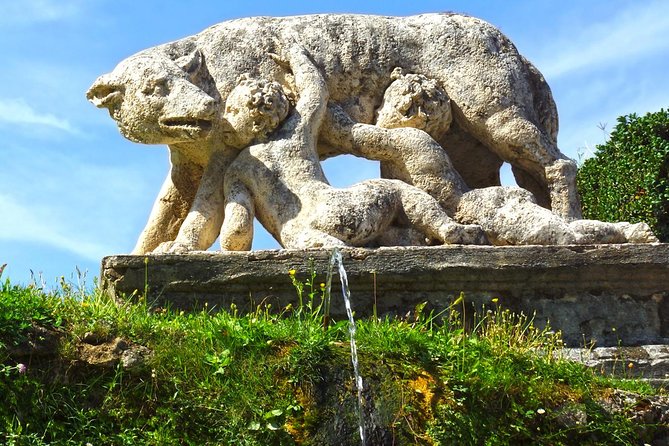
You’ll have a guided flow, but you’ll also want to wander a bit—especially at Villa d’Este. That means you should pack like it’s a real walking morning, not a museum-only visit.
Bring:
- Grippy walking shoes (terraces + ruins = uneven surfaces)
- A light layer (mornings can feel cooler than you expect)
- Water (food and drinks aren’t included)
- Sun protection (fountains or not, you’re outdoors)
If you’re someone who likes photos, start with the big viewpoints, then save your phone-time for the fountains and the clearest ruins landmarks. The gardens reward repetition: you’ll see different patterns from different angles.
And if you’re more about ruins than gardens, don’t treat Villa Adriana like a checklist. Ask your guide during the walkthrough. A few good directions can turn “I see stones” into “I get the layout.”
Who this tour is best for
This is a strong choice if:
- You want two UNESCO sights without separate planning.
- You like guided context so the sites click faster.
- You don’t want the full-day grind of a complex Rome-to-Tivoli transit plan.
It’s also a good fit for history and architecture lovers who appreciate contrasts: Renaissance water spectacle in one direction, Roman imperial retreat in the other.
It may be less ideal if:
- You have limited mobility or you hate steps. The tour is listed for travelers with moderate physical fitness, and Villa d’Este’s terraces are real.
- You expect a long, slow garden day. With about 2 hours, you’ll see a lot, but you won’t “live” there.
Should you book this Villa d’Este and Hadrian’s Villa tour?
I’d book it if you want maximum value from a short Rome morning and you like having someone help you interpret what you’re seeing. The combo of included entrance fees, a guide, and comfortable transport makes it feel efficient rather than rushed.
I’d think twice if you need a very calm, no-surprises schedule. Some days can involve language mixing, weather-driven fountain closures, or delays outside the tour’s control. Still, for most visitors, the payoff is big: two UNESCO heavyweights in one day, with enough time to enjoy both rather than just “arrive and leave.”
FAQ
Is hotel pickup included for this tour?
Hotel pickup is included only for centrally located hotels if you select the pickup option. If your hotel isn’t serviced, you’ll need to go to the meeting point on your own.
Where is the meeting point for the tour?
The listed meeting point is Via di Villa Ruffo, 5, 00196 Roma RM, Italy. If you don’t have pickup, the instructions also point to the Viale Giorgio Washington entrance to the Villa Borghese park metro area (metro line A, stop Flaminio) as the alternative meeting location.
What time does the tour start?
The tour starts at 8:30 am.
How long do you spend at each UNESCO site?
Villa d’Este is about 2 hours, and Hadrian’s Villa is about 1 hour.
Are entrance fees included?
Yes. Admission tickets for both Villa d’Este and Hadrian’s Villa are included.
Is food included?
No. Food and drinks are not included, so plan to buy your own in Tivoli.
Is the tour actually in English?
English is offered for the tour, but at least one experience described a language mix (English and Spanish). If language-only matters, double-check what your specific departure is offering.