REVIEW · ROME
Piazza del Popolo and Historical Sights Walking Tour in Rome
Book on Viator →Operated by Rome's Ultimate Free Walking Tours · Bookable on Viator
A walk like this turns Rome’s highlights into a single, logical route. You start at Porta del Popolo, then connect the dots from early emperors to Renaissance streets and finally to Castel Sant’Angelo with views toward St. Peter’s.
What I really like is the small group feel (max 15) plus a guide who keeps the pace friendly while packing in a lot of context. And because it’s tip-based, you can judge value for yourself at the end instead of paying a big fixed price up front.
One thing to consider: it’s built for speed and sight-seeing, not slow lingering. If you hate walking or you want long time inside major monuments, you’ll need a follow-up visit on your own.
In This Review
- Key things worth knowing before you go
- Porta del Popolo to Piazza del Popolo: a strong start with clear orientation
- Mausoleum of Augustus and Palazzo Borghese: the walk gets political in the best way
- Gelateria della Palma break: practical pacing plus real Rome energy
- Pantheon and Piazza Navona: two “you have to see it” anchors
- Via dei Coronari and St. Angelo Bridge: Renaissance lanes and big stories on stone
- Castel Sant’Angelo and Via della Conciliazione: ending with a Vatican lead-in
- Guides, pace, and the small-group advantage
- The value question: $4.23 plus tips, and what that really means
- Who should book this walking tour (and who might not)
- Should you book Piazza del Popolo and Historical Sights?
- FAQ
- How long is the Piazza del Popolo and Historical Sights walking tour?
- What language is the tour offered in?
- What’s the group size limit?
- Is the tour free, or is there a set ticket price?
- Where does the tour start and where does it end?
- Does the tour include a gelato stop?
- Are there admission fees for the stops?
- What is the cancellation policy?
Key things worth knowing before you go
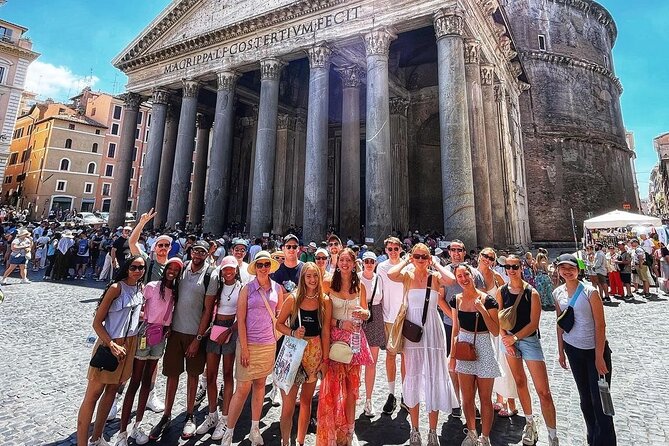
- Small-group size (15 max) keeps the walk interactive and manageable
- 2.5 hours is long enough to connect sites, short enough to keep you moving
- Pass-by stops plus exterior views means you see a lot without big queues eating your time
- Gelato stop at Gelateria della Palma adds a practical break (and real flavor options)
- Route ends near Castel Sant’Angelo with a direct lead-in toward the Vatican area
Porta del Popolo to Piazza del Popolo: a strong start with clear orientation
I love starting Rome walks at Porta del Popolo, because it instantly puts you in “the city’s map mode.” You begin at Porta del Popolo, also known as Porta Flaminia, and that historical naming matters. It’s not just a gate you pass—it’s part of the structure that helped shape where people flowed in and out of the city.
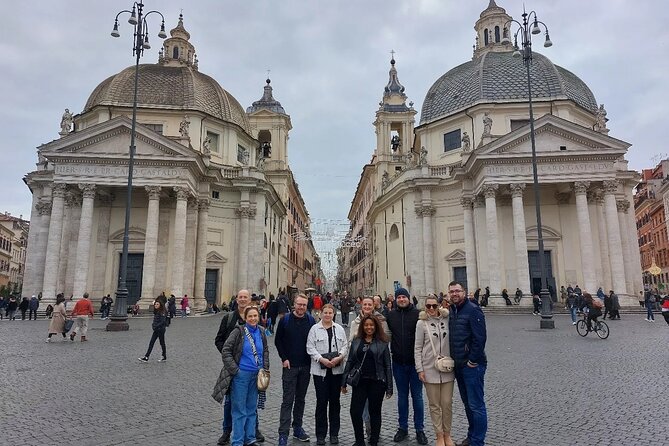
From there, you move into Piazza del Popolo, and the tour gives you a quick way to understand what you’re looking at instead of just snapping photos. The piazza’s big visual markers do the teaching for you: the twin churches designed by Bernini and the obelisk of Ramses II. A good guide helps you connect those artistic statements to Rome’s long habit of stacking eras on top of each other—ancient, then Baroque, then later layers you’ll notice all week.
This is also a smart “first Rome day” moment. If you’re arriving with that overwhelmed feeling—so many monuments, so little mental filing cabinet—this start helps you sort the city by geography and story. You’ll get a sense of direction fast.
Potential snag: Piazza del Popolo can be busy, so give yourself a moment to settle your bearings before you hear the explanations. If you’re arriving late or distracted, you’ll miss the early orientation payoff.
You can also read our reviews of more walking tours in Rome
Mausoleum of Augustus and Palazzo Borghese: the walk gets political in the best way
The tour moves from the crossroads energy of the piazza into imperial Rome with a pass by the Mausoleum of Augustus. This is one of those stops where the name alone is impressive, but the real value is what a guide puts around it: Augustus as the first Roman emperor and the figure behind the Julio-Claudian dynasty.
Even if you’re not stopping for a long visit, learning who someone is changes how you read the city. A tomb isn’t just old stone—it’s the political message of power made visible. You start to notice that Rome often “speaks” through monuments more than through plaques.
Next comes Palazzo Borghese, a 16th-century palace tied to one of the powerful families that helped shape later Rome. You may only see it briefly on the route, but that’s the point of a well-designed walking itinerary: you catch the major landmarks, then decide later what you want to study more deeply.
I’ll be honest: if you want museums and interior rooms, this tour won’t pretend to replace them. But for getting your brain around Rome’s timeline, it’s very effective. You’ll leave with more than a list—you’ll have a set of associations.
Gelateria della Palma break: practical pacing plus real Rome energy
After the concentration of ancient and Baroque signals, you get a reset: a stop at Gelateria della Palma for gelato and (very conveniently) a bathroom break. The tour calls out that it’s one of the most famous gelato shops in Rome, with over 150 flavors.
I like this kind of stop for two reasons. First, it keeps your energy steady. Second, it gives you something to do that feels genuinely Roman instead of purely sightseeing logistics. Rome can be a long day; a mid-walk sugar hit is a smart move.
What to expect: you’ll have time to choose and eat without feeling rushed, but don’t plan on turning it into a full meal. It’s meant to restore you for the next big classics stretch.
Pantheon and Piazza Navona: two “you have to see it” anchors
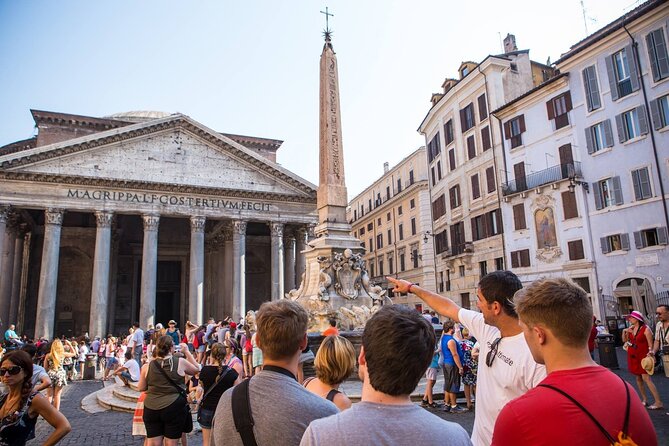
Then you hit one of the major stops: the Pantheon. The tour frames it as the Temple of all the gods, and it also points out a detail that often surprises people: Raphael’s body and the first Italian royalties are buried here. That’s a powerful reminder that Rome doesn’t stay frozen in ancient time. It keeps getting reused—artistically and ceremonially—across centuries.
Even if your time at this kind of stop is limited, a guide helps you look at what you’re seeing. Instead of just thinking “wow, that dome,” you start noticing the why behind the landmark.
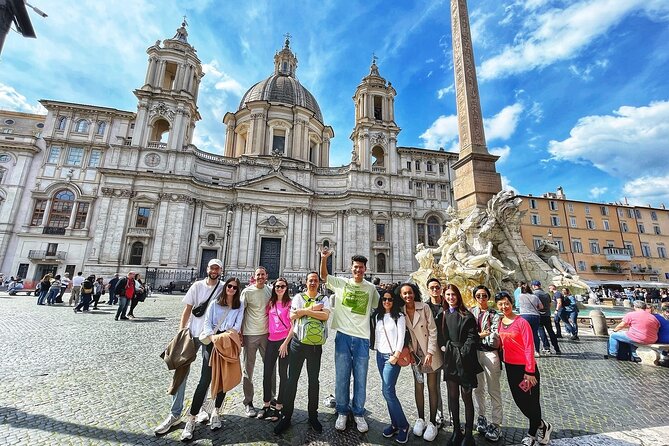
From there, you head to Piazza Navona, originally shaped as the Stadium of Domitian. That one historical link does a lot. It explains why the piazza feels long and stage-like rather than random. You’re standing where crowds once gathered for public spectacle, and now the same space is used for a different kind of performance: street life, fountains, and the endless motion of visitors and locals.
If you like “spot the shape” moments, this is a fun stop. If you hate crowds, go at a calm hour when you can, but the tour’s timing may still put you in the general flow.
Via dei Coronari and St. Angelo Bridge: Renaissance lanes and big stories on stone
After Piazza Navona, the walk shifts into a more atmospheric lane: Via dei Coronari. The tour describes it as a famous street that’s kept its Renaissance feel and you’ll even walk through steps of the original pilgrims.
This is the kind of detail that makes a walking tour worth it. You’re not just going from A to B. You’re traveling through a corridor that still carries the vibe of older Rome—slower, human-scaled, and built for wandering.
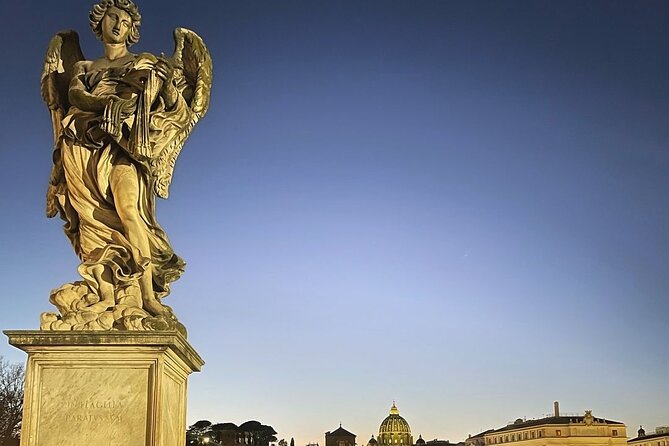
Next is St. Angelo Bridge, also called the Bridge of Angels, where the guide tells the story tied to the martyrdom of Christ. Bridges in Rome are never just infrastructure; they’re storyboards. You’ll see how the city uses art and religious narrative to guide your attention as you cross.
This is where the tour shifts tone: from “here’s the architecture” to “here’s what people believed and how they told it.” If you like context, this section is a good emotional rhythm change.
You can also read our reviews of more historical tours in Rome



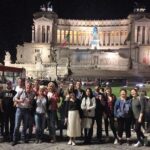
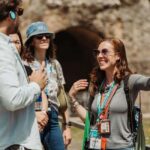
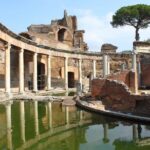
Castel Sant’Angelo and Via della Conciliazione: ending with a Vatican lead-in
You cross the Tiber via the Ponte Sant’Angelo, and then you stop near Castel Sant’Angelo. The guide frames it as a medieval fortress built to host the ashes of Emperor Hadrian. Again, you get that same Rome pattern: an older purpose, then a later identity, all held in one shape you can point to.
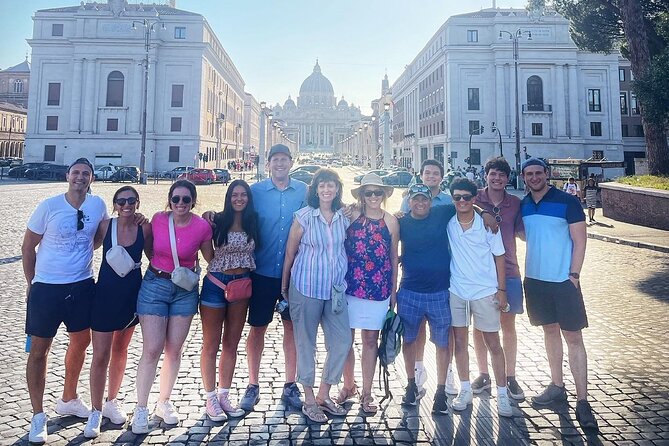
The walk finishes with Via della Conciliazione, described as a masterpiece of Mussolini’s architects—an important reminder that even the “approach to the Vatican” has a modern, political story layered into it. You end outside Castel Sant’Angelo with a stunning view toward St. Peter’s Basilica and a brief introduction to the Vatican area.
This ending is useful. It helps you stand in the right place for your next move, whether you plan to visit St. Peter’s or you just want the best “Rome is gigantic” viewpoint before you head to dinner.
Guides, pace, and the small-group advantage
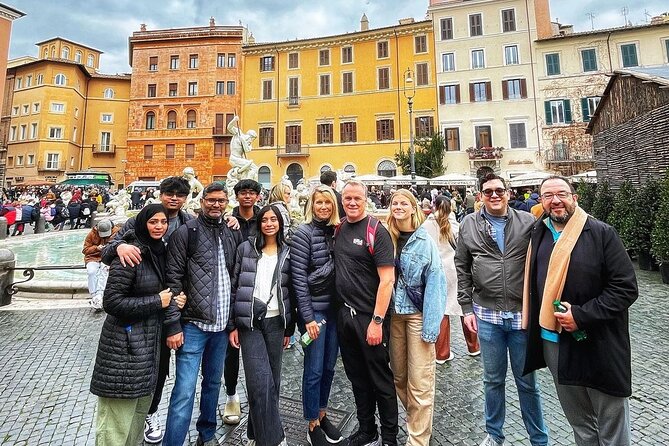
A big reason this tour earns near-perfect ratings is how guides teach it. The tour’s guide rotation includes names like Justin, Luccio, Nick, and Claus, and the common thread is simple: they’re quick to answer questions and good at explaining what you’re looking at in plain language.
That matters because you’ll walk past dozens of details that could be “just scenery” without help. When a guide can connect a monument to an event, a family, or a political shift, your eyes start working differently.
The pacing also helps. The tour is about 2 hours 30 minutes, which is a practical length for a classics route without turning into a marathon. You get multiple stops, but the time at each one is controlled—enough for orientation, not enough to burn your entire day.
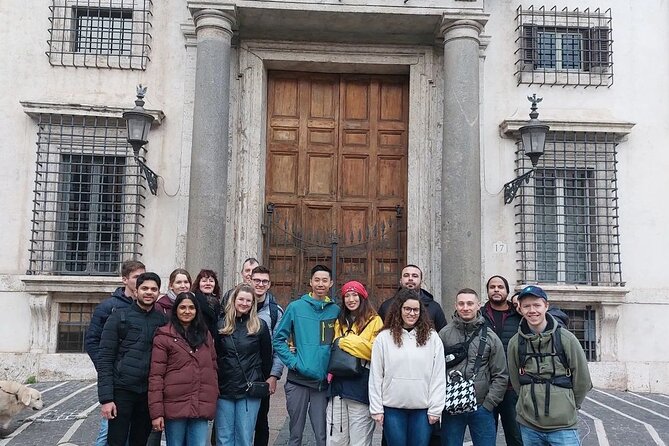
Group size is capped at 15, which keeps the walk from turning into a crowded shuffle. You can hear explanations, and you’re less likely to lose the guide at every corner.
The value question: $4.23 plus tips, and what that really means
The listed price is $4.23 per person, and the experience is tip-based at the end. In plain terms, you’re paying for your place and the guide’s time, and you decide how you feel when it’s done.
Is that realistic value? For a route that strings together big hitters—Porta del Popolo, Piazza del Popolo, Augustus, Pantheon, Piazza Navona, Castel Sant’Angelo—yes, it can be an excellent deal, especially if it’s your first or second day in Rome. The guide’s job is to make the route make sense, not just point at famous buildings.
The real value is the time saved. Without help, you can absolutely do this on your own, but you’ll likely spend time figuring out what matters and what you’re looking at. Here, you get the “why” built into the walk.
One note: because the stops are mostly brief and some sights are more about seeing/understanding from the route, you may still want to do deeper visits later. Think of this tour as your map and your timeline, not your whole Rome plan.
Who should book this walking tour (and who might not)
This is a great fit if you:
- want an efficient route with multiple major sights
- like asking questions and getting answers on the spot
- enjoy walking and want to cover ground without feeling trapped in a bus group
- are early in your trip and want quick orientation
You might want to skip or pair it with other plans if you:
- hate crowds and worry about busy piazzas
- want long inside-the-monument time at places like the Pantheon
- prefer a slower, more leisurely day with lots of wandering freedom
If you’re traveling with kids or anyone who needs a break, the gelato stop helps, and the overall timing stays reasonable. Still, it’s a walk, so wear shoes you trust.
Should you book Piazza del Popolo and Historical Sights?
Yes—if your goal is to get your bearings and build a mental timeline fast, this is worth booking. The route is strong, the stops are well-chosen, and the small-group size keeps it personal. You also get a practical break at Gelateria della Palma, which is not a gimmick; it’s how you keep energy up for the second half.
If you like Rome best when it feels like a connected story rather than a checklist, you’ll enjoy this. And if you’re on the fence, here’s the simplest test: if you’d spend time researching monuments and where they fit together, this tour can save you that work.
FAQ
How long is the Piazza del Popolo and Historical Sights walking tour?
The tour runs about 2 hours 30 minutes.
What language is the tour offered in?
The tour is offered in English.
What’s the group size limit?
The tour has a maximum of 15 travelers.
Is the tour free, or is there a set ticket price?
There’s a listed price of $4.23 per person, and it’s tip-based at the end of the tour.
Where does the tour start and where does it end?
It starts at Piazza del Popolo, 00187 Roma RM, Italy. It ends outside Castel Sant’Angelo with a view over St. Peter’s Basilica.
Does the tour include a gelato stop?
Yes. There’s a stop at Gelateria della Palma for gelato and a bathroom break.
Are there admission fees for the stops?
The tour’s listed stops show admission ticket free for each segment, so you’re not paying for entry as part of the included sights on the route.
What is the cancellation policy?
You can cancel for free up to 24 hours in advance for a full refund. Changes inside 24 hours aren’t accepted, and you won’t be refunded if you cancel less than 24 hours before the start time.