REVIEW · ROME
Rome: Ancient Jubilee in the 4 Major Basilicas
Book on GetYourGuide →Operated by Roman Vacations · Bookable on GetYourGuide
One path, four Holy Doors. It’s a Rome itinerary that feels built for pilgrims, not just sightseeing—visiting St. Peter’s, St. Paul Outside the Walls, St. John Lateran, and Santa Maria Maggiore, then entering each through its Jubilee Holy Door. I love how the day is guided like a real pilgrimage route, with an expert Catholic guide explaining what you’re seeing as you move from basilica to basilica. I also love the “details you’d miss alone” factor, like Michelangelo’s Pietà at St. Peter’s and the chains and sarcophagus focus at St. Paul Outside the Walls. The main drawback to plan for is practical: church interiors can be echo-y and the day moves briskly, so you’ll want to be ready to hear your guide (and manage bathroom breaks) without much downtime.
Begun in the Jubilee tradition launched in 1300 by Pope Boniface VIII, this tour is designed to connect you with the same official pilgrimage practice that has drawn people for centuries. You’ll get transport in a private air-conditioned chauffeured car, plus guided time at each basilica (about an hour per stop), and the whole loop typically starts at the Vatican area and ends back at the original meeting point. The experience is best when you’re comfortable with Rome’s street chaos and religious venues that require proper clothing and a bit of patience at checkpoints.
In This Review
- Key highlights worth your attention
- Four Holy Doors and the 1300 Jubilee tradition: what you’re really doing
- St. Peter’s Basilica: Pietà, altars, and the High Altar setting
- St. Paul Outside the Walls: chains, newly excavated sarcophagus, and the ancient basilica feel
- St. John Lateran: Rome’s cathedral and the heads of Peter and Paul
- Santa Maria Maggiore: golden interior, Nativity crib relic, and Salus Populi Romani
- 5 hours, private car transfers, and why the order can shift
- Value and price: what you’re paying for at about $283 per person
- Clothing, ID, and Holy Door logistics you should handle before you go
- Meeting point and staying oriented with the orange lion sign
- How the guidance feels in practice: ask early, plan your bathroom, stay alert crossing streets
- Who should book this Jubilee basilicas route (and who should skip it)
- Should you book: my straight recommendation
- FAQ
- What does the tour include?
- Which basilicas are visited?
- How long is the experience?
- Where do I meet the guide?
- What should I wear?
- Is there food during the tour?
Key highlights worth your attention
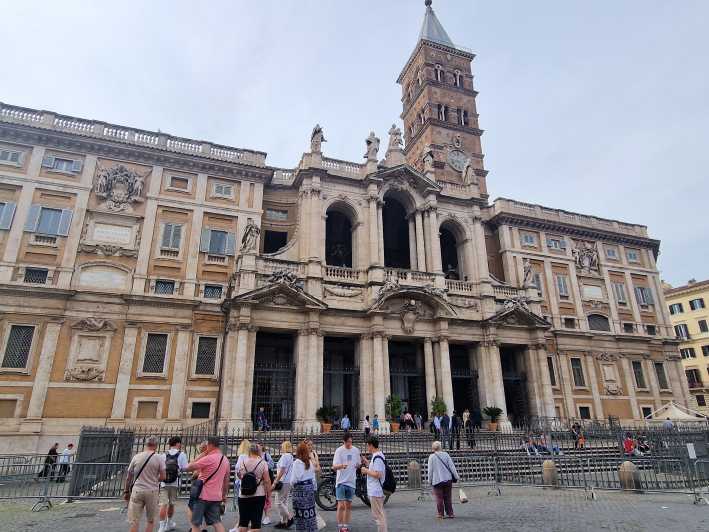
- Four Major Basilicas in Rome with guided time inside all of them, not drive-by photo stops
- Holy Door entry at each basilica as part of the Jubilee tradition
- Expert local Catholic guide who explains the key objects and altars you’ll see
- Private air-conditioned transport between stops so you spend more time in the churches
- Specific “must-see” moments like Michelangelo’s Pietà and the chains of St. Paul
Four Holy Doors and the 1300 Jubilee tradition: what you’re really doing
This isn’t a “hit the landmarks” tour. It’s built around a specific Jubilee practice: visiting the four highest-ranking Major Basilicas of Rome and entering through their Holy Doors during Jubilee years. The whole concept traces back to the Jubilee begun in 1300 by Pope Boniface VIII, when Rome promoted pilgrimage to the churches that matter most in the Christian world.
Here’s why that matters for you: when you enter each basilica through the Holy Door, the day shifts from background sightseeing into something more intentional. You’re given context as you go—what you’re looking at, why it matters, and how it connects to saints and tradition. If you care about meaning as much as marble, this format is a strong fit.
You can also read our reviews of more tours and experiences in Rome.



St. Peter’s Basilica: Pietà, altars, and the High Altar setting
Your first major church is St. Peter’s Basilica, built over the traditional place associated with St. Peter’s body. You enter as part of the Jubilee Holy Door experience, then settle into a guided interior visit designed around the big anchors of the basilica.
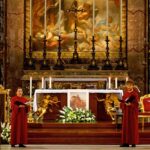
Expect a guided walkthrough that points out Michelangelo’s Pietà, major relics and altars tied to the Catholic tradition, and the architectural and spiritual weight of the High Altar area—where the tour notes St. Peter’s burial is positioned beneath. This is one of those places where the scale can overwhelm you. A guide helps you “find your place” quickly, so you’re not just craning your neck at everything at once.
A practical note for your comfort: sound can be tricky in large basilicas, and they’re not always friendly to group listening. If you tend to get lost when you can’t hear, come mentally ready to lean in, and don’t be shy about asking your guide to repeat key points when you miss them.
St. Paul Outside the Walls: chains, newly excavated sarcophagus, and the ancient basilica feel
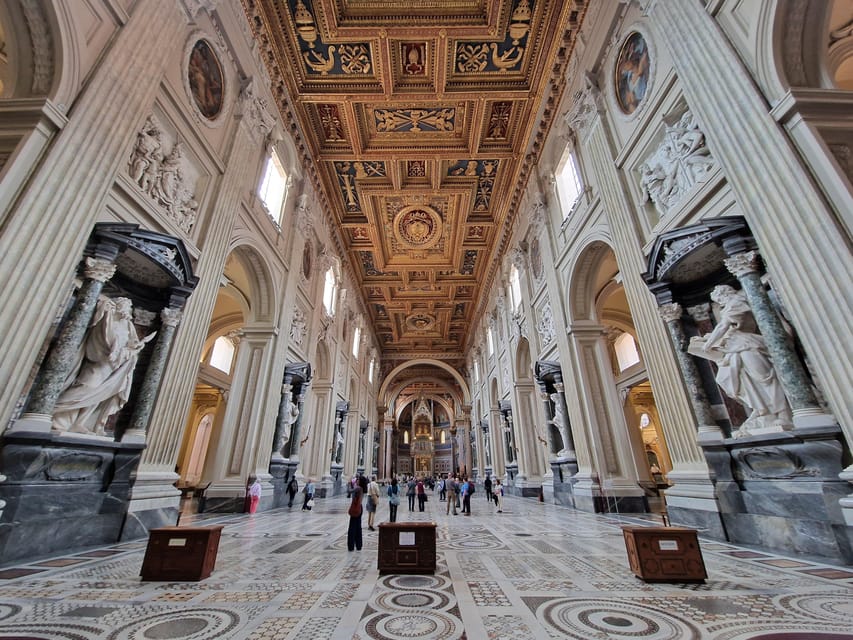
After St. Peter’s, you move to St. Paul Outside the Walls, one of the most moving sites for anyone drawn to the early Church stories. The focus here is very concrete: you’ll see the chains that bound St. Paul during his imprisonment and house arrest in Rome, along with a tour that also highlights his newly excavated sarcophagus.
Then you transition into exploring the rest of this ancient Theodosian basilica. That phrase is doing a lot of work: you’re not just looking at a decorative interior. You’re standing in a building shaped by centuries of devotion, with layers of sacred memory built into the space.
This stop can be a “wow” moment for history-and-faith types, because St. Paul’s story is not abstract. The tour is aimed at giving you something specific to attach to the building—those physical objects and the way the basilica frames them.
St. John Lateran: Rome’s cathedral and the heads of Peter and Paul
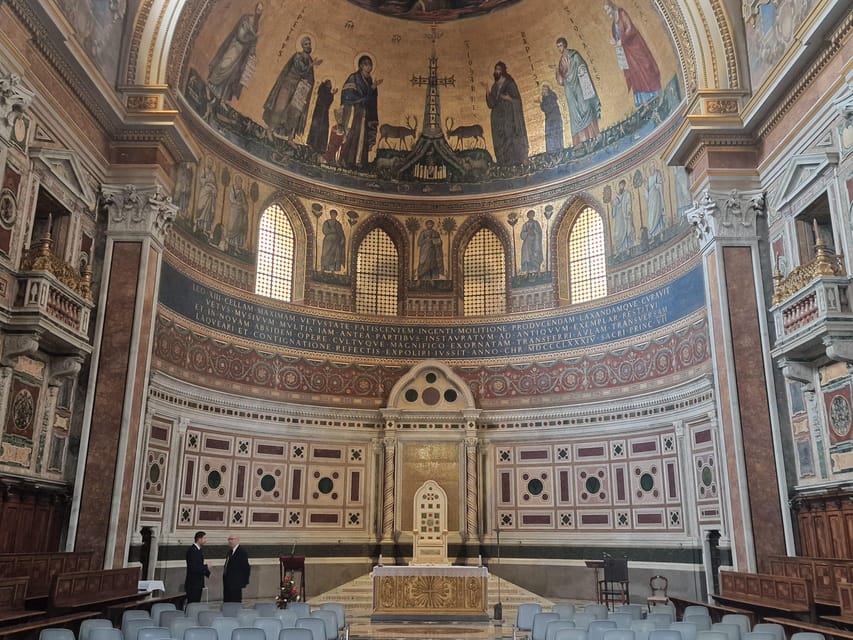
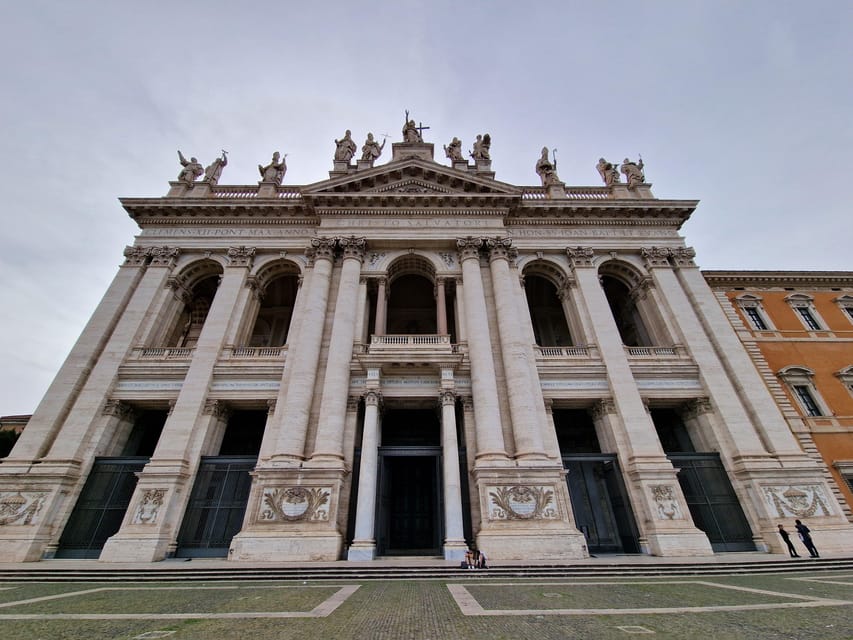
Next comes the Arch-Basilica of St John Lateran (San Giovanni in Laterano)—called out in the tour material as the cathedral of Rome and the highest-ranking major basilica. If you want the sense of Rome’s religious hierarchy in one day, this is the place where it lands.
Your guided visit includes the basilica’s interior and its key stories, with a highlight on the ancient mosaics. You’ll also be guided to stand before the heads of Sts. Peter and Paul, described as being brought and placed above the altar in 1300. That detail matters because it connects the Jubilee idea directly to the objects and locations that pilgrims travel for.
For your mindset: don’t treat this as a “between Stops” church. It’s framed as the mother church of Rome in the tour explanation, so give it mental priority. When you slow down a little inside, the significance becomes easier to feel.
Santa Maria Maggiore: golden interior, Nativity crib relic, and Salus Populi Romani
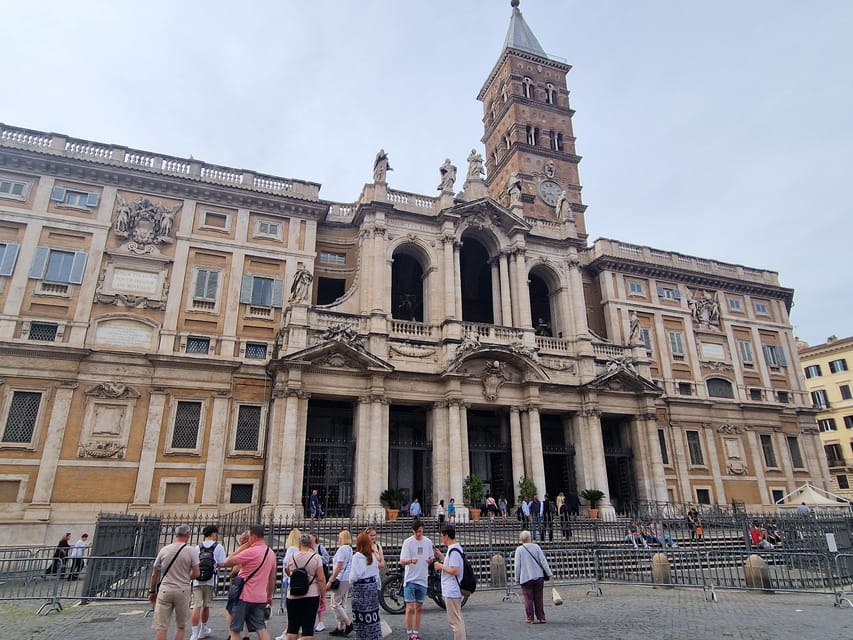
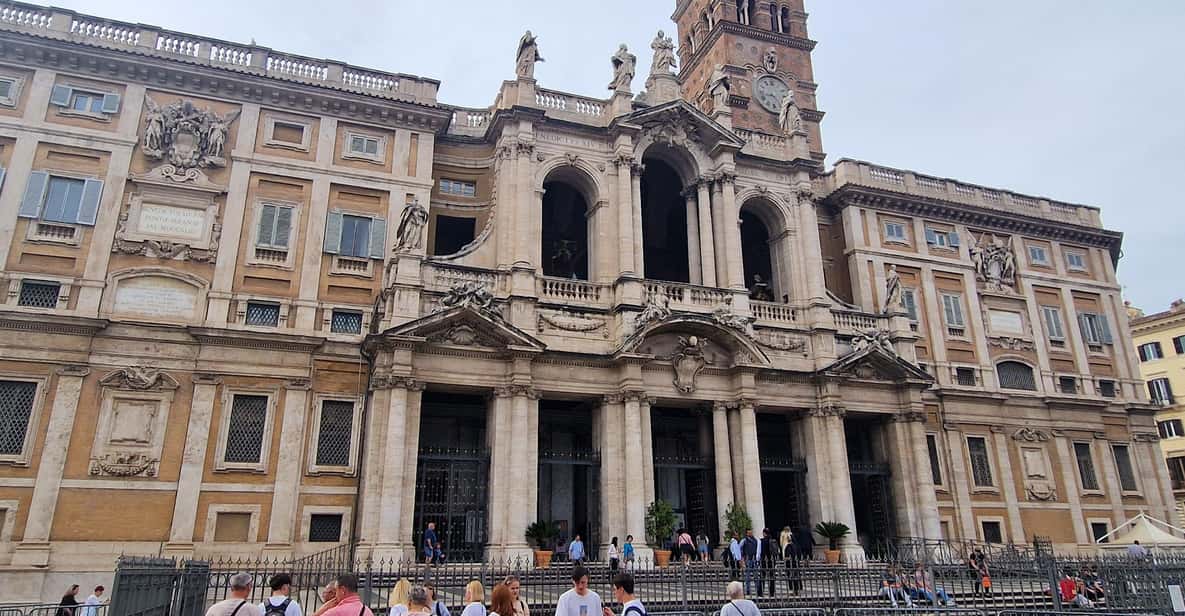
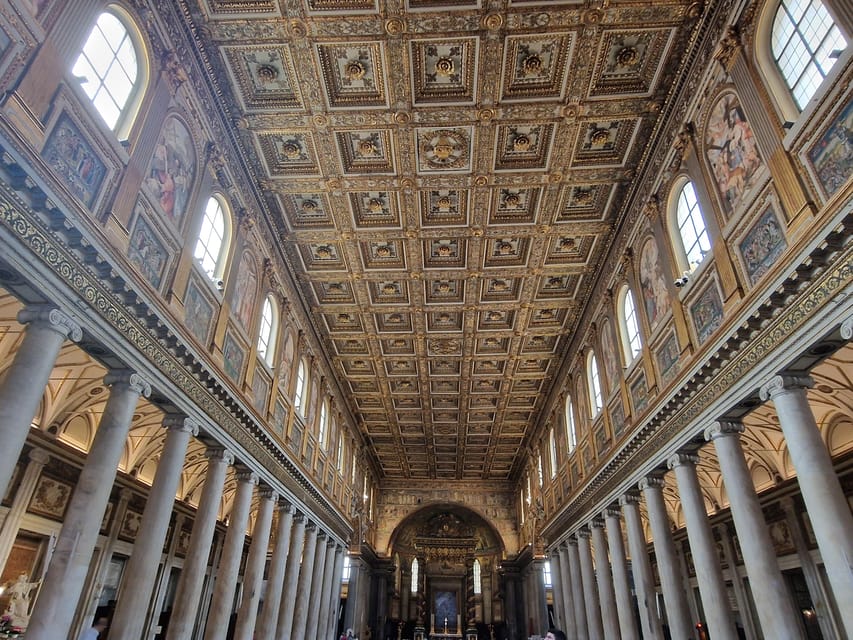
The last basilica on the route is Santa Maria Maggiore. It’s presented as perhaps the oldest major church dedicated to Mary in Rome, and definitely one of the most important—so it earns its “final stop” role.
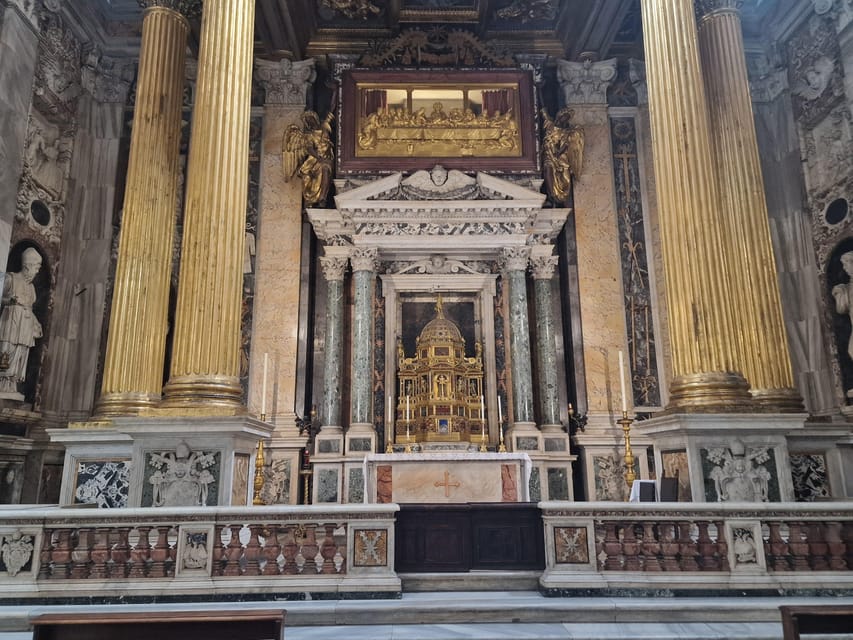
You’ll spend guided time admiring the golden interior, then you’ll get pointed explanations about features that often don’t register for first-time visitors. The tour highlights include popes buried here, the relic of the crib of the Nativity of Christ, and the miraculous icon Salus Populi Romani.
This stop has a different energy than St. Peter’s or St. Paul’s. You’re still in “Major Basilicas” territory, but the focus leans more Marian—Mary-centered devotion, relic tradition, and the visual impact of the interior. If you’re the kind of person who enjoys symbolism and art that’s tied to specific devotion, you’ll likely find this a strong closer.





5 hours, private car transfers, and why the order can shift
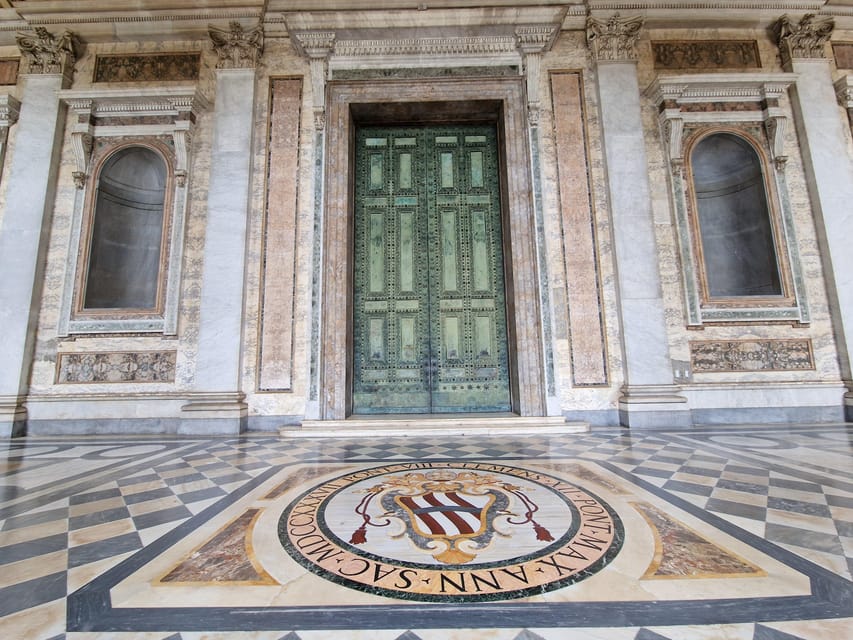
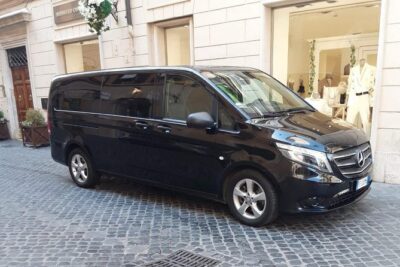
The day is built as a moving pilgrimage loop. You start at the meeting fountain near Piazza Giovanni XXIII, then you visit each basilica with guided time—about one hour per church—and you travel between them by private air-conditioned chauffeured car.
Why the private transport is worth caring about: Rome traffic and walking time can eat your schedule fast. Having transport between the sites helps you keep the day coherent, especially when your goal is religious entry through the Holy Doors rather than simply getting photos before the next ticketed stop.
One more reality check: the tour notes that the order of sites may differ based on traffic or accessibility if there are unforeseen events or closures. That’s normal in a city with constant moving parts. The best approach is simple: focus on the fact that all four basilicas are included, and don’t get thrown off if the sequence changes.
Value and price: what you’re paying for at about $283 per person
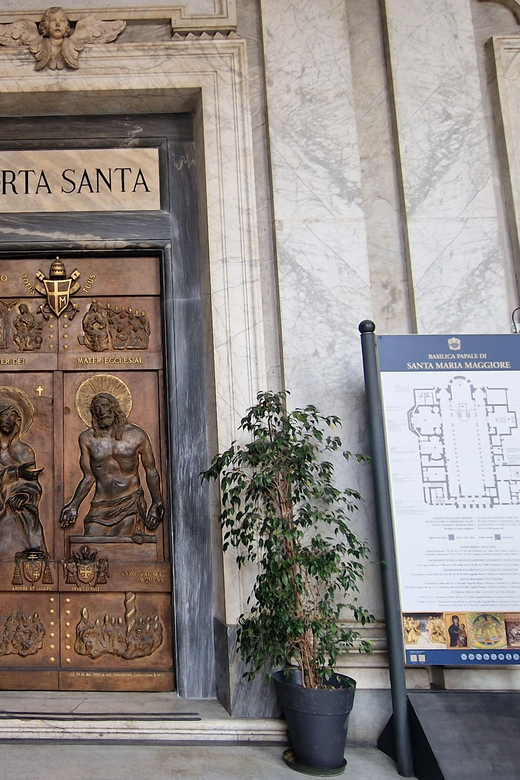
At around $283.21 per person for a 5-hour experience, you’re not just buying entry tickets. You’re paying for three things the tour clearly emphasizes: guided explanation from a local expert, Holy Door entry logistics, and transport between major religious sites.
Is it pricey compared with doing it on your own? Sure, because you could theoretically plan four basilica visits and chase Holy Door access yourself. But most people don’t want that kind of day-math—especially in Jubilee conditions where entry procedures and timing matter. Here, you’re essentially buying a guide-driven “pilgrimage workflow,” plus a car that keeps you from spending the day stuck in traffic.
This price point makes the most sense if you’re aiming for meaning and efficiency—if you want someone to point you to the key altars, relics, and story anchors in each basilica, not just a list of what’s inside.
Clothing, ID, and Holy Door logistics you should handle before you go
This is a religious-venue day with real rules. You’ll want to follow the stated requirements: shoulders and knees covered, and avoid short skirts and sleeveless shirts. If you show up underdressed, you’ll waste time—possibly at the exact moment you want to be in line.
Also plan on having a valid photo ID on hand, since proof of identification may be required. That’s not a detail to shrug off.
Then there’s the Jubilee-specific piece: after booking, you receive communication with instructions about your pilgrim card and how Holy Door entry works during the tour. Treat that message like part of the ticket. Read it before your departure so you’re not scrambling while the group is moving.
Meeting point and staying oriented with the orange lion sign
The meeting point is clearly defined: go to the fountain on the wall of Piazza Giovanni XXIII, near Lungotevere Vaticano, and look for your guide holding an orange sign with a lion head. Check in 15 minutes early, because tours depart promptly and late arrivals don’t get rolled into the plan.
This is where small on-the-ground mismatches can matter. One practical piece of advice from real-world experience: don’t assume you’ll spot the banner instantly. If you don’t see it right away, ask politely nearby staff or confirm the guide details from the pre-tour communication so you can get your bearings fast.
Inside the basilicas, the guide’s delivery may involve quieter, respectful speaking. If you’re someone who struggles with hearing in echoey rooms, it’s smart to position yourself where you can face the guide and ask for repetition when you miss something.
How the guidance feels in practice: ask early, plan your bathroom, stay alert crossing streets
You’ll benefit most from the expertise if you actively work with it. In one case, the guide Stefano stood out for how prepared and clear the explanation was, which made the churches feel easier to understand and appreciate. In another case, a guide Daniel’s communication didn’t meet expectations for volume, and there wasn’t a separate device to help people hear inside the basilicas—so make a habit of staying close enough to hear and be okay with moments where it’s quieter than a typical city walking tour.
Also, don’t wait until you’re desperate to manage basic needs. One practical lesson: ask your guide at the start of the day when there will be bathroom opportunities, and plan to use breaks in transfers rather than trying to hunt for a restroom mid-stream.
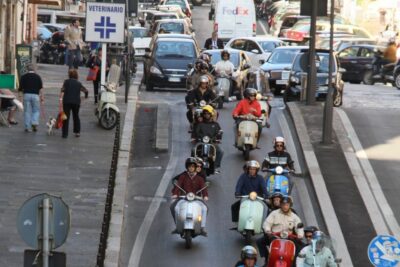
Finally, pay attention while moving through Rome’s streets. Even when the group is led, you’re still in traffic with motorcycles and crowded crossings. Stay alert, walk with the group, and keep your own eyes open so you’re not relying on anyone else to handle every hazard.
Who should book this Jubilee basilicas route (and who should skip it)
This tour fits best if you want a Catholic pilgrimage style day and you like structured guidance tied to specific objects and stories. It’s also ideal if you’re traveling with family or friends who want the “four basilicas” goal checked off without planning four separate logistics layers.
Skip it if you prefer long free time, quiet independent wandering, or you need lots of flexibility during the day. The schedule has guided time blocks that move you through key sites, and the Jubilee experience is designed around entering Holy Doors—so it’s not meant to be a slow, roaming Rome sampler.
Should you book: my straight recommendation
If your top priority is a Jubilee experience that’s built around the four Major Basilicas and Holy Door entry, this is a very sensible way to do it. The guided focus on objects—Pietà at St. Peter’s, Paul’s chains and sarcophagus at St. Paul Outside the Walls, the heads of Peter and Paul at St. John Lateran, and the crib relic plus Salus Populi Romani at Santa Maria Maggiore—gives the day a clear spine.
Book it if you’ll appreciate structure and you’re willing to follow church rules on clothing and ID. If you know you’ll be frustrated by limited flexibility or you struggle hearing in big stone interiors, go in prepared—stay close to your guide, ask about restroom timing early, and treat Holy Door entry as the central event rather than an accessory. When you do that, the $283-ish price starts to feel like a fair trade for having a guided pilgrimage route in place.
FAQ
What does the tour include?
The tour includes entry to each of the four basilicas, an expert local guide, and transport during the tour. Food and drink are not included.
Which basilicas are visited?
You’ll visit St. Peter’s Basilica, St. Paul Outside the Walls, Basilica di San Giovanni in Laterano (St. John Lateran), and Basilica Papale di Santa Maria Maggiore (St. Mary Major).
How long is the experience?
The duration is 5 hours.
Where do I meet the guide?
Meet at the fountain on the wall of Piazza Giovanni XXIII, near Lungotevere Vaticano. Look for the guide holding an orange sign with a lion head.
What should I wear?
You must cover shoulders and knees. Short skirts and sleeveless shirts are not allowed.
Is there food during the tour?
No. Food and drink are not included, so plan to eat on your own before or after.