REVIEW · ROME
Rome: Crypts, Catacombs and Skeletons Underground Tour
Book on GetYourGuide →Operated by TICKETSTATION SRL · Bookable on GetYourGuide
A ceiling of bones sounds odd, then you’ll get it. This Rome underground tour strings together three real-life sites—the Capuchin Crypt, the Acqua Vergine aqueduct, and a lower church crypt—so you can walk through 3,000 years of Roman life in one guided stretch. Two things I really like: you see how the city worked underground, not just above it, and the guide keeps the story clear and human.
You’ll also get a hands-on sense of scale, from the famous 4,000-skeleton Capuchin Friars crypt to the older layers beneath a church. The one drawback is also the big selling point: it’s not built for claustrophobia or mobility limits, and you’ll be underground at several stops.
In This Review
- Key moments worth your time
- What You Get in 3 Hours Underground, Without the Usual Guesswork
- Where to Meet and How to Start Smoothly
- Stop 1: Capuchin Friars Crypt and the Shock That Turns Into Understanding
- Stop 2: The Acqua Vergine Aqueduct Under Commercial Rome
- Stop 3: A 10th-Century Church Sitting Over 1st-Century BC Temples
- The Exorcism Crypt Below: 12th-Century Use and Bone Fragments
- Finish: Underground Prisons and the Saint Nicola Legend
- Price and Value: What You’re Really Paying For
- Who This Tour Is Best For (and Who Should Skip It)
- Photo Rules and Sensible Packing
- The Real Takeaway: Underground Rome Is a City Within a City
- Should You Book This Underground Rome Tour?
- FAQ
- How long is the Rome Crypts, Catacombs and Skeletons Underground Tour?
- Where does the tour start?
- What underground sites are included?
- Is the tour guided in English?
- Are admission fees included?
- Is photography allowed?
- Is hotel pickup or drop-off included?
- Are food and drinks included?
- Is the tour suitable for everyone?
- What is the cancellation and payment option?
Key moments worth your time
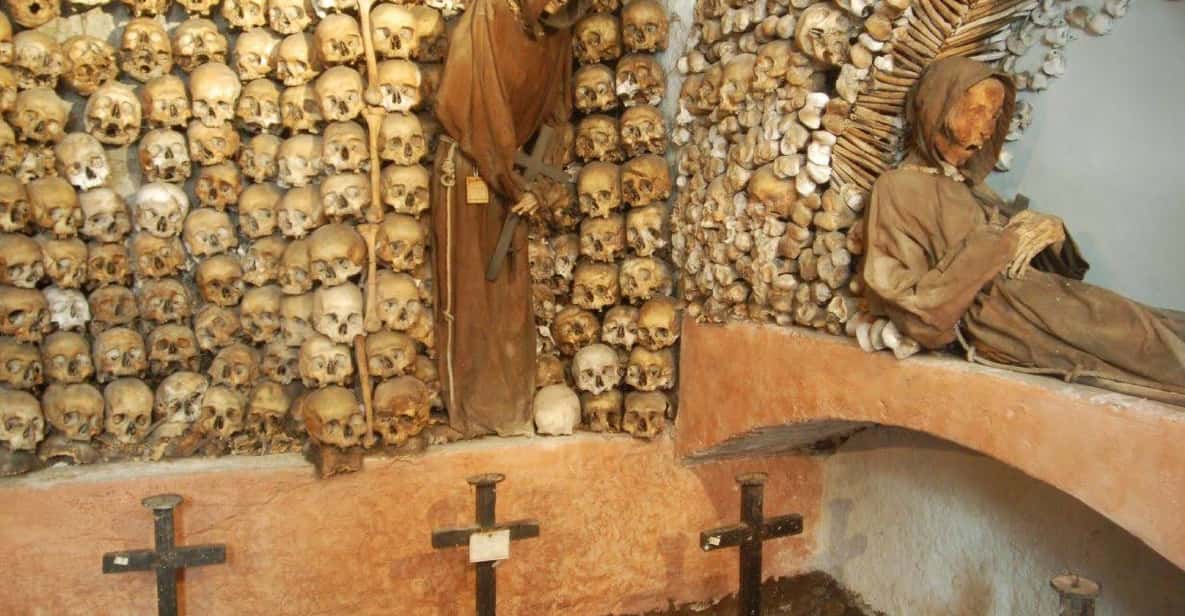
- Capuchin Friars Crypt: a bone-built cemetery holding the remains of about 4,000 friars
- Acqua Vergine aqueduct: walk through an ancient water system that still feeds Trevi Fountain
- 10th-century church above older ruins: over earlier temple remains, in a market area that dates back centuries
- Exorcism crypt layers: descend into a space used for exorcisms in the 12th century, with bone fragments present
- Saint Nicola legend in underground prisons: a final stop tied to a story of imprisonment
What You Get in 3 Hours Underground, Without the Usual Guesswork
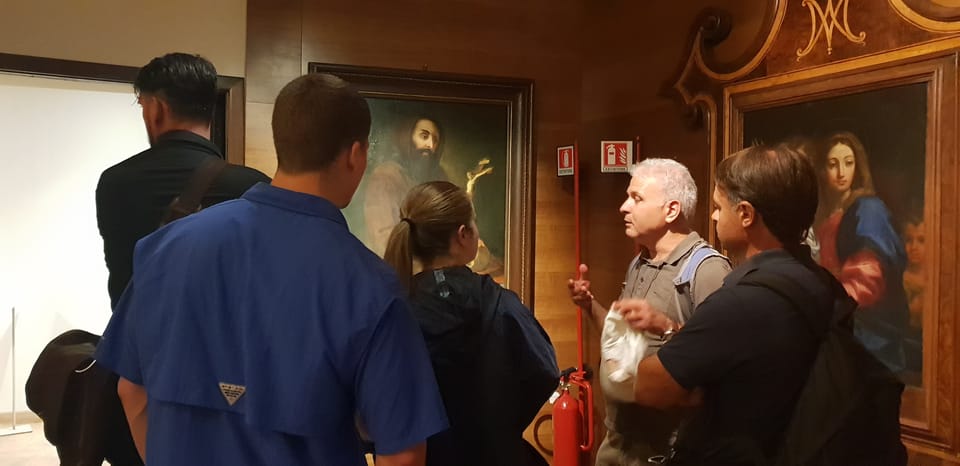
This is a focused Rome underground history tour that keeps to three stops, so you’re not spending half your day relocating and re-orienting. Expect about 3 hours total, with starting times that vary by day, and a live English guide plus an English audio guide.
The big value is that the underground sites connect to each other. You’re not just ticking off crypts. You’re learning why Romans built where they did, how water moved through the city, and how later centuries reused earlier spaces.
You can also read our reviews of more tours and experiences in Rome.



Where to Meet and How to Start Smoothly
The tour meets in front of Fontana del Tritone. Look for staff wearing a red and white hat. Then you’ll head to the first underground stop as a group.
This matters because Rome tours can feel chaotic at street level. Having a clear landmark start helps you get your bearings fast, so you can spend your energy on the underground part, not on “Where do I go now?”
Also note this: not every site allows photos, and you’ll be told on the spot when photography is permitted or not. Plan to rely on your memory and your guide’s explanation rather than your camera.
Stop 1: Capuchin Friars Crypt and the Shock That Turns Into Understanding
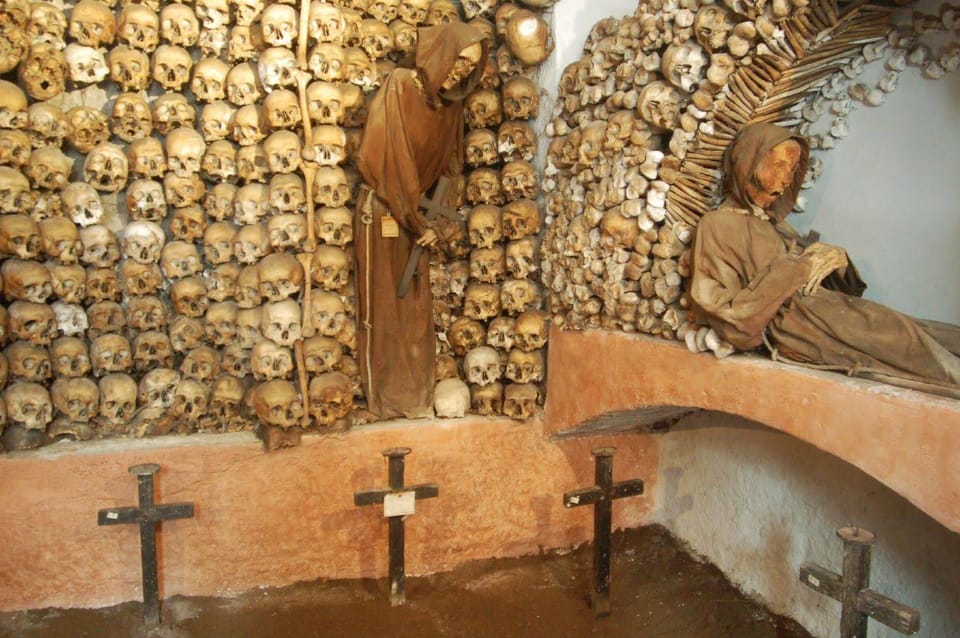
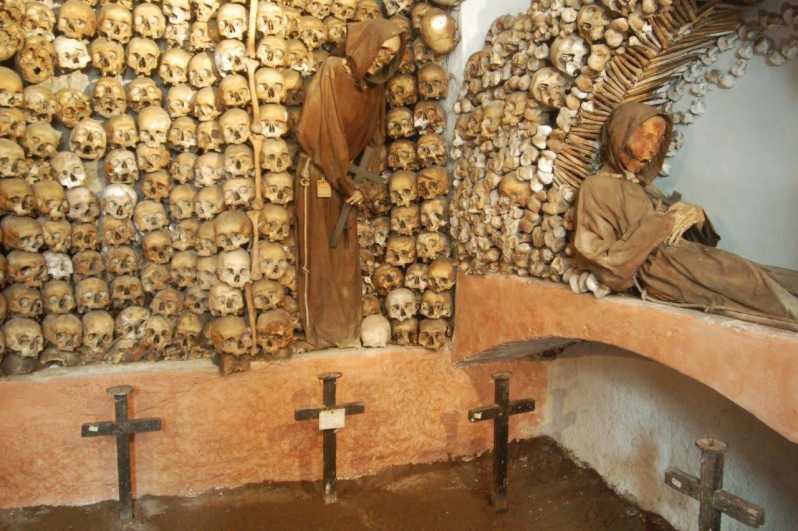
Your first major visit is the Crypt of the Capuchin Friars, famous for its bone construction. You’ll explore this cemetery made from human remains, and you’ll learn about its structure and what it was used for. The crypt is associated with the remains of about 4,000 friars, and that number gives the place an immediate scale.
The emotional effect can be strong, even if you’re not squeamish. The trick is to treat it like history, not horror. Here, the bones aren’t presented as shock value; they’re part of a designed space, a way of thinking about death, community, and display.
If you travel with kids, this can actually work well, because the guide can turn the layout and the craftsmanship into something kids can understand. If you’re expecting a quick “creepy room,” you’ll probably leave with more clarity than you planned.
Practical note: this stop is underground and visually dense, so wear shoes you can trust on uneven surfaces.
Stop 2: The Acqua Vergine Aqueduct Under Commercial Rome
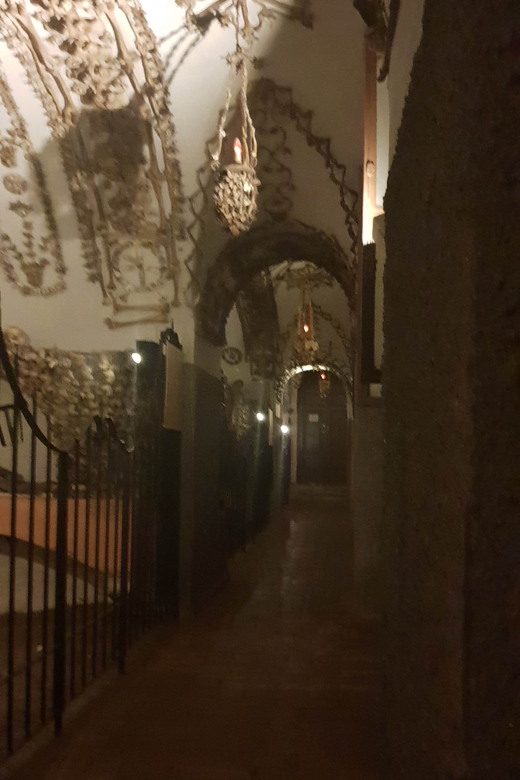
Next you’ll move from the crypt cemetery vibe to a different kind of underground wonder: water infrastructure. You’ll explore ancient aqueducts that supplied water and supported daily life in ancient Rome.
A standout here is the Acqua Vergine, the aqueduct connected to water that still feeds Trevi Fountain. That connection is one of the neatest Rome tricks: you’ll be standing with ancient stone systems while thinking about today’s crowds at Trevi, except this time you’re seeing the machinery behind the magic.
You’ll also have guided time in the aqueduct area that runs beneath a commercial zone. That means the environment feels both ancient and oddly practical, like the city never stopped building over itself. It’s not just “Roman ruins.” It’s Roman infrastructure buried under modern streets.
If you like engineering, architecture, and “how did they do that,” you’ll appreciate this stop more than you might expect. It gives the tour a grounded backbone.
Stop 3: A 10th-Century Church Sitting Over 1st-Century BC Temples
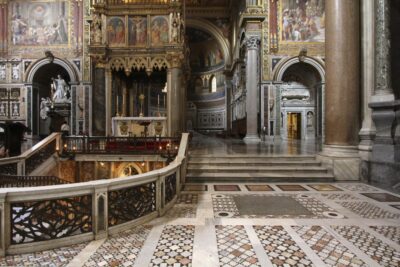
After the aqueduct, the tour shifts to a church setting that helps you understand Rome’s layering over time. You’ll visit a 10th-century church built above remains of three temples from the 1st century BC.
Here’s the historical payoff: the location wasn’t random. It sits in what was once the center of a Roman fruit and vegetable market dating back to the 4th century BC. So instead of imagining temples in empty space, you’re picturing commerce, crowds, and food supply just above ancient structures.
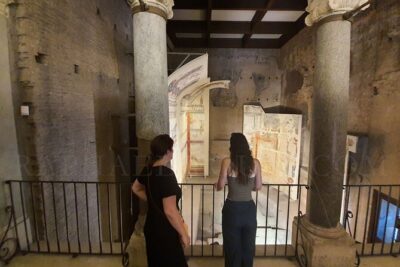
The tour then takes you down below ground again for another time jump. You’ll pass through areas linked to the 3rd century BC, where you get a sense of the city’s earlier layers beneath later construction. In other words, you’re not just going “deeper.” You’re stepping across different eras, one after another.






The Exorcism Crypt Below: 12th-Century Use and Bone Fragments
In the underground portion tied to the church area, you’ll descend into a crypt that was used for exorcisms in the 12th century. You’ll also see the crypt described as being littered with ancient fragments of human bone.
This stop may be the most surprising one on the tour. It changes the tone from Roman daily life to medieval religious practice and fear. Even if you don’t share the belief system, it’s a powerful reminder that underground spaces were repurposed again and again as needs changed.
If you have a sensitive stomach, take it slow here. The experience is educational, but the visuals are real and physical. This is also one of the reasons the tour is not suitable for claustrophobia—your time underground can feel tight, and you’ll want space to breathe.
Finish: Underground Prisons and the Saint Nicola Legend
The tour ends with a final underground stop: ancient prisons, linked by legend to Saint Nicola. The key phrase you should remember is according to legend—this isn’t presented as a documented court record. It’s a story attached to the setting, and the guide connects it to the broader spiritual and historical uses of the underground.
This final stop works well as an ending because it ties together the tour’s main theme: people used underground Rome for practical needs (water, movement, storage), and later for spiritual and institutional uses (rituals, confinement, legacy).
It’s also a nice narrative close. You start with a crypt built from bones, go to water infrastructure, move to religious layering, and finish in a space tied to imprisonment stories.
Price and Value: What You’re Really Paying For
At $147.27 per person, this isn’t a bargain-basement tour. But it can be good value if you like guided access and hate wasting time.
Here’s what’s included that changes the math:
- Local English guide
- Admission fees
- Guided portions in the aqueducts, crypt, and church catacombs
- English audio guide
- Skip the ticket line
The skip-the-line and the included admissions matter in Rome, where waiting can eat into your limited vacation hours. Also, the tour is only 3 hours, which means you’re not paying for a half-day bus ride you didn’t ask for. You’re paying for three guided underground experiences, one after another.
What’s not included: food and drinks, and there’s no hotel pickup/drop-off. If you prefer a tour that includes a meal or transportation, you’ll need to plan those separately.
Who This Tour Is Best For (and Who Should Skip It)
This is a smart fit for you if you want something more specific than a generic “Rome highlights” walk. It’s ideal if you’re curious about:
- how Rome worked underground (especially water systems)
- how later centuries reused earlier spaces
- why certain districts became religious and ceremonial zones
It’s also great for history lovers who like the feeling of moving through layers of time without switching tours all day.
You should skip it if any of these apply:
- claustrophobia
- mobility impairments
- wheelchair users
- pregnant women
The reason is straightforward: you’ll be moving through underground areas at multiple stops, and the physical environment is part of the experience.
Photo Rules and Sensible Packing
The tour says photography is not allowed inside, but it also warns that photo permissions can vary by site. You’ll be told when photos are permitted or not, so don’t assume the rule is identical everywhere.
Pack like you’re going to a museum but with uneven underground steps. Bring:
- comfortable shoes
- comfortable clothes
Also, think about how you’ll manage your phone and camera gear underground. If photos are blocked, you’ll waste time fumbling with your device. I’d treat the guide’s explanation as the main “capture.”
The Real Takeaway: Underground Rome Is a City Within a City
What I like most about this tour is that it helps you see Rome as a system, not just a postcard. You go from bones to water to layered religious spaces, and the connections make more sense than they first appear.
You’ll leave with a clearer mental map of how people in different eras used the same underground geography for different needs. That’s the kind of knowledge that makes the rest of Rome more interesting, because now you’re looking past the streets and asking what’s happening beneath your feet.
Should You Book This Underground Rome Tour?
Book it if you want a tight, guided, three-stop experience that focuses on what’s beneath the surface and connects underground sites to famous Rome landmarks like Trevi. You’ll get strong value from the included admissions, the English live guide, and the fact that the tour is only 3 hours long.
Skip it if you need lots of space, if you can’t handle tight underground environments, or if mobility limits are a concern. Also skip it if you hate tours that restrict photos, because underground rules can be strict and change by site.
If your travel style is “show me how Rome worked,” this is a very solid choice.
FAQ
How long is the Rome Crypts, Catacombs and Skeletons Underground Tour?
The tour lasts about 3 hours.
Where does the tour start?
Meet in front of the Fontana del Tritone. Staff will be there wearing a red and white hat.
What underground sites are included?
You visit the Crypt of the Capuchin Friars, the Acqua Vergine aqueduct areas, and a 10th-century church area with underground spaces including a crypt used for exorcisms and ancient prisons tied to Saint Nicola.
Is the tour guided in English?
Yes. You get a live English guide, and an English audio guide is also included.
Are admission fees included?
Yes. Admission fees are included in the tour price.
Is photography allowed?
Photography is not allowed inside. You’ll be notified when pictures are or aren’t allowed at each stop.
Is hotel pickup or drop-off included?
No. Hotel pickup and drop-off are not included.
Are food and drinks included?
No. Food and drinks are not included.
Is the tour suitable for everyone?
It is not suitable for pregnant women, people with mobility impairments, people with claustrophobia, or wheelchair users.
What is the cancellation and payment option?
You can cancel up to 24 hours in advance for a full refund. There’s also a reserve now & pay later option, so you can book without paying today.