REVIEW · ROME
Roman Catacombs Guided Tour with Transfer
Book on GetYourGuide →Operated by TVR di Stefano Donghi · Bookable on GetYourGuide
Rome’s underground is surprisingly human. On this guided trip to the Appian Way catacombs, I love seeing 2000-year-old burial spaces and frescoes without the hassle of figuring out transport. The air-conditioned minivan transfer keeps everything simple and on time.
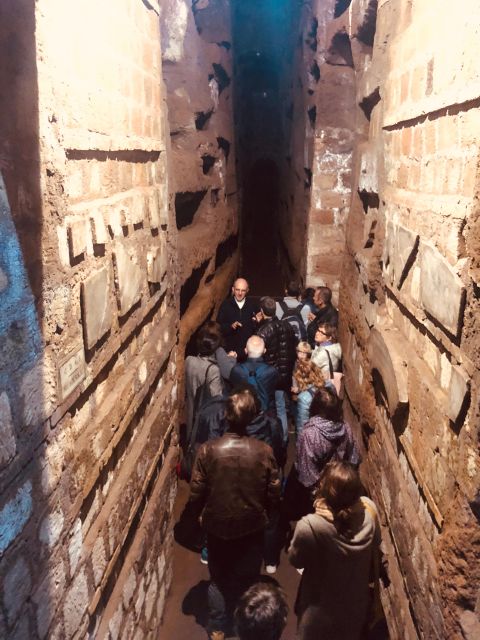
I also like how the guide turns the underground rooms into something you can actually picture: wall inscriptions, bone niches, small chapels, and the kind of burial details you’d miss if you walked in cold. You’ll visit one of the major sites—San Calixtus, Domitilla, or San Sebastiano—depending on what’s available.
One heads-up: this is not for people who feel uneasy in tight spaces. The tour isn’t suitable for claustrophobia, and it’s not set up for wheelchair users.
In This Review
- Key things to know before you go
- The Appian Way Catacombs in 2–3 hours
- Getting there: the minivan ride that actually feels easy
- Which catacombs will you see: San Calixtus, Domitilla, or San Sebastiano
- Entering the underground: what the 45-minute guided walk covers
- The “secret labyrinth” effect—and why it’s so memorable
- Martyrs, popes, and apostles: what you’ll hear in the burial rooms
- Food and wine in Trastevere: the optional add-on that changes the day
- Price and value: is $123.48 a fair deal?
- Practical tips that make the tour smoother
- Who should book this catacombs tour (and who shouldn’t)
- Should you book Roman Catacombs with transfer?
- FAQ
- How long is the catacombs part of the tour?
- Which catacombs will I visit?
- What’s included in the price?
- Do I get a guide during the transfer?
- Is the tour suitable for wheelchair users or people with claustrophobia?
- Are pets, strollers, or luggage allowed?
Key things to know before you go
- Comfortable transfer in an air-conditioned minivan from a central Rome meeting point
- A real guided catacombs visit (45 minutes) with a professional guide at the entrance
- Major catacombs included: San Calixtus, Domitilla, or San Sebastiano (one site, depending on availability)
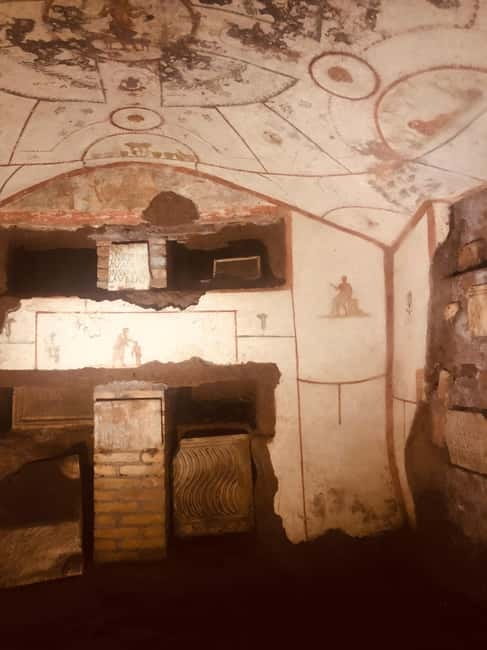
- You’ll see early Christian burial rooms: crypts, tombs, sarcophagi, frescoes, inscriptions
- Optional Trastevere food and wine tasting in a 600-year-old wine cellar
- Not ideal for tight-space needs: claustrophobia and wheelchair access don’t work
The Appian Way Catacombs in 2–3 hours
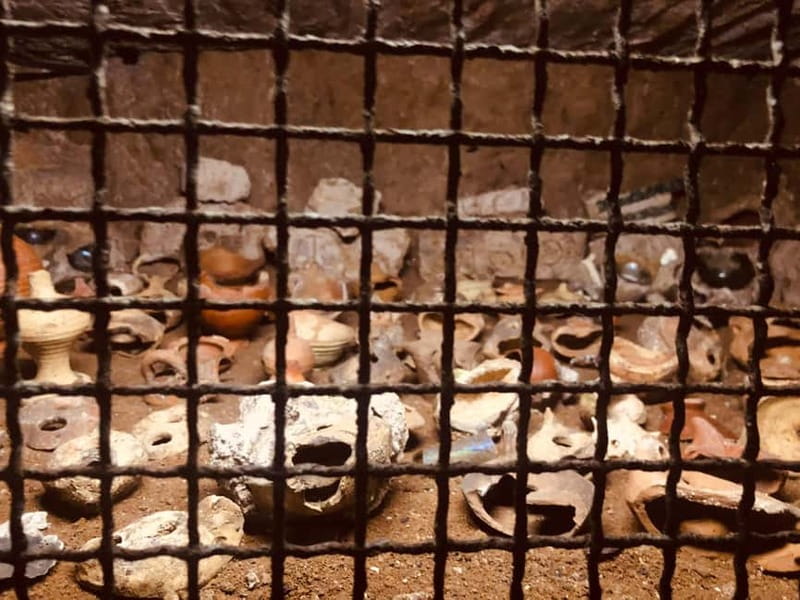
You can do Rome the standard way: ruins in the sun, gelato stops on repeat. This tour flips the script and takes you beneath the Appian Way into the early Christian underworld.
The whole experience is built around a fast, focused block of time. Your total time on the activity is listed as 2 to 3 hours (start times vary). That matters because catacombs tours can sprawl when you’re wandering on your own. Here, you’re guided through what’s open to the public, with a structured visit and a comfortable ride back.
The tour centers on an underground cemetery that’s been used for generations. You’re walking through spaces connected to first Roman Christians and the long tradition of burial and commemoration that followed.
You can also read our reviews of more guided tours in Rome



Getting there: the minivan ride that actually feels easy
One of the best things about this experience is how the transfer is handled. You meet at a central location in Rome and hop into an air-conditioned minivan. The goal is straightforward: make the trip out to the Appian Way painless.
You don’t need to plan a bus line, deal with taxi math, or wonder if you’ll find the right entrance when you arrive. The operator provides a transfer and includes the catacombs tickets and fees, so the “day-of friction” stays low.
And there’s another practical upside: when departures are small, the ride can feel more conversational. In one of the guide/driver notes tied to this service, the shuttle ran with just a few people and the driver explained a lot during the trip. Even if your group size differs, the minivan format usually means you can ask questions and get context before you step into the underground.
Which catacombs will you see: San Calixtus, Domitilla, or San Sebastiano
Here’s the key detail: you don’t pick one catacomb at checkout based on preference. The tour visits one of the publicly accessible catacombs—San Calixtus, Domitilla, or San Sebastiano—depending on availability.
That could sound uncertain, but for a lot of people it’s a practical tradeoff. You’re still guaranteed a guided visit to a major site, and you’re not stuck waiting around if one entrance has limits. In the end, you’re still seeing the same style of world: crypts, tomb niches, burial rooms, inscriptions, and underground corridors connected to early Christian history.
If you’re the type who really wants one specific site, you’ll want to double-check before you book. But if you care more about the experience—walking inside the underground cemetery with a guide—this format works well.
Entering the underground: what the 45-minute guided walk covers
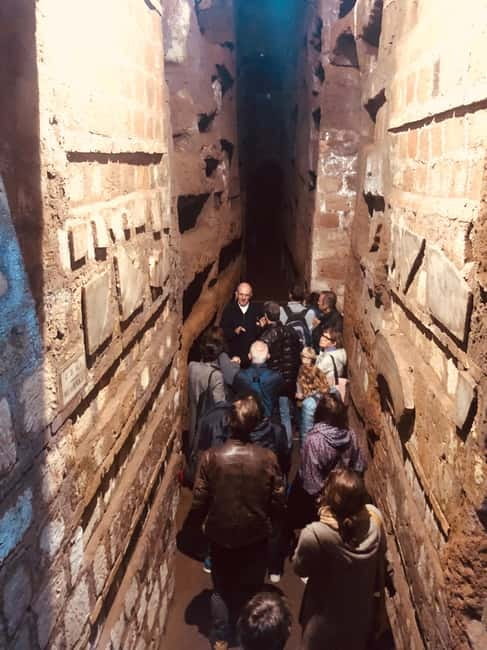
Once you reach the catacombs entrance, you meet your guide and start the guided portion. The catacombs tour itself is 45 minutes, and that time allocation is smart. It’s long enough to see multiple burial areas and take in the frescoes and inscriptions, but not so long that you spend the whole visit trying to decode everything on your own.
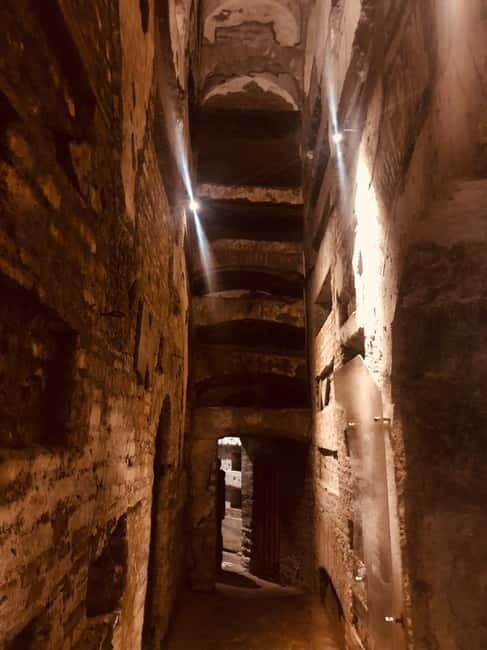
You’ll be guided through an underground maze of chambers and burial spaces. The setting is described as an enormous cemetery network—about 15 hectares in area and roughly 60 km long. That’s a lot of ground for an underground structure, and it explains why the tour is guided. The spaces can blur together if you don’t have someone pointing out what you’re looking at.
What you’re likely to notice with a guide:
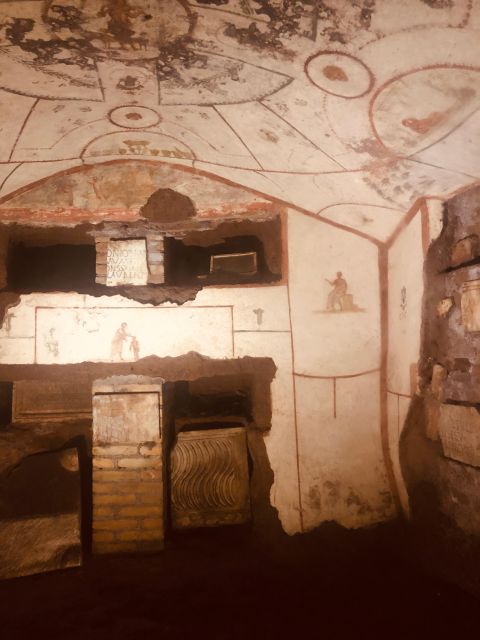
- Crypts and frescoes featuring mythological and biblical figures
- Inscriptions carved into walls, which help connect names, dates, or dedications to the space
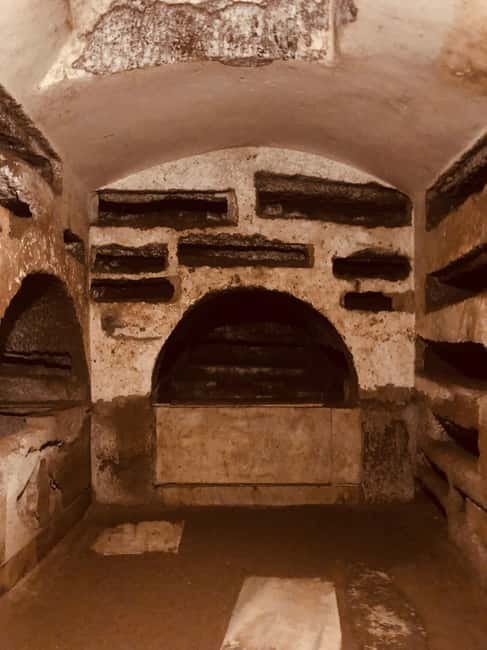
- Niches with skeletal remains, part of how burial was organized and reused over time
- Small mausoleums and chapels, including burial areas that still connect to religious rites
- Sarcophagi and tombs, showing different ways people were commemorated
The tour’s focus stays on viewing and understanding. You’re not just walking through darkness—you’re learning how people used these spaces for burial and later remembrance.
The “secret labyrinth” effect—and why it’s so memorable
Catacombs have a strong mood: low light, stone corridors, and rooms that feel cut out of another world. But the reason this tour tends to stick with people is the combination of visuals and meaning.
The description emphasizes frescoes of mythological and biblical creatures. That detail matters because it shows the early Christian world wasn’t built only from “church-only” imagery. It pulled from older visual traditions and adapted them into new spiritual messages.
Also, the catacombs aren’t presented as a museum-only concept. Some chapels and burial areas are still used to celebrate religious rites. That gives the place an everyday weight, not just a theatrical one.
And the guide helps you connect the dots between what you see: inscriptions aren’t just decoration, and niches aren’t just creepy artifacts. They’re evidence of how ordinary people and religious communities treated death, memory, and identity.
You can also read our reviews of more tours and experiences in Rome





Martyrs, popes, and apostles: what you’ll hear in the burial rooms
This tour specifically highlights burial sites connected with famous names—martyrs, popes, and, according to legend, even apostles. Whether you think about those claims as historical record or tradition, the guided explanation is part of the value.
The names create a thread through the rooms you visit. Instead of thinking of the catacombs as generic underground graves, you get a framework for why certain areas are treated as important.
That matters because early Christian Rome was both public and hidden: communities needed a place to bury the dead, but also wanted a space tied to faith and remembrance. The catacombs served that purpose, and the tour gives you a way to see the underground network as an organized system, not random tunnels.
One practical consideration: you’ll want to go with respect. These spaces are quiet, enclosed, and still meaningful. A calm pace and good shoes will help you take it in without rushing.
Food and wine in Trastevere: the optional add-on that changes the day
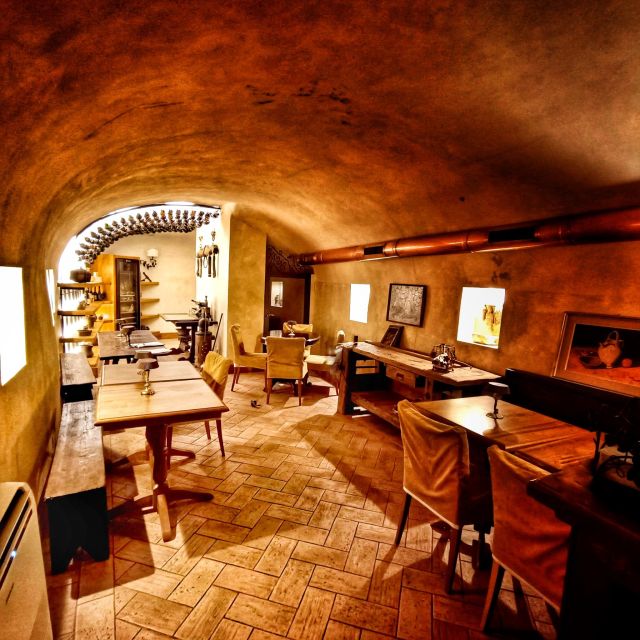
If you add the option, your day doesn’t end after the underground tour. You’ll head to Trastevere for a food-tasting and wine-pairing experience.
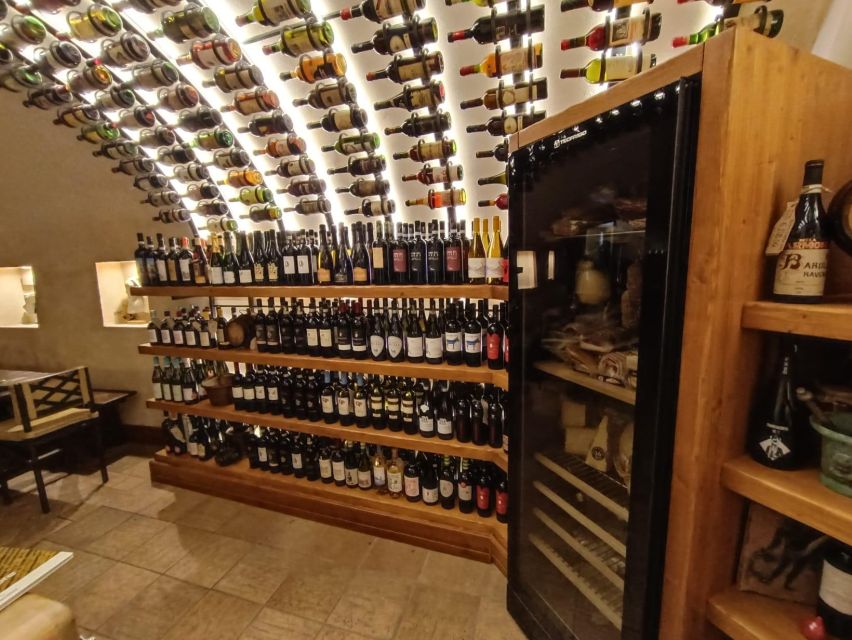
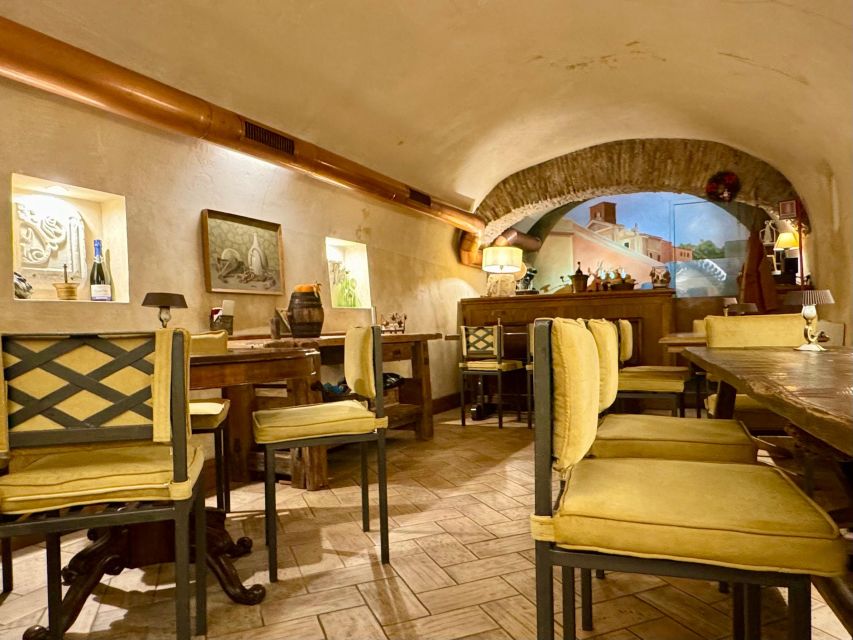
This portion is described as a gourmet tasting served in a 600-year-old wine cellar, with local servers who focus on cheeses, cold cuts, and wine. If that sounds like your kind of evening, it’s a great way to balance the mood shift—from underground shadows to local food culture above ground.
Another detail that makes this add-on work: after your catacombs tour, your driver takes you directly to the meeting point for the food experience. That reduces the chance you’ll spend time figuring out transit between two different Rome neighborhoods.
One important note for the food option: it’s mandatory to communicate any allergies or intolerances at booking. If you don’t, service can’t be guaranteed, and the operator notes that they’re not responsible for reactions caused by allergies or intolerances when they weren’t communicated.
If you don’t have dietary restrictions, you’ll probably enjoy this as a relaxed finale. If you do, be proactive.
Price and value: is $123.48 a fair deal?
At $123.48 per person, this tour isn’t the cheapest thing in Rome—but it also isn’t overpriced for what’s included.
Here’s what you’re paying for:
- Guided access inside the catacombs (including a professional guide)
- Catacombs tickets plus all fees and taxes
- Air-conditioned transfer in a minivan from a central meeting point
- Optional: Trastevere food tasting and wine pairing in a historic cellar
For many visitors, the biggest value is the guided component. Catacombs are visually striking, but they’re hard to interpret without someone who knows what you’re seeing. You’re paying to shorten the learning curve.
If you compare it to the cost of getting out there independently, dealing with tickets, and trying to figure out logistics, the all-in structure usually feels more reasonable—especially when you’re on a tight schedule.
The other value factor is time. With a tour that runs about 2 to 3 hours total, you don’t have to surrender half a day to one activity.
Practical tips that make the tour smoother
Small details matter underground.
Bring a passport or ID card and wear comfortable shoes. You’ll be on stone walkways, and you’ll want grip and support more than style.
Plan around restrictions:
- Pets aren’t allowed.
- Baby strollers, luggage, or large bags aren’t allowed.
- Unaccompanied minors aren’t allowed.
Also, the tour operator notes they may refuse service to passengers who are intoxicated for safety reasons. If anything like that applies, you’ll want to reschedule rather than risk losing your spot.
If you’re sensitive to enclosed spaces, take that seriously. The tour isn’t suitable for claustrophobia, and it also isn’t set up for wheelchair users. If either of those applies, you’ll save yourself disappointment by choosing another Rome experience.
Who should book this catacombs tour (and who shouldn’t)
This one fits best if you:
- Want a guided look at early Christian burial spaces
- Like historical context that connects names, symbols, and burial practices
- Prefer a tour with transport handled so you can focus on the experience
- Would enjoy pairing the darker catacombs mood with a food-and-wine stop in Trastevere
You might skip it if you:
- Need wheelchair access
- Have claustrophobia or feel strongly uncomfortable in tight spaces
- Don’t like structured time limits (the catacombs portion is 45 minutes, so it’s not a slow wander)
Should you book Roman Catacombs with transfer?
I’d book it if your top goal is to see the Appian Way catacombs with a guide and not spend your energy solving logistics. The combination of a comfortable minivan transfer, timed guided access inside the underground, and optional Trastevere tasting gives you a complete, well-paced Rome day.
The strongest reasons to choose it are the practical ones: you get tickets included, the catacombs visit is guided, and you don’t have to manage transport between Rome and the underground sites.
If you’re on the fence, decide based on your comfort level first. Claustrophobia and mobility needs are the deal-breakers here. If those don’t apply, this tour is a thoughtful way to experience Rome from a side most people never manage—quiet, underground, and surprisingly human.
FAQ
How long is the catacombs part of the tour?
The guided catacombs visit is listed as 45 minutes, with the full experience running about 2 to 3 hours depending on the starting time.
Which catacombs will I visit?
You’ll visit one of the publicly accessible catacombs: San Calixtus, Domitilla, or San Sebastiano, depending on availability.
What’s included in the price?
In addition to catacombs tickets, the tour includes an air-conditioned minivan transfer, a professional catacombs guide, and the guided tour itself. If you choose it, the Trastevere food tasting experience is also included.
Do I get a guide during the transfer?
No. The guide is provided for the catacombs portion. The transfer is included, but the guide is not included during the ride.
Is the tour suitable for wheelchair users or people with claustrophobia?
No. It’s not suitable for wheelchair users and it’s listed as not suitable for people with claustrophobia.
Are pets, strollers, or luggage allowed?
Pets aren’t allowed. Baby strollers and luggage or large bags aren’t allowed either, and unaccompanied minors aren’t permitted.