REVIEW · ROME
Guided Vespa Tour of Rome – Ride a Vespa with a Local Guide
Book on Viator →Operated by Rome by Vespa · Bookable on Viator
Rome turns better on two wheels. This Vespa tour with Francesco is a fun way to hit major sights fast, and I like that you get officially licensed local storytelling plus frequent photo stops. The main catch: if you choose self-drive, you need real comfort riding in busy city traffic.
What makes it feel relaxed is the small group size, capped at 15, plus a real pre-ride briefing before you pull away. You also get helmets and basic insurance, but there’s a big €500 deposit per Vespa due the day of the tour.
It runs about 2.5 hours and is offered in English, starting and ending at Via della Madonna dei Monti, 57.
In This Review
- Key highlights at a glance
- Why this Vespa tour is a smart first taste of Rome
- Getting started at Via della Madonna dei Monti
- The real logistics: helmets, insurance, and the €500 deposit
- Self-drive vs. rider option: pick based on your confidence
- Colosseum stop: quick photos, bigger context
- Rione Monti: the streets where a Vespa makes sense
- Trevi Fountain: the coin tradition and the scale shock
- A palace story stop: why it matters even when you don’t get inside
- Spanish Steps: views you can actually enjoy
- Piazza Navona and Bernini’s Four Rivers
- Castel Sant’Angelo: from emperor’s tomb to fortress to museum
- Janiculum Hill and the cannon shot tradition
- Fontanone (Fontana dell’Acqua Paola): a parked Vespa photo with real breathing room
- Trastevere: the ride where Rome feels like a movie set
- How long you’ll actually spend at each sight
- Value check: what you get for the price
- The main drawbacks to plan for
- Who should book this Vespa tour
- Should you book this Vespa tour?
- FAQ
- How long is the Guided Vespa Tour of Rome?
- What is included in the tour price?
- Can I choose to drive the Vespa myself?
- Are entrance tickets to the Colosseum or Castel Sant’Angelo included?
- What do I need if I have a non-EU driver’s license?
- Where do we meet and where does the tour end?
- Is there a required deposit for the Vespa?
- What is the cancellation policy?
Key highlights at a glance

- Licensed guide with Francesco: clear explanations, tight group control, and entertaining moments along the route
- Two ways to ride: self-drive if you meet the requirements, or ride as a passenger with a driver option
- Short, high-impact stops: Colosseum, Trevi Fountain, Spanish Steps, Piazza Navona, and more, with limited walking
- Janiculum wow factor (for some departures): the daily cannon shot and big-city panoramas
- Fontanone photo moment: a parked Vespa viewpoint where you actually get time to look
- Practical safety setup: helmets, basic insurance, and a required €500 security deposit
Why this Vespa tour is a smart first taste of Rome
Rome can feel like a lot on day one: lines, crowds, and endless walking. This is a different rhythm. You glide through streets that cars hate, and you cover big sights in a half-day without spending the whole time searching for seats or entrances.
I also like the balance here. You get iconic landmarks, but you also get local guidance on where to pause, what to notice, and how to think about what you’re seeing. It’s not just scenery from the road.
You can also read our reviews of more guided tours in Rome



Getting started at Via della Madonna dei Monti
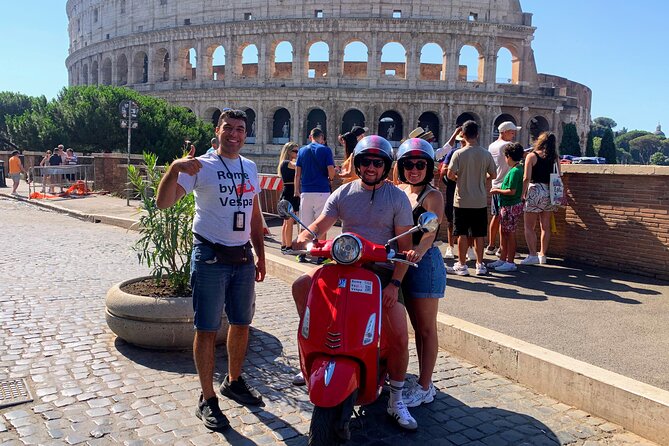
You meet at Via della Madonna dei Monti, 57 (Roma), and the tour ends right back at the same spot. That matters in a city where many activities scatter meeting points across town. It also makes it easier to plan lunch after.
When you arrive, helmets come out and the Vespa is ready for the group. If you’re driving, you’ll get a test ride first so you’re comfortable before you join the real street mix.
If you’re coming by public transportation, this area is convenient enough that you should not feel stuck in the center of a maze. From here, you’re set up for the rest of the day’s sights.
The real logistics: helmets, insurance, and the €500 deposit
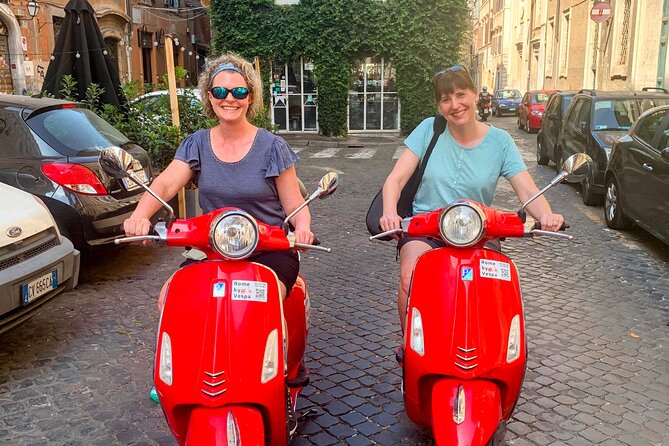
One of the biggest practical points is that you’ll need a refundable €500 security deposit per Vespa on the day of the tour. The deposit is meant to cover potential damage, and it’s returned after the ride when the scooter comes back in proper condition.
You’ll also get helmets and basic insurance for drivers, and passengers if you’re riding with someone driving. And there is a pre-ride briefing covering route and safety protocols.
The deposit is not a reason to avoid the tour, but it is a reason to prepare your payment plan. If you’re traveling with a tight budget, build this into your mental math.
Self-drive vs. rider option: pick based on your confidence
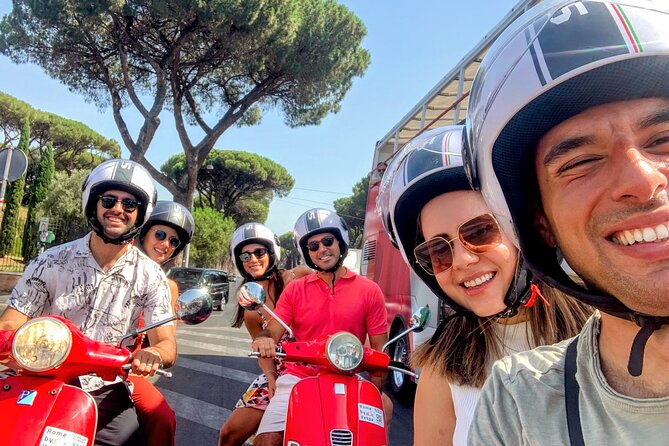
This is the fork in the road. You can choose Self Drive or ride on a Vespa with a driver. The self-drive option is not a beginner setup.
To drive, you must be at least 18, have prior experience riding a 125cc scooter or motorcycle, and feel comfortable in busy traffic. Your license also matters: EU-issued licenses must be category A or B (or valid equivalents), and non-EU licenses need a valid International Driving Permit (IDP). If you’re a U.S. citizen, the data says an IDP issued by AAA is legally required for self-drive.
If you are even slightly unsure about your comfort level, you’ll enjoy the tour more as a passenger. You’ll still get the same stops and storytelling, without the stress of handling traffic on two wheels.
Colosseum stop: quick photos, bigger context
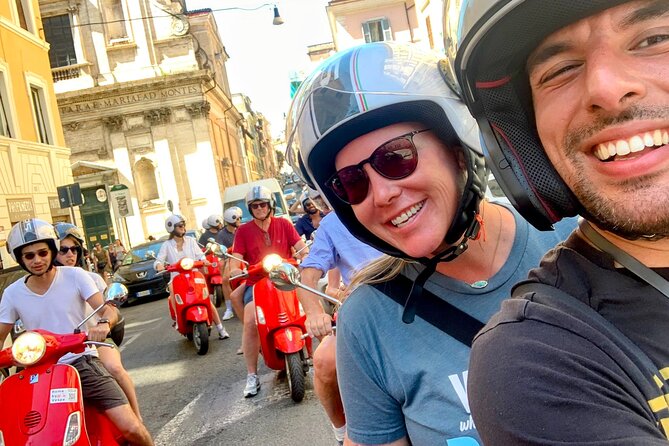
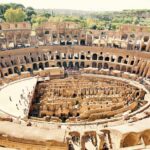
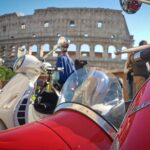
The tour’s first stop is the Colosseum area, and Francesco takes you in for a photo plus a story about the monument. The time here is about 10 minutes, so think of this as a briefing and a landmark moment, not a full visit.
Importantly, the Colosseum admission ticket is not included. That means if you want to go inside, you’ll need a separate ticket and time.
Still, this kind of first encounter can help you make sense of what you’ll see later. If you come back on a different day, you’ll have a framework already.
You can also read our reviews of more tours and experiences in Rome

Rione Monti: the streets where a Vespa makes sense
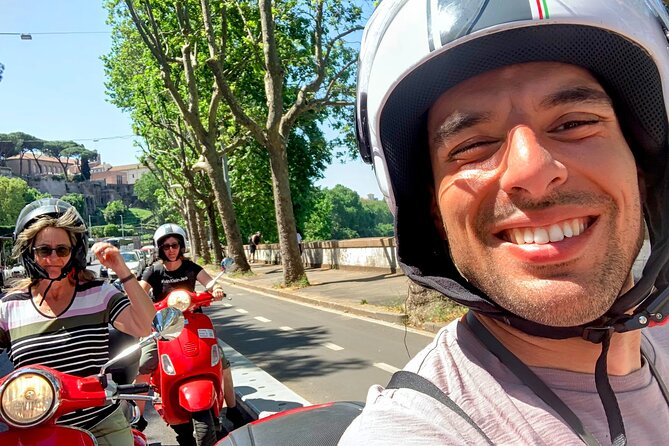
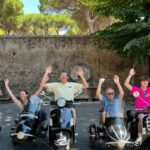
Rione Monti is where the Vespa tour starts to feel like the real deal. You’re greeted at the meeting point, then equipped with helmets and a scooter that’s ready to go. If you chose self-drive, this is where your pre-ride test pays off.
This is also where Francesco steers you toward local spots and quieter angles you might miss if you’re just walking and following the loudest tourist paths. The ride through cobbled streets and rolling city edges is part of the point.
One review detail I really like here: the guides keep the group together and make the ride feel lively. You’re not just listening to facts; you’re learning how Rome moves.
Trevi Fountain: the coin tradition and the scale shock
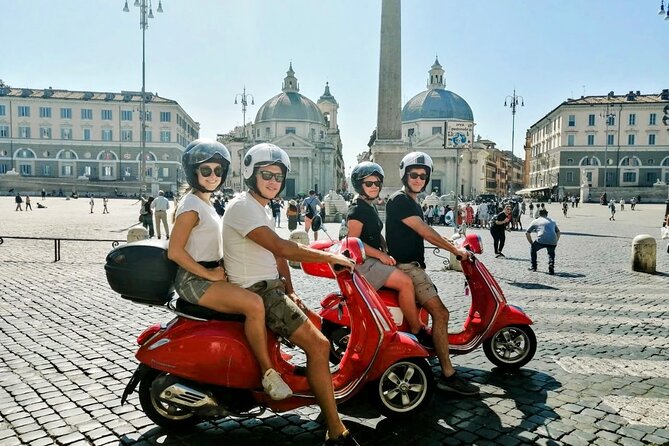
Trevi Fountain is your next big stop, with about 10 minutes on site. You’ll feel the scale quickly. The fountain is massive, with intricate sculptures tied to the Roman god Oceanus and sea horses.
You’ll also learn the tradition of throwing a coin over your shoulder, tied to the legend that it brings good luck and helps you return to Rome. It’s touristy, sure. But it’s also a ritual you can understand once the symbolism is explained.
Here’s the practical angle: with only a short stop, you’re not trying to linger in the crowd. You’re taking in the carvings, listening to the story, and getting your photo without losing the rest of the tour.
A palace story stop: why it matters even when you don’t get inside
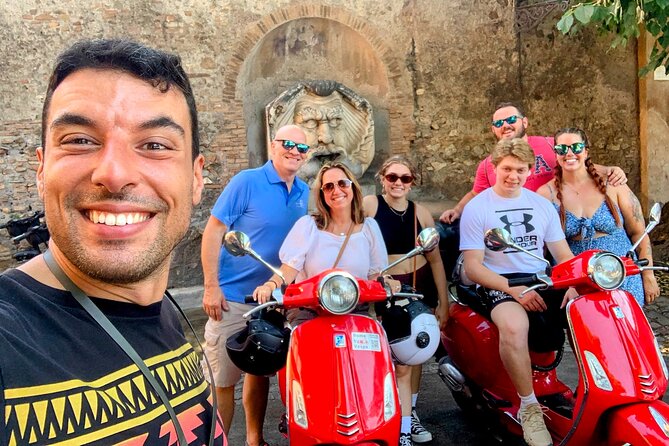
After Trevi, the tour includes a stop focused on the story of a palace where popes, kings, and presidents lived. Even without extra museum time, this kind of context can change how you read the buildings you pass later.
This is a quick narrative pause, not a long entry-ticket experience. If you’re the type who likes to connect politics, power, and architecture, this is the portion you’ll likely appreciate most.
Spanish Steps: views you can actually enjoy
Next up: the Spanish Steps, with about 10 minutes. The time is short, but it’s enough to climb, take in the architecture, and look out from the top.
From there, you get a perspective on Rome that feels different than street-level walking. You can see the mix of old ruins and later streets that make Rome look layered instead of just ancient.
If the steps are crowded when you arrive, don’t panic. The structure of the tour keeps things moving, so you’re not stuck waiting for the exact perfect moment.
Piazza Navona and Bernini’s Four Rivers
Piazza Navona is one of those squares that makes you stop without realizing it. You arrive, and the first thing you notice is the Fountain of the Four Rivers, set in the center of the square.
This fountain was designed by Gian Lorenzo Bernini, and the tour explanation focuses on what you’re seeing: four figures representing major rivers named Nile, Danube, Ganges, and Rio de la Plata. The details are the kind you only appreciate when someone points them out.
Time here is about 15 minutes, and that extra cushion helps. You’re not just walking through; you get real time to look up close.
Castel Sant’Angelo: from emperor’s tomb to fortress to museum
Castel Sant’Angelo is a faster stop (about 10 minutes), but it’s packed with timeline shifts. You’ll hear how it began as the tomb of Emperor Hadrian in 135 AD, later became a military fortress, and then shifted roles again as a papal residence, a Renaissance prison, and eventually a museum.
Admission is not included for this stop, so you should treat it as an exterior and orientation visit unless you plan to add entry separately. Even so, learning the building’s changing job helps you understand why it looks the way it does today.
Janiculum Hill and the cannon shot tradition
This part depends on which departure you book. If you get the morning tour at 12 o’clock, Francesco will take you to Terrazza del Gianicolo to witness the daily cannon shot tradition.
The cannon shot dates back to the 19th century and was used to synchronize the city’s clocks. When it happens, you get a loud moment plus a dramatic payoff: views that stretch across major monuments, from the Colosseum area to Pantheon and St. Peter’s Basilica.
Even if you don’t catch the cannon, the Janiculum viewpoint is still the kind of stop that changes your sense of scale. Rome suddenly feels like one big stage.
Fontanone (Fontana dell’Acqua Paola): a parked Vespa photo with real breathing room
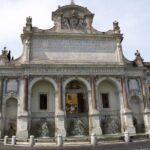
Then you move to the Fontanone at the top of the Janiculum hill. You get panoramic views over the city, with sights like the winding Tiber River, the dome of the Pantheon, and the Vittoriano in the distance.
Here, Francesco parks the red Vespa and you get a short moment to simply take in the view. If you want a photo with the Vespa in frame, this is the part where it’s actually possible without rushing.
This is one of those stops that feels like value beyond the landmark name. You’re not just seeing Rome; you’re getting a minute to feel it.
Trastevere: the ride where Rome feels like a movie set
The last leg leans romantic and local. You cruise through Trastevere’s winding streets, pastel-colored buildings, and cobblestone lanes. The sun and the smaller backstreets make the experience feel different from the central monuments.
You’ll pass beautiful flowers and see daily life in motion while the tour keeps the group together. The guide’s role matters here because Trastevere isn’t just about the sights; it’s about knowing how to ride through it without losing time or spacing.
This is also where the Vespa experience really earns its keep. If you’ve been spending days walking, the switch to riding makes the neighborhood feel fresh even if you’ve seen it in photos.
How long you’ll actually spend at each sight
The tour is about 2 hours 30 minutes. The stops are short, most around 10 minutes, with a slightly longer pause at Piazza Navona (about 15 minutes) and the Janiculum viewpoint (about 15 minutes).
That means you should treat this as an orientation tour. You’ll get a lot of Rome in one morning or afternoon, but you won’t get deep time inside museums or long ticket lines unless you plan a follow-up day.
It’s a smart trade: fewer hours spent in queues and more time moving with the city.
Value check: what you get for the price
At $120.68 per person for a roughly 2.5-hour small-group Vespa ride, the value comes from three things.
First, you’re paying for transportation plus guide time plus safety setup, including helmets and basic insurance, not just directions. Second, the route is built around closeness, so you’re not spending most of your time walking from far parking spots. Third, you get real commentary at multiple major landmarks, with extra context at stops like Castel Sant’Angelo and the Janiculum tradition.
The price can feel steep if you’re only interested in one or two monuments. But if you want a fast, fun overview with stories you can carry into later sightseeing, it’s a strong option.
The main drawbacks to plan for
Two issues show up in the way to choose between rider vs. driver.
If you self-drive, you need confidence in traffic and you get only a brief test ride, not a lesson. Some riders also wish for more detailed instruction on operating the Vespa during the process. If that sounds like you, pick the passenger option.
Second, some entrances aren’t included. The Colosseum and Castel Sant’Angelo admissions are not part of the tour package, so if you want to go inside, plan extra tickets and time.
Finally, scooter condition can vary by day. If you’re picky, do a quick check during the briefing so you feel good about what you’re mounting.
Who should book this Vespa tour
I’d point you toward this tour if you want:
- a first-day Rome hit with minimal walking
- a guide who explains what you see at each stop
- a lively ride through places cars and buses can’t make fun
- the choice to drive if you already ride motorcycles or 125cc scooters confidently
I’d rethink it if:
- you’re a first-time scooter rider
- you’re uncomfortable in heavy traffic
- you need long museum time inside major sites rather than quick landmark stops
Should you book this Vespa tour?
Book it if you want a half-day Rome primer that feels like an experience, not a bus route. The small group setup, the officially licensed guide, and the combination of Colosseum-to-Trastevere landmarks is a solid way to get your bearings fast.
Skip or switch to the passenger option if your driving confidence is shaky. The Vespa part is the star, and you’ll enjoy it more when you don’t have to fight traffic and focus on balance at the same time.
If you do want to go inside the big sites later, this tour still helps. You’ll return with context, not just with photos.
FAQ
How long is the Guided Vespa Tour of Rome?
It runs about 2 hours 30 minutes.
What is included in the tour price?
You get a 2.5-hour guided experience with Francesco, helmet(s) and basic insurance for drivers (and passengers if any), and use of a 125cc scooter for the duration of the tour.
Can I choose to drive the Vespa myself?
Yes. There’s a Self Drive option, but you must meet the driving requirements listed for your license, prior experience, and comfort riding in busy city traffic.
Are entrance tickets to the Colosseum or Castel Sant’Angelo included?
No. Colosseum and Castel Sant’Angelo admission tickets are not included. The other stops listed are free.
What do I need if I have a non-EU driver’s license?
You need a valid International Driving Permit (IDP) as required by Italian law. For U.S. citizens, the data states an IDP issued by AAA is legally required for self-drive.
Where do we meet and where does the tour end?
The meeting point is Via della Madonna dei Monti, 57, 00184 Roma RM, Italy, and the tour ends back at the same meeting point.
Is there a required deposit for the Vespa?
Yes. A refundable 500€ security deposit per Vespa is required on the day of the tour and is refunded after the ride when the Vespa is returned properly.
What is the cancellation policy?
You can cancel for a full refund if you cancel at least 24 hours before the experience starts. Free cancellation is listed up to 24 hours in advance.