REVIEW · ROME
Private Evening Walk: Wonders of Rome in English or Spanish
Book on Viator →Operated by Republic Experiences · Bookable on Viator
Rome at night hits different. This small-group walk strings together big icons and quieter surprises. I like that it’s capped at 15 and that it’s built for cooler evenings when crowds thin out. One thing to consider: it’s weather-dependent, so if conditions are rough, the plan can shift.
You’ll move from Piazza Navona toward the Colosseum, with stops that mix famous landmarks and lesser-known stops like Galleria Sciarra and the Church of Madonna dell’Archetto. I also love the focus on stories you can actually picture, including Rome as a city of layers—ancient, medieval, and modern stacked on top of each other. The possible drawback is pacing: in a compact route, you’ll see a lot more than you’ll do sitting down.
This is also a private experience in the sense that only your group joins you, with a meeting point near public transport. If you want a guided night walk that helps you understand what you’re seeing (instead of just collecting photos), this fits well. Just be ready for the fact that some monument access may be affected during the Jubilee, with updates sent to you.
In This Review
- Key things that make this Rome evening walk worth your time
- Why 6 pm in Rome is the smart time to walk
- Small-group and private feel: what you’ll notice on the street
- The 2-hour route from Piazza Navona toward the Colosseum
- Piazza Navona: where the city’s older life still shows up
- Pantheon story stop: classic Rome, but plan for separate admission
- Chiesa di Sant’Ignazio di Loyola: when churches feel alive
- Trevi Fountain at night: traditions you can actually understand
- Piazza Venezia and Ancient City views: where the city starts to explain itself
- Via dei Fori Imperiali and Trajan’s Column: the Mussolini-built road meets ancient Rome
- The hidden stops: Galleria Sciarra and Madonna dell’Archetto
- Why the guide matters more at night than you think
- Price and value: does $115.64 make sense?
- Weather, Jubilee disruptions, and what to expect if plans shift
- Who should book this evening walk?
- The bottom line: should you book Wonders of Rome at night?
- FAQ
- What time does the tour start?
- How long is the walking tour?
- Where do we meet, and where does the tour end?
- Is this tour private?
- How many people are in the group?
- What languages is the tour offered in?
- Are tickets included for the Pantheon?
- Do I need a mobile ticket?
- What should I do if it’s rainy or monuments are under restoration during the Jubilee?
- What’s the cancellation window for a full refund?
Key things that make this Rome evening walk worth your time
- Small group, big attention: capped at 15 participants, so your guide can keep the energy up and still answer questions.
- Night lighting does the work: monuments look cleaner and easier to read after dark, with details popping instead of blending.
- Hidden corners included: you’ll get time for Galleria Sciarra’s glass-domed atrium and Art Nouveau frescoes, plus Madonna dell’Archetto.
- Mix of classics and stories: Piazza Navona, the Pantheon area, Trevi, Piazza Venezia, Via dei Fori Imperiali, and more.
- Guides that stay conversational: people mention clear voices, patience, and humor—so it doesn’t feel like a lecture with shoes.
Why 6 pm in Rome is the smart time to walk

Rome can be hot, loud, and crowded at midday. At 6:00 pm, you get a better rhythm: temperatures cool, tour buses thin out, and you can actually hear the guide without fighting the street noise. Night also changes how the city reads. Instead of “busy,” landmarks look more layered, more cinematic, and often more detailed.
This tour leans into that. It isn’t just a list of sights; it’s built to help you connect the dots between what you see in front of you and the older city underneath. The result is that even if you’ve seen Rome photos before, you’ll still walk away with a clearer sense of where things came from and why they’re where they are.
You can also read our reviews of more walking tours in Rome

Small-group and private feel: what you’ll notice on the street
The tour is private in the practical sense that only your group participates. Add the fact it’s capped at 15 participants, and you’ll usually get a more human experience: fewer people to dodge around, more time for the guide to adjust to the group, and less rushing to keep everyone together.
This matters most at the stops where the guide is doing the real work—telling stories that make the buildings make sense. When the group is small, the guide can check that everyone’s close enough to hear, and you’re more likely to get a question answered without feeling like you’re interrupting.
If your group has kids, mixed ages, or slower walkers, a small-cap format is a plus. You’re still outside on cobblestones, but the pace is easier to manage.
The 2-hour route from Piazza Navona toward the Colosseum
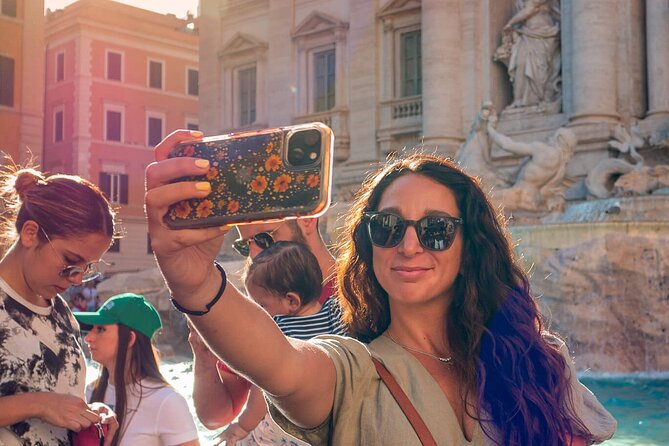
The walk runs about 2 hours (though it can run a bit long when the guide is pulling the stories in and people keep asking questions). You’ll start at Statua di Pasquino, Piazza di Pasquino and finish at the Colosseum area (Piazza del Colosseo).
The route is compact on purpose. You don’t come to Rome for “another long sightseeing day.” You come for the sights—but also for the feeling of the city. This route is designed so you can cover a big span of central Rome while still keeping it fun at night.
Here’s how the experience tends to unfold.
Piazza Navona: where the city’s older life still shows up
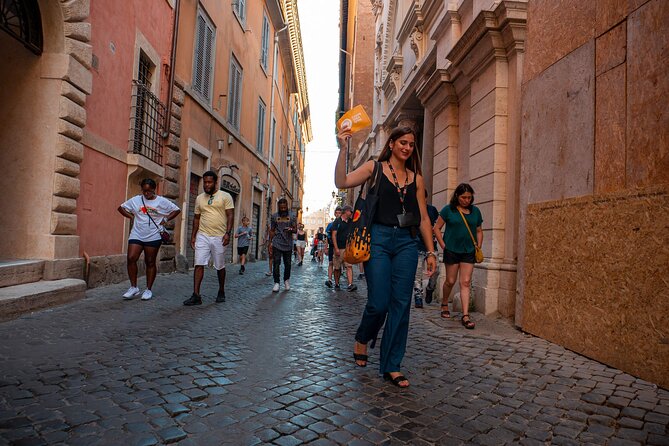
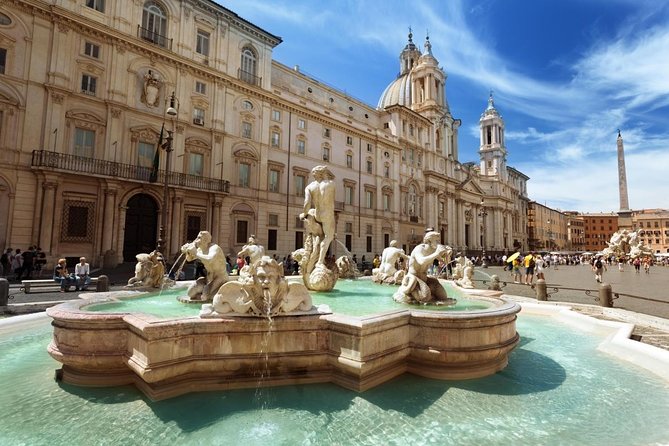
Your first major stop is Piazza Navona, and the guide doesn’t treat it like just a pretty square. You get the background of how this space relates to earlier Roman life—because Rome rarely replaces things in a clean straight line. You’ll hear the kind of history that makes you look at the buildings and think, okay, that’s why this area feels the way it does.
This stop is also convenient time-wise. Piazza Navona is active, well-known, and easy to orient around. Even if you’ve never been to Rome, you can start landing on your feet quickly. Plus, the big views and fountain energy are part of the appeal at night.
Practical note: the square is open and exposed. If you’re sensitive to wind or rain, bring a light layer and consider a small umbrella.
Pantheon story stop: classic Rome, but plan for separate admission
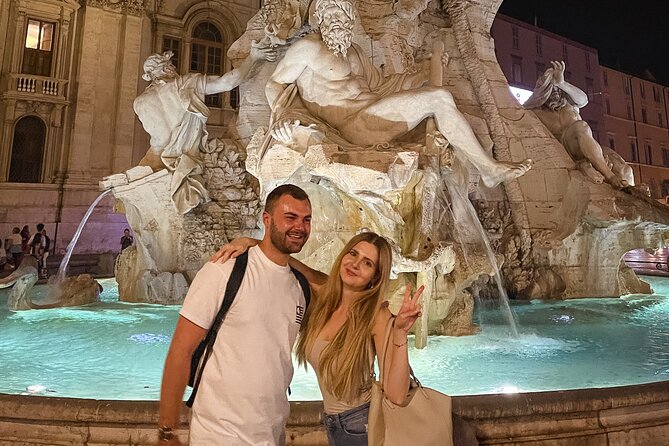
Next comes the Pantheon area, where the guide shares the long story of the site—ancient roots to its later church role. The key thing to know is that Pantheon admission is not included. In other words, you might get a guided stop and explanation, but if you want to go in, you’ll need to budget for that separately.
Why I like this approach: even without tickets, the exterior and immediate surroundings are enough to understand the idea of the place. The dome and the structure are so distinctive that once someone gives you the right context, you’ll see more than you would on a fast photo stop.
If you want to prioritize interior time, you may need to adjust expectations. This tour is optimized for a night walk, not a deep museum-style visit.
You can also read our reviews of more private tours in Rome





Chiesa di Sant’Ignazio di Loyola: when churches feel alive
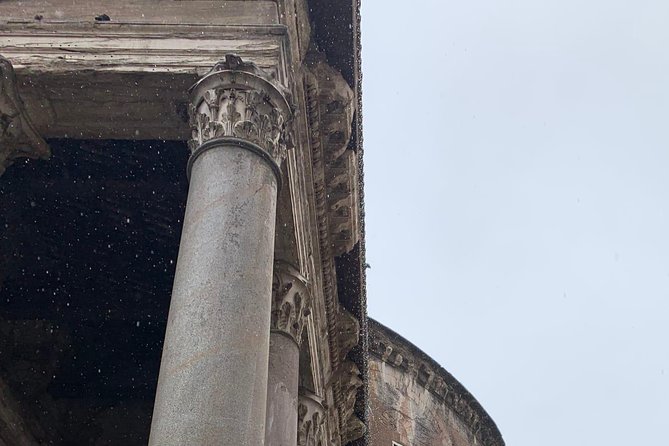
From there you head to Chiesa di Sant’Ignazio di Loyola, a beautiful church that’s known for concerts. Even if you’re not there during a performance, the point is that this is a space with an artistic side—not just a landmark stop.
Expect a short stop (it’s not a long sit-down). The guide uses the moment to connect what you see to why people value the space. If you like architecture with personality, this is a good fit. It also gives the walk a nice switch-up from the louder outdoor squares.
Trevi Fountain at night: traditions you can actually understand
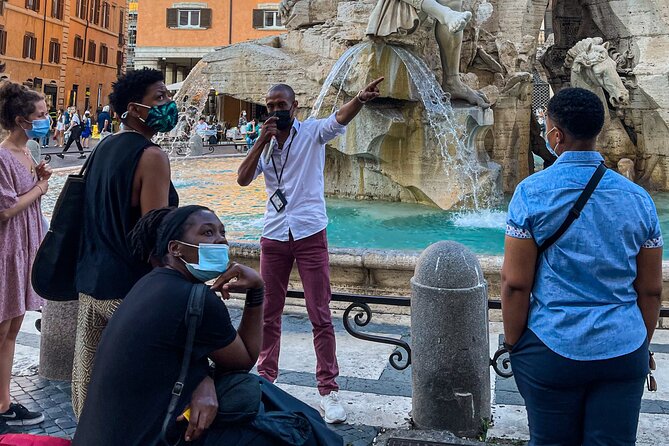
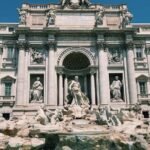
Then it’s Fontana di Trevi, the classic “yes, I’m going to see it” moment. But the experience here isn’t only the fountain itself. You’ll hear the story of the fountain and the traditions people associate with it, so the rituals don’t feel random. They feel like part of the place.
At night, Trevi’s glow helps. Daytime makes it feel like a crowded postcard scene. Evening makes it feel more like a stage—lighting picks out surface details, and the crowd tends to be more manageable than midday, even if it’s still busy.
Time-wise, this is a quick stop designed for viewing and story, not lingering for hours. If you want longer free time to wander close-up, you can use the remaining night walk to do that after the guided portion, but don’t expect the tour to linger forever at any single spot.
Piazza Venezia and Ancient City views: where the city starts to explain itself
Next you’ll be at Piazza Venezia / Ancient City. This area is famous for its monuments and for being a strong “Rome looks like Rome” vantage. The guide shares stories about palaces and what’s going on around the square, giving you a sense of how this section fits into the bigger ancient picture.
This stop works well because it ties together the earlier stops: you start seeing how Rome isn’t a single-era city. It’s layers with different functions over time.
Also, from a practical standpoint, this is a good moment to pause and reset. You’re at a central, recognizable point where you can look around and understand your direction.
Via dei Fori Imperiali and Trajan’s Column: the Mussolini-built road meets ancient Rome
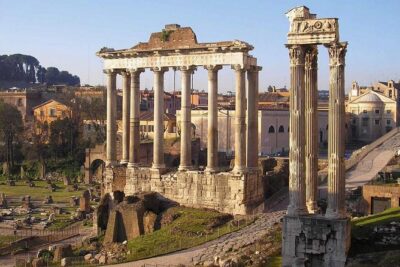
One of the more interesting stretches of the walk is Via dei Fori Imperiali. You’ll hear about the road’s 20th-century construction and then pivot into ancient Rome via Trajan’s Column.
This is a great example of what makes the evening walk different from a basic highlights shuffle. You’re not only seeing ancient art. You’re seeing how later Rome built on top of earlier Rome. The guide’s “unique insight” here turns a single monument into a timeline you can feel under your feet.
This is also where the night vibe helps. Outdoor ruins and monumental stone can look harsh in full sun. At night, they often look calmer and more readable, especially when lighting outlines edges and surfaces.
The hidden stops: Galleria Sciarra and Madonna dell’Archetto
This experience isn’t only about famous names. You also make room for quieter surprises, including:
- Galleria Sciarra, a glass-domed atrium with Art Nouveau frescoes. It’s the kind of place where your brain goes, wait, this is in Rome? The glass roof and interior decoration give you a break from street-level chaos and offer a different kind of beauty.
- Church of the Madonna dell’Archetto, often called the smallest church in Rome. Even if it’s small, it’s the kind of stop that makes Rome feel personal. You’ll get the story context so you’re not just admiring walls—you’re understanding why the site matters.
These stops are valuable for two reasons. First, they balance the heavy hitters so the tour doesn’t feel like a sprint. Second, they keep your mental map from being just one loop of the most photographed places.
Why the guide matters more at night than you think
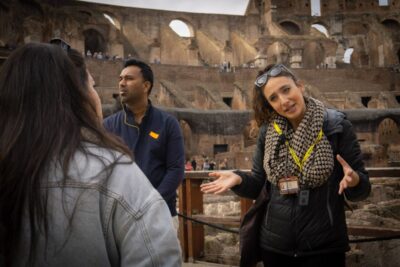
Night tours live and die by the guide’s delivery. What I like in this style of walk is how much it leans on clear storytelling and interaction. People have highlighted guides such as Sarah (clear, audible narration), Dinara (patient, question-friendly), Dan (warm, friendly, willing to keep going), and Anastasia (explaining Rome as a city of levels).
Even if your guide isn’t one of those names, the common thread is the same: you want someone who helps you connect what you’re seeing to what you’re hearing. When that clicks, you start noticing things on your own—inscriptions, building shapes, and the way streets line up with older structures.
If you get a guide who welcomes questions, that’s when the walk can run a little longer. And honestly, that’s a sign the experience is working.
Price and value: does $115.64 make sense?
At $115.64 per person for about 2 hours, the cost feels like you’re paying for access to a good explanation plus the convenience of a planned route. You’re not paying for museum tickets bundled together here—because Pantheon admission is not included, while several other stops are listed as free for admission.
So the value isn’t hidden in secret access. The value is in:
- a small capped group (less crowd friction),
- a route designed for nighttime viewing,
- and a guide who turns famous monuments into understandable stories.
If you’d otherwise be doing Rome by yourself at night, this is the kind of purchase that can save you hours of indecisive wandering. It also prevents that common problem where you see everything and remember nothing. A guide-centered night walk is often the difference.
If you’re traveling solo or as a couple, the price can feel steep compared to a self-guided plan. But with a private group and a small cap, it can still be a smart use of time—especially if you’re on a tight schedule.
Weather, Jubilee disruptions, and what to expect if plans shift
This experience requires good weather. If it’s canceled due to poor conditions, you’ll be offered a different date or a full refund. That’s key because Rome walks don’t like rain on cobblestones.
Also, during the Jubilee, some monuments may be under restoration. You might receive messages about changes to the route or stops. That’s not a reason to panic; it’s Rome doing Rome. Just make sure you keep an eye on updates close to your start time.
Who should book this evening walk?
I think this tour fits best if you:
- want a night plan that covers major sights without feeling like a rushed checklist,
- like stories tied to architecture and monuments,
- and appreciate smaller groups that let you ask questions.
It’s also a good choice for people who have limited time in Rome. You get a broad slice of central Rome—Piazza Navona, Pantheon area, Trevi, Piazza Venezia, Via dei Fori Imperiali—and you throw in the quieter interior/chapel stops that many highlight-only tours skip.
If you’re the type who wants hours inside museums, long church visits, or a deep Pantheon entry experience, you might pair this with other timed-ticket activities. Think of this as the best “night orientation with stories” move.
The bottom line: should you book Wonders of Rome at night?
Yes, if your goal is a guided, easy-to-follow evening that blends the most famous sights with Rome’s smaller, more surprising stops. You’re paying for a strong guide-led experience, a small group size, and a route that works well at 6 pm.
I would hesitate only if you know your group can’t handle walking on cobblestones after dark, or if you’re traveling in a period where weather is consistently bad. Otherwise, this is one of those Rome experiences where the timing does half the work—and the guide finishes the job.
FAQ
What time does the tour start?
The start time is 6:00 pm.
How long is the walking tour?
It lasts about 2 hours.
Where do we meet, and where does the tour end?
You meet at Statua di Pasquino in Piazza di Pasquino, and the tour ends at the Colosseum area on Piazza del Colosseo, 1.
Is this tour private?
Yes. Only your group participates.
How many people are in the group?
The tour is capped at 15 participants.
What languages is the tour offered in?
It’s offered in English or Spanish.
Are tickets included for the Pantheon?
No. Pantheon admission is not included. Other listed stops show free admission.
Do I need a mobile ticket?
Yes, the tour uses a mobile ticket.
What should I do if it’s rainy or monuments are under restoration during the Jubilee?
The experience requires good weather, so it may be canceled and you’ll be offered a different date or a full refund. During the Jubilee, some monuments may be under restoration, and you should pay attention to messages about possible changes.
What’s the cancellation window for a full refund?
You can cancel up to 24 hours in advance for a full refund. If you cancel less than 24 hours before the start time, you won’t receive a refund.