REVIEW · ROME
Rome: Underground Temples & Crucifixion Relics Walking Tour
Book on GetYourGuide →Operated by Touriks · Bookable on GetYourGuide
Rome hides temples under your feet. This tour takes you to St. Clement’s Underground, where pagan and early Christian Rome literally stack up below the streets.
I especially love two things: the chance to visit a site with multiple layers of worship in one stop, and the small-group feel (maximum 10 people) that keeps the experience personal.
One drawback to plan for: the underground portions are tight and not for claustrophobia. You’ll also want to dress properly, since churches here are strict about shoulders and legs.
Three archeological layers at St. Clement: You go step-by-step from one era to the next beneath the basilica.
Mithraic temple + underground river: You’ll see where a pagan cult center sat under later Christian construction.
Proto-Christian art you can actually study: Frescoes and mosaics come with clear explanations of what you’re seeing.
Relics tied to Helena and Constantine: The Holy Stairs and other items connect the Roman church story to Jerusalem.
A short, efficient loop of major churches: You pack in key Rome sites without feeling like you’re sprinting.
Small group, headset support: Maximum 10 people plus headsets help you keep up even when it’s crowded.
In This Review
- St. Clement’s Underground: Rome’s Most Useful Kind of Time Travel
- A practical note before you go underground
- The Mithraic Temple and the Underground River: The Pagan Backdrop You Can See
- Frescoes, Mosaics, and Martyrs: How Early Christians Used Art
- Walking to St. John Lateran: Constantine’s Turning Point, Explained Simply
- Scala Sancta: The Holy Stairs You See, Not Just Hear About
- The Basilica of the Holy Cross in Jerusalem: Relics Linked to Helena
- Emotional tip (from a practical reviewer perspective)
- Santa Maria Maggiore Extension: When You Have the Extra Hour
- Price and Logistics: Is $88 Worth It?
- What to Wear, What to Pack Light, and How to Stay Comfortable
- Who This Tour Suits Best (and Who Might Prefer a Different Day)
- Should You Book This Rome Underground Temples and Relics Tour?
- FAQ
- How long is the Rome Underground Temples & Crucifixion Relics walking tour?
- Where does the tour start?
- What’s included in the price?
- Are food and drinks included?
- How big are the groups?
- Is the tour wheelchair-accessible?
- Is it suitable for claustrophobia?
- What should I wear and what items are not allowed?
St. Clement’s Underground: Rome’s Most Useful Kind of Time Travel
If you like Rome for its layers, you’ll be in your element from minute one. The tour begins at the Basilica of St. Clement, and then you go beneath it, where the ground drops away and the story climbs. It’s not just “old building, now older building.” It’s multiple eras sitting on top of each other, with the guide showing how each later community built over what came before.
What I like most here is the way the space does the teaching. You don’t need a lecture hall. You stand in the real setting and watch the timeline take shape around you. The underground includes a first-century structure linked with St. Clement—described as the home of the third pope after St Peter—sitting above structures tied to a pagan cult. That matters because it gives you the political and religious backdrop for what happened when Christianity became a force in the empire.
Then the tour rises through the next strata. You’ll encounter the 4th-century basilica level, known for its preserved spaces and scenes connected to martyrs. Later comes the 12th-century basilica layer, with golden mosaics and Christian symbolism explained in a way that makes the artwork feel less like decoration and more like communication.
A practical note before you go underground
Bring comfortable shoes and be ready for uneven footing. Also, if you’re the type who feels uneasy in enclosed spaces, take that seriously here. The tour is not wheelchair-accessible and it’s explicitly not suitable for claustrophobia.
You can also read our reviews of more walking tours in Rome

The Mithraic Temple and the Underground River: The Pagan Backdrop You Can See
One of the most interesting stops on the route is the underground pagan temple connected with the Mithraic cult. Rome is full of pagan-to-Christian overlaps, but this is one of the more direct ways to get the “how” and “why.”
The guide sets up the background: pagan worship existed in the area, and the later rise of Christianity (including persecutions) didn’t happen in a vacuum. Standing where a Mithraic temple is located—below later Christian construction—makes the religious transition feel physical. It’s not an abstract timeline. It’s architecture and sacred space changing hands.
You’ll also see an underground river still running in the same kind of way described as feeding through the area below, referenced as also running below the Colosseum. That detail adds realism. Even if you’re not a “water system nerd,” it helps you picture ancient Rome as a working city, not just a museum.
I find this part valuable because it sharpens your reading of the rest of the tour. When you later see early Christian churches with frescoes and mosaics, you’re better prepared to understand what they were trying to replace, claim, or reinterpret.
Frescoes, Mosaics, and Martyrs: How Early Christians Used Art
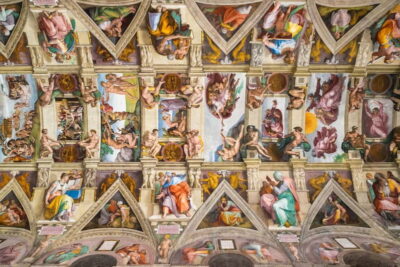
After the first underground layer experiences, the tour moves upward into church levels where the art is the main event. The 4th-century basilica spaces are described as featuring frescoes connected to the lives of martyrs, and the 12th-century basilica layer brings in intricate golden mosaics with symbolism.
Here’s the practical value: the guide doesn’t treat art like a postcard. You’ll get context for what the scenes represent and why the church wanted those visuals to teach. That’s important because early Christian storytelling wasn’t only about sermons. Art helped people recognize shared beliefs, remember key figures, and understand martyr narratives.
And because the group size is kept to a maximum of 10, you’re not stuck staring at a wall from three steps back. You can actually listen and look at the same time. Headsets are included, which helps a lot when the space gets echo-y and voices bounce.
If your main goal is “I want to see important places fast,” the tour delivers. If your goal is “I want to understand what I’m seeing,” it works well too.
Walking to St. John Lateran: Constantine’s Turning Point, Explained Simply
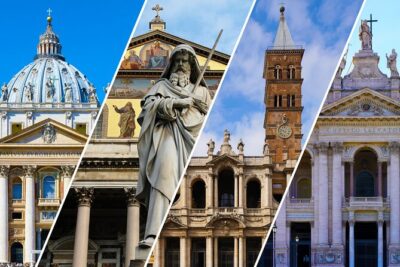
Next you head to the Basilica di San Giovanni in Laterano (St. John Lateran). This is described as the “Mother and head of all churches on Earth,” and the tour frames it that way, not as exaggeration but as an institutional landmark in Rome.
This stop also connects you to Emperor Constantine and the moment Christianity gained legal status in 313. You’ll hear why that matters in terms of how early Christians shifted from persecuted communities to a religion able to build, promote, and preserve its public identity.
In real terms, this site helps you zoom out. St. Clement shows the underground “how it changed.” St. John Lateran shows the “why it changed so quickly.” It gives you the sense of Roman power aligning with a new religious order.
There can be lines here depending on the calendar, and you should plan to stay flexible. The tour is designed so your guide adapts the pace to keep you moving through the remaining churches without rushing the key points.
Scala Sancta: The Holy Stairs You See, Not Just Hear About
From Lateran, you move to Scala Sancta (the Holy Stairs). The tour describes these as the original stairs of the praetorium that Jesus climbed at his judgment. Even if you approach sacred sites in a practical, curious way, you’ll feel the intensity of the moment just from what the stairs represent.
This stop is short—about 15 minutes in the tour flow—but it’s focused. You’re not waiting around for the next location. You’re getting the meaning behind the place and then moving on.
It’s also a good “reset” stop after the church interior time. You change environments—up close, vertical, and very “human-scale.” For many people, that contrast is what makes the tour memorable.






The Basilica of the Holy Cross in Jerusalem: Relics Linked to Helena
Now you get to the heart of the Holy Land story carried into Rome: the Basilica of the Holy Cross in Jerusalem.
This is where the tour turns from architecture and art into physical items connected to early Christian belief. You’ll be guided through a set of relics associated with St. Helena, described as having recovered artifacts from Jerusalem. The tour also frames how the early underground church in the Holy Land safeguarded items during that era.
The relics listed include:
- a nail from the Crucifixion
- the walnut board associated with Pontius Pilate
- the wood of the Cross Jesus was crucified on
- fragments from the wall of the cave of the Nativity in Bethlehem
- two thorns from the crown of the Passion
- and soil from the Holy Land
The value here isn’t only the drama of the items. It’s how the guide connects them into a single narrative: Jerusalem, recovery under Helena, and then what Rome chose to keep. If you want to understand why certain churches gained reputations and why Rome became a hub for Christian devotion, this is a key piece.
Emotional tip (from a practical reviewer perspective)
Relics can feel either deeply meaningful or surprisingly intense, depending on your beliefs. Either way, give yourself a moment here to take it in without multitasking. This stop rewards calm attention.
Santa Maria Maggiore Extension: When You Have the Extra Hour
If you have time, the tour can be extended to Basilica Papale di Santa Maria Maggiore. This is described as offering stunning mosaics and sacred relics, and it’s included as an option of about one extra hour.
I’d consider adding it if you want more of the same “visual theology” you saw at St. Clement’s 12th-century layer. Since Santa Maria Maggiore is known in Christian history for its importance (as presented by the tour), it can also help you round out the day with another major Roman church that feels distinct from St. John Lateran.
Price and Logistics: Is $88 Worth It?
At $88 per person for roughly 2.5 to 3.5 hours, this tour can be good value if you want a lot of high-impact stops without piecing together tickets and guides for each place.
Here’s why the pricing works for many people:
- Entrance fees to St. Clement’s Undergrounds are included.
- You get a live professional guide plus headsets, which you’ll appreciate in churches where sound travels weirdly.
- The itinerary is dense but not chaotic, thanks to the small group cap (maximum 10).
What you should consider is that the tour involves real walking between churches and then time spent in underground and indoor spaces with dress requirements. You won’t be able to toss on casual summer clothes and cruise through.
If you’re traveling with limited time in Rome and you want the “major Christian Rome” story told through a concrete sequence of sites, this is one of the more efficient ways to do it.
What to Wear, What to Pack Light, and How to Stay Comfortable
The tour has clear rules, and they matter because churches can turn strict quickly.
Bring / wear
- comfortable shoes (you’ll thank yourself later)
Avoid wearing
- shorts
- short skirts
- sleeveless shirts
Don’t bring
- weapons or sharp objects
- luggage or large bags
- trolleys
- pets
Also, the route is not wheelchair-accessible, and it’s not suitable for claustrophobia, due to the underground settings.
If you want a simple packing plan: travel light, wear covered shoulders and legs, and carry only what you need for the day.
Who This Tour Suits Best (and Who Might Prefer a Different Day)
This tour fits you if:
- you like Rome for its layered building story (not just famous façades)
- you want to pair underground archaeology with early Christian churches
- you’re curious about how Christian tradition traveled from Jerusalem to Rome
- you appreciate a small group pace with headset support
It may not fit you if:
- you strongly dislike enclosed spaces underground (claustrophobia is a no-go)
- you want a totally relaxed, outdoor-only stroll
- you’re expecting a “churches from the outside only” kind of experience
Should You Book This Rome Underground Temples and Relics Tour?
Book it if you want a focused 2.5 to 3.5 hour plan that goes beyond Rome’s usual surface checklist. The standout value is the combination of St. Clement’s underground layers, the pagan context tied to a Mithraic temple and an underground river, and then the sharp pivot into Scala Sancta and Holy Cross in Jerusalem relics.
Skip—or at least reconsider—if underground spaces make you uncomfortable. And if you’re very sensitive to religious relics, be aware this tour is designed around those items and the story connecting them to Helena and Constantine.
If you’re ready to trade a little comfort for a lot of meaning and atmosphere, this is a strong choice.
FAQ
How long is the Rome Underground Temples & Crucifixion Relics walking tour?
The tour runs about 2.5 to 3.5 hours.
Where does the tour start?
The starting point can vary by option, with one listed option at Piazza di San Clemente and another at the Basilica di San Clemente al Laterano.
What’s included in the price?
You get a live professional guide, entrance fees to St. Clement’s Undergrounds, headsets, and full on-site assistance.
Are food and drinks included?
No. Food and drinks are not included.
How big are the groups?
The tour has a maximum of 10 travelers.
Is the tour wheelchair-accessible?
No, this tour is not wheelchair-accessible.
Is it suitable for claustrophobia?
No. It is not suitable for people with claustrophobia.
What should I wear and what items are not allowed?
Wear comfortable shoes. Avoid shorts, short skirts, and sleeveless shirts. The tour also does not allow luggage or large bags, trolleys, or pets inside the monuments. Weapons or sharp objects are not allowed either.